
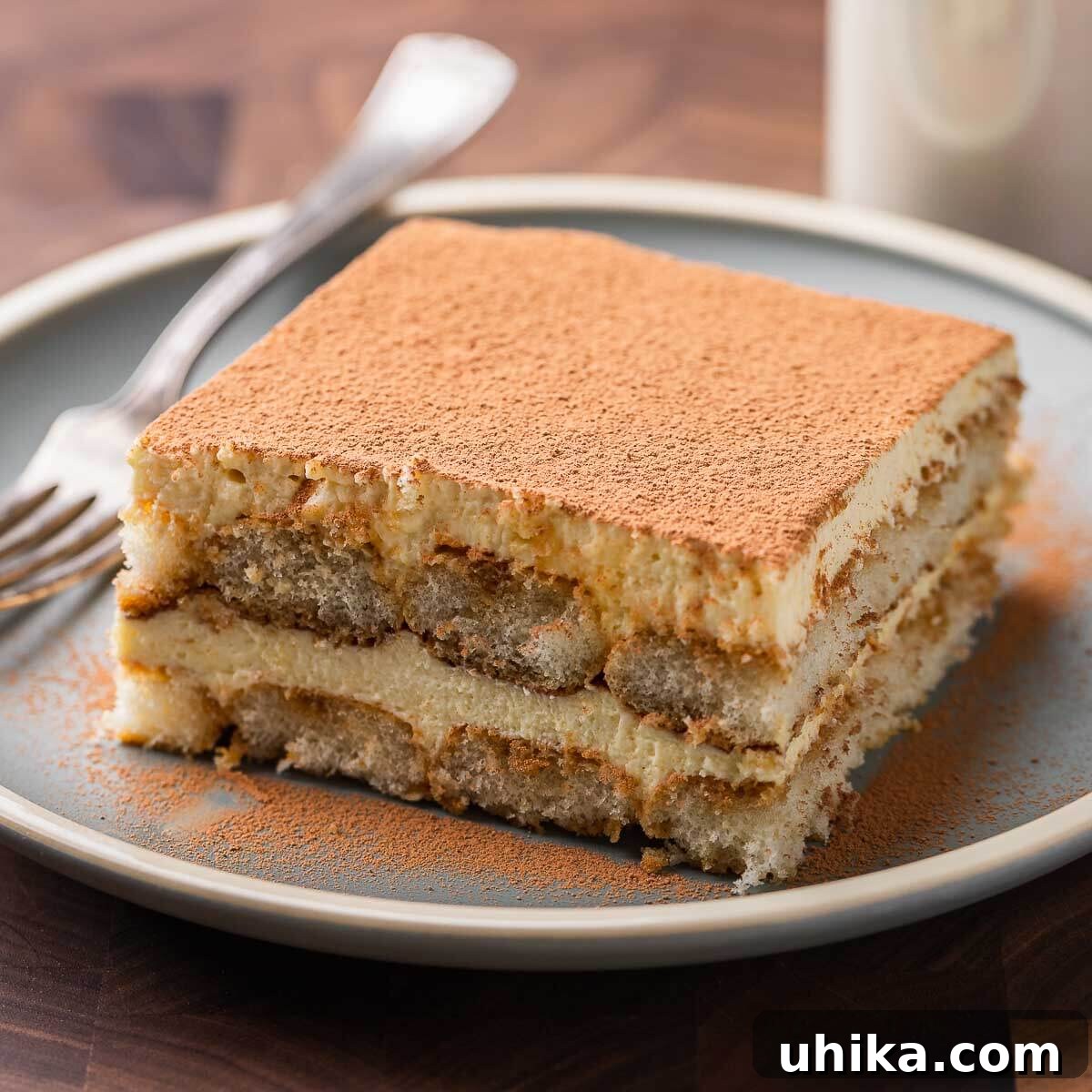
Tiramisu, the quintessential Italian dessert, is a harmonious symphony of flavors and textures. Its name, meaning “pick me up” or “cheer me up,” perfectly encapsulates the delightful experience it delivers. This iconic treat is meticulously crafted with layers of espresso-soaked ladyfingers, generously enveloped in a rich, airy mascarpone-zabaglione cream, and elegantly finished with a dusting of cocoa powder. With its perfect balance of sweetness and a sophisticated hint of coffee, this Tiramisu recipe transcends mere dessert status; it’s an unforgettable culinary journey you’ll want to recreate time and time again.
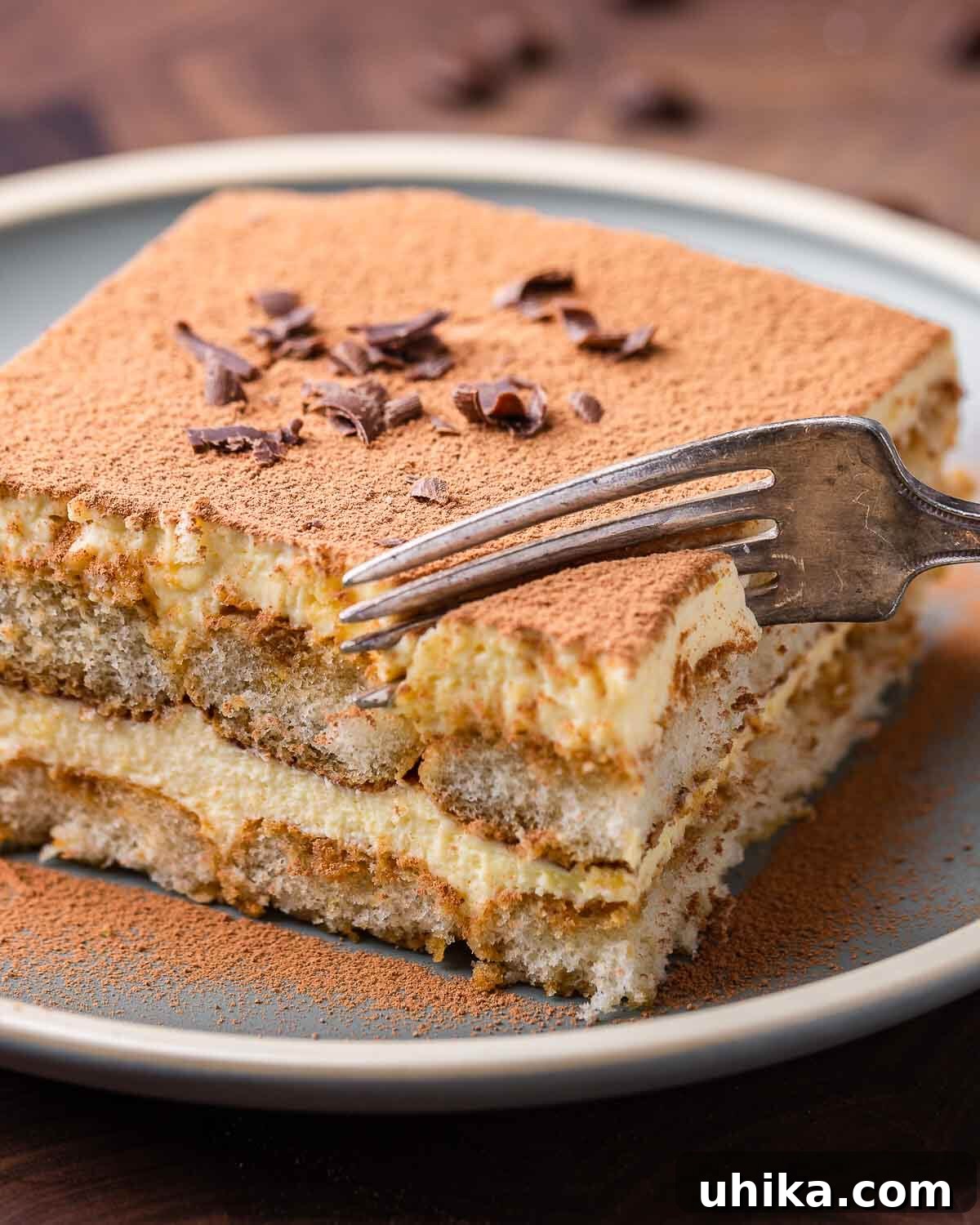
The Allure of Tiramisu: A Timeless Italian Classic
Tiramisu holds a cherished place in the pantheon of Italian desserts, revered for its elegant presentation and complex flavor profile. While seemingly simple in its components, a truly exceptional Tiramisu is a testament to balance and technique. It’s a dessert that invites contemplation with every spoonful, where the bitterness of cocoa and coffee perfectly complements the sweet richness of mascarpone and the delicate crumb of ladyfingers.
Throughout Italy, and indeed the world, variations of Tiramisu abound. Some recipes call for raw egg yolks and whites, while others incorporate different liqueurs such as rum, brandy, or various coffee-flavored spirits. Our meticulously developed recipe combines time-honored techniques with carefully selected flavors to create a Tiramisu that consistently earns rave reviews. We’ve focused on creating a version that is both deeply traditional and incredibly approachable, ensuring a consistently delicious outcome.
The most challenging aspect of making Tiramisu isn’t the preparation itself, but the waiting game. Once assembled, this delightful dessert requires a minimum of several hours, ideally overnight, to properly set and allow its myriad flavors to meld and deepen in the refrigerator. The anticipation can be agonizing, but the reward of a perfectly chilled, exquisitely flavored Tiramisu is undeniably worth every moment of patience.
Enjoy your homemade Tiramisu as a sophisticated conclusion to any meal, perhaps alongside a freshly brewed cup of coffee or a robust espresso. For an extra touch of indulgence, pair it with a delightful after-dinner drink, such as a classic espresso martini. Its rich, creamy profile makes it a versatile companion to a variety of beverages.
Essential Ingredients for Authentic Tiramisu
Crafting a truly memorable Tiramisu begins with sourcing the finest ingredients. Each component plays a vital role in achieving that perfect balance of flavor and texture. Here’s a closer look at what you’ll need to create this Italian masterpiece:
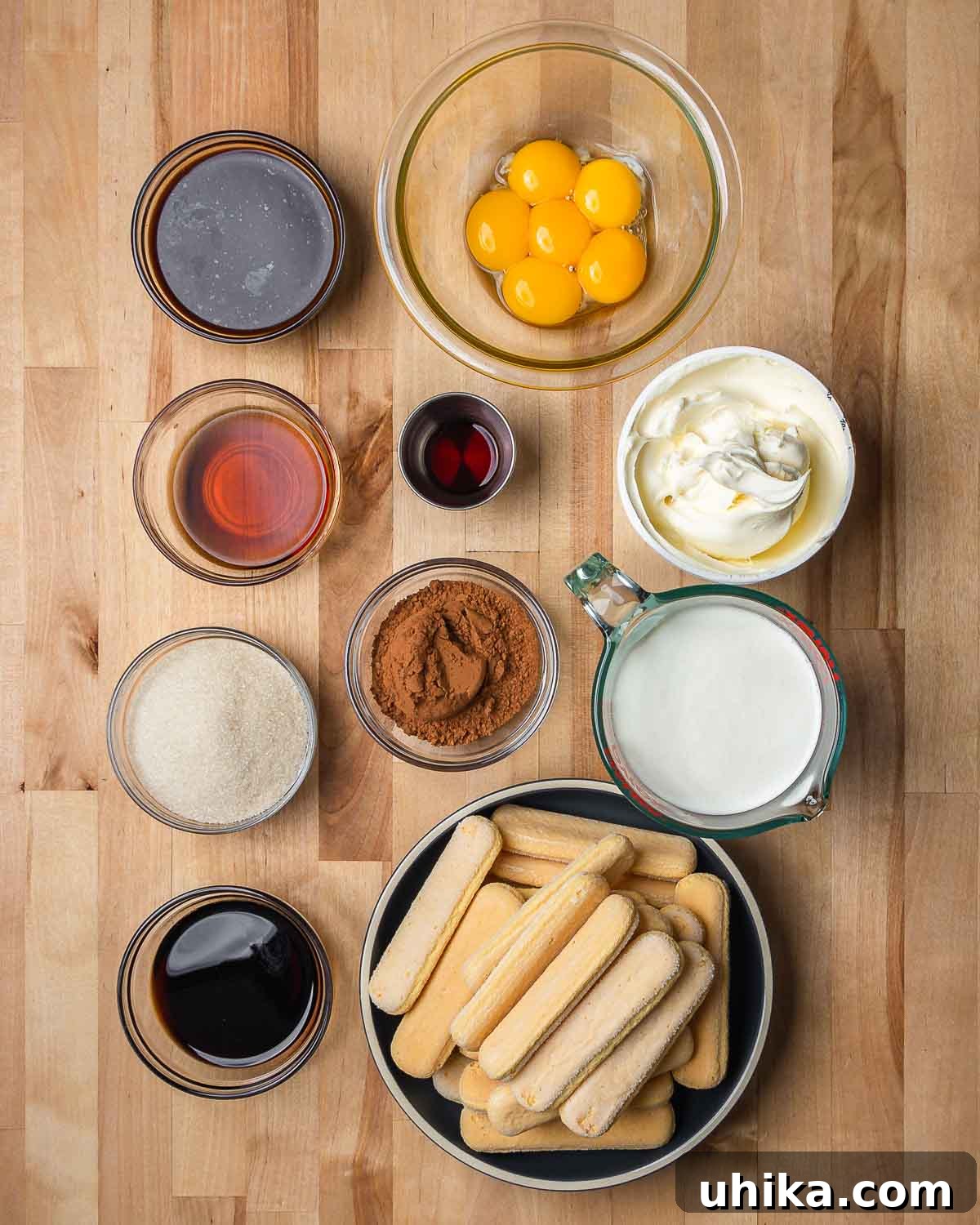
- Ladyfingers (Savoiardi): These dry, finger-shaped sponge cakes are specifically designed to absorb liquid without becoming overly soggy. They are the backbone of Tiramisu’s structure.
- Espresso: Strong, freshly brewed espresso is non-negotiable for that authentic coffee flavor. If espresso isn’t available, a very strong, dark-roasted coffee can be a suitable alternative.
- Coffee Liqueur: A splash of coffee liqueur (such as Kahlua or Tia Maria) enhances the coffee notes and adds a subtle depth of flavor. This can be omitted for a non-alcoholic version or substituted.
- Mascarpone Cheese: This Italian cream cheese is the heart of the Tiramisu’s creamy filling. Its high-fat content gives it a luxurious, velvety texture and rich flavor. Ensure it’s at room temperature for optimal whisking.
- Egg Yolks: Used to create a traditional zabaglione, the egg yolks provide richness, color, and structure to the cream. Cooking them gently over a double boiler ensures safety and creates a silky smooth base.
- Granulated Sugar: Sweetens the zabaglione and balances the bitterness of the coffee and cocoa.
- Sweet Marsala Wine: A fortified wine, Marsala adds a distinctive, delicate sweetness and nutty undertone to the zabaglione, truly elevating the flavor profile.
- Heavy Whipping Cream: Whipped to medium-stiff peaks, heavy cream provides lightness and airiness to the mascarpone mixture, making the overall dessert incredibly soft and ethereal.
- Vanilla Extract: A touch of pure vanilla extract enhances the overall sweetness and aromatic complexity of the cream.
- Unsweetened Cocoa Powder: The final flourish, a generous dusting of cocoa powder provides a slight bitterness that beautifully contrasts the sweet cream and coffee, tying all the flavors together.
Crafting Your Perfect Tiramisu: A Step-by-Step Guide
Making Tiramisu is an art form that, with a little care and attention, can be mastered by any home cook. Follow these detailed instructions to create a dessert that will impress everyone.
Preparation for the Espresso Mixture and Mascarpone Base
- In a shallow bowl, combine 3/4 cup (180g) of freshly brewed espresso with 3 ounces (80g) of coffee liqueur. Stir gently to combine. Set this mixture aside, as you may not need all of it, but having enough for quick dipping is crucial.
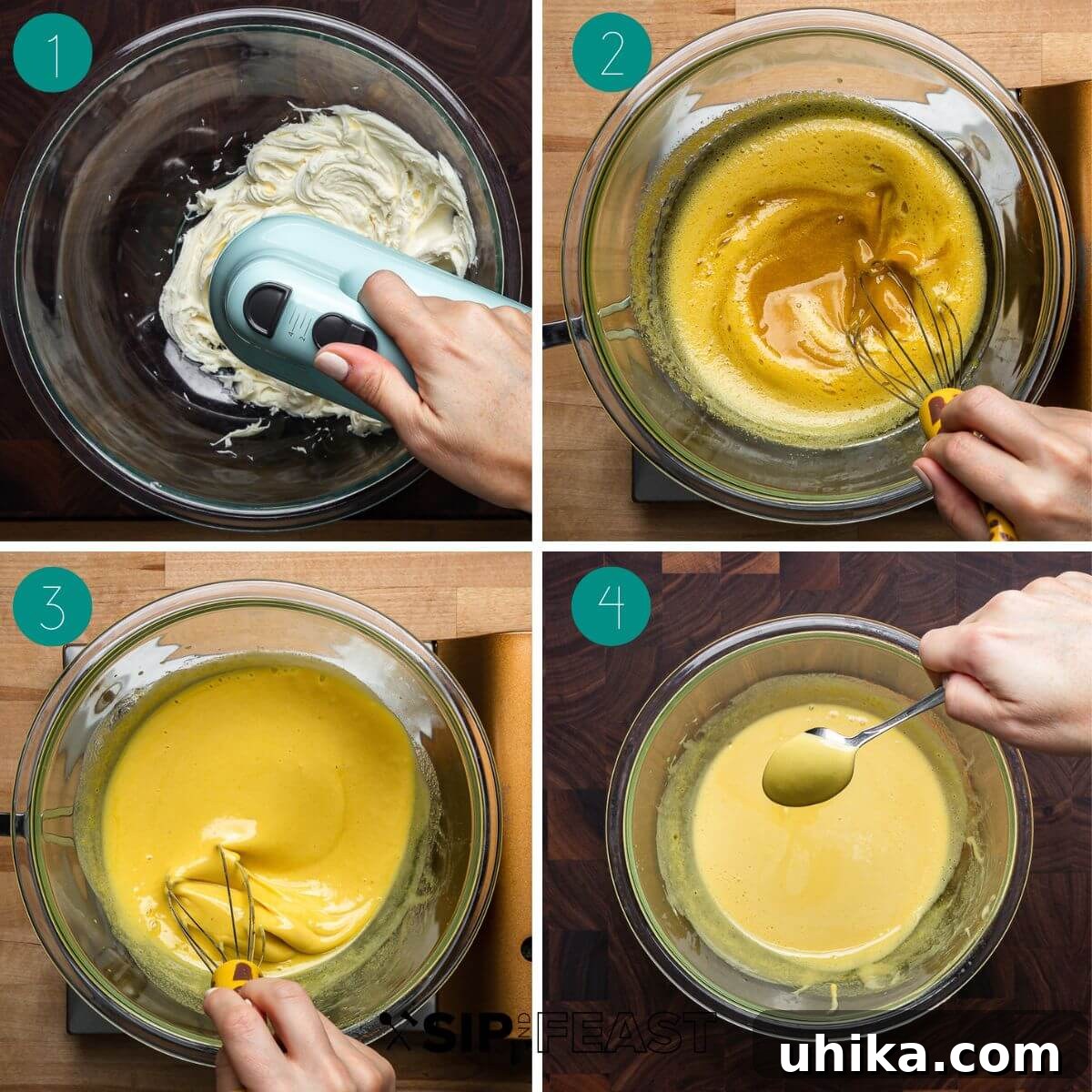
- In a separate large mixing bowl, add 1 pound (454g) of room-temperature mascarpone cheese. Whisk the mascarpone gently for about 30 seconds until it becomes light and smooth. Over-whisking mascarpone can cause it to separate, so be mindful. Set aside.
Creating the Silky Zabaglione Cream
- Prepare a double boiler: Fill a saucepan with a small amount of water and bring it to a gentle simmer over medium-low heat.
- In a heatproof glass bowl (or the top of your double boiler), combine 6 large room-temperature egg yolks, 1/4 cup (60g) of sweet Marsala wine, and 3/4 cup (150g) of granulated sugar.
- Carefully place the glass bowl over the simmering saucepan, ensuring that the bottom of the bowl does not touch the water. This indirect heat is essential for a gentle cooking process.
- Whisk the yolk mixture constantly over the heat to create the zabaglione. Continuous whisking is key to preventing the eggs from scrambling and achieving a smooth, airy texture.
- Continue whisking for approximately 8-10 minutes, or until the zabaglione has significantly thickened and can form a “ribbon” when the whisk is lifted (meaning it leaves a trail on the surface before slowly dissolving). If using an instant-read thermometer, the mixture should reach a temperature of approximately 160°F (71°C) to ensure the eggs are safely cooked.
- The thickened zabaglione should be able to coat the back of a spoon, leaving a clear path when you draw a finger across it.
Combining the Cream Components
- Once the zabaglione is ready, remove it from the heat and allow it to cool for a few minutes, stirring occasionally. This prevents it from overcooking as you prepare to combine.
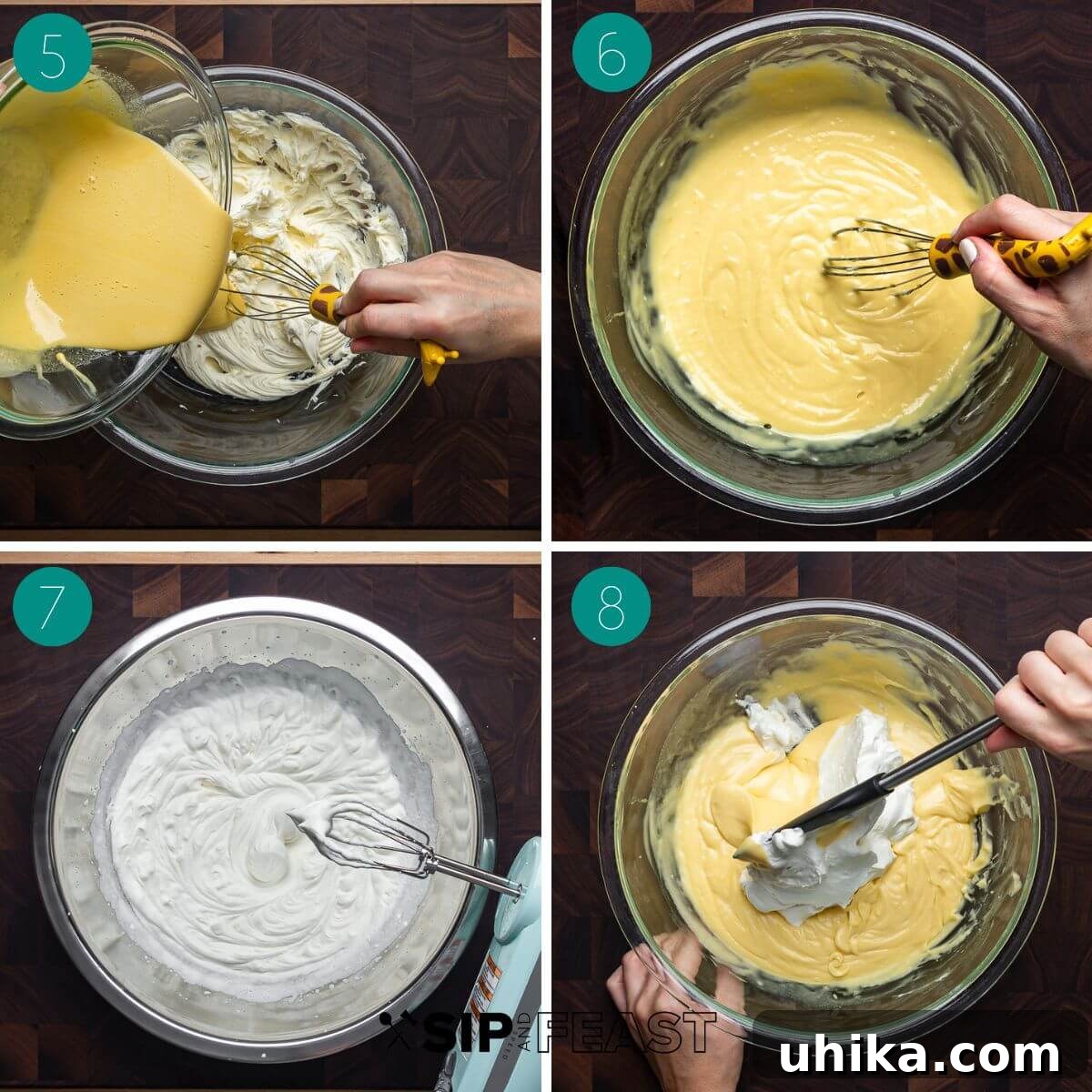
- Slowly and gently fold the cooled zabaglione mixture into the whisked mascarpone cheese. Whisk until just combined and smooth. Be careful not to overmix, as this can deflate the mixture.
Whipping the Cream and Finalizing the Filling
- In a large mixing bowl, or the bowl of a stand mixer fitted with a whisk attachment, add 2 cups (480g) of cold heavy whipping cream and 2 teaspoons of vanilla extract.
- Begin beating on low speed, gradually increasing to high, until the whipped cream forms medium-stiff peaks. It should hold its shape but still be soft and airy. Avoid overmixing, which can turn it grainy.
- Gently fold half of the whipped cream mixture into the mascarpone-zabaglione mixture using a spatula.
- Add the remaining whipped cream mixture and continue to fold gently until all components are just incorporated and the cream is smooth and homogenous. Set this exquisite mascarpone cream aside; it’s now time for assembly.
Assembling Your Tiramisu Layers
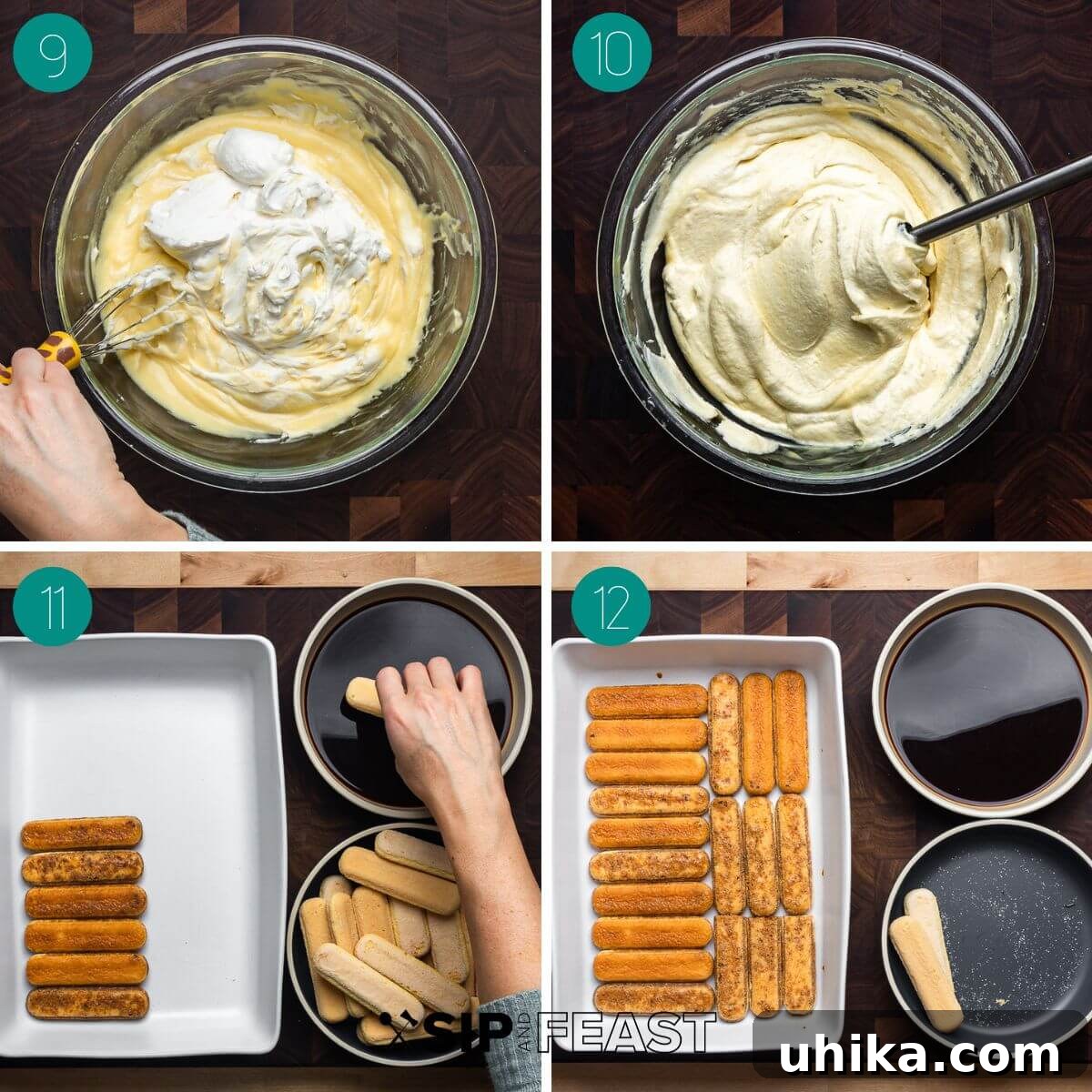
- Carefully remove approximately 40 ladyfingers from their package. Begin to gently dip each side of a ladyfinger into the prepared espresso mixture. It is critically important not to submerge or oversoak the ladyfingers; a quick dip of approximately 1 second per side is sufficient. They should be moistened, not saturated.
- Arrange the dipped ladyfingers in a single layer at the bottom of a 9×13-inch baking dish. You may need to trim a few ladyfingers to fit snugly, filling any gaps to create a solid first layer. Ensure there is no excess liquid pooling in the bottom of the dish, which indicates oversoaking.
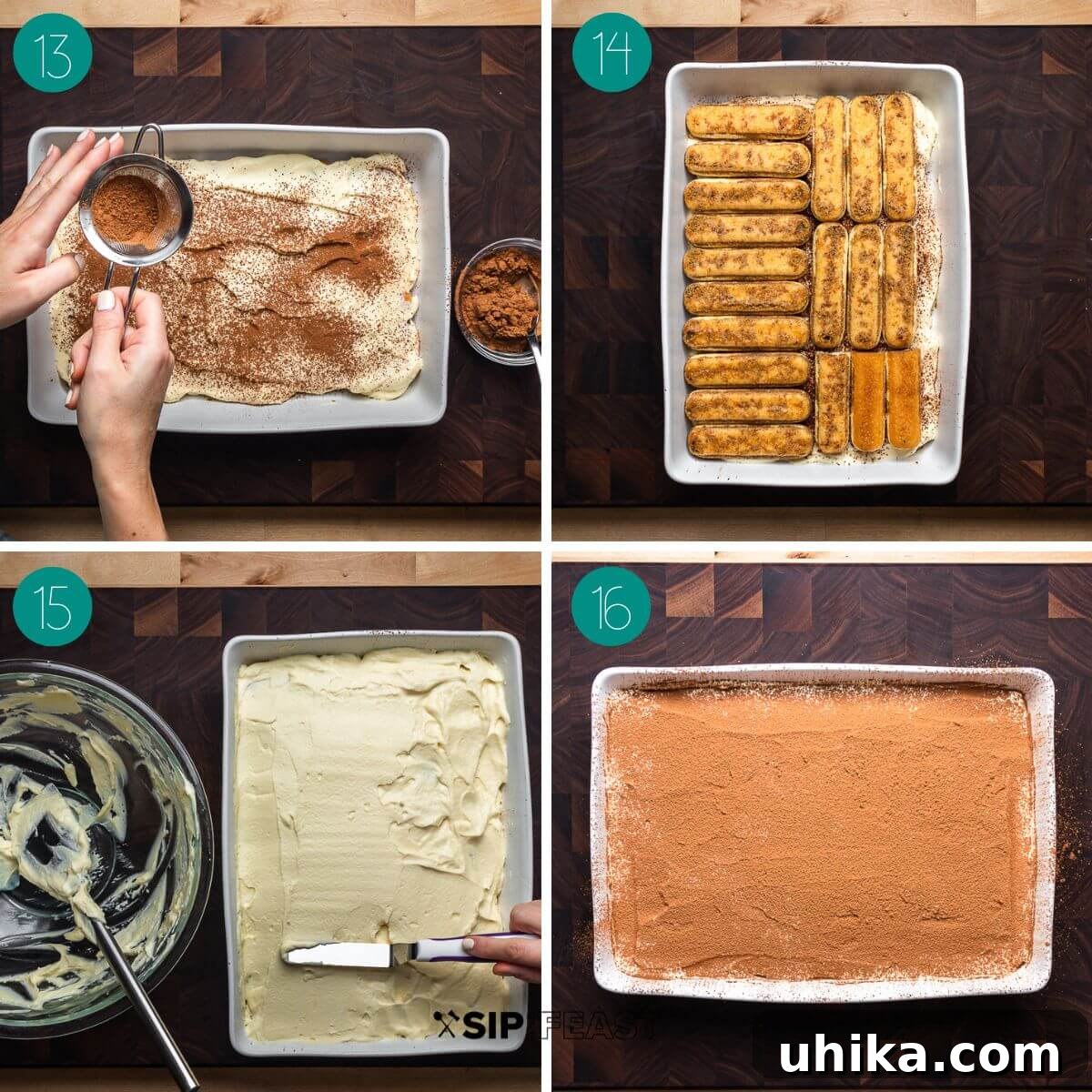
- Evenly spoon half of the mascarpone cream mixture over the first layer of ladyfingers. Use an offset spatula or the back of a spoon to spread it smoothly from edge to edge.
- Using a fine-mesh sifter, dust the cream layer generously with unsweetened cocoa powder.
- Repeat the process to build your second layer: gently dip the remaining ladyfingers in the espresso mixture and arrange them over the first cream layer, following the same pattern.
- Spread the remaining mascarpone cream mixture over the second layer of ladyfingers, smoothing the top surface meticulously.
Chilling and Serving Your Masterpiece
- Cover the baking dish tightly with plastic wrap, ensuring it doesn’t touch the cream surface if possible.
- Place the Tiramisu in the refrigerator to chill for at least 6 hours, though ideally overnight. This crucial chilling period allows the flavors to meld, the ladyfingers to fully soften, and the cream to set perfectly.
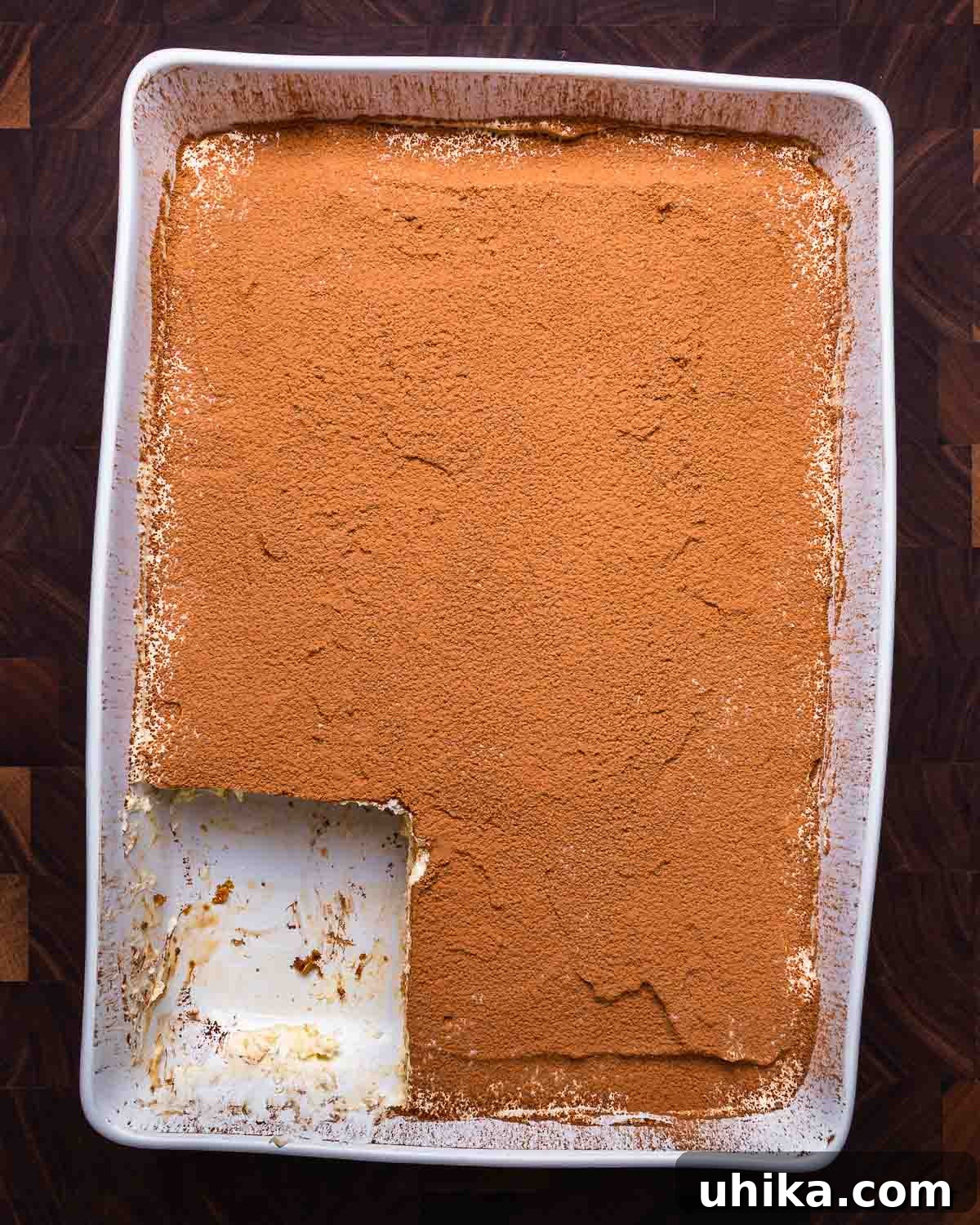
- Just before serving, remove the Tiramisu from the refrigerator. Using a sifter, generously dust the entire top surface with unsweetened cocoa powder.
- With a sharp knife, carefully slice the Tiramisu into individual squares or desired portions. Serve immediately and savor every exquisite bite. Enjoy!
Expert Tips for a Flawless Tiramisu
Achieving Tiramisu perfection is within reach with these expert insights and techniques:
- Mastering the Zabaglione: The zabaglione is a luxurious custard that forms the rich base of our Tiramisu cream. The key to a silky-smooth zabaglione is continuous whisking over a double boiler. Ensure the bowl never touches the simmering water, as direct heat can scramble the eggs. Whisking for about 8-10 minutes ensures the eggs are safely cooked and the mixture thickens beautifully. For arm relief, a handheld electric mixer on a low setting can be a great help.
- The Art of Ladyfinger Dipping: This is arguably the most crucial step. Ladyfingers are designed to absorb liquid, but oversoaking them will lead to a soggy, mushy Tiramisu. A quick dip of just one second per side in the espresso mixture is typically all that’s needed. The ladyfingers should be moist, not dripping wet, to maintain their structural integrity and texture once layered with the cream. You will likely have leftover espresso mixture, which is normal.
- Espresso vs. Strong Coffee: For an authentic Italian experience, fresh, strong espresso is recommended. However, if you don’t have an espresso machine, a darkly brewed, very strong coffee can be a good substitute. For those sensitive to caffeine, decaffeinated espresso or coffee works just as well without compromising flavor.
- Understanding Alcohol in Tiramisu: Our recipe incorporates sweet Marsala wine for the zabaglione and a coffee liqueur for the espresso mixture, adding layers of complex flavor. Both can be omitted entirely for a family-friendly version. If you wish to substitute, rum (dark or light) is a popular alternative that can replace both the Marsala and coffee liqueur, offering a different, yet equally delightful, depth.
- The Critical Chill Time: We understand the irresistible urge to dive into your freshly made Tiramisu immediately. However, patience is paramount. The dessert requires a minimum of 6 hours in the refrigerator, but it truly shines when allowed to chill overnight. This extended period allows the ladyfingers to fully absorb the flavors of the cream and coffee, and for all the elements to meld into a cohesive, perfectly set, and wonderfully flavorful dessert.
- Perfecting the Cocoa Dust: While it might be tempting to dust the Tiramisu with cocoa powder before chilling, we recommend waiting until just before serving. Cocoa powder can absorb moisture from the cream mixture over time, causing it to appear less fresh and vibrant. A final, generous dusting right before slicing ensures a beautiful, striking presentation and a fresh burst of bittersweet flavor.
- Serving Suggestions and Pairings: Tiramisu is incredibly versatile. It’s an ideal make-ahead dessert for holidays, dinner parties, or any special occasion, as its flavor only improves with time. Consider creating a dessert buffet featuring other Italian favorites like an apple crostata, delicate lemon ricotta cookies, or a fragrant orange olive oil cake.
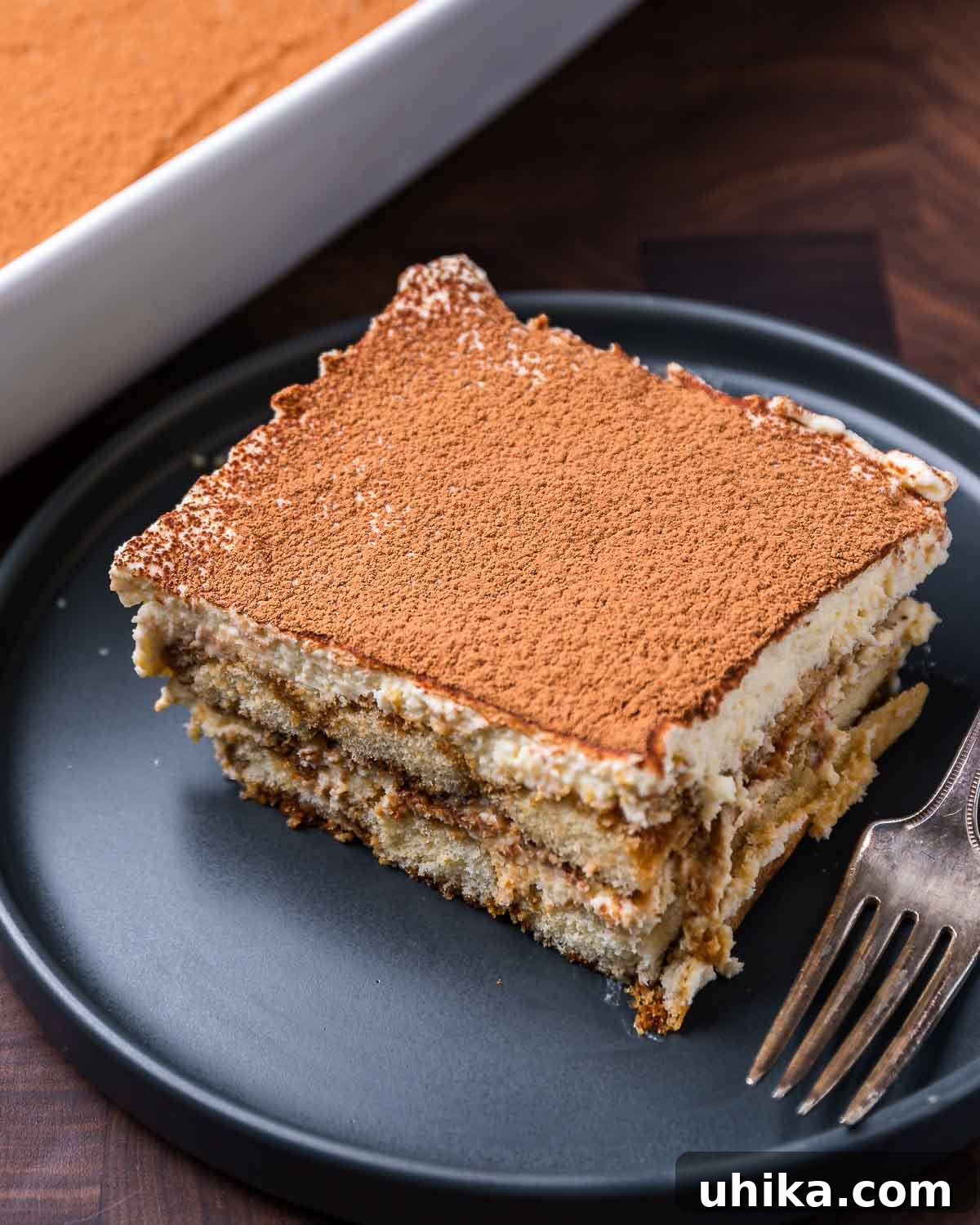
Classic Tiramisu Recipe
This recipe for Tiramisu yields 12 generous slices of pure Italian indulgence. It combines traditional methods with clear, easy-to-follow steps to ensure a spectacular outcome every time. Prepare to delight your family and friends with this timeless dessert!
Summary
Tiramisu is a classic Italian dessert featuring espresso and coffee liqueur-dipped ladyfingers, a rich Marsala zabaglione, airy whipped cream, and a dusting of cocoa powder for an irresistible finish.
- Prep Time: 20 minutes
- Cook Time: 10 minutes
- Chilling Time: 6 hours
- Total Time: 6 hours 30 minutes
- Servings: 12 slices
- Author: James Delmage
- Rating: 5 out of 5 stars (from 10 votes)
- Pin Recipe
- Print Recipe
Recipe Video
For a visual guide to making this delicious Tiramisu, watch our step-by-step video below:
Ingredients
For the espresso mixture
- 3/4 cup (180g) espresso (may not need it all)
- 3 ounces (80g) coffee liqueur (may not need it all)
For the mascarpone filling
- 1 pound (454g) mascarpone, room temperature
- 1/4 cup (60g) Marsala wine, dolce (sweet)
- 6 large egg yolks, room temperature
- 3/4 cup (150g) granulated sugar
- 2 cups (480g) heavy whipping cream
- 2 teaspoons vanilla extract
For the Tiramisu assembly
- 1/4 cup (22g) cocoa powder, unsweetened
- 40 savoiardi ladyfingers
Instructions
For the espresso mixture
- In a shallow bowl, combine the espresso and coffee liqueur. Stir gently and set aside.
For the mascarpone filling
- Add the mascarpone to a large bowl, whisk until light and smooth (about 30 seconds), then set aside.
- To create the zabaglione, add the egg yolks, Marsala wine, and granulated sugar to a heatproof glass bowl. Place the bowl over a pot of simmering (not boiling) water, ensuring the bottom of the bowl does not touch the water. Whisk continuously over the heat until the mixture thickens, coats the back of a spoon, and reaches approximately 160°F (71°C) (about 10 minutes).
- Remove the zabaglione from the heat and let it cool for a few minutes. Then, gently add the cooled zabaglione to the whisked mascarpone and whisk until just combined.
- In a large mixing bowl or the bowl of a stand mixer, combine the cold heavy whipping cream and vanilla extract. Beat on low speed, gradually increasing to high, until the whipped cream forms medium-stiff peaks. Be careful not to overmix.
- Gently fold half of the whipped cream into the mascarpone-zabaglione mixture, then add the remaining whipped cream and gently whisk until just incorporated.
For the Tiramisu assembly
- Quickly dip both sides of each ladyfinger into the espresso mixture (1 second per side maximum) and arrange them side by side in a single layer in a 9×13-inch baking dish. Trim a few ladyfingers if necessary to fill any gaps. Ensure there’s no excess liquid pooling in the dish.
- Spoon half of the mascarpone cream mixture evenly over the ladyfingers and smooth with a spatula. Dust generously with unsweetened cocoa powder using a sifter.
- Repeat the layering process for the second layer: dip and arrange the remaining ladyfingers. Then, spoon and smooth the remaining mascarpone cream mixture on top.
- Cover the baking dish with plastic wrap and refrigerate for at least 6 hours, or ideally overnight, to allow the flavors to meld and the dessert to set.
- Just before serving, remove the Tiramisu from the refrigerator and dust the top generously with the remaining unsweetened cocoa powder. Slice into squares using a sharp knife and serve immediately. Enjoy your magnificent homemade Tiramisu!
Notes
- Be very careful not to oversoak the ladyfingers. A quick dip of approximately 1 second per side is all that’s needed. It is normal to have some leftover espresso/coffee liqueur mixture.
- The alcohol (Marsala wine and coffee liqueur) can be omitted entirely from both the coffee mixture and the zabaglione for an alcohol-free version.
- This recipe uses a 9×13-inch baking dish. You may need to cut a few ladyfingers to achieve a snug fit for the layers. The exact number of ladyfingers required can vary slightly depending on the brand and the size of your dish.
- Tiramisu benefits greatly from an adequate chilling period. A minimum of 6 hours in the refrigerator is essential, but letting it sit overnight yields the best results, allowing the flavors to deepen and the structure to firm up perfectly.
- While you can dust the Tiramisu with cocoa powder before chilling, we highly recommend dusting it just before slicing and serving. This ensures the cocoa remains a vibrant, distinct layer and doesn’t absorb into the cream, which can slightly alter its appearance.
Nutrition
Nutrition information is automatically calculated, so should only be used as an approximation.
- Serving: 1 slice
- Calories: 445 kcal
- Carbohydrates: 59 g
- Protein: 11 g
- Fat: 17 g
- Saturated Fat: 8 g
- Cholesterol: 202 mg
- Sodium: 88 mg
- Potassium: 116 mg
- Fiber: 2 g
- Sugar: 34 g
- Calcium: 105 mg
- Iron: 1 mg
If you’ve enjoyed preparing this classic Tiramisu recipe or any other recipe from our collection, we’d be thrilled if you could leave a 5-star rating and share your experience in the comments below. Your feedback helps us continue to create delicious content!
We believe in catering to various learning styles. If you prefer to learn through visual demonstration, many of our recipes, including this one, are available on our YouTube channel and our Facebook Page. Don’t forget to check us out on Instagram at @sipandfeast or tag #sipandfeast to share your culinary creations!