
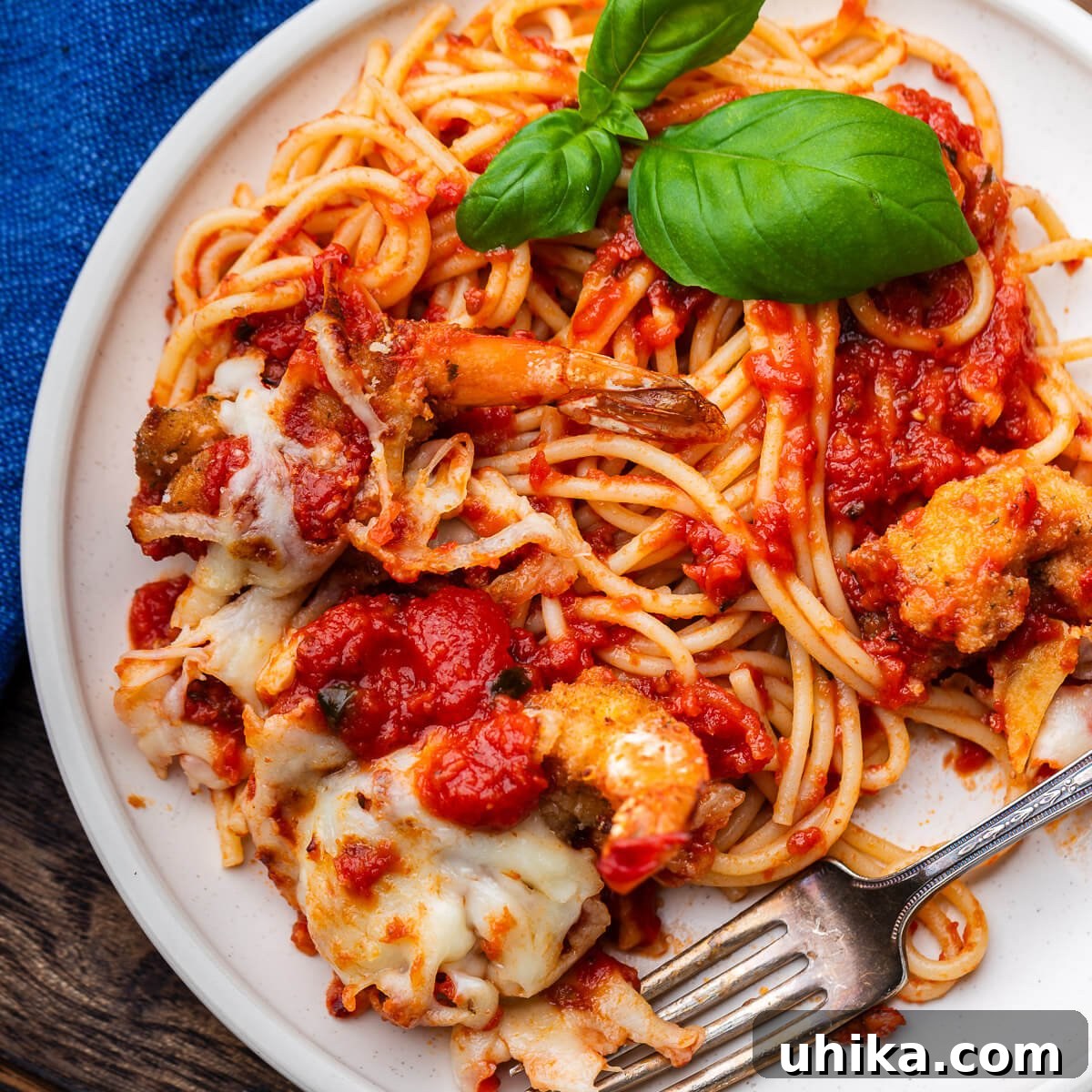
Experience the delightful fusion of crispy shrimp, rich marinara, and melted mozzarella with this incredible Shrimp Parmigiana recipe. This beloved Italian-American classic transforms golden-fried shrimp into a comforting and utterly satisfying dish, perfect for a cozy weeknight meal or an impressive dinner party. Forget everything you thought about pairing cheese with seafood – Shrimp Parmigiana is here to redefine your culinary expectations.
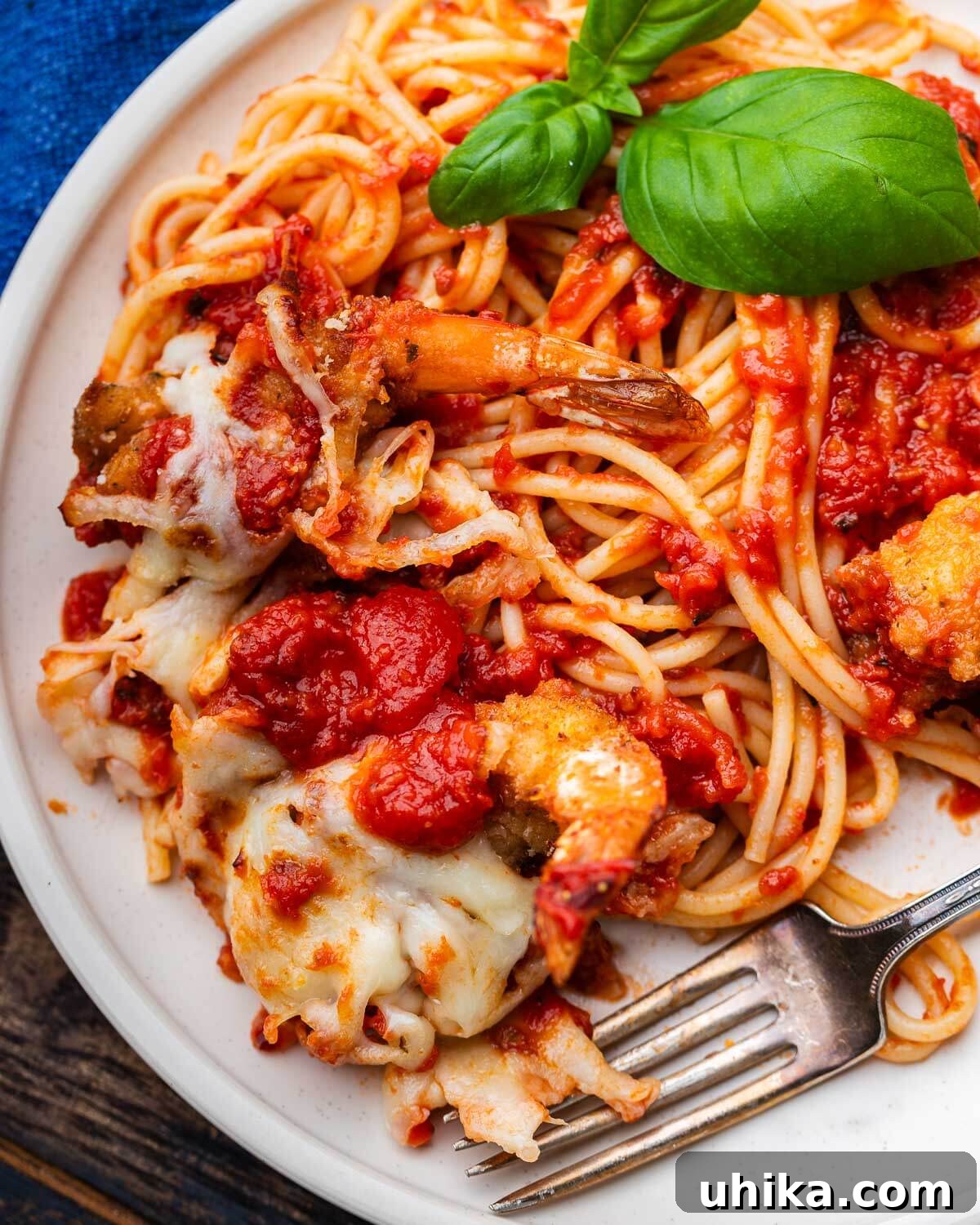
While some culinary traditionalists might raise an eyebrow at the combination of cheese and seafood, one bite of Shrimp Parmigiana is all it takes to convert even the most skeptical palates. This dish isn’t just good; it’s a testament to the innovative spirit of Italian-American cuisine, creating a harmonious blend of flavors and textures that is truly irresistible.
Often found gracing the menus of New York-area pizzerias and family restaurants, Shrimp Parmigiana offers a delightful twist on its more famous counterparts, Chicken Parmigiana and Eggplant Parmigiana. It’s incredibly versatile, serving beautifully alongside a mound of pasta, or transforming into a legendary “Shrimp Parm Hero” when nestled in a crusty roll. If you opt for the hero, remember to remove the shrimp tails for easier eating!
Essential Ingredients for Shrimp Parmigiana
Crafting the perfect Shrimp Parmigiana begins with selecting high-quality ingredients. Here’s a closer look at what you’ll need, with some insights to guide your choices.
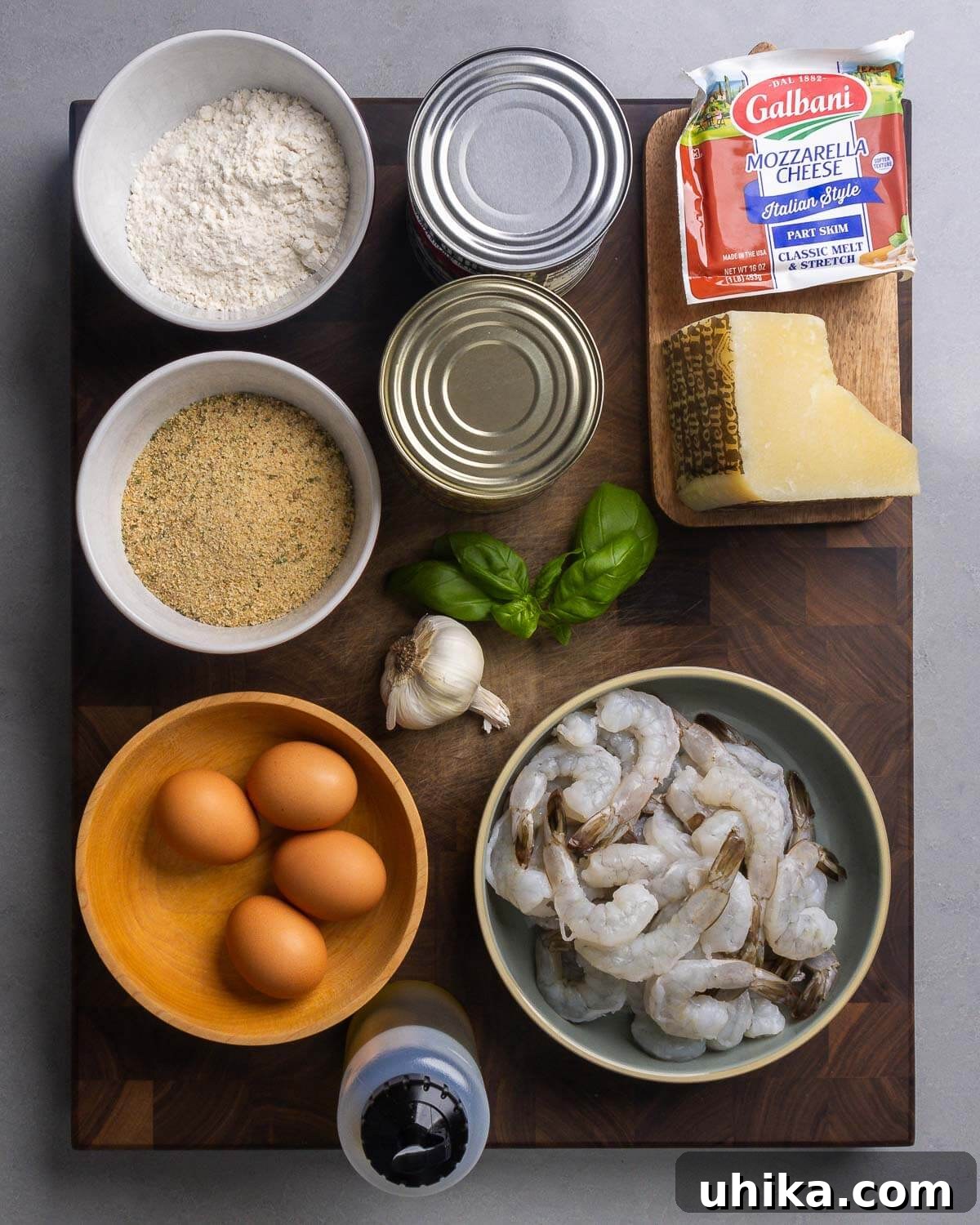
- Shrimp: For this recipe, we recommend using large shrimp, specifically u21-25 count, which means there are 21 to 25 shrimp per pound. These larger shrimp provide a substantial bite and are easier to butterfly and bread. Ensure your shrimp are already cleaned and deveined to save time. While butterflying creates a larger surface area for breading and helps them cook evenly, it’s an optional step you can skip if you’re short on time.
- Mozzarella Cheese: The key to that perfect, melty, bubbly cheese topping is block mozzarella. Unlike fresh mozzarella, which contains a higher water content and can make your dish soggy, block mozzarella melts beautifully and creates that classic gooey texture. Opt for a good quality, low-moisture block mozzarella and shred it yourself for the best results.
- Pecorino Romano Cheese: Despite the name “Parmigiana,” many authentic Italian-American pizzerias and home cooks in the New York area prefer Pecorino Romano for its sharper, saltier flavor profile. This adds a wonderful depth to the dish that Parmesan cheese might not achieve. However, if Parmesan is your preference or what you have on hand, feel free to use it; the dish will still be delicious!
- Canned Plum Tomatoes: For the sauce, high-quality canned plum tomatoes (San Marzano if possible) are essential. Crushing them by hand or pulsing them lightly in a blender yields a rustic texture that’s superior to overly smooth purées.
- Italian Seasoned Breadcrumbs: These provide a flavorful, crisp coating for the shrimp. You can also use plain breadcrumbs and add your own Italian seasoning blend (garlic powder, onion powder, dried oregano, dried basil, salt, and pepper).
- Garlic & Fresh Basil: Fresh garlic is crucial for the marinara sauce, providing an aromatic base. Fresh basil, torn just before serving, adds a vibrant, fragrant finish that brightens the rich flavors.
- Eggs & Flour: These form the classic breading station, ensuring the breadcrumbs adhere perfectly to the shrimp for a golden, crispy crust.
- Olive Oil: Use extra virgin olive oil for sautéing the garlic and a neutral oil (like olive oil or vegetable oil) for frying the shrimp.
Refer to the comprehensive recipe card below for precise quantities and additional details on all ingredients.
Mastering Shrimp Parmigiana: A Step-by-Step Guide
Follow these detailed instructions to create a restaurant-quality Shrimp Parmigiana right in your own kitchen. Each step is designed for clarity and ease, ensuring a successful and delicious outcome.
- Prepare Your Ingredients: Begin by organizing all your components. Slice 8 cloves of garlic for the sauce. For the tomatoes, either hand crush two 28-ounce cans of plum tomatoes or give them a quick pulse in a blender until chunky, then set aside. Shred 2 ½ cups of block mozzarella cheese and grate ¼ cup of Pecorino Romano cheese, keeping them separate. If butterflying the shrimp, take 1 pound of u21-25 shrimp (cleaned and deveined). Using a sharp paring knife, make a shallow cut along the back of each shrimp, from the head end almost to the tail, without cutting all the way through. Gently open the shrimp like a book to flatten it. Chef’s Note: While butterflying is optional, it helps the shrimp cook more evenly and creates a larger surface for breading. If you remove the tails at this stage, the shrimp will flatten completely, making them even easier to eat, especially if preparing a hero.
- Breading the Shrimp: Set up your dredging station. In the first shallow bowl, combine 1 cup of all-purpose flour seasoned with 1 teaspoon of kosher salt, ½ teaspoon of black pepper, and ½ teaspoon of garlic powder. In a second shallow bowl, whisk 3-4 large eggs until thoroughly beaten. In a third shallow bowl, add 1 ½ cups of Italian seasoned breadcrumbs. Dredge each butterflied shrimp first in the seasoned flour, shaking off any excess. Next, dip it into the beaten egg, ensuring it’s fully coated. Finally, press it firmly into the Italian breadcrumbs, making sure the entire surface is covered.
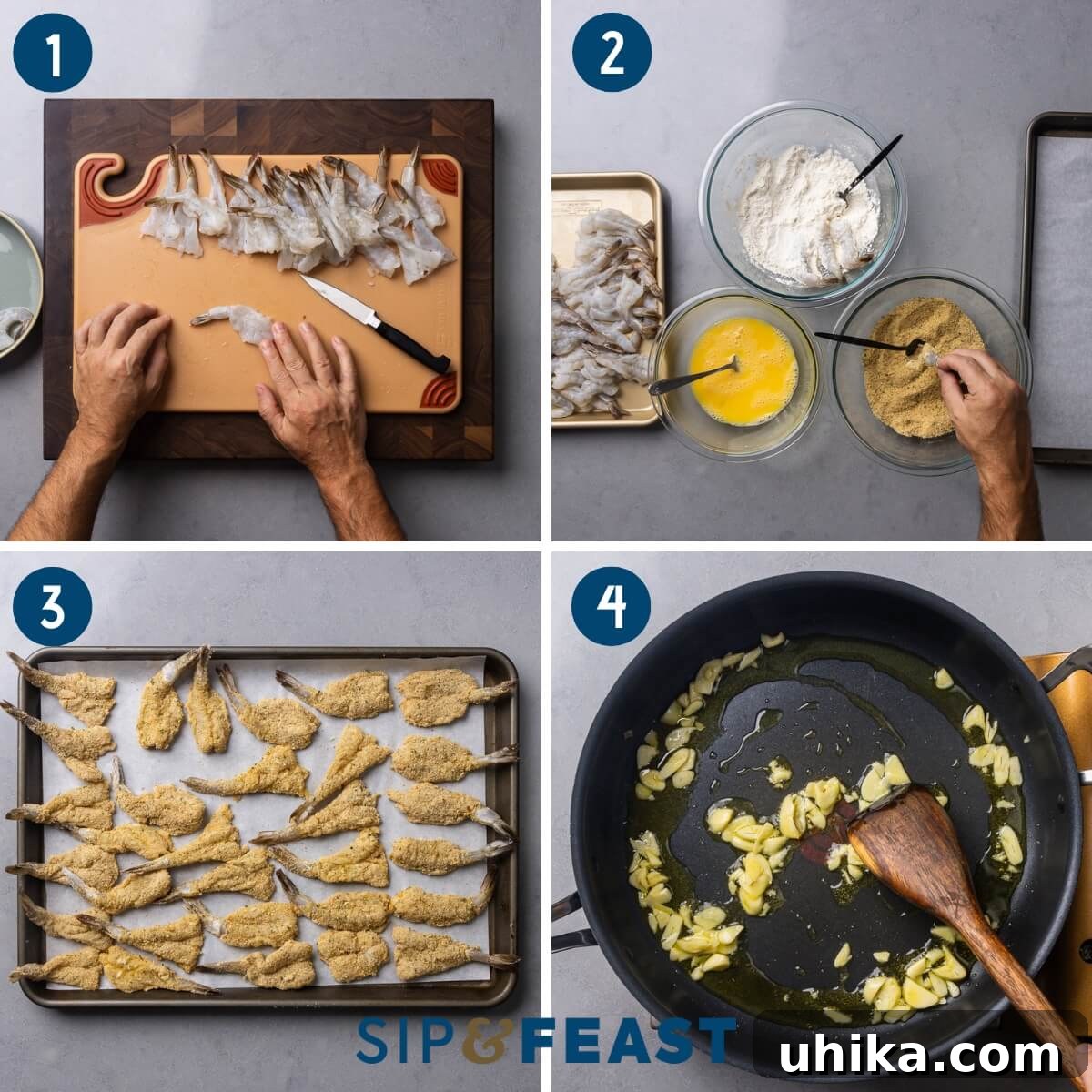
- Chill the Breaded Shrimp: Arrange the breaded shrimp in a single layer on a baking sheet lined with parchment paper. Place this baking sheet in the refrigerator for at least 20-30 minutes, or even up to several hours. Pro Tip: Chilling the shrimp allows the breading to adhere better, preventing it from falling off during frying. This also gives you ample time to prepare your delicious marinara sauce.
- Simmer the Marinara Sauce: Preheat your oven to 425°F (220°C). In a medium saucepan, heat ¼ cup of extra virgin olive oil over medium heat. Add the sliced garlic and sauté for about 2 minutes, or until it turns lightly golden and fragrant. Be careful not to burn the garlic. If desired, stir in ½ teaspoon of crushed red pepper flakes and cook for an additional 30 seconds to release their aroma.
- Finish the Sauce: Pour in the crushed plum tomatoes and stir well to combine all ingredients. Bring the sauce to a gentle simmer and let it cook for at least 10 minutes, allowing the flavors to meld and deepen. Taste the sauce and adjust the seasoning with salt and pepper as needed. Once you’re satisfied with the flavor, reduce the heat to very low to keep the sauce warm while you fry the shrimp. Yield Note: This recipe yields enough sauce for the shrimp parmigiana and a generous ½ pound of pasta, providing a complete meal.
- Fry the Shrimp: In a large, heavy-bottomed pot like a Dutch oven or a deep frying pan, pour olive oil or vegetable oil to a depth of approximately 2 inches. Heat the oil to 360°F (180°C). A reliable oil thermometer is highly recommended here for consistent results. Once the oil reaches the target temperature, carefully add the breaded shrimp in batches, ensuring you do not overcrowd the pot. Overcrowding will lower the oil temperature and result in soggy shrimp.
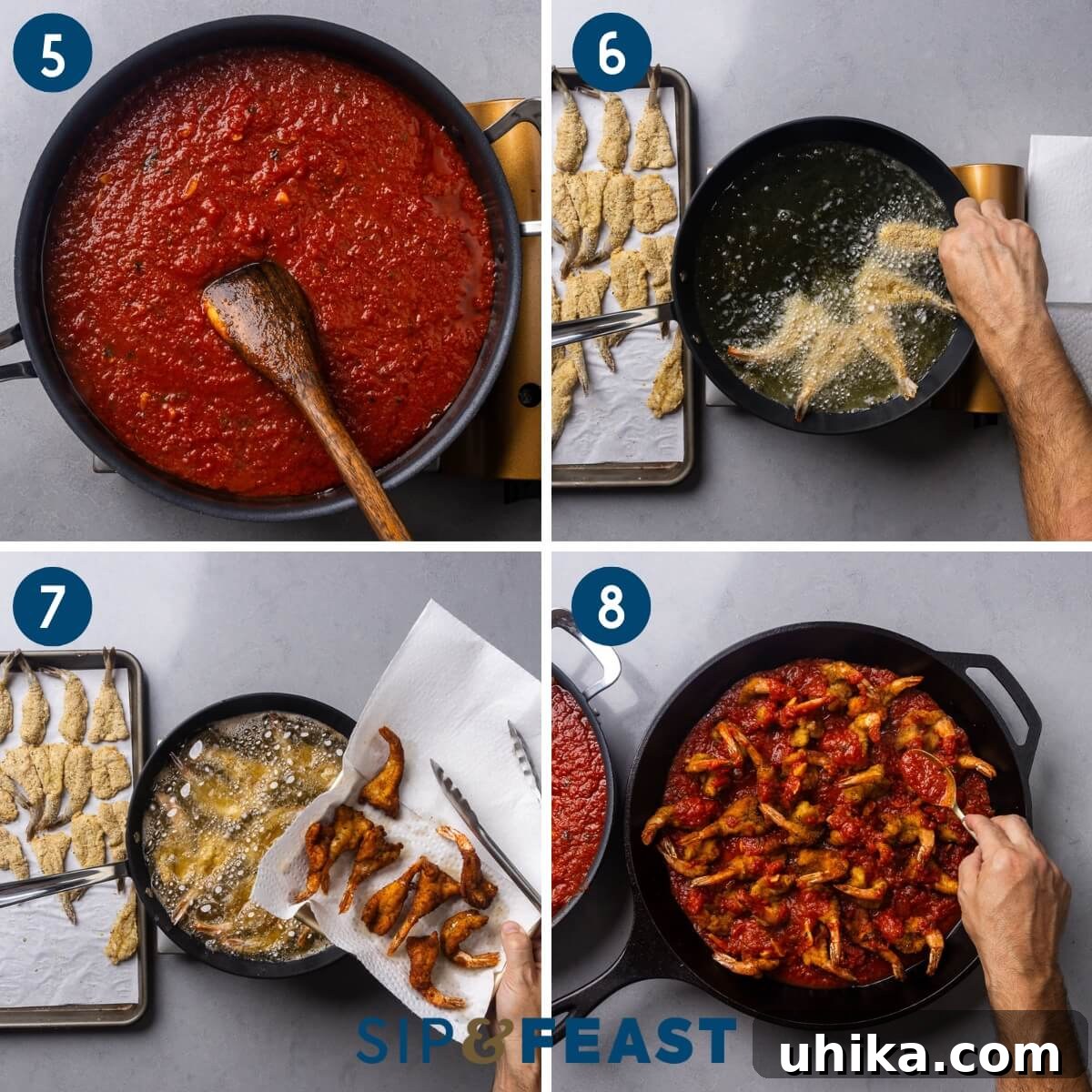
- Drain the Fried Shrimp: Fry each batch of shrimp until it’s golden brown and cooked through, which typically takes about 2-3 minutes total. Using tongs, carefully remove the fried shrimp from the oil and transfer them to a plate lined with paper towels or a wire rack set over a baking sheet to drain any excess oil.
- Assemble the Parmigiana: In a large baking dish, spread a thick, even layer of your warm marinara sauce across the bottom. Arrange the fried shrimp over the sauce in a single layer. Once all the shrimp are in place, spoon another generous layer of marinara sauce over the top of the shrimp, ensuring they are well-covered.
- Add the Cheese: Evenly sprinkle the shredded mozzarella cheese over the sauced shrimp. Then, sprinkle half of the grated Pecorino Romano cheese over the mozzarella. This layering ensures every bite is bursting with flavor.
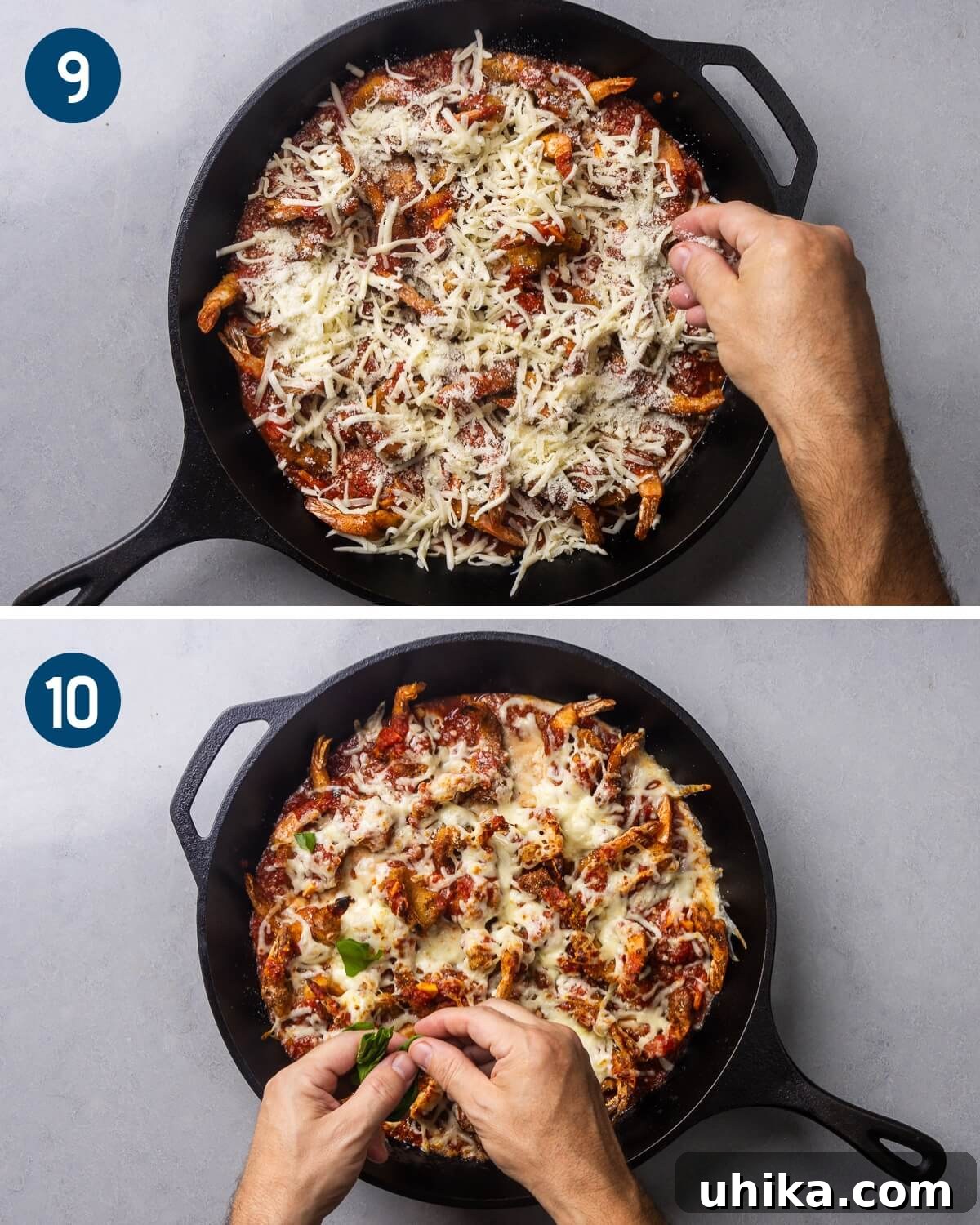
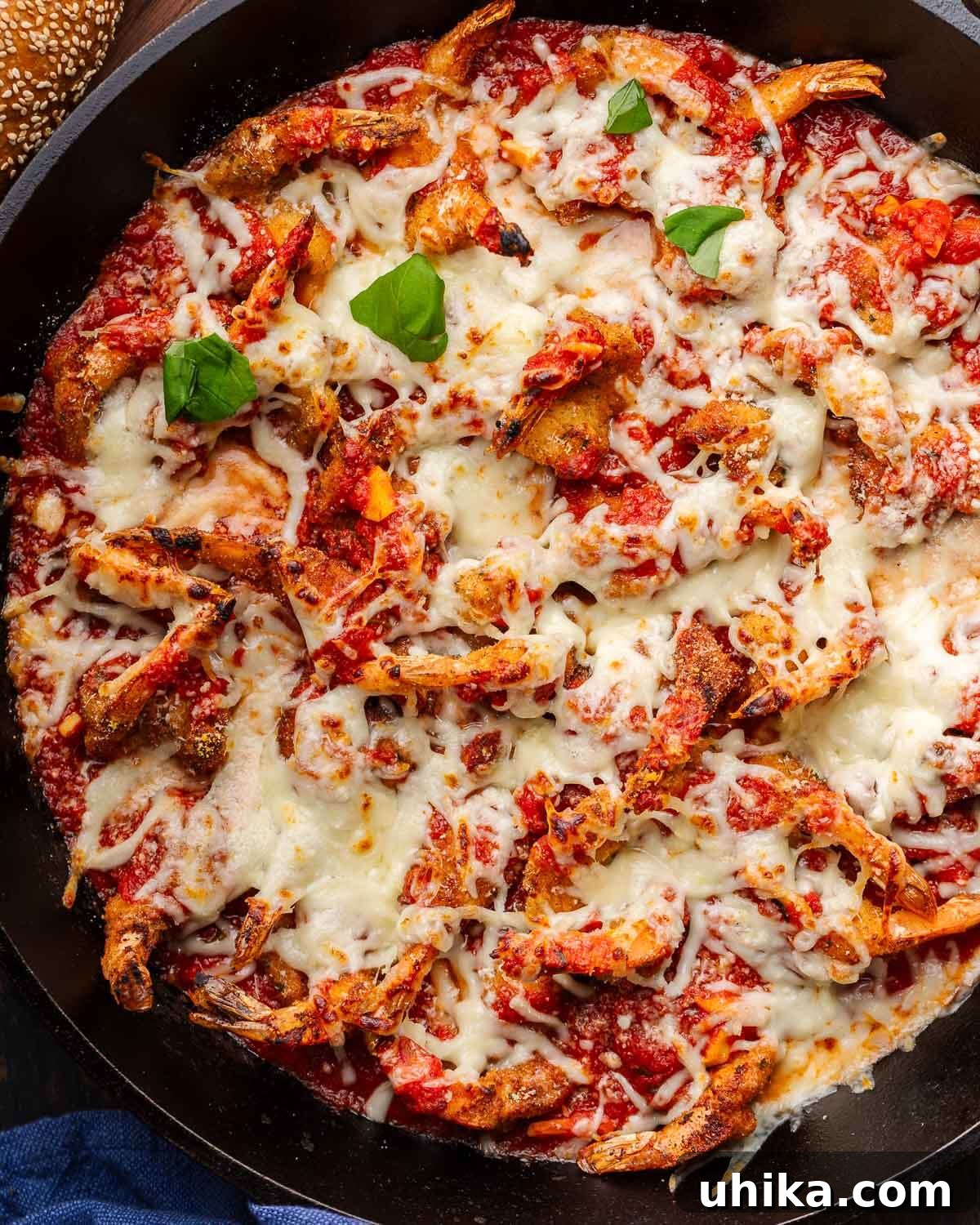
- Bake and Serve: Place the baking dish in your preheated 425°F (220°C) oven and bake for 5 minutes, allowing the cheeses to melt and become bubbly. For a beautifully golden-brown and slightly crispy top, switch your oven to broil and broil for an additional 30-60 seconds, keeping a close eye to prevent burning. Remove the pan from the oven. Sprinkle with the remaining Pecorino Romano cheese and about 5 hand-torn fresh basil leaves for a burst of freshness. Serve immediately with extra marinara sauce on the side and a generous portion of your favorite pasta. Enjoy this truly unforgettable Shrimp Parmigiana!
Expert Tips for the Best Shrimp Parmigiana
- Chill for Crispier Breading: This is a crucial step often overlooked! After breading the shrimp, arrange them on a parchment-lined baking sheet and refrigerate for a minimum of 20 minutes, or even up to several hours. This allows the breading to “set” and adhere much better to the shrimp, leading to a perfectly golden and crisp crust when fried, rather than the breading falling off. Plus, it’s a perfect window to get your sauce simmering.
- Master Oil Temperature with a Thermometer: Achieving the ideal frying temperature is key to crispy, non-greasy shrimp. Invest in a reliable deep-fry thermometer to monitor your oil. Aim for a consistent 360°F (180°C). Too cool, and the shrimp will absorb too much oil; too hot, and the exterior will burn before the shrimp cooks through.
- Don’t Overcrowd the Pan: When frying, always work in batches. Overcrowding the pan dramatically drops the oil temperature, leading to soggy, poorly cooked shrimp. Give each piece enough space to fry properly and evenly.
- Make Extra Marinara Sauce: Our recipe provides enough sauce for the shrimp and a side of pasta. However, marinara is incredibly versatile and freezes exceptionally well. Consider doubling the sauce recipe to have extra on hand for future pasta nights, dipping bread, or other Italian dishes. Homemade sauce elevates this dish significantly.
- Butterfly for Even Cooking and Texture: While optional, butterflying the shrimp ensures they cook faster and more uniformly, creating a larger, flatter surface area that holds more breading and cheese, enhancing every bite.
- Choose the Right Mozzarella: Stick to block, low-moisture mozzarella. Fresh mozzarella, while delicious, releases too much water when melted, potentially making your parmigiana watery.
Serving Your Shrimp Parmigiana
This versatile dish pairs wonderfully with a variety of sides, making it easy to create a complete and satisfying meal.
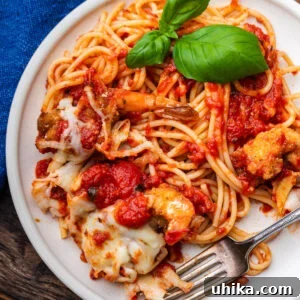
- Classic Pasta Pairing: The most popular accompaniment is a simple side of spaghetti, linguine, or penne, tossed with some of the extra marinara sauce.
- The Ultimate Hero Sandwich: For a hearty lunch or dinner, pile the cheesy shrimp onto a crusty Italian roll. Add extra sauce and a sprinkle of fresh basil for an authentic New York-style Shrimp Parm Hero.
- Garlic Bread: A warm, buttery slice of garlic bread is perfect for soaking up any leftover sauce.
- Fresh Green Salad: A light, crisp green salad with a vinaigrette dressing offers a refreshing contrast to the richness of the parmigiana.
- Roasted Vegetables: Sides like roasted broccoli, asparagus, or zucchini make for a healthy and flavorful addition.
Explore More Delicious Shrimp Recipes
If you’re a fan of the rich flavors in Shrimp Parmigiana, you’ll definitely want to try these other fantastic shrimp dishes:
- Shrimp Francese: Lightly battered shrimp in a delicate lemon-butter sauce.
- Shrimp Oreganata: Baked shrimp with a savory breadcrumb and herb topping.
- Shrimp Alfredo: Creamy pasta with succulent shrimp, a true comfort food.
Storage and Reheating
- Leftovers: Any leftover Shrimp Parmigiana can be stored in an airtight container in the refrigerator for up to 3 days.
- Reheating: For best results, reheat in the oven at 350°F (175°C) until thoroughly warmed through and the cheese is bubbly again. Microwaving is an option, but it may result in a less crispy texture.
- Make Ahead: You can prepare the marinara sauce a day or two in advance. You can also bread the shrimp and store them chilled in the refrigerator for up to 4-6 hours before frying, as mentioned in our tips.
We hope you thoroughly enjoy this Shrimp Parmigiana Recipe! If you tried it and loved it, please consider giving it a 5-star rating and sharing your feedback in the comments below. Your input helps us create more amazing recipes for you.
For those who prefer visual learning, many of our recipes, including this one, feature step-by-step video guides available on our official YouTube Channel and Facebook Page.
Unlock access to exclusive, never-before-seen FULL MEAL RECIPE VIDEOS by becoming a Patreon member today!
Shrimp Parmigiana
James Delmage
20 mins
45 mins
1 hr
5 mins
4
Pin
Ingredients
For the sauce
- 2 28-ounce cans plum tomatoes hand crushed or blender pulsed
- 8 cloves garlic sliced
- 1/4 cup extra virgin olive oil
- 1/2 teaspoon crushed hot red pepper flakes (optional)
- salt and pepper to taste
For the shrimp
- 1 pound shrimp u21-25, cleaned, deveined, and butterflied (optional)
- 1 cup all-purpose flour for dredging
- 1 teaspoon kosher salt
- 1/2 teaspoon garlic powder
- 1/2 teaspoon black pepper
- 3-4 large eggs beaten
- 1 1/2 cups Italian seasoned breadcrumbs
- olive or vegetable oil for frying
- 2 1/2 cups shredded block mozzarella cheese
- 1/4 cup grated Pecorino Romano divided
- 5 large basil leaves hand torn, for finishing
Instructions
Making the sauce
-
Heat a saucepan to medium heat with the olive oil. Add the garlic and cook until golden (about 2 minutes). Add in the hot red pepper flakes (optional) and cook for 30 seconds more.
-
Add the tomatoes, stir together, and bring the sauce to a simmer for at least 10 minutes.
-
Taste test the sauce, and adjust salt and pepper if required. When satisfied, attend to the shrimp. Leave the sauce on low to keep warm.
Frying the shrimp
-
Mix the flour with 1 teaspoon kosher salt, 1/2 teaspoon pepper, and a 1/2 teaspoon of garlic powder.
-
Dredge the shrimp in the seasoned flour and shake off excess, then dip into the egg, and then into the breadcrumbs. Place the breaded shrimp onto a parchment paper lined baking sheet and set aside to chill (see tips).
-
In a large Dutch oven or heavy frying pan, pour oil approximately 2 inches high and heat to 360°F (180°C).
-
When the oil reaches the frying temperature, add the shrimp into the pot and fry in batches so as to not overcrowd the pot. The shrimp will take approximately 2-3 minutes total cooking time until golden. Drain the fried shrimp on a paper towel-lined plate or a wire rack.
Assembling the shrimp parmigiana
-
Preheat oven to 425°F (220°C).
-
Place a thick layer of sauce on the bottom of a large baking dish. Space out the fried shrimp in the dish and cover them with another thick layer of sauce.
-
Next, sprinkle on the mozzarella cheese, dividing evenly. Sprinkle half of the grated Pecorino Romano cheese on top.
-
Bake for 5 minutes, then broil for 30-60 seconds to brown the top and achieve a bubbly, golden finish.
-
Remove the pan from the oven and sprinkle the remaining Pecorino Romano cheese and hand-torn basil all over. Enjoy!
Notes
- Any size shrimp can be used for this recipe, though larger shrimp (u21-25) are generally preferred as they offer a more substantial bite and require less prep work than smaller varieties. Butterflying the shrimp is optional but recommended for even cooking and better breading adherence.
- This recipe yields a generous amount of marinara sauce, providing enough for the shrimp parmigiana itself, plus extra to serve alongside at least a 1/2 pound of pasta. Any surplus sauce can be stored in the refrigerator or frozen for future use.
- Leftovers keep well. Store any remaining Shrimp Parmigiana in an airtight container in the fridge for up to 3 days. To reheat, place it in an oven preheated to 350°F (175°C) until warm and bubbly, ensuring the shrimp remain tender and the cheese remelts perfectly.
Nutrition
Carbohydrates: 19.7g |
Protein: 49.7g |
Fat: 46.2g |
Saturated Fat: 14.5g |
Cholesterol: 415mg |
Sodium: 1401mg |
Potassium: 693mg |
Fiber: 2.4g |
Sugar: 8.8g |
Calcium: 545mg |
Iron: 3mg
Nutrition information is automatically calculated and should be used as an approximation.
Like this? Leave a comment below!
Check us out on Instagram at @sipandfeast or tag #sipandfeast!