
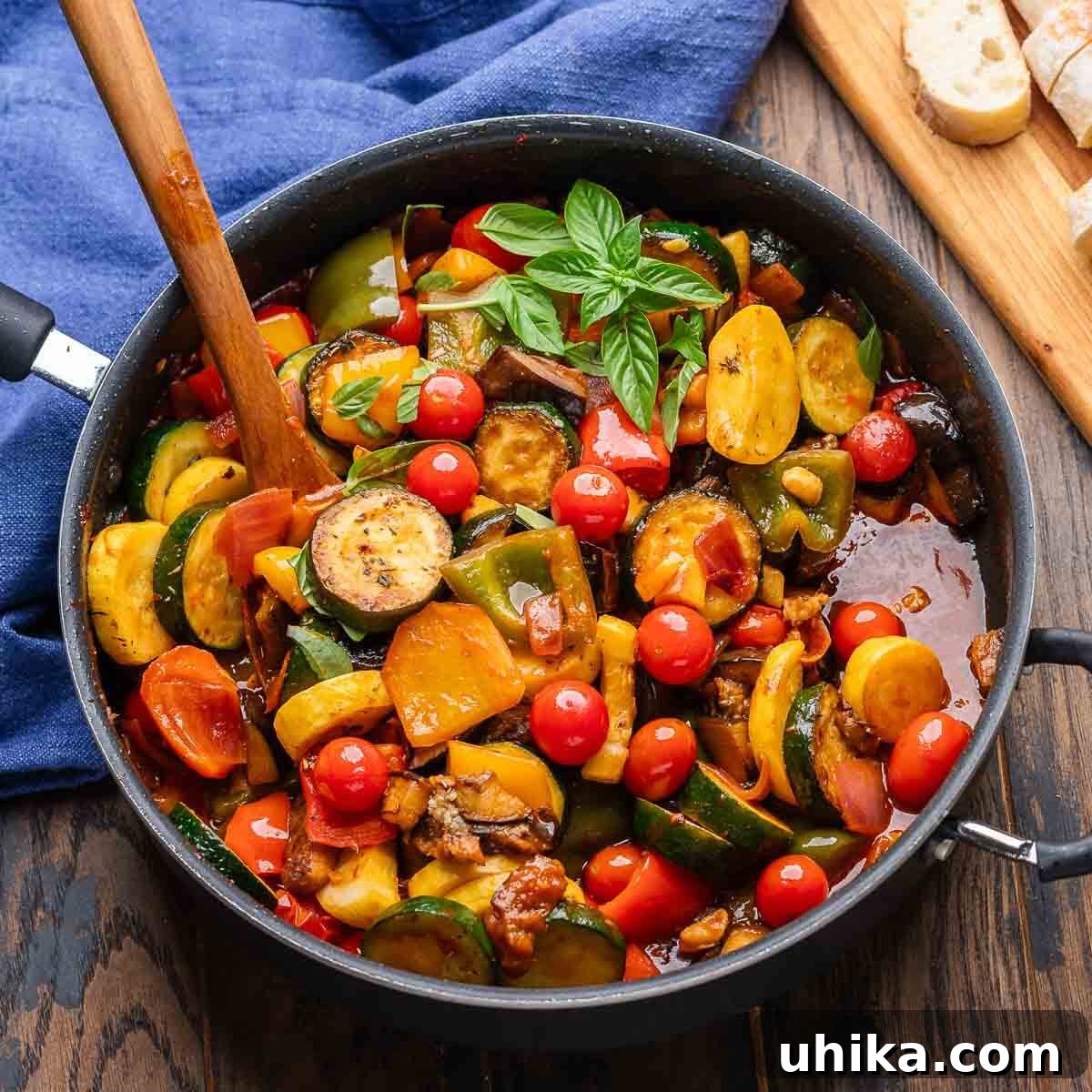
Ratatouille: A Quintessential French Summer Vegetable Stew
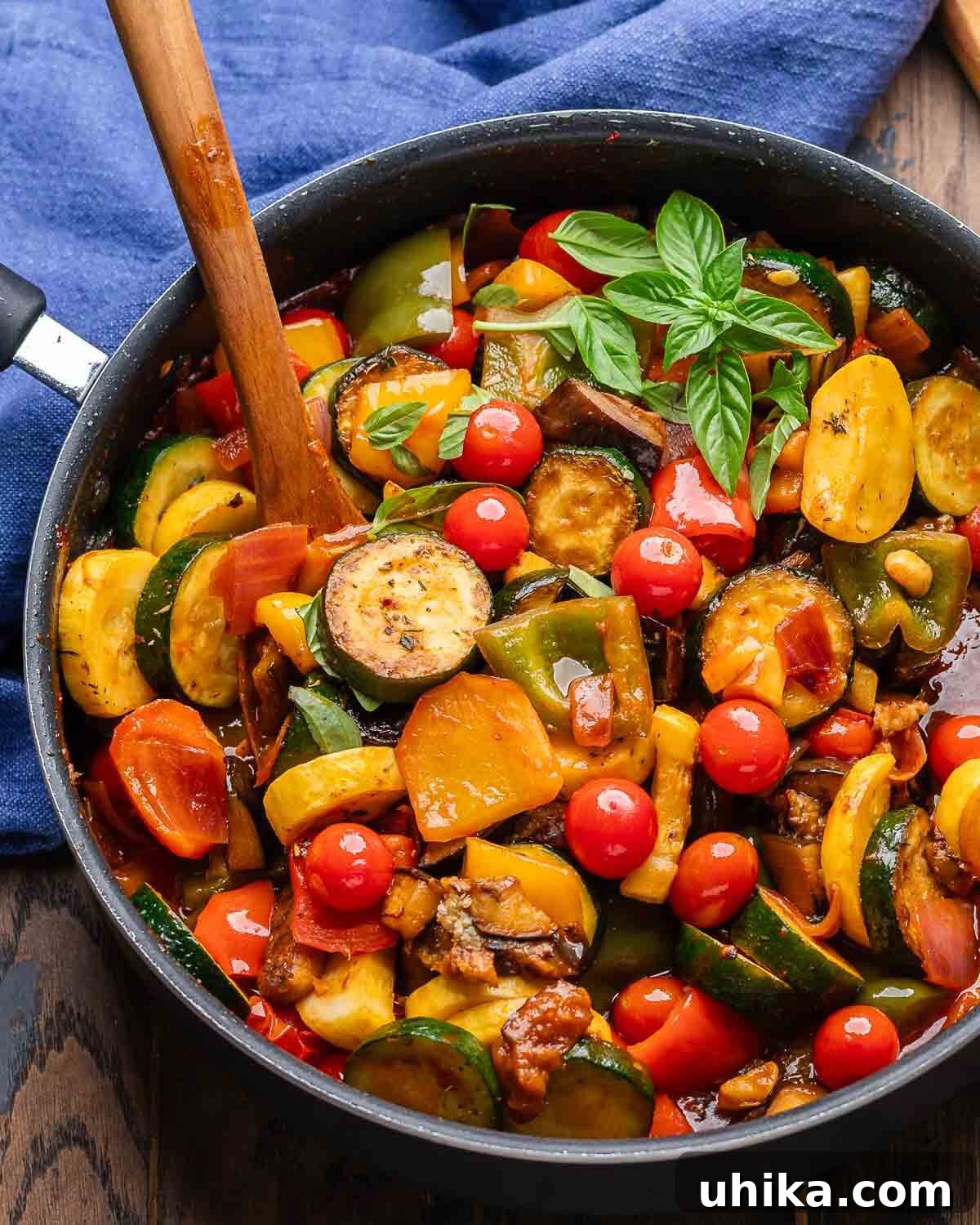
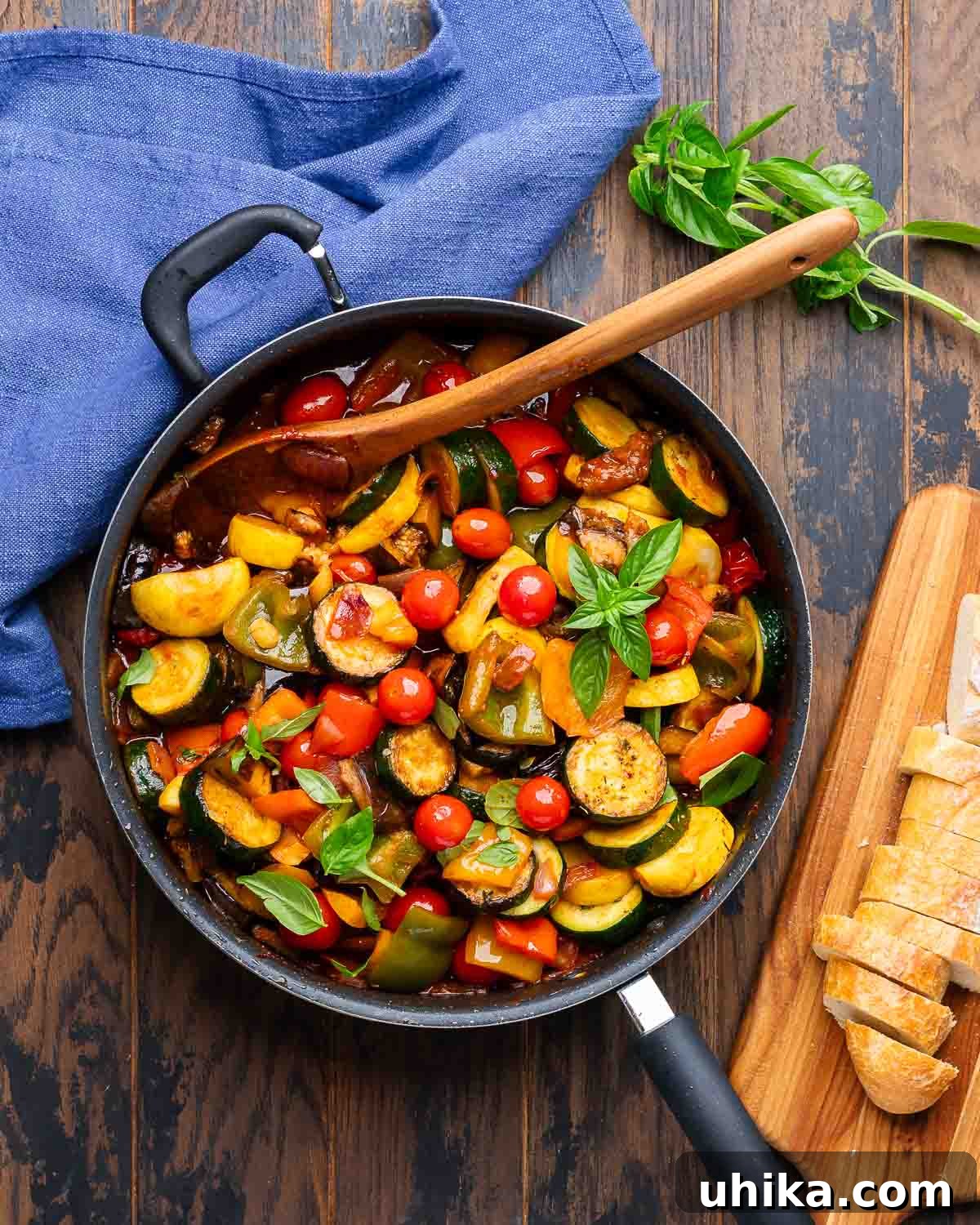
Embrace the bounty of summer with Ratatouille, a classic French vegetarian stew that transforms simple garden vegetables into a harmonious culinary masterpiece. This beloved dish features an exquisite blend of fresh zucchini, tender eggplant, ripe tomatoes, sweet bell peppers, and fragrant onions, all simmered to perfection. It’s a versatile and flavorful offering, equally at home as a robust side dish alongside your favorite grilled meats or fish, or as a delightful vegetarian main course when paired with plenty of crusty bread.
Ratatouille is more than just a dish; it’s a celebration of the season, a true ode to the peak freshness of summer’s harvest. Originating from the sun-drenched region of Provence in Southern France, this stew embodies the rustic elegance of French country cooking. Its appeal lies not only in its incredibly rich, layered flavors but also in its surprising ease of preparation. For those who appreciate the vibrant, wholesome taste of fresh produce, Ratatouille is an essential addition to your summer cooking repertoire.
Similar to Italy’s hearty ciambotta, Ratatouille showcases the beauty of fresh, seasonal vegetables. While traditionally a savory affair, our rendition introduces a subtle “agrodolce” touch—a hint of sweet and sour achieved with a splash of vinegar. This addition, though not strictly traditional, elevates the flavors, adding a delightful complexity that we believe makes this stew truly unforgettable. Enjoy it warm, at room temperature, or even chilled; the flavors only deepen and meld beautifully over time, making it an ideal make-ahead meal.
Crafting Your Perfect Ratatouille: A Step-by-Step Guide
Creating a truly exceptional Ratatouille involves a thoughtful approach to cooking each vegetable, allowing their individual characteristics to shine before coming together in a harmonious stew. Follow these detailed steps to achieve a dish bursting with flavor and perfectly tender textures.
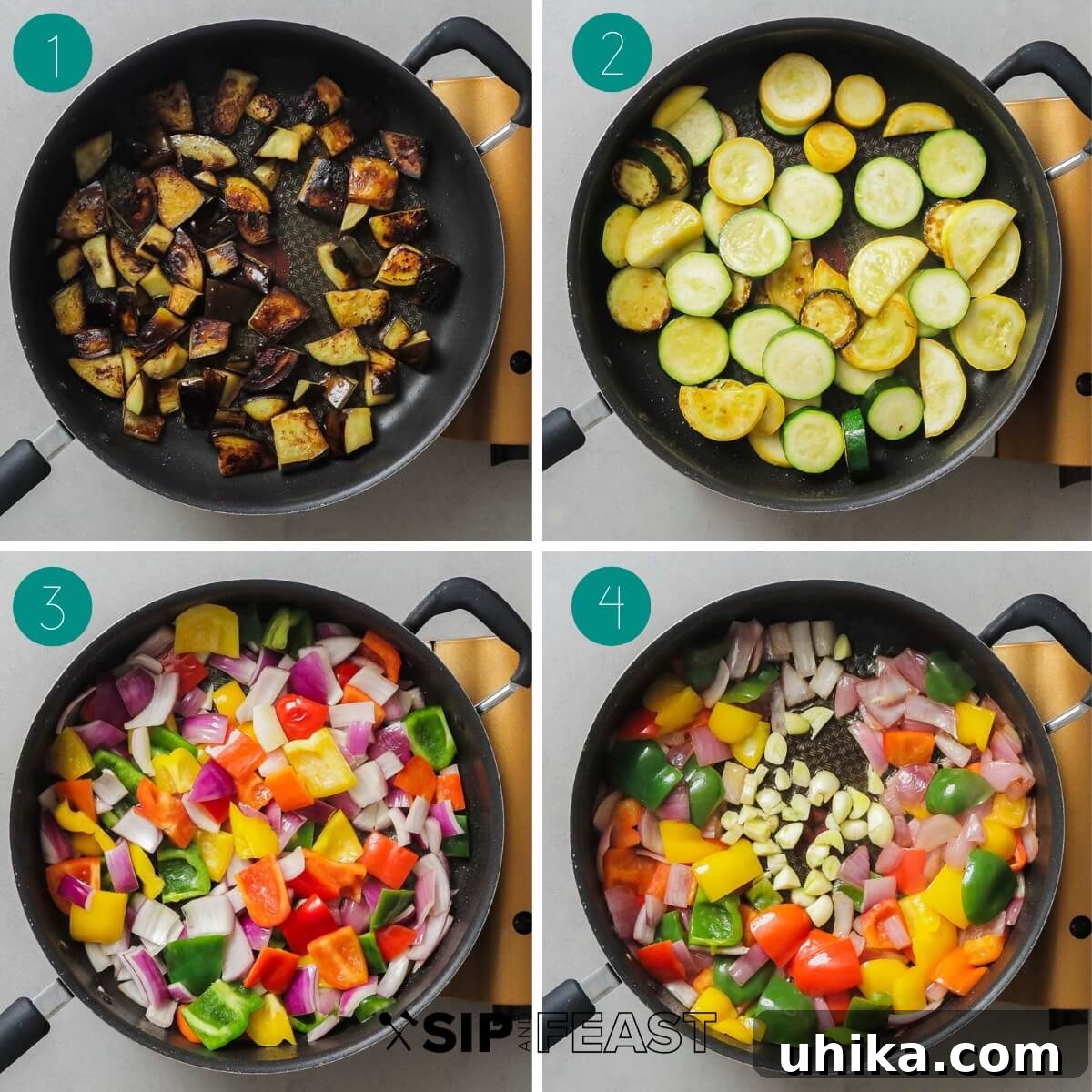
- Prepare and Brown the Eggplant: Begin by cubing one large eggplant into uniform pieces. In a large Dutch oven or heavy-bottomed pot, heat half a cup of extra virgin olive oil over medium heat. Add the cubed eggplant and sauté it until it is thoroughly browned and tender, which usually takes about 7-10 minutes. It’s crucial for the eggplant to be almost fully cooked and soft enough to offer no resistance when pierced with a knife. If necessary, add a little more olive oil to prevent sticking and ensure even browning. Once cooked, remove the eggplant from the pot, place it on a platter, and season lightly with salt. Set aside.
- Sear Zucchini and Yellow Squash: With the pot still on medium heat, add a bit more olive oil if needed. Then, add two medium zucchini and one medium yellow squash, sliced into half-inch thick rounds (or half-moons if the pieces are large). Sear these slices until they are beautifully browned, approximately 5 minutes per batch. Once done, transfer them to the platter with the eggplant and season with a touch of salt. This individual browning step for each vegetable is key to developing deep, rich flavors and preventing a watery stew.
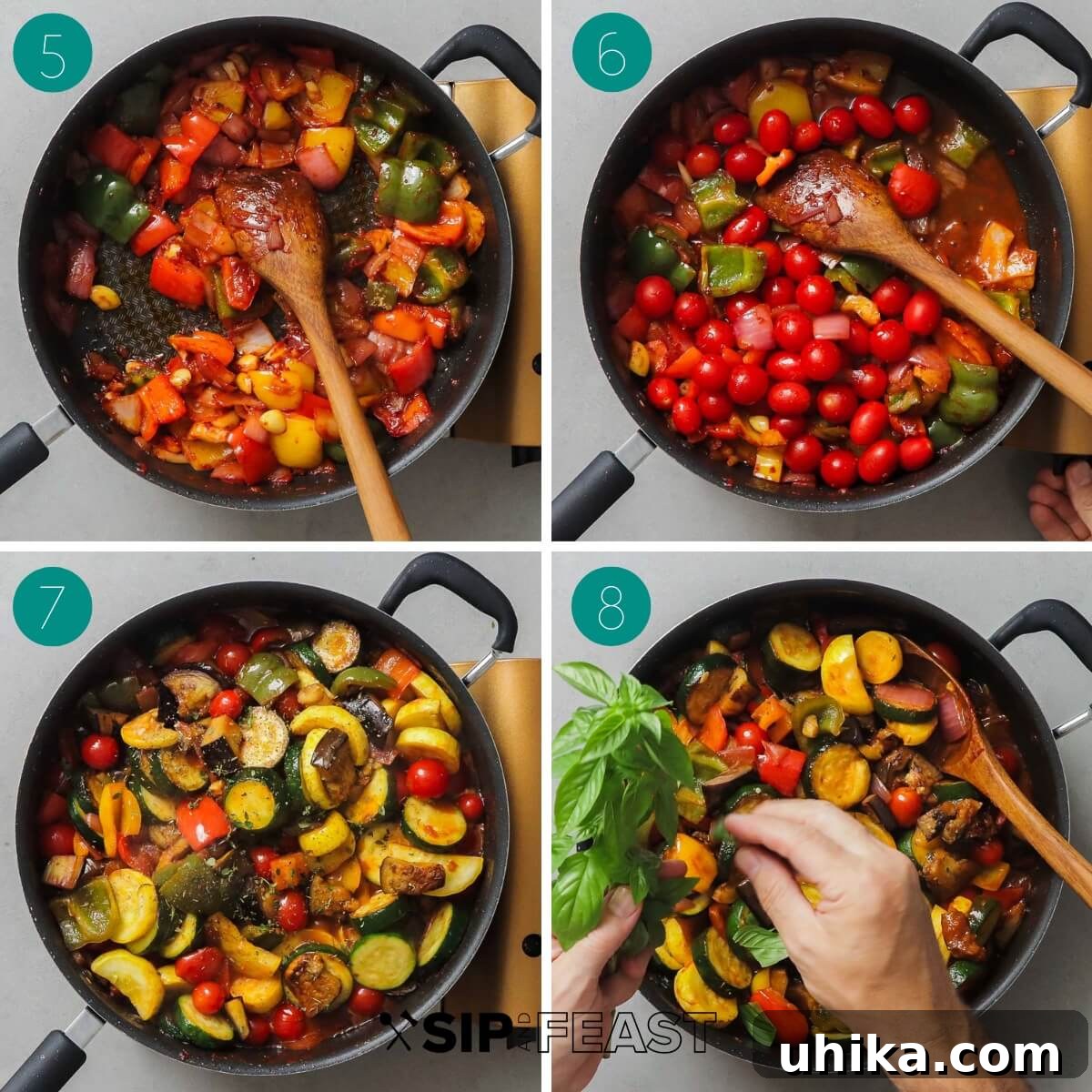
- Sauté Onions and Peppers: Add any remaining olive oil to the pot, then introduce one large chopped red onion, one large chopped green bell pepper, and one large chopped yellow or red bell pepper. Sprinkle with a pinch of salt and cook for about 5 minutes, or until the vegetables have softened slightly and become aromatic. The salt helps draw out moisture and concentrates their natural sweetness.
- Infuse with Garlic and Spice: Add 10 cloves of finely chopped garlic to the pot with the softened onions and peppers. Continue to cook for another 2-3 minutes, stirring constantly, until the garlic becomes fragrant and turns a light golden color. Be careful not to burn the garlic, as this can impart a bitter taste. Next, stir in half a teaspoon of crushed red pepper flakes for a gentle warmth and depth of flavor.
- Develop Tomato Paste Flavor: Incorporate 3 ounces of tomato paste into the vegetable mixture. Cook the tomato paste for 5 minutes, stirring frequently. This vital step, often called “caramelizing” or “cooking out” the tomato paste, deepens its flavor and removes any raw taste, contributing significantly to the stew’s richness. If the paste starts to stick or burn, add a few ounces of water to lower the temperature and deglaze the bottom of the pot.
- Deglaze with Wine and Tomatoes: Add 12 ounces of cherry tomatoes and half a cup of dry white wine to the pot. Increase the heat to high and bring the mixture to a rolling boil. Allow it to boil for a few minutes to cook off the alcohol, leaving behind the wine’s nuanced flavors. Use a wooden spoon to gently scrape the bottom of the pan, dislodging any browned bits (known as “fond”) that have accumulated. These bits are packed with flavor and will dissolve into the sauce, enriching the entire dish.
- Simmer to Perfection: Return the browned eggplant, zucchini, and yellow squash to the pot. Stir in 2 tablespoons of fresh thyme leaves and 3 tablespoons of red wine vinegar. Reduce the heat to a gentle simmer and let the Ratatouille cook for 15 minutes, allowing all the flavors to meld beautifully. If the stew becomes too dry during this time, add a splash of low-sodium vegetable stock to maintain a luscious consistency.
- Final Seasoning and Serving: Taste the Ratatouille and adjust the seasoning with salt and freshly ground black pepper as needed. Once you are satisfied with the flavor profile, remove the pot from the heat. Stir in a quarter cup of freshly chopped basil leaves, mixing them gently through the stew. Serve your exquisite Ratatouille immediately with plenty of crusty bread to soak up the delicious sauce. For an even deeper flavor experience, consider making your Ratatouille a day in advance; the flavors often improve overnight as they continue to meld. Enjoy!
Expert Tips for the Best Ratatouille
Achieving a restaurant-quality Ratatouille at home is entirely possible with a few key techniques and considerations. Here are our top tips to ensure your stew is incredibly flavorful and perfectly textured every time.
- Mastering the Eggplant: Eggplant is often the most challenging vegetable in Ratatouille, but also one of the most rewarding when cooked correctly. It requires a bit more oil and patience than the other vegetables to properly brown and soften. We sauté the eggplant first because it takes longer to release its water and develop that desirable caramelized exterior and creamy interior. When it’s ready, a knife should slide into a piece with virtually no resistance. Don’t be shy about tasting a piece or two to check for doneness! Properly cooked eggplant adds a wonderful depth and silkiness to the stew.
- Vibrant Bell Peppers: Bell peppers are not just for flavor; they also add a beautiful spectrum of color to your Ratatouille. Feel free to use any combination of colors you prefer—red, yellow, orange, and green all contribute distinct sweetness and visual appeal. While our recipe specifies two large peppers, if your peppers are on the smaller side, using three will provide a more substantial and colorful addition to the dish, enhancing both texture and taste.
- The Agrodolce Balance (Sweet and Sour): We love the bright, complex notes that a touch of “agrodolce,” or sweet and sour, brings to Ratatouille. This subtle tang enhances the natural sweetness of the vegetables and provides a lovely counterpoint to the richness of the olive oil. If you prefer a less sour profile, you can certainly omit the red wine vinegar. Alternatively, for a balanced sweetness, a pinch of sugar can be added to temper the acidity of the vinegar and tomatoes. This sweet-sour dynamic works wonderfully in dishes like sweet and sour zucchini or our peperonata recipe, and it shines brilliantly here.
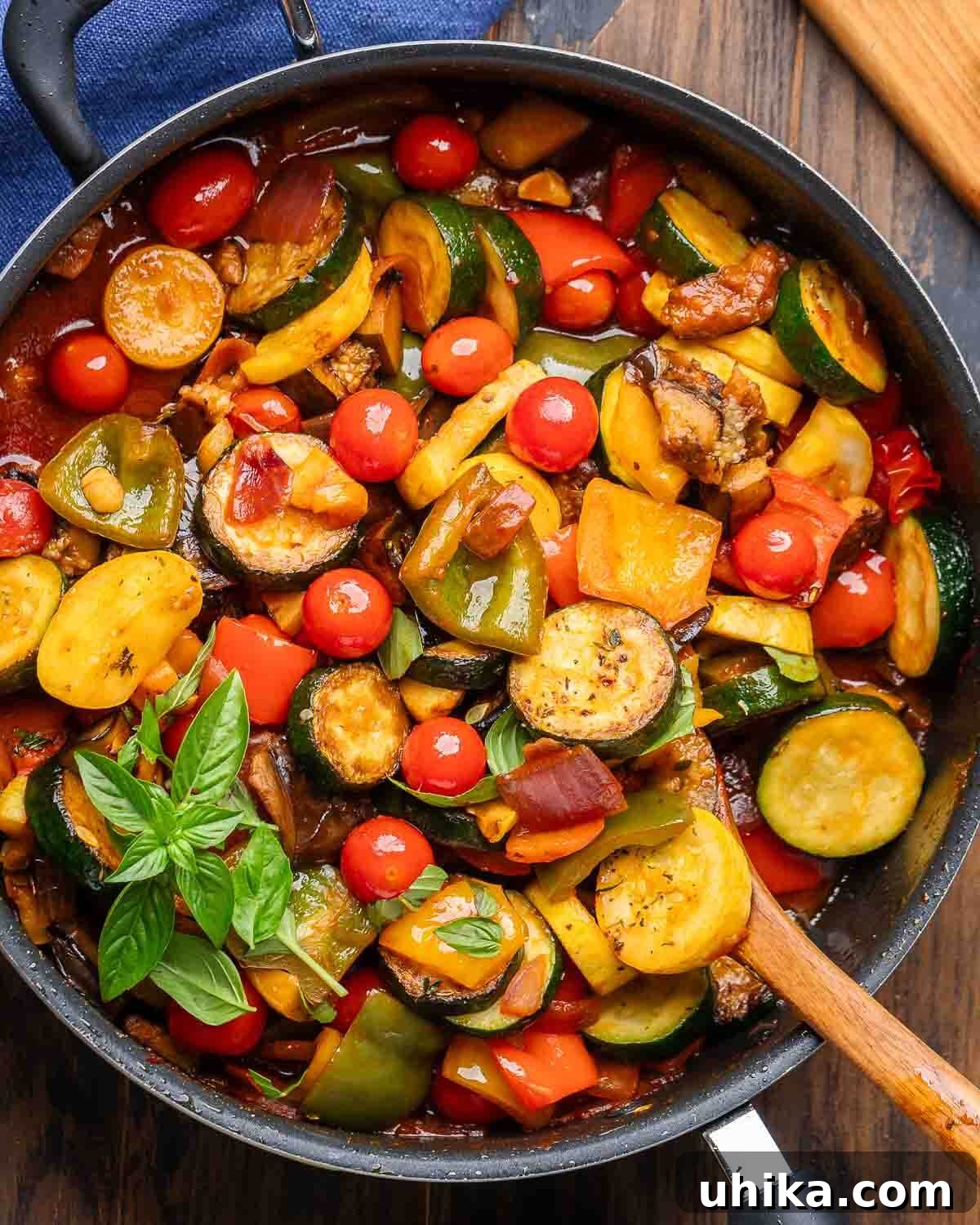
- Aromatic Herbs: Fresh herbs are indispensable in French cooking, and Ratatouille is no exception. Fresh thyme leaves contribute an earthy, slightly floral note that perfectly complements the robust vegetables. Fresh basil, stirred in at the end, adds a burst of vibrant, aromatic freshness. Since Ratatouille hails from Provence, a classic blend of “Herbs de Provence” (which typically includes thyme, rosemary, marjoram, savory, and oregano) would also be an excellent addition, infusing the stew with a quintessential Southern French flavor.
- Optimal Serving Suggestions: Ratatouille is incredibly versatile when it comes to serving. It makes an outstanding side dish for a variety of grilled meats, such as succulent chicken thighs, juicy pork chops, or delicate fish. It’s equally delightful served simply as a vegetarian main course with plenty of crusty baguette to scoop up every last drop of the rich sauce. One of the best qualities of Ratatouille is its flexibility in temperature: it can be enjoyed warm straight from the pot, at room temperature, or even cold. In fact, the flavors of this French vegetable stew deepen and meld beautifully if made a day in advance, making it a fantastic option for meal prep or entertaining.
More Summer Vegetable Delights
Summer is the season for celebrating fresh, vibrant vegetables, and there’s no better way to enjoy their peak flavors. If you’ve loved this Ratatouille recipe, explore these other fantastic dishes that highlight the best of summer’s bounty:
- Italian Zucchini Soup – A comforting and light soup featuring fresh zucchini, broken spaghetti, and a generous sprinkle of fresh basil.
- Stuffed Eggplant – Indulgent eggplant halves filled with a savory mixture of tomatoes, aromatic mint and basil, crunchy pine nuts, and rich cheese.
- Pasta alla Norma – A classic Sicilian pasta dish marrying tender eggplant, sweet tomatoes, fresh basil, and salty ricotta salata cheese.
We hope this detailed guide inspires you to create your own perfect Ratatouille, bringing the taste of Provence into your home. This dish is a testament to the idea that simple, fresh ingredients, treated with care, can yield extraordinary results. Whether you’re a seasoned chef or a home cook looking to expand your vegetarian repertoire, Ratatouille offers a truly rewarding culinary experience.
Ratatouille
Ingredients
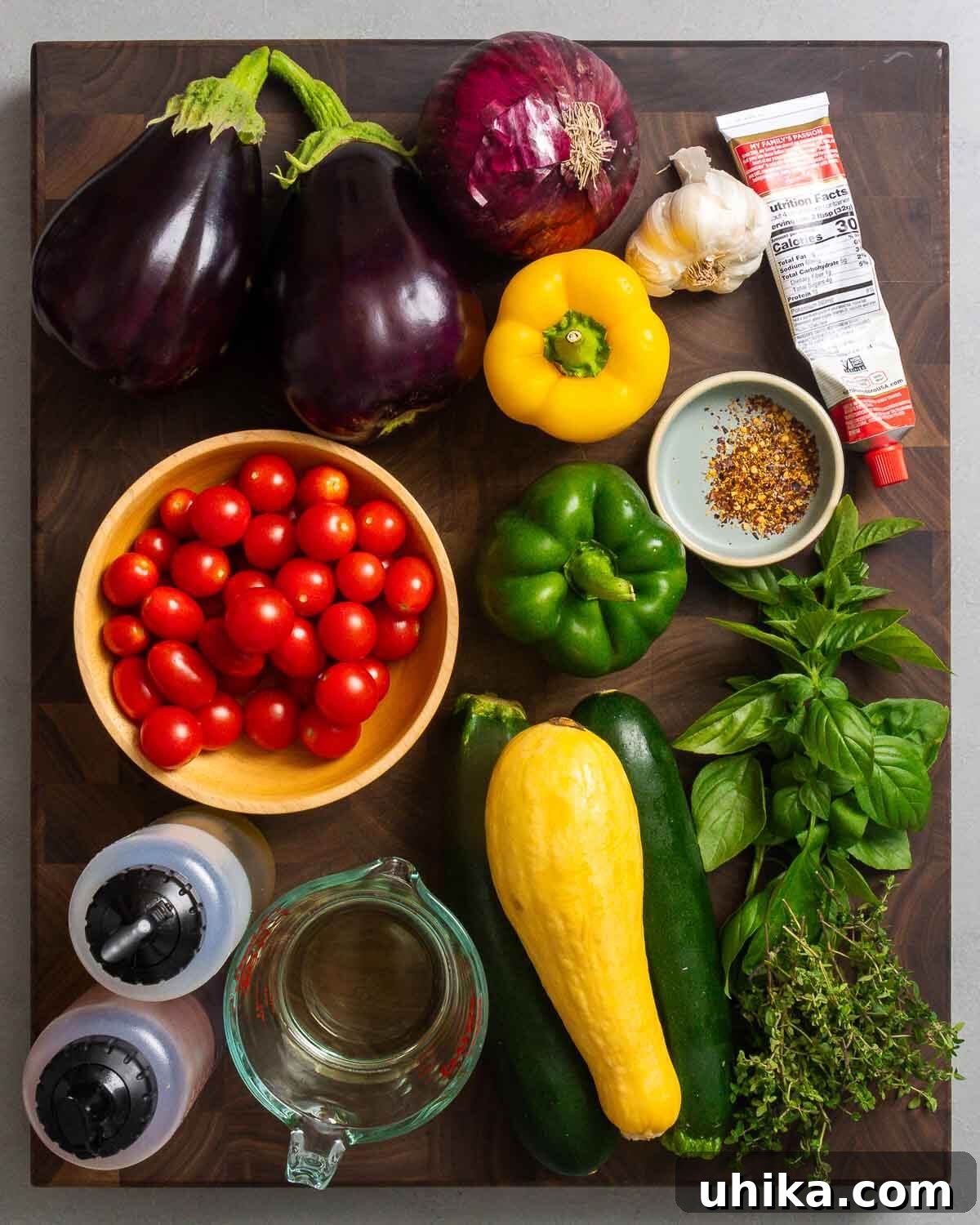
- 1 large eggplant cubed
- 1 cup extra virgin olive oil divided, plus more if needed
- 2 medium zucchini 1/2-inch thick sliced rounds
- 1 medium yellow squash 1/2-inch thick sliced rounds
- 1 large red onion chopped
- 1 large green bell pepper chopped
- 1 large yellow or red bell pepper chopped
- 10 cloves garlic chopped
- 1/2 teaspoon crushed hot red pepper flakes
- 3 ounces tomato paste
- 1/2 cup dry white wine
- 12 ounces cherry tomatoes
- 3 tablespoons red wine vinegar
- 2 tablespoons fresh thyme leaves
- 1/4 packed cup basil chopped
- 1 cup low sodium vegetable stock optional
Instructions
-
Heat a large Dutch oven or heavy pot to medium heat with 1/2 cup of extra virgin olive oil. Add the eggplant and saute for 7-10 minutes or until well browned. Remove the eggplant to a platter and sprinkle with a touch of salt and set aside.
-
Add more oil as needed along with the zucchini and yellow squash. Sear until lightly browned (about 5 minutes) then remove to the platter with the eggplant. Sprinkle the zucchini and squash with a touch of salt.
-
Add the remaining olive oil to the pot along with the onion and peppers. Sprinkle with salt and cook until slightly soft (about 5 minutes) then add the garlic and cook for another 2 minutes or until fragrant.
-
Add the red pepper flakes and tomato paste. Cook the paste for 5 minutes, stirring frequently. If it starts to burn, simply add a couple of ounces of water.
-
Add the cherry tomatoes and the wine. Turn the heat to high and bring to a boil to burn off the strong alcohol smell. With a wooden spoon scrape the bottom of the pot to dislodge the brown bits into the sauce.
-
Return the eggplant, squash, and zucchini to the pot and add the thyme and vinegar. Cook at a gentle simmer for 15 minutes. If the ratatouille becomes too dry, simply add a few ounces of vegetable stock.
-
Taste test and season with salt and pepper to taste. Once satisfied, remove the pot from the heat, add the basil, and mix well. Serve with crusty bread. Ratatouille is best made one day in advance so that the flavors can better meld. Enjoy!
Notes
- Eggplant must be cooked through. This is the most crucial step which is why the eggplant is cooked first.
- Leftovers can be saved for up to 3 days and can be reheated on the stovetop though ratatouille is great at room temperature or even cold.
Nutrition
Calories: 390kcal
|
Carbohydrates: 19.8g
|
Protein: 3.6g
|
Fat: 34.2g
|
Saturated Fat: 4.9g
|
Sodium: 417mg
|
Potassium: 802mg
|
Fiber: 6g
|
Sugar: 11.1g
|
Calcium: 43mg
|
Iron: 1mg
Nutrition information is automatically calculated, so should only be used as an approximation.
If you’ve enjoyed this Ratatouille recipe or any recipe on this site, we encourage you to give it a 5-star rating and leave a review. Your feedback helps us grow and inspires other home cooks!
We strive to satisfy a number of learning styles. If you prefer to learn by watching, you can find many of our recipes on YouTube and our Facebook Page.
Share your culinary creations with us on Instagram! Tag @sipandfeast or use #sipandfeast to show off your delicious Ratatouille. We love seeing what you cook!