
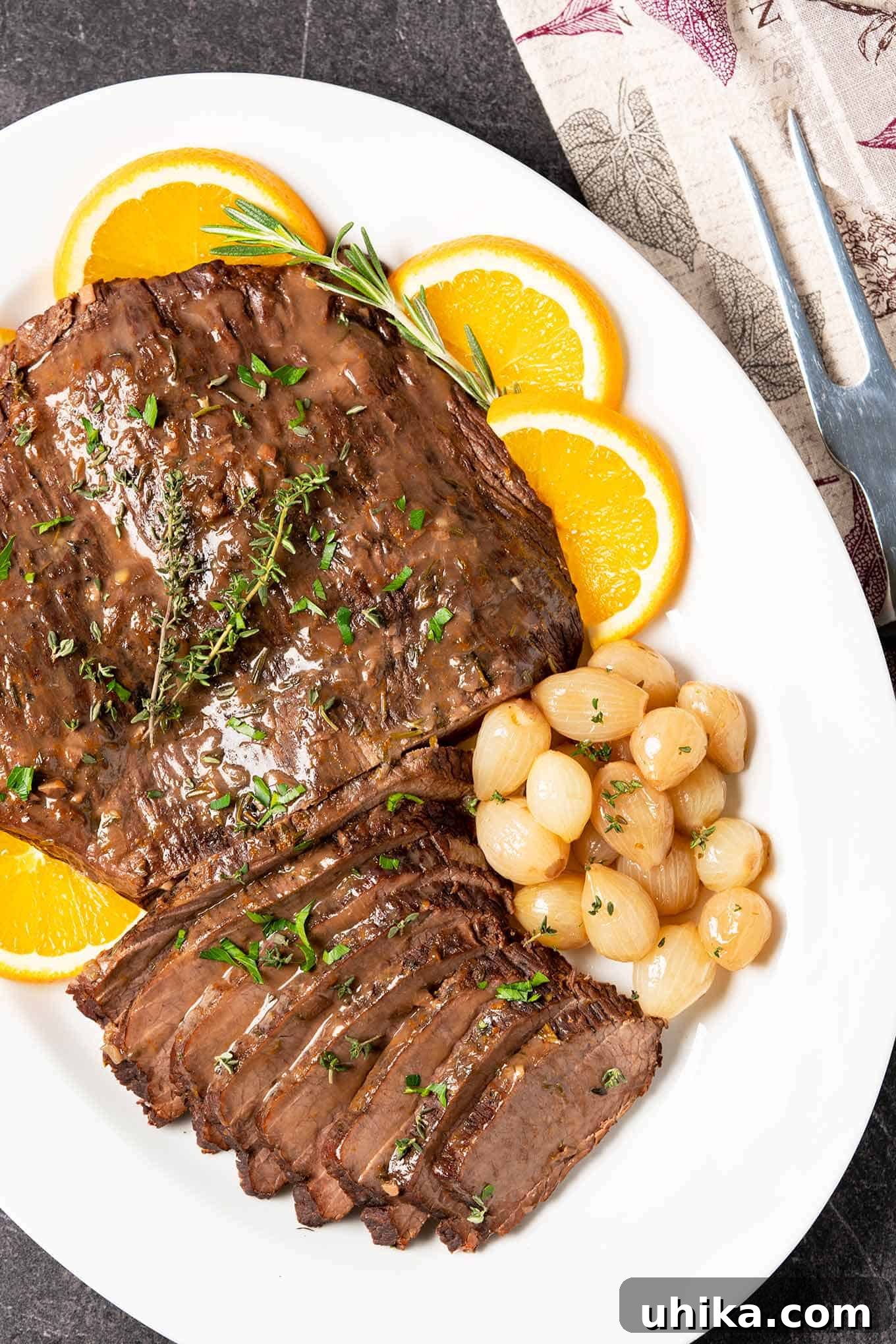
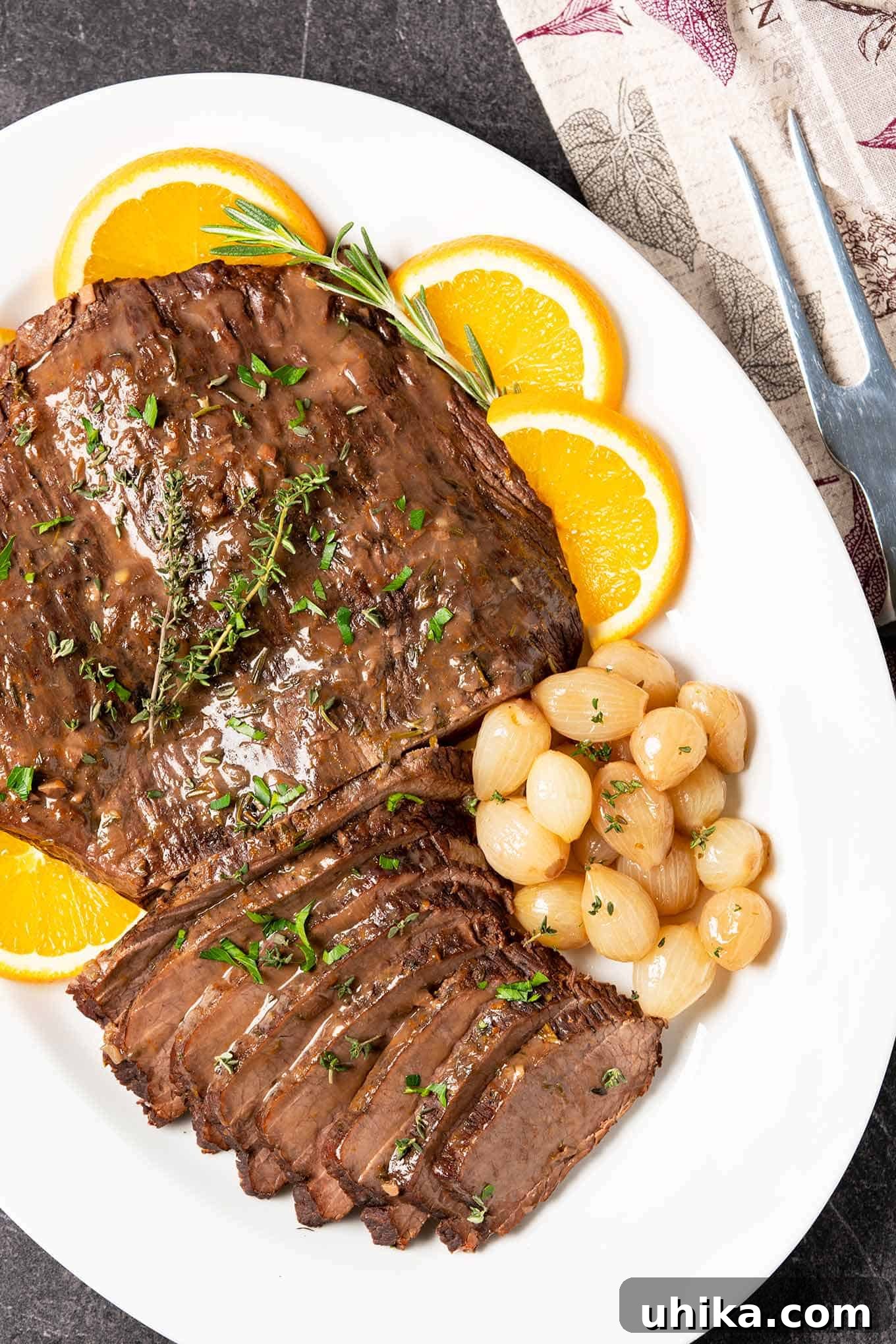
Exquisite Red Wine Braised Brisket with Zesty Orange and Fresh Herbs
Discover the ultimate slow-cooked delight with our Red Wine Braised Brisket, a recipe meticulously crafted to transform a naturally tough cut of beef into an irresistibly tender, succulent masterpiece. Brisket, known for its robust flavor and fibrous structure, is perfectly suited for the art of oven braising. This method involves gently cooking the meat in a flavorful liquid over an extended period, allowing its connective tissues to slowly break down. The result is a melt-in-your-mouth texture that effortlessly absorbs the rich, aromatic essences of the braising liquid, creating a truly memorable culinary experience.
Our signature braised beef brisket recipe elevates this classic comfort dish with a sophisticated blend of flavors. The backbone of the braising liquid is a robust red wine, providing a deep, complex foundation. This is beautifully complemented by the bright, citrusy notes of fresh orange juice and zest, which cut through the richness of the beef and wine, adding an invigorating brightness. Fragrant fresh rosemary and thyme infuse the dish with their earthy, herbaceous aromas, creating a multi-layered flavor profile that is both comforting and elegantly balanced. This harmonious combination ensures that no single ingredient overpowers another, resulting in a perfectly integrated and consistently delicious braised brisket every time.
What sets this particular red wine braised brisket apart is the attention to detail, particularly in finishing the sauce on the stovetop after the braising process. This crucial step refines the sauce to a velvety-smooth consistency, allowing it to beautifully coat each tender slice of brisket. The elegant presentation makes this dish an ideal centerpiece for entertaining guests, yet its straightforward preparation and make-ahead convenience also make it perfect for a stress-free family dinner. Prepare to impress with this easy, yet gourmet, slow-cooked brisket that promises exceptional flavor and tenderness.
Essential Ingredient Notes and Smart Substitutions for Perfect Brisket
Understanding your ingredients is key to culinary success. Here’s what you need to know about the key components of this Red Wine Braised Brisket recipe. A comprehensive list, including precise quantities, can be found in the printable recipe card below.
BEEF BRISKET: For this exquisite braised brisket, seek out a fresh brisket labeled “flat cut” or “first cut.” This boneless cut, typically weighing between 2½ to 4 pounds and about 1 to 1½ inches thick, features a desirable thin layer of fat on top. This fat is vital as it slowly renders during the long braising process, basting the meat from within and contributing significantly to its moistness and flavor. It is crucial not to confuse this with corned beef brisket, which has been cured in a brine and possesses a distinctly different flavor profile unsuitable for this recipe. As the brisket braises, the internal fat will render, causing the final cooked yield to be approximately two-thirds of its original weight, yielding beautifully tender and flavorful slices.
RED WINE: The choice of red wine is paramount for the depth and complexity of your braising liquid. Opt for a fruity, medium- to full-bodied red wine with moderate tannins. A Merlot is an excellent choice, as it offers a smooth, approachable flavor that won’t overwhelm the other ingredients. Other suitable options include a Cabernet Sauvignon, Zinfandel, or a Grenache. Avoid heavily oaked wines, which can impart an undesirable woody or bitter note, and overly tannic wines, as their astringency can dominate the delicate balance of the sauce. The goal is a wine that enhances, rather than competes with, the rich beef and aromatic herbs.
NAVEL ORANGES: Navel oranges are our top recommendation for this recipe due to their convenient seedless nature, making them incredibly easy to zest and juice. Their vibrant, sweet-tart flavor beautifully complements the savory brisket and red wine. Moreover, their attractive appearance makes them an ideal garnish, adding a pop of color and freshness to the finished dish. If possible, choose organic navel oranges, especially since the zest, which carries the most intense citrus oil flavor, will be used directly in the sauce. The zest contributes significantly to the bright, aromatic qualities of the braising liquid.
FRESH ROSEMARY AND THYME: The unparalleled flavor of fresh herbs truly shines in a long braise like this. Fresh rosemary offers a piney, slightly peppery aroma, while fresh thyme provides an earthy, subtly floral note. Together, they create a clean, balanced, and deeply aromatic profile that dried herbs simply cannot replicate. If fresh herbs are unavailable, you may substitute dried versions, but remember that dried herbs are significantly more potent. As a general rule, use one-third the amount of dried herbs compared to fresh (e.g., if the recipe calls for 1 tablespoon fresh, use 1 teaspoon dried).
BAY LEAVES: Often underestimated, bay leaves play a crucial supporting role in the braising liquid. While they don’t possess a strong, distinct flavor on their own, they contribute a subtle, slightly floral and herbaceous note that rounds out and balances the other flavors. They add a layer of complexity and depth that would be noticeably absent without them. Remember to remove the bay leaves before serving, as they are meant to infuse flavor and are not intended for consumption.
Preparation Overview
Mastering the Art of Braised Brisket: A Step-by-Step Guide
Embarking on this culinary journey? Here’s a quick overview of the process to create this magnificent Red Wine Braised Brisket. Detailed, step-by-step instructions with exact measurements are provided in the printable recipe card below.
The journey to an incredibly flavorful and tender braised brisket begins with proper seasoning and a crucial searing step. First, generously season your brisket on all sides, preparing it for maximum flavor infusion. Next, sear the brisket in a heavy, oven-safe pan over medium-high heat until a beautiful, deep brown crust forms on both sides. This browning, known as the Maillard reaction, is not merely for aesthetics; it caramelizes the meat’s natural sugars and amino acids, creating hundreds of new flavor compounds that significantly deepen the overall taste of the finished dish and the subsequent sauce. Once perfectly seared, the brisket is temporarily set aside, allowing you to build the foundational flavors for your braising liquid.
With the brisket resting, the same pan is used to sauté the aromatics. Lower the heat and add minced shallots and garlic, softening them gently in the flavorful remnants left behind by the seared brisket. As they cook, they’ll absorb those delicious browned bits, further enriching the flavor base. A small amount of flour is then added and cooked, forming a roux that will give the braising liquid its desirable body and smooth consistency. Gradually, red wine, orange juice, and fresh orange zest are whisked in, creating a harmonious blend that starts to simmer. Finally, the fresh rosemary, thyme, and bay leaves are introduced, infusing the liquid with their signature herbaceous notes. Once the sauce is smooth and gently simmering, the browned brisket is returned to the pan, topped with elegant slices of orange and fresh herb sprigs. Careful positioning ensures that the meat cooks evenly, submerged just enough in the liquid to absorb all the wonderful flavors as it braises slowly in the oven.
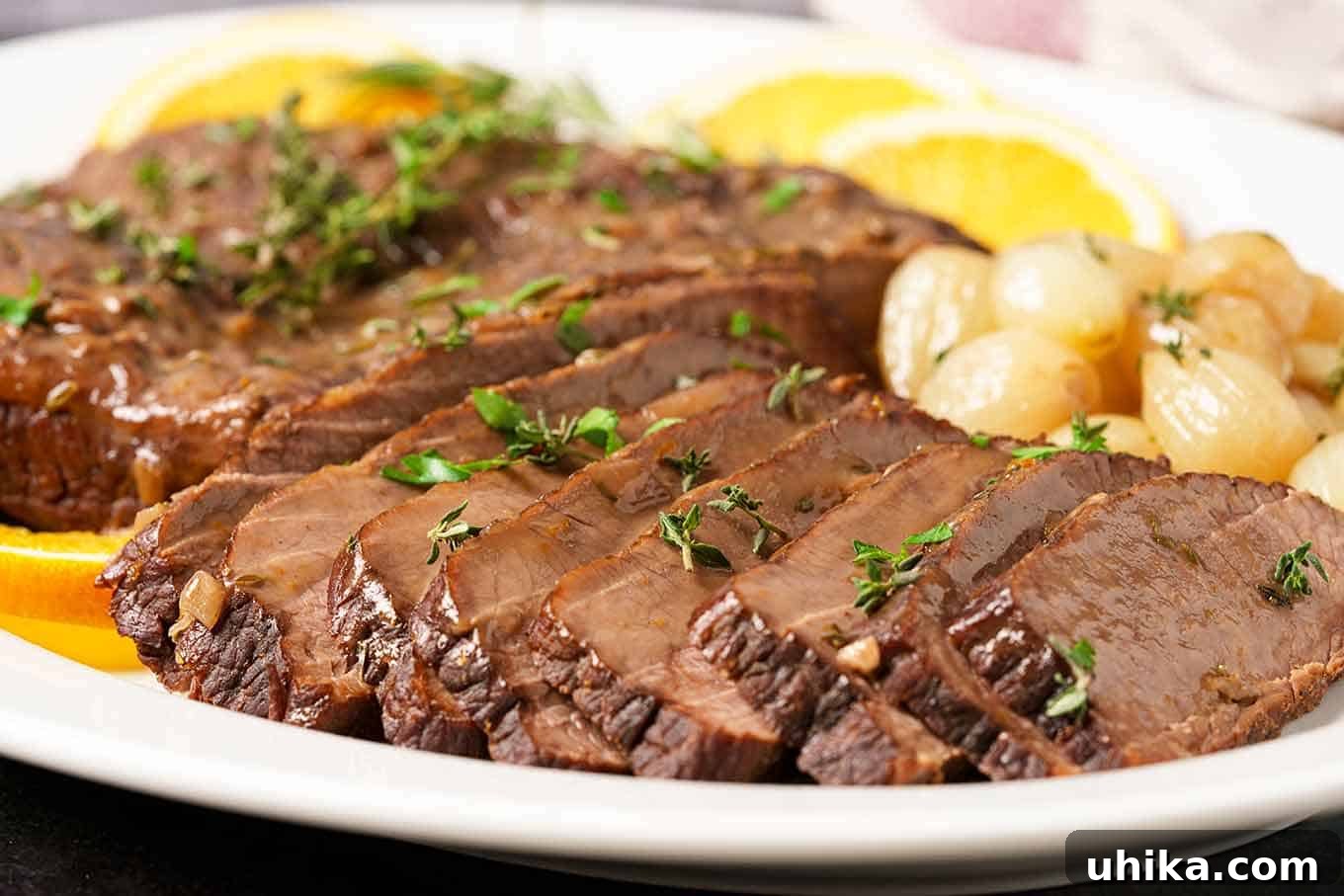
As the brisket undergoes its slow transformation in the oven, it gradually becomes incredibly tender, deeply imbued with the rich flavors of the red wine, orange, and herbs. Partway through the braising, delicate pearl onions are added to the pan. This timing is essential; it allows them to soften to a buttery texture without completely breaking down, adding another layer of subtle sweetness and texture to the dish. Once the brisket has reached its peak tenderness, it is carefully removed from the braising liquid. The remaining liquid is then skimmed of excess fat and lightly thickened to create a luxurious, glossy sauce. This delectable sauce is then spooned generously over the perfectly sliced brisket, which should always be carved against the grain for the cleanest, most tender cuts. Garnish with the softened pearl onions, fresh orange slices, and a sprinkle of fresh herbs for a truly impressive presentation.
Expert Tips for a Flawless Braised Brisket
MAKE-AHEAD FRIENDLY: This red wine braised brisket is not just delicious; it’s also an exceptional make-ahead dish, making it perfect for entertaining or busy schedules. Preparing it a day in advance allows the flavors to meld and deepen even further, resulting in an even more remarkable taste. Simply prepare the entire dish, allow it to cool completely, then refrigerate overnight. When ready to serve, reheat the brisket, covered, in a 325°F (160°C) oven until thoroughly warmed through. A significant advantage of making it ahead is the ease of fat removal: any excess fat from the sauce will solidify overnight and can be effortlessly lifted from the surface before reheating, leaving you with a richer, less greasy sauce.
NO BRAISING PAN? NO PROBLEM: While a heavy-bottomed Dutch oven or dedicated braising pan is ideal for its even heat distribution and tight-fitting lid, you don’t need specialized equipment to achieve a fantastic braised brisket. Any oven-proof pan that is just slightly larger than your brisket will work wonderfully, as this helps prevent excessive evaporation of your precious braising liquid. For an equally reliable alternative, consider using a deep roasting pan or a lasagna pan. Ensure it’s tightly covered with heavy-duty aluminum foil (or two layers for extra security) to mimic the sealed environment of a Dutch oven, trapping steam and ensuring the brisket remains moist and tender throughout the slow cooking process.
ACHIEVING THE PERFECT TENDERNESS: The key to a truly magnificent braised brisket lies in patience. Resist the urge to rush the cooking process. Braising low and slow, as specified in this recipe, is crucial for breaking down the tough connective tissues in the brisket, transforming it into that signature fall-apart tenderness. If your brisket isn’t as tender as you’d like after the recommended cooking time, simply return it to the oven, covered, and continue braising for another 30-60 minutes, checking periodically. The exact cooking time can vary slightly depending on your oven and the specific cut of meat, so trust the fork-tender test over strict timing for optimal results.
Elegant Serving Suggestions for Your Braised Brisket
Once carved, serve this magnificent braised brisket generously sliced with an ample amount of its luscious red wine and orange sauce. The key to successful pairing is choosing side dishes that complement, rather than compete with, the rich and complex flavors of the brisket. Our rustic mashed potatoes are an absolutely perfect choice, providing a creamy, comforting canvas ideal for soaking up every drop of that exquisite sauce. For a delightful contrast in texture and flavor, consider serving roasted green beans with toasted walnuts and shallots. Their crispness and earthy notes add a refreshing balance to the menu, ensuring a well-rounded and satisfying meal. Other excellent starchy accompaniments include creamy polenta, saffron risotto, or simply a crusty baguette to sop up the delicious juices.
Beyond the main meal, leftover braised brisket is a culinary gift, offering endless possibilities for delicious transformations. One fantastic way to repurpose it is in a gourmet sandwich. Gently warm thin slices of the brisket in your favorite barbecue sauce, then layer them generously onto toasted hoagie rolls. Top with sautéed green peppers and onions for an incredible, savory experience. This simple preparation gives the brisket a completely different spin, transforming it into a hearty and satisfying meal without losing any of its rich, beefy character. You can also shred leftover brisket for delicious tacos, add it to a hearty stew, or even incorporate it into a flavorful hash for breakfast or brunch. Its versatility ensures that every last morsel will be enjoyed.
Red Wine Braised Brisket
Lynne Webb
35 mins
3 hrs 50 mins
4 hrs 25 mins
8
servings
Rate Recipe
Print Recipe
Ingredients
-
3 to 4
pound
boneless beef flat-cut brisket -
1-1/2
teaspoons
kosher salt -
1/2
teaspoon
onion powder - Freshly ground black pepper
-
3
tablespoons
olive oil,
divided - Sprigs of fresh thyme (for garnish)
-
1
lb
pearl onions,
ends trimmed, skins removed
For the braising liquid:
-
1
shallot,
minced (about 2 tablespoons) -
4
cloves
garlic,
minced -
3
tablespoons
all-purpose flour,
divided (plus more if needed) -
1/4
cup
water -
1
cup
red wine -
3/4
cup
orange juice -
1
navel orange -
1
tablespoon
fresh rosemary,
minced -
1
tablespoon
fresh thyme leaves -
2
bay leaves
Instructions
-
Preheat your oven to 300°F (150°C).
Sear the brisket to lock in flavor
-
Season the brisket generously on both sides with kosher salt, onion powder, and several grinds of fresh black pepper.
-
In a heavy, oven-safe braising pan or Dutch oven, coat the bottom with 1 tablespoon of olive oil. Heat over medium-high heat until shimmering. Carefully place the seasoned brisket into the hot pan and sear until well browned on both sides, about 4 minutes per side. This crucial step builds incredible flavor. Transfer the seared brisket to a plate and set aside.
Craft the aromatic braising liquid
-
Add the remaining 2 tablespoons of olive oil to the same pan and reduce the heat to medium. Add the minced shallots and garlic, cooking until they are softened and fragrant, typically about 2 minutes.
-
Scatter 2 tablespoons of the all-purpose flour evenly over the shallots and garlic. Using a spatula, actively scrape up any flavorful browned bits (fond) that have accumulated on the bottom of the pan from searing the brisket. Continue cooking, stirring constantly, until the flour is well incorporated and just beginning to turn golden, about 1-2 minutes.
-
Gradually whisk in the 1/4 cup of water, ensuring no lumps form. Bring the mixture to a gentle simmer and cook until it slightly thickens, about 3 minutes. Slowly whisk in the red wine and orange juice, continuing to whisk until the liquid is smooth and fully combined.
-
Finely zest the entire navel orange and add it to the sauce along with the minced fresh rosemary, fresh thyme leaves, and bay leaves. Bring the mixture to a gentle simmer once more and cook, stirring often, for an additional 3 minutes to allow the flavors to meld. Carefully return the seared brisket to the pan, nestling it into the braising liquid.
-
From the orange you just zested, cut 4 or 5 thick slices from its center and arrange them artistically on top of the brisket. Garnish with a few fresh thyme sprigs. Squeeze the juice from any remaining orange pieces over the top of the brisket, then spoon some of the rich braising sauce over the exposed meat to keep it moist.
Slow braise to perfection
-
Cover the braising pan tightly with its lid (or heavy-duty foil) and place it in the preheated 300°F (150°C) oven. Braise for 2-1/2 hours. Every 45 minutes or so, carefully remove the pan from the oven, lift the lid, and baste the brisket by spooning the rich braising liquid over any exposed surface of the meat. This ensures even cooking and keeps the brisket moist. Re-cover tightly and return to the oven.
-
After the brisket has been cooking for approximately 2-1/2 hours, remove the pan from the oven. Gently add the pearl onions around the brisket in the braising liquid. Re-cover the pan and continue braising for an additional 1 hour, or until the brisket is fork-tender.
-
Once tender, carefully remove the brisket from the braising liquid and transfer it to a carving board. Tent it loosely with aluminum foil to keep it warm while you prepare the sauce. Transfer the cooked pearl onions to a separate serving dish and set aside.
Finish the velvety sauce
-
Carefully pour the braising liquid from the pan into a gravy separator to easily remove excess fat (alternatively, skim the fat from the top with a large spoon). Reserve about one cup of the skimmed braising liquid in a glass measuring cup. Pour the balance of the liquid into a small saucepan.
-
To create a smooth thickening slurry for the sauce, whisk one tablespoon of all-purpose flour into the reserved cup of braising liquid until thoroughly blended and lump-free.
-
Place the saucepan with the main braising liquid over medium-high heat. Slowly pour the prepared slurry into the simmering sauce while whisking continually. Continue whisking until the sauce is smooth and begins to thicken to your desired consistency. If a thicker sauce is preferred, you can repeat the process with a little more flour mixed with a small amount of water to form another slurry. Once the sauce has reached your liking, transfer it to a warm bowl or gravy boat.
Carve and serve with elegance
-
On your carving board, carve the tender brisket against the grain into 1/4-inch thick slices. Arrange the sliced brisket on a large serving platter. Spoon some of the rich, velvety sauce generously over the top of the meat. Garnish with the softened pearl onions, fresh orange slices, and a vibrant sprinkle of fresh herbs (such as parsley or additional thyme sprigs) for a beautiful presentation. Serve immediately and enjoy!
Notes
Nutrition
Calories:
306
,
Total Fat:
14
g
,
Cholesterol:
70
mg
,
Sodium:
531
mg
,
Carbohydrates:
14
g
,
Fiber:
2
g
,
Sugar:
6
g
,
Protein:
25
g
Nutrition information is automatically calculated, so should only be used as an approximation.
Enjoyed this recipe? Share your thoughts below!