
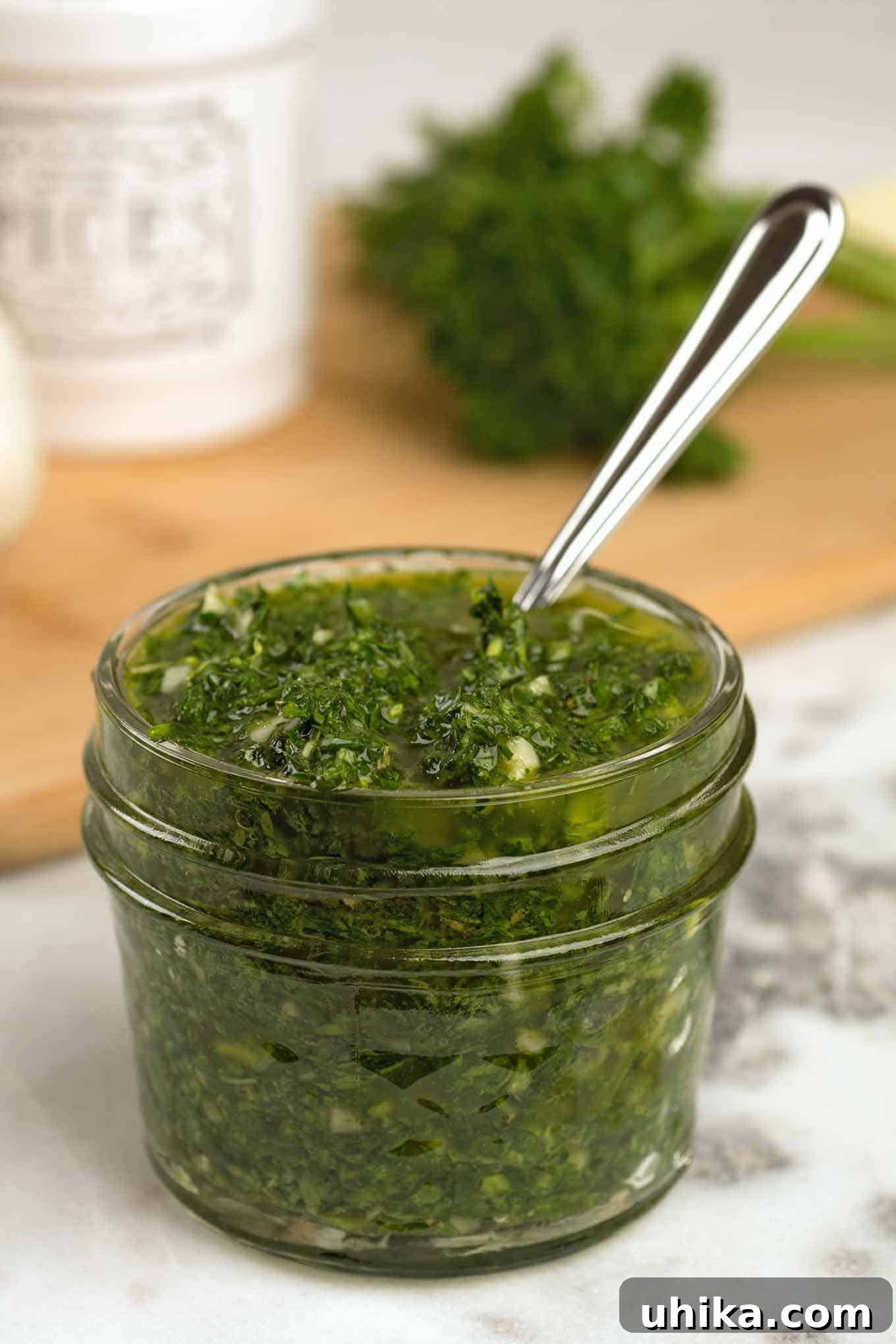
Embark on a culinary journey to the vibrant flavors of South America with homemade chimichurri sauce. Our family first encountered this exquisite condiment years ago while savoring a churrasco steak at a bustling Cuban restaurant. That unforgettable taste sparked a quest to recreate its magic at home, leading us to discover the simple brilliance of chimichurri. Traditionally lauded as the perfect accompaniment to grilled beef, this bold, garlicky, and incredibly fresh herb sauce has since earned its permanent place as a beloved staple in our kitchen. Its preparation is surprisingly quick and effortless, yet it delivers an explosion of flavor that elevates any meal, making it an exceptionally versatile addition to your culinary repertoire.
While homemade chimichurri is famously paired with grilled skirt steak, its adaptability extends far beyond. We’ve found that it harmonizes beautifully with an array of grilled proteins, including succulent pork, tender chicken, and firm fish varieties like mahi-mahi and swordfish. This vibrant green sauce promises to transform even the simplest dishes into a gourmet experience, adding a burst of herbaceous zest that will delight your palate.
The Essence of Chimichurri: A Flavor Profile Unmatched
What exactly is chimichurri, and what makes it so uniquely captivating? At its heart, chimichurri is an uncooked, oil-based sauce, akin to a vibrant pesto but with its own distinct character. It’s a celebration of fresh herbs, robust garlic, and a tangy acidity that cuts through rich flavors, making it an ideal partner for grilled meats. The sauce boasts a bright, herbaceous, and zesty profile, punctuated by a prominent garlicky kick. Its texture is typically finely chopped, creating a spoonable consistency that generously clings to food, infusing every bite with its complex layers of taste.
Originating from Argentina and Uruguay, chimichurri has long been an integral part of the South American barbecue, or “asado,” tradition. Its name, while playfully debated in its etymology, signifies its universal appeal. It’s more than just a sauce; it’s a culinary philosophy that embraces fresh ingredients and simple preparation to achieve extraordinary results. This classic condiment is a testament to how humble components can come together to create something truly spectacular.
Ingredient Notes and Substitutions: Crafting Your Perfect Blend
Understanding the key ingredients is crucial for mastering this authentic chimichurri recipe. The quality and balance of each component contribute significantly to the sauce’s final flavor. Below is a detailed guide to what you need to know about the essential elements. The complete list, including precise quantities, is conveniently located in the printable recipe card further down this page.
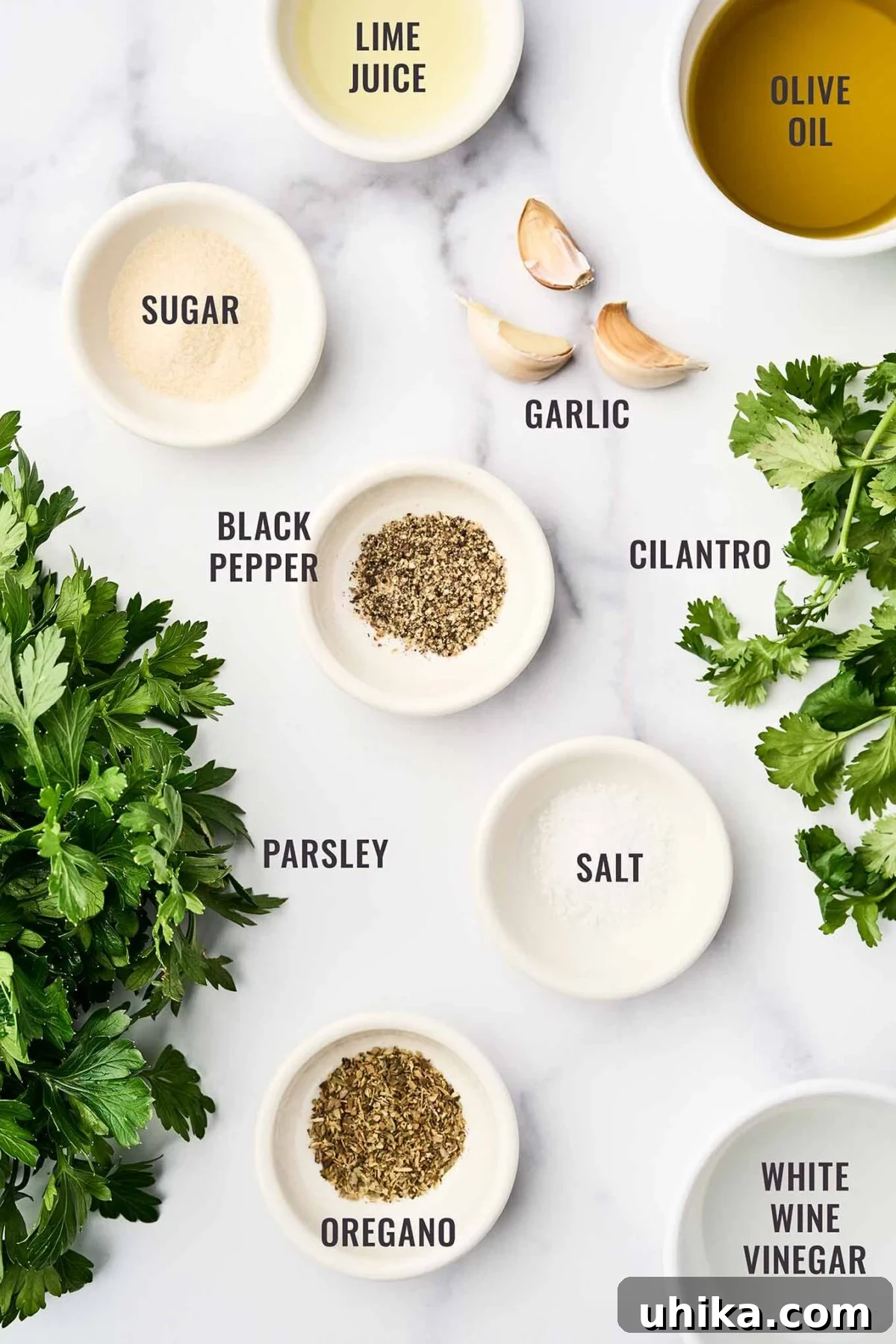
PARSLEY & CILANTRO: These two fresh herbs form the aromatic backbone of our chimichurri. We opt for an equal parts blend of flat-leaf parsley and cilantro to achieve a robust, herbaceous flavor that is both bright and profound. Flat-leaf parsley, also known as Italian parsley, offers a clean, peppery taste, while fresh cilantro introduces a distinctive citrusy, almost pungent note. If you prefer a milder sauce, you can adjust the ratio to two-thirds parsley and one-third cilantro. For those who find cilantro’s flavor too strong or soapy, feel free to use all parsley or experiment by incorporating other fresh herbs like chives, fresh oregano, or even a touch of mint for a different twist. Always ensure your herbs are fresh, vibrant, and thoroughly washed before use, and remove any thick stems for a smoother consistency.
GARLIC: A cornerstone of authentic chimichurri, garlic provides a bold, pungent flavor that is absolutely essential. Our recipe calls for a generous amount to deliver that classic garlicky kick. If you’re new to chimichurri or are sensitive to strong garlic, it’s perfectly acceptable to reduce the quantity slightly to better suit your palate. For an even more nuanced garlic flavor, consider quickly blanching the chopped garlic cloves in boiling water for 30 seconds before adding them to the food processor; this can mellow their intensity without sacrificing their essential character.
LIME JUICE & VINEGAR: The acidity in chimichurri is crucial for balancing the richness of grilled meats and enhancing the fresh herb flavors. We uniquely temper the sharp tang of white wine vinegar by blending it with a splash of fresh lime juice. This addition not only rounds out the acidity but also infuses the sauce with a bright, refreshing citrus note that elevates the overall profile. While lemon juice can also work as a substitute, be aware that it will impart a slightly different, perhaps more pronounced, citrus flavor. Red wine vinegar is also a traditional choice and can be used for a deeper, fruitier acidic base.
SUGAR: Just a small amount of sugar plays a vital role in our chimichurri, acting as a secret weapon to harmonize the flavors. Its primary function is not to sweeten the sauce, but rather to mellow the inherent acidity from the vinegar and lime juice, ensuring a well-rounded and balanced taste. This subtle sweetness prevents the sauce from being overly sharp or sour, allowing the fresh herbal notes to shine through beautifully.
EXTRA VIRGIN OLIVE OIL: The choice of olive oil is paramount, as it forms the base and binds all the flavors together. Opt for a high-quality extra virgin olive oil with a pleasant, fruity aroma. It contributes to the sauce’s luxurious texture and richness. The oil also acts as a carrier for the fat-soluble flavors from the herbs and garlic, distributing them evenly throughout the condiment.
DRIED OREGANO, KOSHER SALT & FRESHLY GROUND BLACK PEPPER: These seasonings provide depth and structure to the chimichurri. Dried oregano adds an earthy, slightly bitter undertone that complements the fresh herbs. Kosher salt is preferred for its pure flavor and larger crystals, allowing for better control over seasoning. Freshly ground black pepper, rather than pre-ground, offers a more pungent and aromatic kick, enhancing the overall vibrancy of the sauce.
Prep Overview
How to Make Homemade Chimichurri: Simple Steps to Zesty Perfection
Ready to whip up this incredible sauce? Here’s a quick overview of the straightforward process. For detailed, step-by-step instructions and specific measurements, refer to the comprehensive recipe card below.
Creating your own batch of chimichurri sauce couldn’t be simpler, making it an ideal choice for busy weeknights or impromptu gatherings. The beauty of this recipe lies in its minimal fuss and maximum flavor. All the essential ingredients—a generous medley of fresh herbs, potent garlic, tangy vinegar, zesty lime juice, rich olive oil, and perfectly balanced seasonings—are combined effortlessly in a food processor. With just a few quick pulses, these components transform into a finely chopped, vibrant, and spoonable sauce that’s ready to elevate your culinary creations instantly. The goal is a uniform, yet slightly rustic, texture that retains the freshness of the herbs.
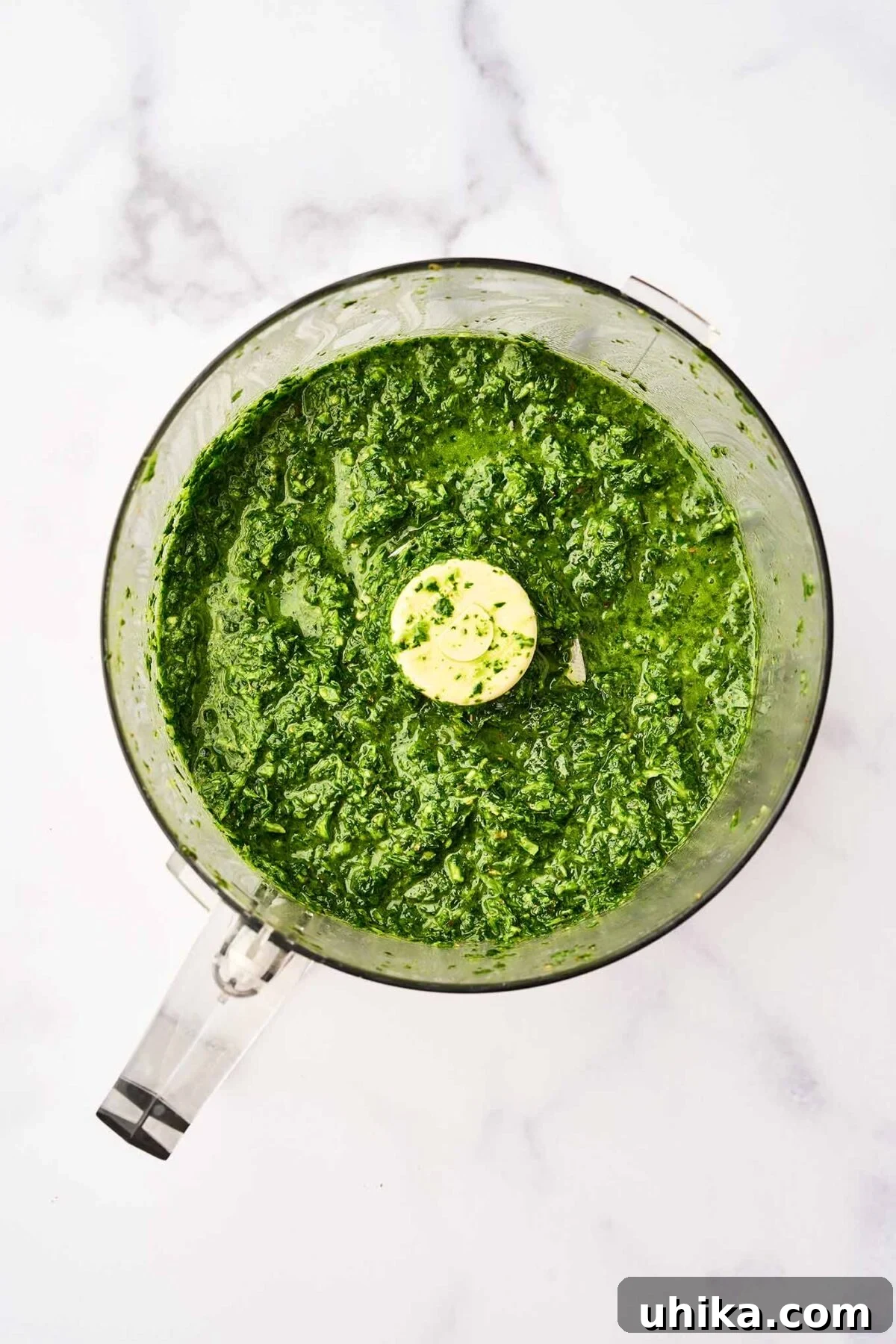
Once your chimichurri is blended to perfection, take a moment to taste and adjust the seasoning. This step is crucial for achieving your desired flavor balance. If you prefer a thinner consistency, you can gradually add a little more extra virgin olive oil and pulse again until it reaches your liking. The finished sauce should boast a bold, well-balanced flavor profile, with the invigorating acidity perfectly complementing the aromatic herbs and delightful garlicky goodness. It’s truly a symphony of tastes! You can use this freshly made sauce immediately to enhance your meal, or transfer it to an airtight container and store it in the refrigerator for up to two days, allowing the flavors to meld even further.
Tips for Success:
- Don’t Over-Process: Pulsing rather than continuous blending is key. You want finely chopped herbs, not a smooth paste. Over-processing can bruise the herbs and make the sauce too liquidy.
- Manual Method: No food processor? No problem! Finely chop all the herbs and garlic by hand, then combine with the wet ingredients and seasonings in a bowl. This method gives a more rustic texture.
- Taste and Adjust: Always taste your chimichurri before serving. You might find it needs a pinch more salt, a dash more vinegar, or a touch more sugar to perfectly suit your taste.
- Rest for Flavor: While delicious immediately, letting the chimichurri sit for 30 minutes to an hour at room temperature allows the flavors to deepen and meld beautifully.
Beyond the Grill: Creative Ways to Enjoy Chimichurri
While chimichurri sauce is undoubtedly a star when served alongside grilled meats, its incredible versatility means it can be incorporated into countless other dishes, often in less traditional but equally delicious ways. Don’t limit this vibrant sauce to just steak night!
- As a Marinade: Chimichurri makes an exceptional marinade for chicken, pork, or even firm tofu. Its acidic components help tenderize, while the herbs and garlic infuse deep flavor. Marinate for at least 30 minutes, or up to several hours for maximum impact.
- On Sandwiches and Wraps: Ditch the mayonnaise and spread chimichurri on your next sandwich or wrap for a burst of fresh flavor. It’s fantastic with leftover grilled chicken, roast beef, or even vegetarian options.
- With Roasted Vegetables: Toss roasted potatoes, carrots, asparagus, or broccoli with chimichurri for an instant flavor upgrade. The sauce brightens and complements the earthy notes of vegetables beautifully.
- Egg Enhancer: A spoonful of chimichurri over scrambled eggs, omelets, or even avocado toast takes your breakfast or brunch to a whole new level.
- In Pasta Dishes: Stir chimichurri into warm pasta with a splash of pasta water for a quick, flavorful sauce. Add cherry tomatoes and a sprinkle of Parmesan for a light meal.
- Dressings and Dips: Whisk chimichurri with a little extra olive oil or Greek yogurt to create a zesty salad dressing or a vibrant dip for crusty bread and crudités.
- On Pizza: Drizzle chimichurri over a freshly baked pizza instead of traditional red sauce for an unexpected and delightful herbal kick.
- Chimichurri Burger: For a truly unique experience, try our Chimichurri Burger, where we actually mix a variation of the sauce right into the ground beef. Then, we spoon more on top of the cooked burger, replacing traditional condiments like ketchup and mustard with a fresh, bold alternative.
- Asian Chimichurri Twist: Explore global fusion with our Mirin-Marinated Steak with Asian Chimichurri. This unique spin incorporates a blend of fresh ginger, mint, basil, and cilantro, demonstrating how adaptable the chimichurri concept can be to different flavor profiles.
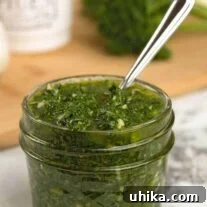
Homemade Chimichurri Sauce
Rate Recipe
Print Recipe
Ingredients
- 1 cup fresh flat-leaf parsley leaves, thick stems removed
- 1 cup fresh cilantro leaves, thick stems removed
- 3 cloves garlic, peeled and roughly chopped
- 6 tablespoons extra virgin olive oil
- 3-1/2 tablespoons white wine vinegar
- 1/2 tablespoon fresh lime juice
- 3/4 teaspoon sugar
- 1 teaspoon dried oregano
- 1/2 teaspoon kosher salt
- 1/2 teaspoon freshly ground black pepper
Instructions
-
Add the parsley, cilantro, and garlic to the work bowl of a food processor. Pulse a few times to begin chopping the herbs and garlic.
-
Now, add the olive oil, white wine vinegar, lime juice, sugar, dried oregano, kosher salt, and freshly ground black pepper to the food processor. Continue to pulse until the mixture is finely chopped but still retains some texture, avoiding a smooth paste.
-
Taste the chimichurri and adjust the seasoning as needed. You might want to add a pinch more salt, a dash more vinegar, or a touch more sugar to achieve your preferred balance of flavors. If you’d like a slightly looser consistency, blend in a little more extra virgin olive oil, pulsing briefly to combine.
-
Transfer the freshly made chimichurri to a serving bowl and use immediately for the freshest flavor. Alternatively, refrigerate it in a tightly sealed glass container for up to 2 days. For optimal flavor and consistency, allow the chimichurri to come to room temperature for about 15-20 minutes before serving.
Notes
Nutrition
Nutrition information is automatically calculated, so should only be used as an approximation.
Health Benefits of Homemade Chimichurri
Beyond its incredible flavor, homemade chimichurri offers a surprising array of health benefits, primarily due to its fresh, whole ingredients:
- Rich in Antioxidants: Parsley and cilantro are packed with vitamins A, C, and K, as well as powerful antioxidants that help protect your cells from damage.
- Immune-Boosting Garlic: Garlic is renowned for its immune-boosting properties and is a natural antimicrobial, contributing to overall wellness.
- Heart-Healthy Fats: Extra virgin olive oil is a cornerstone of the Mediterranean diet, providing monounsaturated fats that are beneficial for heart health.
- Natural and Fresh: Unlike many processed condiments, homemade chimichurri contains no artificial ingredients, preservatives, or excessive sugars, making it a healthier choice for enhancing your meals.
Troubleshooting Your Chimichurri: Perfecting Your Sauce
Even though chimichurri is simple, sometimes things don’t go exactly as planned. Here are some common issues and how to fix them:
- Too Watery? If your chimichurri seems too thin, you might have added too much liquid (vinegar, lime juice, or oil) or over-processed the herbs, causing them to release too much water. To thicken it, you can add a handful more fresh parsley or cilantro and pulse briefly, or let it sit for a bit in the fridge for the oil to firm up slightly.
- Too Garlicky? While bold garlic is a hallmark, if it’s overwhelming, you can balance it out by adding more fresh herbs, a little extra olive oil, or a touch more lime juice/vinegar to dilute the intensity. A pinch more sugar can also subtly mellow the harshness.
- Flavor Not Popping? If the sauce tastes flat, it likely needs more salt. Salt is a flavor enhancer that brings out the best in all the ingredients. You might also need a bit more acid (lime juice or vinegar) to brighten it up.
- Herbs Bruised or Pasty? This usually happens from over-processing. Remember to use quick pulses rather than continuous blending to achieve a finely chopped texture without pulverizing the herbs. If it’s already too pasty, there’s not much to do but learn for next time, or embrace it as a slightly different, but still tasty, version!