
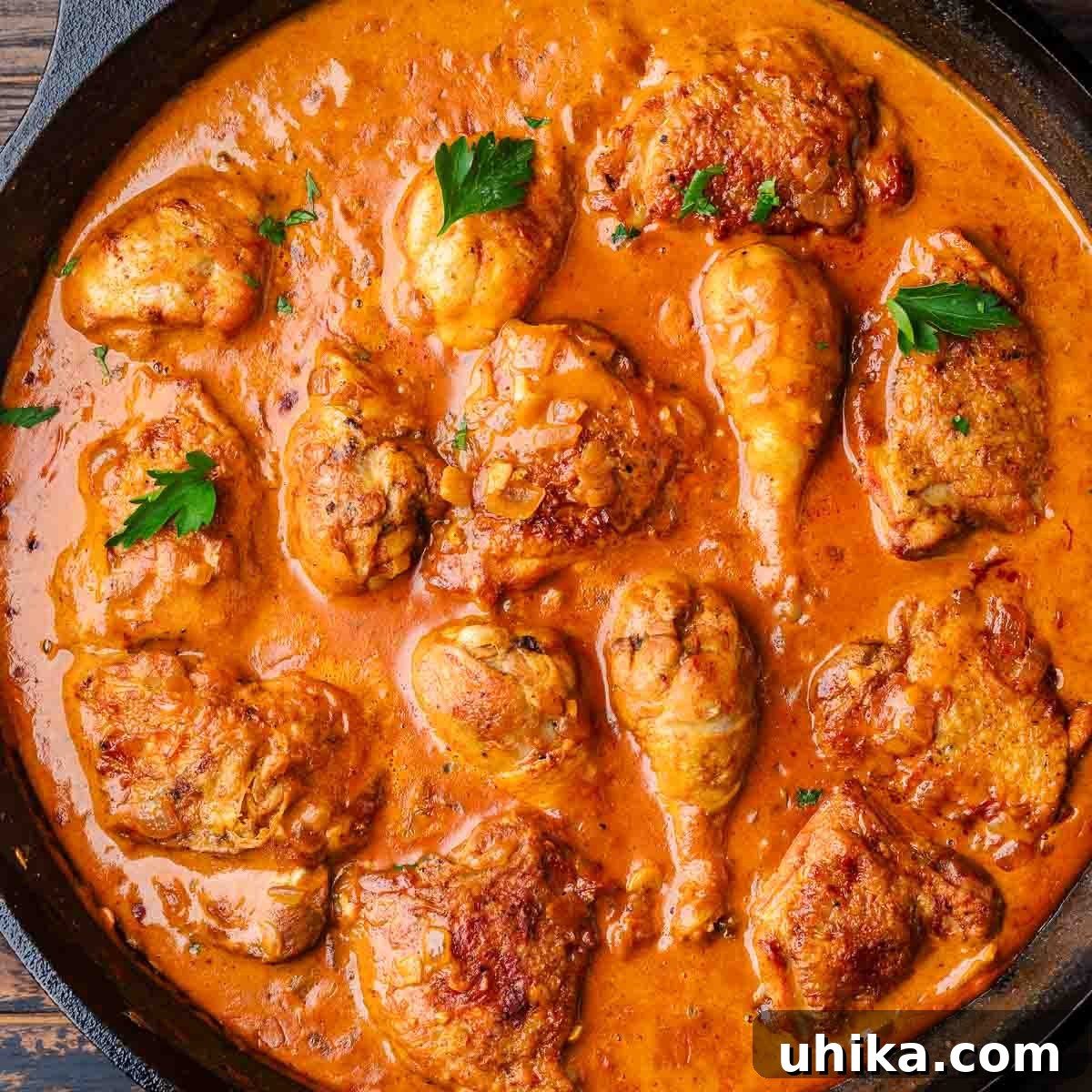
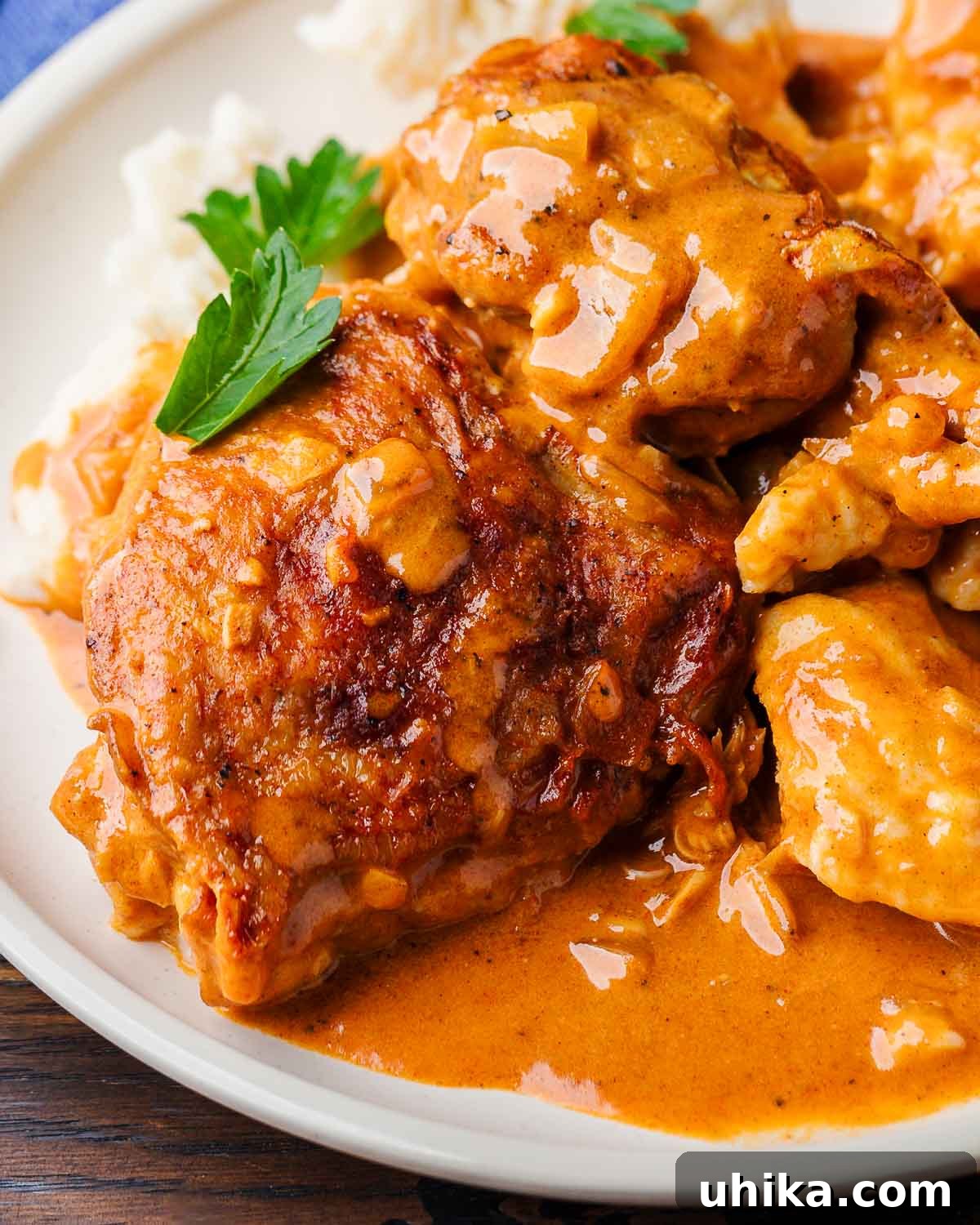
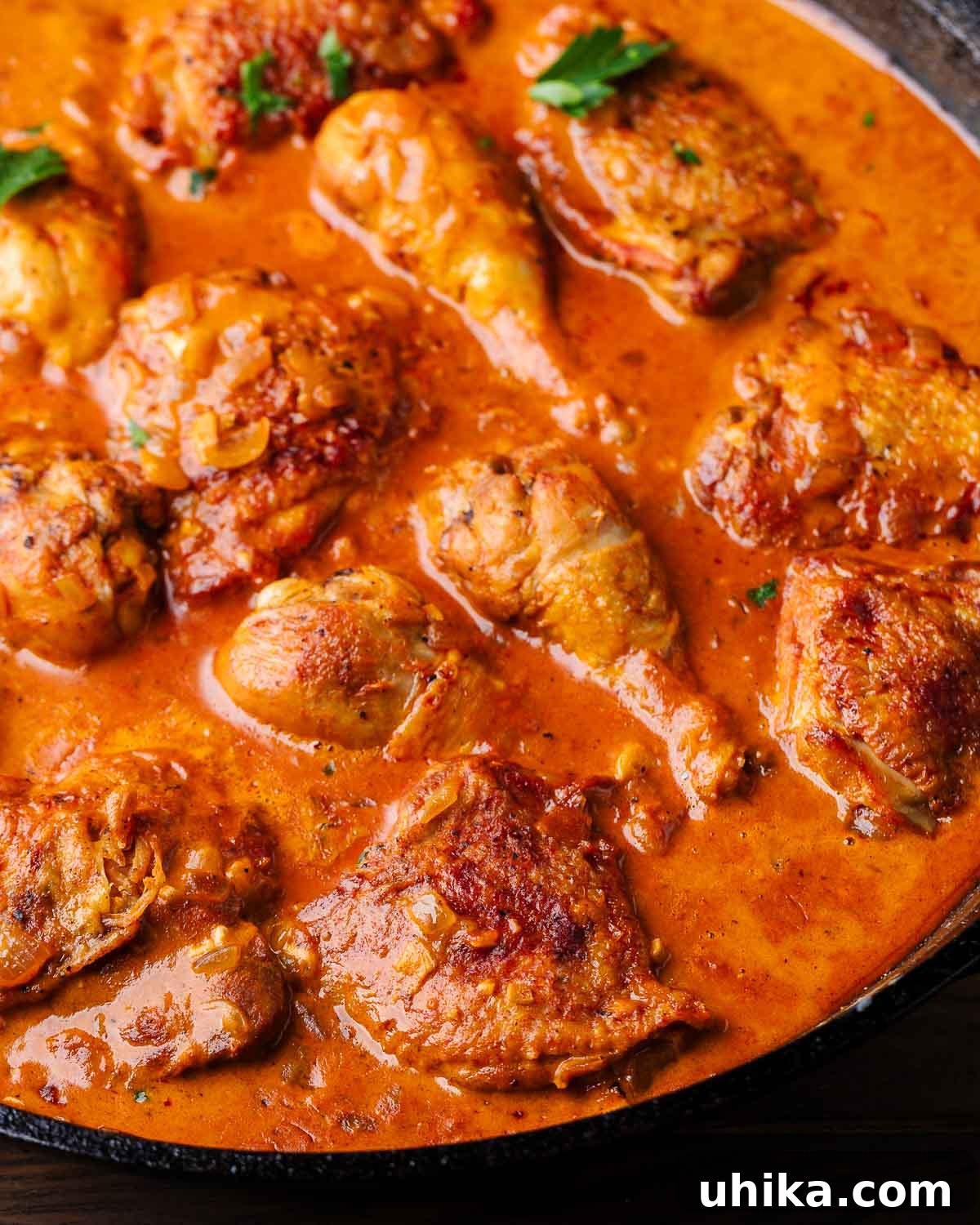
Chicken Paprikash, or Csirkepaprikás as it’s known in its native Hungary, stands as a cherished emblem of Central European comfort cuisine. This timeless dish features succulent chicken, slow-braised to perfection in a rich, velvety sauce infused with the warm, complex flavors of paprika, sweet onions, and aromatic garlic. Traditionally served alongside the simplest homemade dumplings (nokedli), this hearty and profoundly satisfying meal promises to become a cherished staple in your culinary repertoire.
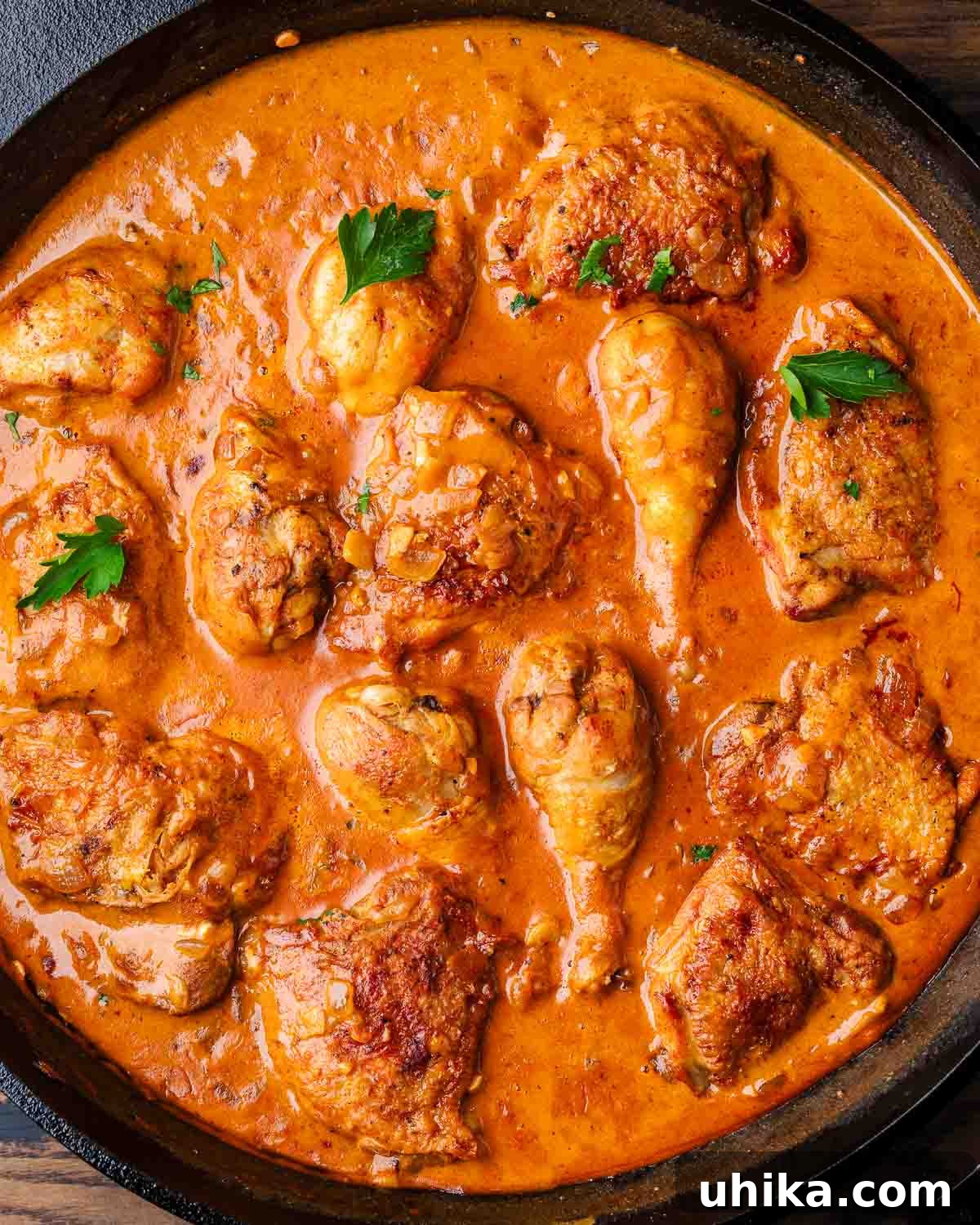
The first encounter with an authentic, creamy Chicken Paprikash accompanied by fluffy, tender dumplings is often a culinary revelation – an experience akin to discovering a hidden treasure. For many years, this Hungarian masterpiece remained unknown to me, but from the very first spoonful, I knew it was destined to be a regular and much-loved meal for my family. The harmonious blend of fork-tender chicken, swimming in a luxurious, creamy paprika-infused sauce, truly elevates this humble comfort food to an extraordinary delight.
While I adore serving Chicken Paprikash with its traditional homemade dumplings (my straightforward recipe for flour and egg dumplings is detailed below), its versatility allows for other equally delicious accompaniments. Consider pairing it with wide egg noodles, homemade spaetzle, or even a simple bed of fluffy rice to soak up every last drop of that incredible sauce. Each option offers a unique texture and flavor profile, making this dish adaptable to any preference or occasion.
Unveiling the Rich History of Chicken Paprikash
Chicken Paprikash is more than just a recipe; it’s a culinary journey through Hungarian history and culture. Originating in the heart of Hungary, this dish gained widespread popularity due to its reliance on paprika, a spice that became synonymous with Hungarian cuisine after its introduction from the New World. While early versions might have been simpler, the addition of sour cream (tejföl) truly transformed it into the creamy, iconic dish we know today. It’s a testament to rustic cooking, where humble ingredients are transformed into something truly magnificent through careful preparation and patience. Every bite tells a story of tradition, warmth, and home.
Essential Recipe Ingredients for Authentic Flavor
Crafting the perfect Chicken Paprikash begins with selecting high-quality ingredients. Each component plays a crucial role in developing the deep, rich flavors and creamy texture that define this classic Hungarian dish. Below, you’ll find a visual guide to the core ingredients, along with special notes to help you make the best choices for an unforgettable meal.
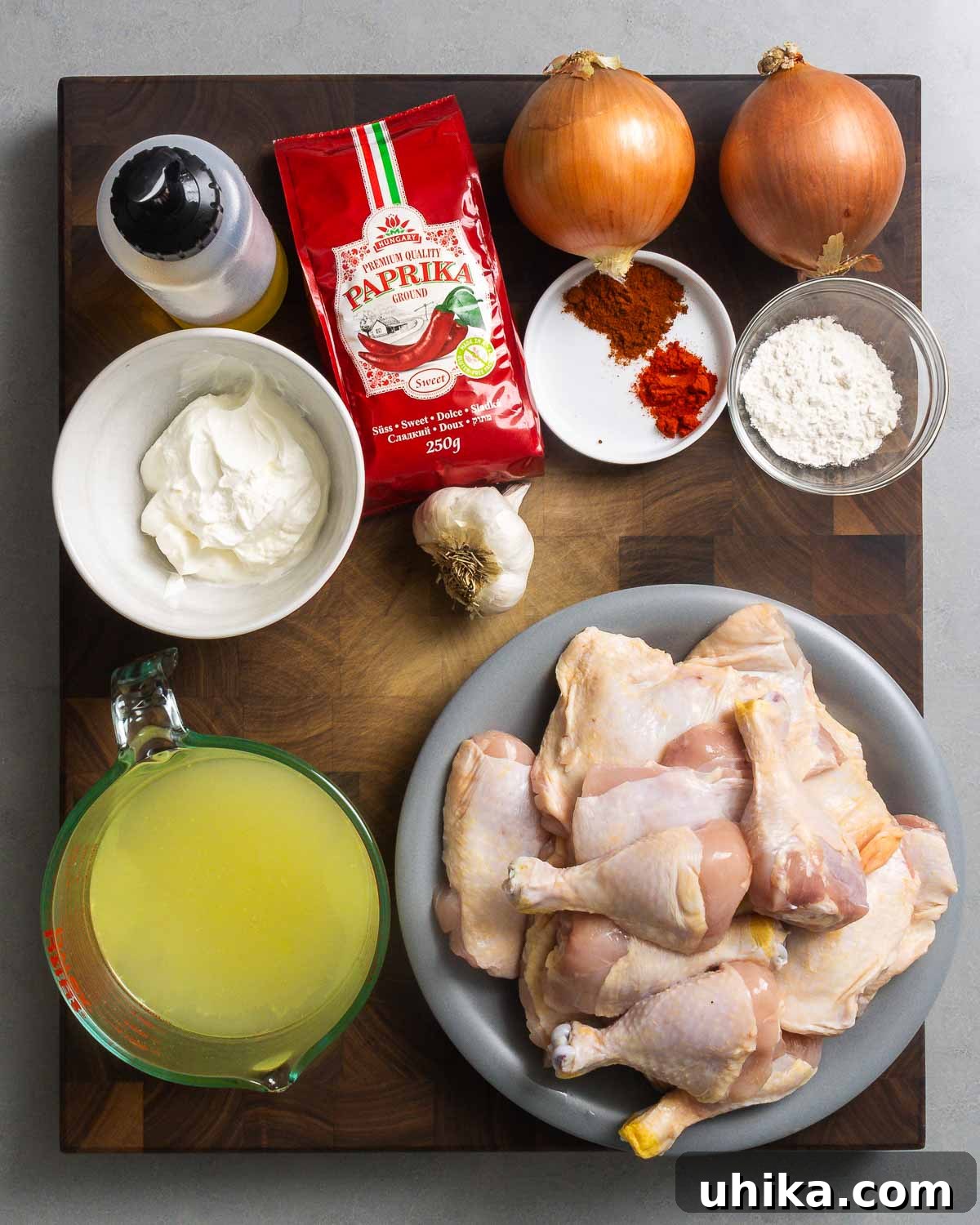
- Chicken: For braised dishes like Chicken Paprikash or French Coq au Vin, dark meat chicken such as bone-in, skin-on legs and thighs are undeniably the best choice. Their higher fat content and bone presence contribute significantly to the dish’s richness and tenderness, preventing the chicken from drying out during the slow cooking process.
- Paprika: This is the soul of Chicken Paprikash, so invest in quality. I highly recommend using high-quality Hungarian paprika. For a nuanced and authentic flavor profile, I combine three varieties: sweet paprika for its vibrant color and foundational flavor, smoked paprika for a subtle depth and smoky aroma, and a touch of hot paprika to introduce a gentle, warming spice.
- White Wine (not pictured): A dry white wine, such as Sauvignon Blanc, is used to deglaze the pan. Its acidity not only adds a layer of complexity to the sauce but also helps to scrape up all those flavorful browned bits from the bottom of the pan, which are essential for depth. If you prefer to omit wine, you can use additional chicken stock or a splash of white wine vinegar for a touch of acidity.
- Chicken Stock: The foundation of our luscious sauce. Whenever possible, I advocate for using homemade chicken stock. It offers unparalleled flavor and allows you to control the sodium content. If homemade isn’t an option, a good quality, low-sodium chicken stock or broth made from a chicken base (like Better Than Bouillon) will work wonderfully.
- Sour Cream: An indispensable ingredient for classic creamy Chicken Paprikash. Full-fat sour cream is crucial here, as it provides that signature rich, creamy texture and a delightful, tangy counterpoint that brightens the entire dish. Using full-fat also helps prevent the sauce from breaking or curdling.
- Fat: Traditionally, this dish begins with lard, which imparts a unique savory depth. However, if lard is unavailable or you prefer an alternative, a neutral vegetable oil or even olive oil can be used to brown the chicken and sauté the aromatics.
- Onions and Garlic: These aromatic staples form the flavor base. Sweet yellow onions, slowly caramelized, bring natural sweetness, while freshly minced garlic adds a pungent warmth that complements the paprika beautifully.
Refer to the recipe card below for the precise quantities and full list of ingredients for both the main dish and the optional dumplings.
Crafting Your Creamy Chicken Paprikash: A Step-by-Step Guide
Follow these detailed steps to create a rich and tender Chicken Paprikash that will warm your soul. Each numbered instruction corresponds to the process, ensuring a smooth cooking experience.
- Prepare Chicken and Aromatics: Begin by dicing two large yellow onions and mincing five cloves of garlic – these form the aromatic backbone of our sauce. Heat a large, heavy-bottomed pan, such as a Dutch oven or cast-iron skillet, over medium heat, then add three tablespoons of lard or vegetable oil. While the fat heats, pat four pounds of chicken pieces (legs and thighs are ideal) thoroughly dry with paper towels. Season generously on all sides with salt and freshly ground black pepper. This initial seasoning is vital for flavor. (Photo #1)
- Sear the Chicken: Carefully add the seasoned chicken pieces to the hot pan. Cook them in batches, if necessary, to avoid overcrowding, which can steam the chicken instead of browning it. Sear for about 4-5 minutes per side until each piece is beautifully golden brown and caramelized. This browning step is crucial for developing deep flavor. Once browned, remove the chicken to a plate and loosely tent it with foil to keep warm and retain its juices. (Photo #2)
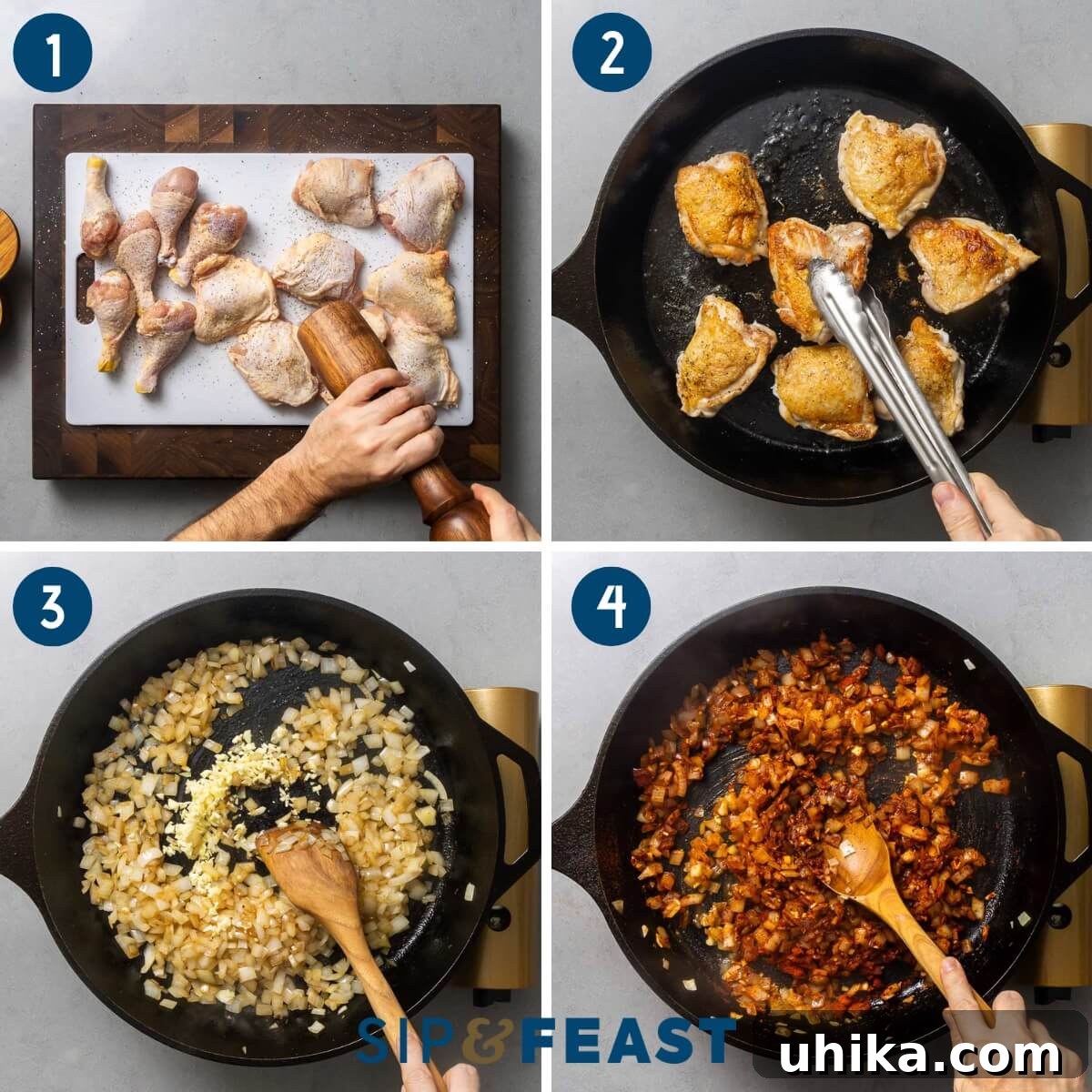
- Sauté Onions and Garlic: In the same pan, add the diced onions along with a pinch of salt. Cook over medium heat, stirring occasionally, for 10-12 minutes, or until the onions have softened and turned translucent. Then, add the minced garlic and continue to cook for just another minute until it becomes fragrant, being careful not to burn it. The aroma at this stage is truly wonderful! (Photo #3)
- Bloom the Paprika: Reduce the heat to low. Stir in three tablespoons of Hungarian sweet paprika, two teaspoons of Hungarian smoked paprika, and one teaspoon of Hungarian hot paprika. Mix them thoroughly with the onions and garlic. It’s vital to cook the paprika gently for only about 30 seconds; burning it will make the sauce bitter. This brief “blooming” releases its full flavor and vibrant color. (Photo #4)
- Deglaze the Pan: Pour in one-half cup of dry white wine. Increase the heat to high. Using a wooden spoon, vigorously scrape up all the flavorful brown bits (fond) from the bottom of the pan. This deglazing step adds immense depth and richness to the sauce. (Photo #5)
- Simmer the Base: Allow the wine to cook down for 30-60 seconds, letting its alcohol evaporate. Then, add two cups of low-sodium chicken stock and bring the mixture to a rolling boil for two minutes. This ensures all the flavors meld together beautifully before the chicken returns. (Photo #6)
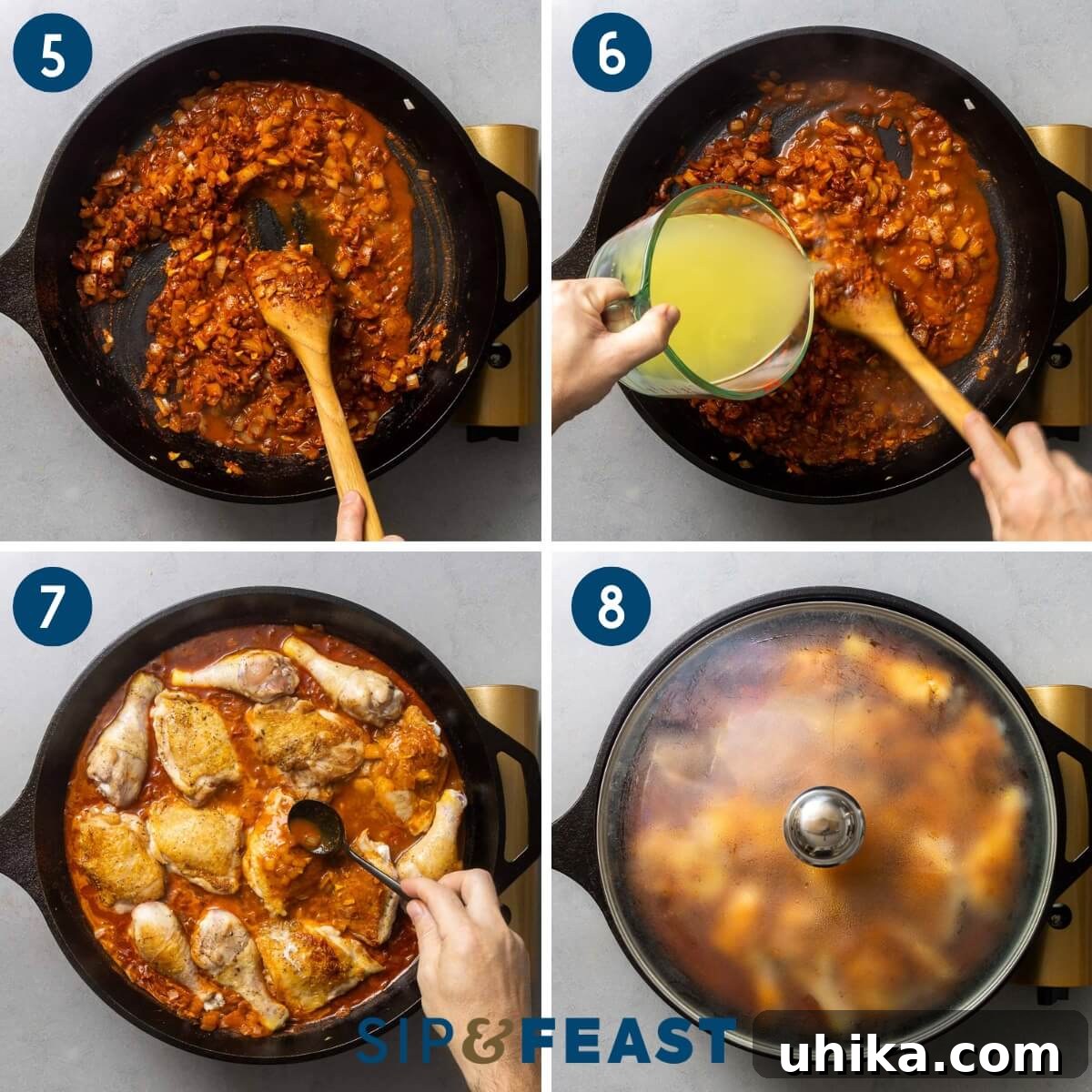
- Braise the Chicken: Reduce the heat to a low simmer. Return the browned chicken pieces and any accumulated juices from the plate back into the pan. Spoon the rich paprika sauce over the chicken to ensure all pieces are submerged and coated. (Photo #7)
- Slow Cook to Tenderness: Cover the pan tightly with a lid and let the chicken braise gently for approximately 45 minutes, or until it is incredibly fork-tender and practically falling off the bone. (Photo #8) Note: This simmering time is perfect for preparing the dumplings (recipe below), or you can keep the chicken warm and make the dumplings just before serving – the choice is yours!
- Remove Chicken: Once the chicken has reached optimal tenderness, carefully remove the pieces from the pan and place them on a clean plate. Tent them lightly with foil once more to keep them warm while you finish the sauce. (Photo #9)
- Temper the Sour Cream: In a small bowl, whisk together one cup of full-fat sour cream and two tablespoons of all-purpose flour until smooth. This flour acts as a stabilizer and thickener. To prevent the sour cream from curdling when added to the hot sauce, temper it by gradually adding a few tablespoons of the warm paprikash sauce to the sour cream mixture, whisking constantly. Continue adding a few more spoonfuls until the mixture is warm and runny, ensuring there are no lumps. (Photo #10)
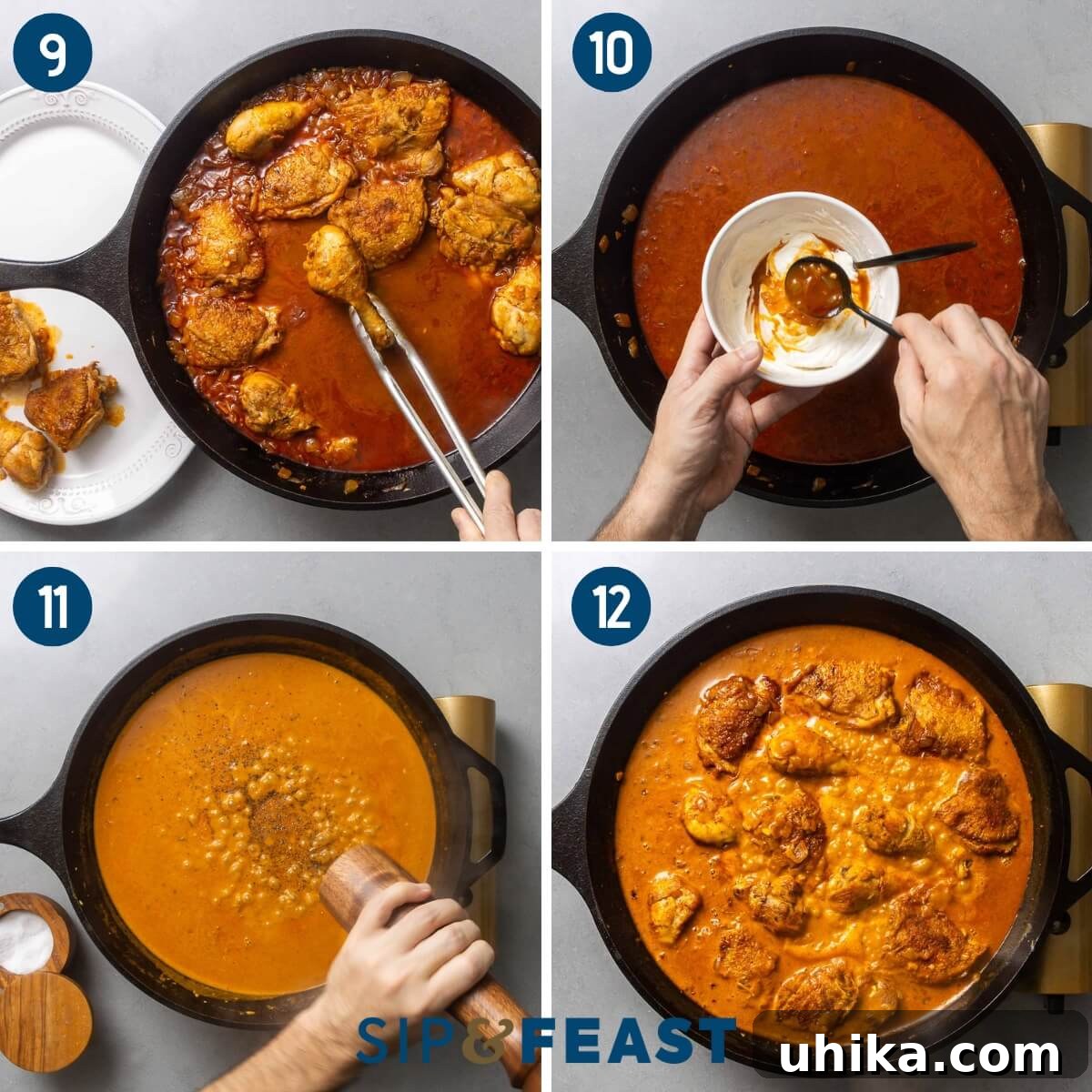
- Finish the Sauce: Pour the tempered sour cream mixture into the pan with the paprika sauce and mix well to fully incorporate. Increase the heat to medium and bring the sauce to a gentle simmer, allowing it to thicken slightly. Taste the sauce and adjust the seasoning with salt and pepper as needed to achieve your perfect balance. (Photo #11)
- Serve and Garnish: Return the tender chicken pieces to the pan, nestling them into the creamy sauce. Gently baste the chicken with the sauce to ensure all pieces are beautifully coated. Simmer for another 10 minutes, uncovered, allowing the flavors to meld and the chicken to reheat gently. Turn off the heat. Just before serving, sprinkle generously with three tablespoons of fresh flat-leaf parsley for a burst of color and herbaceous freshness. Serve this exquisite dish immediately with your homemade dumplings (recipe below), wide egg noodles, or rice. Enjoy the rich, comforting flavors! (Photo #12)
Homemade Hungarian Dumplings (Nokedli): A Simple Delight
These traditional Hungarian dumplings, known as Nokedli, are incredibly easy to make and are the perfect companion to Chicken Paprikash. While optional, they truly elevate the authentic experience. However, if you’re short on time, wide egg noodles make an excellent substitute. This recipe yields approximately 60 tender dumplings.
- Prepare the Batter: Bring a large pot of heavily salted water to a rolling boil. In a spacious mixing bowl, combine six large eggs, four cups of all-purpose flour, one cup of water, one teaspoon of salt, and four teaspoons of baking powder. Whisk or mix these ingredients together until you achieve a smooth, slightly sticky batter. It should be thick enough to cling to a spoon but still pliable. (Photo #1)
- Form and Cook Dumplings: Once the salted water is vigorously boiling, scoop one heaping tablespoon of the prepared batter. To easily release the batter, dip the spoon into the boiling water between each dumpling before scooping the next portion. This prevents sticking. Alternatively, an oiled spoon also works wonders. Drop the batter directly into the boiling water. (Photo #2)
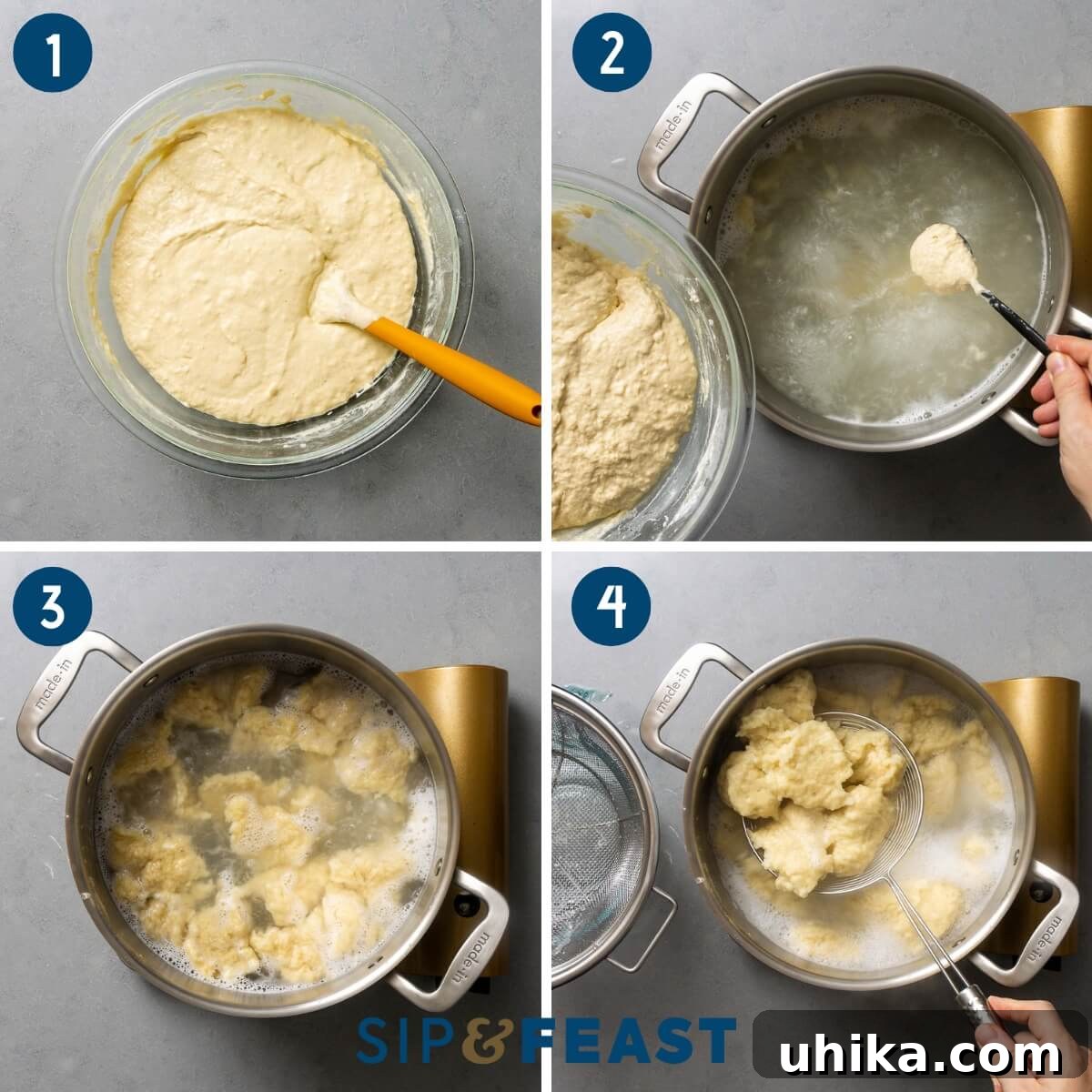
- Boil and Float: Work in batches to avoid overcrowding the pot, as this can lower the water temperature and make the dumplings sticky. A 10-12 quart pot should comfortably handle roughly two batches. The dumplings will sink initially and then begin to float to the surface. Once they start floating, allow them to cook for an additional 3-4 minutes to ensure they are cooked through and tender. (Photo #3)
- Rinse and Hold: Using a slotted spoon or a pasta spider, carefully remove the cooked dumplings from the boiling water. Immediately run them under cold water to halt the cooking process and prevent them from sticking together. Transfer the rinsed dumplings to a platter, ready to be added to your warm Paprikash sauce just before serving. (Photo #4)
Expert Tips for Perfect Chicken Paprikash
Achieving the rich, authentic flavor and perfect texture of Chicken Paprikash is easy with these insider tips:
- The Paprika Paradox: As the star ingredient, the quality of your paprika truly makes or breaks this dish. Always opt for imported Hungarian paprika, which can be easily found online or in specialty stores. Look for varieties clearly labeled “Product of Hungary.” This high-quality paprika offers a depth of flavor and vibrant color that simply cannot be replicated with generic substitutes. Using a combination of sweet, smoked, and hot Hungarian paprika creates a balanced and complex profile. The same quality paprika will serve you well for other traditional Hungarian dishes like Hungarian Goulash.
- Tempering is Key: When incorporating sour cream into a hot sauce, tempering is a non-negotiable step. As demonstrated in the recipe, gradually whisking a few tablespoons of the warm sauce into the sour cream mixture before adding it to the main pot slowly raises the temperature of the sour cream. This gentle process prevents it from shocking and curdling upon contact with the hot liquid, ensuring a smooth, silky, and stable sauce.
- Embrace Full-Fat Sour Cream: For the creamiest, most luxurious sauce, always use full-fat sour cream. Lower-fat versions are more prone to breaking and curdling, especially when heated. The higher fat content in full-fat sour cream provides a protective buffer, contributing to a consistently smooth and rich consistency that is characteristic of authentic Paprikash.
- Homemade Stock for Superior Flavor: While store-bought chicken stock is convenient, nothing compares to the depth and nuance of homemade chicken stock. It not only significantly enhances the overall taste of your dish but also gives you complete control over the sodium level, allowing you to season the Paprikash precisely to your preference. Make a big batch and freeze it for future culinary adventures!
- Don’t Rush the Onions: The slow sautéing of the onions is fundamental. Caramelizing them thoroughly before adding the paprika builds a sweet, flavorful base that is essential for the depth of the sauce. Patience here truly pays off.
- Proper Pan Choice: A heavy-bottomed pan, such as a Dutch oven or a large cast-iron skillet, is ideal for this recipe. It ensures even heat distribution, which is crucial for browning the chicken properly and preventing the sauce from scorching during the long simmer.
- Leftovers and Storage: Chicken Paprikash tastes even better the next day! Store any leftovers in an airtight container in the refrigerator for up to three days. Reheat gently on the stovetop over moderate heat, adding a splash of chicken stock or water if the sauce has thickened too much.
Discover More Comforting Chicken Recipes
If you’ve fallen in love with the comforting embrace of Chicken Paprikash, we’re confident you’ll adore these other fantastic chicken recipes, perfect for a cozy meal any night of the week:
- Chicken Fricassee – Experience the elegance of French home cooking with tender chicken legs and thighs simmered in a silky cream sauce, enriched with carrots, celery, onion, and earthy mushrooms.
- Chicken Cacciatore – Transport yourself to the Italian countryside with this “hunter’s style” chicken, featuring succulent pieces braised in a rich tomato sauce with fragrant herbs and briney oil-cured olives.
- Chicken and Dumplings – Dive into a bowl of pure American comfort with this thick, creamy soup, brimming with tender chicken, wholesome vegetables, and fluffy, easy-to-make dumplings.
We hope you’ve enjoyed this detailed guide to crafting an authentic Hungarian Chicken Paprikash Recipe. If this recipe has brought warmth and joy to your kitchen, please consider giving it a 5-star rating and sharing your experience in the comments section below.
We believe in catering to various learning preferences. If you are someone who prefers visual learning, you can find most of our recipes and cooking demonstrations on our official YouTube channel and our dedicated Facebook Page. Connect with us there!
Chicken Paprikash
Pin
Ingredients
- 3 tablespoons lard or vegetable oil
- 4 pounds chicken thighs and legs
- 2 large yellow onions diced
- 5 cloves garlic minced
- 3 tablespoons Hungarian sweet paprika
- 2 teaspoons Hungarian smoked paprika
- 1 teaspoon Hungarian hot paprika
- 1/2 cup dry white wine
- 2 cups low-sodium chicken stock
- 2 tablespoons all-purpose flour
- 1 cup sour cream
- salt and pepper to taste
- 3 tablespoons flat leaf parsley for garnish
For the dumplings (optional)
- 6 large eggs
- 4 cups flour
- 1 cup water
- 1 teaspoon salt
- 4 teaspoons baking powder
Instructions
-
Heat a large, heavy-bottomed pan to medium heat and add the lard or oil. Pat the chicken pieces thoroughly dry with paper towels and season generously with salt and pepper on both sides. Add the chicken to the pan and cook until beautifully browned on both sides (about 4-5 minutes per side). When the chicken is browned, remove it to a plate and lightly tent with foil to keep warm. Work in batches if necessary to avoid overcrowding the pan and ensure proper searing.
-
Add the diced onions to the pan along with a pinch of salt and cook until softened and translucent (10-12 minutes). Then, add the minced garlic and cook for just another minute until fragrant, being careful not to burn it.
-
Reduce the heat to low. Add all three types of paprika (sweet, smoked, and hot) and mix well with the onions and garlic, taking care not to burn the paprika. Cook the paprika for 30 seconds to allow its flavors to bloom, then add the dry white wine. Turn the heat to high and use a wooden spoon to scrape all the flavorful brown bits (fond) off the bottom of the pan, deglazing it thoroughly.
-
Allow the wine to cook for 30-60 seconds, then add the chicken stock and bring the mixture to a boil for 2 minutes, allowing the sauce base to intensify in flavor.
-
Turn the heat down to a low simmer. Return the chicken pieces and any accumulated juices back to the pan. Cover the pan with a lid and cook for approximately 45 minutes, or until the chicken is incredibly fork-tender and falling off the bone. Once the chicken is tender, carefully remove the pieces to a plate and tent loosely with foil.
-
In a separate bowl, mix together the full-fat sour cream and all-purpose flour until smooth. To temper the sour cream, gradually add a few tablespoons of the warm paprikash sauce into the bowl, whisking constantly to prevent lumps. Add a few more tablespoons of sauce and mix again until the sour cream mixture is warm and fluid. Pour the tempered sour cream mixture into the pan and mix well to incorporate it into the sauce. Turn the heat to medium and bring to a gentle simmer, allowing the sauce to thicken slightly.
-
Taste the sauce and season with additional salt and pepper if required to achieve your desired flavor balance. Add the chicken pieces back to the pan, nestling them into the creamy sauce, and baste them to ensure all pieces are coated. Simmer for another 10 minutes, uncovered, allowing the flavors to meld and the chicken to gently reheat. Turn off the heat. Sprinkle the fresh flat-leaf parsley on top for garnish and serve immediately. Traditionally, this dish is served over homemade dumplings (recipe provided below), but wide egg noodles or fluffy rice also work wonderfully. Enjoy this classic Hungarian comfort food!
For the dumplings (optional)
-
Bring a large pot of heavily salted water to a rolling boil.
-
In a large mixing bowl, combine the water, flour, salt, eggs, and baking powder. Mix thoroughly until you have a smooth, slightly sticky batter.
-
Once the water boils vigorously, scoop one heaping tablespoon of the batter into the water. To prevent sticking, dip the spoon into the boiling water between each dumpling before scooping the next portion. Alternatively, an oiled spoon also works well. Cook the dumplings in batches; a 10-12 quart pot should comfortably take two batches to complete.
-
The dumplings will sink and then float. Once they begin to float to the surface, allow them to cook for an additional 3-4 minutes to ensure they are fully cooked through. Use a slotted spoon or colander to remove the dumplings, then immediately run them under cold water to stop the cooking process and prevent them from sticking together. Place them on a platter until you are ready to serve them with the Paprikash sauce.
Notes
- The use of full-fat sour cream combined with proper tempering (gradually heating it with the sauce) is crucial for a smooth, stable sauce that won’t curdle or “break.”
- This dumpling recipe yields approximately 60 delicious, tender dumplings, enough to generously accompany your Chicken Paprikash.
- Leftover Chicken Paprikash can be stored in an airtight container in the refrigerator for up to three days. Reheat gently on the stovetop over moderate heat, adding a splash of chicken stock or water if the sauce has thickened.
Nutrition
Nutrition information is automatically calculated, so should only be used as an approximation.
Like this? Leave a comment below!Check us out on Instagram at @sipandfeast or tag #sipandfeast!