
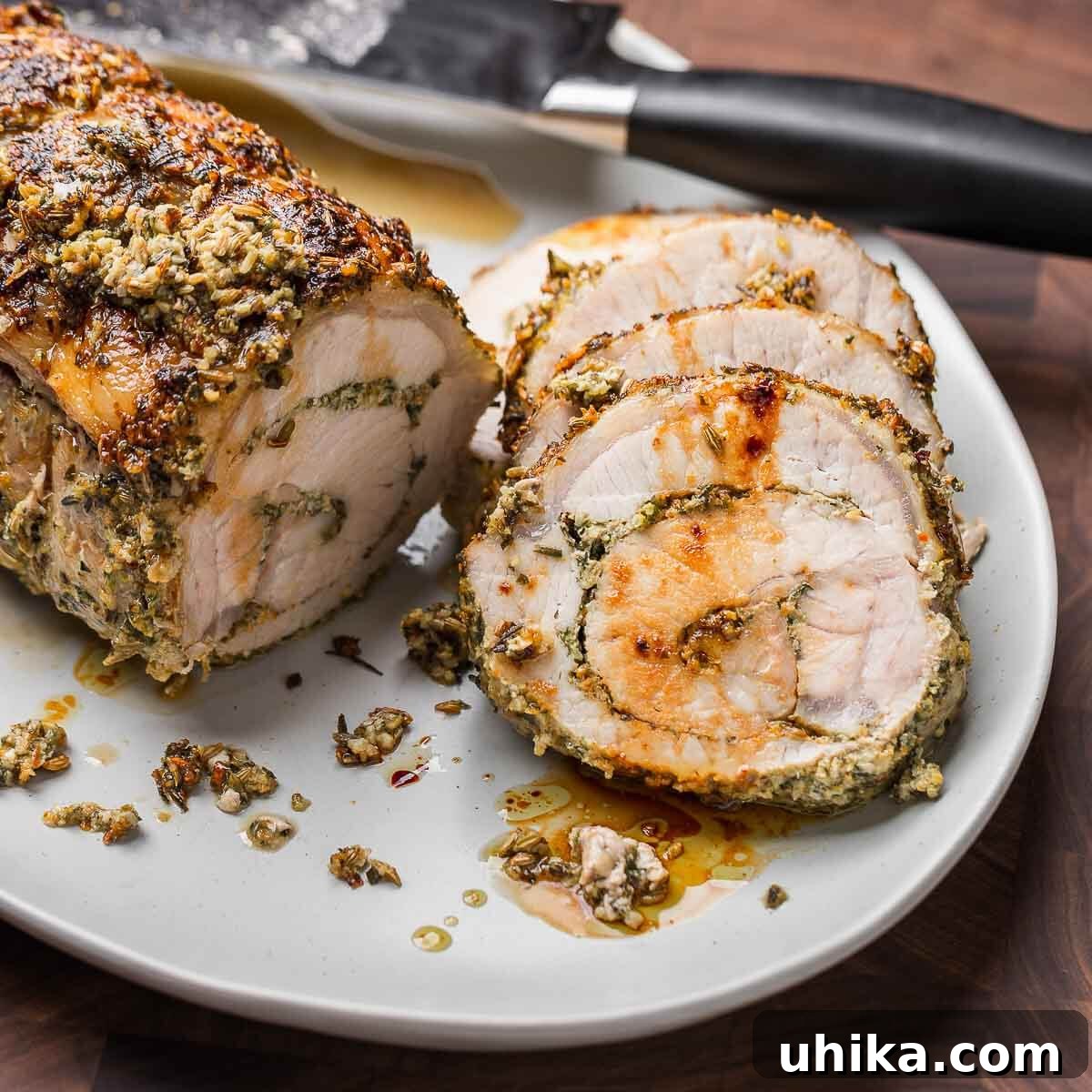
Exquisite Italian Stuffed Pork Loin: The Ultimate Holiday Roast
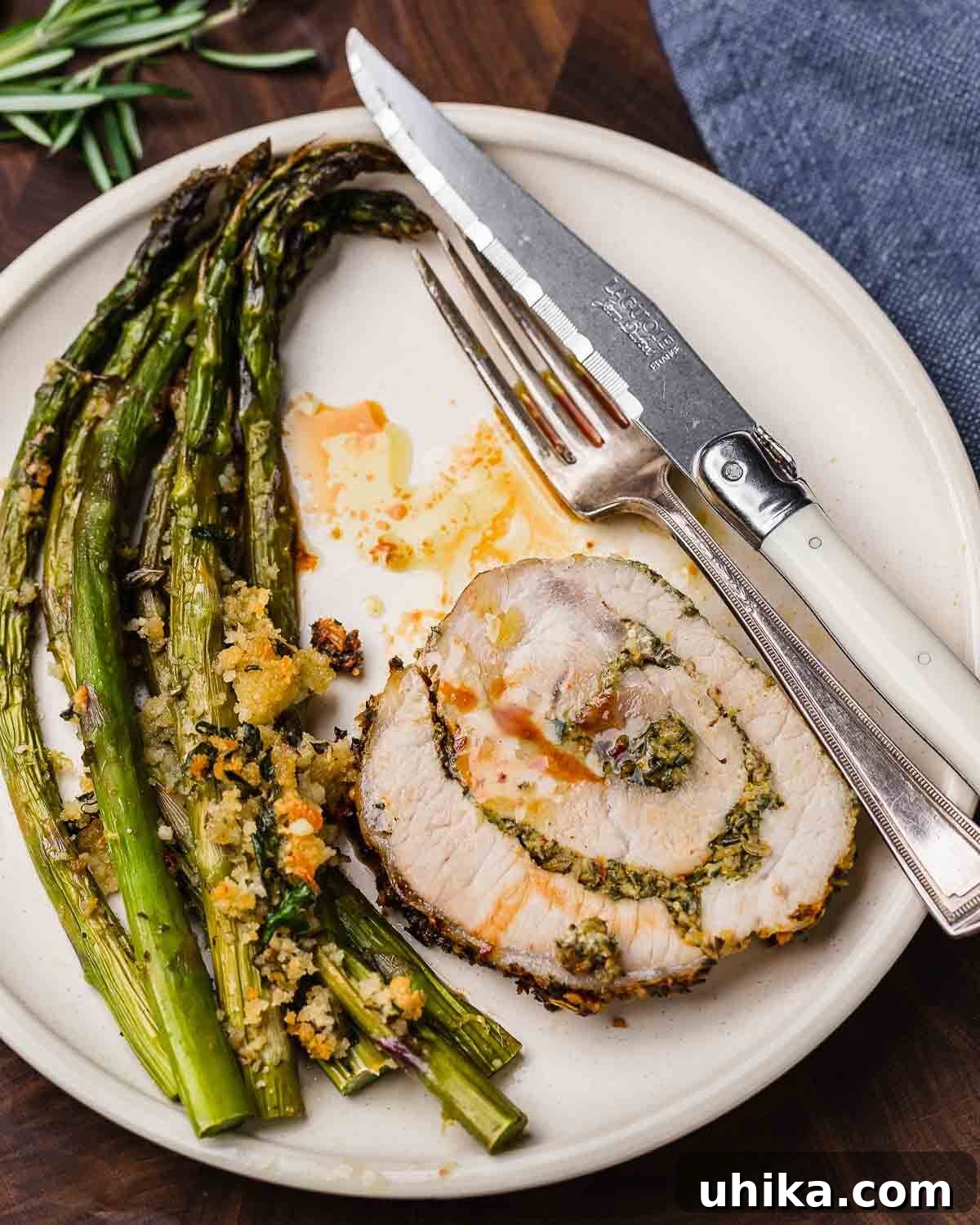
Transform your holiday meals and special gatherings with an exquisite Italian stuffed pork loin. This magnificent roast boasts a symphony of flavors, with a fragrant stuffing of aromatic garlic, delicate pignoli (pine nuts), bright orange zest, and fresh rosemary. Roasted to perfection, it achieves a beautiful golden exterior while remaining incredibly moist and tender on the inside, promising a truly memorable dining experience.
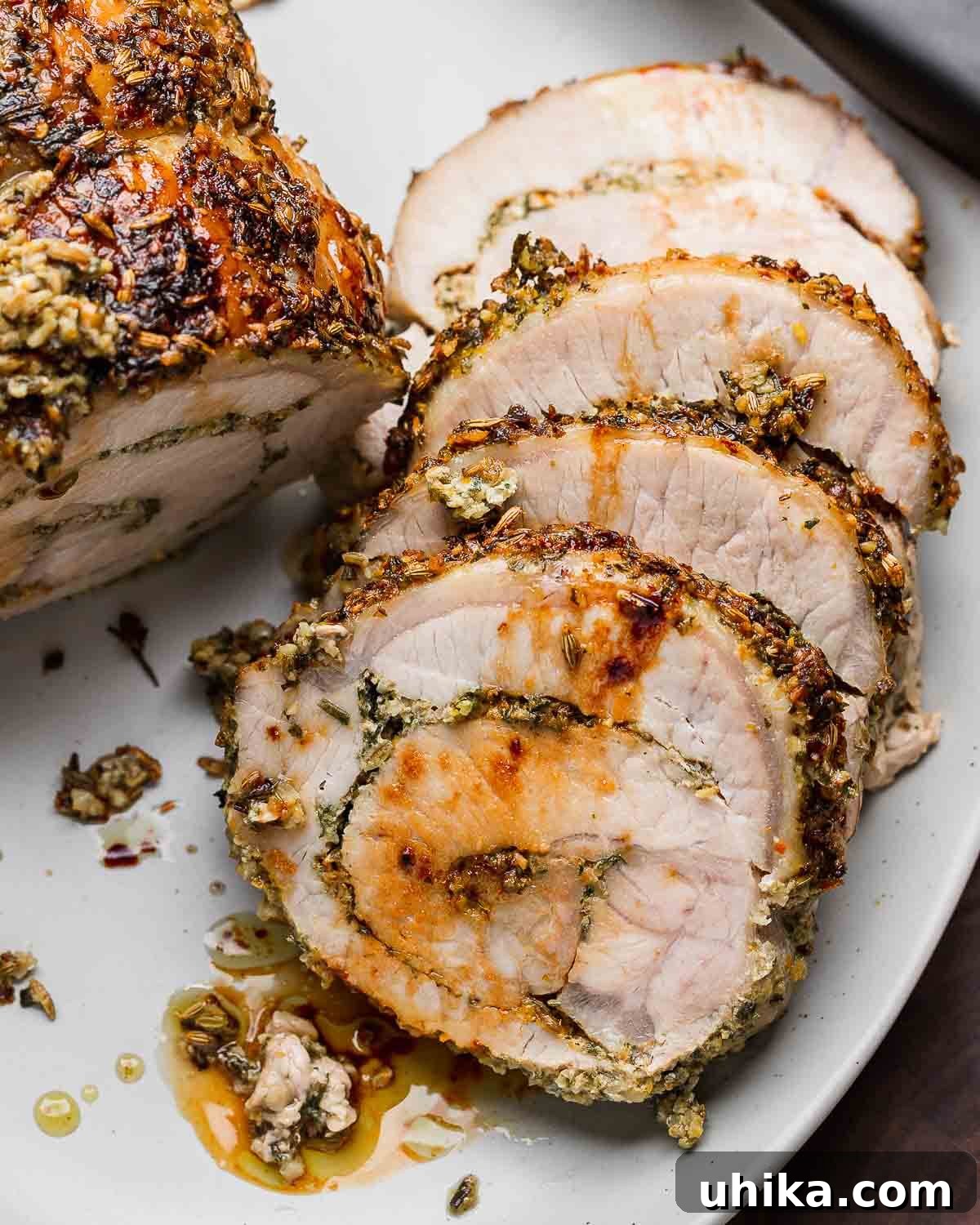

Why This Stuffed Pork Loin is Your Next Holiday Centerpiece
As culinary enthusiasts, we constantly seek out dishes that impress without overwhelming the chef, especially during the bustling holiday season. Our Italian stuffed pork loin stands out as a top contender for any festive table. While we adore the complexity of a classic porchetta, we find this stuffed pork loin offers a more approachable and equally delicious alternative. It’s noticeably easier and quicker to prepare, and often more budget-friendly, making it an ideal choice when feeding a crowd or simply aiming for less kitchen stress.
This dish delivers a robust flavor profile that mirrors the best of Italian tradition. The harmonious combination of zesty orange, earthy rosemary, pungent garlic, and buttery pignoli creates an unforgettable stuffing that permeates every bite of the tender pork. It’s a flavor profile so universally appealing, we often say it’s “picky eater approved” – a true testament to its irresistible charm.
Pairing this magnificent roast with complementary sides elevates the entire meal. Imagine serving it alongside crispy rosemary lemon smashed potatoes, perfectly charred roasted Brussels sprouts with a hint of balsamic, rich and comforting baked cauliflower with cheesy breadcrumbs, or vibrant steamed asparagus. Each of these sides complements the pork beautifully, adding texture and balancing the rich flavors. Whether it’s a grand holiday feast or an intimate family dinner, this Italian stuffed pork loin is guaranteed to be the star of the show.
Mastering the Italian Stuffed Pork Loin: A Step-by-Step Guide
Crafting this impressive Italian stuffed pork loin is simpler than you might imagine. Follow these detailed steps to ensure a flavorful and perfectly cooked roast every time. Each instruction is designed to guide you through the process, from preparing the aromatic stuffing to achieving that coveted golden-brown crust and succulent interior.
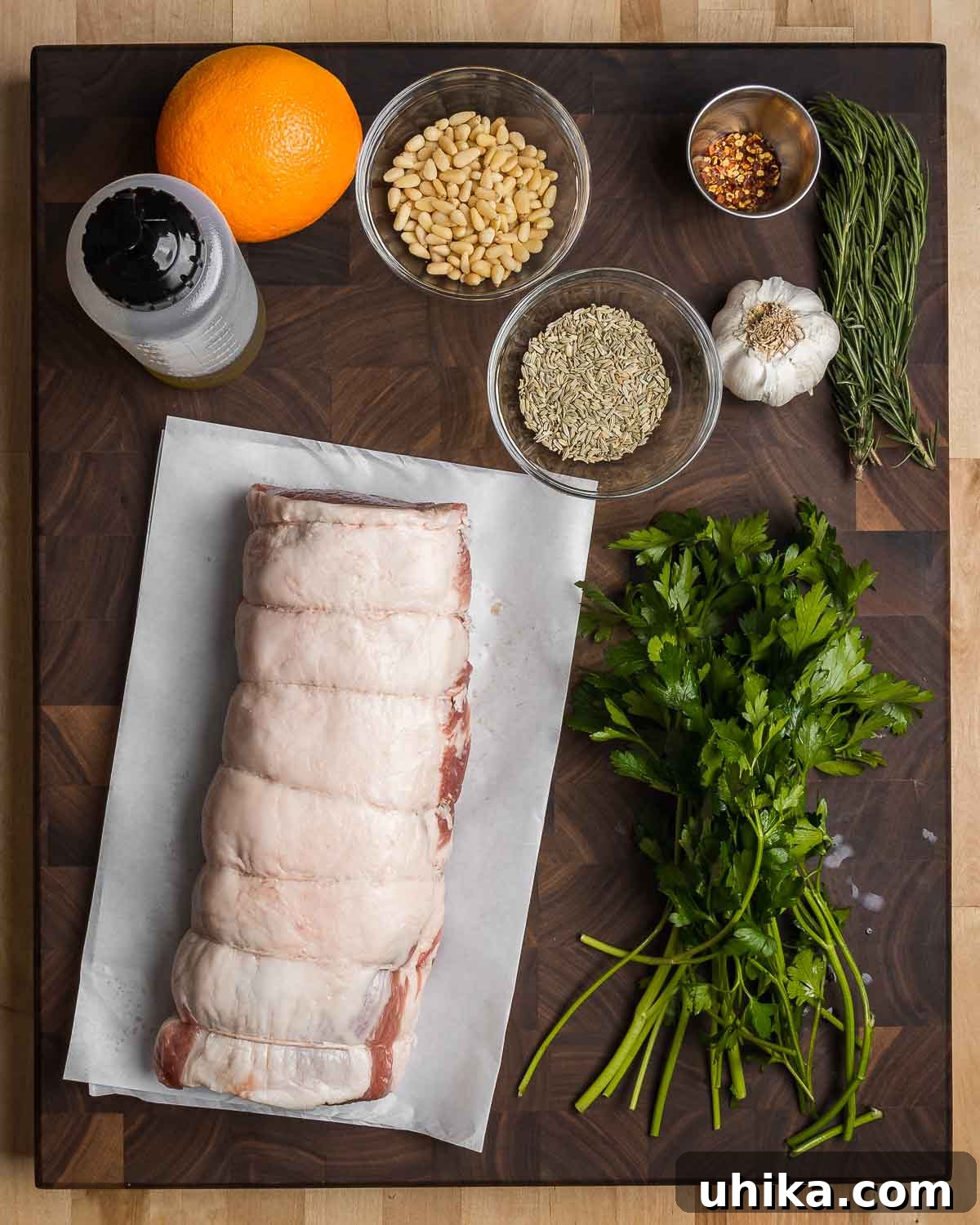
- Prepare the Aromatic Paste: Begin by creating the heart of your stuffing – the flavorful paste. In the bowl of a food processor, combine 1/4 cup of pignoli nuts, 2 tablespoons of fragrant fennel seeds, 1 teaspoon of crushed red pepper flakes for a subtle kick, 3 tablespoons of fresh rosemary leaves, 1/4 cup of vibrant chopped flat-leaf parsley, 5 cloves of peeled garlic, 3 tablespoons of bright orange zest, and 1/4 cup of quality olive oil. Process these ingredients until a coarse yet cohesive paste forms. If the mixture appears too dry, gradually add a touch more olive oil until the desired consistency is achieved. For those without a food processor, a mortar and pestle or meticulous hand chopping will also work beautifully, though it will require a bit more effort. Set this vibrant paste aside as you prepare the pork.
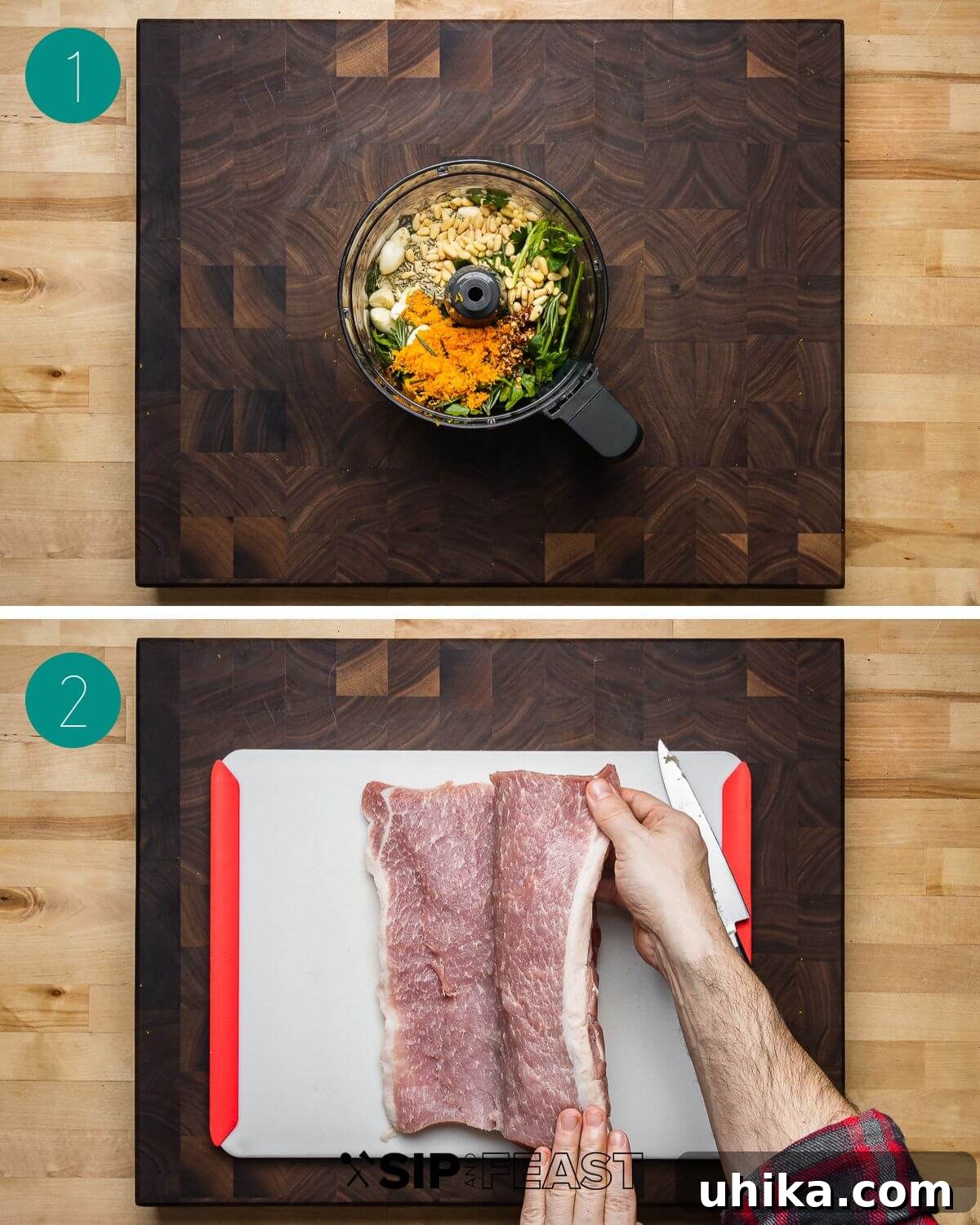
- Butterfly the Pork Loin: Preheat your oven to 350°F (175°C) and adjust an oven rack to the middle position. Take a 3 1/2 to 4-pound pork loin and, using a very sharp knife, make a lengthwise cut about one-third of the way from the bottom, being careful not to cut all the way through to the other side. This creates a flap. Continue to cut and unroll the loin, flattening it out like a book. If your loin is particularly thick, you may need to make additional cuts to fully unfurl it into an even, flat slab. For thinner loins, a single central cut, opening it up like a book, may suffice.
- Even Out the Thickness: Once unrolled, cover the pork loin with a sheet of plastic wrap. Using the flat side of a meat mallet, gently pound the loin until it achieves an even thickness throughout. This crucial step ensures uniform cooking and a perfectly tender result.
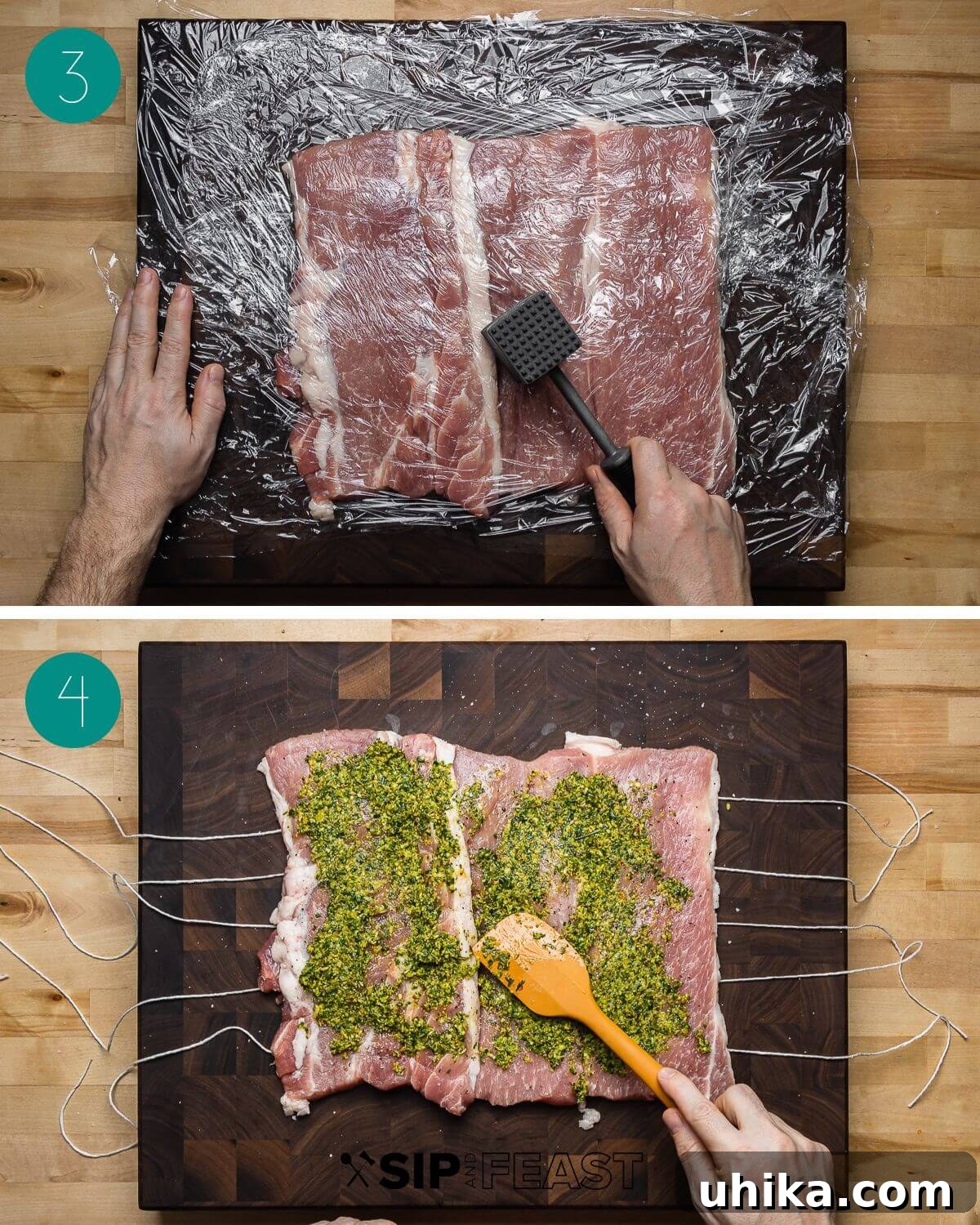
- Season and Stuff the Interior: Pat both sides of the butterflied pork loin thoroughly dry with paper towels; this helps in seasoning adherence and browning. Lay the loin fat-side down on your work surface. Arrange 4-5 lengths of butcher’s twine underneath the loin, spaced approximately 2 inches apart. Season the entire inside surface of the pork with 2 teaspoons of kosher salt, then generously spread half of the prepared aromatic paste evenly over the seasoned interior.
- Roll the Loin: Carefully and tightly roll up the pork loin from one end to the other, ensuring the stuffing remains securely inside. Aim for a compact roll that will hold its shape during cooking.
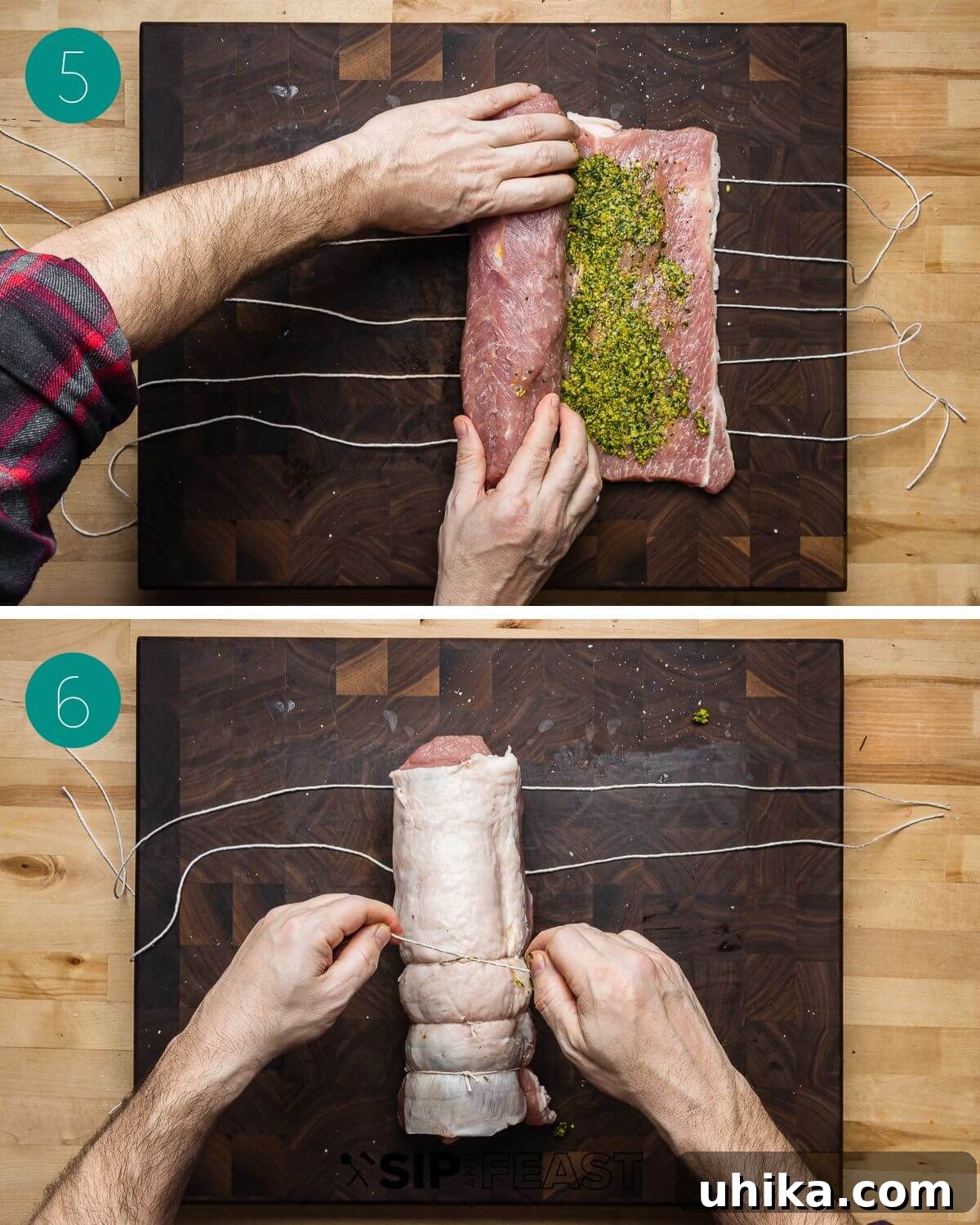
- Secure and Season the Exterior: Once rolled, firmly tie the loin with the pre-positioned butcher’s twine using double knots. Trim any excess twine. Season the exterior of the tied loin with the remaining 1 teaspoon of kosher salt, then spread the rest of the aromatic paste evenly over the entire surface, ensuring it is completely coated. This outer layer of paste will create a beautiful crust and infuse more flavor.
- Prepare for Roasting: Place the seasoned and tied pork loin into a baking dish or an oven-safe pan. If you possess an oven-safe digital thermometer, insert its probe into the thickest part of the center of the roast. This invaluable tool will allow you to precisely monitor the internal temperature throughout the cooking process, guaranteeing a perfectly cooked and juicy result. Carefully transfer the pan to the preheated oven.
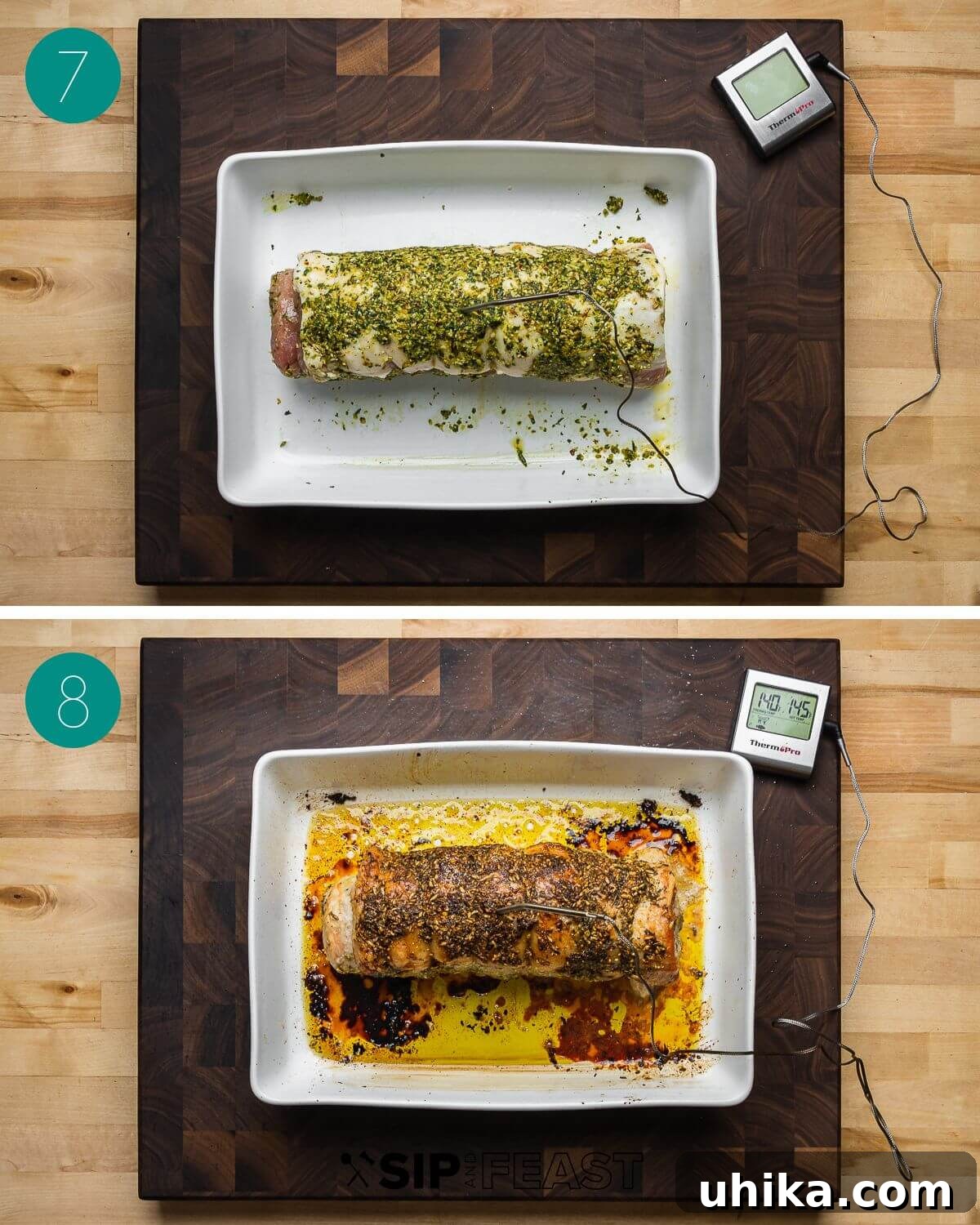
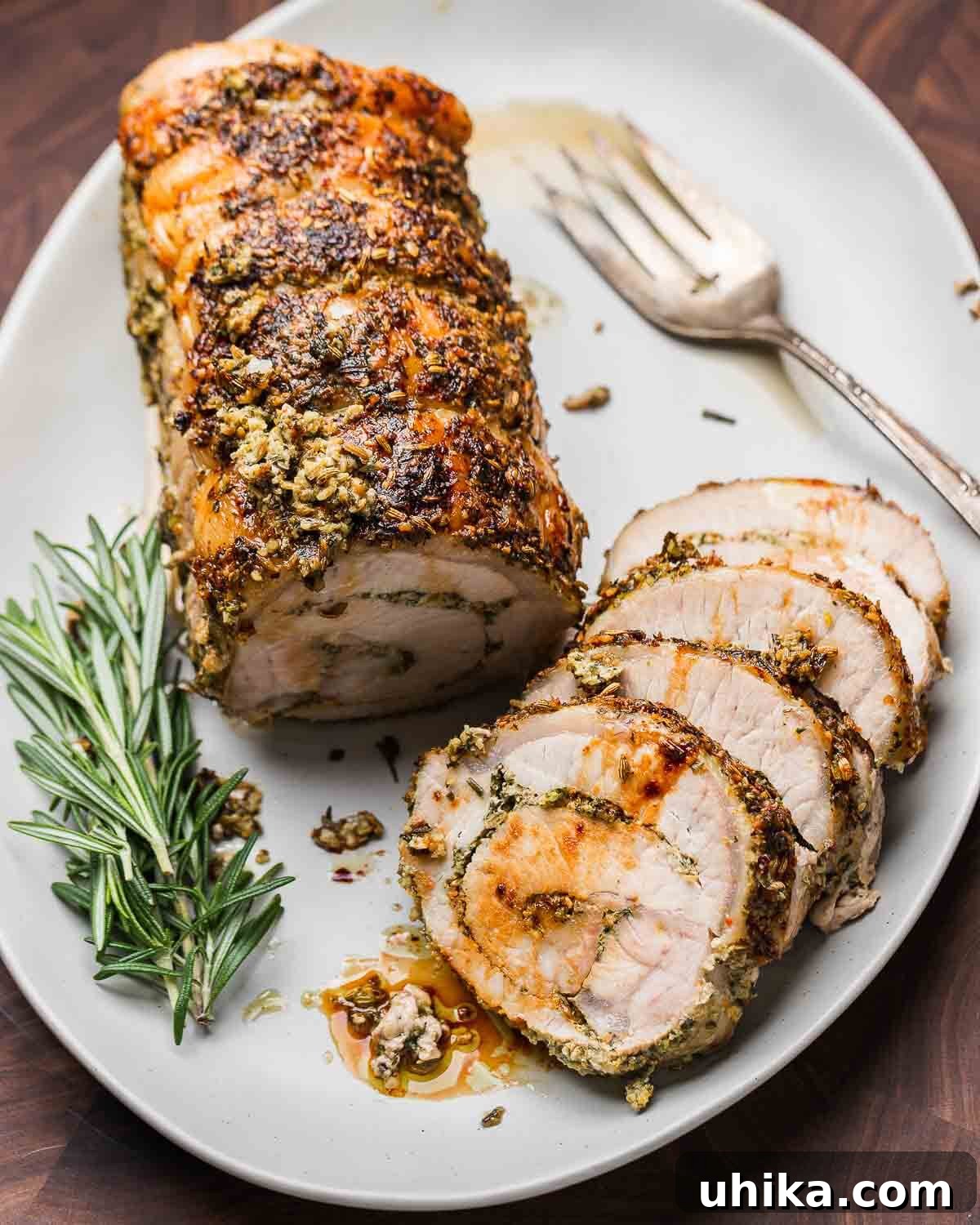
- Roast and Rest: Roast the pork loin in the preheated oven until its internal temperature reaches 135-140°F (57-60°C). This typically takes about 60-70 minutes, but actual cooking time may vary based on your oven and the exact thickness of the loin. Once the desired temperature is reached, remove the roast from the oven. Loosely tent it with aluminum foil and allow it to rest for a minimum of 15 minutes before slicing and serving. This resting period is crucial; it allows the juices to redistribute throughout the meat, ensuring maximum tenderness and flavor. Slice and enjoy your perfectly cooked Italian stuffed pork loin!
Expert Tips for a Perfect Italian Stuffed Pork Loin Roast
Achieving a show-stopping stuffed pork loin is all about understanding a few key techniques. These expert tips will help you master the roast, ensuring incredible flavor, texture, and presentation.
- Embrace the Fat: The natural fat cap on your pork loin is a secret weapon for achieving a beautifully colored, ultra-crispy, and utterly delicious exterior. As the roast cooks, this fat renders, basting the meat and developing an irresistible golden-brown crust. For this reason, it is paramount to place the fat side down when you begin seasoning the butterflied loin. This ensures that once the loin is rolled, the glorious fat cap is positioned on the outside, exposed to the direct heat of the oven, allowing it to crisp up to perfection. Don’t trim too much fat before cooking; it’s essential for both flavor and moisture.
- To Roll or Not to Roll?: The decision to roll the pork loin primarily impacts presentation and texture. Rolling creates an elegant, visually appealing spiral of stuffing and meat when sliced, and can help to keep the loin moist by holding the juices within the coiled structure. However, if you prefer a slightly simpler preparation or are short on time, you can absolutely choose not to roll the pork loin. Instead, leave the loin intact and use a sharp knife to cut several deep slits into the top surface (being careful not to cut all the way through). You can then generously stuff these slits with the aromatic paste. While not as visually dramatic as a rolled loin, this method still infuses the pork with abundant flavor and can be quicker to prepare.
- The Golden Rule of Temperature: Precision is key when cooking pork. For a juicy and safe result, pork should be cooked to an internal temperature of 140°F (60°C). Remember that the meat will continue to cook slightly after it’s removed from the oven due to carry-over cooking, reaching a final temperature of around 145°F (63°C), which is the USDA recommended minimum safe temperature for pork. To ensure this precise doneness and prevent overcooking (which can lead to dry pork), we highly recommend using an oven-safe digital thermometer. Insert the probe into the thickest part of the roast, avoiding bone, before placing it in the oven. This allows for continuous monitoring without constantly opening the oven door, preserving heat and ensuring accuracy.
- Pork Loin vs. Pork Tenderloin: This recipe utilizes a pork loin, which is a larger, leaner cut of meat, making it ideal for serving a generous number of guests at holidays or larger gatherings. If you’re planning a smaller, more intimate meal for fewer people, a pork tenderloin can be a fantastic alternative. Tenderloins are much smaller and cook more quickly. If substituting, you would need to adjust the amount of paste accordingly (likely less) and significantly reduce the cooking time. However, the internal temperature target remains the same: cook the tenderloin to 140°F (60°C) for optimal juiciness, followed by a crucial resting period. You can adapt our bacon-wrapped pork tenderloin approach for a smaller, stuffed version.
- Crafting a Simple Pan Sauce (Optional, but Recommended): While this stuffed pork loin is incredibly flavorful on its own and truly doesn’t require a sauce, a quick pan gravy can beautifully enhance the meal, adding another layer of savory richness. Here’s how to make one in about 15 minutes: after removing the roast, transfer about 1/4 cup of the rich pan drippings into a small saucepan. Over medium heat, sauté 1 minced shallot in the drippings until it softens and becomes translucent, typically 2-3 minutes. Whisk in 1/4 cup of all-purpose flour and cook for about 1 minute, stirring constantly, until it turns golden brown to create a roux. Gradually whisk in 1 1/2 cups of low-sodium chicken stock, ensuring no lumps form. Bring the mixture to a gentle simmer, allowing it to thicken slightly. Season with salt and freshly ground black pepper to taste. This simple pork gravy, utilizing the delicious rendered fats and juices, perfectly complements the roast.
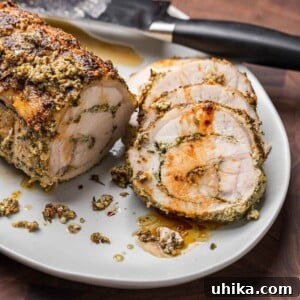
Explore More Delicious Roast Recipes
If you’ve fallen in love with the art of roasting, we have an array of other delectable roast meat recipes that we think you’ll truly enjoy. From succulent poultry to tender red meats, these dishes are perfect for various occasions and offer diverse flavor profiles to satisfy every palate:
- Hearty Roast Pork Shoulder: A slow-roasted favorite, perfect for shredding or slicing, bursting with flavor.
- Elegant Boneless Leg of Lamb: A sophisticated choice for special dinners, seasoned to perfection.
- Luxurious Prime Rib Au Jus: The ultimate celebration roast, incredibly tender and served with its rich pan juices.
- Classic Garlic Butter Roast Chicken: A timeless, comforting dish that’s simple to make and always a crowd-pleaser.
- Juicy Dry-Brined Turkey Breast: A fantastic option for a smaller Thanksgiving meal or any time you crave tender turkey.
If you’ve enjoyed preparing and tasting this Italian stuffed pork loin recipe, we encourage you to share your experience by giving it a 5-star rating!
For more culinary inspiration and cooking demonstrations, be sure to watch us on YouTube, follow along on our Facebook Page for daily updates, and consider becoming a Patreon member to gain exclusive access to full-meal videos, behind-the-scenes content, and more. Your support helps us continue creating delicious recipes for you!
Italian Stuffed Pork Loin
Pin
Ingredients
- 1 3 1/2-4 pound pork loin
- 3 teaspoons kosher salt
For the Aromatic Paste
- 1/4 cup pignoli nuts
- 2 tablespoons fennel seeds
- 1 teaspoon crushed hot red pepper flakes
- 3 tablespoons fresh rosemary leaves only
- 1/4 cup flat leaf Italian parsley chopped
- 5 cloves garlic chopped
- 3 tablespoons orange zest
- 1/4 cup olive oil
Instructions
For the Aromatic Paste
-
Combine all of the paste ingredients (pignoli nuts, fennel seeds, red pepper flakes, fresh rosemary leaves, chopped flat-leaf parsley, garlic, orange zest, and olive oil) in a food processor. Blend until a thick, aromatic paste is formed. If the mixture seems too dry, add an additional tablespoon or two of olive oil until it reaches the desired consistency. Alternatively, you can achieve this by finely chopping all ingredients by hand and mixing them thoroughly with the olive oil.
For the Stuffed Pork Loin
-
Preheat your oven to 350°F (175°C) and place an oven rack in the middle position to ensure even heat distribution.
-
To prepare the pork loin for stuffing, use a very sharp knife to make a lengthwise cut, approximately one-third of the way from the bottom edge of the loin. Be careful not to slice all the way through. Continue to cut and carefully unroll the loin, opening it up into a flat, even slab. If the loin is thinner, you might simply cut it through the center and open it like a book. Once unrolled, cover the pork with plastic wrap and use the flat side of a meat mallet to pound it to an even thickness (about 1/2 to 3/4 inch). This ensures consistent cooking.
-
Pat both sides of the butterflied pork loin dry with paper towels. Lay the loin fat-side down on your clean work surface. Carefully place 4-5 lengths of butcher’s twine underneath the loin, spaced about 2 inches apart. Season the entire inside surface of the pork loin generously with 2 teaspoons of kosher salt, then spread half of the prepared aromatic paste evenly over the seasoned interior.
-
Starting from one end, carefully and tightly roll up the pork loin into a compact cylinder, keeping the stuffing securely inside. Use the butcher’s twine to tie the rolled loin firmly with double knots. Trim any excess twine. Season the exterior of the tied loin with the remaining 1 teaspoon of kosher salt, then spread the rest of the aromatic paste over the entire surface, ensuring it is completely coated. This outer layer of paste will create a delicious crust during roasting.
-
Place the prepared loin into a baking dish or an oven-safe pan. For best results, insert an oven-safe digital thermometer into the thickest part of the center of the roast. This allows you to easily monitor the internal temperature throughout cooking. Place the pan in the preheated oven. Roast until the internal temperature of the pork reaches 140°F (60°C), which typically takes about 60-70 minutes, depending on the thickness of your loin and your oven.
-
Once the roast reaches the target temperature, remove it from the oven. Loosely tent the roast with aluminum foil and let it rest for at least 15 minutes before carving. This resting period is essential for allowing the juices to redistribute, resulting in a more tender and flavorful pork loin. Slice into thick rounds, serve, and enjoy your culinary masterpiece!
Notes
- For consistent results and to ensure a perfectly juicy, never-dry pork loin, always use an oven-safe digital thermometer inserted into the thickest part of the roast while it cooks. This helps you hit the ideal internal temperature of 140°F (60°C) without guesswork.
- Leftover Italian stuffed pork loin makes for fantastic next-day meals! Store any unused portions in an airtight container in the refrigerator for up to 3 days. Reheat gently to maintain moisture.
Nutrition
Nutrition information is automatically calculated, so should only be used as an approximation. It may vary based on specific ingredients and preparation methods.
Like this? Leave a comment below!Check us out on Instagram at @sipandfeast or tag #sipandfeast to share your culinary creations!