
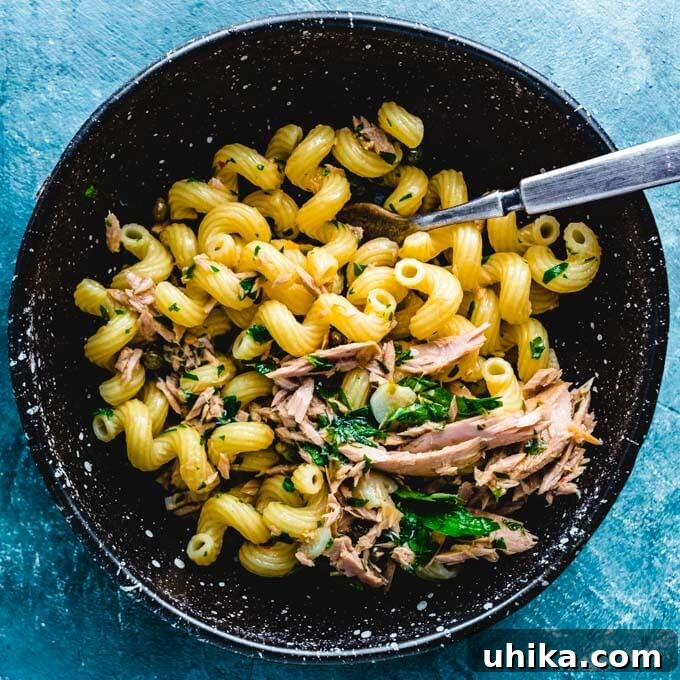
Tuna Pasta, known in Italy as Pasta al Tonno, is the quintessential dish for those seeking a quick, incredibly easy, and utterly delicious meal. With its minimal ingredients and preparation time, this recipe ensures a delightful culinary experience in under 30 minutes, making it a perfect solution for busy weeknights or spontaneous gatherings.
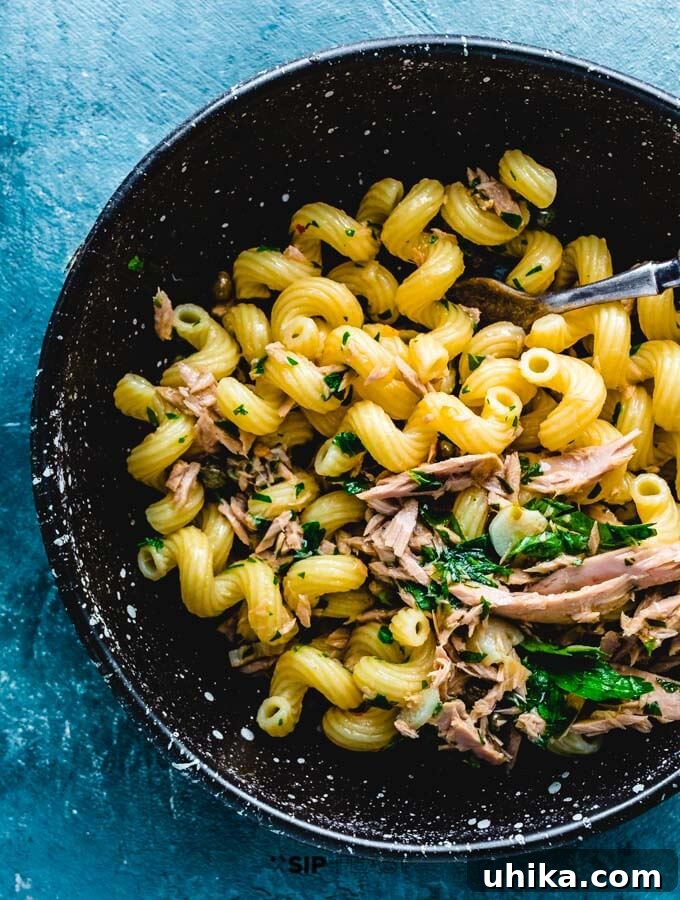
Unveiling the Simplicity of Pasta al Tonno in Bianco
This particular recipe focuses on Pasta al Tonno in Bianco, which translates to pasta in a “white” tuna sauce. Unlike its tomato-based counterpart, this version celebrates the pure, unadulterated flavors of high-quality tuna, garlic, capers, and olive oil, creating a light yet incredibly satisfying dish. While the red pasta al tonno with olives and capers is also a fantastic option, the bianco style offers a distinct elegance and allows the robust taste of the tuna to truly shine.
The beauty of this white tuna sauce lies in its simplicity. With only a handful of ingredients, each component plays a crucial role. This means that the quality of your ingredients is paramount to achieving an authentic Italian flavor profile. We strongly advise against using albacore tuna packed in water for this recipe. While it might be a convenient alternative, the results will likely be subpar and will not capture the rich, nuanced taste of true Italian Pasta al Tonno. For a truly exceptional dish that transports you straight to the shores of Italy, invest in premium, oil-packed tuna.
Essential Ingredients for Your Authentic Italian Tuna Pasta
Crafting the perfect Pasta al Tonno starts with selecting the right ingredients. Here’s a detailed breakdown of what you’ll need and why each choice matters:
- 1 pound pasta: The choice of pasta can significantly influence the dish’s texture and how the sauce clings to it. While tuna spaghetti is perhaps the most popular and classic choice, feeling free to use any shape you prefer. We’ve found cavatappi works wonderfully, with its corkscrew shape adept at catching every bit of the delicious sauce. Other excellent options include orecchiette, penne, rigatoni, or linguine, each offering a unique bite and mouthfeel.
- 10-12 ounces yellowfin tuna in olive oil: This is the star of the show, and quality cannot be stressed enough. Opt for yellowfin tuna fillets packed in high-quality olive oil. Brands like Genova, Tonnino, As do Mar, and Ortiz are widely recognized for their superior flavor and texture. These varieties provide a richer, more tender tuna that seamlessly integrates into the sauce. If you have access to an Italian specialty store, explore their selection for even more exquisite options, possibly even ventresca (belly) tuna, which offers an unparalleled melt-in-your-mouth experience.
- 2 Tbsp capers: These small, briny flower buds add a delightful tang and salty kick that perfectly complements the richness of the tuna. Their distinctive flavor is integral to the authentic taste of Pasta al Tonno. A light rinse before use can help temper their saltiness, allowing their nuanced flavor to come through without overpowering the dish.
- 1/4 cup fresh parsley: Fresh herbs are non-negotiable for vibrant Italian cooking. Fresh parsley, finely chopped, adds a burst of herbaceous freshness and a beautiful green hue. Avoid dried parsley; its flavor simply doesn’t compare to the bright, clean taste of fresh.
- 5 cloves garlic: The foundation of countless Italian sauces, garlic provides an aromatic depth that is essential to this pasta dish. Sliced garlic is preferred for a subtle infusion, rather than minced, which can burn too quickly.
- 1/2 tsp crushed red pepper flakes: For those who appreciate a touch of heat, crushed red pepper flakes add a gentle warmth that elevates the flavor profile. Adjust the quantity to your preference – a generous amount can turn this into a wonderfully spicy dish!
- 1/4 cup olive oil (for sautéing): This is the initial oil used to gently cook the garlic and capers, building the aromatic base of the sauce. A good quality olive oil will ensure a clean, flavorful start.
- 1/4 cup extra virgin olive oil (for finishing): A drizzle of high-quality extra virgin olive oil at the end is crucial. It adds a luxurious sheen, a peppery note, and a fresh, fruity aroma that rounds out the dish beautifully and enhances the overall mouthfeel.
- Salt/pepper: Seasoning to taste is always important. Because capers are inherently salty, you may find that little additional salt is needed. However, black pepper is a must for a subtle kick. Always taste and adjust to your liking!
- 1 1/2 cups pasta water: This often-overlooked ingredient is a true secret weapon in Italian cooking. The starchy water leftover from cooking your pasta is essential for emulsifying the sauce, helping it to cling to the pasta, and achieving a silky, glossy consistency. While you may not use all of it, always save a generous mugful; it’s excellent insurance if your pasta dries out before serving.
Step-by-Step Guide: Crafting Your Perfect Italian Tuna Pasta
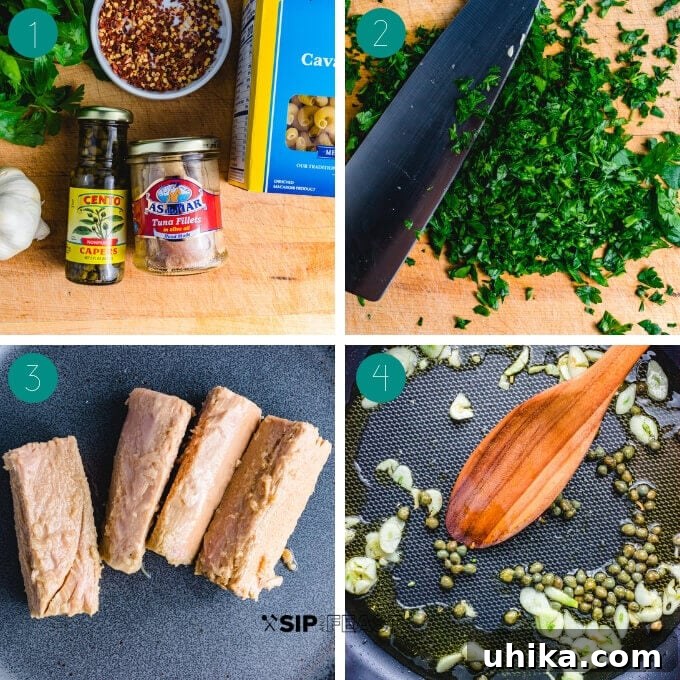
- Prepare the Pasta: Bring a large pot of generously salted water to a rolling boil. A good rule of thumb is 2 tablespoons of kosher salt per gallon of water – this properly seasons the pasta from within. Add your chosen pasta and cook according to package directions until it is perfectly “al dente,” meaning tender yet firm to the bite.
- Chop and Rinse: While the pasta cooks, finely chop your 1/4 cup of fresh parsley. Measure out 2 tablespoons of capers from their jar and give them a quick, light rinse under cold water. This helps to remove excess brine, allowing their distinct flavor to shine without making the sauce overly salty.
- Slice the Garlic: Thinly slice 4-5 cloves of garlic. Slicing rather than mincing ensures the garlic infuses the oil with flavor without burning too quickly.
- Aromatic Foundation: In a large skillet or pan, heat 1/4 cup of olive oil over medium heat. Add the sliced garlic and sauté gently for about 3-4 minutes, or until it turns a light golden color and becomes fragrant. Be careful not to burn the garlic, as this can make it bitter. Once golden, add the rinsed capers to the pan and sauté for another minute, allowing their flavors to meld with the garlic.
- Incorporate Tuna and Spice: Gently add the high-quality yellowfin tuna fillets into the pan. Using the back of a wooden spoon, begin to break the tuna apart into flakes. Stir in the 1/2 teaspoon of crushed red pepper flakes at this stage, allowing their heat to infuse into the oil and tuna.
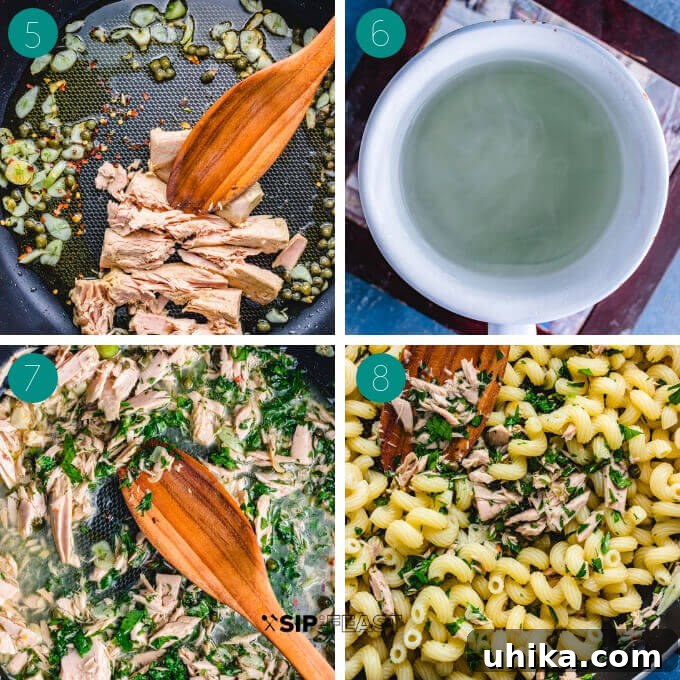
- Reserve Pasta Water: Before draining your al dente pasta, make sure to reserve about 1 1/2 cups of the starchy cooking water. This liquid gold is vital for creating a cohesive and luscious sauce.
- Build the Sauce: Add about 1/2 cup of the reserved pasta water to the pan with the tuna mixture. Bring the sauce to a gentle simmer, allowing the tuna and other flavors to meld and create a light, flavorful base. Let it cook for approximately 1-2 minutes until slightly reduced. Then, stir in the finely chopped fresh parsley and cook for just 1 more minute to release its aroma.
- Combine and Finish: Drain the pasta and add it directly into the pan with the tuna sauce. Toss thoroughly for 1-2 minutes, ensuring every strand of pasta is beautifully coated. Taste the dish and adjust seasoning as needed – add more salt, pepper, or crushed red pepper flakes to achieve your desired flavor profile. Turn off the heat and drizzle the 1/4 cup of extra virgin olive oil over the pasta, tossing once more for a glossy finish. If the pasta seems a little dry before serving, add a few splashes (an ounce or two at a time) of the reserved pasta water to achieve that perfect, silky consistency. Serve immediately and enjoy!
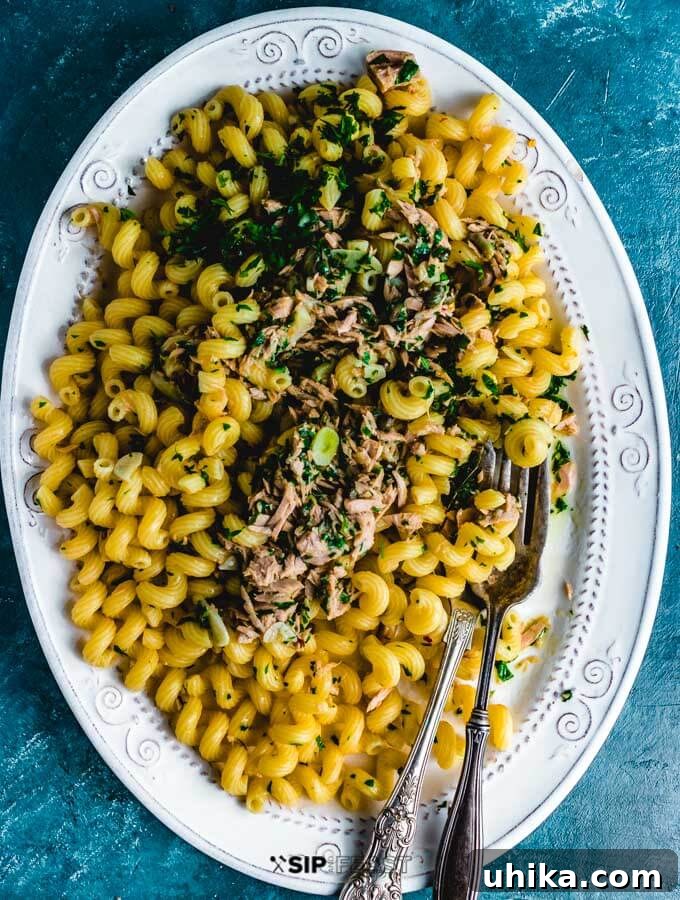
Choosing Your Pasta: Any Shape Works Wonders for Tuna Pasta
One of the many delightful aspects of this simple Italian recipe is its versatility when it comes to pasta shapes. While spaghetti and tuna was the most common version we enjoyed growing up, nearly any type of pasta can work beautifully. The key is to choose a shape that can effectively hold the delicate white tuna sauce.
Beyond spaghetti, orecchiette (little ears), penne, rigatoni, and linguine are all excellent choices. Orecchiette, with its cupped shape, is fantastic for scooping up the flakes of tuna and capers. Penne and rigatoni, with their ridged surfaces and tubular forms, provide texture and ensure the sauce clings perfectly. Linguine, similar to spaghetti but flatter, offers a slightly different mouthfeel while still being a classic choice for seafood-based sauces. Don’t hesitate to experiment with your favorite pasta to discover your perfect pairing.
Flavor Customization: Substitutions and Delicious Additions
This Tuna Pasta recipe is wonderfully adaptable. Here are a few ways to customize it to your taste or dietary needs:
- Capers: If you’re not a fan of capers, you can certainly omit them. However, be prepared to adjust the salt levels more significantly, as capers contribute a substantial amount of natural salinity to the dish.
- Lemon: A squeeze of fresh lemon juice and a hint of zest can brighten the entire dish, adding a lovely, zesty counterpoint to the richness of the tuna and olive oil. Start with the juice of half a lemon and about a teaspoon of zest, then taste and add more if desired. It’s an excellent addition to in bianco sauces.
- Black Olives: For an extra layer of savory, briny flavor, black olives are a superb addition. Nicoise olives are ideal if you can find them, but Kalamata or oil-cured black olives also work exceptionally well. Pit and chop about 1/2 cup of olives and add them to the pan along with the tuna for a Mediterranean twist.
- Anchovies: For a deeper, more pronounced seafood flavor and an umami boost, consider adding anchovies. They are a staple in many Italian seafood preparations, including our Linguine Alle Vongole. If you find good quality, oil-packed tuna challenging to source, or simply crave more depth, sauté 2-3 finely chopped anchovy fillets along with the garlic at the beginning of the cooking process. They will dissolve into the oil, imparting a rich, savory essence without a strong “fishy” taste.
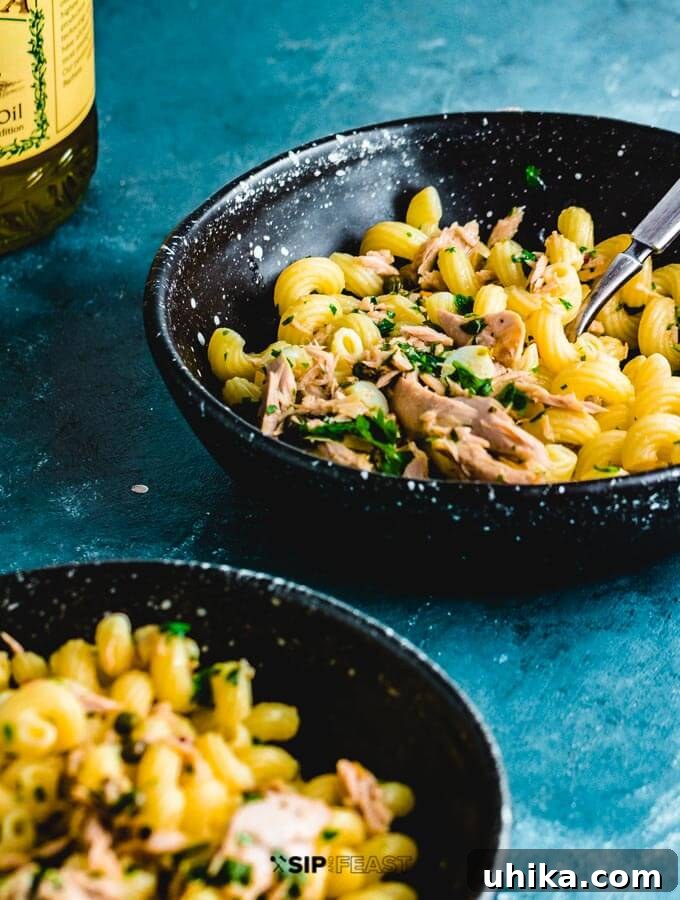
Frequently Asked Questions About Tuna Pasta
Can Tuna and Pasta Be Reheated? What About Leftovers?
Yes, tuna pasta can be reheated, but be mindful of the flavor intensity. When microwaved, the flavors can become more concentrated, and some people might find it a bit too “fishy.”
However, many, including us, absolutely love and prefer it as a cold leftover. Skipping the reheating process preserves the delicate flavors and offers a wonderfully fresh, light taste, especially on a warm day. If serving cold, a generous squeeze of fresh lemon juice and another drizzle of high-quality extra virgin olive oil will truly elevate it to perfection, making it taste like a brand new dish.
What is “Pasta al Tonno in Bianco”?
“Pasta al Tonno in Bianco” literally means “pasta with tuna in white (sauce).” This distinguishes it from “Pasta al Tonno al Pomodoro” or “in Rosso,” which features a tomato-based sauce. The “bianco” version emphasizes the pure flavors of olive oil, garlic, capers, and the tuna itself, creating a lighter, brighter, and often more aromatic dish.
Why is quality tuna so important for this recipe?
Because this recipe uses minimal ingredients, each one must be of the highest quality to ensure an authentic and delicious outcome. Cheap, water-packed tuna often lacks the rich flavor and tender texture needed to truly elevate this dish. Oil-packed yellowfin or ventresca tuna provides a superior taste and mouthfeel that forms the heart of this classic Italian meal.
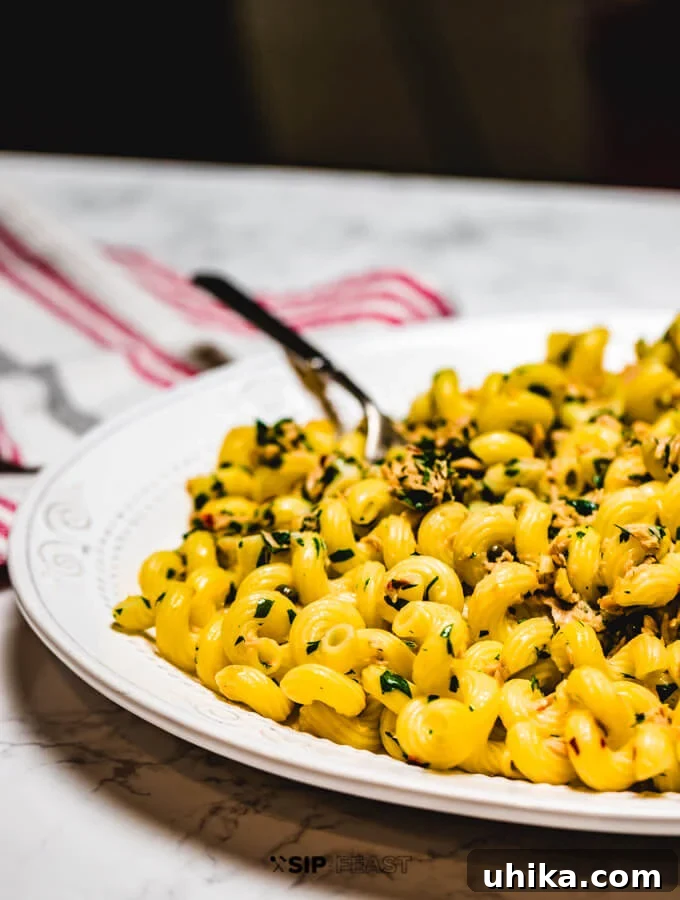
Discover More Delicious Italian Pasta Dishes
If you’ve enjoyed the simplicity and flavor of this Tuna Pasta, you’ll love exploring other staple Italian pasta recipes. Here are some of our favorites to inspire your next meal:
- Lemon Garlic Shrimp Pasta
- Spaghetti Carbonara
- Rigatoni Alla Vodka
- Linguine Alle Vongole
- Pasta Al Forno
Share Your Culinary Creations!
DID YOU TRY THIS RECIPE?
If you loved this Italian Tuna Pasta (Pasta al Tonno) recipe, we would be incredibly grateful if you could take a moment to give it a star rating and leave a comment below! Your feedback helps us and other home cooks.
We’d also love to see your creations! Share your photos on Instagram or Facebook using #sipandfeast. It’s wonderful to see how you bring our recipes to life, and it inspires others in our community. Thanks for being a part of Sip and Feast!
Follow us on Youtube, Instagram, Pinterest, and Facebook to stay updated with our latest recipes and culinary adventures. We truly appreciate you sharing our recipes on your favorite social platforms!
Tuna Pasta (Pasta al Tonno)
James Delmage
5
20
25
4
Pin
Ingredients
- 1 pound pasta
- 10-12 ounces canned yellowfin tuna in olive oil
- 2 Tbsp capers
- 1/4 cup fresh parsley, chopped
- 5 cloves garlic, sliced
- 1/2 tsp crushed red pepper flakes
- 1/4 cup olive oil (for sautéing)
- 1/4 cup extra virgin olive oil (for finishing)
- 1 1/2 cups reserved pasta water
- Salt and freshly ground black pepper, to taste
Instructions
-
Cook pasta to al dente in generously salted water (2 Tbsp kosher salt per gallon). While pasta cooks, finely chop fresh parsley. Thinly slice garlic cloves and rinse 2 tablespoons of capers to remove some of their saltiness.
-
In a large pan, heat 1/4 cup of olive oil over medium heat. Sauté the sliced garlic until lightly golden and fragrant, about 3-4 minutes. Be careful not to burn it. After the garlic is golden, add the rinsed capers to the pan and cook for 1 minute more.
-
Next, add the yellowfin tuna fillets to the pan. Using the back of a wooden spoon, gently break the tuna apart into flakes. Stir in the crushed red pepper flakes.
-
Before draining the pasta, reserve 1 1/2 cups of the starchy pasta water. Add about 1/2 cup of this reserved pasta water to the pan with the tuna mixture and bring to a gentle simmer. Let it cook for 1-2 minutes, allowing the flavors to meld and the sauce to slightly reduce. Stir in the chopped fresh parsley and cook for 1 minute more.
-
Drain the al dente pasta and add it directly to the pan with the tuna sauce. Toss thoroughly to coat the pasta evenly. Cook together for 1-2 minutes, allowing the pasta to absorb the flavors. Turn off the heat. Taste and adjust salt, pepper, and crushed red pepper levels to your desired taste. Drizzle the 1/4 cup of extra virgin olive oil over the pasta and mix once more.
-
If the pasta appears a little dry before serving, add a splash (1 ounce at a time) of the remaining reserved pasta water until you achieve the perfect, silky consistency. Serve immediately and enjoy your authentic Italian Tuna Pasta!
Notes
- Due to the natural saltiness of capers, you may find little to no additional salt is needed for the dish. Always taste and adjust seasoning according to your personal preference.
- The reserved pasta water is your best friend for achieving the ideal sauce consistency. Use it gradually to prevent the pasta from drying out before serving and to create a beautiful emulsion.
- For the most authentic and delicious result, prioritize yellowfin tuna fillets packed in high-quality olive oil. While canned albacore can be a substitute, it will significantly alter the flavor profile of this traditional Italian dish.
Nutrition
Calories: 651kcal
|
Carbohydrates: 62.1g
|
Protein: 32.9g
|
Fat: 30.3g
|
Cholesterol: 119mg
|
Sodium: 375mg
Nutrition information is automatically calculated, so should only be used as an approximation.
Like this? Leave a comment below!
Check us out on Instagram at @sipandfeast or tag #sipandfeast!