
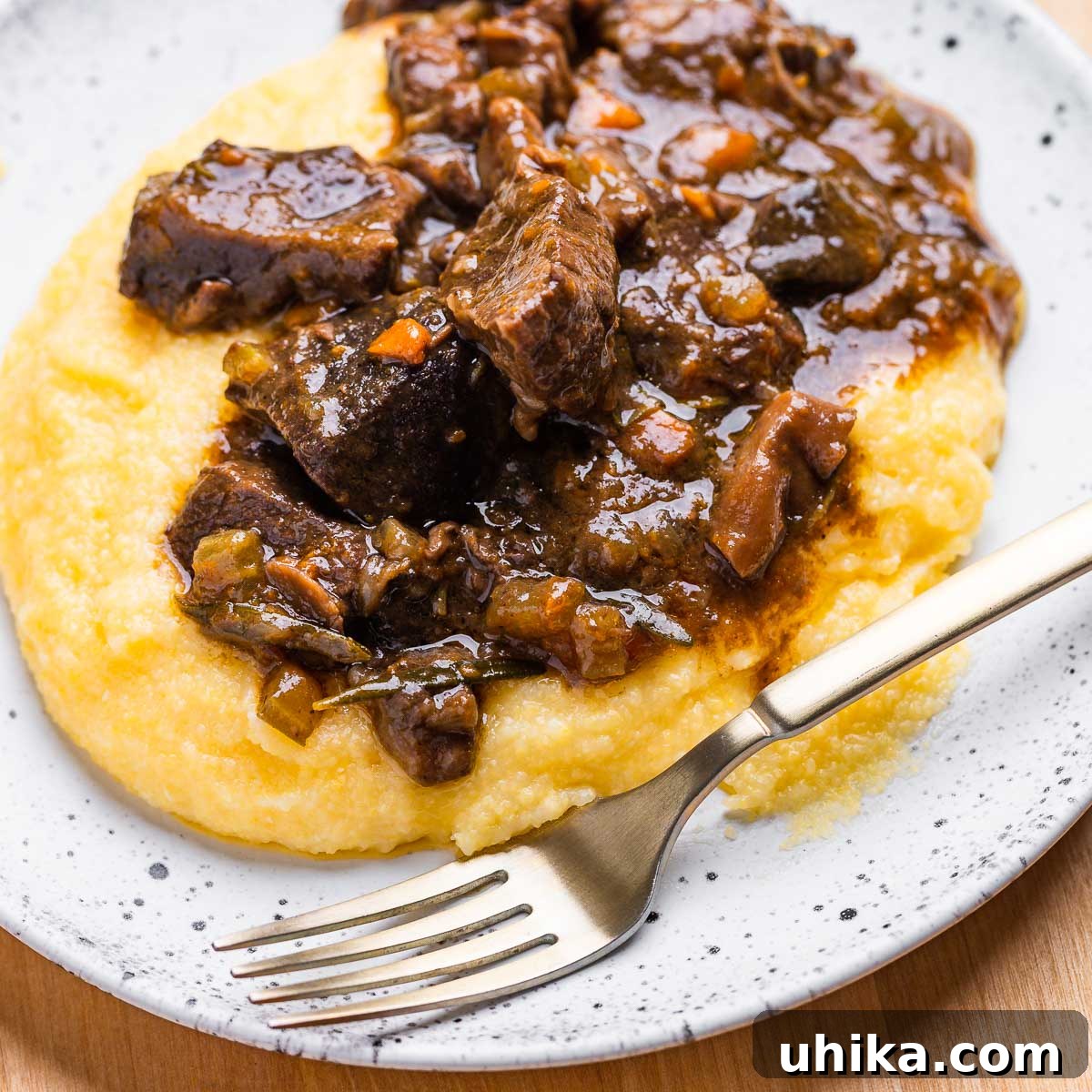
Italian Beef Stew, known in Italy as Spezzatino di Manzo, stands as a timeless culinary masterpiece, embodying the very essence of comfort food. As the crisp autumn air turns into the chill of winter, there’s nothing quite as satisfying as a bowl of this rich, slow-braised stew. This traditional Italian dish transforms humble chuck beef into incredibly tender morsels, simmered patiently in a robust, aromatic sauce brimming with earthy carrots, crisp celery, savory mushrooms, and the deep, complex notes of red wine. Infused with classic herbs like fragrant rosemary and bay leaf, this stew delivers a symphony of flavors that warms the soul and delights the palate. It’s an ideal centerpiece for a cozy family dinner, effortlessly paired with creamy polenta, velvety mashed potatoes, or a generous slice of crusty artisan bread for soaking up every last drop of its magnificent sauce.
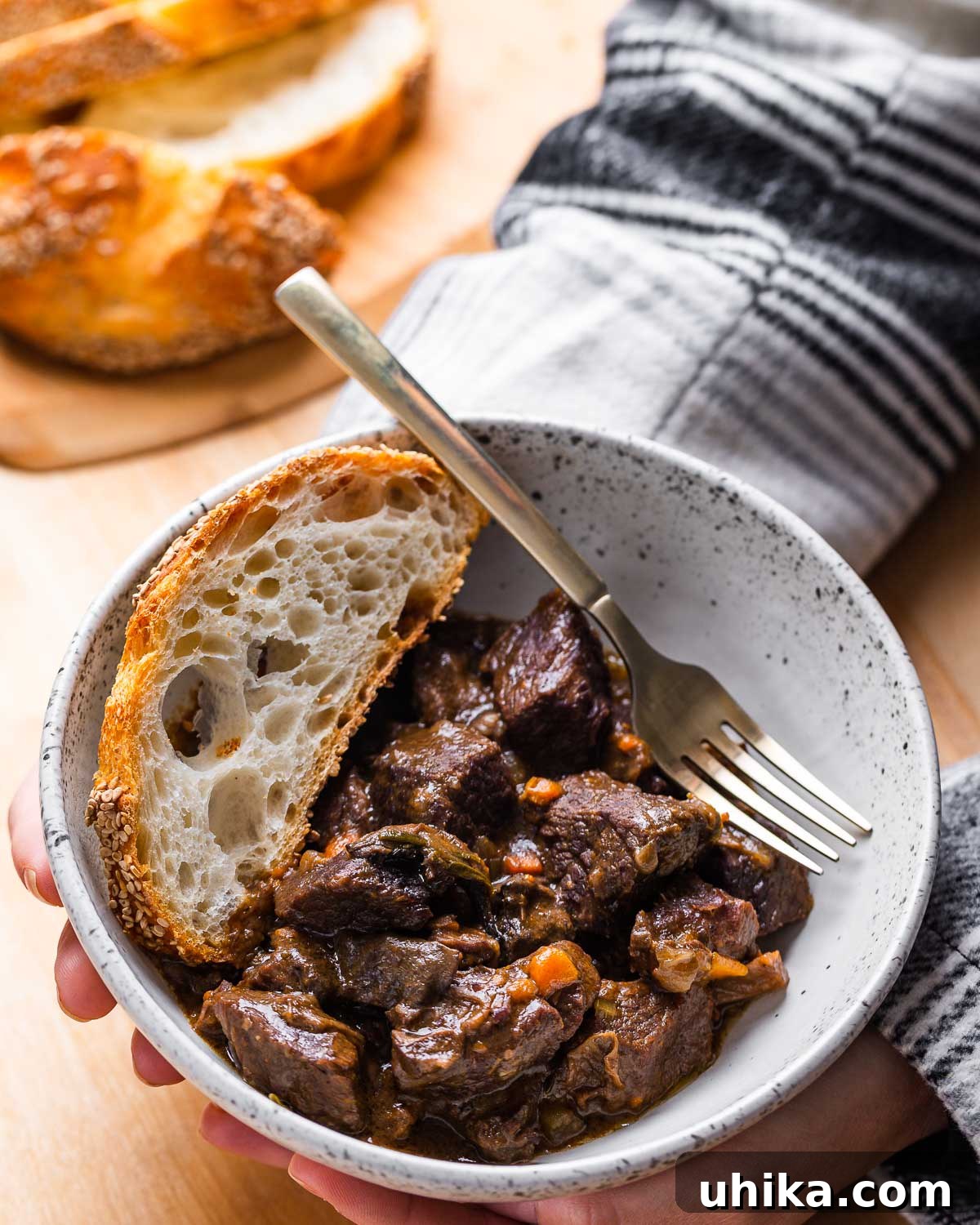
Table of Contents
- The Essence of Italian Beef Stew
- Why Chuck Roast is Perfect for Spezzatino
- How to Make the Best Italian Beef Stew
- Essential Tips for a Perfect Italian Beef Stew
- Serving Suggestions and Wine Pairings
- More Hearty Beef Recipes
- Italian Beef Stew (Spezzatino di Manzo) Recipe Card
The culinary landscape of Italy is rich with dishes that evoke warmth, tradition, and profound satisfaction, and Spezzatino di Manzo is undoubtedly one of them. Few aromas rival the comforting embrace of freshly brewed coffee in the morning, or the tantalizing scent of a simmering Sunday sauce. Yet, the distinctive perfume of beef braising in a deep red wine, mingling with fresh rosemary and other aromatic vegetables, holds a special place, signaling that a truly exceptional meal is underway. This stew is more than just food; it’s an experience, a journey to the heart of Italian home cooking.
Our recipe for Italian Beef Stew champions the use of chuck roast, a cut celebrated for its rich flavor and inherent tenderness when slow-cooked. Not only is chuck roast incredibly budget-friendly, making it a fantastic choice for hearty family meals, but it also excels in dishes demanding long, gentle braising. Its marbling melts slowly, infusing the stew with unparalleled succulence and depth. This versatility is why chuck roast is a star in many beloved comfort classics, from classic pot roast and Swiss steak to the iconic beef bourguignon. While chuck steak is our preferred cut, opting for pre-cut beef stew meat can often reduce costs further, without compromising on the final delicious result.
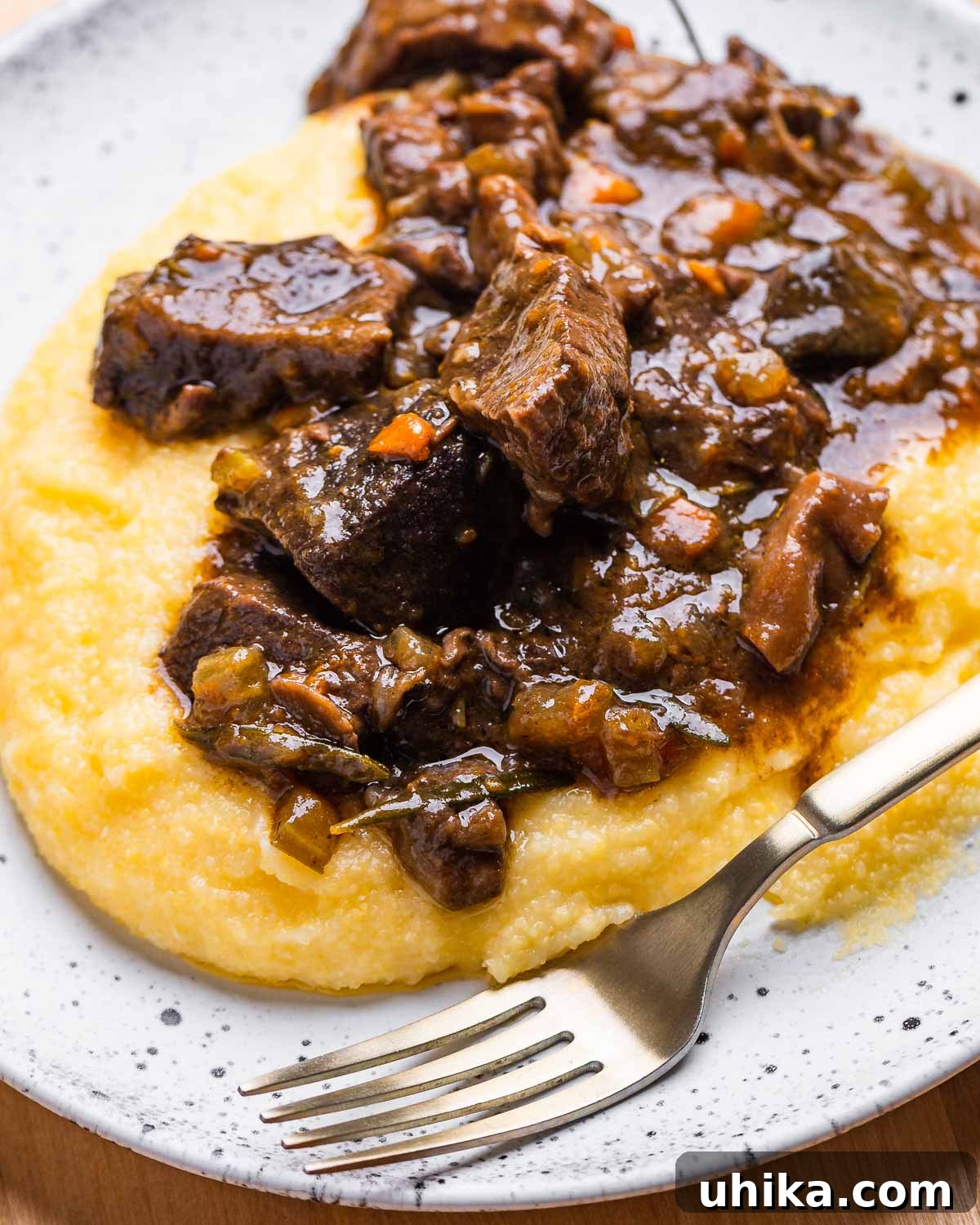
Italian beef stew transcends a mere meal; it’s an event. It finds its perfect companion in a bed of creamy polenta, its rich sauce coating each grain, or alongside fluffy roasted garlic mashed potatoes, creating a luxurious dining experience. Beyond these traditional pairings, we often complement our Spezzatino di Manzo with generous slices of crusty Italian bread, ideal for dipping into the flavorful gravy, and a glass of fine red wine, elevating the meal to a celebratory feast.
The Essence of Italian Beef Stew
At its heart, Italian Beef Stew, or Spezzatino di Manzo, is a celebration of slow cooking and robust, natural flavors. Unlike some stews that rely heavily on thickeners, a truly authentic Italian rendition allows time and quality ingredients to build its rich body and depth. The choice of meat, the careful selection of vegetables, and the slow infusion of aromatic herbs and red wine are what give this dish its distinctive character. It’s a testament to the Italian philosophy of simple, high-quality ingredients yielding extraordinary results.
This stew is incredibly versatile, adapting beautifully to various preferences. While our recipe highlights a classic combination, you can easily customize it with other root vegetables, different types of mushrooms, or even a touch of tomato paste for an added layer of umami. The beauty of Spezzatino lies in its forgiving nature and the promise of a deeply flavorful meal that improves even further the next day.
Why Chuck Roast is Perfect for Spezzatino
Choosing the right cut of beef is paramount for a successful stew, and chuck roast is an undisputed champion for Spezzatino di Manzo. Sourced from the shoulder of the cow, chuck roast is renowned for its excellent marbling—those streaks of fat that render down during slow cooking, basting the meat from within and imparting incredible tenderness and flavor. While other cuts like short ribs or even beef shank can be used, chuck roast strikes the perfect balance of affordability and suitability for the long braising process required to break down its connective tissues into gelatin, enriching the sauce and making the meat fall-apart tender.
When selecting your chuck roast, look for a piece with good marbling throughout, which is indicative of moisture and flavor. Cutting it into uniform 1-inch cubes ensures even cooking, allowing each piece to become perfectly tender without some drying out while others are still tough. Remember, the goal is not just cooked meat, but beef that melts in your mouth with every bite.
How to Make the Best Italian Beef Stew
Crafting this soulful Italian beef stew is a labor of love, but one that rewards you with an unforgettable meal. The process involves a few key steps that build layers of flavor, ensuring a rich and aromatic end product. Follow these detailed instructions to create a Spezzatino di Manzo that will impress every time:
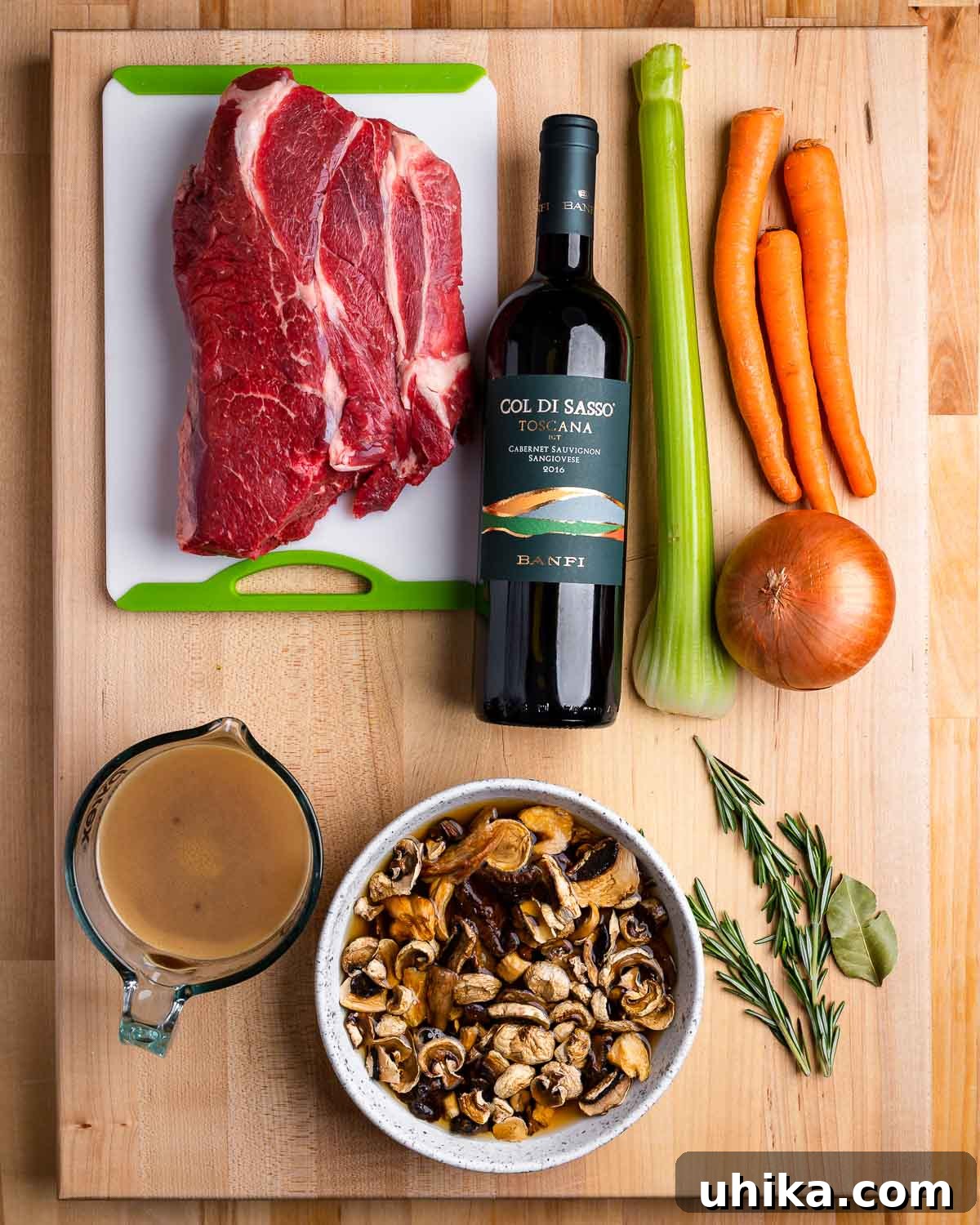
- Preheat your oven to a steady 300°F (150°C). This gentle heat is crucial for the slow braising process that makes the beef incredibly tender. Prepare your cooking space by ensuring there’s enough room on the middle oven rack for a large Dutch oven. While the oven preheats, begin preparing your vegetables: finely dice 2 celery ribs, 3 medium carrots, and 1 medium onion. This aromatic trinity forms the flavorful base of your stew. (Photo #1)
- Next, carefully cut the chuck steak into approximately 1-inch cubes. Uniform size is important for even cooking. While some prefer to trim all visible fat, leaving some larger pieces of fat on the meat is often recommended, as it renders during cooking, contributing significantly to the stew’s richness and flavor. Discard only excessively large or gristly pieces. (Photo #2)
- Place your large Dutch oven on the stovetop and heat it to medium-low. Add about 1/4 cup of olive oil, allowing it to shimmer gently. Introduce the diced carrots, celery, and onion to the hot oil. Sauté these aromatics for about 5 minutes until they begin to soften and become fragrant, but without browning them too much. This initial sautéing releases their natural sugars and deepens their flavor. (Photo #3)
- After 5 minutes, add the sliced mushrooms to the pot. Continue to cook, stirring frequently, allowing the mushrooms to release their moisture. If using fresh mushrooms, they will visibly shrink and brown as their water evaporates, concentrating their umami flavor. If using reconstituted dried mushrooms, they will simply warm through and integrate with the other vegetables. (Photo #4)
- While the vegetables are gently sautéing, take a moment to pat the cubed chuck roast dry with paper towels. This step is crucial for achieving a good sear on the beef, which locks in flavor. Once the mushrooms have released their water and most of it has evaporated from the pot, season the beef cubes generously with salt and freshly ground black pepper. Add the seasoned beef to the Dutch oven, tossing it with the sautéed vegetables and olive oil to ensure it’s well coated. Allow the beef to cook for 5-10 minutes, stirring occasionally. During this time, the beef will start to develop a light color but won’t fully brown, which is perfectly fine as the deep browning will occur during the wine reduction. (Photo #5)
- Increase the heat to medium-high. Pour in 1 cup of dry red wine. Chianti, Valpolicella, or Cabernet Sauvignon are all excellent choices, contributing a beautiful depth and acidity to the stew. (Photo #6)
- Allow the wine to simmer vigorously for 5-7 minutes, or until it has mostly evaporated and been absorbed by the beef and vegetables. This process, known as deglazing, is vital. Use a wooden spoon to scrape up any browned bits that have accumulated at the bottom of the pot. These “fonds” are packed with flavor and will dissolve into the stew, adding layers of delicious complexity. (Photo #7)
- Add 2 cups of low-sodium beef stock to the pot, along with 1 tablespoon of fresh rosemary and 1 large bay leaf. Stir everything together gently to combine. Bring the mixture to a gentle simmer on the stovetop, then cover the Dutch oven with a tight-fitting lid. Transfer the pot to the preheated oven and cook for 2 1/2 hours, or until the beef is incredibly tender and easily pierced with a fork. Slow braising ensures the meat breaks down beautifully, becoming succulent and flavorful. (Photo #8)
- After approximately 2 hours of braising, your Italian beef stew will have transformed into a rich, aromatic concoction, the beef tenderizing beautifully in the flavorful liquid. (Photo #9)
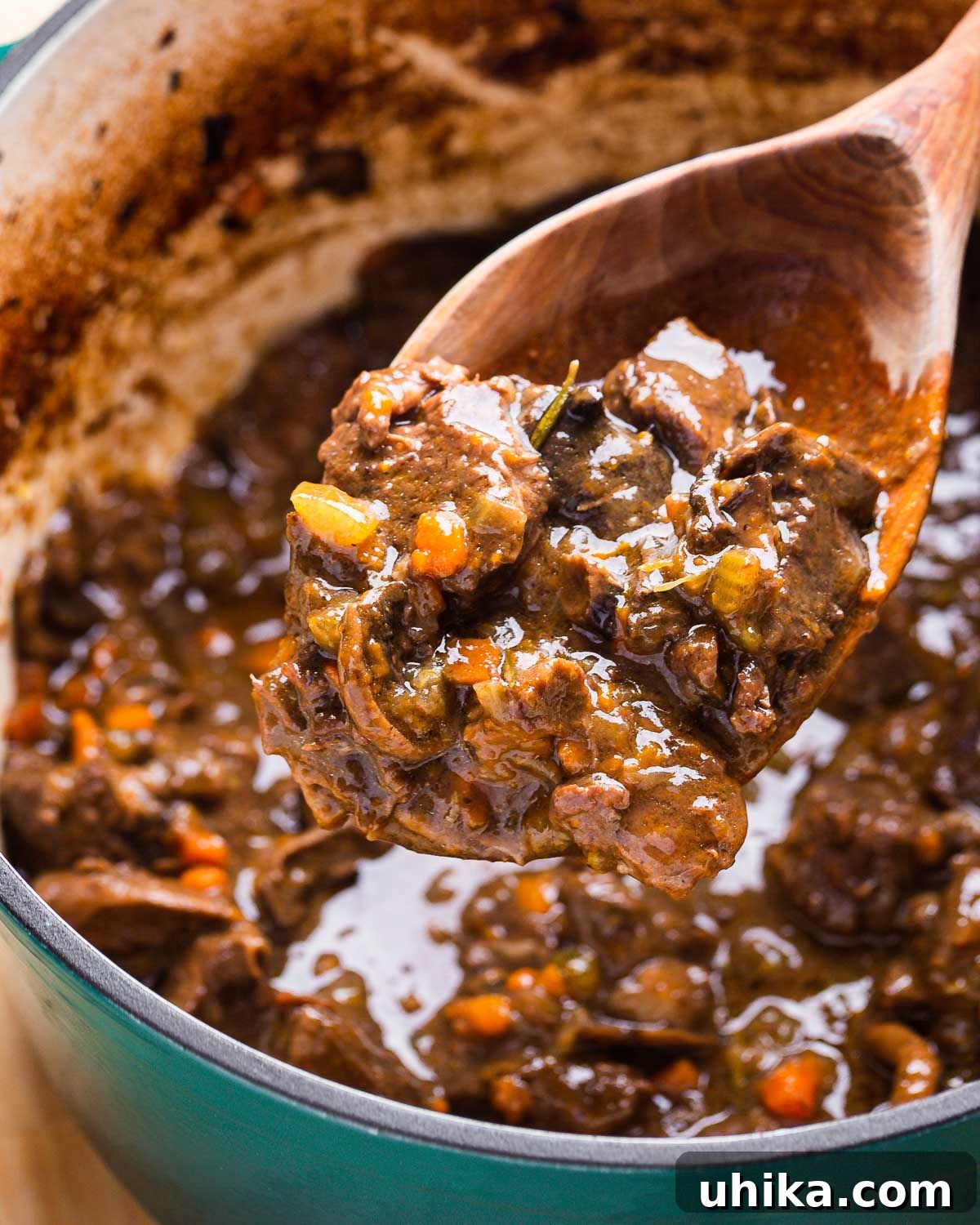
- Return the pot to the oven for an additional 30-60 minutes, but this time, leave the lid slightly ajar, as shown in the photo. This slight opening allows some of the liquid to evaporate, naturally thickening the stew and intensifying its flavors without over-reducing. (Photo #10)
- After a total of roughly 2 1/2 to 3 hours in the oven, the beef should be exceptionally tender, practically falling apart. If, at this point, you find the stew’s consistency to be a bit too thin for your liking, you can easily thicken it. Prepare a cornstarch slurry by mixing 1 tablespoon of cornstarch with 1 ounce of cold water until smooth. Place the pot back on the stovetop over medium-high heat. Once the stew begins to bubble, slowly drizzle in the cornstarch slurry while stirring continuously. (Photo #11)
- The slurry will work its magic quickly, thickening the beef stew to a desirable consistency in about 60 seconds. Once thickened, turn off the heat. Remove the bay leaf. Now is the time for a final taste test. Adjust the seasoning with additional salt and pepper as needed, ensuring the flavors are perfectly balanced. Serve this magnificent Italian Beef Stew piping hot over your choice of creamy mashed potatoes, soft polenta, or with hearty crusty bread. Enjoy every comforting spoonful! (Photo #12)
Essential Tips for a Perfect Italian Beef Stew
Achieving the perfect Italian Beef Stew, with its melt-in-your-mouth beef and rich, flavorful sauce, requires attention to a few key details. These tips will help you master this comforting dish:
- Monitor Cooking Times for Tenderness: Remember that every oven and stovetop can vary in heat distribution and calibration. The cooking times outlined are a guide, and your stew may require slightly more or less time. The ultimate indicator of readiness is the tenderness of the beef. If, after the recommended cooking time, the meat still feels tough when gently pressed with a fork, it simply needs more time to braise. Continue cooking, checking periodically, until it reaches that desirable fall-apart tenderness. Patience is truly a virtue when it comes to braising.
- Seasoning Strategy: While you’ll season the beef with salt and pepper before searing, resist the urge to add significant amounts of additional salt or pepper until the very end of the cooking process. As the stew simmers for hours, the liquids reduce and the flavors concentrate. Adding too much salt early on can lead to an overly salty dish. Once the stew has finished braising and you’ve adjusted its thickness, taste it carefully. At this point, you can make your final adjustments to salt, pepper, and any other seasonings to achieve a perfectly balanced flavor profile.
- Achieving the Ideal Stew Consistency: The consistency of your stew is a matter of personal preference. If you enjoy a thicker, more gravy-like sauce, a simple cornstarch slurry is your best friend. To make one, whisk together 1 tablespoon of cornstarch with 1 ounce of cold water until no lumps remain. After the beef has braised and is tender, place the Dutch oven back on the stovetop over medium-high heat. Once the stew is bubbling, slowly pour in the cornstarch slurry while continuously stirring. The stew will visibly thicken within about 60 seconds. If you desire an even thicker sauce, you can add a little more slurry, but do so gradually to avoid an overly dense consistency. Another method is to simply braise the stew with the lid slightly ajar for the last hour, allowing natural reduction to occur.
- Creative Side Dish Pairings: While creamy polenta and mashed potatoes are classic and undeniably delicious pairings for Italian Beef Stew, don’t hesitate to get creative with your side dishes. For an added touch of elegance, consider serving the stew over al dente pappardelle pasta, allowing the broad noodles to capture the rich sauce. Steamed or roasted seasonal vegetables like green beans, asparagus, or broccoli rabe make excellent lighter accompaniments. For a truly fun and interactive presentation that kids (and adults!) adore, purchase small, individual round boules of crusty bread. Hollow out the center of each to create a bread bowl, then ladle the warm stew directly inside. The bread soaks up the flavorful sauce, making for a wonderfully edible serving vessel.
Serving Suggestions and Wine Pairings
The beauty of Italian Beef Stew lies not only in its heartwarming flavors but also in its versatility when it comes to serving. Beyond the classic creamy polenta and fluffy mashed potatoes, consider:
- Crusty Bread: A must-have! Italian ciabatta or a rustic sourdough is perfect for soaking up every drop of the rich sauce.
- Egg Noodles or Pasta: Wide egg noodles or a hearty pasta like pappardelle or rigatoni can serve as an excellent vehicle for the tender beef and savory gravy.
- Risotto: A simple Parmesan risotto can elevate the dish, adding another layer of creamy, comforting texture.
- Roasted Vegetables: A side of roasted root vegetables like parsnips, turnips, or even more carrots can complement the stew’s flavors and add nutritional value.
For wine pairings, opt for a medium to full-bodied red wine that complements the richness of the beef and the earthiness of the vegetables and mushrooms. The same dry red wine you use in the stew – such as Chianti, Valpolicella, or Cabernet Sauvignon – will be an excellent choice to serve alongside it. Their tannins and fruit notes cut through the richness of the stew, creating a harmonious balance on the palate.
More Hearty Beef Recipes
If the comforting allure of Spezzatino di Manzo has captured your heart, you’ll surely appreciate these other hearty beef recipes. They are perfect for cooler weather, providing warmth, satisfaction, and rich, deep flavors that truly hit the spot:
- Short Rib Ragu with Pappardelle
- Stracotto
- Oven Braised Short Ribs
- Brasato al Barolo
We hope you thoroughly enjoyed this Italian Beef Stew recipe. If you’ve tried this or any other recipe from our collection, we’d love for you to leave a 5-star rating and share your experience in the comments below! Your feedback helps us continue to create and share delicious recipes.
For those who thrive on visual learning, you can discover many of our recipes, including preparation videos, on our YouTube channel and our Facebook Page. Join our community and cook along with us!
Italian Beef Stew (Spezzatino di Manzo) Recipe Card
Pin Recipe
Ingredients for 6 servings
- 2 1/2 pounds chuck roast cubed into 1-inch pieces
- 1/4 cup olive oil
- 1 medium onion diced
- 3 medium carrots diced
- 2 large celery ribs diced
- 8 ounces baby Bella mushrooms sliced
- 1 cup dry red wine (e.g., Chianti, Valpolicella, Cabernet Sauvignon)
- 2 cups low sodium beef stock
- salt and pepper to taste
- 1 tablespoon fresh rosemary
- 1 large bay leaf
For cornstarch slurry (optional)
- 1 tablespoon cornstarch
- 1 ounce water
Instructions
-
Preheat oven to 300°F (150°C). In a large Dutch oven, heat 1/4 cup olive oil over medium-low heat. Add diced carrots, celery, and onion, sautéing for 5 minutes until softened. Stir in the sliced mushrooms and continue to cook, stirring frequently, until mushrooms release their water and begin to brown.
-
While vegetables cook, pat chuck roast cubes dry with paper towels. Once mushrooms have reduced and most liquid has evaporated, season the beef liberally with salt and pepper. Add the beef to the Dutch oven, tossing to coat with vegetables and oil. Cook for 5-10 minutes, allowing a light sear to form (it won’t fully brown at this stage).
-
Increase heat to medium-high. Pour in 1 cup of dry red wine. Cook for 5-7 minutes, scraping up any browned bits from the bottom of the pot with a wooden spoon, until the wine is mostly evaporated and absorbed by the beef. This deglazing step adds immense flavor.
-
Add 2 cups of low-sodium beef stock, 1 tablespoon fresh rosemary, and 1 large bay leaf. Stir to combine. Cover the Dutch oven with a tight-fitting lid and transfer to the preheated oven. Braise for 2 1/2 hours, or until the beef is very tender. For the final 30-45 minutes, remove or slightly crack the lid to allow the sauce to thicken and the flavors to concentrate.
-
Once beef is tender, remove the pot from the oven. If a thicker sauce is desired, create a cornstarch slurry by mixing 1 tablespoon of cornstarch with 1 ounce of cold water. Place the pot on the stovetop over medium-high heat. When bubbling, slowly drizzle in the slurry, stirring constantly for about 60 seconds until thickened. Remove bay leaf. Taste and adjust salt and pepper as needed. Serve hot with mashed potatoes, polenta, or crusty bread. Enjoy!
Notes
- For a thicker sauce, prepare a cornstarch slurry (1 tablespoon cornstarch mixed with 1 ounce water). After braising, place the pot on the stove, bring to a bubble, and slowly stir in the slurry until thickened (about 1 minute). Add more slurry for a thicker result, being careful not to over-thicken.
- Dried mushrooms can be used instead of fresh; simply reconstitute them according to package directions before adding to the stew. They add a wonderful depth of flavor, especially in braised dishes.
- Leftovers store well! Keep them in an airtight container in the refrigerator for up to 3 days, or freeze for up to 3 months. Reheat gently in the microwave or on the stovetop over medium-low heat until thoroughly warm.
Nutrition
Nutrition information is automatically calculated and should be used as an approximation.
Like this? Leave a comment below!Connect with us on Instagram at @sipandfeast or tag #sipandfeast to share your culinary creations!