

Pasta e Ceci: A Roman Chickpea Pasta for Comfort and Simplicity
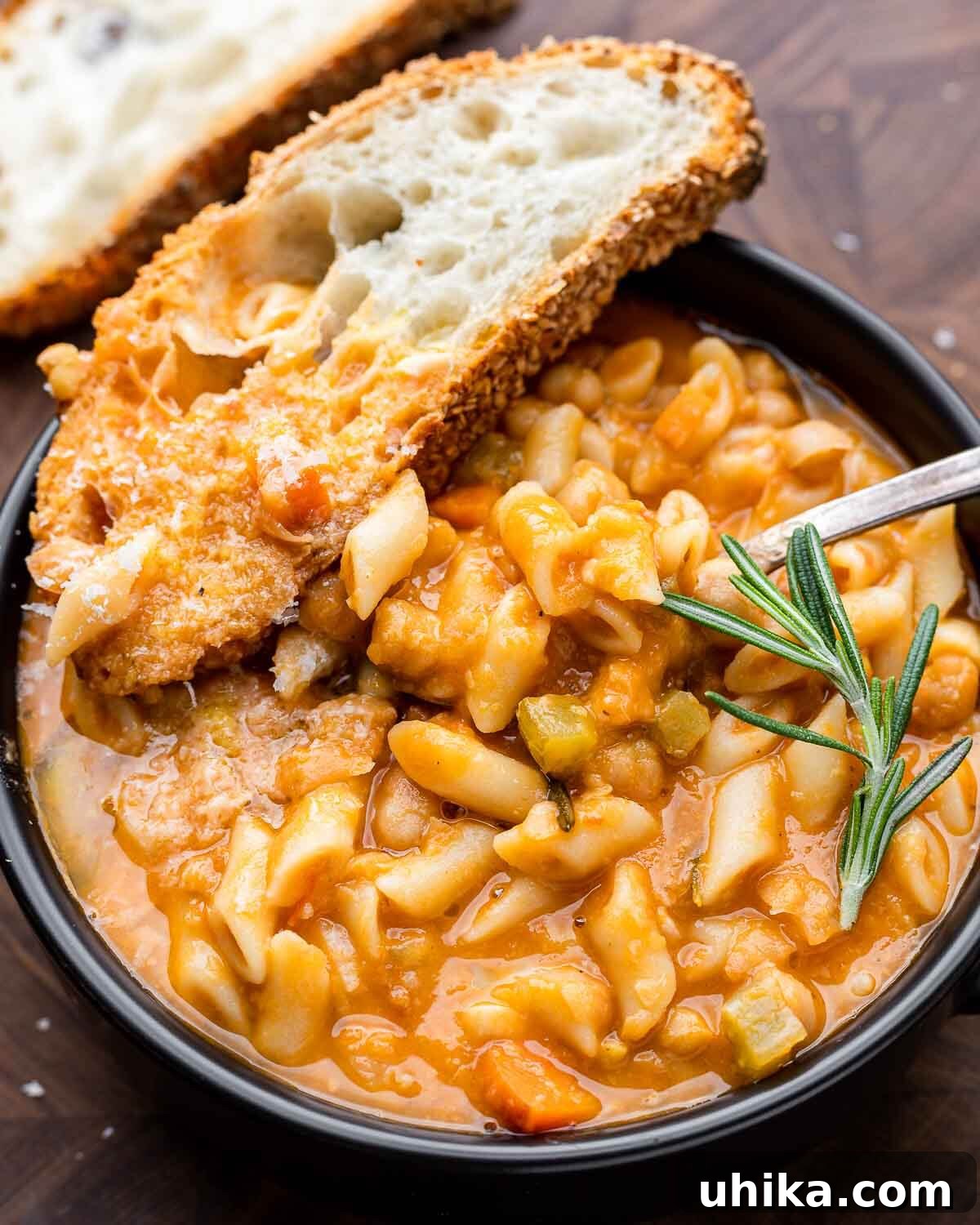
Dive into the comforting world of Pasta e Ceci, a classic Roman dish that perfectly embodies the spirit of cucina povera – humble cooking that yields incredibly flavorful and satisfying results. This one-pot wonder brings together tender chickpeas and small pasta, simmered in a rich tomato broth infused with aromatic vegetables like carrots, onion, celery, and garlic. It’s a testament to how simple ingredients can create profound taste, making it an ideal choice for busy weeknights when you crave something wholesome and deeply fulfilling, ready in under an hour.
The Enduring Charm of Roman Comfort Food

In our household, Pasta e Ceci is more than just a meal; it’s a culinary hug. Its appeal lies in its straightforward preparation and the fact that it primarily uses pantry staples. This dish, much like its cousins Pasta e Fagioli (pasta with beans) and Pasta e Lenticchie (pasta with lentils), is a prime example of traditional Italian thriftiness transformed into deliciousness. It’s hearty, budget-friendly, and profoundly satisfying, proving that gourmet flavors don’t require expensive ingredients. As a meatless dish, it’s also a fantastic option for those seeking plant-based meals, or for traditional observances like Fridays during Lent.
We typically serve our Pasta e Ceci with a crisp green salad, slices of crusty artisan bread to soak up the flavorful broth, and a generous drizzle of the finest extra virgin olive oil. A sprinkle of freshly grated Parmigiano Reggiano is, of course, a must for many!
Why Pasta e Ceci Deserves a Spot in Your Recipe Repertoire
- Effortless One-Pot Cooking: Minimize cleanup and maximize flavor with this streamlined cooking method.
- Budget-Friendly: Made with economical ingredients that are likely already in your pantry.
- Nutritious & Wholesome: Packed with plant-based protein, fiber, and essential vitamins from chickpeas and vegetables.
- Versatile: Easily customizable to suit various tastes and dietary needs.
- Authentic Italian Flavors: A taste of Roman tradition, bringing warmth and comfort to any table.
- Quick Preparation: Ideal for busy weeknights, coming together in less than an hour.
The Essential Ingredients: What You’ll Need
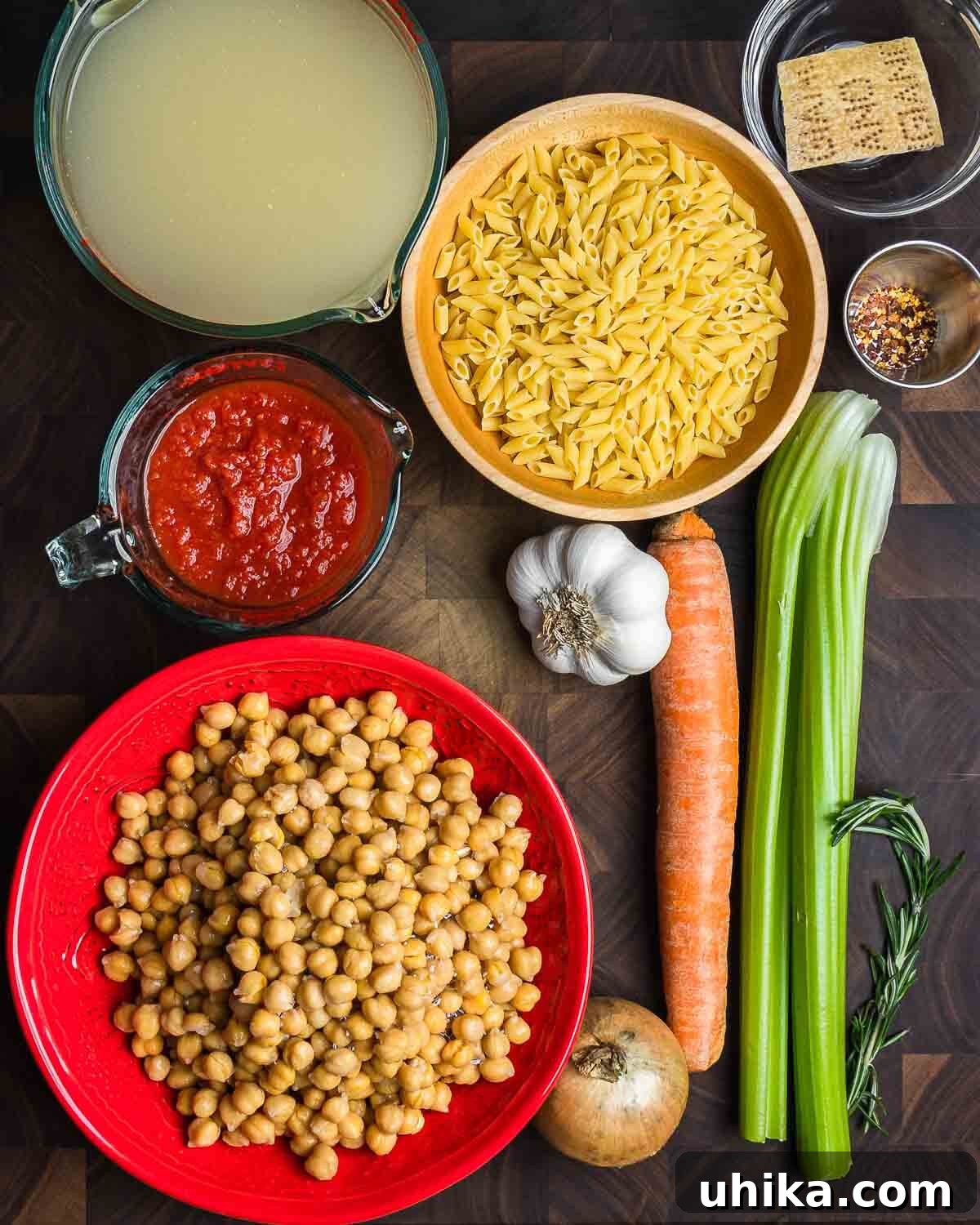
Creating an exceptional Pasta e Ceci begins with selecting quality, yet simple, ingredients. Each component plays a vital role in building the dish’s depth of flavor and comforting texture.
- Extra Virgin Olive Oil: The foundation of many Italian dishes, a good quality EVOO provides a rich base for sautéing the vegetables.
- Aromatic Vegetables (Soffritto): Diced celery, carrots, and onion form the classic Italian soffritto. Sautéing these until very soft is crucial for developing a sweet, savory depth. Minced garlic adds its unmistakable punch later in the process.
- Chickpeas (Ceci): Canned chickpeas are a time-saver. Remember to drain them but avoid rinsing to preserve some of their natural starch, which contributes to the broth’s body. If using dried chickpeas, soak them overnight and cook them separately until tender before adding.
- Crushed Red Pepper Flakes: A touch of heat is traditional and enhances the overall flavor profile. Adjust to your preference.
- Canned Plum Tomatoes: Hand-crushed plum tomatoes offer a fresh, vibrant tomato base. The quality of your tomatoes significantly impacts the final taste.
- Parmigiano Reggiano Rind: This might seem unusual, but a piece of Parmesan rind simmered in the broth adds incredible umami and richness. Just remember to remove it before serving!
- Rosemary: A fresh sprig of rosemary lends an earthy, piney aroma that complements the chickpeas beautifully. Fresh is always best here.
- Low-Sodium Vegetable Stock: The liquid base for our stew. Using low-sodium stock allows you to control the seasoning precisely. Water can be substituted, but stock adds more flavor.
- Small-Shaped Pasta: The “pasta” in Pasta e Ceci! Small varieties like ditalini, tubetti, small shells, or even broken spaghetti work best, as they integrate well into the stew and cook quickly.
- Salt and Freshly Ground Black Pepper: Essential for seasoning to taste.
- Garnishes: A final drizzle of extra virgin olive oil, fresh parsley, or additional grated Parmigiano Reggiano can elevate the dish just before serving.
Step-by-Step Guide to Crafting Perfect Pasta e Ceci
Follow these detailed steps to create a wonderfully flavorful and authentic Pasta e Ceci:
- Prepare Your Vegetables: Start by finely dicing 2 celery ribs, 2 medium carrots, and 1 medium onion. These three ingredients form your soffritto. Mince 5 cloves of garlic. For the chickpeas, simply drain 3 (16-ounce) cans of chickpeas; there’s no need to rinse them, as the residual liquid helps thicken the stew.
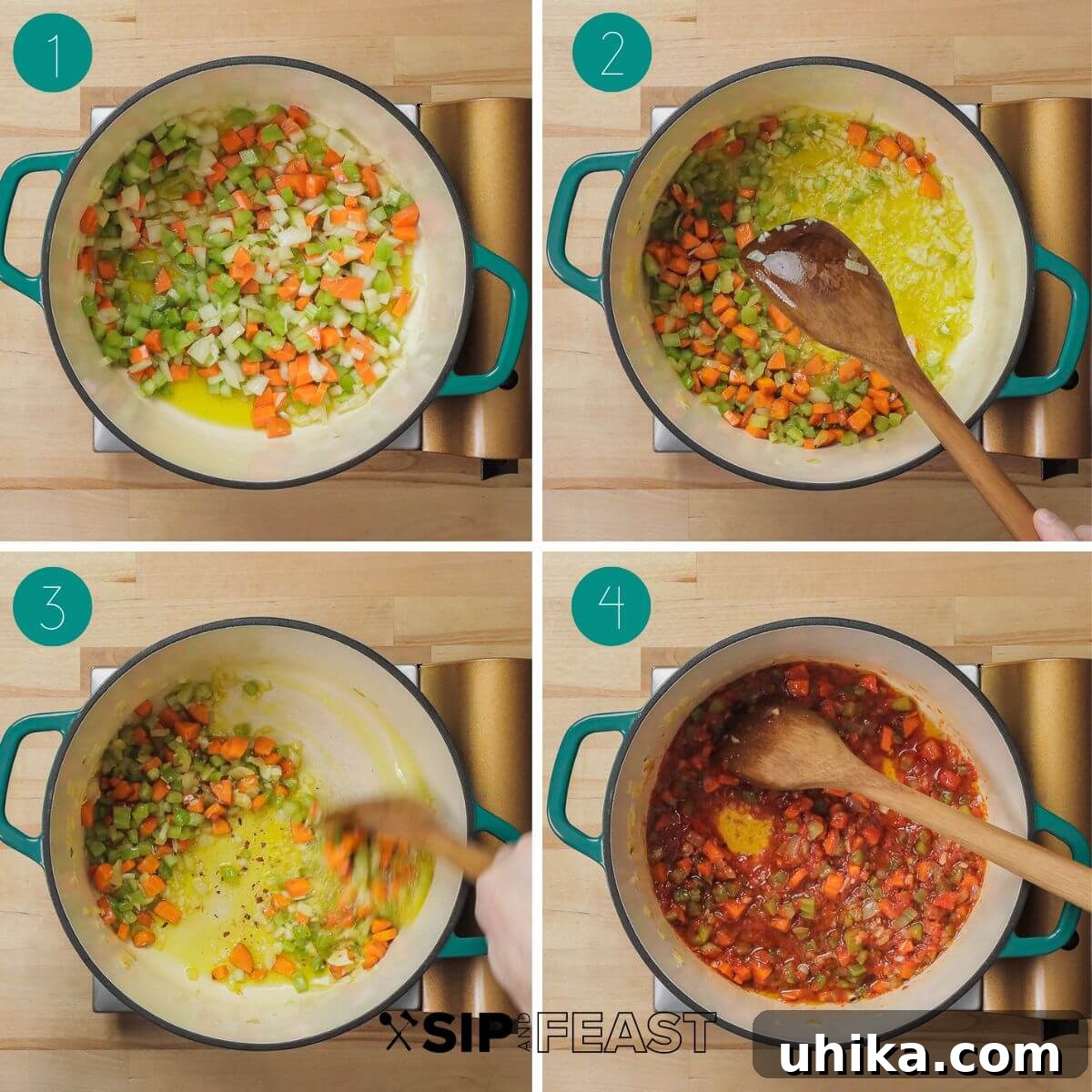
- Build the Flavor Base: In a large, heavy-bottomed pot or Dutch oven, heat about 1/2 cup of extra virgin olive oil over medium-low heat. Add the diced onions, celery, and carrots. Sauté them gently for approximately 10-12 minutes, or until they become very soft and translucent. This slow sautéing process is key to drawing out their natural sweetness and building a deep flavor foundation.
- Introduce Aromatics and Spice: Once the soffritto is tender, add the minced garlic to the pot. Cook for another 1-2 minutes, stirring constantly, until the garlic is fragrant and just golden. Be careful not to burn it, as burnt garlic can turn bitter. Stir in 1/4 teaspoon of crushed red pepper flakes (or more if you prefer a spicier kick) and cook for just 30 seconds more to toast the spice and release its aroma.
- Add Tomatoes and Umami: Pour in 1 cup of hand-crushed canned plum tomatoes. Stir well to combine with the sautéed vegetables. Now, add a Parmigiano Reggiano rind to the pot. This secret ingredient will slowly melt and infuse the broth with a profound savory, cheesy depth.
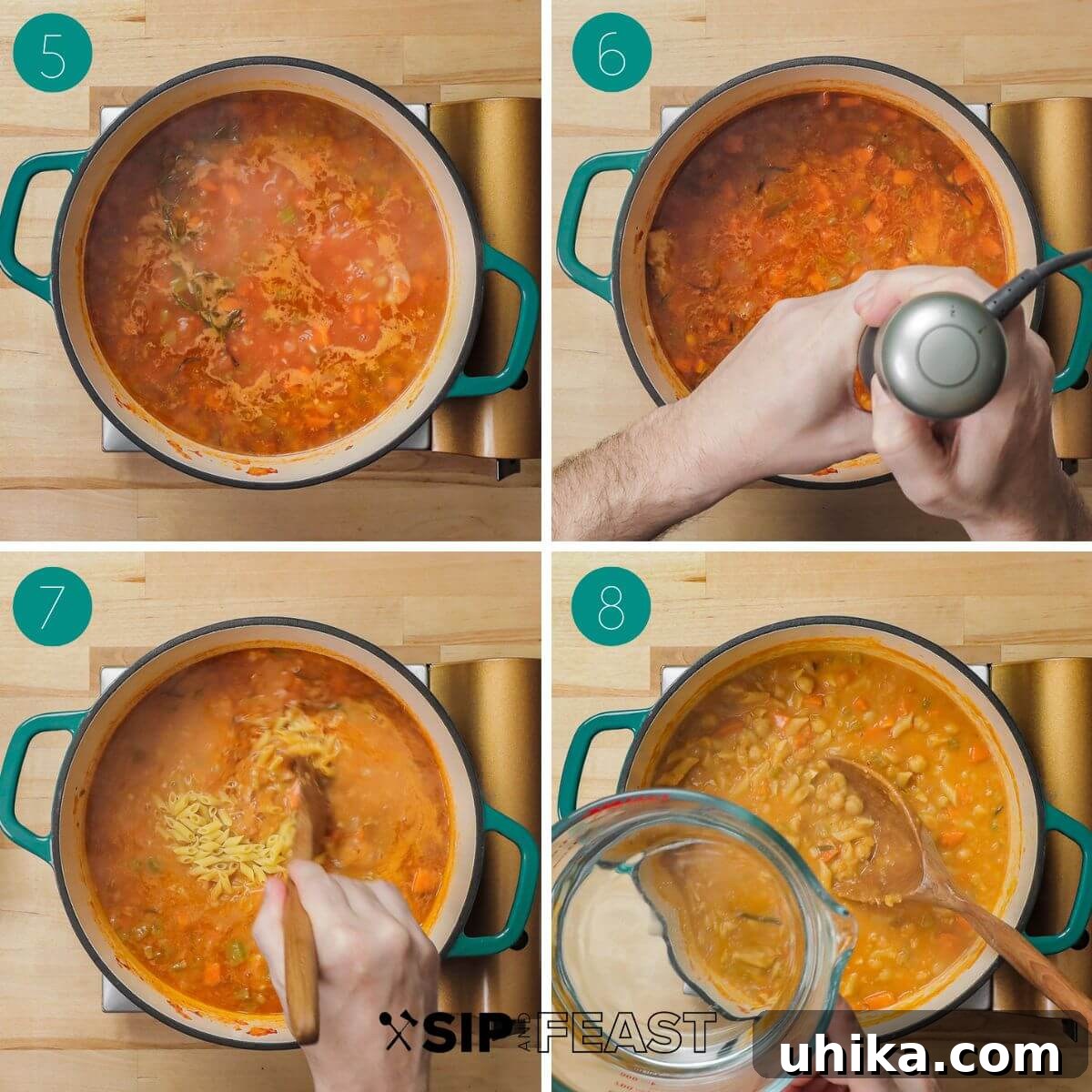
- Simmer for Depth of Flavor: Add the drained chickpeas along with 1 sprig of fresh rosemary and 4 cups of low-sodium vegetable stock. Bring the mixture to a rolling boil over medium-high heat. Once boiling, reduce the heat to a gentle simmer, cover the pot partially, and let it cook for at least 15 minutes. This allows all the flavors to meld beautifully.
- Create Creaminess (Optional but Recommended): After simmering, remove the rosemary sprig and the Parmigiano rind. Increase the heat to medium. At this stage, you can use the back of a wooden spoon to gently mash some of the chickpeas against the side of the pot. For a smoother, creamier consistency, use an immersion blender to briefly blend a portion of the soup directly in the pot. This creates a wonderful texture contrast without making the dish entirely puréed.
- Cook the Pasta: Add 1/2 pound of your chosen small-shaped pasta directly to the simmering broth. Cook according to package directions until the pasta is al dente (firm to the bite). It’s crucial to stir frequently during this stage to prevent the pasta from sticking to the bottom of the pot.
- Adjust Consistency and Seasoning: As the pasta cooks, it will absorb a significant amount of the liquid. Keep an eye on the pot and add more water or vegetable stock, a little at a time, until the soup reaches your desired consistency. Some prefer it thick and stew-like, while others enjoy a looser, soupier texture. Remember that the pasta will continue to absorb liquid even after you turn off the heat. Once the pasta is al dente, turn off the heat. Taste the Pasta e Ceci and adjust the seasoning with salt, freshly ground black pepper, and additional red pepper flakes if needed.
- Serve and Enjoy: Ladle the hot Pasta e Ceci into individual bowls. Garnish with a fresh drizzle of your best extra virgin olive oil, a sprinkle of fresh parsley, and freshly grated Parmigiano Reggiano. Serve immediately with crusty bread for dipping.
Expert Tips for the Best Pasta e Ceci
Top Tips for Success
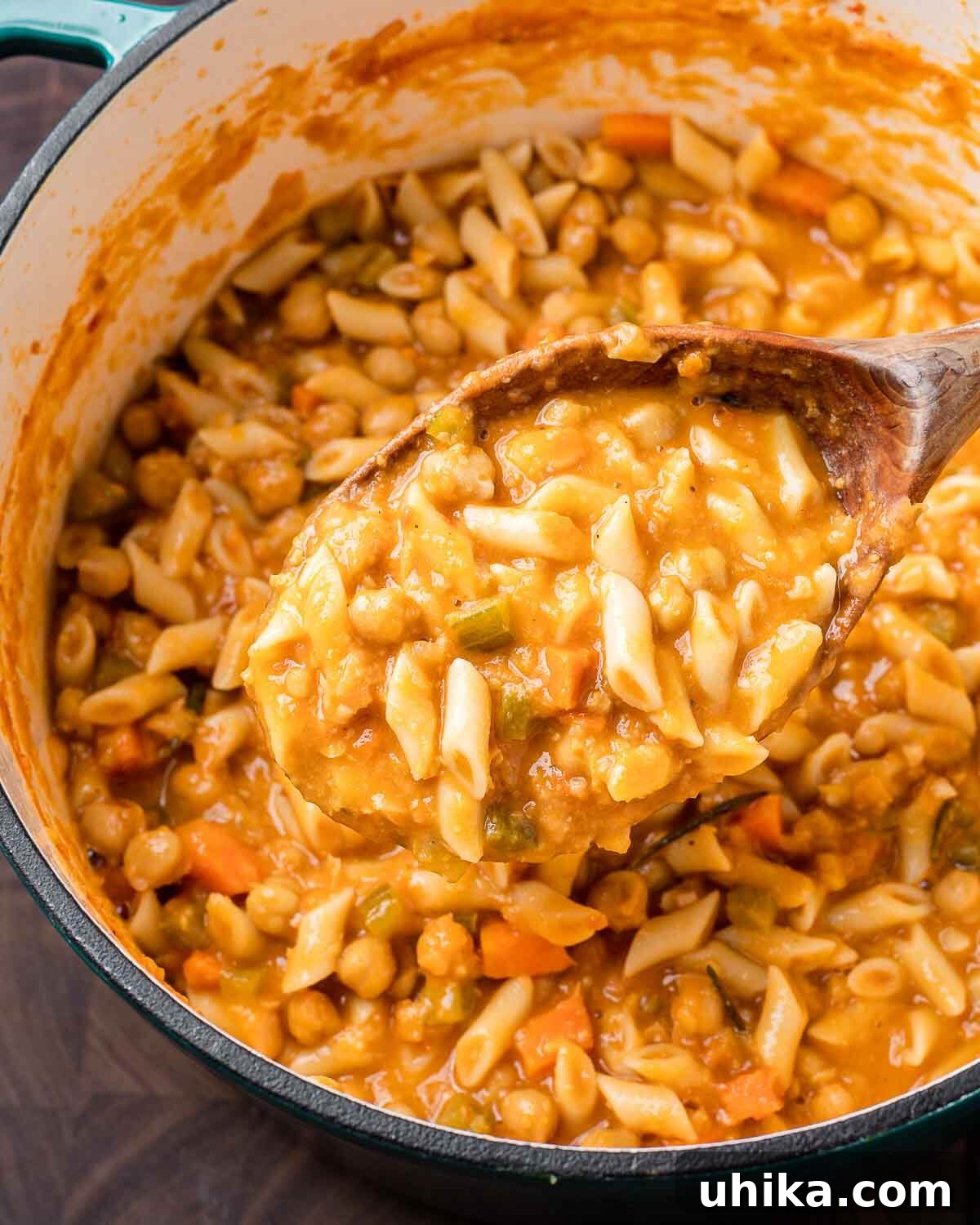
- Choose Your Pasta Wisely: The ideal pasta for Pasta e Ceci is a small, short shape that blends well with the chickpeas and broth. While we used small penne in this recipe, classic choices include ditalini, tubetti, small shells, elbow macaroni, or even tiny bowties. Avoid long pasta shapes or very large pasta that might overpower the dish. Broken spaghetti can also work in a pinch for a truly rustic feel.
- Master the Consistency: The desired thickness of Pasta e Ceci is highly personal. Some prefer a thick, almost stew-like texture, while others enjoy a looser, soupier consistency. To achieve a thicker dish, mashing or immersion blending some of the chickpeas is highly recommended, as the starches released will naturally thicken the broth. If you prefer it soupier, simply add more vegetable stock or water gradually until you reach your ideal consistency. Remember, the pasta will continue to absorb liquid even after cooking, so err on the side of slightly soupier if you’re not serving immediately.
- Handling Leftovers: If you anticipate having leftovers, consider cooking the pasta separately. Cook the pasta al dente in a separate pot of salted water, then drain and add it to individual servings of the chickpea stew just before eating. This prevents the pasta from becoming overly soft and mushy as it sits in the leftover broth, maintaining its perfect texture. Store the chickpea broth and cooked pasta separately in airtight containers in the refrigerator for up to 3 days. Reheat the broth gently and add freshly cooked or separately stored pasta.
- Fresh Herbs are Key: While dried rosemary can be used, a fresh sprig of rosemary truly elevates the aroma and flavor of this dish. If fresh rosemary isn’t available, try fresh thyme or a bay leaf for a similar aromatic touch.
- Don’t Waste the Parmesan Rind: That hard, inedible rind of Parmigiano Reggiano is a flavor powerhouse! Freezing rinds from previous cheeses allows you to always have one on hand for dishes like this. It imparts a beautiful depth of flavor that is hard to replicate.
- Spice Level Customization: The 1/4 teaspoon of crushed red pepper flakes provides a mild warmth. Feel free to increase or decrease this amount based on your preference for spice. For a truly Roman kick, add a pinch more!
Discover More Simple & Satisfying Recipes
If you enjoyed the rustic charm and delicious simplicity of Pasta e Ceci, you might also love these other comforting Italian-inspired dishes:
- Pasta con Broccoli: A delightful and healthy pasta dish featuring tender broccoli.
- Pasta e Patate: Another classic “poor man’s dish,” combining pasta and potatoes for ultimate comfort.
- Pasta with Peas in Red Sauce: A simple yet flavorful pasta dish with sweet peas in a rich tomato sauce.
Pasta e Ceci

Pin Recipe
Pasta e ceci is a comforting combination of tiny pasta, chickpeas, carrots, onions, celery, and garlic simmered in a tomato broth with rosemary. This simple dish can be ready in under an hour.
Ingredients
- 1/2 cup extra virgin olive oil
- 2 ribs celery diced
- 1 medium onion diced
- 2 medium carrots diced
- 5 cloves garlic minced
- 1/4 teaspoon crushed hot red pepper flakes
- 3 (16-ounce) cans chickpeas drained, but don’t rinse
- 4 cups low sodium vegetable stock to start, add more as needed
- 1 cup plum tomatoes canned, hand crushed
- 1 Parmigiano rind
- 1 sprig Rosemary
- 1/2 pound small shell pasta or ditalini, elbows, etc.
- salt and pepper to taste
Instructions
-
Heat a large heavy pot to medium-low with the extra virgin olive oil. Sauté the diced onions, celery, and carrots until very soft (about 10-12 minutes). Once tender, add the minced garlic and cook for 1-2 minutes more, or until just golden and fragrant. Finally, stir in the crushed hot red pepper flakes and cook for an additional 30 seconds to bloom the spice.
-
Add the hand-crushed tomatoes, drained chickpeas, Parmigiano rind, rosemary sprig, and 4 cups of low-sodium vegetable stock. Bring the mixture to a boil. Once boiling, reduce the heat to a gentle simmer, partially cover, and let it cook for 15 minutes to allow the flavors to deepen.
-
Remove the rosemary sprig and Parmigiano rind. Increase the heat to medium. For a thicker consistency, gently crush some of the chickpeas against the side of the pot with a wooden spoon, or use an immersion blender to briefly purée a portion of the soup to your liking.
-
Add 1/2 pound of small-shaped pasta to the pot and cook until al dente. Stir very frequently to prevent the pasta from sticking. As the pasta cooks, it will absorb much of the liquid; add more water or stock as needed to maintain your desired consistency.
-
Once the pasta is al dente, turn off the heat. Taste the Pasta e Ceci and adjust the seasoning with salt, pepper, and additional red pepper flakes to your preference.
-
Serve immediately in bowls with crusty bread on the side. Offer a drizzle of your best extra virgin olive oil and freshly grated cheese over each serving for an enhanced experience. Enjoy!
Notes
- Small pasta shapes such as ditalini, small shells, elbow macaroni, or even broken spaghetti integrate best with the chickpeas and broth.
- To maintain optimal pasta texture for leftovers, it’s recommended to cook the pasta separately and add it to individual servings of the chickpea stew just before eating. However, for immediate serving, cooking the pasta directly in the sauce allows it to absorb maximum flavor.
- Leftovers can be stored in an airtight container in the refrigerator for up to 3 days and are easily reheated in the microwave or on the stovetop with a splash of extra broth or water.
Nutrition
Carbohydrates: 70.8g |
Protein: 17.9g |
Fat: 21.5g |
Saturated Fat: 2.8g |
Sodium: 53mg |
Potassium: 665mg |
Fiber: 13.6g |
Sugar: 9.9g |
Calcium: 81mg |
Iron: 6mg
Nutrition information is automatically calculated and should be used as an approximation.
Loved this Pasta e Ceci recipe? Leave a comment below!
Connect with us on social media: Find us on Instagram at @sipandfeast or share your culinary creations using #sipandfeast!
This recipe was originally published on April 2, 2019, and underwent a comprehensive update, including new process shots and expanded information, on February 24, 2023.