
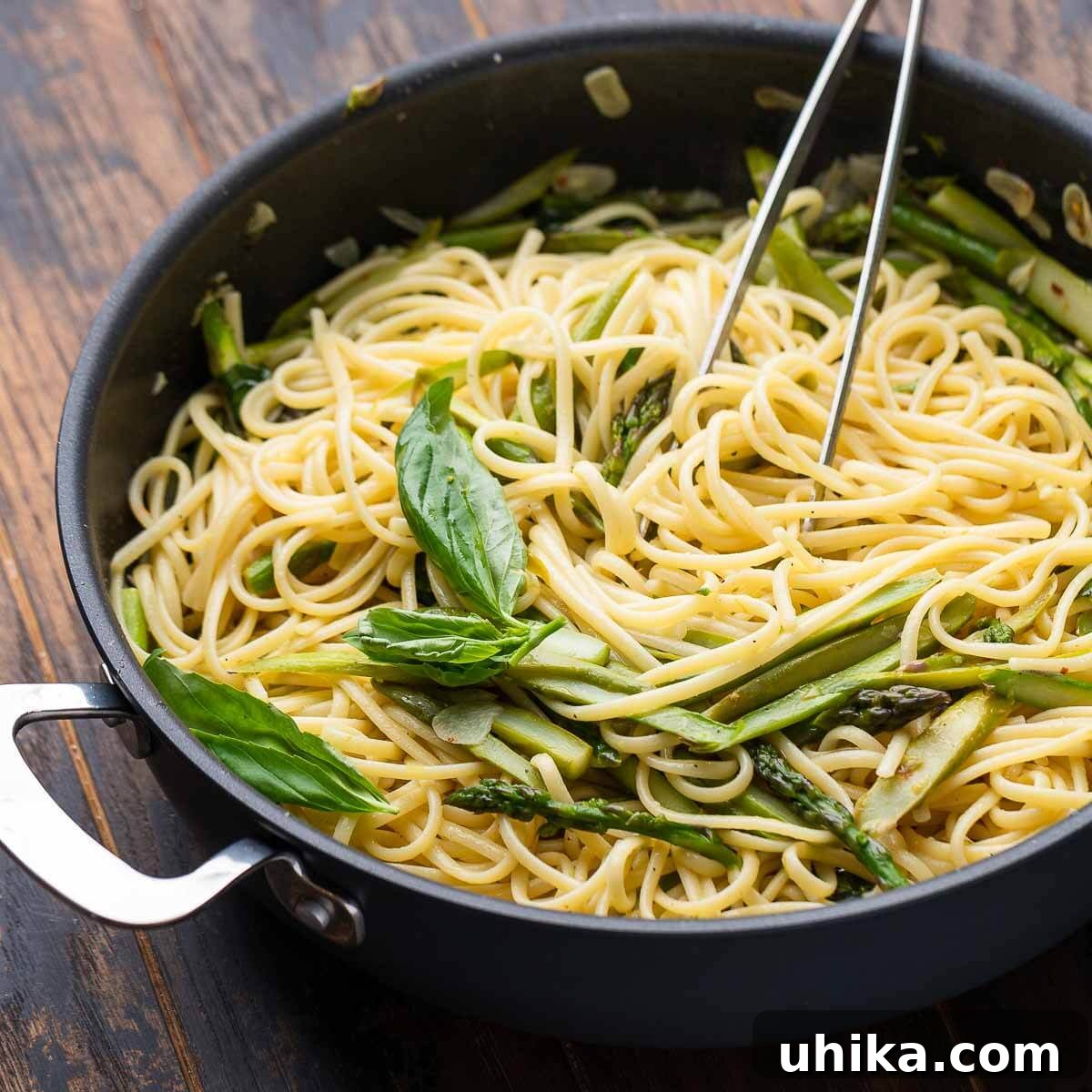
Lemon Asparagus Pasta: Your Essential Spring & Summer Dish
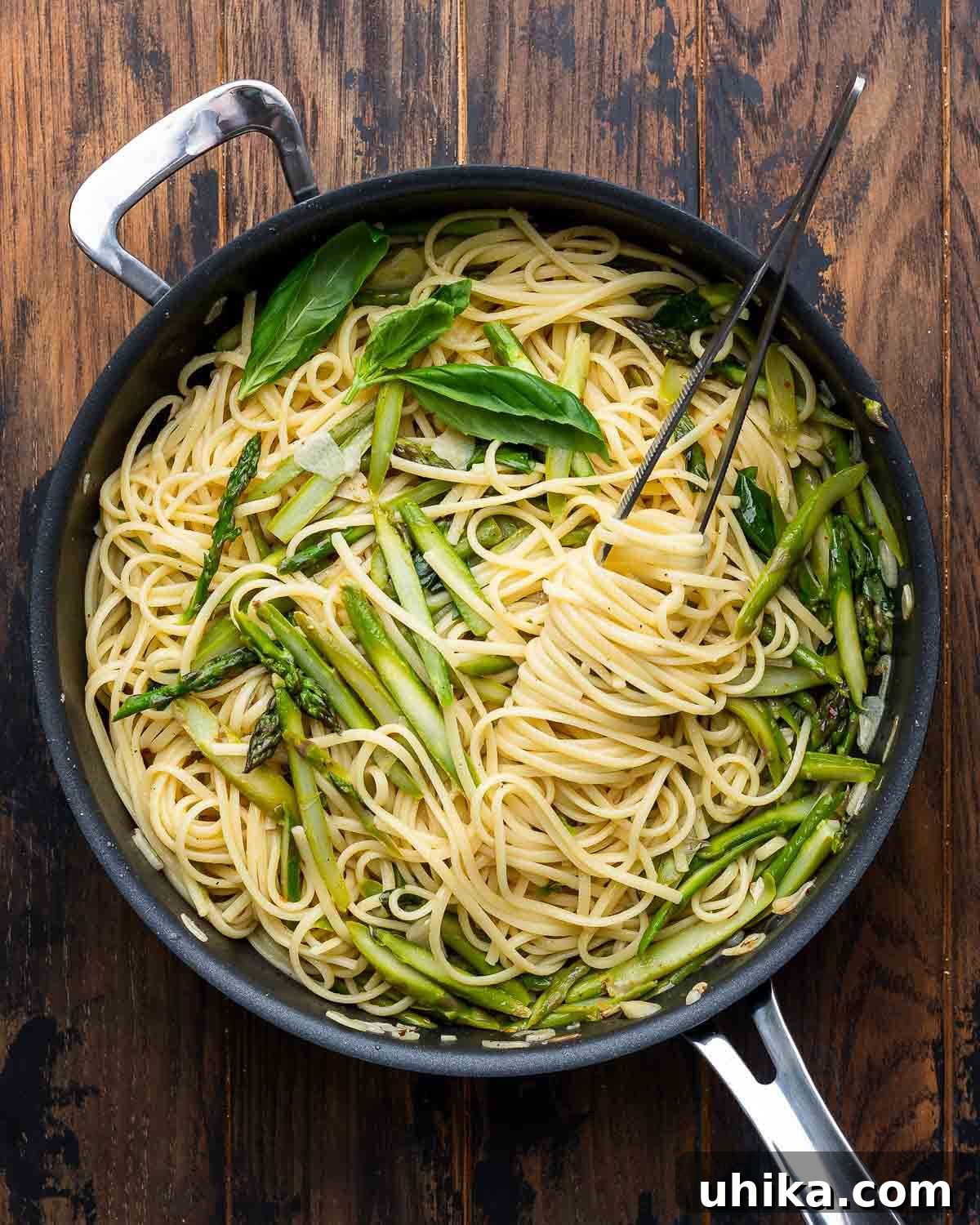
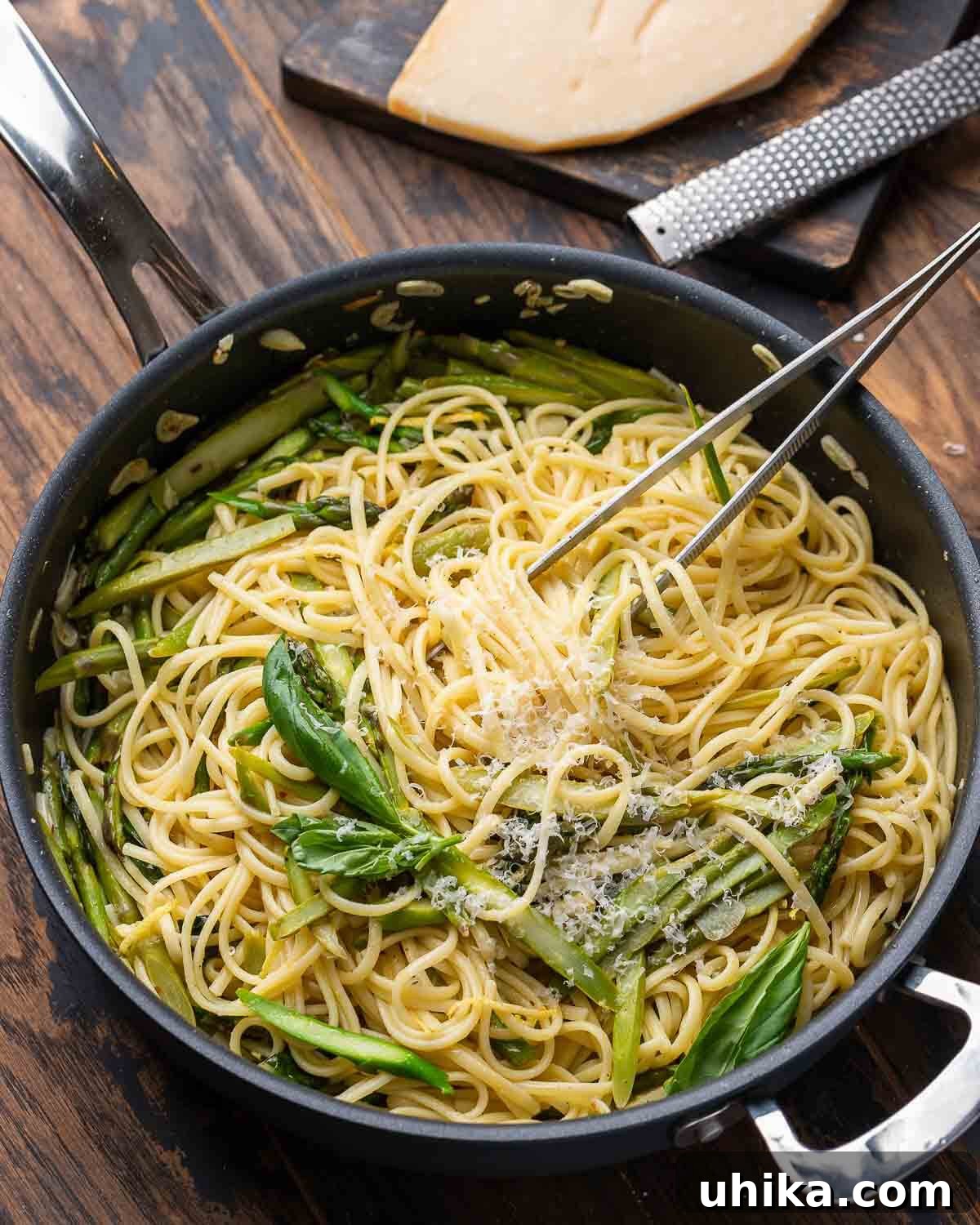
Lemon Asparagus Pasta is a vibrantly fresh and intensely flavorful dish, embodying the very essence of spring and summer. This delightful pasta recipe comes alive with the crisp tenderness of thinly sliced asparagus, quickly sautéed to perfection with aromatic garlic and a hint of olive oil. It’s then elegantly tossed with perfectly al dente spaghetti or linguine, bright lemon zest, and invigorating lemon juice. The final flourishes of hand-torn fresh basil and a generous grating of Parmesan cheese elevate this meal to an experience that is as effortless to prepare as it is utterly enjoyable to eat. It’s truly a celebration of seasonal ingredients, designed to bring brightness and zest to your table in less than 30 minutes!
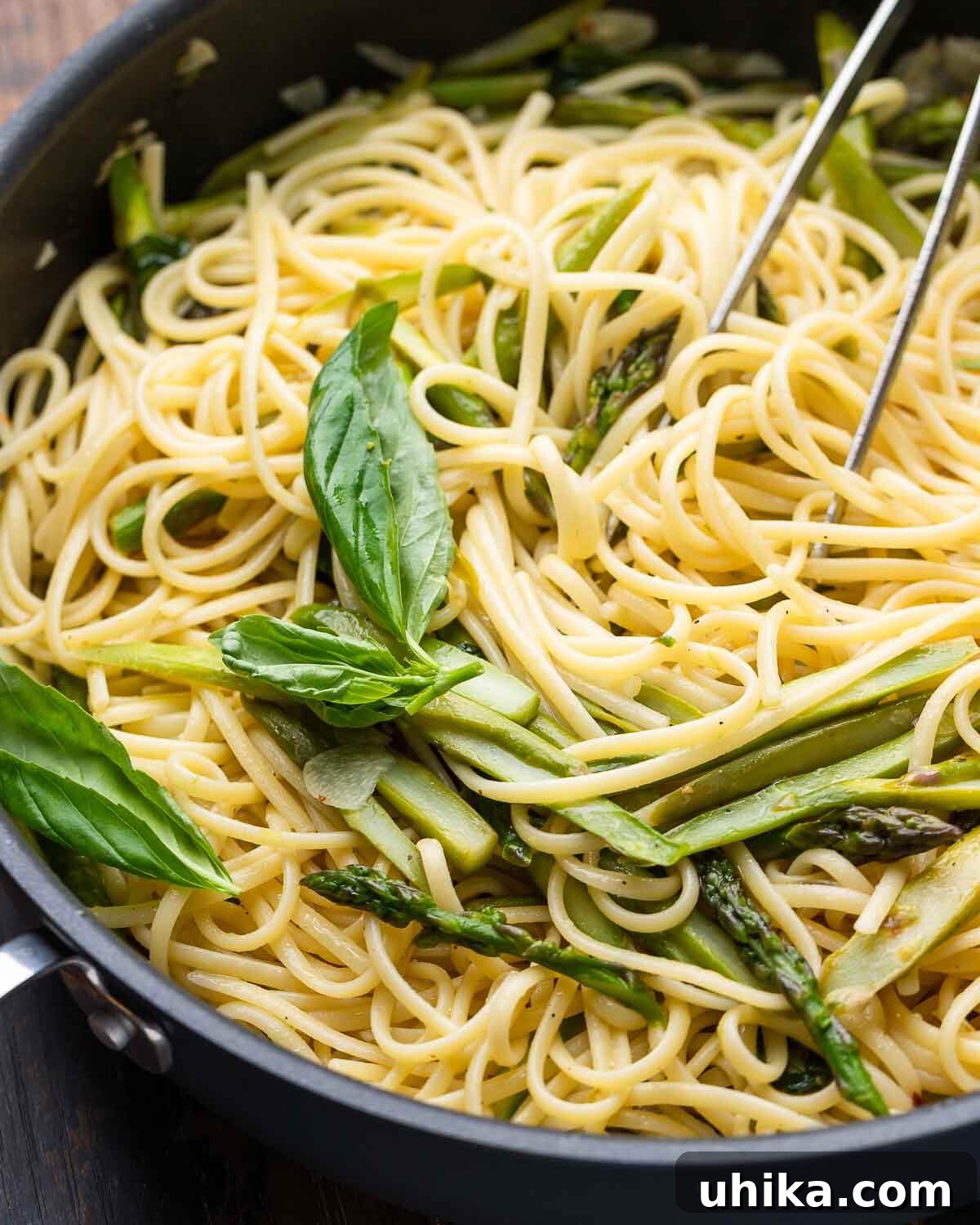
Why You’ll Adore This Lemon Asparagus Pasta
While our home enjoys the comfort of heartier pasta dishes year-round, the warmer months naturally lead us to crave something lighter and more refreshing. This Lemon Asparagus Pasta perfectly fits that desire, standing proudly alongside other warm-weather favorites like Lemon Arugula Pasta and Angel Hair with Sun-Dried Tomatoes and Spinach. Here’s why this particular recipe will become a staple in your kitchen:
Quick and Easy Preparation
In today’s fast-paced world, finding a meal that is both incredibly delicious and requires minimal effort is a true gem. This Lemon Asparagus Pasta is a testament to simplicity, coming together in under 30 minutes. From the moment you start prepping your ingredients to the first delightful bite, the process is streamlined and stress-free, making it ideal for busy weeknights or impromptu gatherings. No complicated techniques or obscure ingredients are required, just fresh produce and pantry staples transformed into a gourmet experience.
Bursting with Fresh Flavors
The cornerstone of this dish is its vibrant flavor profile. The zesty tang of fresh lemon juice and its aromatic zest cut through the richness of the olive oil and pasta, providing a refreshing brightness that is utterly irresistible. The tender, sweet-yet-earthy taste of the bright green asparagus adds a wonderful textural contrast and depth of flavor, making each forkful a harmonious blend of tastes. Fresh basil, hand-torn to release its aromatic oils, infuses the dish with an herbaceous, peppery note, adding yet another layer of complexity to this wonderfully simple pasta.
A Healthy and Satisfying Meal
Beyond its fantastic taste, this pasta dish is also a nutritious choice. Asparagus is packed with vitamins and antioxidants, while lemon provides a boost of Vitamin C. Made with wholesome ingredients, it offers a satisfying meal without feeling heavy, allowing you to enjoy a delicious plate of pasta guilt-free. It’s light enough for a summer lunch yet substantial enough for dinner, offering a perfect balance.
Perfect for Any Occasion
Whether you’re hosting a casual backyard barbecue, preparing a romantic dinner for two, or simply seeking a quick and flavorful family meal, Lemon Asparagus Pasta is remarkably versatile. Its elegant presentation and inviting aroma make it suitable for special occasions, while its ease of preparation ensures it’s equally perfect for everyday dining. It’s a crowd-pleaser that always impresses with its fresh appeal and delightful taste.
Ingredients Spotlight: Crafting the Perfect Spring Pasta
The magic of Lemon Asparagus Pasta lies in the quality and freshness of its few, but powerful, ingredients. Each component plays a crucial role in building the harmonious flavors and textures that make this dish so special.
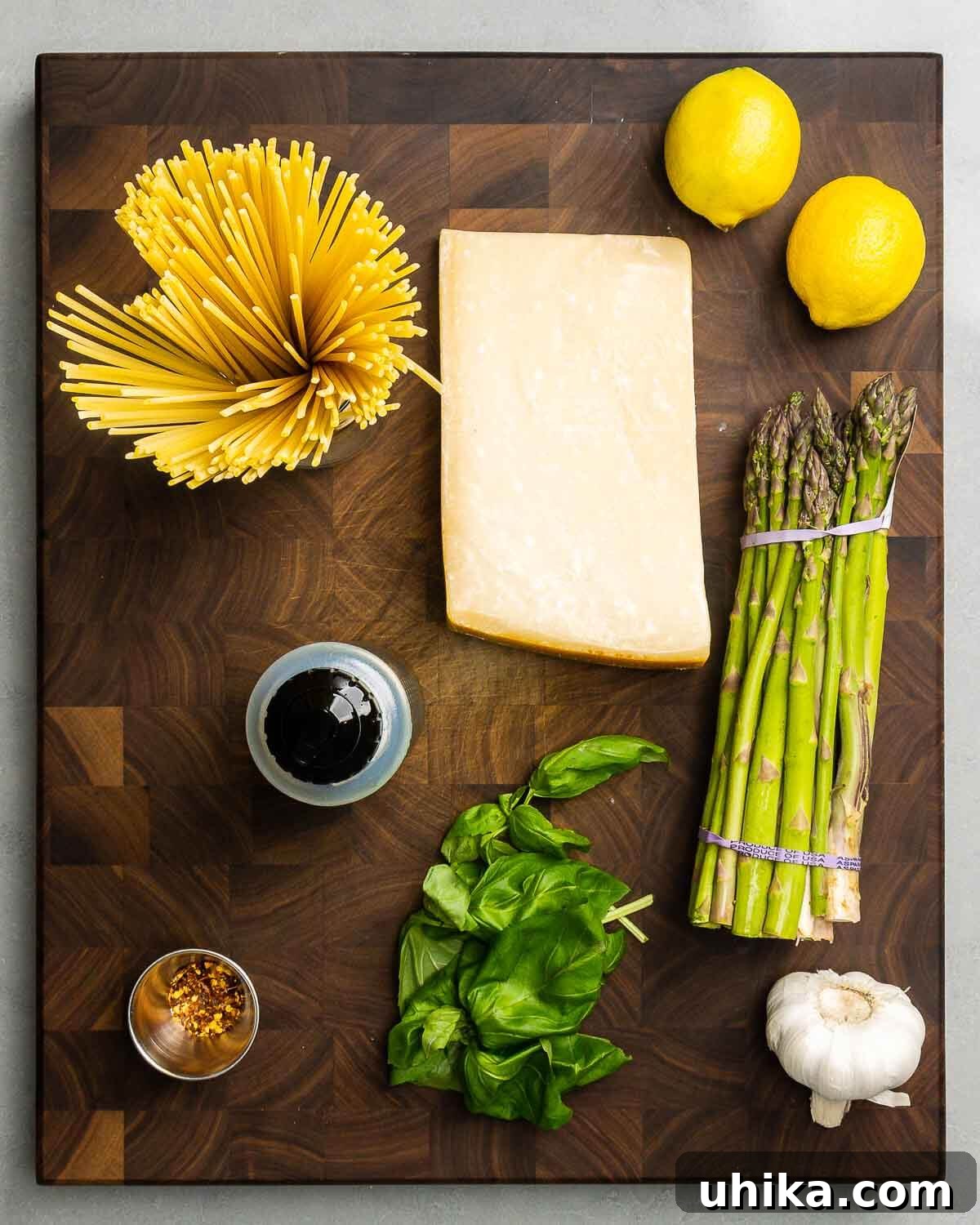
The Star: Fresh Asparagus
When selecting asparagus, look for firm, bright green spears with tightly closed tips. Avoid any with withered ends or floppy stalks. The key to integrating asparagus seamlessly into this dish is slicing it very thinly, preferably on a diagonal bias. This technique creates long, delicate strands that mimic the shape of the pasta, ensuring that each bite contains a perfect blend of pasta and vegetable. Thinly sliced asparagus also cooks quickly and evenly, becoming tender-crisp rather than mushy, retaining its vibrant color and distinct flavor. Don’t forget to snap off the woody ends before slicing – they are tough and unpalatable.
Zesty Lemon: The Brightening Agent
Fresh lemons are non-negotiable for this recipe. You’ll be using both the zest and the juice, each contributing a unique element. The zest contains essential oils that provide a highly aromatic, intense lemon flavor without the acidity. The juice, on the other hand, adds that quintessential tartness and helps to create a light, emulsified sauce when combined with pasta water and olive oil. Always zest your lemon before juicing it, as it’s much easier to do on a whole, firm lemon.
Aromatic Garlic & Olive Oil: The Foundation
Good quality extra virgin olive oil is the backbone of many Mediterranean-inspired dishes, and this pasta is no exception. It serves as the medium for sautéing and infusing the dish with its rich, fruity notes. Pair it with freshly sliced garlic, gently cooked until fragrant but not browned, to build a foundational layer of aromatic depth. The garlic should be sliced, not minced, to prevent it from burning too quickly and to offer pockets of intense flavor.
Fragrant Basil & Creamy Parmesan: The Finishing Touches
Fresh herbs are crucial for adding a final burst of flavor and aroma. Hand-torn fresh basil is preferred over chopped, as tearing gently bruises the leaves, releasing their essential oils more effectively. Its sweet, peppery notes are the perfect complement to the lemon and asparagus. Grated Parmesan cheese (ideally Parmigiano Reggiano or Grana Padano) adds a salty, umami richness that ties all the flavors together, creating a creamy, luxurious finish without the need for heavy cream.
Choosing Your Pasta
While the recipe suggests linguine or spaghetti, the choice is ultimately yours. Long, thin pasta shapes work best as they beautifully intertwine with the thinly sliced asparagus strands, creating a cohesive and satisfying mouthfeel. Other options like fettuccine or even a thin bucatini could also be wonderful, but avoid very short or tubular pasta shapes which might not hold the light sauce as effectively. Cook your pasta to just shy of al dente in generously salted water, as it will finish cooking in the pan with the sauce.
A Touch of Heat: Red Pepper Flakes
A small amount of crushed hot red pepper flakes adds a subtle warmth and gentle kick that enhances the overall flavor profile without overpowering the delicate ingredients. Adjust the quantity to your personal preference for heat. If you prefer no heat, simply omit them.
Step-by-Step Guide to Making Lemon Asparagus Pasta
Creating this delightful Lemon Asparagus Pasta is a straightforward process, broken down into simple, manageable steps. Follow these instructions for a perfectly balanced and flavorful meal every time.
1. Preparation is Key (Getting Started)
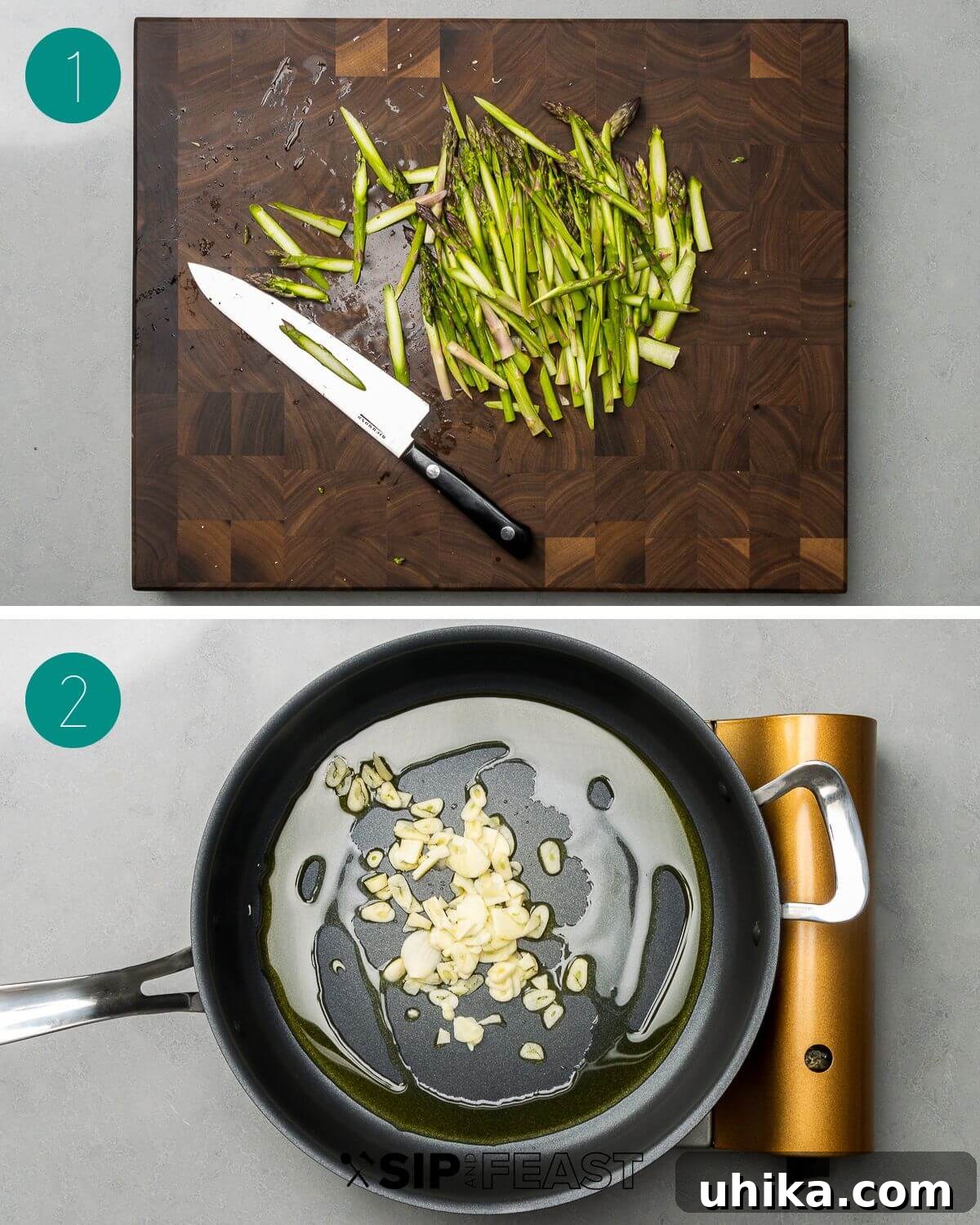
Begin by bringing a large pot of water to a rolling boil. Remember to salt your pasta water generously – about 2 tablespoons of salt per gallon of water is a good ratio. This is your first opportunity to season the pasta itself, which makes a huge difference in the final dish. While the water heats, prepare your vegetables and aromatics. Snap off the tough, woody bottom two inches from a fresh bunch of asparagus. Then, slice the tender spears into thin, 3-inch long pieces on a diagonal bias. This angle helps create those beautiful, long strands that blend so well with spaghetti or linguine. Slice 6 cloves of garlic thinly, zest one entire lemon, and then juice it, setting both aside. Finally, grate about 1/2 cup of Parmesan cheese. Ensuring everything is prepped before you start cooking makes the rest of the process flow smoothly.
2. Cooking the Pasta and Sautéing Aromatics
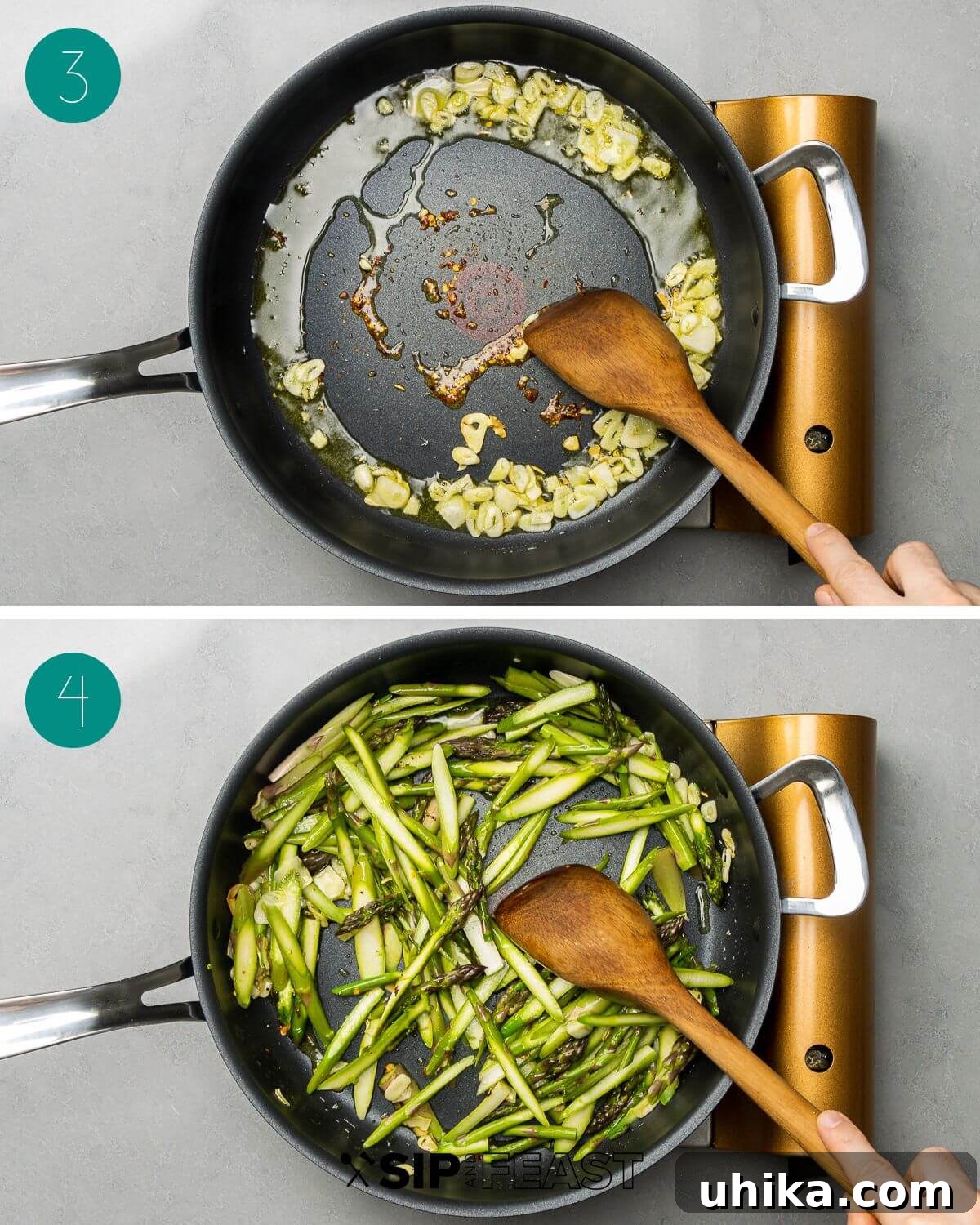
Once your salted water is boiling, add 1 pound of your chosen pasta (linguine or spaghetti) and cook it to 1 minute less than al dente according to package directions. It’s crucial not to overcook the pasta at this stage, as it will finish cooking in the pan with the sauce. While the pasta cooks, heat a large, wide pan (a skillet or sauté pan works best) over medium-low heat. Coat the pan generously with approximately 1/4 cup of extra virgin olive oil. Add your sliced garlic and sauté gently for 1-2 minutes until it becomes wonderfully fragrant and slightly softened, but be careful not to let it brown, as burnt garlic can taste bitter.
3. Infusing the Asparagus
To the fragrant garlic and oil in the pan, add 1/2 teaspoon of hot red pepper flakes. Sauté for just 30 seconds more to allow their subtle heat and aroma to infuse into the oil. Next, add the thinly sliced asparagus to the pan. Cook the asparagus for only 1-2 minutes, stirring occasionally, until the spears turn a vibrant, bright green. The goal here is tender-crisp asparagus, not limp or soggy, so avoid overcooking.
4. Bringing it All Together
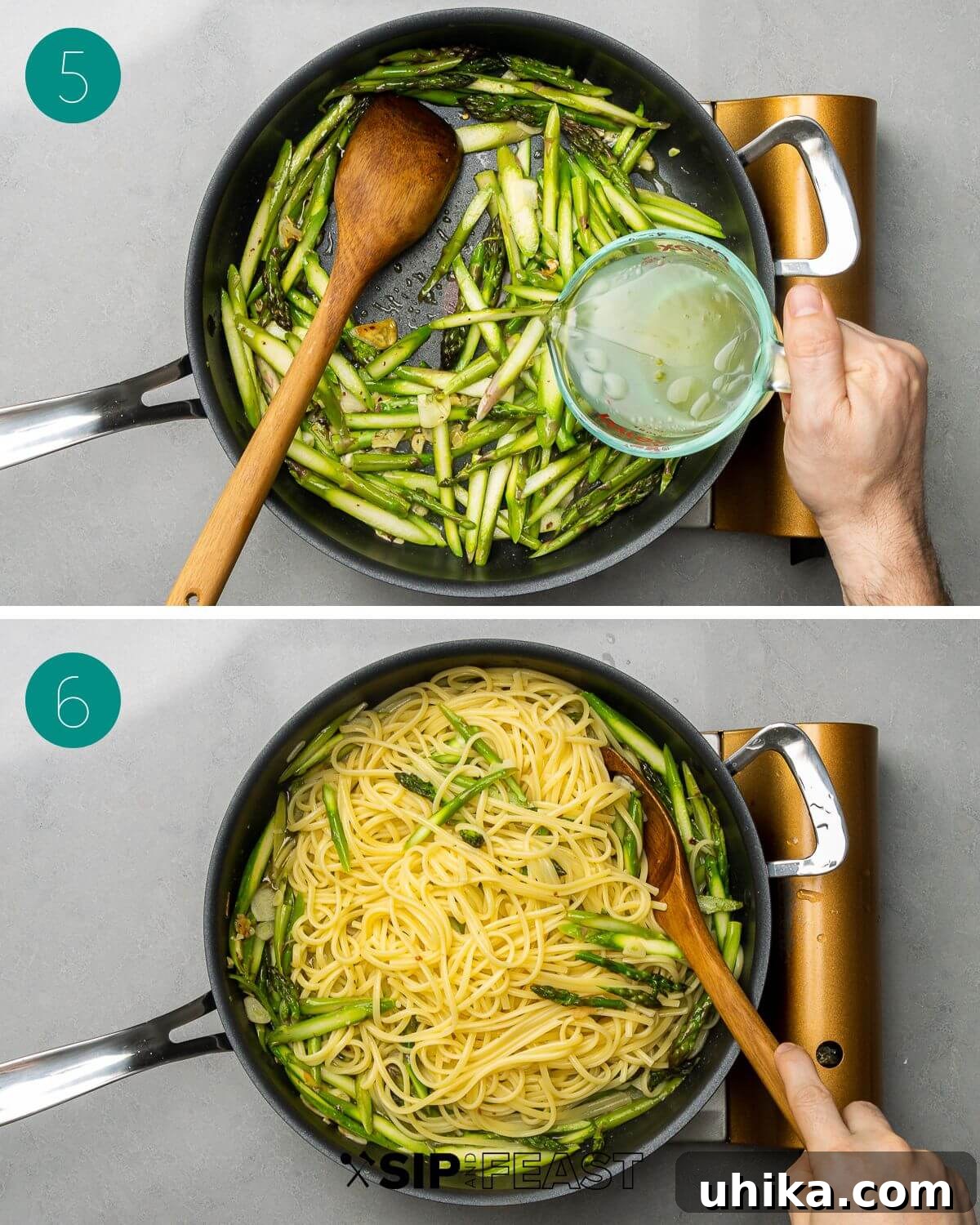
Just as your pasta is almost done cooking (remember, 1 minute shy of al dente), reserve at least 1-2 cups of the starchy pasta water. Then, add 1 cup of this reserved pasta water directly to the pan with the asparagus mixture and increase the heat to medium. This starchy water is essential for creating a silky, emulsified sauce that coats every strand of pasta beautifully.
5. The Final Flourish
Using tongs, transfer the almost-cooked pasta directly from its pot into the pan with the asparagus and sauce. Toss vigorously to thoroughly coat the pasta with the garlic, oil, and asparagus. Continue to toss and cook for another minute or so, allowing the pasta to absorb the flavors and reach a perfect al dente texture. If the sauce looks too dry or thick, add an additional splash or two of pasta water until it reaches your desired consistency.
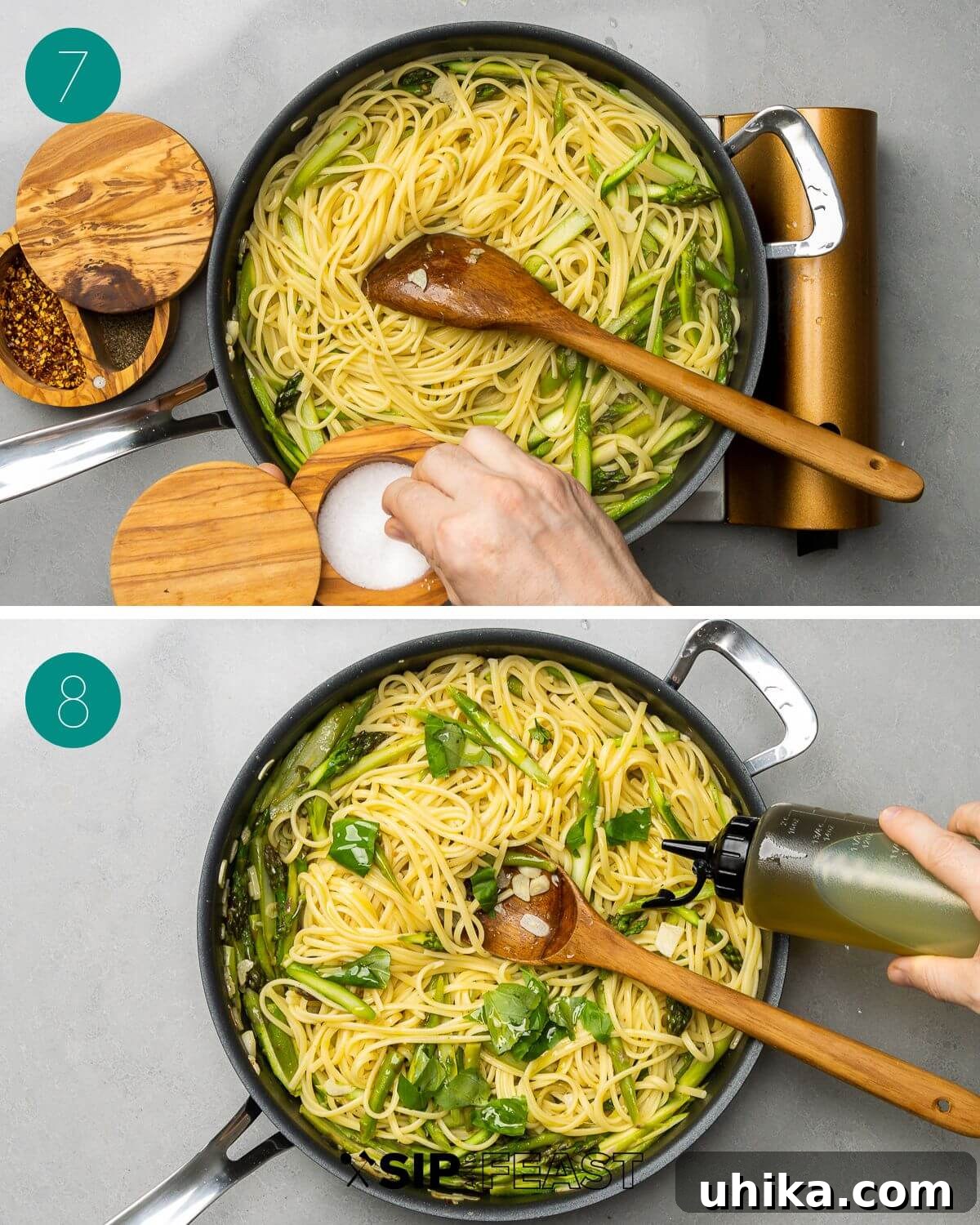
Once the pasta is perfectly al dente, remove the pan from the heat. This is crucial to prevent the lemon flavor from becoming bitter. Add the fresh lemon zest and lemon juice, and toss again to emulsify the sauce and distribute the bright citrus notes evenly. Taste test the pasta and make any necessary adjustments for salt and black pepper. Finish by folding in about 1/4 cup of fresh, hand-torn basil leaves and a hefty drizzle of your best extra virgin olive oil. Serve immediately in warm bowls, topped with the grated Parmesan cheese. Enjoy every vibrant, flavorful bite!
Expert Tips for Flawless Lemon Asparagus Pasta
Achieving the perfect Lemon Asparagus Pasta is simple, especially when you keep a few key tips in mind. These insights will help you elevate your dish from good to absolutely unforgettable.
- Asparagus Perfection: As mentioned, the way you slice your asparagus truly makes a difference. Thin, diagonal cuts are not just for aesthetics; they ensure the asparagus cooks quickly and evenly, achieving a tender-crisp texture that complements the pasta beautifully. It also ensures each piece is roughly the same length and thickness as the pasta, making for a more enjoyable eating experience.
- The Magic of Pasta Water: We preach this in nearly all our pasta recipes because it’s that important! The starchy water leftover from cooking your pasta is liquid gold. In this recipe, we explicitly call for 1 cup of pasta water to help form the silky, emulsified sauce. The starches in the water help the olive oil and lemon juice bind together, creating a light yet flavorful coating for your pasta. Always reserve more than you think you’ll need; additional splashes can be used to loosen the sauce if it becomes too thick or dry while tossing.
- Choosing Your Pasta Shape: While we used linguine for its flat, ribbon-like quality, spaghetti is another excellent choice that works perfectly with the thin asparagus strands. Feel free to experiment with other long pasta shapes like fettuccine or even bucatini, but avoid very short shapes that won’t meld as well with the sauce and asparagus.
- Quality Cheese Matters: For the best flavor, opt for high-quality Parmesan cheese. Parmigiano Reggiano is the gold standard, offering a nutty, salty, complex flavor. Grana Padano is another fantastic option, often a bit milder and more affordable. If you prefer the sharper, saltier notes of Pecorino Romano, you can certainly use it, but be mindful of its intensity and adjust your added salt accordingly.
- Fresh Herbs are Non-Negotiable: In a dish with such a simple ingredient list, the quality of each component shines through. This is especially true for herbs. Fresh basil is highly recommended for its aromatic and peppery flavor. Fresh parsley, with its clean, slightly bitter notes, would also be a wonderful addition or substitute. We strongly advise against using dried basil or generic “Italian seasoning” in this or any similar fresh pasta dish; they simply cannot replicate the vibrant taste and aroma of fresh herbs.
- Don’t Overcook the Asparagus: Asparagus cooks very quickly. You want it to be bright green and tender-crisp, not soft or mushy. Its vibrant color is an indicator of its perfect doneness.
- Taste and Adjust: Always taste your pasta before serving and adjust the seasoning as needed. A final pinch of salt, a crack of black pepper, or another tiny squeeze of lemon can make all the difference in balancing the flavors.
Variations & Customizations
This Lemon Asparagus Pasta recipe is fantastic as is, but it also serves as a wonderful canvas for customization. Feel free to experiment and make it your own!
Add Protein
- Shrimp: Sauté shrimp with the garlic and asparagus for a seafood twist.
- Chicken: Cooked and shredded or diced chicken breast can be tossed in at the end.
- Prosciutto/Pancetta: Crisp up some thinly sliced prosciutto or pancetta and crumble it over the top for a salty, savory crunch.
- Tofu/Chickpeas: For a plant-based protein boost, add pan-fried tofu cubes or roasted chickpeas.
Make it Vegan/Dairy-Free
Simply omit the Parmesan cheese. For a cheesy flavor, you can add nutritional yeast or a plant-based Parmesan alternative. Ensure your pasta is egg-free.
Gluten-Free Option
Easily convert this dish to gluten-free by using your favorite gluten-free pasta. The cooking method remains the same.
Vegetable Additions
While asparagus is the star, you can enhance the dish with other seasonal vegetables:
- Cherry Tomatoes: Halved cherry tomatoes added with the asparagus will burst and create a lovely sauce.
- Peas: Fresh or frozen peas can be added during the last minute of pasta cooking or directly to the pan.
- Spinach/Arugula: Wilt in a handful of fresh spinach or arugula at the very end for extra greens.
What to Serve with Lemon Asparagus Pasta
This light and flavorful pasta dish can easily stand on its own, but it also pairs beautifully with a few simple accompaniments to create a complete and satisfying meal.
- Crusty Bread: A warm, crusty baguette or focaccia is perfect for soaking up any leftover lemon-garlic-olive oil sauce.
- Simple Side Salad: A crisp green salad with a light vinaigrette would offer a refreshing contrast and add more greens to your meal.
- Grilled Chicken or Fish: For those who prefer a side of protein, grilled chicken breast or a flaky white fish like cod or halibut would complement the pasta without overpowering its delicate flavors.
- White Wine: A glass of crisp, dry white wine such as Sauvignon Blanc, Pinot Grigio, or Vermentino would be an excellent pairing.
Storage and Reheating
Leftovers of Lemon Asparagus Pasta can be stored in an airtight container in the refrigerator for up to 3 days. While fresh is always best, this pasta reheats surprisingly well.
To reheat: Gently warm the pasta in a skillet over medium-low heat with a splash of water or vegetable broth to rehydrate the sauce. Alternatively, microwave in short bursts, stirring occasionally, until heated through. Add a fresh drizzle of olive oil and perhaps a sprinkle of fresh basil before serving to revive the flavors.
Frequently Asked Questions (FAQ)
Here are some common questions about making Lemon Asparagus Pasta, designed to help you perfect this delightful dish.
Can I use frozen asparagus?
While fresh asparagus is highly recommended for its texture and vibrant flavor, you can use frozen asparagus in a pinch. If using frozen, thaw it first and pat it very dry to remove excess moisture. Add it to the pan as directed, but be aware it might cook even faster than fresh, so watch it closely to prevent it from becoming mushy. The texture might not be quite as crisp as fresh.
What is al dente pasta?
“Al dente” is an Italian term meaning “to the tooth.” When pasta is al dente, it is cooked through but still firm to the bite, offering a slight resistance. It should not be mushy or soft. For this recipe, we cook the pasta slightly less than al dente in the boiling water, as it will finish cooking in the pan with the sauce, absorbing the flavors and reaching perfect doneness.
Can I prepare this dish ahead of time?
This dish is truly best served immediately after preparation to enjoy the fresh flavors and tender-crisp texture of the asparagus. If you need to prep ahead, you can slice the asparagus and garlic, zest and juice the lemon, and grate the cheese in advance. Store these components separately in the refrigerator. Cook the pasta and assemble the dish just before serving for optimal results.
Why is pasta water so important?
Pasta water, especially the starchy kind left after cooking, is a secret weapon in Italian cooking. The starch released from the pasta helps to emulsify and thicken the sauce, creating a smooth, cohesive, and luxurious coating for your pasta. It allows the oil, lemon juice, and other ingredients to cling beautifully to each strand, enhancing the overall texture and flavor of the dish.
More Light & Luminous Pasta Recipes
If you’ve fallen in love with the fresh, light flavors of this Lemon Asparagus Pasta, you’ll surely enjoy these other warm-weather pasta recipes that are perfect for spring and summer dining:
- Pasta con Broccoli – A classic, simple dish featuring spaghetti tossed with tender broccoli, plenty of garlic, and olive oil.
- Roasted Zucchini Pasta – Delightful pasta bathed in a spicy marinara sauce with the sweet notes of roasted zucchini, finished with melted mozzarella.
- Rigatoni Primavera – A vibrant medley of seasonal vegetables like asparagus, zucchini, broccolini, and peas, all tossed in a delicate, creamy pink sauce.
We hope you’ve enjoyed making and savoring this bright Lemon Asparagus Pasta. If you’ve tried this recipe or any other on our site, please consider leaving a 5-star rating and a review. Your feedback helps us grow and share more delicious recipes!
If you prefer to learn by watching, many of our recipes, including similar delightful pasta dishes, can be found on our YouTube channel and our Facebook Page. Don’t forget to follow us for more culinary inspiration!
Lemon Asparagus Pasta
By: James Delmage
5 out of 5 stars (10 votes)
Pin Recipe
Lemon asparagus pasta is a warm-weather delight that combines thinly sliced asparagus, fragrant garlic, olive oil, and zesty lemon, all tossed with al dente spaghetti and finished with fresh basil. This simple pasta can be ready in under 30 minutes!
Ingredients
- 1 pound spaghetti or linguine
- 1 bunch asparagus, sliced diagonally on a thin bias
- 1/2 cup extra virgin olive oil, divided
- 6 cloves garlic, sliced thinly
- 1/2 teaspoon crushed hot red pepper flakes (optional, adjust to taste)
- 3 cups pasta water (reserved from cooking pasta)
- 1 lemon, zested and juiced
- Salt and fresh black pepper, to taste
- 1/4 cup fresh basil, hand-torn
- 1/2 cup grated Parmesan cheese
Instructions
- Bring a large pot of generously salted water (2 tablespoons per gallon) to a rolling boil.
- While the water heats, prepare your ingredients: cut off and discard the bottom 2 inches of the asparagus, then slice it into 3-inch long thin pieces on a diagonal bias. Thinly slice the garlic cloves, zest the lemon, then juice it, and grate the Parmesan cheese.
- Add the spaghetti or linguine to the boiling water and cook until 1 minute less than al dente, reserving at least 3 cups of pasta water before draining.
- Meanwhile, heat a large pan over medium-low heat. Coat the pan with 1/4 cup of extra virgin olive oil. Add the sliced garlic and sauté for 1-2 minutes until fragrant and slightly softened, being careful not to brown it.
- Stir in the 1/2 teaspoon of crushed red pepper flakes (if using) and sauté for another 30 seconds. Add the sliced asparagus and cook for 1-2 minutes, or until the asparagus turns bright green and is tender-crisp.
- Add 1 cup of the reserved pasta water to the pan and turn the heat up to medium.
- Transfer the almost-cooked pasta directly into the pan with the asparagus and sauce. Toss vigorously to combine and coat the pasta. Continue cooking and tossing for about 1 minute until the pasta reaches a perfect al dente texture and absorbs the flavors. If the sauce appears too dry, add a splash more pasta water. Season with salt and pepper to taste.
- Remove the pan from the heat. Stir in the lemon zest and lemon juice, tossing well to emulsify the sauce. Add the hand-torn basil leaves and a final hefty drizzle of the remaining extra virgin olive oil. Taste and make any final adjustments to salt and pepper.
- Serve immediately in bowls, topped with the grated Parmesan cheese. Enjoy!
Notes
- For the best texture and integration with the pasta, slice the asparagus very thinly on a diagonal bias. The pieces will soften into long, delicate strands.
- Leftovers can be stored in an airtight container in the fridge for up to 3 days and can be gently reheated in the microwave or on the stovetop with a splash of water.
Nutrition Information (Approximate Per Serving)
- Calories: 681 kcal
- Carbohydrates: 89.4 g
- Protein: 20.4 g
- Fat: 30 g
- Saturated Fat: 5.4 g
- Cholesterol: 9 mg
- Sodium: 118 mg
- Potassium: 203 mg
- Fiber: 6.2 g
- Sugar: 3.9 g
- Calcium: 136 mg
- Iron: 2 mg
Nutrition information is automatically calculated and should only be used as an approximation.
Like this recipe? Leave a comment below!
Check us out on Instagram at @sipandfeast or tag #sipandfeast!