
Experience the Crispy Delight of Homemade Tonkatsu: A Classic Japanese Pork Cutlet Recipe
Embark on a culinary journey to Japan with Tonkatsu, a beloved dish that perfectly marries a golden, incredibly crispy exterior with succulent, tender pork. This Japanese classic, featuring panko-coated pork cutlets shallow-fried to perfection and served with a distinctive sweet and tangy sauce, is far simpler to prepare at home than you might imagine. Forget the takeout; in under 30 minutes, you can have a restaurant-quality meal gracing your dinner table.
Tonkatsu is more than just a meal; it’s a delightful textural experience. Each bite delivers an audible crunch from the unique panko breading, followed by the rich, juicy flavor of the pork, all balanced by a savory-sweet Katsu sauce. Whether you’re a seasoned chef or a kitchen novice, this comprehensive guide will help you master the art of homemade Tonkatsu, transforming everyday ingredients into an extraordinary Japanese feast.
What is Tonkatsu? Unveiling a Japanese Comfort Food Staple
At its heart, Tonkatsu (とんかつ) is a Japanese dish consisting of a pork cutlet that has been breaded with panko, fried, and typically served with a special sauce. The name itself is a combination of “ton” (豚), meaning pork, and “katsu” (カツ), which is a shortened form of “katsuretsu” (カツレツ), the Japanese transliteration of the English word “cutlet.” Its origins trace back to the late 19th century, when Western influences began to shape Japanese cuisine, leading to the creation of dishes like Tonkatsu, which quickly became a staple in households and restaurants across the country.
What sets Tonkatsu apart from other breaded and fried pork dishes is primarily the use of panko breadcrumbs. Unlike regular breadcrumbs, panko is made from bread without crusts and is processed into larger, flakier shards. This unique texture results in a lighter, airier, and significantly crisper coating that absorbs less oil during frying, making for a less greasy and more enjoyable eating experience. Paired with its signature tangy sauce, Tonkatsu offers a harmonious blend of textures and flavors that has captivated palates worldwide.
Why Make Tonkatsu at Home? Convenience, Flavor, and Customization
While many excellent Japanese restaurants serve Tonkatsu, there’s a unique satisfaction in preparing this dish in your own kitchen. Firstly, the process is surprisingly quick and straightforward. With readily available ingredients and a few simple steps, you can create an authentic Tonkatsu meal in less time than it takes to order delivery.
Secondly, making Tonkatsu at home allows for complete control over the quality of your ingredients. You can select premium pork, fresh eggs, and your preferred brand of panko, ensuring the freshest and most flavorful outcome. Moreover, customizing the dish to your taste is easy. Adjust the seasoning of the pork, tweak the Katsu sauce to be sweeter or tangier, or experiment with different side dishes to complement your meal perfectly.
Finally, the aroma of freshly fried Tonkatsu filling your kitchen is an experience in itself. It’s a fantastic way to introduce new flavors to your family or impress dinner guests with a dish that tastes complex but is deceptively simple to execute. This recipe offers a fast, easy, and incredibly rewarding cooking adventure.
Tonkatsu (Crispy Japanese Pork Cutlet)
Lynne Webb
15
10
25
4 servings
Print Recipe
Ingredients
- 4 to 6 thin-sliced boneless pork cutlets, 1 to 1-1/4 lbs
- 1 large egg
- 2 tablespoons milk
- 1 cup panko crumbs
- Salt and freshly ground black pepper
- Onion powder
- Vegetable oil
For the sauce:
- 1/4 cup ketchup
- 2 tablespoons hoisin sauce
- 1 tablespoon low-sodium soy sauce, or tamari
- 1-1/2 teaspoons lemon juice
- 1 to 2 cloves garlic, finely minced or pressed
Instructions
-
Prepare the Tonkatsu sauce first by combining the ketchup, hoisin, soy sauce, lemon juice, and finely minced garlic in a small bowl. Whisk until well combined and set aside. This allows the flavors to meld beautifully.
-
In a shallow dish or a pie plate, whisk together the large egg and milk until thoroughly combined. This mixture will act as the binder for your panko breading.
-
Spread the panko crumbs evenly on a flat surface, such as a large plate or a cutting board. Season the panko generously with 1 teaspoon of salt, a few grinds of fresh black pepper, and a pinch of onion powder. Mix these seasonings into the panko until evenly distributed.
-
Prepare your pork cutlets by lightly patting them dry with paper towels. Dip each pork chop thoroughly into the egg mixture, ensuring it’s fully coated. Then, gently but firmly press the pork chop into the seasoned panko crumbs, coating both sides evenly. Make sure to press firmly so the panko adheres well.
-
Heat about 1/8-inch of vegetable oil in a large, heavy frying pan or skillet over medium-high heat. The oil should be hot enough to sizzle when a small piece of panko is dropped in, but not smoking.
-
Carefully place half of the breaded pork chops into the hot oil, ensuring not to crowd the pan. Fry until crisp and beautifully golden brown, which typically takes about 2 to 2-1/2 minutes per side. Overcrowding can lower the oil temperature and result in soggy Tonkatsu.
-
Once cooked, transfer the crispy Tonkatsu to a plate lined with paper towels to drain any excess oil. Wipe out the pan if necessary to remove any burnt panko crumbs, add a fresh small amount of oil, and repeat the frying process with the remaining pork chops.
-
To serve, slice the cooked pork chops into strips approximately 1/2 to 3/4-inch thick. Arrange them on a plate and drizzle generously with the prepared Tonkatsu sauce. Pass any remaining sauce at the table for extra dipping.
Notes
Nutrition
Nutrition information is automatically calculated, so should only be used as an approximation.
Choosing and Preparing Your Pork Cutlets
The foundation of great Tonkatsu lies in the pork itself. For this recipe, we recommend using thin-sliced boneless pork cutlets, often labeled as “pork loin cutlets” or “thin-sliced pork chops” at your local supermarket. These cuts are ideal because their thinness allows them to cook quickly and evenly, ensuring maximum tenderness without drying out. Typically, four to six cutlets weighing between 1 to 1-1/4 lbs total will serve four people.
If you can only find thicker pork chops, don’t worry! You can easily prepare them for Tonkatsu by placing them between two sheets of plastic wrap and pounding them gently with a meat mallet (or the bottom of a heavy pan) until they are uniformly about 1/4 to 1/2 inch thick. This process not only tenderizes the meat but also ensures a consistent cooking time, resulting in perfectly juicy Tonkatsu every time. Always pat your pork dry before breading to help the egg wash adhere better, leading to a crispier crust.
The Magic of Panko: Achieving Ultimate Crispiness
Panko breadcrumbs are truly the secret to Tonkatsu’s signature crispness. Originating in Japan, panko is distinct from traditional breadcrumbs. It’s made from crustless bread that’s dried and then ground into coarse, airy flakes. These flakes are larger and more irregularly shaped than standard breadcrumbs, which creates more surface area and allows for a lighter, more delicate, and incredibly crunchy coating. Because of its airy structure, panko absorbs less oil during frying, preventing your Tonkatsu from becoming greasy and heavy.
For this recipe, we enhance the panko by mixing it with salt, freshly ground black pepper, and a touch of onion powder. This simple seasoning adds another layer of flavor to the crust, complementing the pork and the tangy Katsu sauce beautifully. Don’t skip this step – it elevates the overall taste profile of your homemade Tonkatsu.
Crafting the Irresistible Katsu Sauce
No Tonkatsu is complete without its iconic sauce. This sweet, tangy, and savory condiment is an essential component, cutting through the richness of the fried pork and adding a burst of complex flavor. Our homemade Katsu sauce is a cinch to make and comes together in minutes, far superior to store-bought versions.
The base of our sauce consists of:
- Ketchup: Provides a sweet and slightly acidic foundation.
- Hoisin Sauce: Adds a rich, savory, and subtly sweet umami depth.
- Low-Sodium Soy Sauce (or Tamari): Contributes essential umami and saltiness, balanced by the “low-sodium” option.
- Lemon Juice: Brightens the sauce with a refreshing tang, perfectly balancing the sweetness.
- Minced Garlic: Infuses a pungent aromatic kick.
Simply combine these ingredients in a small bowl and whisk until smooth. Making the sauce first allows the flavors to marry and develop while you prepare and fry the pork. Feel free to adjust the quantities slightly to suit your preference for more sweetness, tanginess, or garlic kick.
Serving Suggestions: Traditional and Modern Pairings
Traditionally, Tonkatsu is served with a mound of finely shredded cabbage, steamed white rice, and sometimes a side of miso soup. The crisp, refreshing cabbage provides a lovely textural contrast and helps cleanse the palate between bites of rich pork. The white rice acts as a neutral canvas, absorbing the delicious flavors of the Tonkatsu and its sauce.
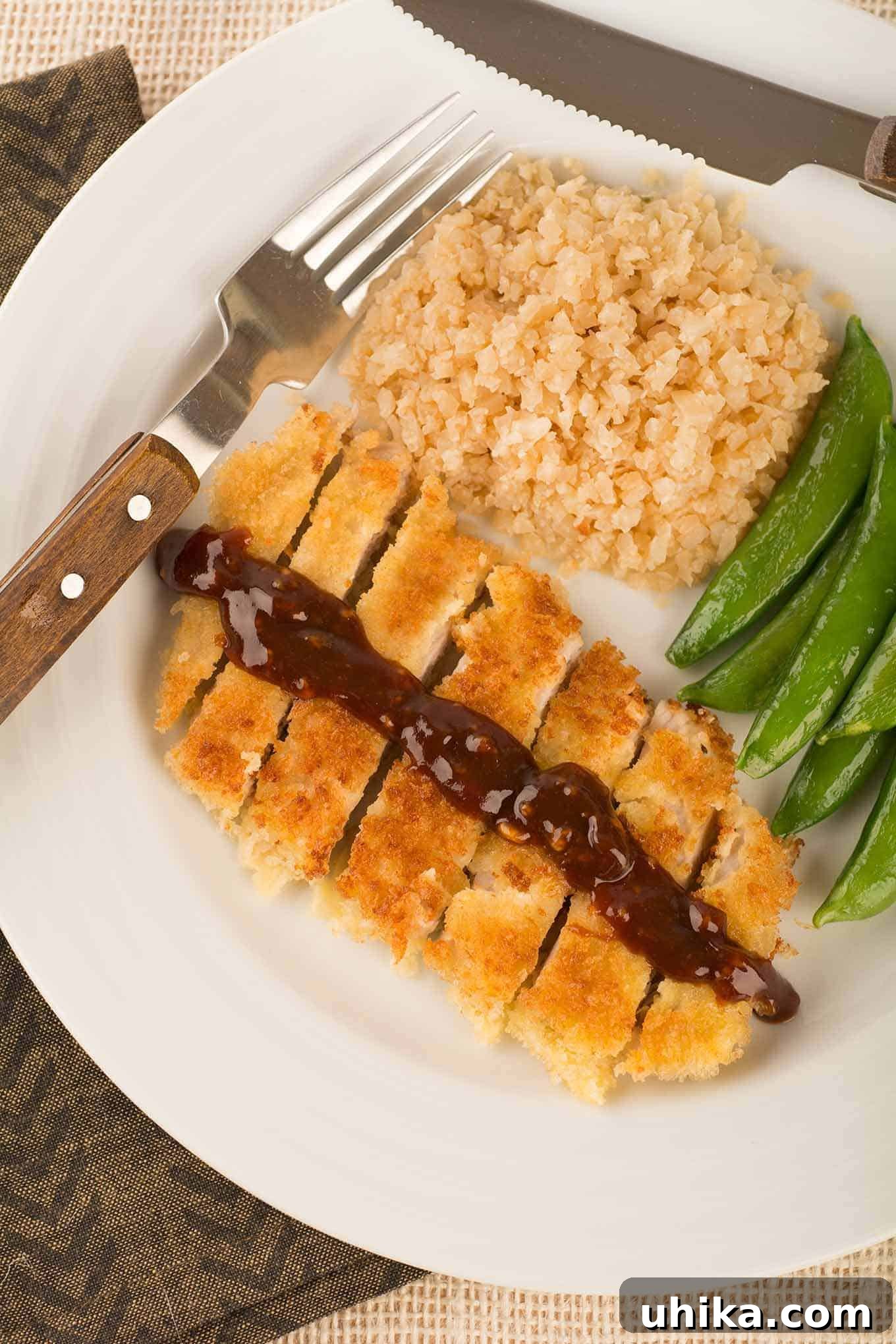
However, modern culinary preferences often lead to creative twists. Lately, we’ve fallen in love with serving Tonkatsu alongside sautéed snap peas and riced cauliflower seasoned with a touch of soy sauce and sesame oil. This combination offers a lighter, vegetable-forward approach that’s both flavorful and satisfying, making the meal feel fresh and contemporary. Other excellent side dishes include:
- Miso Soup: A classic Japanese accompaniment, warm and comforting.
- Pickled Ginger (Gari): Its sharp, sweet, and tangy flavor provides a great contrast.
- Daikon Radish: Grated daikon can be served alongside to add a peppery, refreshing bite.
- Green Salad with Ginger Dressing: A simple salad adds freshness and crunch.
Don’t be afraid to experiment with your favorite vegetables or grains to find your perfect Tonkatsu meal pairing!
Tips for Tonkatsu Success
Achieving perfectly crispy and juicy Tonkatsu is all about technique. Here are some key tips to ensure your homemade version is a resounding success:
- Even Thickness: As mentioned, ensure your pork cutlets are of uniform thickness (about 1/4 to 1/2 inch). This guarantees even cooking.
- Pat Dry: Always pat the pork cutlets completely dry with paper towels before breading. Moisture is the enemy of crispiness.
- Firm Panko Press: When coating with panko, press the cutlets firmly into the crumbs. This helps the panko adhere well, creating a thick, crunchy crust that won’t fall off during frying.
- Optimal Oil Temperature: Maintain a consistent medium-high heat. If the oil isn’t hot enough, the panko will absorb too much oil and become greasy. If it’s too hot, the exterior will burn before the pork is cooked through. A temperature between 325-350°F (160-175°C) is ideal.
- Don’t Crowd the Pan: Fry the cutlets in batches to avoid lowering the oil temperature. Overcrowding leads to steaming instead of frying, resulting in soggy Tonkatsu.
- The “Shake the Pan” Trick: For shallow-frying, gently shaking the pan periodically helps splash hot oil onto the sides of the cutlets. This promotes uniform browning and crispiness, as detailed in our recipe notes.
- Rest the Pork: After frying, let the Tonkatsu rest on a paper towel-lined plate for a minute or two. This allows any excess oil to drain and the juices in the pork to redistribute, resulting in a more tender and flavorful cutlet.
Variations to Explore: Beyond the Classic Pork
While pork Tonkatsu is the traditional star, the concept of a panko-breaded and fried cutlet can be wonderfully applied to other proteins, opening up a world of delicious variations:
- Chicken Katsu: Substitute boneless, skinless chicken breasts or thighs for pork. Pound the chicken breasts to an even thickness for best results. Chicken Katsu is a lighter alternative but equally satisfying.
- Cheese Katsu: For a decadent twist, create a pocket in your pork or chicken cutlet and stuff it with a slice of cheese (like mozzarella or a mild cheddar) before breading and frying. The melted cheese oozing out is a delightful surprise.
- Fish Katsu: Firmer white fish fillets, such as cod or mahi-mahi, can also be breaded with panko and fried for a seafood-inspired Katsu.
- Vegetarian Katsu: Thick slices of firm tofu, eggplant, or portobello mushrooms can be prepared in the same manner for a delicious plant-based option.
Experiment with different spices in your panko mixture to further customize the flavor profile. A touch of garlic powder, paprika, or even a hint of cayenne can add an interesting kick.
Like this recipe? Tell us what you think!
Share your thoughts and ratings in the comments below!
Conclusion: Your Next Favorite Japanese Meal
Tonkatsu offers an incredibly rewarding cooking and eating experience. Its combination of a satisfyingly crispy crust, tender and juicy pork, and a vibrant sweet-and-sour sauce makes it a favorite for good reason. It’s a dish that feels special enough for a celebration yet is simple enough for a busy weeknight. By following these steps and tips, you can effortlessly bring the authentic taste of Japan into your home.
So, gather your ingredients, follow our easy instructions, and prepare to delight your taste buds with this fantastic Japanese pork cutlet. Whether you stick to traditional accompaniments or try our modern veggie suggestions, homemade Tonkatsu is sure to become a beloved staple in your culinary repertoire. Don’t hesitate to share your creations and experiences with us!
Craving more delicious Japanese-inspired dishes? Be sure to also try our Ramen Noodle Bowl with Chicken for another quick and flavorful meal idea.