

Hearty & Authentic Minestrone Soup: A Timeless Italian Classic
Minestrone, a robust and deeply satisfying Italian vegetable soup, brings warmth and nourishment to any table. Bursting with an array of garden vegetables, savory beans, and aromatic herbs simmered in a rich tomato-based broth, this versatile dish is truly a celebration of seasonal bounty. While often enjoyed during the cooler months, its vibrant flavors and wholesome ingredients make it a delightful and light option for year-round enjoyment. Prepare to discover the comforting essence of a truly homemade Minestrone.

The Enduring Legacy of Minestrone Soup
Minestrone is more than just a soup; it’s a culinary philosophy rooted in Italian tradition. Its name, derived from “minestra” (soup) and “minestrone” (big soup), perfectly encapsulates its generous and inclusive nature. Traditionally, Minestrone was a peasant dish, a practical and delicious way to utilize whatever fresh vegetables were available, making each pot a unique reflection of its season and region. This inherent adaptability is what has allowed Minestrone to remain a staple in Italian homes for centuries, evolving with local produce and culinary customs.
Across Italy, the variations of Minestrone are as diverse as the regions themselves. In Tuscany, for instance, you might encounter Minestrone that incorporates stale bread, transforming into the beloved Ribollita, a thick, reboiled vegetable and bread soup. Travel north, and you might find versions featuring rice or small pasta, adding another layer of heartiness. This regional fluidity means there’s no single “authentic” Minestrone recipe, but rather an endless tapestry of delicious interpretations.
For many Italian-Americans, the concept of Minestrone often conjures images of the reddish-brown, often canned varieties found in supermarkets, frequently containing kidney beans, lima beans, and macaroni. While these versions have their place in nostalgic memories, they often differ significantly from the homemade, vibrant vegetable soups cherished in Italian and Italian-American households. The Minestrone we aim to recreate here is a deeply flavorful, nutrient-dense, tomato-based broth laden with fresh vegetables and beans, reminiscent of the traditional, lovingly prepared family recipes passed down through generations.
Crafting Your Perfect Homemade Minestrone: Key Ingredients
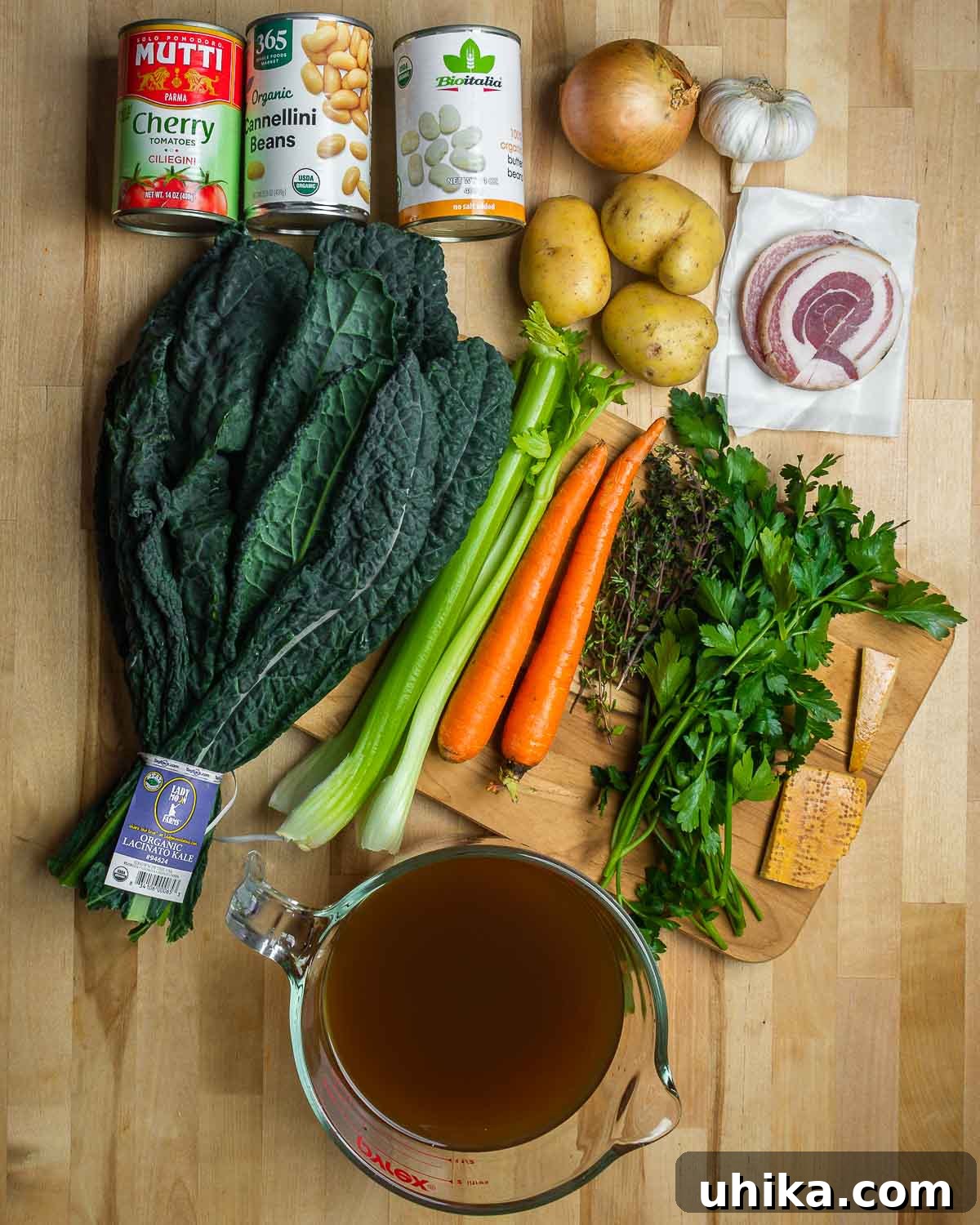
The secret to an exceptional Minestrone lies in the quality and balance of its ingredients. Each component plays a crucial role in building the complex layers of flavor that define this classic soup.
- Extra Virgin Olive Oil: The foundation of Italian cooking, used for sautéing the aromatics and drizzled fresh over the finished soup for added richness.
- Pancetta: Diced pancetta provides a savory depth, rendering its fat to create an incredibly flavorful base for the soffritto. For a vegetarian or vegan Minestrone, simply omit the pancetta and use a little extra olive oil, or consider sautéing mushrooms for umami.
- Soffritto (Onion, Carrots, Celery): This aromatic trinity is the soul of many Italian dishes. Dicing them uniformly ensures even cooking and a harmonious blend of flavors.
- Garlic: Added later to prevent burning, minced garlic infuses the soup with its pungent, warm aroma.
- Beans (Cannellini & Lima Beans): Cannellini beans (white kidney beans) are creamy and tender, while lima beans (or butter beans) add another dimension of texture and flavor. Feel free to experiment with other beans like borlotti, great northern, or chickpeas.
- Tuscan Kale: Also known as Lacinato or Dinosaur kale, its sturdy leaves hold up well during simmering, offering a slightly bitter, earthy counterpoint to the sweet tomatoes. Other leafy greens like spinach, chard, or savoy cabbage can be used.
- Fresh Thyme: Earthy and slightly floral, thyme adds a subtle, herbaceous note that complements the vegetables beautifully. Dried thyme can be used as an alternative, but fresh is always preferred for brightness.
- Crushed Plum Tomatoes: The backbone of the broth, providing a rich, tangy, and naturally sweet base. Hand-crushing whole plum tomatoes offers a rustic texture and fresh flavor.
- Parmigiano Reggiano Rind (Optional but Recommended): A true flavor enhancer! Simmering a cheese rind in the broth imparts an incredible umami depth and savory complexity that is hard to replicate.
- Low-Sodium Vegetable Stock: Using a good quality stock is paramount, as it forms the liquid base. Low-sodium allows you to control the seasoning precisely.
- Yukon Gold Potatoes: These creamy, waxy potatoes hold their shape well and add a satisfying heartiness to the soup. Red bliss or other similar potato varieties can also work.
- Fresh Flat-Leaf Italian Parsley: A burst of fresh, herbaceous flavor and vibrant color added just before serving.
- Salt and Pepper: Essential for seasoning and balancing all the flavors. Adjust to your taste throughout the cooking process.
Step-by-Step: Crafting Your Minestrone Masterpiece
Making homemade Minestrone is a rewarding culinary journey that builds flavor layer by layer. Follow these detailed steps to create a soul-warming soup.
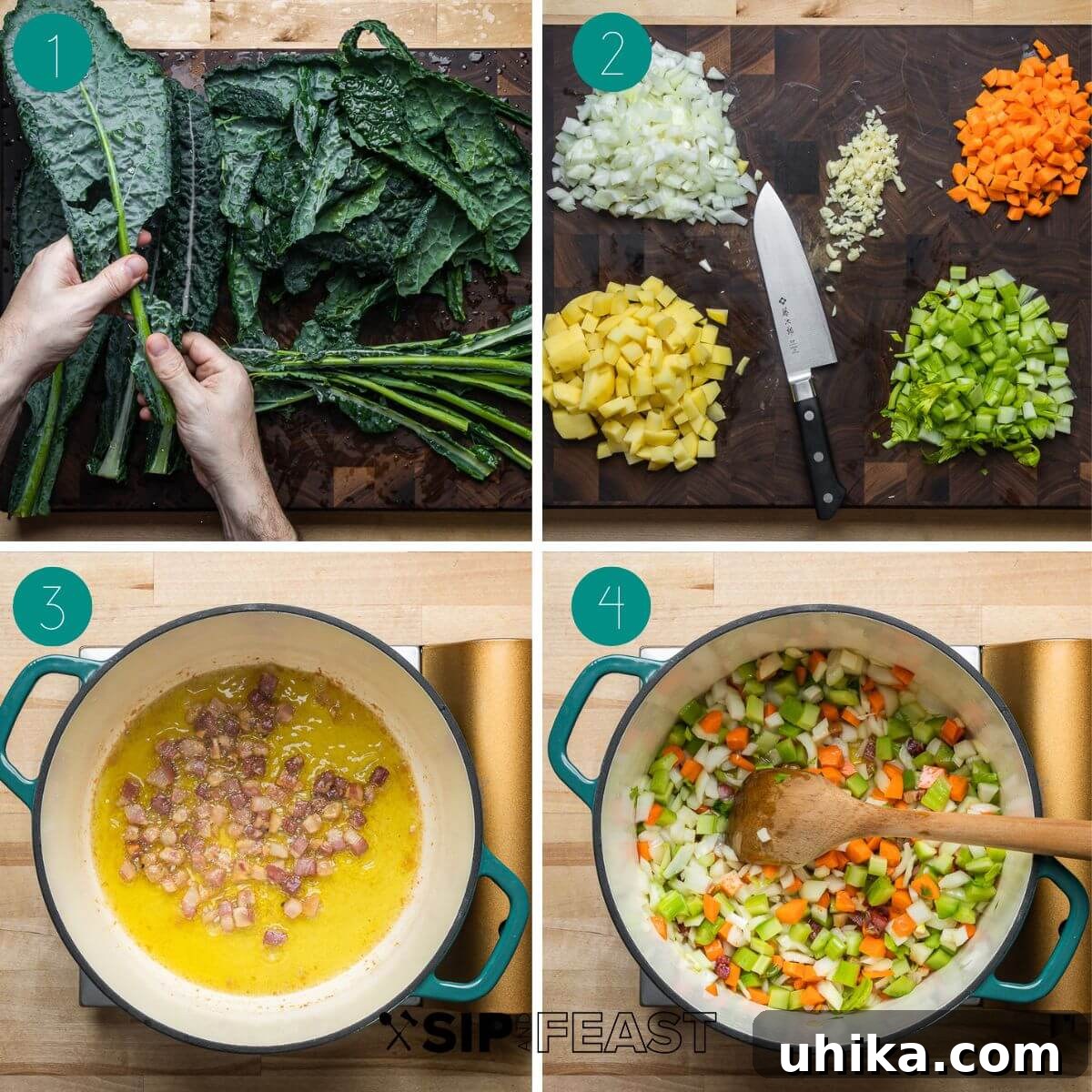
- Prepare Your Vegetables: Begin by washing and preparing all your vegetables. Remove the tough stems from one bunch of Tuscan kale, then roughly chop the leaves. You can discard or compost the stems. Dice 1 large onion, 2 medium carrots, and 2 celery ribs into small, uniform pieces. Mince 5 cloves of garlic finely and chop 1/2 cup of fresh flat-leaf parsley. Finally, cube 3 medium-sized Yukon Gold potatoes. Dice 1/4 pound of pancetta.
- Build the Flavor Base (Soffritto): Heat a large, heavy pot or Dutch oven over medium-low heat. Add 1/2 cup of extra virgin olive oil and the diced pancetta. Cook the pancetta slowly, stirring occasionally, until it has rendered most of its fat and becomes slightly crispy (about 8-10 minutes). This process creates an incredible depth of flavor.
- Sauté the Aromatics: To the pot with the pancetta and its rendered fat, add the diced celery, carrots, and onion. Sprinkle with a pinch of salt to help draw out moisture and soften the vegetables. Cook for 10-12 minutes, stirring periodically, until the vegetables are tender and translucent but not browned. This slow sautéing is crucial for developing the sweet, foundational flavors of your Minestrone.
- Infuse with Garlic: Once the soffritto vegetables are soft, add the minced garlic. Cook for an additional 2-3 minutes, stirring constantly, until the garlic becomes highly fragrant. Be careful not to burn the garlic, as it can turn bitter.
- Add Remaining Ingredients for Simmering: Stir in the chopped kale, 8 sprigs of fresh thyme (or 2 teaspoons of dried thyme), 1 (15-ounce) can of drained lima beans, 1 (15-ounce) can of drained cannellini beans, and 1 (14-ounce) can of crushed plum tomatoes. If using whole plum tomatoes, you can crush them by hand or pulse briefly in a blender for a chunkier texture.
- Introduce the Broth and Cheese Rind: Add 1 rind of Parmigiano Reggiano (if using) and 8 cups of low-sodium vegetable stock to the pot. Stir everything together gently to combine.
- Initial Simmer: Bring the soup to a rolling boil over medium-high heat. Once boiling, reduce the heat to low, partially cover the pot with a lid, and let the soup simmer gently for 1 hour. This extended simmer allows the flavors to meld and deepen beautifully, creating a rich and harmonious broth.
- Taste and Adjust Seasoning: After the initial hour of simmering, taste the Minestrone and make any necessary adjustments to salt and pepper. Remember that the cheese rind will add some saltiness.
- Cook the Potatoes: Add the cubed potatoes to the pot. Bring the soup back up to a boil, then immediately lower the heat to a gentle simmer. Continue to simmer until the potatoes are tender when pierced with a fork, which should take approximately 15-20 minutes.
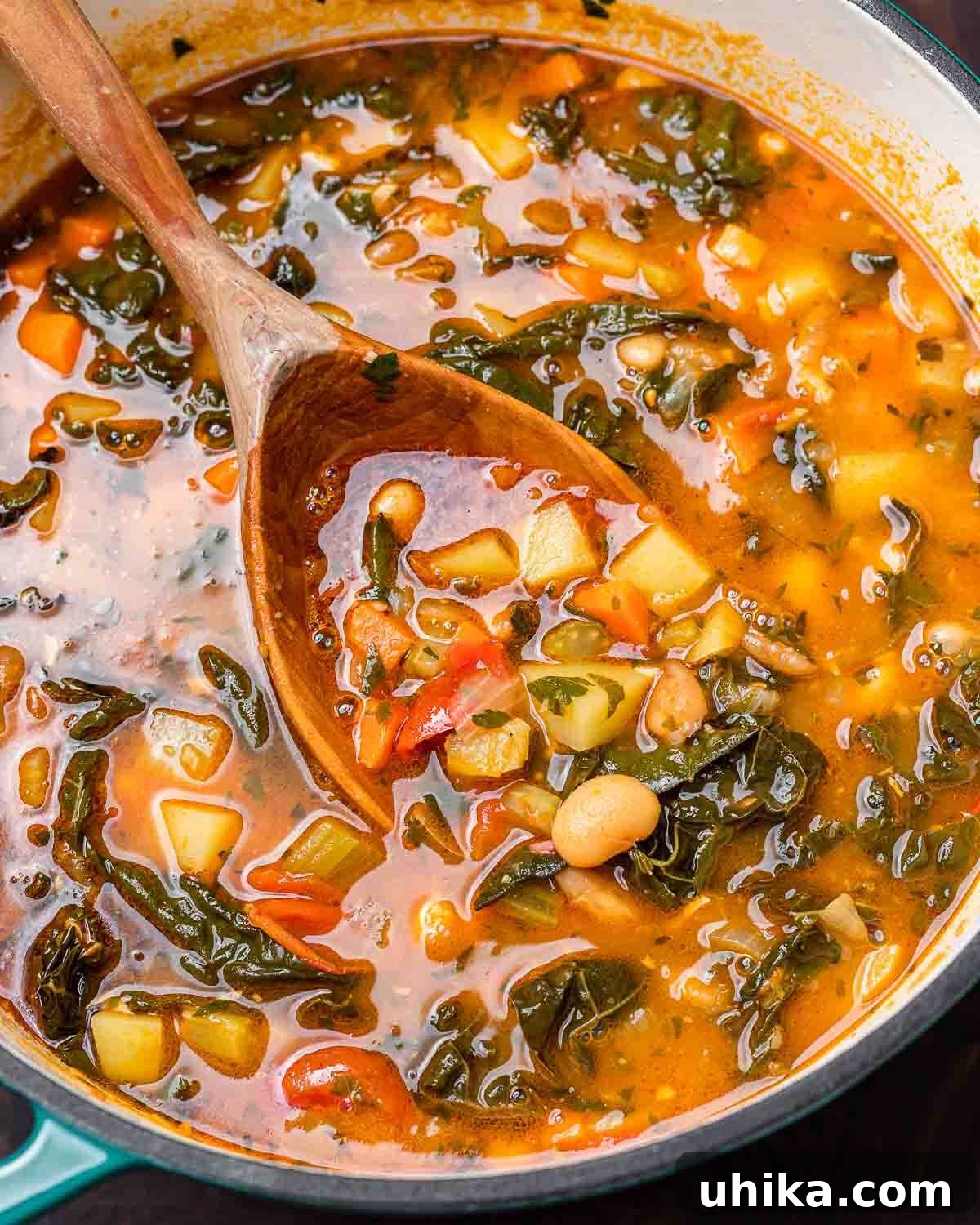
- Final Adjustments and Serving Preparation: Once the potatoes are tender, taste the soup one last time and make any final adjustments to salt and pepper. For a thicker, more rustic Minestrone, you can use the back of a spoon to mash some of the beans and potatoes against the side of the pot. Just before serving, stir in the minced fresh parsley.
- Serve and Enjoy: Ladle the hearty Minestrone into bowls. Garnish each serving with a generous sprinkling of freshly grated Parmigiano Reggiano cheese and a hefty drizzle of good quality extra virgin olive oil. Serve immediately with plenty of crusty Italian bread for dipping.


Top Tips for an Unforgettable Minestrone Experience
Elevate your Minestrone from good to extraordinary with these helpful tips:
- Embrace Vegetable Versatility: The beauty of Minestrone lies in its flexibility. While our recipe features Tuscan kale, carrots, celery, onion, and potatoes, feel free to use what’s in season or what you have on hand. Zucchini, bell peppers, green beans, or even small florets of broccoli or cauliflower can be wonderful additions. For greens, chard, spinach, or savoy cabbage are excellent substitutes for kale.
- Bean Bonanza: Don’t limit yourself to cannellini and lima beans. Garbanzo beans (chickpeas), kidney beans, or borlotti beans are also fantastic choices and can be used individually or in combination to suit your preference. Always drain and rinse canned beans to remove excess sodium and improve flavor.
- The Flavor Power of Fat: Our recipe uses pancetta and olive oil to build a robust soffritto base. If you’re aiming for a vegetarian or vegan Minestrone, simply omit the pancetta. Increase the amount of good quality extra virgin olive oil and consider adding a generous pinch of red pepper flakes with the garlic for an extra kick, or a tablespoon of tomato paste with the soffritto for deeper umami.
- Serving Suggestions to Savor: While Minestrone is a meal in itself, pairing it with complementary elements enhances the experience. Crusty Italian bread is a classic companion, perfect for soaking up the flavorful broth. For an even heartier meal, you can stir in some small pasta shapes like ditalini, elbow macaroni, or broken spaghetti during the last 10-15 minutes of cooking, or a scoop of cooked rice or farro. Always finish with a drizzle of high-quality extra virgin olive oil and a generous grating of Parmigiano Reggiano or Pecorino Romano cheese. A spoonful of fresh pesto swirled in just before serving can also add a delightful herbaceous touch.
- Maximizing Flavor: The Overnight Secret: Like many stews and soups, Minestrone truly shines on the second day. The flavors continue to meld and deepen overnight, creating an even more complex and satisfying broth. If time permits, we highly recommend preparing your Minestrone a day in advance and gently reheating it before serving. This simple step can transform a delicious soup into an unforgettable one.
- Broth Quality Matters: Since the broth forms the core of your Minestrone, using a high-quality low-sodium vegetable stock is essential. It allows you to control the overall saltiness and ensures a pure, clean flavor that won’t overpower the fresh vegetables.
- Achieving Your Desired Thickness: If you prefer a thicker soup, there’s a simple trick: use the back of a wooden spoon or a potato masher to gently mash some of the cooked beans and potatoes against the side of the pot. This releases their starches, naturally thickening the broth to your desired consistency.

Minestrone for All Seasons: Customization and Variations
Don’t let the idea of a “winter soup” limit your enjoyment of Minestrone. Its adaptability makes it suitable for any time of year.
- Spring Minestrone: Incorporate fresh spring peas, asparagus tips, and tender baby spinach.
- Summer Minestrone: Add zucchini, bell peppers, fresh corn kernels, and basil. Use fresh garden tomatoes if available.
- Autumn Minestrone: Think butternut squash, leeks, and hearty greens like collards or chard.
For a completely vegan version, beyond omitting pancetta and cheese, ensure your vegetable stock is certified vegan. Nutritional yeast can offer a cheesy flavor without dairy, and sautéing mushrooms or sun-dried tomatoes can add umami depth. For a protein boost, consider adding pre-cooked lentils or quinoa during the final simmering phase.
Storage and Reheating Tips
Minestrone is a fantastic make-ahead meal and stores beautifully:
- Refrigeration: Allow the soup to cool completely before transferring it to an airtight container. It can be stored in the refrigerator for up to 3-4 days.
- Freezing: For longer storage, Minestrone freezes exceptionally well. Portion the cooled soup into freezer-safe containers or bags, leaving a little headspace. It can be frozen for up to 6 months. Thaw overnight in the refrigerator before reheating.
- Reheating: Gently reheat Minestrone on the stovetop over medium-low heat, stirring occasionally, until warmed through. If the soup has thickened considerably, you may need to add a splash of extra vegetable stock or water to reach your desired consistency.
More Comforting Soup Recipes to Explore
If you’ve found comfort in this Minestrone recipe, we encourage you to explore other delightful soup creations from our collection:
- Tuscan White Bean Soup – A rustic blend of roasted garlic, pancetta, wholesome veggies, and aromatic herbs.
- Escarole and Bean Soup – A simple yet flavorful combination of garlic, tender escarole, and creamy cannellini beans.
- Italian Zucchini Soup – A light and refreshing zucchini soup, often with broken spaghetti for added texture.
Minestrone Recipe Card
Minestrone
by James Delmage
Minestrone is a hearty vegetable soup made with carrots, celery, onion, kale, potatoes, and beans in a tomato-based broth. It’s a warm, satisfying meal for any season.

Prep Time: 10 mins
Cook Time: 1 hr 40 mins
Total Time: 1 hr 50 mins
Servings: 6
Ingredients
- 1/2 cup extra virgin olive oil
- 1/4 pound pancetta, diced
- 1 large onion, diced
- 2 medium carrots, diced
- 2 celery ribs, diced
- 5 cloves garlic, minced
- 1 (15-ounce) can cannellini beans, drained
- 1 (15-ounce) can lima beans, drained
- 1 bunch Tuscan kale, stems discarded and rough chopped
- 8 sprigs fresh thyme (or 2 teaspoons dried thyme)
- 1 (14-ounce) can plum tomatoes, hand crushed
- 1 Parmigiano Reggiano rind (optional)
- 8 cups low sodium vegetable stock (plus more if needed to thin)
- 3 medium Yukon Gold potatoes, cubed
- 1/2 cup flat leaf Italian parsley, minced
- Salt and pepper to taste
Instructions
- Heat a large heavy pot or Dutch oven to medium-low. Add the pancetta and extra virgin olive oil. Once the pancetta has rendered most of its fat, add the onion, celery, and carrots. Sprinkle with salt and cook until soft (about 10-12 minutes).
- Once the veggies are soft, add the garlic and cook until fragrant (2-3 minutes). Then add the tomatoes, beans, kale, thyme, Parmigiano rind (if using), and vegetable stock. Bring to a boil.
- Once boiling, turn the heat down and simmer for 1 hour with the lid partially covered.
- Taste test and season with more salt and pepper if needed. Add the potatoes and bring the heat back up to a boil, then lower it to a simmer. Simmer until the potatoes are tender (about 15-20 minutes).
- Taste test the soup once more and make final adjustments to salt and pepper. For a thicker soup, feel free to mash some of the beans and potatoes with a wooden spoon.
- Before serving, add the fresh parsley to the pot and serve in bowls with parmesan cheese and a drizzle of high-quality extra virgin olive oil. Serve the soup with crusty bread. Enjoy! Note: This soup is often even better if it is left to cool and refrigerated overnight, but it can certainly be enjoyed the same day.
Notes
- Feel free to change up the veggies or beans. Savoy cabbage, chard, and other types of kale all work well. Zucchini and bell peppers can also be added.
- Serve with crusty Italian bread, grated Parmigiano Reggiano or Pecorino Romano cheese, and a hearty drizzle of extra virgin olive oil in each bowl. A spoonful of pesto can also be a delightful addition.
- Minestrone can be stored in the fridge for up to 3 days or frozen for up to 6 months in an airtight container.
Nutrition
Calories: 450 kcal | Carbohydrates: 40.6g | Protein: 18.3g | Fat: 25.3g | Saturated Fat: 5.1g | Cholesterol: 21mg | Sodium: 494mg | Potassium: 120mg | Fiber: 9.1g | Sugar: 6.2g | Calcium: 109mg | Iron: 4mg
Nutrition information is automatically calculated, so should only be used as an approximation.
If you’ve enjoyed this Minestrone soup recipe or any recipe on this site, we encourage you to give it a 5-star rating and share your thoughts in the comments below. We love hearing from you!
We strive to satisfy a number of learning styles. If you are someone who prefers to learn by watching, you can find many of our recipes on YouTube and our Facebook Page.
Like this? Leave a comment below! Check us out on Instagram at @sipandfeast or tag #sipandfeast!