
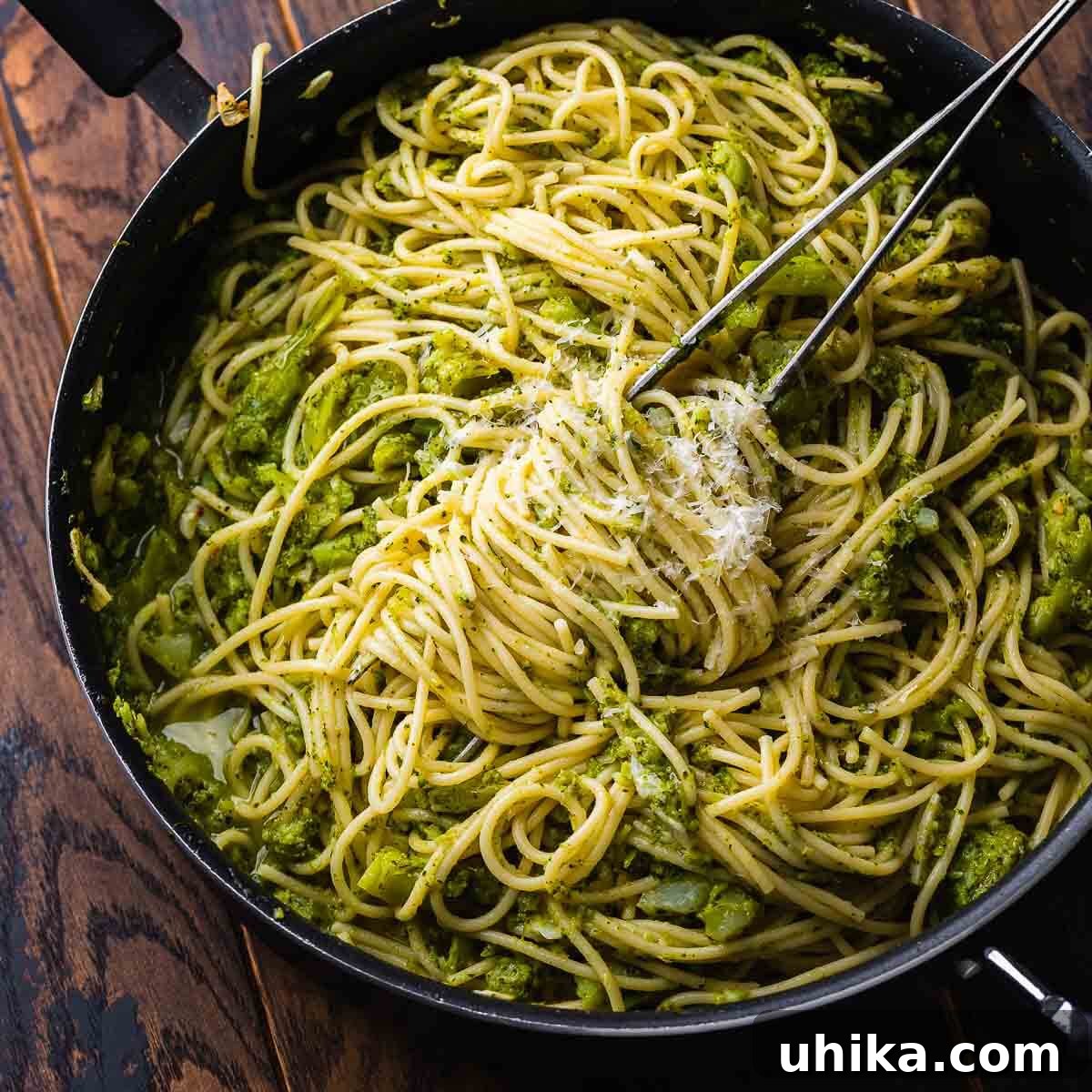
Welcome to the ultimate guide to Pasta con Broccoli, a beloved Italian staple that effortlessly marries fresh broccoli with aromatic garlic, rich olive oil, and perfectly cooked pasta. This isn’t just a recipe; it’s a testament to the beauty of simple ingredients coming together to create something truly extraordinary. Whether you’re a seasoned chef or a kitchen novice, this dish promises a comforting, flavorful, and incredibly satisfying meal that can be on your table in under 30 minutes, making it an ideal choice for busy weeknights.
For many, Pasta con Broccoli, or spaghetti with broccoli, evokes fond memories of home-cooked meals. It’s a dish that transcends generations, offering a delightful blend of textures and tastes. The magic lies in transforming humble broccoli, garlic, and extra virgin olive oil into a creamy, luscious sauce, perfectly clinging to every strand of al dente pasta. Even the most discerning palates, including those of picky eaters, often find themselves falling in love with this wholesome and nourishing creation.
The Charm of Pasta con Broccoli: A Weeknight Favorite
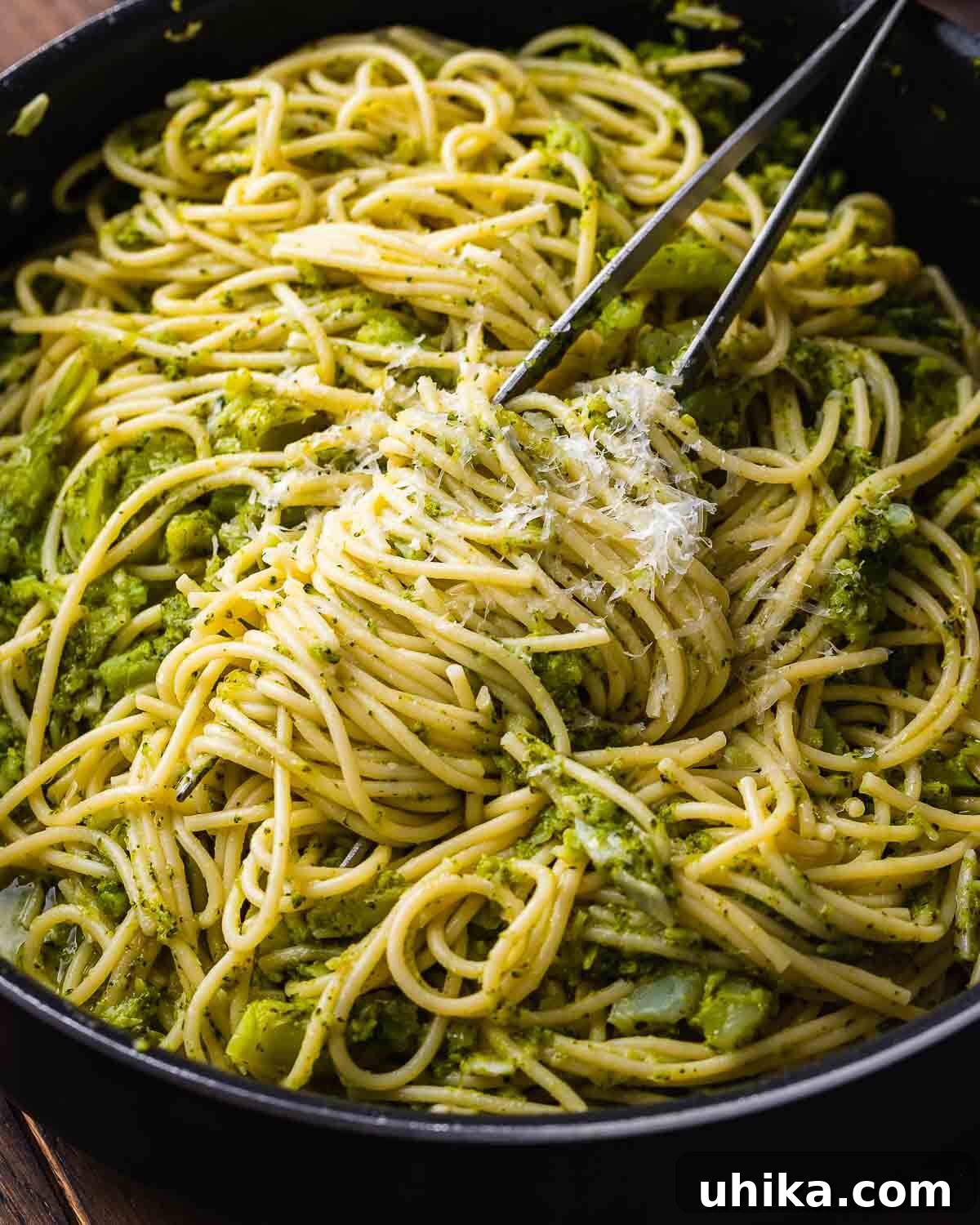
In the culinary world, simplicity often reigns supreme, and Pasta con Broccoli is a shining example. This traditional Italian recipe celebrates fresh, seasonal ingredients, transforming them into a dish that is both hearty and light. Its quick preparation time doesn’t compromise on flavor or nutritional value, offering a guilt-free indulgence that feeds the body and soul. The vibrant green of the broccoli, combined with the golden hue of garlic-infused olive oil, creates an inviting visual appeal that’s as delightful as its taste.
This dish is not merely a collection of ingredients; it’s a symphony of flavors and textures. The subtle bitterness of the broccoli is expertly balanced by the sweet, pungent notes of sautéed garlic, all brought together by the robust fruitiness of high-quality extra virgin olive oil. The addition of starchy pasta water is the secret weapon, emulsifying with the oil to form a velvety sauce that coats the pasta beautifully. Finished with a generous sprinkle of Pecorino Romano cheese, it achieves a depth of flavor that belies its minimal ingredient list.
Why Choose This Broccoli Pasta Recipe?
- Speed and Efficiency: Ready in about 30 minutes, perfect for quick dinners.
- Nutrient-Rich: Broccoli is packed with vitamins and fiber, making this a healthy choice.
- Crowd-Pleaser: Its mild yet flavorful profile appeals to a wide range of tastes, including children.
- Pantry Staples: Uses easily accessible ingredients you likely already have.
- Versatile: Easily customizable with additional vegetables or proteins.
Mastering Spaghetti with Broccoli: A Step-by-Step Guide
Crafting the perfect Pasta con Broccoli is a straightforward process, but paying attention to a few key details will elevate your dish from good to exceptional. The technique involves a clever use of the pasta cooking water and strategic timing to achieve that coveted creamy sauce. Here’s how to create this Italian classic in your own kitchen.
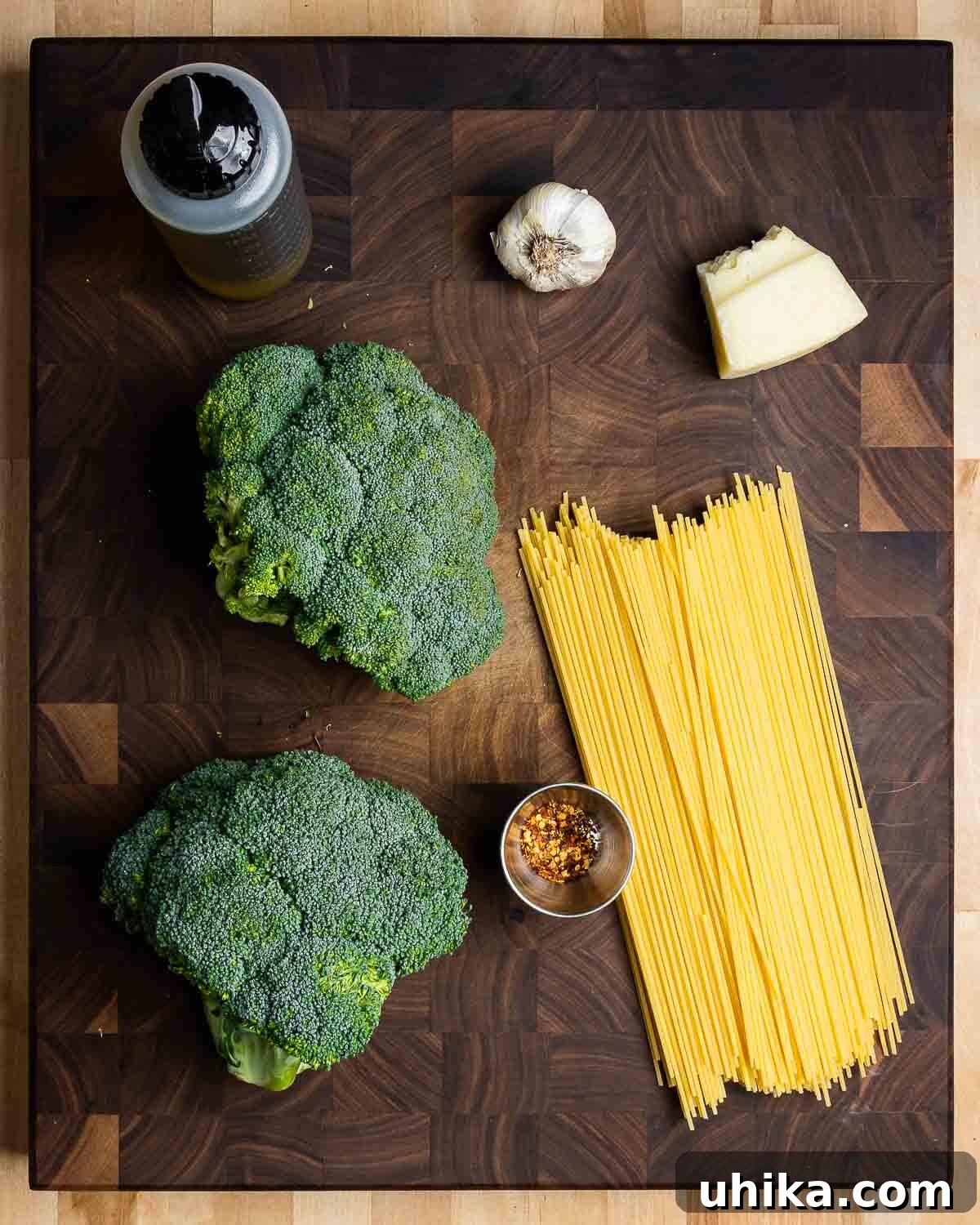
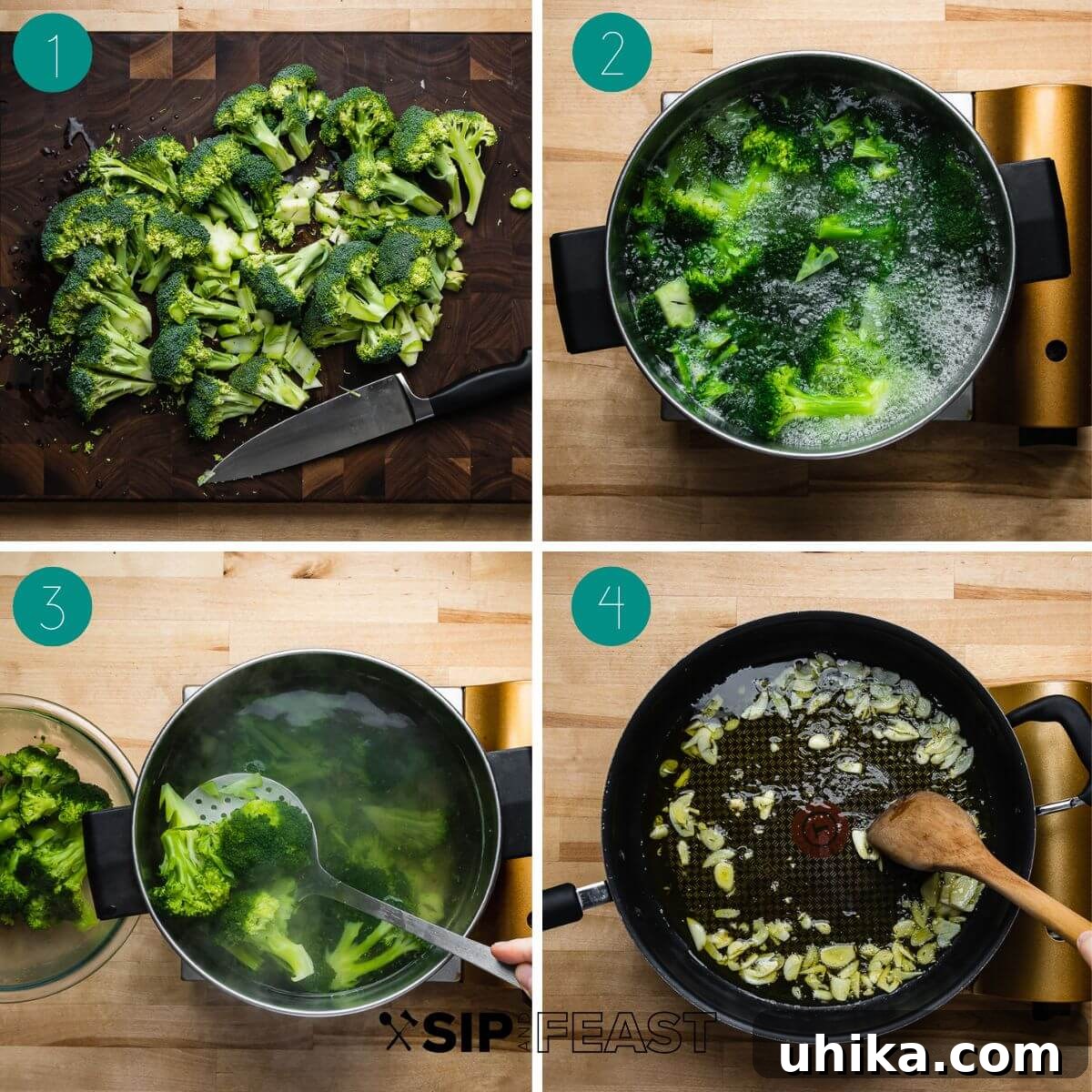
- Prepare Your Ingredients: Begin by bringing a large pot of generously salted water to a rolling boil (approximately 2 tablespoons of salt per gallon of water). While the water heats, prepare your broccoli. Trim and discard the lower 1-2 inches of the fibrous stems. Break the remaining broccoli into bite-sized florets. Next, thinly slice 6 cloves of garlic and grate about 1/2 cup of Pecorino Romano cheese. (Note: While the images show two broccoli crowns, one large head of broccoli is generally sufficient for this recipe.)
- Blanch the Broccoli: Once the water is boiling, add the broccoli florets to the pot. Cook them for about 10 minutes, or until they are very tender. The goal is soft broccoli that can easily be mashed, which will contribute to the creaminess of your sauce.
- Reserve Water and Set Aside Broccoli: Using a slotted spoon, carefully remove the cooked broccoli from the pot and set it aside. It’s crucial not to discard the boiling water; this same water will be used to cook your pasta and will also provide the starchy liquid needed for your sauce.
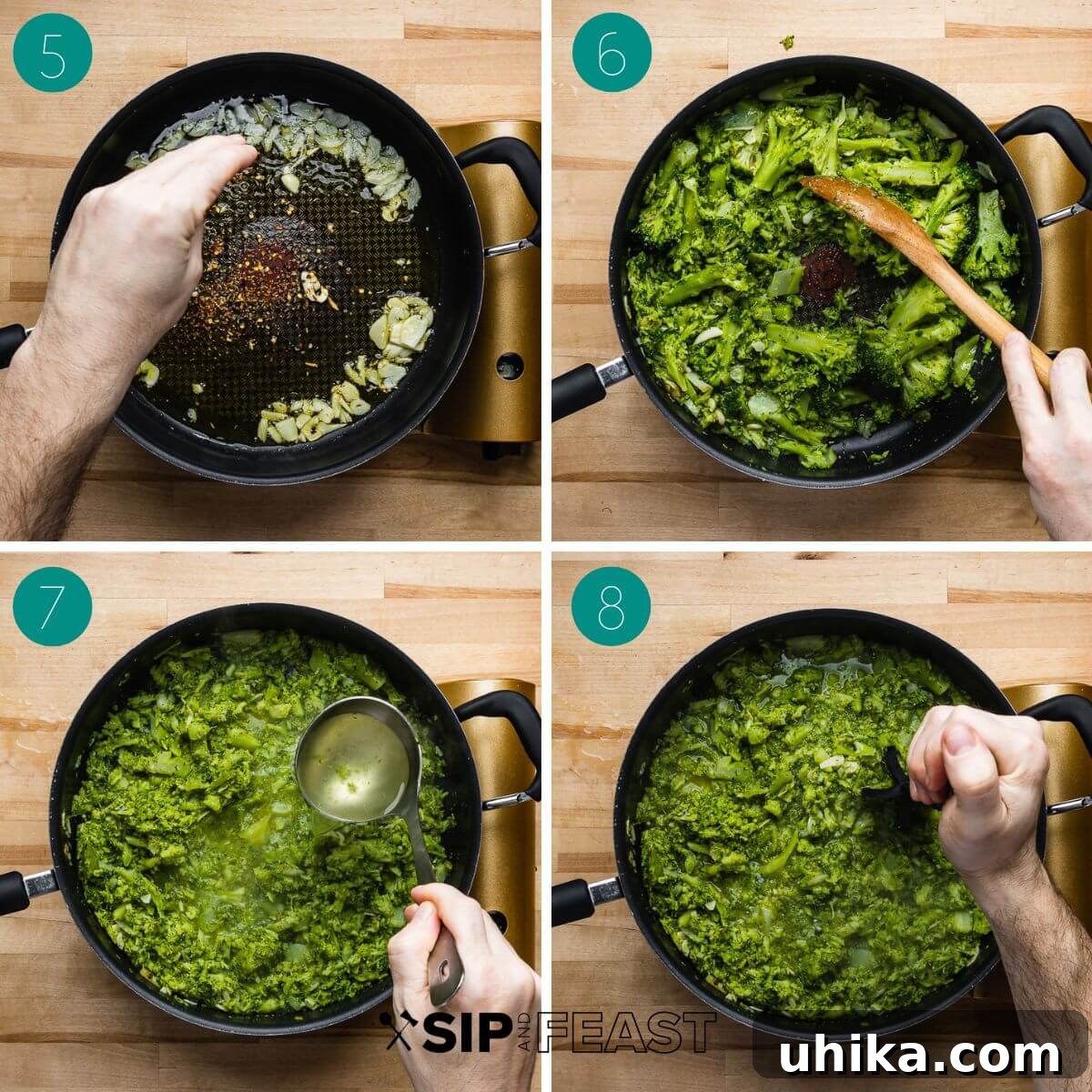
- Infuse the Olive Oil: Heat a large, wide pan (a skillet or Dutch oven works well) over medium-low heat. Add 1/2 cup of high-quality extra virgin olive oil. Once shimmering, add the sliced garlic and sauté gently for 2-3 minutes until it turns a beautiful golden color. Be careful not to burn the garlic, as this can make it bitter.
- Add a Hint of Spice: Stir in 1/2 teaspoon of crushed red chili flakes (adjust to your preference for heat) and continue to sauté for another 30 seconds, allowing the chili flakes to release their aromatic oils into the garlic-infused olive oil.
- Soften the Broccoli Further: Add the tender, blanched broccoli to the pan with the garlic and chili flakes. Continue to sauté it gently for a few minutes, allowing it to soften even more and absorb the flavors of the oil and garlic.
- Cook the Pasta: Return to your pot of reserved boiling water and add 1 pound of spaghetti. Cook the pasta until it is about 1 minute less than al dente. It will finish cooking in the sauce.
- Create the Creamy Sauce: While the pasta cooks, add 1 cup of the hot pasta water to the pan with the broccoli mixture. Reduce the heat to a low simmer. For a creamier consistency, use a wooden spoon or a meat masher to gently mash some of the broccoli against the bottom and sides of the pan. This releases more starch and helps thicken the sauce, creating a rich, emulsified texture.
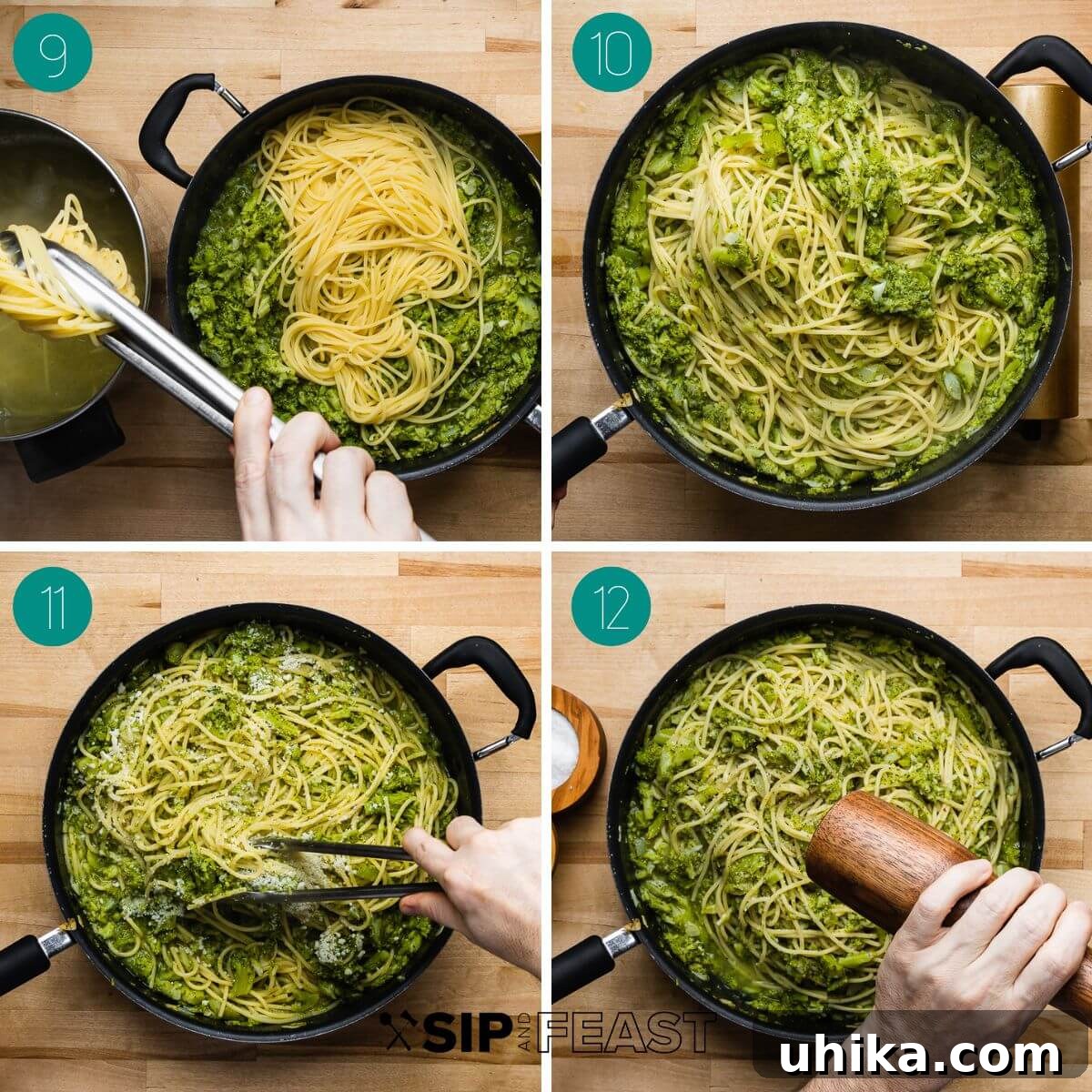
- Combine Pasta and Sauce: When the spaghetti is 1 minute shy of al dente, use tongs to transfer it directly from the boiling water to the pan with the broccoli sauce.
- Finish Cooking Together: Continue to cook the pasta in the sauce over low heat, stirring constantly or tossing vigorously. This allows the pasta to absorb the flavorful sauce and the starches to release, creating a cohesive, creamy dish. Cook until the pasta reaches a perfect al dente texture.
- Add the Cheese: Remove the pan from the heat. Add the grated Pecorino Romano cheese and toss or mix thoroughly until the pasta is well coated and the cheese has melted into the sauce.
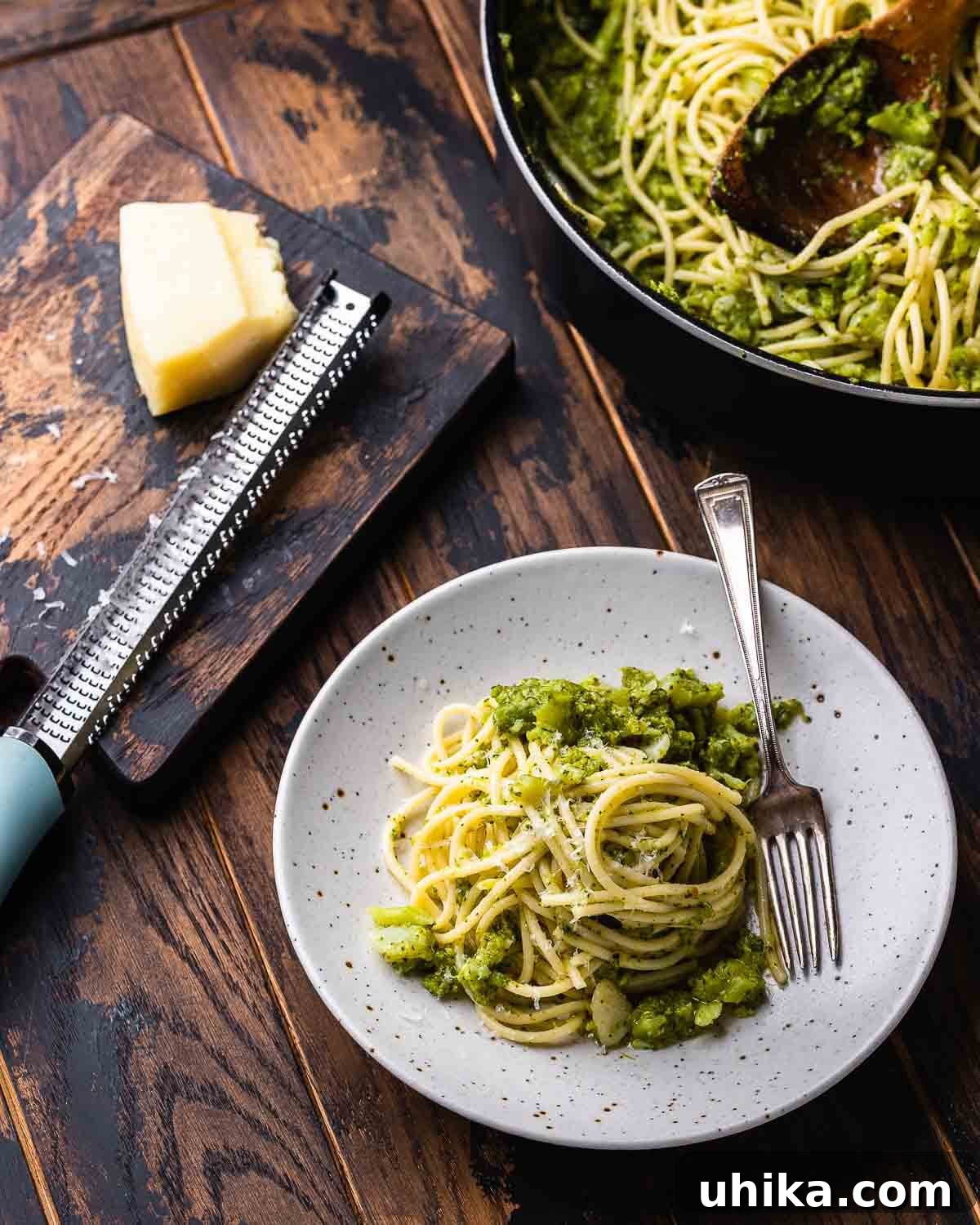
- Season and Serve: Taste the pasta and adjust the seasoning with salt and freshly ground black pepper as needed. If the sauce appears too thick or dry, add a splash more reserved pasta water until your desired consistency is achieved. Serve immediately, garnished with additional Pecorino Romano, a sprinkle of fresh crushed red pepper flakes, and a generous drizzle of your finest extra virgin olive oil. Enjoy this delightful Italian classic!
Expert Tips for the Perfect Pasta con Broccoli
While the recipe itself is straightforward, a few insider tips can help you achieve restaurant-quality results every time you make Pasta con Broccoli.
-
The Power of Pasta Water: This is arguably the most critical component of a successful broccoli pasta. The starchy water leftover from cooking both the broccoli and the pasta is essential for creating the creamy, emulsified sauce. It helps bind the oil, garlic, and broccoli, preventing the sauce from becoming greasy. Always reserve at least 2-3 cups of this magical liquid before draining your pasta.
-
Customizing Your Sauce Consistency: The texture of your broccoli sauce is entirely up to you. If you prefer distinct broccoli florets in your dish, cook them for a slightly shorter time, ensuring they are tender but still hold their shape, and avoid excessive mashing. For a truly creamy, almost puréed sauce that coats the pasta beautifully, cook the broccoli until very soft and mash it generously with a wooden spoon or potato masher in the pan. The longer and more you mash, the creamier your sauce will be.
-
Cheese Choices and Salt Balance: This recipe traditionally calls for Pecorino Romano, a sharp, salty sheep’s milk cheese. Because of its intense saltiness, you might find you need very little, if any, additional salt beyond what’s used in the cooking water. If you opt for a milder cheese like Parmigiano Reggiano, which is less salty, you may need to adjust the final seasoning more liberally. Always taste your pasta before adding extra salt.
-
Quality Olive Oil Makes a Difference: Since olive oil is a foundational flavor in this dish, using a high-quality extra virgin olive oil will significantly enhance the overall taste. Its fresh, peppery, or fruity notes will shine through, especially when drizzled over the finished dish.
-
Al Dente Perfection: Transferring the pasta to the sauce when it’s just under al dente allows it to finish cooking in the flavorful broccoli sauce. This step, known as “mantecare” in Italian, enables the pasta to absorb the sauce’s flavors, creating a more cohesive and delicious dish.
Variations and Enhancements for Your Broccoli Pasta
While classic Pasta con Broccoli is perfect as is, it also serves as an excellent canvas for customization. Feel free to experiment with these ideas to suit your taste or what you have on hand:
- Add Protein: Sautéed chicken, crispy pancetta, Italian sausage, or even canned tuna (oil-packed) can be wonderful additions. Add cooked protein to the pan when you add the broccoli florets to warm through.
- Spice it Up: For those who love a bit more heat, increase the amount of red chili flakes or add a pinch of fresh, finely diced Calabrian chili.
- Include Other Vegetables: A handful of cherry tomatoes, spinach, kale, or roasted bell peppers can add extra color and nutrients. Add delicate greens like spinach towards the end of cooking to prevent overcooking.
- Different Pasta Shapes: While spaghetti is traditional, penne, orecchiette, or even short, tubular pasta shapes work well as they can trap the creamy sauce effectively.
- Herbaceous Notes: Fresh parsley or basil, chopped and stirred in at the very end, can brighten the flavors.
- Lemon Zest: A touch of freshly grated lemon zest can add a vibrant, refreshing counterpoint to the richness of the dish.
More Simple Pasta Recipes to Explore
If you’re a fan of quick, flavorful, and comforting pasta dishes like Pasta con Broccoli, you’ll love these other easy recipes that celebrate fresh ingredients:
- Roasted Broccolini Pasta: A delightful alternative featuring tender roasted broccolini, toasted breadcrumbs, and a finish of Parmigiano Reggiano for an extra layer of texture and flavor.
- Roasted Zucchini Pasta: Light and fresh, this pasta combines roasted zucchini with sweet tomatoes and a kick of Calabrian chili paste for a vibrant taste experience.
- Spaghetti alla Nerano: A classic Neapolitan dish featuring fried zucchini, pasta, and a blend of cheeses that create an incredibly rich and satisfying sauce.
- Macaroni and Broccoli with Tiny Meatballs Soup: For those who adore the broccoli and pasta combo, this comforting soup offers a hearty and satisfying twist.
Frequently Asked Questions (FAQ)
Can I use frozen broccoli for Pasta con Broccoli?
Yes, you can use frozen broccoli. Thaw it completely and drain any excess water before adding it to the boiling water or directly to the pan if you want a firmer texture. Keep in mind that fresh broccoli generally offers a better texture and flavor.
What type of pasta works best for this dish?
Long pasta shapes like spaghetti or linguine are traditional and excellent as they allow the creamy sauce to cling well. However, short pasta shapes like penne, orecchiette, or farfalle are also great options as they scoop up the sauce effectively.
Is Pasta con Broccoli a healthy meal?
Absolutely! Broccoli is a powerhouse of vitamins (C, K), fiber, and antioxidants. Combined with healthy fats from olive oil and complex carbohydrates from pasta, it makes for a balanced and nutritious meal. You can further boost its health profile by using whole wheat pasta.
Can I make this dish vegan?
Yes, to make it vegan, simply omit the Pecorino Romano cheese. You can substitute it with a plant-based grated cheese alternative, or nutritional yeast for a cheesy flavor, or just enjoy it without cheese, focusing on the fresh flavors of garlic, broccoli, and olive oil.
How do I store and reheat leftovers?
Leftovers can be stored in an airtight container in the refrigerator for up to 3 days. When reheating, add a splash of water or vegetable broth to loosen the sauce, as the pasta tends to absorb liquids. Reheat gently on the stovetop or in the microwave until warmed through.
This Pasta con Broccoli recipe is a testament to the fact that incredibly delicious and satisfying meals don’t need to be complicated. With just a few quality ingredients and simple techniques, you can create a dish that’s both comforting and nourishing. Give it a try tonight and discover your new favorite weeknight go-to!
Pasta con Broccoli
by James Delmage
Pin Recipe
Pasta con broccoli is a simple 30-minute dish that combines broccoli, garlic, and oil to form a creamy sauce that’s tossed with al dente pasta and finished with Pecorino Romano cheese.
Ingredients
- 1 head broccoli (bottom 1-2 inches discarded)
- 1 pound spaghetti
- 1/2 cup extra virgin olive oil
- 6 cloves garlic (sliced)
- 1/2 cup Pecorino Romano (grated)
- 1/2 teaspoon chili flakes
- 3 cups pasta water (will most likely not need it all)
Instructions
- Bring a large pot of salted water (2 tablespoons per gallon) to boil. Remove and discard the lower 1-2 inches of fibrous stems from the broccoli and break them into bite-size florets. Add florets to boiling water and cook for 10 minutes until very tender. Once tender, remove the cooked broccoli with a slotted spoon and set aside, making sure to not drain the boiling water.
- Meanwhile, in a large pan over medium-low heat, sauté the garlic in extra virgin olive oil. Once the garlic turns golden (about 2-3 minutes), add the hot red pepper flakes and cook for another 30 seconds.
- Add the broccoli to the pan and continue to sauté to further soften it.
- Cook the pasta in the same boiling water until 1 minute less than al dente.
- Add 1 cup of the pasta water to the pan to make the broccoli sauce and continue to cook at a low simmer. For a creamier sauce, mash the broccoli with a wooden spoon against the side of the pan.
- Once the pasta reaches the almost al dente stage, add it to the pan and cook, stirring frequently, until the pasta reaches a perfect al dente.
- Remove the pan from the heat and add the Pecorino Romano cheese. Toss or mix well to coat.
- Taste test the pasta and adjust salt and pepper if required. If needed, add more reserved pasta water to achieve a loose consistency. Serve with more Pecorino, crushed red pepper, and a drizzle of your best extra virgin olive oil. Enjoy!
Notes
- The sauce consistency will get creamier the longer the broccoli cooks. If you like the broccoli more firm, just reduce the boiling time.
- Pecorino Romano can be quite salty, so you might not need too much extra salt. Taste test and adjust to personal preference right before serving.
- Crushed red pepper flakes are optional.
- Leftovers can be saved in the fridge for up to 3 days and can be reheated in the microwave.
Nutrition
Calories: 638kcal | Carbohydrates: 71.1g | Protein: 20.3g | Fat: 32.2g | Saturated Fat: 6g | Cholesterol: 93mg | Sodium: 348mg | Potassium: 580mg | Fiber: 3g | Sugar: 2g | Calcium: 150mg | Iron: 4.7mg
Nutrition information is automatically calculated, so should only be used as an approximation.
This recipe was originally published on April 23, 2019, and was completely updated on March 27, 2023, with enhanced instructions, process shots, and expanded information to provide the best possible guide to this delightful dish.