
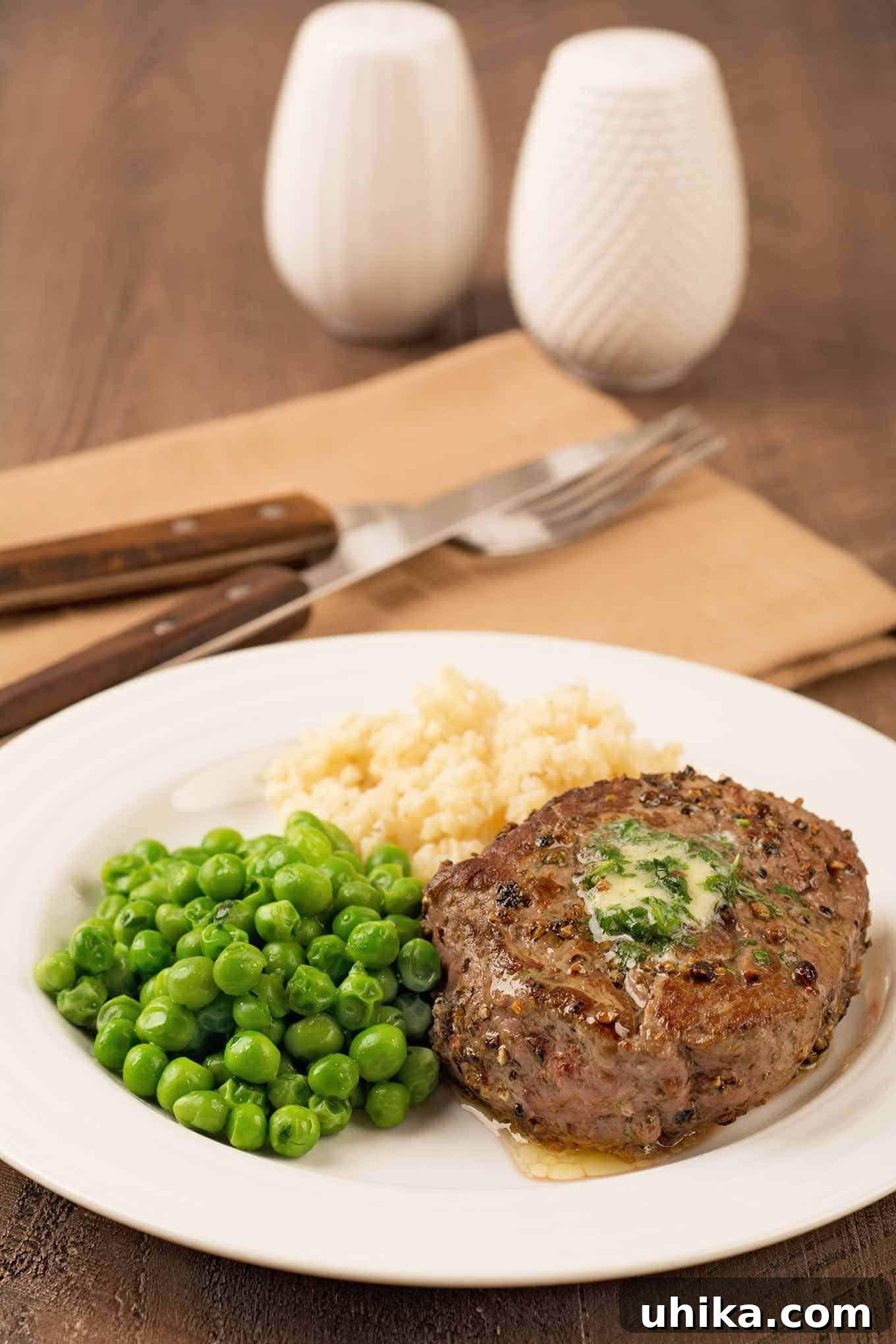
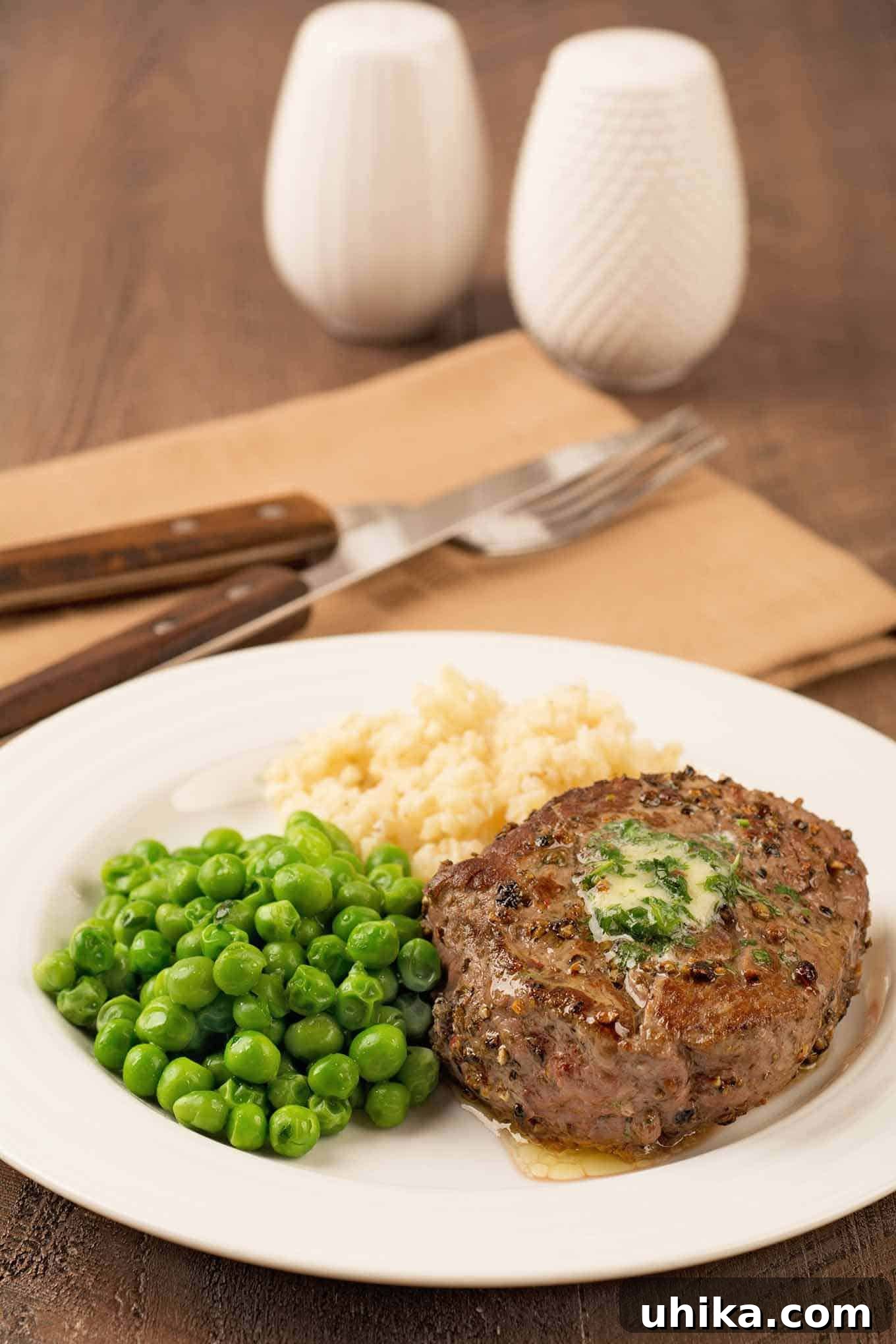
Indulge in Gourmet: How to Master Restaurant-Style Steak au Poivre at Home
Imagine a steak so succulent, so flavorful, that it transports you straight to the finest French bistro. That’s the magic of Steak au Poivre, a timeless classic frequently gracing the menus of upscale steakhouses. But what if we told you that this elegant dish, renowned for its bold peppercorn crust and tender interior, is not only achievable but surprisingly simple to recreate in your own kitchen? Prepare to elevate your dinner game and impress your guests with this guide to crafting the perfect Peppercorn Crusted Filet Mignon.
Steak au Poivre, a French term meaning “pepper steak,” is a celebration of contrasting textures and intense flavors. It typically features a thick-cut, tender steak, most often filet mignon, generously crusted in coarsely cracked peppercorns. This robust coating isn’t just for show; it forms a flavorful crust when pan-seared, locking in the juices before the steak is finished to perfection in a hot oven. The pièce de résistance? A luscious pat of homemade parsley butter, melting exquisitely over the hot meat, adding a layer of fresh herbs and bright citrus that perfectly balances the peppery bite.
The Allure of Steak au Poivre: A Culinary Journey
The origins of Steak au Poivre are somewhat debated, with some tracing it back to 19th-century Normandy and others to early 20th-century Parisian bistros. Regardless of its precise beginning, its popularity surged, establishing itself as a hallmark of French culinary excellence. The dish became a favorite for its straightforward yet sophisticated approach to preparing beef. It emphasizes the quality of the ingredients, particularly the steak and the peppercorns, allowing their inherent flavors to shine through.
While many restaurant preparations involve a cognac or brandy cream sauce, our recipe focuses on a simpler, yet equally decadent, approach using a vibrant parsley butter. This keeps the preparation accessible for home cooks without sacrificing the luxurious experience. The core principle remains: a perfect sear, a flavorful crust, and a tender, juicy interior, making every bite a memorable one.
Choosing Your Canvas: The Best Steak for Au Poivre
The traditional choice for Steak au Poivre is undeniably filet mignon. Its lean, melt-in-your-mouth tenderness and mild flavor provide an ideal backdrop for the aggressive peppercorn crust. Filet mignon, cut from the tenderloin, has very little marbling, which contributes to its delicate texture. For this recipe, we recommend 1-inch thick cuts to ensure a beautiful sear and even cooking to your desired doneness.
However, the beauty of this dish lies in its adaptability. If filet mignon isn’t available or fits your budget, you can certainly experiment with other tender, boneless cuts. Options like New York strip, ribeye (boneless), or even sirloin can yield delicious results. Just be mindful that thicker cuts or those with more marbling might require slight adjustments to the cooking time to achieve your preferred doneness. The key is a steak that is relatively even in thickness to promote uniform cooking.
Crafting the Signature Peppercorn Crust
The peppercorn crust is the heart and soul of Steak au Poivre. It’s not just about adding heat; it’s about introducing a complex aroma and a satisfying texture that crackles with every bite. To achieve this, coarsely cracked peppercorns are essential. Whole peppercorns won’t adhere properly or release enough flavor, while finely ground pepper can burn and turn bitter during searing.
The Peppercorn Blend: Beyond Just Black
While black peppercorns are the classic choice, experimenting with a blend can add depth and nuance. Our preferred method uses a combination of black, green, and pink peppercorns. Black peppercorns provide that robust, pungent heat. Green peppercorns, often brined or dried, offer a fresher, milder, and sometimes fruity note. Pink peppercorns, actually dried berries, contribute a slightly sweet, floral, and subtly spicy flavor. This trifecta creates a more rounded and less aggressive pepper profile, making the dish accessible even to those who aren’t fans of intense heat. If you prefer a bolder, spicier kick, feel free to use all black peppercorns and even increase the quantity slightly.
Cracking the Peppercorns: Techniques for Success
The goal is a coarse, uneven texture. Here are a few ways to achieve it:
- Zip-top Bag & Rolling Pin: The simplest method. Place peppercorns in a sturdy freezer bag, seal it, and crush them with a rolling pin or the bottom of a heavy pan.
- Spice Grinder/Coffee Grinder: Use a dedicated spice grinder (or a clean coffee grinder) for a few quick pulses. Be careful not to over-process into a fine powder.
- Mortar and Pestle: The traditional way, allowing for precise control over the coarseness.
Once coarsely cracked, combine the peppercorns with kosher salt. The salt not only seasons the steak but also helps draw out moisture, contributing to a better crust.
Mastering the Pan-Sear and Oven Finish
The cooking method for Steak au Poivre is a crucial two-step process: an aggressive pan-sear followed by a gentle finish in the oven. This ensures a beautiful, crispy crust and an evenly cooked, juicy interior.
The Perfect Sear: Building Flavor
A heavy, oven-proof skillet is your best friend here, with cast iron being the gold standard. Cast iron retains heat exceptionally well, ensuring a consistent high temperature necessary for that perfect crust. Preheat your skillet over high heat until it’s smoking lightly. Add a thin coating of olive oil – just enough to coat the bottom without pooling – and let it get shimmering hot. The oil facilitates even searing and prevents sticking.
Place your peppercorn-crusted steaks into the screaming hot pan. Resist the urge to move them! Let them sear undisturbed for 1 to 1-1/2 minutes per side. You’re looking for a deep brown, almost black, crust to form. The goal is for the steak to release easily from the pan when flipped. If it sticks, it probably needs a few more seconds to develop that crust.
The Oven Finish: Achieving Desired Doneness
After searing both sides, immediately transfer the skillet (with the steaks) to a preheated 425°F (220°C) oven. This allows the steak to cook through gently and evenly, preventing the exterior from burning while the interior comes to temperature. For a medium-rare filet mignon (our recommendation), approximately 4 minutes in the oven is usually sufficient for a 1-inch thick steak. Adjust this time for thicker or thinner cuts, or for different doneness preferences:
- Rare: 125-130°F (52-54°C) internal temperature
- Medium-Rare: 130-135°F (54-57°C) internal temperature
- Medium: 135-140°F (57-60°C) internal temperature
A meat thermometer inserted into the thickest part of the steak is the most accurate way to check for doneness. Remember, the steak will continue to cook slightly as it rests.
The Essential Rest: A Step Not to Skip
Once removed from the oven, resist the temptation to cut into your beautiful steaks immediately. Resting the meat is paramount. Transfer the steaks to a cutting board or warm plate and let them rest for at least 5 minutes. This allows the juices, which have been driven to the center during cooking, to redistribute throughout the meat, resulting in a more tender and juicy steak. Without resting, the juices would simply spill out onto your plate.
The Flavorful Finishing Touch: Parsley Butter (Beurre Maître d’Hôtel)
While the peppercorn crust is bold, the parsley butter offers a refreshing counterpoint, adding richness, herbaceous notes, and a touch of acidity that brightens the entire dish. This compound butter, also known as Beurre Maître d’Hôtel, is simple to prepare and can be made in advance.
Combine softened unsalted butter with finely chopped fresh parsley, a pinch of salt, and a squeeze of fresh lemon juice. The lemon juice is crucial here; its acidity cuts through the richness of the butter and steak, enhancing all the flavors. Mix everything thoroughly until well combined. Form the butter into a log using plastic wrap, then chill it until firm. This allows you to easily slice off uniform pats of butter to top each hot steak. As the butter melts, its fragrant oils and fresh flavors infuse into the steak, creating a truly gourmet experience.
Peppercorn Crusted Filet Mignon (Steak au Poivre)
Lynne Webb
15 minutes
10 minutes
25 minutes
4
servings
Rate Recipe
Print Recipe
Ingredients
-
4
1-inch thick filet mignons -
Olive oil -
1
tablespoon
peppercorns,
coarsely cracked (see notes) -
1
teaspoon
kosher salt
For the parsley butter:
-
4
tablespoons
unsalted butter,
softened -
1/4
teaspoon
salt -
1
tablespoon
fresh parsley,
finely chopped -
1/2
teaspoon
lemon juice
Instructions
-
About 45 minutes before you’re ready to serve, prepare the parsley butter (Beurre Maître D’Hotel). Thoroughly combine the softened butter, salt, parsley, and lemon juice in a small bowl. Transfer the mixture to a sheet of plastic wrap and form it into a 3-inch long round log. Wrap tightly and refrigerate until firm.
-
Preheat the oven to 425°F (220°C).
-
Place the peppercorns and salt in a small zip-top freezer bag. Lay on a flat surface and, using a rolling pin or the bottom of a heavy pan, crush the peppercorns to a coarse, relatively uniform consistency.
-
Brush one side of the steaks with olive oil and season them evenly with half of the pepper mixture. Rub the pepper into the meat using the back of a spoon to ensure it adheres well, turn the steaks and repeat the process on the other side.
-
Add a thin coating of olive oil to the bottom of a heavy oven-proof skillet (we recommend cast iron) and place it over high heat until shimmering.
-
Add the steaks to the hot pan and sear just long enough for them to release easily, about 1 to 1-1/2 minutes per side, developing a dark, crispy crust. Remove the pan from the heat immediately and place it in the preheated oven to finish cooking, approximately 4 minutes for medium-rare.
-
Remove the steaks from the oven, top each with a slice of the prepared parsley butter, and let them rest for 5 minutes before serving. This allows the juices to redistribute and the butter to melt perfectly.
Notes
- About the steaks: As mentioned above, we always use filet mignon for this recipe due to its exceptional tenderness. However, any tender, boneless steak suitable for grilling or broiling will work well. Remember to adjust the finishing time in the oven based on the thickness of your chosen cut to reach your desired doneness.
- About the peppercorns: We used a vibrant combination of black, green, and pink peppercorns. This blend offers a more complex and somewhat milder flavor profile compared to using only black peppercorns. If you prefer a bolder, spicier pepper flavor, you can certainly opt for all black peppercorns and increase the quantity slightly to suit your taste.
Nutrition
Calories:
473
,
Total Fat:
37
g
,
Cholesterol:
119
mg
,
Sodium:
811
mg
,
Carbohydrates:
2
g
,
Fiber:
1
g
,
Sugar:
1
g
,
Protein:
31
g
Nutrition information is automatically calculated, so should only be used as an approximation.
Like this recipe? Rate and comment below!
Serving Suggestions: Completing the Gourmet Experience
Steak au Poivre is a rich and flavorful dish, perfectly complemented by sides that can either soak up its delicious juices or provide a fresh contrast. Here are some classic pairings to complete your restaurant-style meal:
- Creamy Mashed Potatoes: A timeless combination, mashed potatoes provide a smooth, comforting canvas for the robust steak.
- Roasted Asparagus or Green Beans: Lightly roasted or steamed green vegetables offer a fresh, slightly crisp counterpoint to the richness of the meat and butter.
- Creamed Spinach: Another steakhouse staple, creamed spinach adds a luxurious, savory side that pairs wonderfully.
- Crusty Bread: Perfect for soaking up any lingering juices or butter on your plate.
- Simple Salad: A lightly dressed green salad can offer a refreshing break between bites of the rich steak.
Wine Pairings
For wine lovers, Steak au Poivre calls for a bold red. Consider a Cabernet Sauvignon, Syrah (Shiraz), or a robust Merlot. The peppery notes in the steak find a fantastic match with the spice and fruit characteristics of these wines.
Tips for Steak au Poivre Success
Achieving a perfect Steak au Poivre is within reach with a few key considerations:
- Room Temperature Steak: Always bring your steaks to room temperature for at least 30 minutes before cooking. This ensures more even cooking from edge to center.
- Pat Dry: Before applying the oil and peppercorn mixture, pat your steaks thoroughly dry with paper towels. Excess moisture hinders searing and prevents a crispy crust.
- Don’t Overcrowd the Pan: Cook steaks in batches if necessary. Crowding the pan lowers the temperature, leading to steaming instead of searing.
- High-Quality Peppercorns: Freshly cracked, high-quality peppercorns make a significant difference in flavor. Avoid pre-ground pepper.
- Meat Thermometer is Your Friend: For precise doneness, invest in a good instant-read meat thermometer. It takes the guesswork out of cooking.
- Season Generously: Don’t be shy with the salt and pepper crust. It’s meant to be bold.
Conclusion: Your Home, Your Steakhouse
Steak au Poivre is more than just a meal; it’s an experience. With this detailed guide, you have all the knowledge and techniques to create a restaurant-quality dish in the comfort of your home. From selecting the right cut of meat to mastering the searing and oven-finishing process, and finally topping it with a bright, herbaceous parsley butter, every step contributes to a symphony of flavors and textures. So, gather your ingredients, fire up that skillet, and prepare to savor one of the most elegant and satisfying steak dishes known to man. Enjoy your culinary masterpiece!