
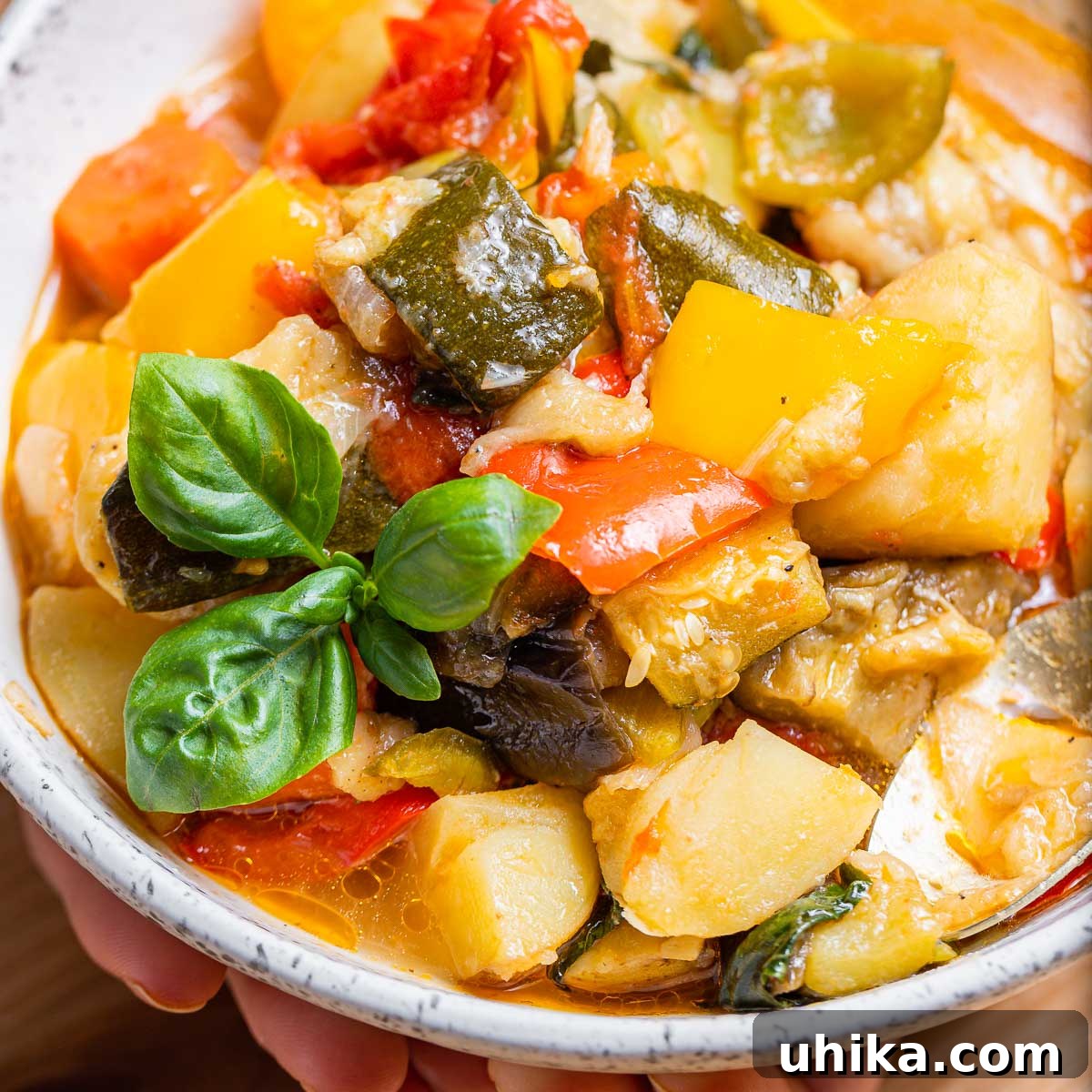
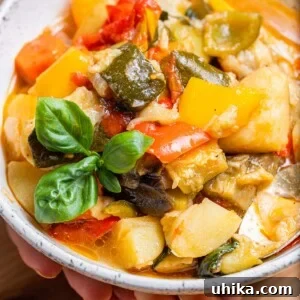
Imagine a culinary masterpiece that captures the vibrant essence of summer in every single bite – that’s Ciambotta. This beloved Italian vegetable stew, also known as Giambotta or Cianfotta in various regions, is a celebration of fresh, seasonal produce. Picture ripe zucchini, tender eggplant, sweet bell peppers, juicy tomatoes, earthy carrots, and hearty potatoes, all gently simmered together until they reach a harmonious symphony of flavors and textures. This rustic yet refined dish requires little more than a generous drizzle of the finest extra virgin olive oil, a scattering of fragrant fresh herbs, and a slice of crusty Italian bread to complete an unforgettable meal.
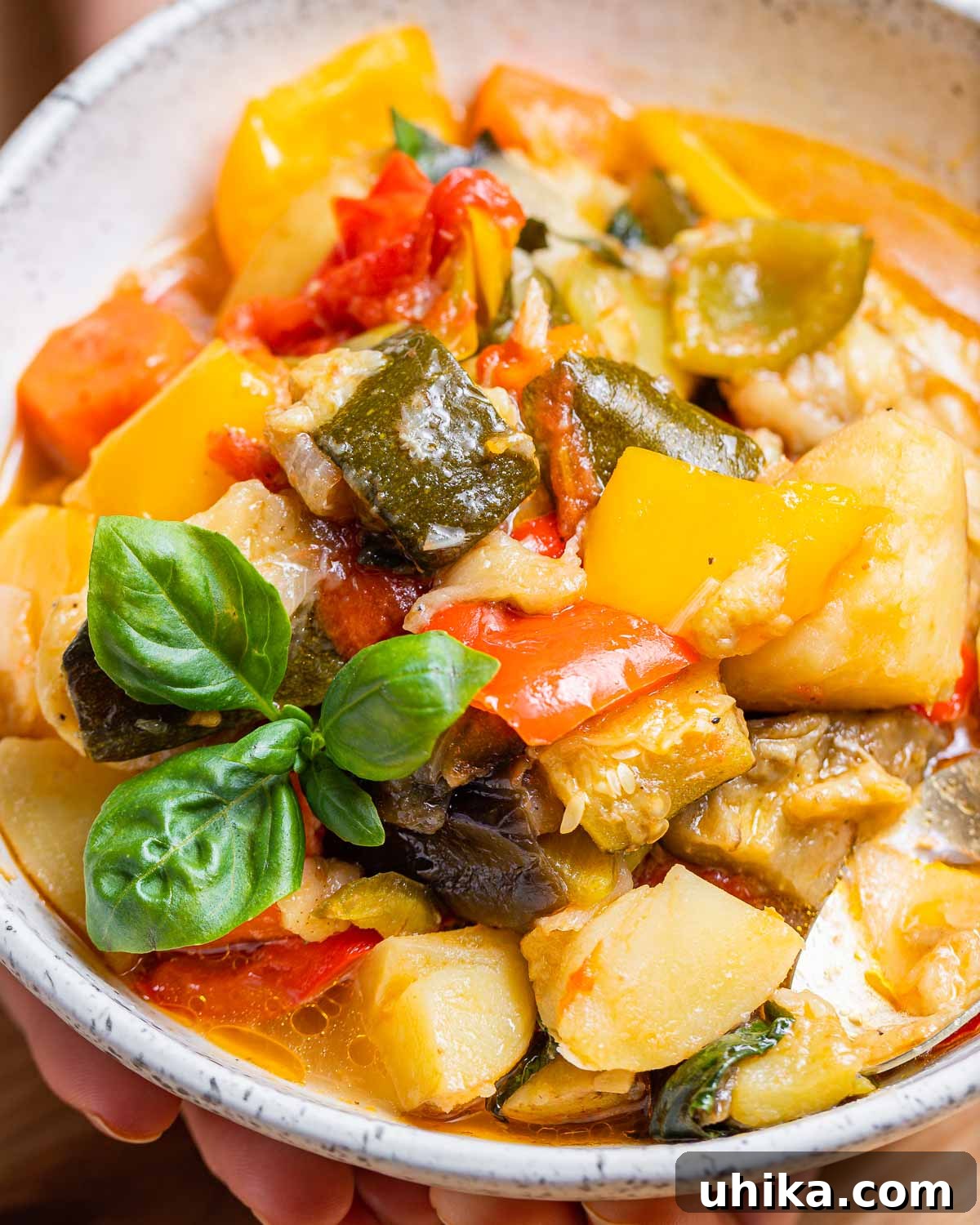
Ciambotta: A Taste of Italian Summer in Every Spoonful
There’s perhaps no dish that pays more perfect homage to the bountiful harvest of Italian summer vegetables than Ciambotta. Often likened to its French cousin, Ratatouille, this robust yet incredibly fresh vegetable stew stands distinctively Italian, boasting deep, complex flavors born from the simplicity of its ingredients and a slow, gentle cooking process. It’s a testament to the beauty of Mediterranean cooking, where fresh produce is king and allowed to shine without overpowering additions.
What truly sets Ciambotta apart, beyond its rich tapestry of flavors and diverse textures, is its captivating duality. While it possesses the comforting depth and satisfying heartiness characteristic of a traditional stew, its composition solely from vegetables imbues it with an unexpected lightness. This unique balance makes Ciambotta an ideal choice even during the warmest summer months when heavy meals are often avoided. Crafted from the very vegetables that thrive under the summer sun, it finds a welcome place at our table, offering a nourishing and refreshing experience, even on the sultriest evenings. This wonderful paradox makes Ciambotta not just a dish, but an experience – a bowlful of contradictions that somehow perfectly aligns. We are confident it will quickly become one of your absolute favorites, just as it is one of ours.
Understanding Ciambotta: Regional Variations and Our Unique Twist
The beauty of Italian cuisine often lies in its regional diversity, and Ciambotta is a perfect example. Depending on your family’s heritage or the specific region you visit, you might encounter different names or spellings for this delightful stew. Whether you call it Giambotta, Giambot, Cianfotta, Ciambotta Calabrese, or Ciambotta Napoletana, each name loosely refers to the same underlying concept: a vibrant medley of stewed summer vegetables. These regional differences often extend to slight variations in ingredients and preparation methods, each reflecting the local agricultural bounty and culinary traditions.
For instance, some versions of this rustic summer stew might incorporate robust Italian sausage, adding a savory depth and heartiness that transforms it into a more substantial meal. Other recipes may include tender chicken thighs, stewed alongside the vegetables, offering a different protein dimension. While these additions are delicious, our recipe leans into the pure, unadulterated flavor of the vegetables themselves, allowing their natural sweetness and earthiness to shine through. However, we do introduce a subtle, yet impactful, variation that, if you’re familiar with our cooking style, you might just guess. That’s right – the addition of cherry peppers.
Traditionally, cherry peppers are not a standard inclusion in most Ciambotta recipes. Yet, we’ve discovered that their subtle heat and delicate vinegary tang impart an extraordinary “something extra” to the stew. This unexpected zing cuts through the richness of the other vegetables, brightening the overall flavor profile and adding an intriguing layer of complexity that elevates the dish. It’s a small deviation that makes a big difference, enhancing the natural flavors without overwhelming them. We encourage you to try this unique twist; it might just become your new favorite secret ingredient for Ciambotta.
Crafting the Perfect Ciambotta: A Step-by-Step Guide
Creating a truly delicious Ciambotta begins with careful preparation and a patient hand. Follow these detailed steps to bring this sensational Italian summer stew to life in your own kitchen. Each instruction is designed to help you achieve a rich, flavorful, and perfectly textured dish.
-
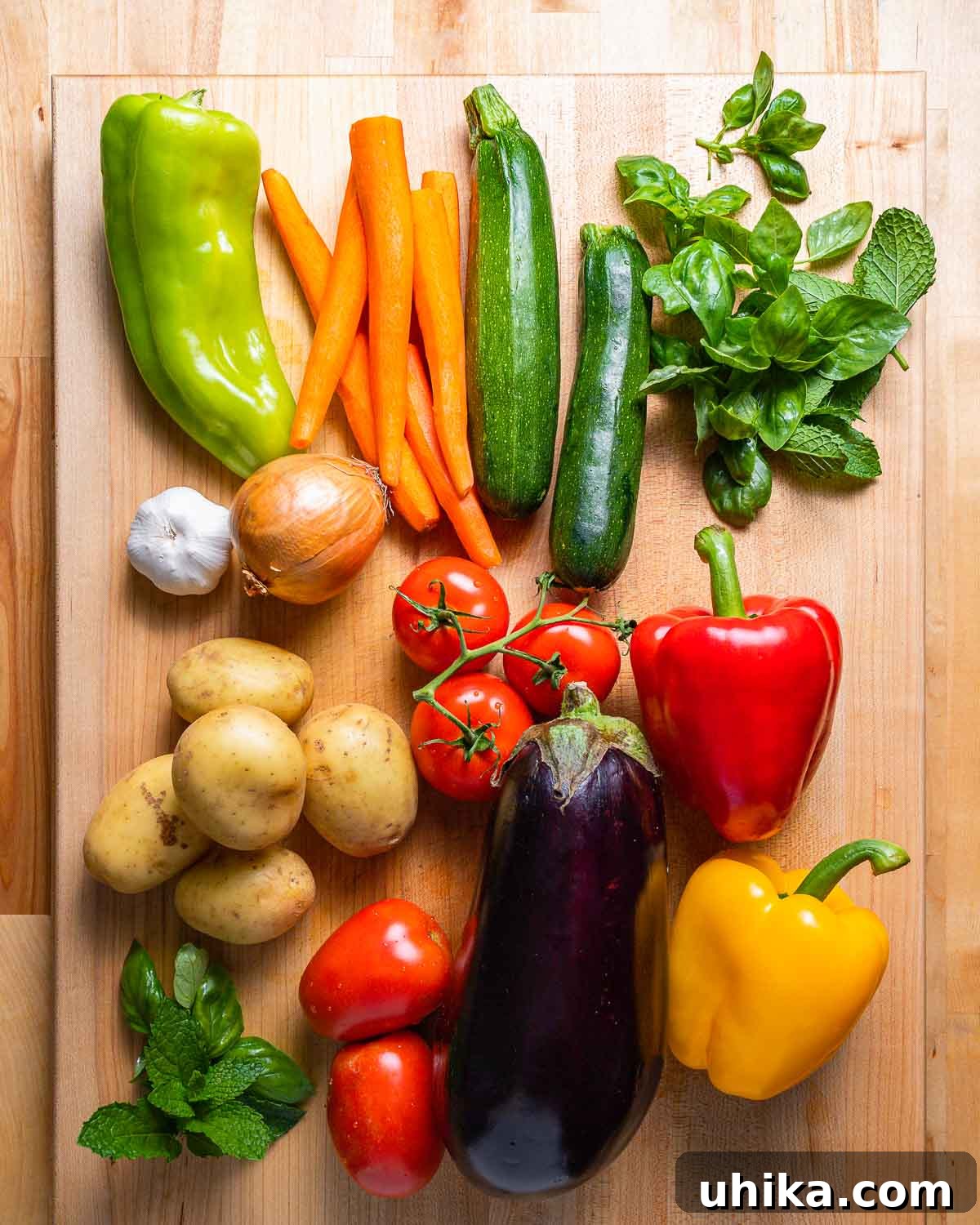
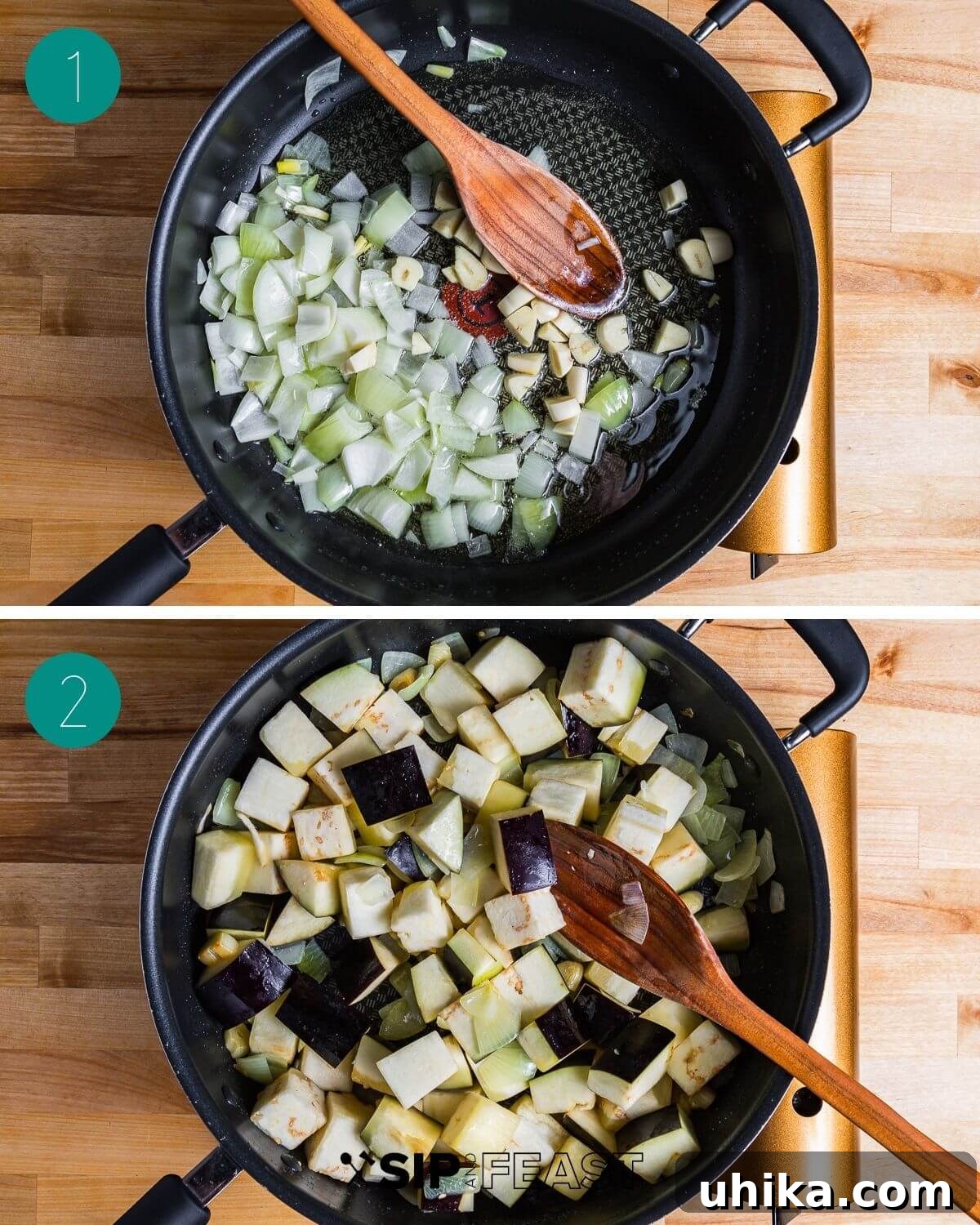
Prepare Your Vegetables: The foundation of any great stew is well-prepared ingredients. Start by meticulously chopping all your vegetables. Cube the zucchini, eggplant, and potatoes into roughly equal-sized pieces to ensure even cooking. Dice the carrots and onion into uniform pieces to create a flavorful aromatic base. Chop both the bell peppers and Cubanelle peppers into approximately 1-inch squares. For the cherry peppers (our special ingredient!), carefully remove the stems and seeds before giving them a rough chop; this helps manage the heat and integrates their unique flavor more smoothly. In a large, high-walled pot or a Dutch oven, begin by sautéing the chopped onion in the extra virgin olive oil over medium-low heat. Cook the onion for several minutes until it becomes translucent and fragrant, softening without browning. This gentle sauté builds a foundational sweetness for the stew. Next, add the minced garlic and continue to cook for another 2 minutes, stirring constantly. Be careful not to burn the garlic, as this can turn bitter and compromise the stew’s flavor.

-
Introduce the Eggplant: Increase the heat to medium. Add the cubed eggplant to the pot. Eggplant absorbs oil and cooks down beautifully, so stir frequently for about 5 minutes, allowing it to soften slightly and soak up the flavors from the onion and garlic. This initial cooking helps to develop its tender texture.
-
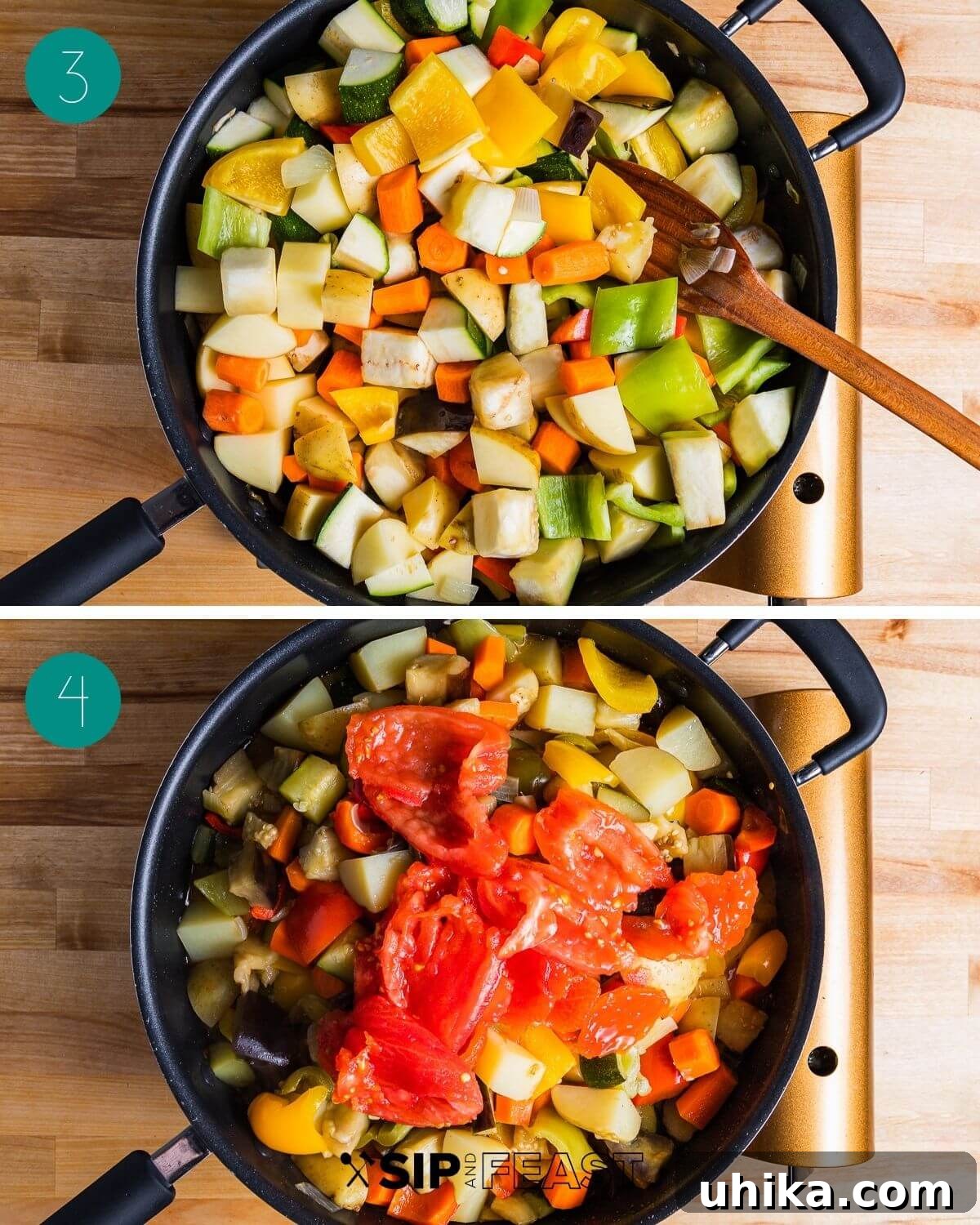
Add Remaining Vegetables: Now, it’s time to incorporate the rest of your summer bounty. Add the chopped bell peppers, Cubanelle peppers, potatoes, zucchini, carrots, and the prepared cherry peppers to the pot. Stir all the vegetables thoroughly, ensuring they are well coated with the olive oil and the flavorful base you’ve built. This step is crucial for distributing flavors and initiating the cooking process for all the components.
-
Incorporate the Tomatoes and Simmer: Allow the vegetables to cook together for approximately 20 minutes, stirring occasionally, before adding the tomatoes. If using fresh tomatoes, such as blanched and deseeded Roma tomatoes, they will impart a bright, fresh flavor. For ultimate convenience and consistent results, we highly recommend using a 28-ounce can of good quality plum tomatoes, drained and hand-crushed. The recipe card instructions below are tailored for canned tomatoes, making your preparation even smoother. Once the tomatoes are added, bring the mixture to a gentle simmer, ensuring all ingredients are well combined.
-
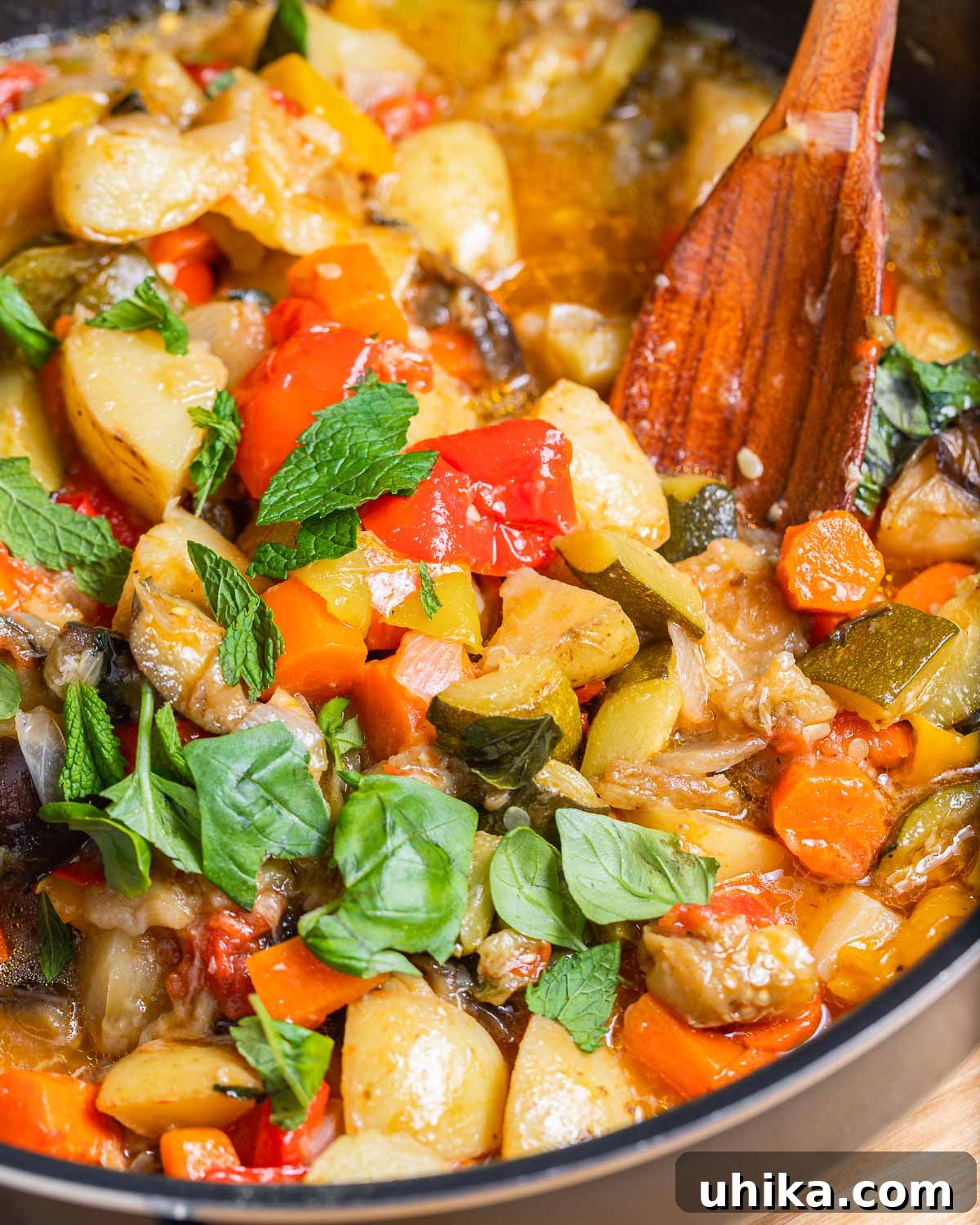
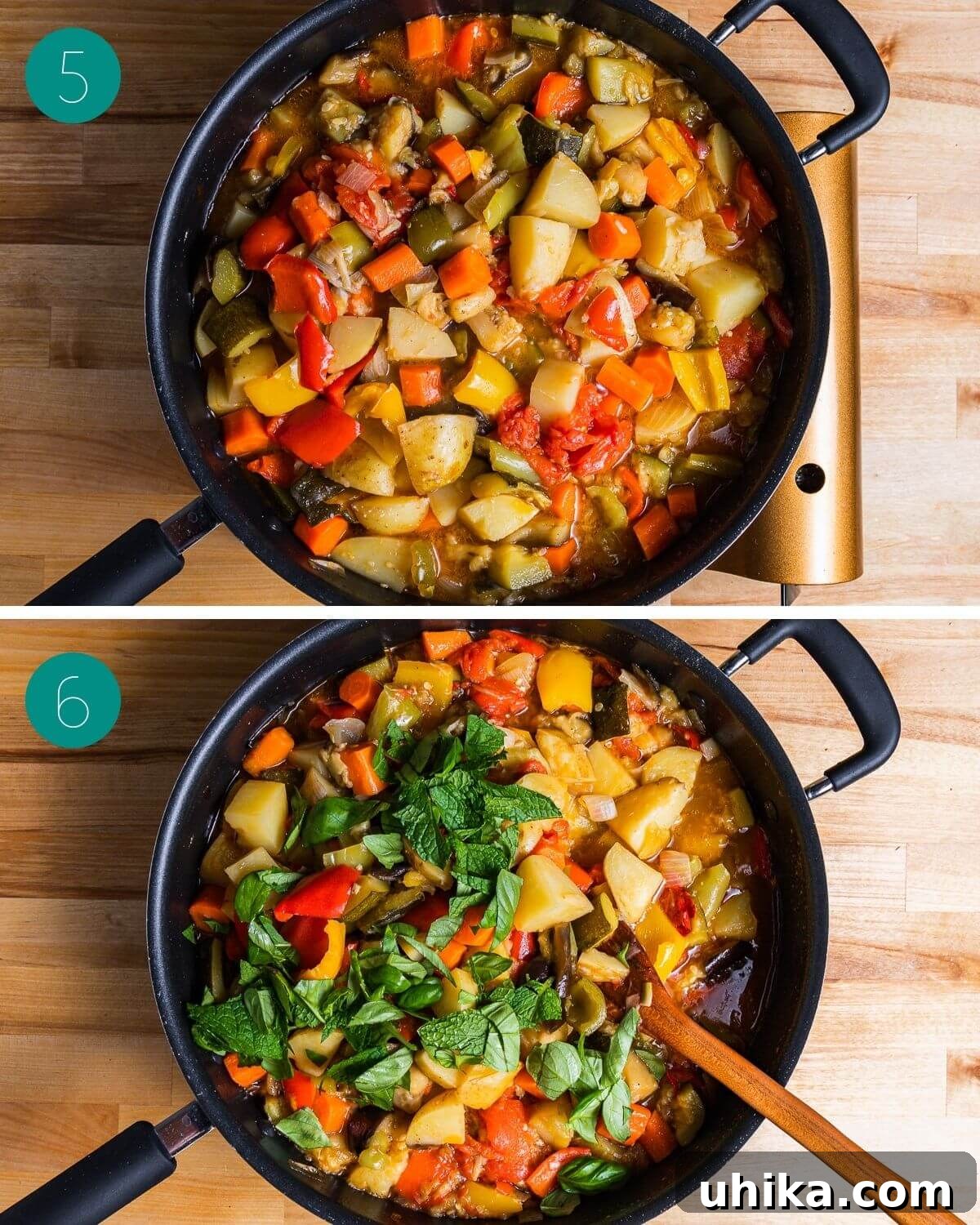
Slow Cook to Perfection: Cover the pot, but leave the lid slightly ajar to allow some steam to escape while still retaining moisture. Let the vegetables continue to cook slowly until they become very soft and tender, which typically takes about 30-40 minutes. The key here is patience; slow cooking allows the flavors to meld beautifully and the vegetables to break down into a rich, stew-like consistency. Throughout this simmering period, keep an eye on the consistency. If the stew appears too dry or starts to stick to the bottom of the pot, add a small amount of water (a quarter cup at a time) to loosen it up and prevent burning. This ensures a perfectly moist and luscious Ciambotta.
-
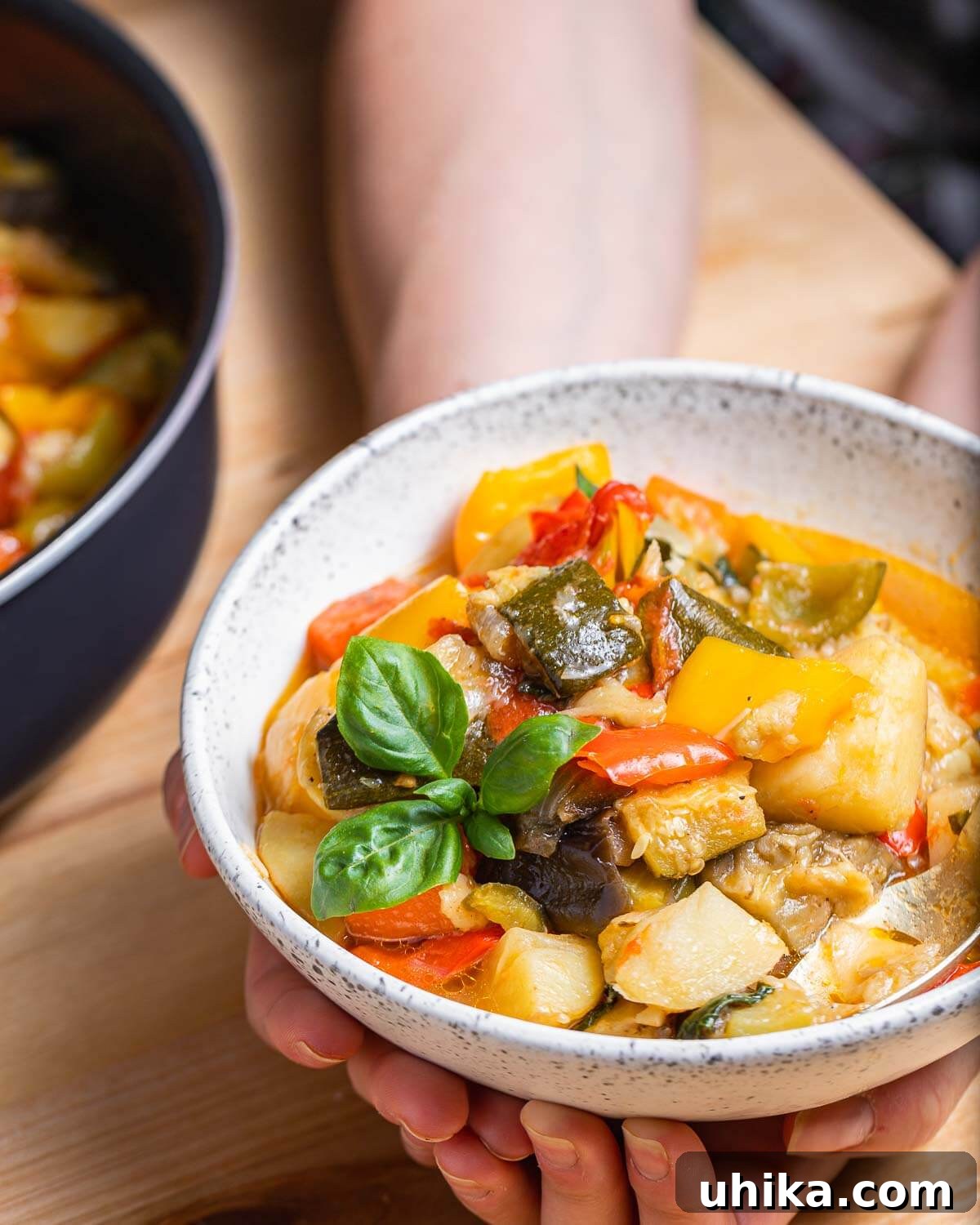
Finish and Serve: Once the vegetables have reached that desired state of perfect tenderness, it’s time to season your Ciambotta. Taste and adjust with salt and freshly ground black pepper until the flavors are just right. Stir in the freshly chopped basil and mint; these herbs add a burst of freshness and aroma that brightens the entire dish. Finally, before serving, drizzle a little more high-quality extra virgin olive oil over the top – this adds a final layer of luxurious flavor and a beautiful sheen. Serve your magnificent Ciambotta piping hot, accompanied by slices of crusty Italian bread, perfect for soaking up every delicious drop, and generous amounts of freshly grated Parmesan or Pecorino Romano cheese. Enjoy this taste of authentic Italian summer!
More Summer Vegetable Delights to Explore
If the rich, wholesome flavors of Ciambotta have captured your heart, it’s clear you have a profound appreciation for fresh, seasonal vegetables. The Mediterranean diet, celebrated for its reliance on nature’s bounty, offers an endless array of delicious ways to enjoy produce, especially during the peak of summer. Here are some of our other cherished vegetable dishes that beautifully showcase the abundance of summer’s harvest, perfect for expanding your culinary repertoire:
- Potatoes and Peppers – A rustic, Calabrian-style side dish featuring tender potatoes and sweet peppers, excellent when paired with a hearty loaf of Italian bread.
- Roasted Eggplant with Tomato Sauce – Perfectly roasted eggplant slices, generously topped with a vibrant marinara sauce and crumbled ricotta salata for a savory, satisfying experience.
- Italian Zucchini Soup – A light and comforting soup featuring tender zucchini and broken spaghetti in a delicate tomato broth, ideal for a lighter summer meal.
- Zucchini alla Parmigiana – A delightful twist on the classic, made with thinly sliced zucchini layered with rich tomato sauce, creamy mozzarella, and sharp Parmesan cheese.
- Peperonata – A sweet and tangy relish made from stewed bell peppers, fantastic spread over crusty bread or as an accompaniment to grilled meats.
- Pasta with Cherry Tomatoes – A simple yet incredibly flavorful pasta dish highlighting sweet garden cherry tomatoes and fresh basil, a true taste of summer.
- Eggplant Caponata – A classic Sicilian sweet and sour condiment featuring tender eggplant, celery, olives, and capers, with the unique addition of raisins and pine nuts for a delightful textural and flavor contrast.
We hope you’ve thoroughly enjoyed this Ciambotta recipe and found it a wonderful addition to your summer cooking. If you’ve tried this or any other recipe from our site, we would be incredibly grateful if you could take a moment to give it a 5-star rating and leave a review. Your feedback helps us grow and inspires others to discover these delicious dishes.
For those who prefer to learn by watching, many of our recipes, including this one, are available on our YouTube channel and our Facebook Page. Follow along as we demonstrate how to create these authentic Italian dishes, bringing the flavors of Italy directly to your screen.
Ciambotta
Pin
SaveSaved
Ingredients
- 1 medium onion chopped
- 2 medium zucchini cubed
- 1 medium eggplant cubed
- 2 medium carrots chopped
- 2 large bell peppers chopped into 1″ squares
- 1 large Italian frying pepper (cubanelle) chopped into 1″ squares
- 3 medium hot cherry peppers seeded and stems removed, chopped, optional
- 5 medium Yukon Gold potatoes cubed
- 1 28-ounce can plum tomatoes drained and hand crushed
- 5 cloves garlic minced
- 1/4 cup basil chopped
- 2 tablespoons mint chopped
- 1/2 cup extra virgin olive oil plus extra for finishing
- salt and pepper to taste
Want To Save This Recipe?
Enter your email and we’ll send it to you. Plus, get great new recipes from us every week!
Instructions
-
In a large, high-walled pot or Dutch oven, heat the olive oil over medium-low heat. Add the chopped onion and sauté for a few minutes until translucent and softened. Add the minced garlic and cook for 2 minutes more, being careful not to brown it.
-
Increase the heat to medium. Add the cubed eggplant and cook for 5 minutes, stirring frequently, until it begins to soften. Then, add the bell peppers, Cubanelle pepper, potatoes, zucchini, carrots, and optional cherry peppers. Stir all vegetables well to coat them with the olive oil and aromatics.
-
After approximately 20 minutes, add the hand-crushed plum tomatoes to the pot. Reduce the heat to a low simmer, stirring occasionally to combine. Cover the pot, leaving the lid slightly ajar, and allow the vegetables to cook until they are very soft and tender, about 30-40 minutes. If at any point the stew appears too dry, add a small splash of water to maintain a desirable consistency and prevent sticking.
-
Once the vegetables are perfectly soft, season the Ciambotta generously with salt and freshly ground black pepper to taste. Stir in all the freshly chopped basil and mint. Before serving, drizzle with more extra virgin olive oil for a final touch of richness. Serve hot with crusty Italian bread and a sprinkle of grated Parmesan or Pecorino Romano cheese. Enjoy this comforting and flavorful Italian stew!
Notes
- This recipe yields approximately 6 generous servings or 8 moderate-sized portions, perfect for family meals or entertaining.
- Ciambotta can be enjoyed with varying consistencies. For a thicker, heartier stew, reduce the amount of added water. For a more soupy texture, feel free to add a bit more water or vegetable broth during the simmering stage.
- The addition of hot cherry peppers is optional, but they impart a wonderfully subtle heat and tangy zest that truly elevates the dish’s flavor profile. We highly recommend trying it!
- To transform Ciambotta into a complete meal with added protein, consider serving it alongside grilled chicken, Italian sausage, or even pan-seared fish.
- Leftovers can be stored in an airtight container in the refrigerator for up to 5 days, and the flavors often deepen overnight. For longer storage, Ciambotta freezes beautifully for up to 3 months.
- To reheat, simply warm in the microwave or gently simmer over medium-low heat on the stovetop until heated through. Add a splash of water or broth if needed to restore consistency.
Nutrition
Nutrition information is automatically calculated, so should only be used as an approximation.
Like this? Leave a comment below!Check us out on Instagram at @sipandfeast or tag #sipandfeast!