
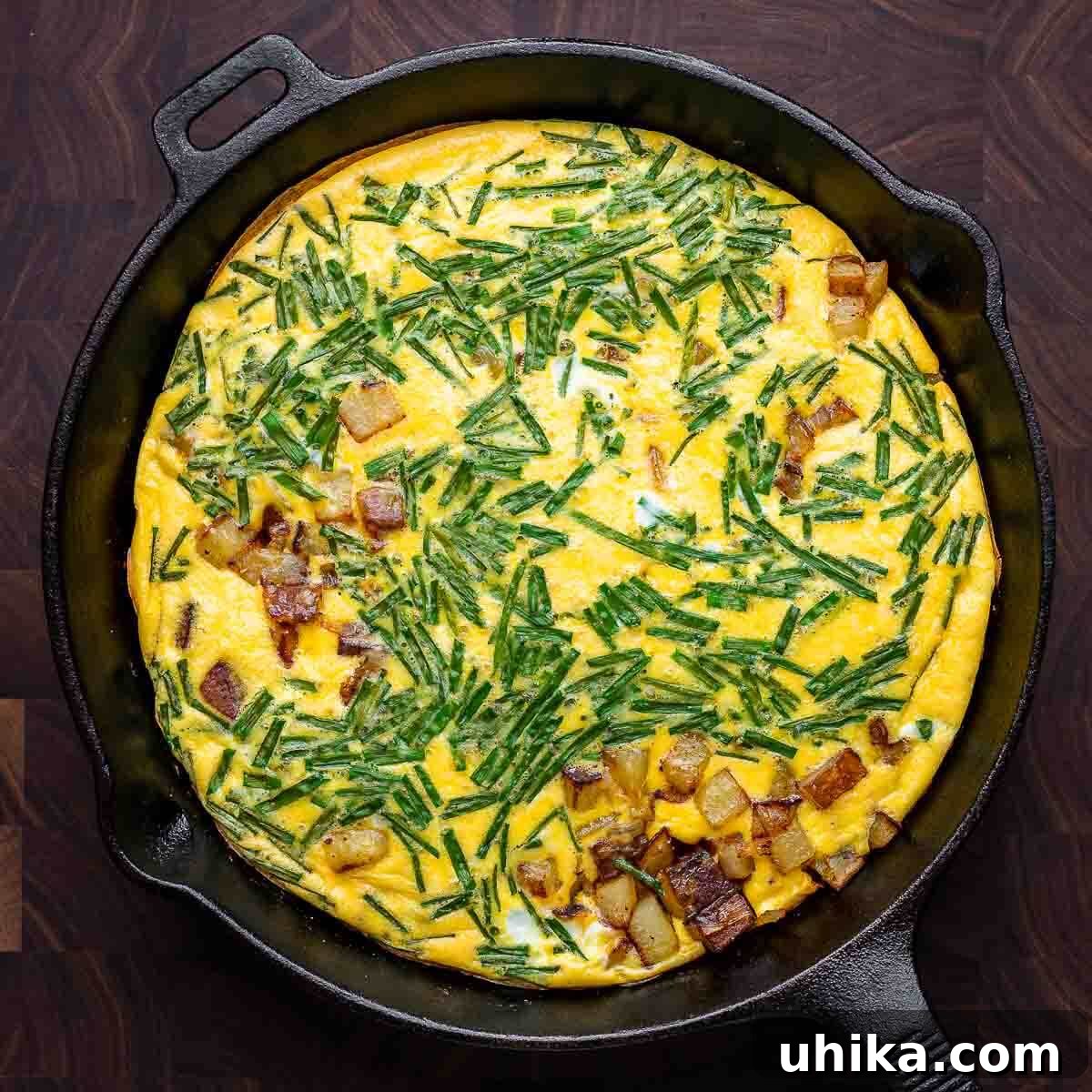
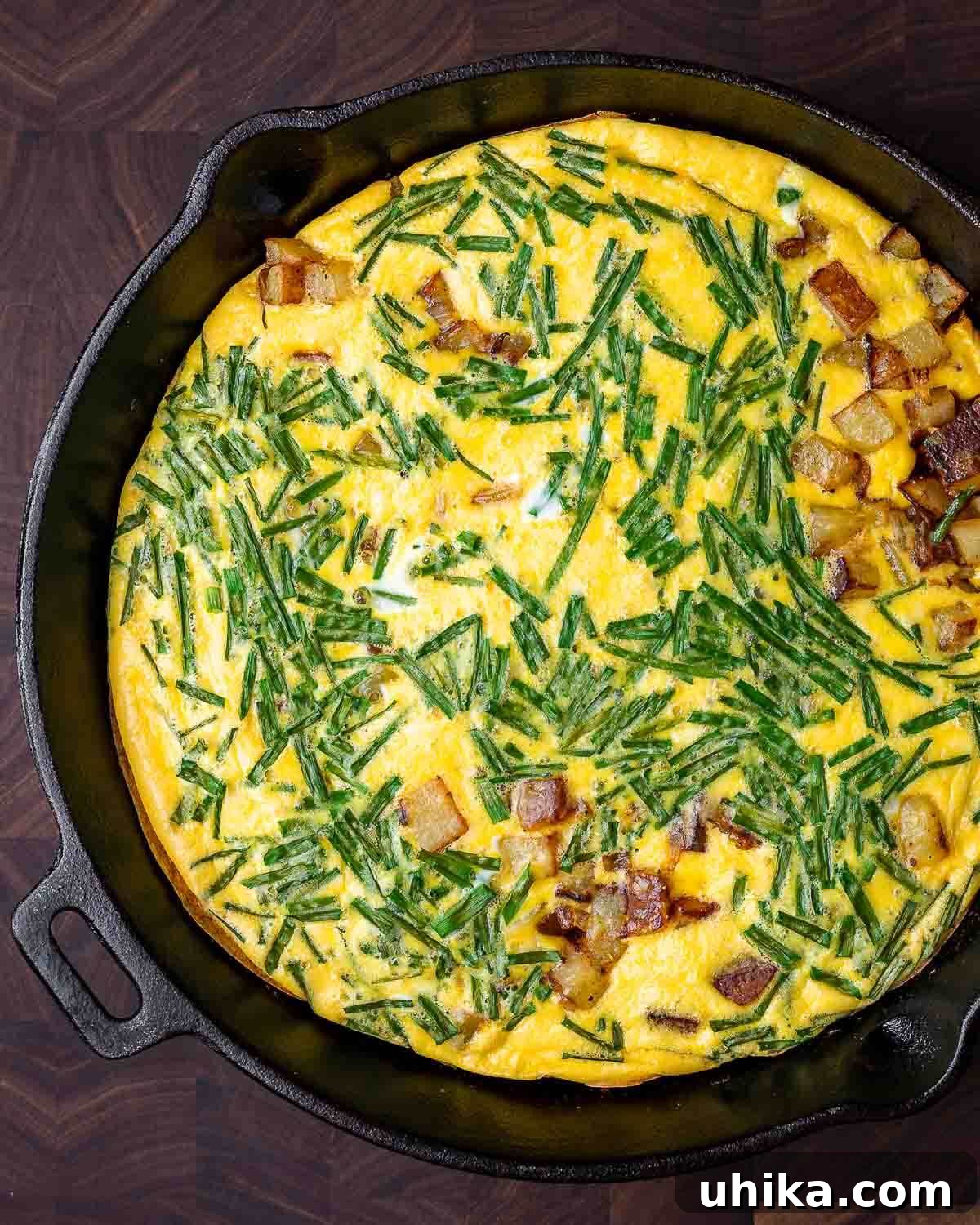
Prepare to elevate your breakfast, brunch, or dinner routine with our exquisite Potato Frittata. This isn’t just any frittata; it’s a culinary masterpiece featuring fluffy eggs, tender Yukon Gold potatoes, savory Pecorino Romano cheese, vibrant chives, and crowned with a luscious wilted cherry tomato topping. It’s a dish that’s incredibly simple to prepare, yet sophisticated enough to impress at any mealtime. While perfect on its own, serve it alongside a crisp fresh salad or a comforting bowl of soup, and you have a complete, satisfying meal that’s both hearty and healthy.
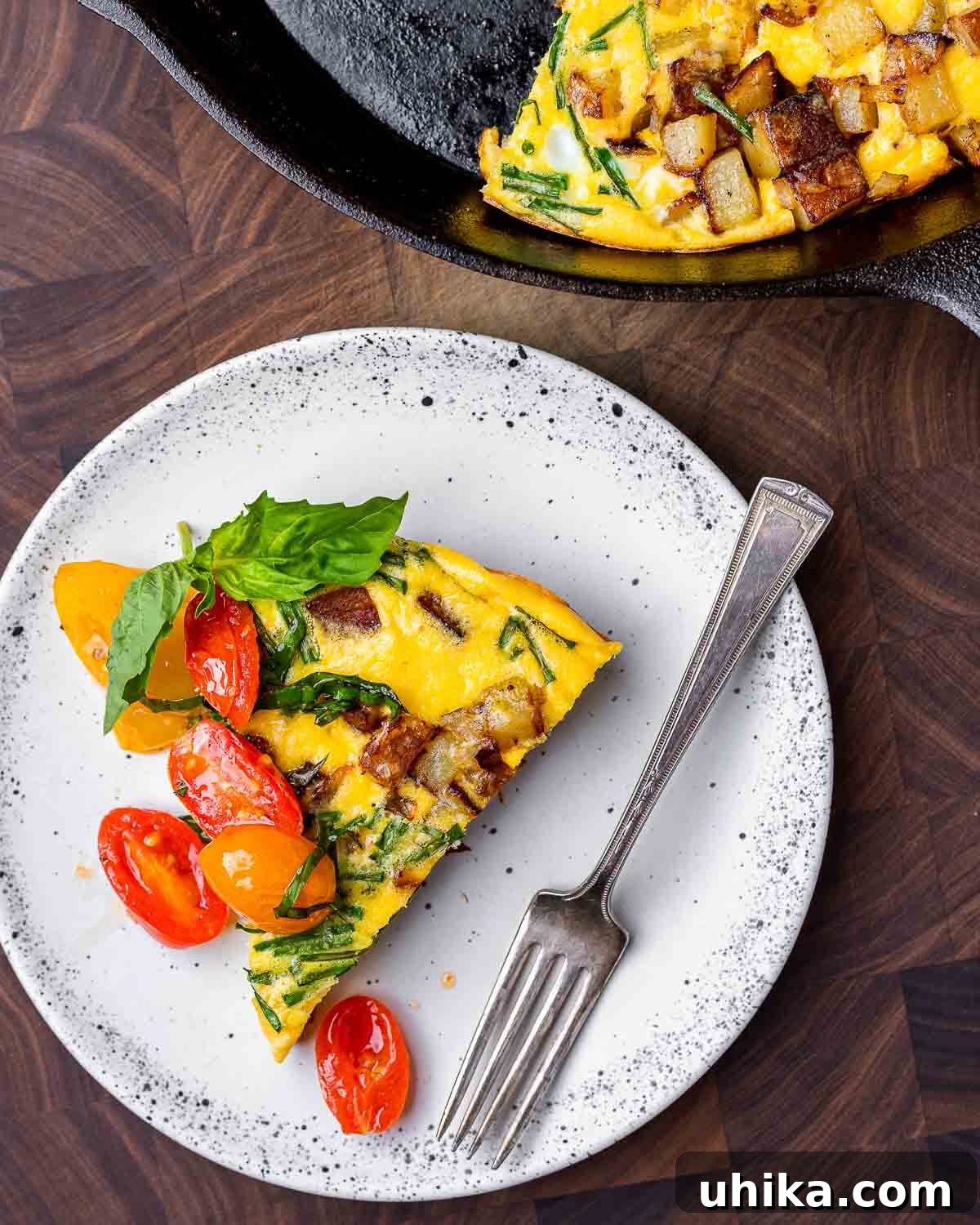
In countless Italian-American kitchens, including our own, a potato frittata variation makes a regular appearance on the dinner table, often once a week or more. It’s a beloved tradition, offering an effortless and economical way to nourish a family. The beauty of this dish lies in its humble ingredients and its remarkable ability to transform into a gourmet experience without breaking the bank or requiring extensive cooking skills. This staple recipe becomes the foundation for countless culinary explorations, always delivering consistent flavor and heartwarming satisfaction.
Our classic potato frittata forms the basis for all our frittata adventures. While fresh chives are a perennial favorite, adding a delicate oniony freshness, we often experiment with other aromatic herbs. Sometimes, we’ll whisk in fragrant fresh basil or bright parsley into the egg mixture, each herb lending its unique character to the dish. The optional, but highly recommended, wilted cherry tomato topping provides a burst of juicy sweetness and a touch of acidity that beautifully complements the richness of the eggs and potatoes. However, for those seeking a different flavor profile, a zesty cherry pepper spread can be an excellent alternative, adding a delightful kick. We also love creating more elaborate versions, like our savory sun-dried tomato frittata with spinach and fresh mozzarella, showcasing the endless possibilities within the frittata family. Regardless of the variations, the outcome is always a testament to simplicity, consistent deliciousness, and universal appeal.
Frittatas are renowned for their versatility, serving equally well as a hearty breakfast, an elegant brunch centerpiece, a light lunch, or a comforting dinner. This particular potato frittata stands out as a true crowd-pleaser, easily adaptable to accommodate diverse tastes and dietary preferences. Its robust flavors and satisfying texture make it a go-to option for busy weeknights or relaxed weekend gatherings. The secret lies in the harmonious blend of everyday ingredients transformed into something extraordinary with minimal effort. This dish embodies the essence of Italian home cooking: simple, fresh, and bursting with flavor.
Table of Contents
- The Art of the Perfect Potato Frittata
- Crafting the Vibrant Cherry Tomato Topping (Optional)
- Essential Tips for Frittata Perfection
- Expand Your Breakfast and Brunch Horizons
- Potato and Egg Frittata Recipe
- Storage and Reheating Tips
- Frequently Asked Questions
The Art of the Perfect Potato Frittata
Creating this delicious potato frittata involves a few straightforward steps, ensuring a perfectly cooked and flavorful dish every time. Each step builds upon the last, culminating in a dish that’s both impressive and comforting. Follow these instructions carefully to achieve the ideal texture and taste.
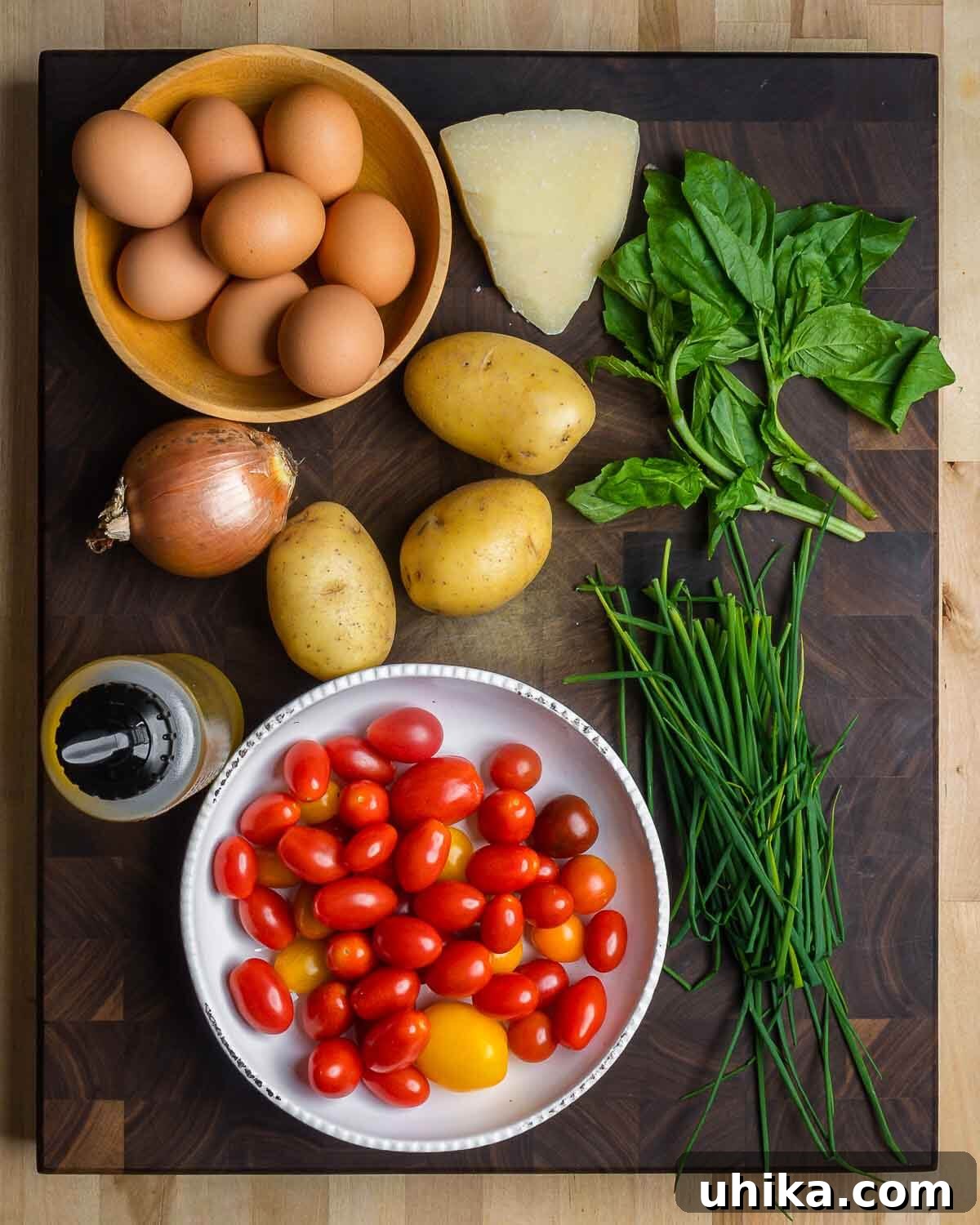
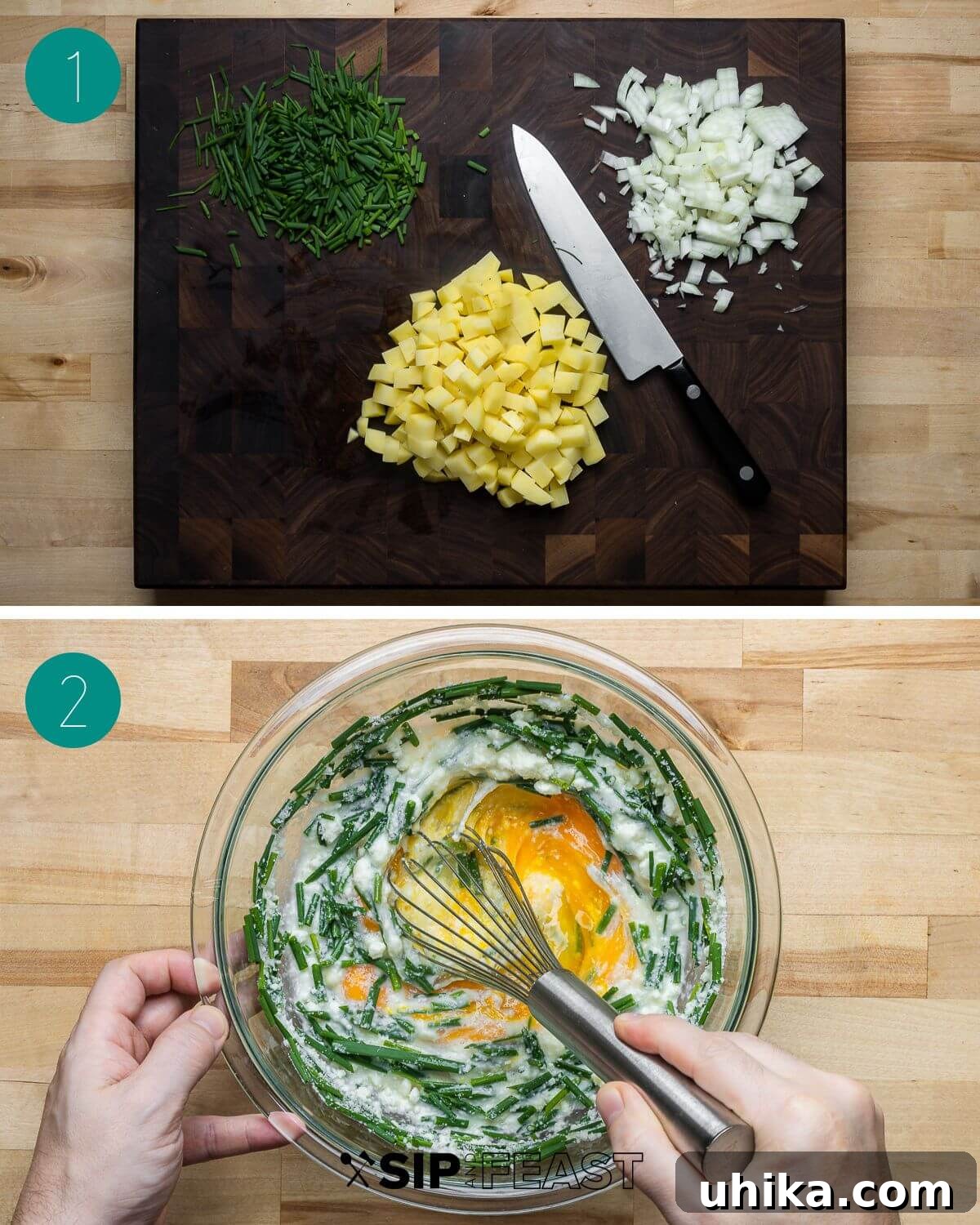
- Prepare Your Ingredients: Begin by gathering and preparing all your components. Peel and precisely dice three medium-sized Yukon Gold potatoes. This potato variety is ideal for frittatas due to its creamy texture and ability to hold its shape beautifully during cooking. Dice one medium onion into small, uniform pieces, ensuring it cooks evenly and integrates seamlessly into the frittata. Finely mince one generous bunch of fresh chives, which will infuse the egg mixture with a delicate, fresh onion flavor. Finally, grate one cup of high-quality Pecorino Romano cheese. This salty, pungent cheese is a cornerstone of Italian flavor and adds a fantastic depth to the frittata. (Refer to Photo #1 for visual guidance on ingredient preparation.)
- Preheat and Whisk: Preheat your oven to 350°F (175°C) and adjust the oven rack to the middle position. This ensures even baking and a beautifully golden-brown finish. In a large mixing bowl, gently beat eight large eggs. Add ¼ cup of milk, the grated Pecorino Romano, and the minced chives to the eggs. Whisk everything together until well combined and slightly frothy, but avoid over-whisking, which can make the frittata tough. This mixture will be the flavorful base of your frittata. (See Photo #2 for the whisked egg mixture.)
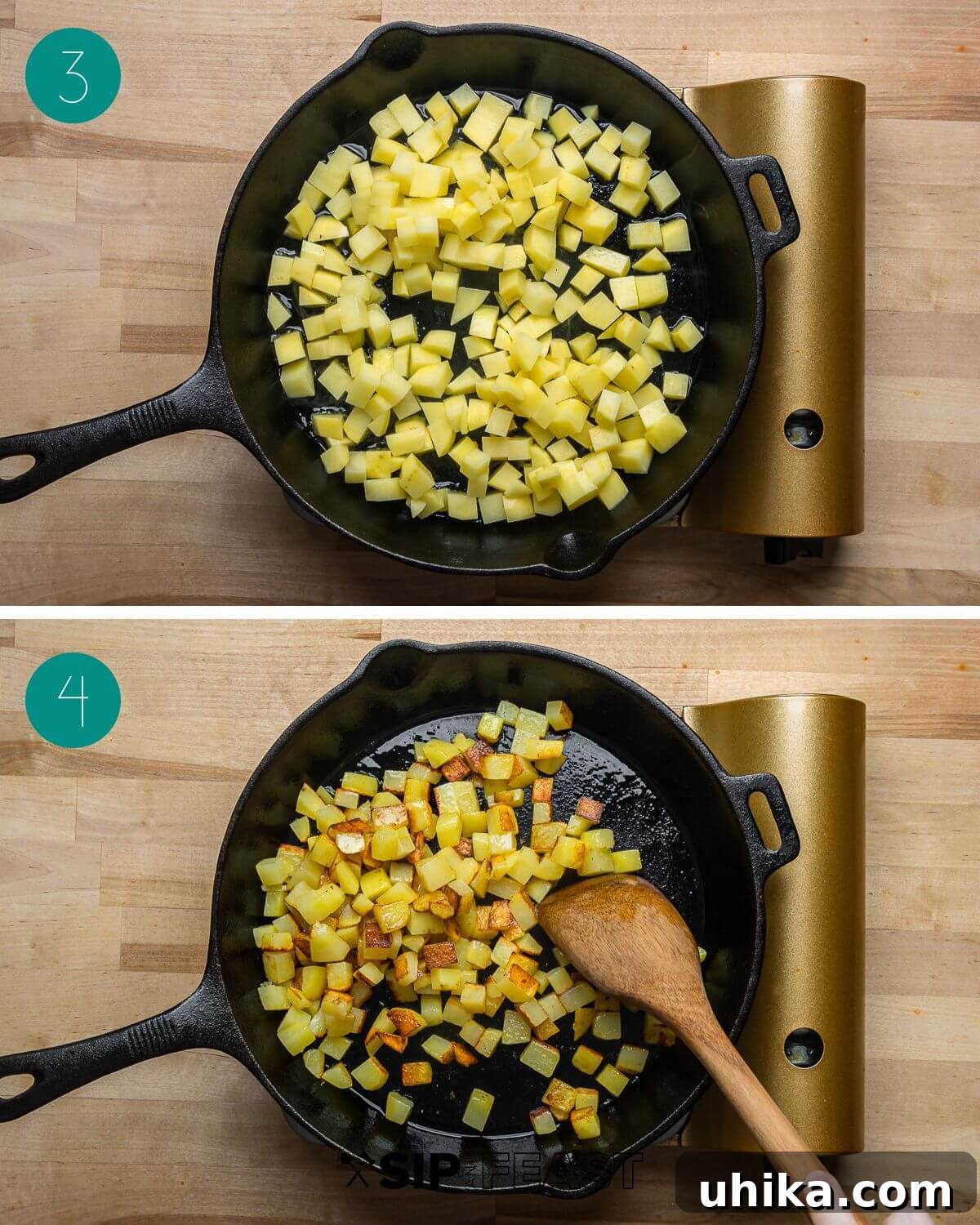
- Sauté the Potatoes: Place a 10-inch cast iron skillet over medium heat. Cast iron is ideal for frittatas as it retains heat exceptionally well and transitions seamlessly from stovetop to oven. Add ¼ cup of olive oil to the hot skillet, allowing it to shimmer before adding the diced potatoes. Distribute the potatoes evenly across the pan. (Photo #3 illustrates potatoes beginning to sauté.)
- Cook Potatoes to Tenderness: Continue to cook the potatoes, stirring occasionally, for approximately 10 minutes. During this time, they will start to soften and develop a light golden crust, building a foundational flavor for the frittata. (Observe Photo #4 for the appearance of the potatoes after this stage.)
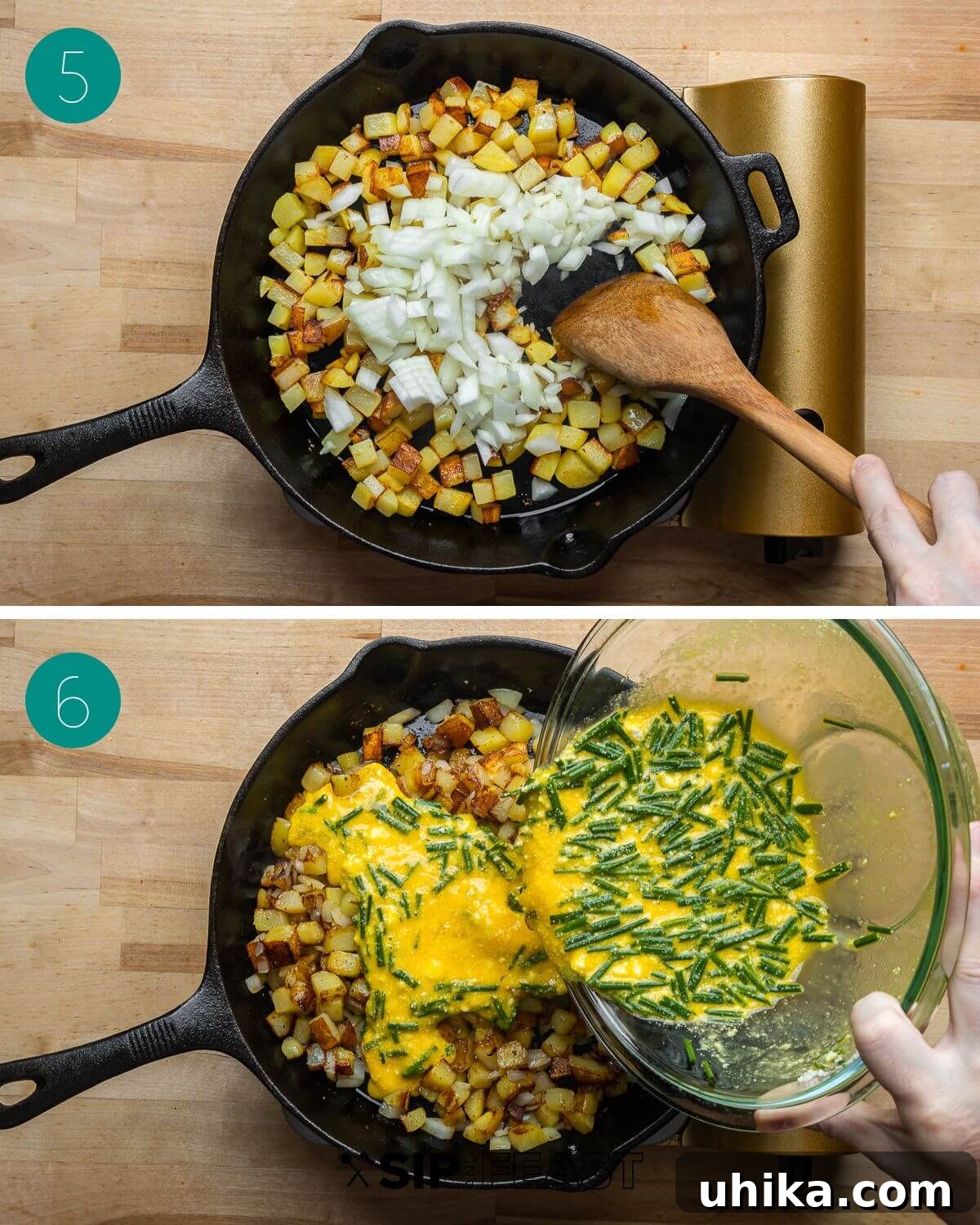
- Introduce Onions and Season: Add the diced onion to the skillet with the potatoes. Continue cooking for another 5 minutes, or until the potatoes are almost tender when pierced with a fork and the onions have become translucent and softened. Season generously with salt and freshly ground black pepper to taste. Proper seasoning at this stage is crucial for the overall flavor of your frittata. (Photo #5 shows onions added to the cooking potatoes.)
- Combine with Eggs: Once the potatoes and onions are cooked to perfection, pour the prepared egg mixture evenly over them in the skillet. Immediately turn off the heat on the stovetop. The residual heat from the pan will begin to set the bottom layer of the frittata. (Photo #6 captures the egg mixture being poured.)
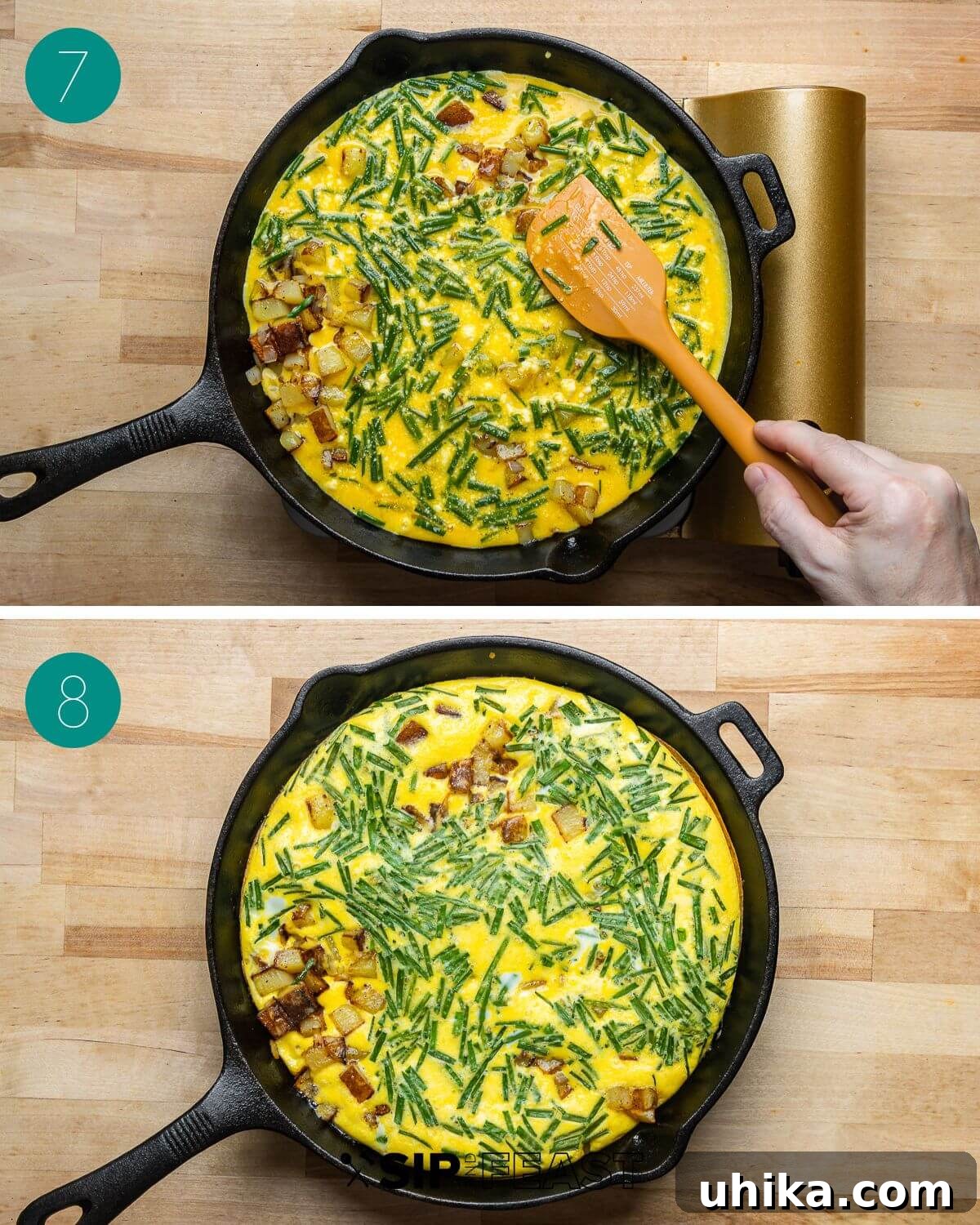
- Even Out the Mixture: Using a heat-resistant spatula, gently spread the egg and potato mixture to ensure it is evenly distributed in the pan. This step is important for uniform cooking and a visually appealing final product. (Photo #7 demonstrates leveling the frittata mixture.)
- Bake to Perfection: Carefully transfer the cast iron pan into the preheated oven. Bake for approximately 15 minutes, or until the eggs are completely set and the frittata is lightly golden on top. You can test for doneness by gently shaking the pan; the center should be firm and not jiggly. A toothpick inserted into the center should come out clean. (Photo #8 illustrates the frittata in the oven, achieving its final set form.)
Crafting the Vibrant Cherry Tomato Topping (Optional)
This optional cherry tomato topping adds a wonderful burst of freshness and color, elevating the frittata from great to extraordinary. Its bright flavors perfectly cut through the richness of the eggs and potatoes, creating a balanced and delightful culinary experience.
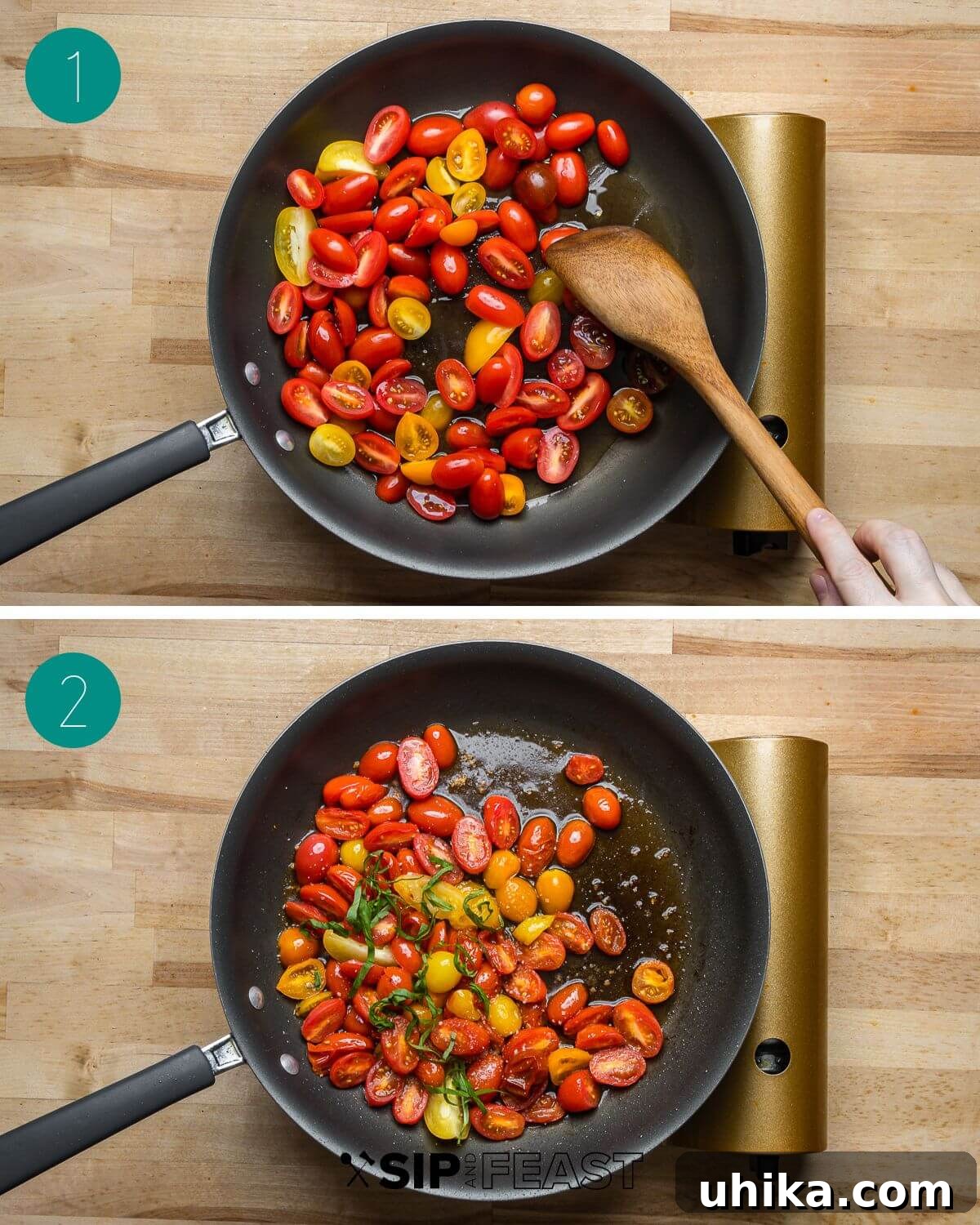
- Tomato Preparation: While your frittata is baking, prepare the tomato topping. Slice 24 ounces of cherry tomatoes in half. The smaller size of cherry tomatoes ensures they wilt quickly and release their sweet juices. Chiffonade 4 tablespoons worth of fresh basil leaves. Chiffonade is a technique of cutting herbs into long, thin strips, which not only looks elegant but also maximizes their aromatic release. Heat a large pan to medium heat and add ¼ cup of extra virgin olive oil along with the halved tomatoes. The olive oil will help soften the tomatoes and infuse them with its rich flavor. (Photo #1 displays the tomatoes in the pan.)
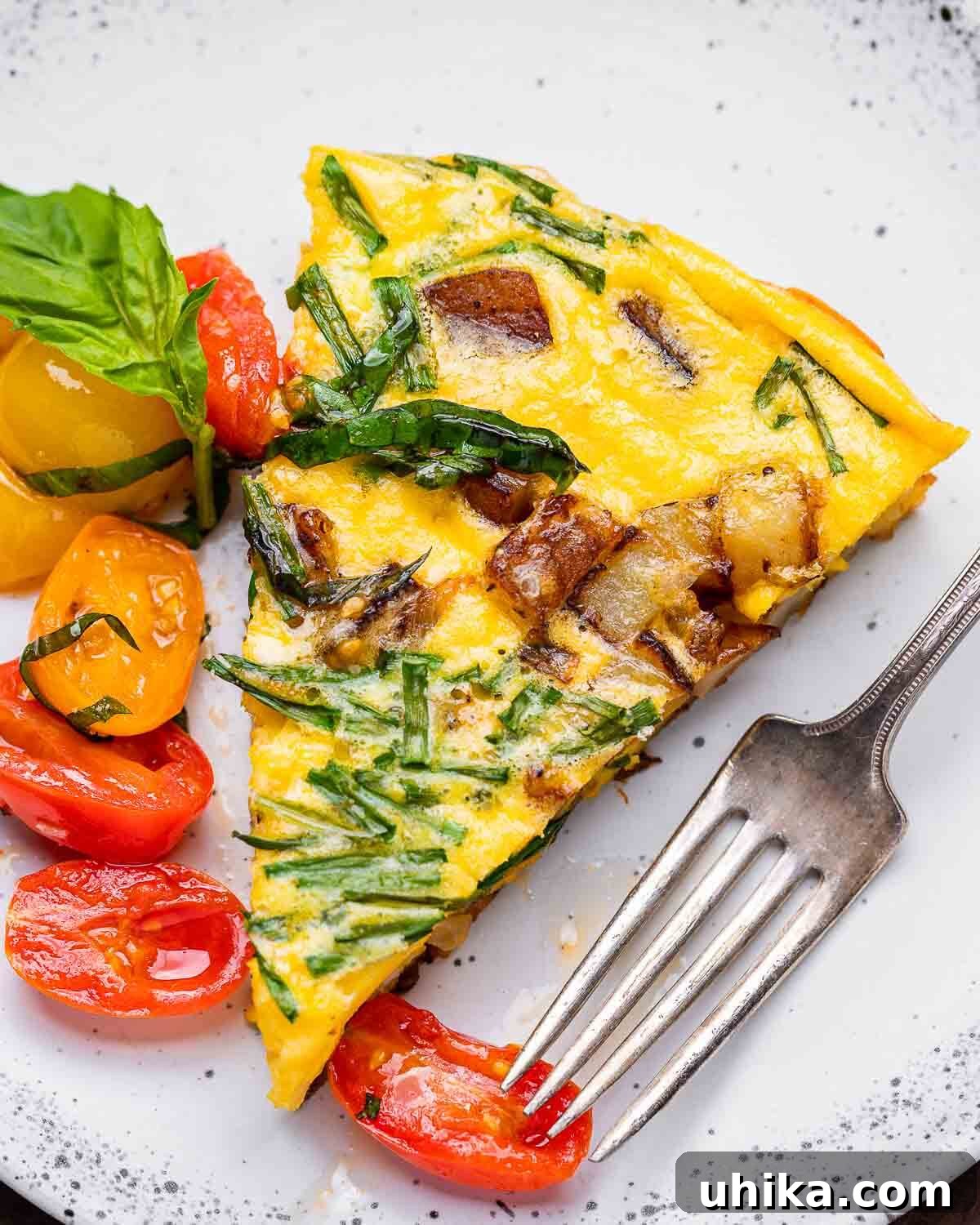
- Sauté and Serve: Sauté the tomatoes for about 7 minutes, or until they have visibly wilted and softened, releasing their juices and becoming slightly jammy. Remove the pan from the heat and season the tomatoes generously with salt and pepper to taste. Stir half of the chiffonaded basil into the warm tomatoes, allowing its fragrance to meld with the tomatoes. Once the frittata is finished baking and has rested briefly, slice it into wedges. Serve each slice topped with a generous spoonful of the wilted cherry tomatoes and garnish with the remaining fresh basil. Enjoy this delightful combination! (Photo #2 shows the finished tomato topping.)
Essential Tips for Frittata Perfection
- The Versatility of a Cast Iron Pan: We highly recommend using a 10-inch cast iron pan for this potato frittata recipe. Its robust construction makes it perfectly oven-safe, allowing for a seamless transition from stovetop sautéing to oven baking. Beyond its oven compatibility, cast iron excels at retaining heat, ensuring your frittata stays warm long after it’s removed from the oven, which is perfect for serving. If you don’t have cast iron, any oven-safe, non-stick skillet of similar size will work, just ensure it can withstand oven temperatures.
- Achieving the Right Doneness: Knowing when your frittata is perfectly cooked is key to its fluffy texture. The frittata is done when the eggs are completely set throughout. A simple test is to gently shake the pan; the center should no longer be jiggly. For a more precise check, insert a toothpick or a thin knife into the center of the frittata. If it comes out clean, your frittata is ready. Overcooking can lead to a rubbery texture, so keep a close eye on it during the last few minutes of baking.
- Choosing the Right Cheese: Pecorino Romano is one of our all-time favorite cheeses for potato frittatas. Its sharp, salty, and tangy flavor profile perfectly complements the potatoes and eggs. However, Pecorino Romano is on the saltier side, so be mindful of your additional salt seasoning. If you opt for a less salty cheese, such as Parmigiano Reggiano (which offers a nuttier, slightly sweeter flavor), you may need to increase the amount of salt added to the potatoes and egg mixture to achieve a similar level of seasoning. Experiment with your favorite hard Italian cheeses to find your perfect match.
- Creative Additions and Variations: This frittata recipe is incredibly forgiving and encourages experimentation. Feel free to incorporate additional herbs beyond chives, such as fresh dill for a brighter note, or marjoram for a slightly sweet and pungent aroma. You can also mix in various greens, like tender baby spinach, kale, or Swiss chard, adding both nutrients and color. For inspiration, check out our sweet potato frittata, which showcases how easily vegetables can be integrated. Other vegetables like bell peppers, zucchini, or even cooked sausage can also make fantastic additions.
- Serving Suggestions: While the cherry tomato topping is entirely optional, we enthusiastically recommend it! The sweet and acidic burst of the wilted tomatoes and fresh basil provides a fantastic contrast to the rich frittata. For those who enjoy a little heat, a dollop of Calabrian chili paste on the side adds a fiery, smoky dimension that pairs beautifully with the savory flavors. Serve warm or at room temperature, making it ideal for meal prepping or entertaining.
Expand Your Breakfast and Brunch Horizons
If you love starting your day with something delicious and satisfying, explore these other fantastic breakfast and brunch recipes that are sure to become new favorites:
- Eggs in Purgatory: A spicy and savory Italian classic.
- Lemon Blueberry French Toast: A bright and fruity twist on a breakfast staple.
- Corned Beef Hash: A hearty, flavorful dish perfect for a weekend brunch.
Storage and Reheating Tips
Frittatas are excellent for meal prepping and enjoying leftovers. Properly stored, your potato frittata can last for several days without losing its delightful flavor and texture.
- Refrigeration: Allow the frittata to cool completely to room temperature before storing. Cover it tightly with plastic wrap or aluminum foil, or transfer slices to an airtight container. It will keep fresh in the refrigerator for up to 3 days.
- Freezing: For longer storage, you can freeze individual slices. Wrap each slice tightly in plastic wrap, then again in aluminum foil, or place them in a freezer-safe bag or container. Frozen frittata can be stored for up to 1-2 months. Thaw overnight in the refrigerator before reheating.
-
Reheating:
- Microwave: For a quick reheat, place a slice on a microwave-safe plate and heat for 1-2 minutes, or until warmed through. Be careful not to overheat, which can make the eggs rubbery.
- Oven: For best results, especially with frozen frittata, preheat your oven to 325°F (160°C). Place slices on a baking sheet and heat for 10-15 minutes, or until heated through. If reheating from frozen, it may take 20-25 minutes. Covering with foil can help prevent the top from drying out.
Frequently Asked Questions
Here are some common questions about making and enjoying potato frittatas:
- What is the difference between a frittata and an omelet? While both involve eggs, a frittata is typically started on the stovetop and finished in the oven, resulting in a thicker, more casserole-like dish that is usually served in wedges. Omelets, on the other hand, are cooked entirely on the stovetop, folded, and often have a softer, creamier interior, and are usually served individually. Frittatas also tend to incorporate ingredients directly into the egg mixture from the start, whereas omelets often have fillings added before folding.
- Can I use different types of potatoes? Yes, while Yukon Gold potatoes are recommended for their creamy texture, you can experiment with other varieties. Russet potatoes will result in a fluffier, drier frittata, while red or new potatoes might be waxier and hold their shape more distinctly. Adjust cooking times as needed for different potato types.
- Can I make this frittata ahead of time? Absolutely! Frittatas are excellent make-ahead meals. You can prepare and bake the frittata entirely, let it cool, and then refrigerate it. It tastes fantastic served cold or at room temperature, making it perfect for brunches or packed lunches. See our “Storage and Reheating Tips” section for more details.
- How can I prevent my frittata from sticking to the pan? Using a well-seasoned cast iron skillet or a good quality non-stick, oven-safe pan is crucial. Ensure you use enough olive oil to coat the bottom of the pan before adding ingredients. You can also lightly grease the sides of the pan. If you’re concerned, a small piece of parchment paper cut to fit the bottom of the pan can act as an extra non-stick layer.
- What other vegetables can I add to the frittata? The possibilities are endless! Consider adding sautéed bell peppers, mushrooms, zucchini, asparagus, or even leftover roasted vegetables. Just ensure any high-moisture vegetables are cooked down slightly to prevent a watery frittata.
If you’ve enjoyed this Potato Frittata Recipe or any recipe on this site, we’d love to hear from you! Please consider giving it a 5-star rating and share your thoughts in the comments below. Your feedback helps us grow and inspires others to try our recipes.
We believe in reaching all kinds of learners. If you prefer to learn by watching, you can find most of our recipes and cooking demonstrations on our YouTube channel and our Facebook Page. Don’t forget to subscribe and follow for more delicious inspiration!
Potato and Egg Frittata Recipe
James Delmage
5 mins
35 mins
40 mins
8

Pin
Ingredients
For the Frittata
- 1/4 cup olive oil
- 3 medium Yukon Gold potatoes, peeled and diced
- 1 medium onion, diced
- Salt and pepper to taste
- 8 large eggs
- 1/4 cup milk
- 1 cup Pecorino Romano, grated
- 1 bunch chives, minced
For the Cherry Tomato Topping (Optional)
- 24 ounces cherry tomatoes, halved
- 1/4 cup extra virgin olive oil
- Salt and pepper to taste
- 4 tablespoons basil, chiffonade, divided
Instructions
For the Frittata
- Preheat your oven to 350°F (175°C) and set the rack to the center level.
- Heat a 10-inch cast iron skillet over medium heat. Add the olive oil along with the diced potatoes. Sauté for 10 minutes until they begin to soften. Then, add the diced onion and continue to cook until the potatoes are almost tender (about 5 more minutes). Season generously with salt and pepper to taste.
- In a mixing bowl, whisk together the eggs, milk, grated Pecorino Romano, and minced chives until well combined.
- Pour the prepared egg mixture evenly over the potatoes and onions in the skillet. Immediately turn off the heat on the stovetop.
- Use a spatula to gently level off the frittata mixture, ensuring even distribution. Place the pan carefully into the preheated oven and bake for about 15 minutes, or until the eggs are completely set and the frittata is lightly golden.
For the Cherry Tomato Topping (Optional)
- While the frittata is baking, prepare the tomato topping. Heat a separate large pan over medium heat. Add the extra virgin olive oil along with the halved cherry tomatoes and sauté until they wilt and soften (about 7 minutes).
- Remove the pan from the heat and season the tomatoes with salt and pepper to taste. Stir in half of the chiffonaded basil.
- Once the frittata is finished baking, slice it into wedges. Serve each slice topped with the warm cherry tomato mixture and garnish with the remaining fresh basil. Enjoy immediately!
Notes
- Feel free to mix in various greens or any other vegetables you enjoy, such as spinach, bell peppers, or mushrooms, for added flavor and nutrition.
- Leftovers can be stored in an airtight container in the refrigerator for up to 3 days. Reheat in the microwave for a quick warm-up or gently in the oven for best texture.
Nutrition
Nutrition information is automatically calculated, so should only be used as an approximation.
Like this? Leave a comment below!
Check us out on Instagram at @sipandfeast or tag #sipandfeast!