
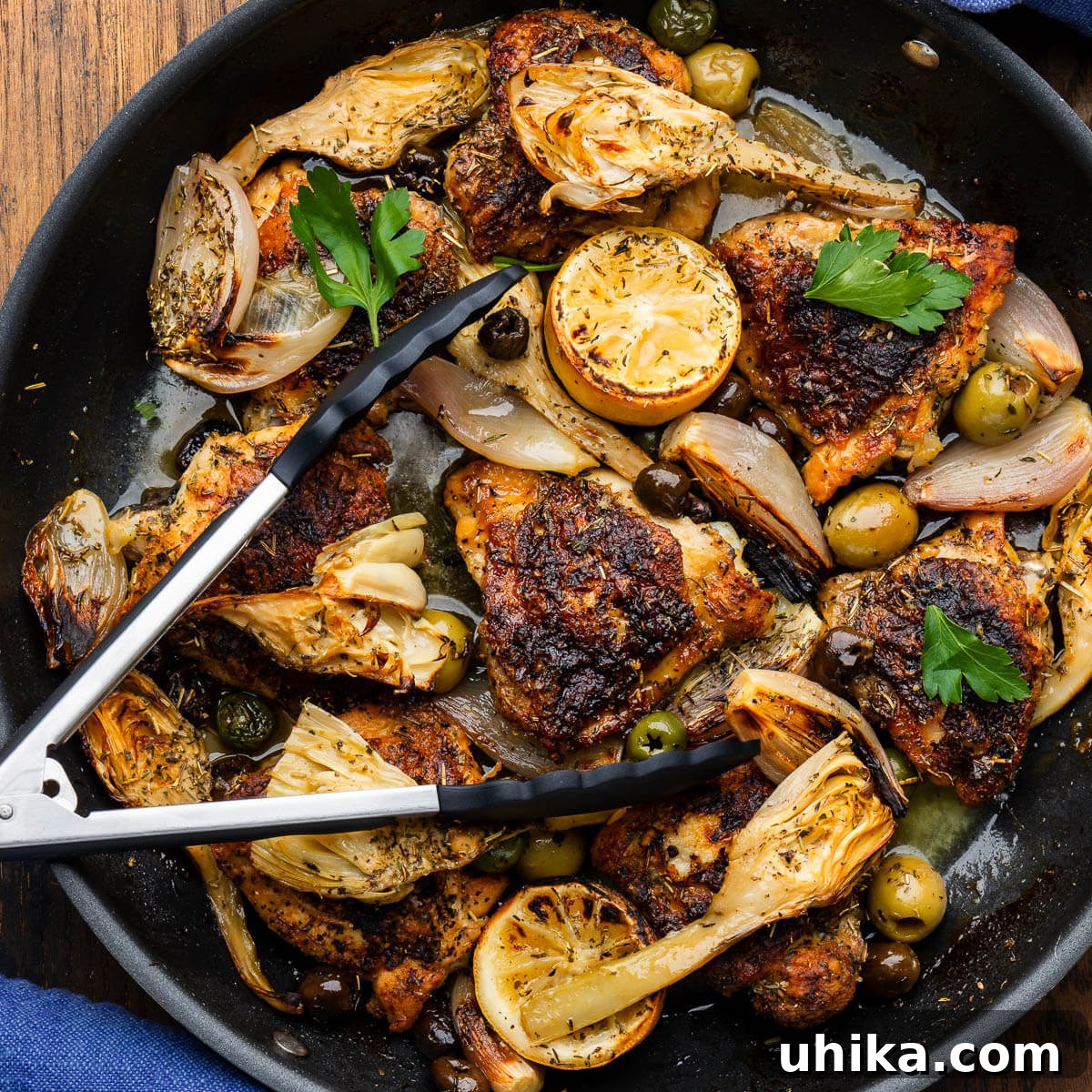
Authentic Chicken Provencal: A Rustic One-Pan French Delight
Discover the rich, aromatic flavors of Chicken Provencal, a timeless French dish that transforms simple ingredients into an extraordinary meal. Featuring tender chicken thighs, seasoned generously with fragrant herbes de Provence, and roasted alongside sweet shallots, briny olives, succulent artichoke hearts, and bright lemon, this one-pan wonder is perfect for both a cozy weeknight dinner and an elegant gathering with friends. Its rustic charm and depth of flavor make it an absolute kitchen staple.
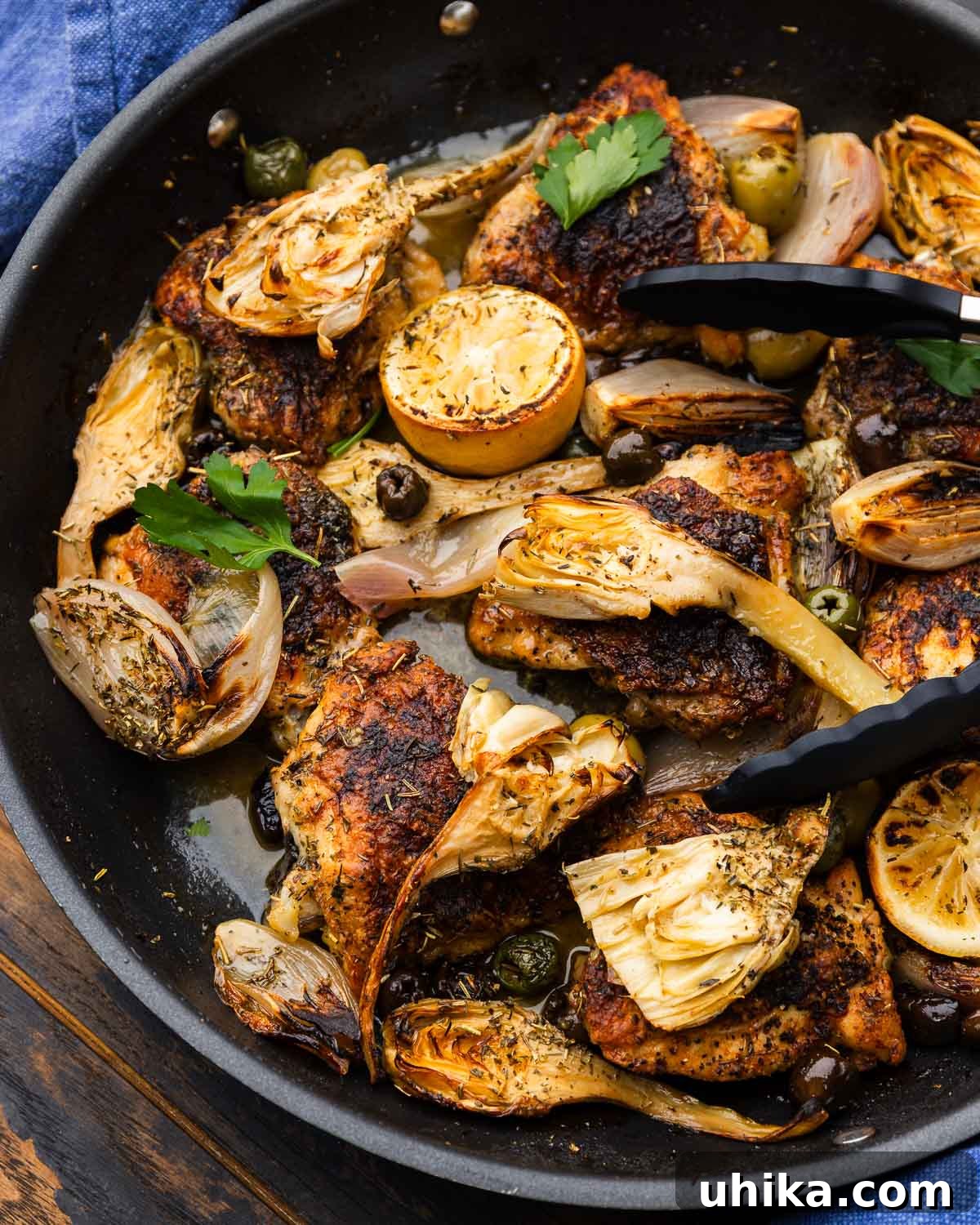

Embracing the Elegance of French Cuisine
While my culinary roots are deeply embedded in Italian-American traditions, a world I cherish and frequently explore, I find myself continually drawn to the refined simplicity of French cooking. Dishes like classic Beef Bourguignon or a hearty Coq au Vin often leave me wondering why I don’t delve into this rich culinary heritage more often. There’s a certain magic in French gastronomy that allows a few well-chosen ingredients to shine, creating complex flavors with surprising ease.
Chicken Provencal perfectly embodies this philosophy. Its rustic charm comes from a harmonious blend of simple yet impactful French flavors. The shallots, slow-roasted to a mellow, tender sweetness, become almost caramelized, adding a foundational layer of flavor. They mingle beautifully with the bright tang of artichoke hearts, the salty burst of olives, and the zesty aroma of roasted lemon. These elements work in concert, creating a symphony of textures and tastes that elevate the incredibly moist chicken, boasting a perfectly crispy skin. Each bite offers a glimpse into the sun-drenched landscapes of Provence.
This versatile dish is exceptionally satisfying on its own, especially when served with a crusty baguette to soak up every last drop of the savory pan sauce – a true hallmark of French dining. For a more complete meal, consider pairing it with golden crispy roasted potatoes or a fresh, vibrant green salad drizzled with a homemade French vinaigrette. The possibilities are endless, allowing you to tailor this Provencal masterpiece to any occasion.
Essential Ingredients for Your Chicken Provencal
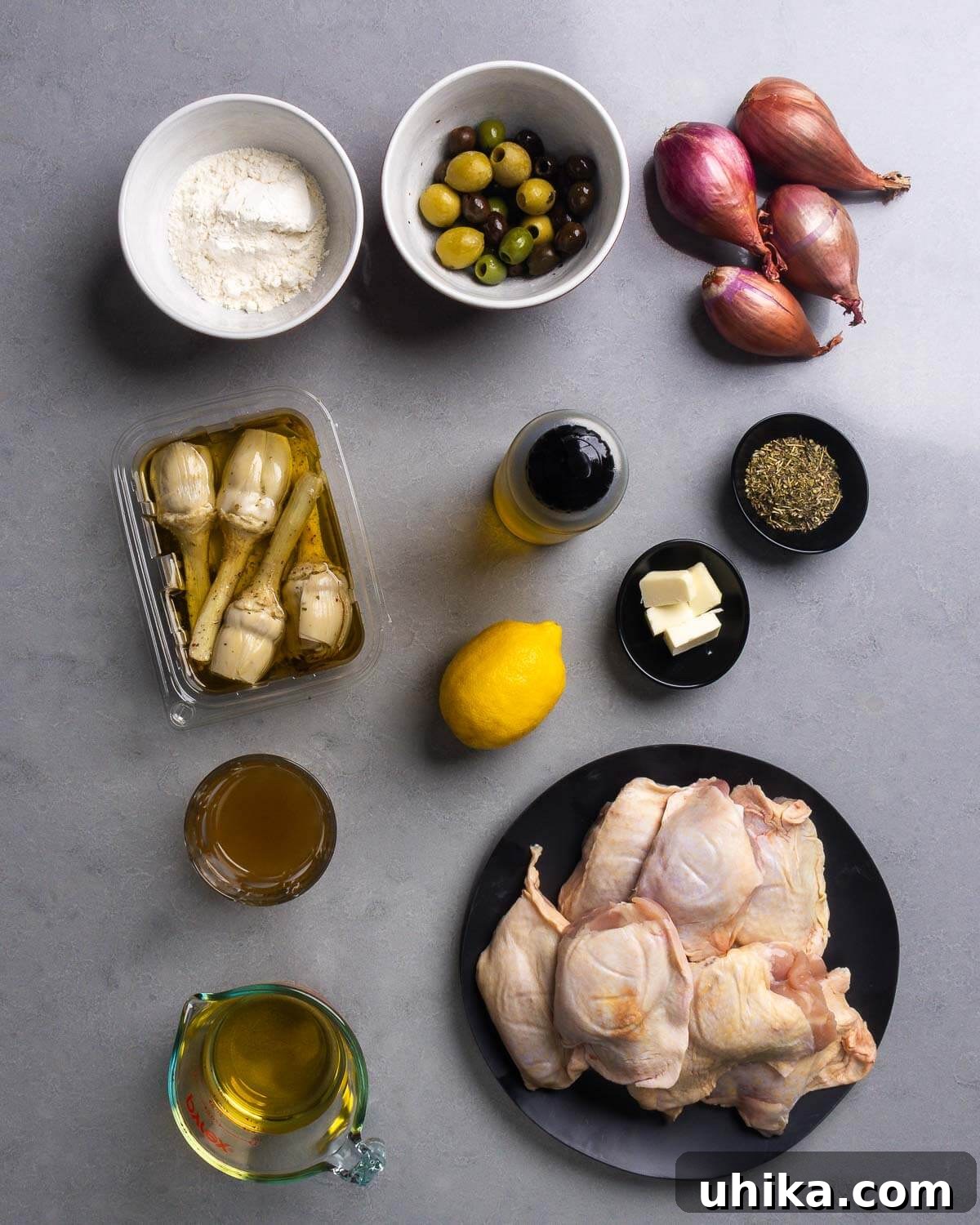
Crafting the perfect Chicken Provencal begins with selecting high-quality ingredients. Below, you’ll find a visual guide to all the components you’ll need, along with specific notes to help you make the best choices for an authentic and flavorful experience.
Ingredient Spotlight: Tips for Selection and Substitution
- Chicken: For optimal flavor and texture, bone-in, skin-on chicken thighs are highly recommended. The bone helps to keep the meat moist during cooking, and the skin renders crispy and delicious, adding a crucial textural element to the dish. Thighs are incredibly forgiving and hold up beautifully to both searing and roasting. If you prefer to use boneless, skinless chicken breasts, remember to adjust your cooking time. Remove them from the oven once they reach an internal temperature of 160°F (71°C) to prevent them from drying out, as they cook much faster than thighs.
- Artichoke Hearts: I often seek out extra-large artichoke hearts with stems intact, packed in oil, for their impressive presentation and rich flavor. However, these can sometimes be a bit elusive. Don’t hesitate to use regular artichoke hearts packed in oil or water, readily available in most supermarkets. If using those packed in water, ensure you pat them thoroughly dry before adding them to the pan to avoid excess moisture.
- Shallots: These elegant members of the onion family are a cornerstone of French cooking. When roasted, shallots transform, becoming incredibly sweet, mellow, and tender, far less pungent than onions. They absorb the pan juices beautifully, offering bursts of savory sweetness. In my family, these roasted shallots are so beloved that they become a coveted delicacy! While the recipe calls for 4 large shallots, feel free to increase the quantity to 6 or even 8 if you’re a fan – you won’t regret it.
- Olives: The choice of olives can significantly impact the dish’s overall profile. I typically use a flavorful mix of pitted kalamata olives, known for their rich, fruity, and slightly tangy taste, and pitted Sicilian green olives, which offer a brighter, milder saltiness. However, feel free to experiment with any olives you enjoy. Black oil-cured olives, with their intense, concentrated flavor, would also be a fantastic addition, similar to those used in a traditional Chicken Cacciatore.
- Vermouth: Dry vermouth lends a wonderful acidity and herbaceous complexity to the sauce, enhancing the overall flavor profile. If vermouth isn’t readily available, a good quality dry white wine, such as Sauvignon Blanc or Pinot Grigio, makes an excellent substitute. For an alcohol-free alternative, low-sodium chicken stock can be used, though it will slightly alter the final flavor nuances.
- Herbes de Provence: This quintessential dried French herb blend is crucial for achieving the authentic taste of Provence. It typically includes a fragrant mix of thyme, rosemary, oregano, marjoram, tarragon, and sometimes a hint of lavender. If you can’t find a pre-mixed blend, you can create your own by combining equal parts of dried thyme, rosemary, and oregano. The lavender note, while traditional, is optional.
- Chicken Stock: Opt for low-sodium chicken stock to control the saltiness of the dish, especially since olives are naturally briny. You can always add more salt to taste later.
- Lemon: Fresh lemon provides a crucial bright counterpoint to the rich flavors. Half of the lemon will be roasted, mellowing its acidity and releasing its aromatic oils into the sauce. A final squeeze of fresh lemon juice before serving can awaken all the flavors.
- All-Purpose Flour: A light dusting of flour helps create a beautiful golden-brown crust on the chicken and slightly thickens the pan sauce, giving it a luxurious mouthfeel.
- Unsalted Cold Butter: Whisking in cold butter at the very end enriches the sauce, adding a silky finish and a touch of indulgence.
Please refer to the complete recipe card below for precise information on quantities and any further notes.
Mastering Chicken Provencal: Step-by-Step Guide
Follow these detailed steps to create a show-stopping Chicken Provencal in your own kitchen. Each instruction is designed for clarity, ensuring a perfect result every time.
Preparation and Searing the Chicken
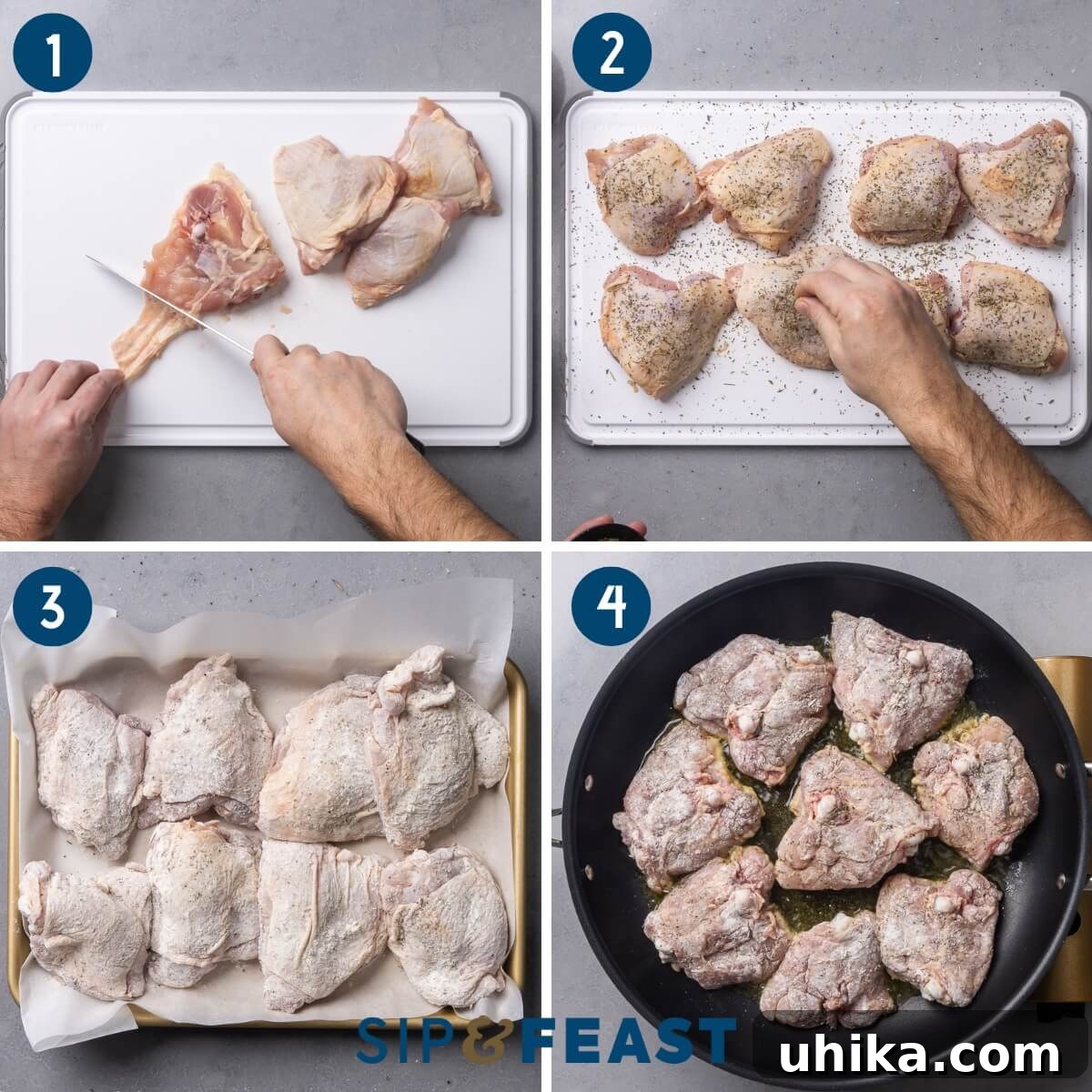
- Prepare the Chicken: Begin by preheating your oven to 400°F (200°C). Carefully trim any excess fat or skin that overhangs the chicken thighs. This prevents burning and ensures a crispier skin. Pat the chicken thighs very dry with paper towels; this is a critical step for achieving a beautiful, golden sear.
- Season Generously: Season the chicken thighs on all sides with salt, freshly ground black pepper, and 1 tablespoon of herbes de Provence. Don’t be shy with the seasoning; it forms the foundation of the dish’s flavor.
- Dredge in Flour: Lightly dredge each seasoned chicken thigh in all-purpose flour, shaking off any excess. Place the floured chicken on a parchment paper-lined baking sheet, preparing them for searing.
- Sear the Chicken: Heat 3 tablespoons of olive oil in a large, oven-safe pan (preferably a 14-inch cast-iron skillet or Dutch oven) over medium heat until shimmering. Carefully place the chicken thighs, skin side down, into the hot pan. Sear for 6-8 minutes, or until the skin is deeply golden brown and crispy. This initial searing locks in juices and develops incredible flavor. Work in batches if necessary to avoid overcrowding the pan, which can steam the chicken instead of searing it.
Building the Sauce and Roasting
- Flip and Finish Searing: Turn the thighs over and sear for another 5 minutes on the flesh side. Again, ensure you’re working in batches to prevent overcrowding, allowing each piece to brown properly. Once seared on both sides, temporarily remove the chicken from the pan and set it aside.
- Deglaze the Pan: Return the pan to the heat. Add the vermouth (or dry white wine) and chicken stock. Bring the liquid to a gentle simmer for 1 minute, using a wooden spoon to scrape up all the delicious brown bits (fond) stuck to the bottom of the pan. This deglazing step incorporates immense flavor into your sauce. Return the chicken thighs to the pan, arranging them skin-side up, and spoon some of the simmering sauce over each piece.
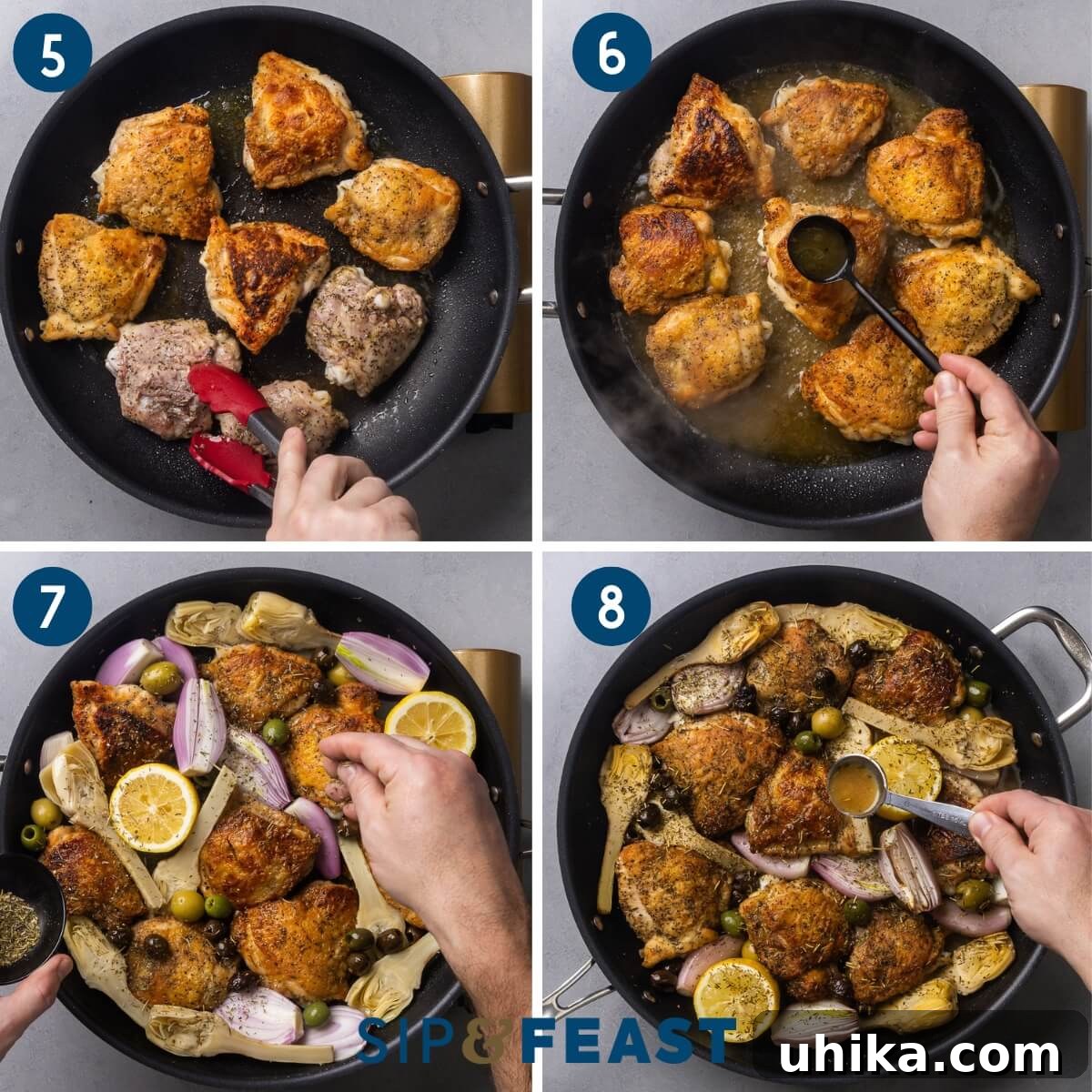
- Add Aromatics and Herbs: Turn off the heat. Artfully arrange the olives, artichoke hearts, halved shallots, and lemon halves (cut side up) around the chicken in the pan. Sprinkle the remaining 1 tablespoon of herbes de Provence generously over everything. This ensures the herbs infuse their fragrance as the dish roasts.
- Roast to Perfection: Transfer the pan to the preheated 400°F (200°C) oven. Roast for 30 minutes. After this time, carefully remove the pan from the oven and baste the chicken and vegetables with the flavorful pan juices. Return the pan to the oven for another 20 minutes, or until the chicken thighs reach an internal temperature of at least 185°F (85°C) when measured with an instant-read thermometer. This higher temperature for thighs ensures they are fall-off-the-bone tender.
- Finish and Serve: Once roasted, remove the pan from the oven. To enrich the sauce, whisk in the cold unsalted butter, one cube at a time, until fully incorporated and the sauce is glossy. Let the Chicken Provencal rest for 5 minutes before serving. This allows the juices to redistribute, resulting in incredibly tender and flavorful chicken. Serve immediately, encouraging everyone to soak up the delicious sauce with a crusty baguette. Enjoy your homemade taste of Provence!
Expert Tips for a Flawless Chicken Provencal
- The Art of Searing: Achieving a beautifully crisp, golden-brown skin on your chicken thighs is essential for both flavor and texture. The secret lies in patting the chicken extremely dry with paper towels before seasoning. Moisture on the skin prevents proper browning and can lead to a less appealing, steamed texture. Don’t rush this step; a good sear takes time and moderate heat.
- Choosing the Right Pan: Your pan choice is paramount for Chicken Provencal. I highly recommend using a large, oven-safe pan – a 14-inch cast-iron skillet or a substantial Dutch oven works perfectly. This ensures all ingredients can fit in a single layer without overcrowding, allowing everything to roast evenly and develop maximum flavor. If your largest pan isn’t oven-safe or is too small to accommodate all ingredients comfortably, you’ll need to sear the chicken in batches on the stovetop and then transfer all components to a large roasting pan before placing it in the oven.
- Don’t Overcrowd the Pan: Whether searing or roasting, resist the urge to pack too many chicken thighs or vegetables into the pan. Overcrowding lowers the pan’s temperature and causes ingredients to steam rather than brown. If necessary, cook the chicken in two batches for searing, then combine everything for roasting.
- Deglazing for Flavor: The browned bits (fond) stuck to the bottom of the pan after searing the chicken are pure gold! When you add the vermouth or stock, be sure to scrape these bits up with a wooden spoon. This process, called deglazing, extracts all that concentrated flavor and incorporates it into your pan sauce, making it incredibly rich and complex.
- Resting the Chicken: Once cooked, it’s crucial to let the chicken rest for at least 5-10 minutes before serving. This allows the juices, which have gathered towards the surface during cooking, to redistribute back through the meat, resulting in a significantly more tender and moist chicken.
- Taste and Adjust Seasoning: Always taste your sauce before serving and adjust the seasoning as needed. The saltiness from the olives and the acidity from the lemon and vermouth will develop during cooking, so a final check ensures perfect balance.
Explore More Roasted Chicken Masterpieces
If the rustic elegance of Chicken Provencal resonates with your taste buds, you’re sure to adore these other beloved roasted chicken recipes that bring comfort and incredible flavor to your table:
- 40 Clove Garlic Chicken: A truly aromatic and tender dish where chicken bakes with an abundance of garlic cloves that mellow into a sweet, spreadable delight.
- Maple-Roasted Chicken: A perfect balance of sweet and savory, this chicken is glazed with maple syrup, creating a beautiful caramelized crust.
- Garlic Butter Roast Chicken: Simple yet profoundly flavorful, this recipe features succulent chicken infused with rich garlic butter for an unforgettable meal.
If you’ve enjoyed this Chicken Provencal recipe, we’d love for you to give it a 5-star rating and share your thoughts below.
Stay connected with us for more culinary inspiration! Watch our cooking demonstrations on YouTube, follow along on our Facebook Page, and consider becoming a Patreon member for exclusive access to full-meal videos and behind-the-scenes content.
Chicken Provencal
James Delmage
15
1
20
1
35
4
Pin
Ingredients
-
8
chicken thighs
trimmed of overhanging fat, bone-in, skin-on preferred -
salt and pepper
to taste -
2
tablespoons
herbes de Provence
divided -
1/2
cup
all-purpose flour
for dredging -
3
tablespoons
olive oil -
3/4
cup
dry vermouth or dry white wine -
1/2
cup
low-sodium chicken stock
-
4
large
shallots
peeled, cut in half -
1/2
cup
pitted kalamata olives -
1/2
cup
pitted Sicilian green olives -
4
large
marinated artichoke hearts
patted dry of excess oil and halved -
1
large
lemon
halved -
1
tablespoon
unsalted cold butter
cubed
Instructions
-
Preheat oven to 400°F (200°C).
-
Pat the chicken thighs thoroughly dry with paper towels. Season generously with salt, pepper, and 1 tablespoon of herbes de Provence on both sides. Lightly dredge the chicken thighs in flour, shaking off excess, and set them on a parchment paper-lined baking sheet.
-
Heat the olive oil in a large oven-safe pan (preferably 14-inch) over medium heat. Add the chicken thighs, skin side down, and sear for 6-8 minutes until deeply golden brown and crispy. Flip the thighs over and cook for another 5 minutes on the other side. Work in batches to avoid overcrowding the pan.
-
Temporarily remove the chicken. Add vermouth and chicken stock to the pan and bring to a simmer for 1 minute, scraping the bottom with a wooden spoon to dislodge all the flavorful brown bits (fond). Return the chicken to the pan, skin side up. Spoon some of the sauce over each chicken piece. Turn off the heat. Arrange the olives, artichoke hearts, shallots, and lemon halves (cut side up) around the chicken. Sprinkle the remaining 1 tablespoon of herbes de Provence over everything. Note: This mixture will optimally fit in a 14-inch pan. If your pan is smaller or not oven-safe, transfer all ingredients to a large roasting pan before proceeding.
-
Roast in the preheated oven for 30 minutes. Remove the pan, baste the chicken with the pan juices, then return to the oven for an additional 20 minutes, or until the chicken reaches an internal temperature of at least 185°F (85°C). Remove from the oven and whisk in the cold butter, one cube at a time, until the sauce is smooth and glossy. Let the chicken rest for at least 5 minutes before serving. Serve hot, ensuring you have crusty bread to soak up the delicious sauce. Enjoy!
Notes
- Herbs: While Herbes de Provence is highly recommended for its authentic flavor, a blend of dried thyme, rosemary, and oregano can be used as a suitable substitute if the specific mix is unavailable.
- Artichoke hearts: Large marinated artichoke hearts with stems make for a visually appealing dish. If these are hard to find, a 12-ounce jar of standard marinated artichoke hearts (drained and halved) or even artichoke hearts packed in water (drained and patted dry) will work beautifully.
- Shallots: Roasted shallots are incredibly delicious and sweet. Although the recipe calls for 4 large shallots, many prefer to use 8-10 or even more to fully enjoy their mellow flavor after roasting.
- Pan size: To ensure even cooking and browning, all eight chicken thighs should ideally fit in a single layer in a 12-inch pan, but a 14-inch oven-safe pan is even better, especially when adding all the other ingredients for roasting. If you don’t have a pan large enough or one that is oven-safe, transfer all ingredients to a large roasting pan before placing in the oven.
- Sauce: A significant portion of the liquid will reduce and concentrate during the roasting process. The caramelized bits at the bottom of the pan are packed with flavor. Don’t let them go to waste – use plenty of crusty bread to mop up every last drop of the rich pan sauce.
- Leftovers: Leftover Chicken Provencal can be stored in an airtight container in the refrigerator for up to 3 days. Reheat gently in the microwave or in a preheated oven until warmed through.
Nutrition
Calories:
768
kcal
|
Carbohydrates:
32.7
g
|
Protein:
28.5
g
|
Fat:
56.6
g
|
Saturated Fat:
14.6
g
|
Cholesterol:
126
mg
|
Sodium:
930
mg
|
Fiber:
1.4
g
|
Sugar:
1.9
g
|
Calcium:
44
mg
|
Iron:
3
mg
Nutrition information is automatically calculated and should only be used as an approximation.
Enjoyed this recipe? Leave a comment below!
Check us out on Instagram at @sipandfeast or tag #sipandfeast!