
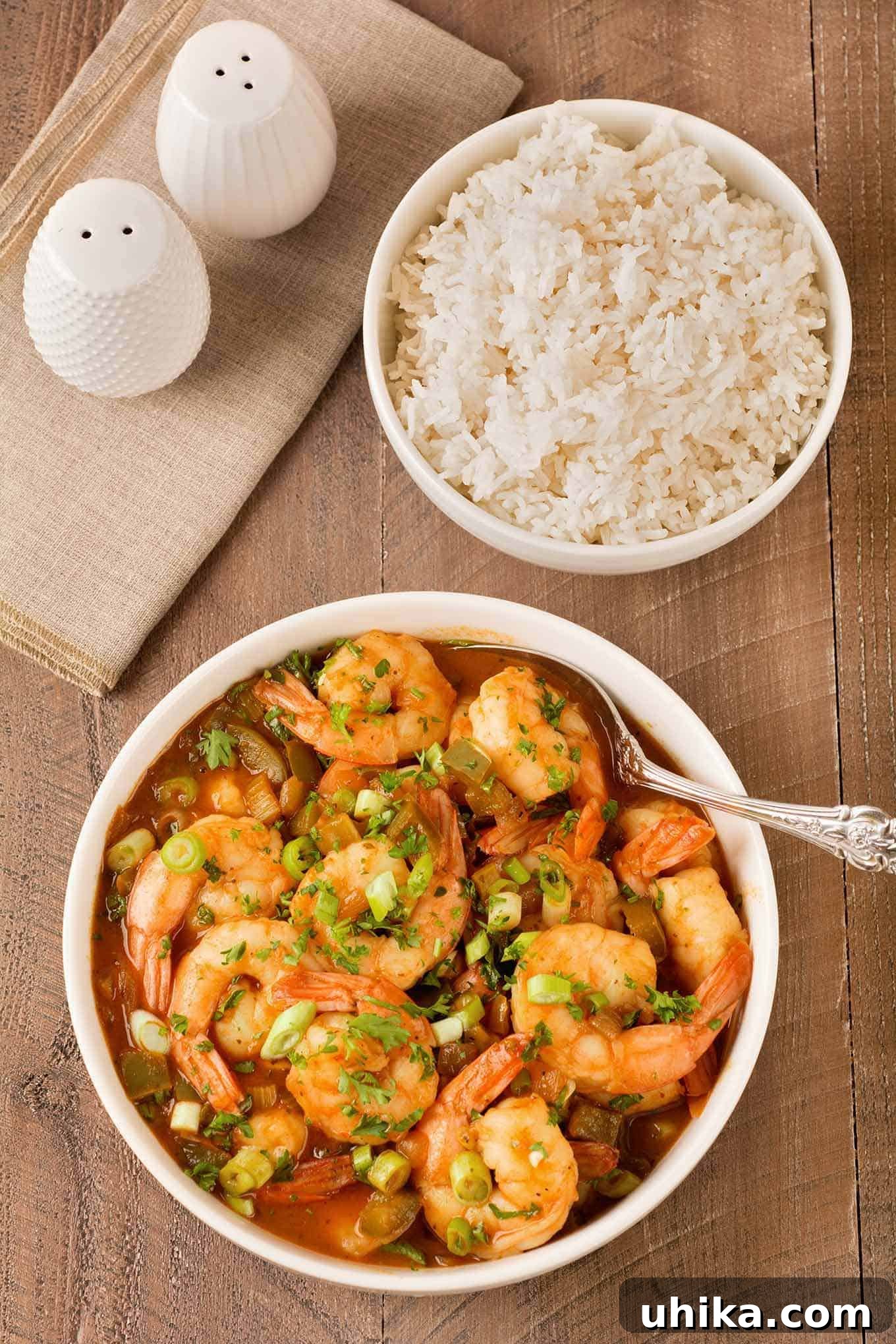
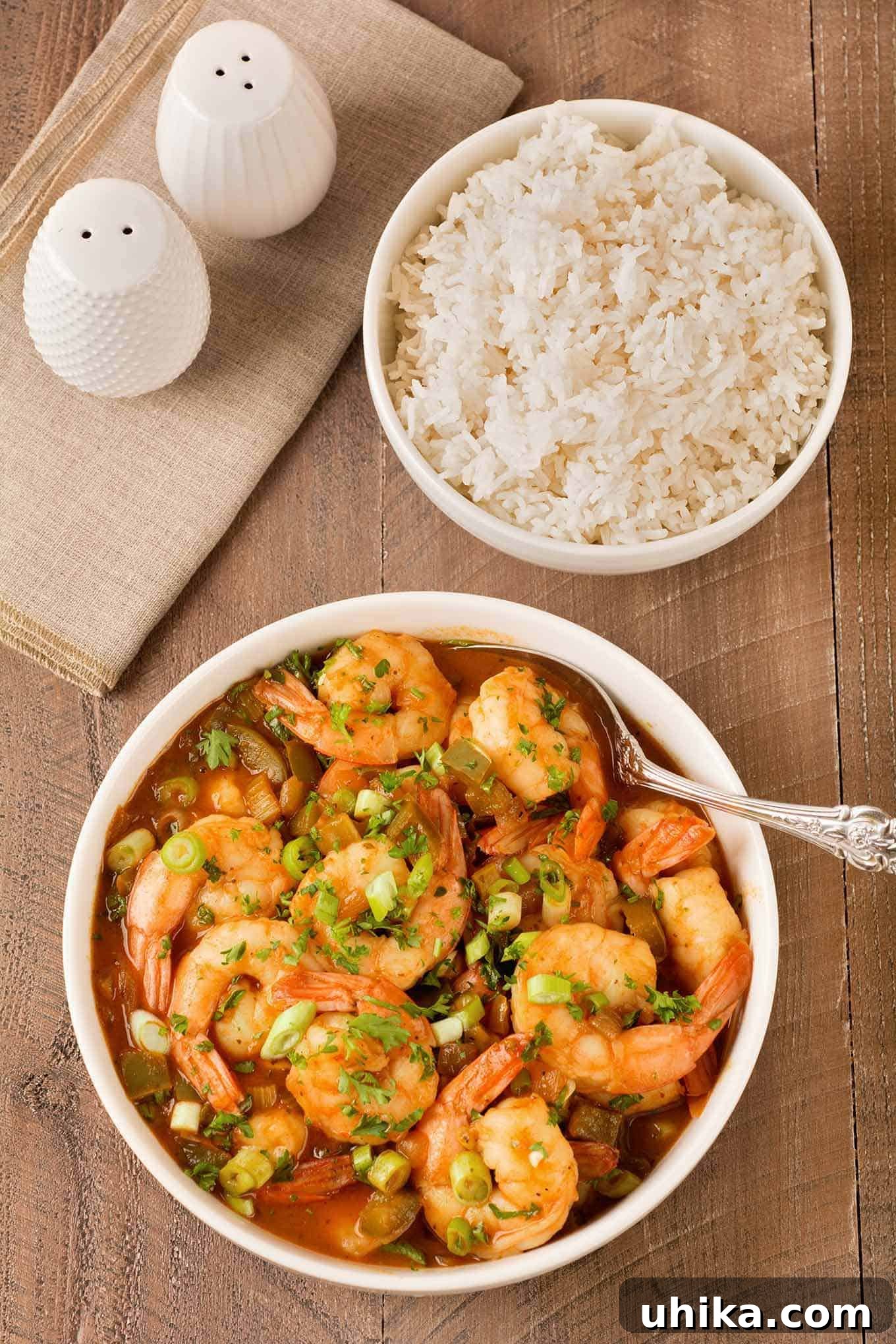
Experience the Rich Flavors of Louisiana: Authentic Shrimp and Rice Recipe
Embark on a culinary journey to the heart of Louisiana with this incredibly satisfying and intensely flavorful Louisiana Style Shrimp and Rice dish. Often likened to a classic étouffée, this recipe stands out with its robust, savory gravy that perfectly coats succulent shrimp. It’s a comforting meal that brings the vibrant spirit of Cajun and Creole cooking right to your kitchen, proving that exceptional flavor doesn’t have to be complicated.
The secret to this dish’s unparalleled taste lies in its deeply flavored sauce. Crafted from the aromatic “holy trinity” of Cajun cooking—sautéed onion, bell pepper, and celery—along with seasoned flour, rich tomato paste, and a unique touch of beef stock, this gravy is nothing short of extraordinary. While beef stock might seem an unconventional choice for shellfish, its profound umami quality and depth of flavor are what truly elevate this recipe, distinguishing it from other shrimp and rice dishes. Served piping hot over fluffy white or wholesome brown rice, every spoonful is a testament to the soulful cuisine of Louisiana.
The Culinary Roots: Tracing the Origins of This Flavorful Shrimp Dish
Our exploration into this delectable shrimp and rice recipe led us down a fascinating path, hinting at its historical ties to traditional Louisiana fare. Through a bit of culinary detective work, we believe we’ve uncovered what might be the foundational version of this beloved dish on LouisianaSeafood.com. The original recipe, known as Shrimp Delicate, was shared with us by enthusiastic readers, Pat and Melanie, who savored its flavors during a memorable trip to Baton Rouge. Their desire to share this unforgettable experience with our community inspired us to perfect and present this incredible rendition to all our visitors.
This dish exemplifies the rich culinary heritage of Louisiana, a cuisine born from a melting pot of cultures. French, Spanish, African, and Native American influences converged over centuries to create a food culture renowned for its bold flavors and innovative use of local ingredients. From the bayous to the bustling streets of New Orleans, Louisiana cuisine tells a story of resilience, resourcefulness, and a deep appreciation for the art of cooking. Understanding these origins adds another layer of appreciation to every bite of this authentic shrimp recipe, connecting us to generations of culinary tradition.
Deciphering Louisiana’s Iconic Dishes: Étouffée, Gumbo, and Jambalaya
Given the sauce-centric nature of this recipe, it proudly bears a strong resemblance to an étouffée. But have you ever pondered the nuances that differentiate étouffée from other legendary Cajun and Creole creations such as gumbo and jambalaya? While all three are cornerstones of Louisiana cooking, each possesses distinct characteristics that make them unique. Let’s break down these beloved classics to help you navigate the vibrant world of Southern culinary delights.
Understanding these differences not only enriches your appreciation for Louisiana cuisine but also empowers you to choose the perfect dish to savor, whether you’re dining out or experimenting in your own kitchen. Each dish, while sharing common ingredients like the “holy trinity,” tells a different story through its preparation and texture.
-
Étouffée: The Art of Smothering Flavor
Loosely translating to “smothered” in French, étouffée is typically a rich, thick stew often made with seafood, most famously crawfish or shrimp. The cooking method involves slowly simmering the main ingredient in a flavorful, roux-thickened sauce that features the omnipresent bell pepper, onion, and celery. Unlike gumbo, étouffée is characterized by its velvety, thick gravy and is always served generously spooned over a bed of rice. It’s a testament to slow cooking, allowing the ingredients to meld into a deeply satisfying and aromatic experience. The sauce is the undisputed star, offering a smooth, intensely savory base for the tender protein. -
Gumbo: A Hearty Stew with Endless Variations
Gumbo is perhaps Louisiana’s most famous culinary export, a robust stew renowned for its dark, complex roux—a mixture of flour and fat cooked to a deep, nutty brown. This foundation is key to gumbo’s distinctive flavor profile. It’s incredibly versatile, incorporating a variety of meats (like chicken, duck, or sausage), seafood (shrimp, crab, oysters), and vegetables. Most gumbo recipes include okra (a natural thickener), tomatoes (especially in Creole versions), and onions, often with the addition of sausage or ham for an extra layer of smoky depth. There are two main types: Cajun gumbo, which tends to be darker and relies heavily on roux and less on tomatoes, and Creole gumbo, which is often lighter and includes tomatoes, reflecting French, Spanish, and African influences. Gumbo is typically served in a bowl, often with a scoop of rice cooked separately. -
Jambalaya: The One-Pot Wonder
Jambalaya is a classic one-pot rice dish, often compared to Spanish paella due to its combination of cooked rice with various meats and vegetables. It’s a vibrant and hearty meal where the rice is cooked directly in the broth, absorbing all the rich flavors of the other ingredients. Common elements include tomatoes, onions, and green peppers, forming a colorful and aromatic base. Like gumbo, jambalaya is highly adaptable, with recipes varying widely from cook to cook and region to region. Creole jambalaya, often found in New Orleans, is characterized by its red, tomato-based sauce, while Cajun jambalaya, more common in rural areas, typically has a brown, savory base without tomatoes, emphasizing a robust meat flavor. Both versions are incredibly flavorful and perfect for feeding a crowd, making it a beloved staple in Louisiana households.
4.43 from 7 votes
Louisiana Style Shrimp and Rice
By Lynne Webb
Similar to étoufée, this saucy, Louisiana-style shrimp and rice dish is satisfying, intensely flavorful, and easy to make. Perfect for a comforting weeknight meal or a festive gathering, it brings the authentic taste of the South to your table.
Prep Time: 30 mins
Cook Time: 20 mins
Total Time: 50 mins
Servings: 4 servings
Rate Recipe
Print Recipe
Ingredients
- 1-1/4 lbs large shrimp, peeled (tails left on) and deveined
- 3 tablespoons olive oil
- 1 cup onion, diced
- 1 cup celery, diced
- 1 green bell pepper, seeded and diced
- 2 cloves garlic, minced
- 1 tablespoon tomato paste
- 1-1/2 cups reduced-sodium beef stock
- 3 to 4 scallions, sliced
- 2 tablespoons fresh parsley, finely chopped
For the seasoned flour mix:
- 2 tablespoons all-purpose flour
- 1 teaspoon paprika
- 1/2 teaspoon dried oregano
- 1/2 teaspoon onion powder
- 1/2 teaspoon celery seed
- Pinch of cayenne pepper (adjust to your spice preference)
Instructions
- In a small bowl, whisk together all the ingredients for the seasoned flour blend: all-purpose flour, paprika, dried oregano, onion powder, celery seed, and cayenne pepper. Set this flavorful mixture aside.
- Heat the olive oil in a large, heavy-bottomed frying pan or Dutch oven over medium heat. Add the diced onion and sauté gently for 3 to 4 minutes, or until it has softened and become translucent.
- Introduce the diced celery and bell pepper to the pan. Continue cooking for another 2 minutes, allowing the “holy trinity” to soften and release their aromatic flavors.
- Stir in the minced garlic and sauté for 1 minute more until fragrant. Be careful not to burn the garlic. Immediately sprinkle the reserved seasoned flour mixture evenly over all the vegetables in the pan.
- Continue cooking the mixture, stirring constantly, for 2-3 minutes. This step is crucial for lightly browning the flour, which creates a foundational flavor and deepens the color of your sauce, similar to developing a quick roux.
- Stir in the tomato paste, ensuring it is well combined with the vegetable and flour mixture. Cook for another minute, allowing the tomato paste to caramelize slightly and enhance its sweetness.
- Gradually whisk in the reduced-sodium beef broth into the pan. Bring the mixture to a gentle simmer, continuously stirring, until the sauce thickens to a rich gravy consistency. This process should take about 5-7 minutes.
- Add the peeled and deveined shrimp to the simmering gravy. Continue cooking, stirring occasionally, for 5 to 7 minutes, or until the shrimp turn opaque and pink and are just cooked through. Avoid overcooking to keep the shrimp tender.
- Stir in the sliced scallions and finely chopped fresh parsley. If desired, reserve a small amount of each for a fresh garnish when serving. Combine all ingredients thoroughly.
- Remove the pan from the heat immediately once the shrimp are cooked and the herbs are incorporated.
- Serve this authentic Louisiana Style Shrimp and Rice generously over a bed of freshly steamed white or brown rice. Garnish with reserved scallions and parsley for a pop of color and freshness.
Notes for a Perfect Dish
For best results, use fresh, high-quality large shrimp. If using frozen shrimp, ensure they are fully thawed and patted dry before adding them to the pan. Adjust the amount of cayenne pepper according to your desired spice level; a pinch adds a subtle warmth, while more can ignite a fiery kick. This dish pairs wonderfully with a side of crusty French bread for soaking up every last drop of the rich gravy, or a simple green salad to balance the flavors.
Tips for Success & Variations
- Choosing Your Shrimp: Fresh shrimp will always yield the best flavor and texture. Look for firm, translucent shrimp with a mild, ocean-like smell.
- The Holy Trinity’s Role: Don’t rush sautéing the onion, bell pepper, and celery. This step builds the aromatic foundation of the dish.
- Spice Level: Louisiana cuisine is known for its kick! Feel free to increase the cayenne pepper or add a dash of your favorite hot sauce at the end for an extra layer of heat.
- Make it Your Own: While this recipe calls for beef stock, you can experiment with vegetable or even seafood stock for a different flavor profile, though the beef stock truly gives it that signature umami depth.
- Add More Veggies: Sliced mushrooms or diced tomatoes can be added along with the celery and bell pepper for more complexity and nutrients.
- Serving Suggestions: Beyond rice, this dish is fantastic with cornbread or grits. A simple squeeze of lemon juice over the top before serving can brighten all the flavors.
Nutrition Information
Calories: 268, Total Fat: 12g, Cholesterol: 228mg, Sodium: 385mg, Carbohydrates: 12g, Fiber: 3g, Sugar: 6g, Protein: 32g
Nutrition information is automatically calculated and should only be used as an approximation. Actual values may vary based on specific ingredients and preparation methods.
Like this recipe? We’d love to hear from you! Rate and comment below to share your experience with this delicious Louisiana Style Shrimp and Rice.
More Popular Shrimp Recipes to Explore:
- Easy Shrimp and Andouille Gumbo
- Shrimp and Grits
- Brazilian Shrimp Stew
- Sautéed Shrimp With Orzo
- Old Bay Shrimp Sauté