
Authentic Greek Moussaka Recipe: A Culinary Journey to the Heart of Greece
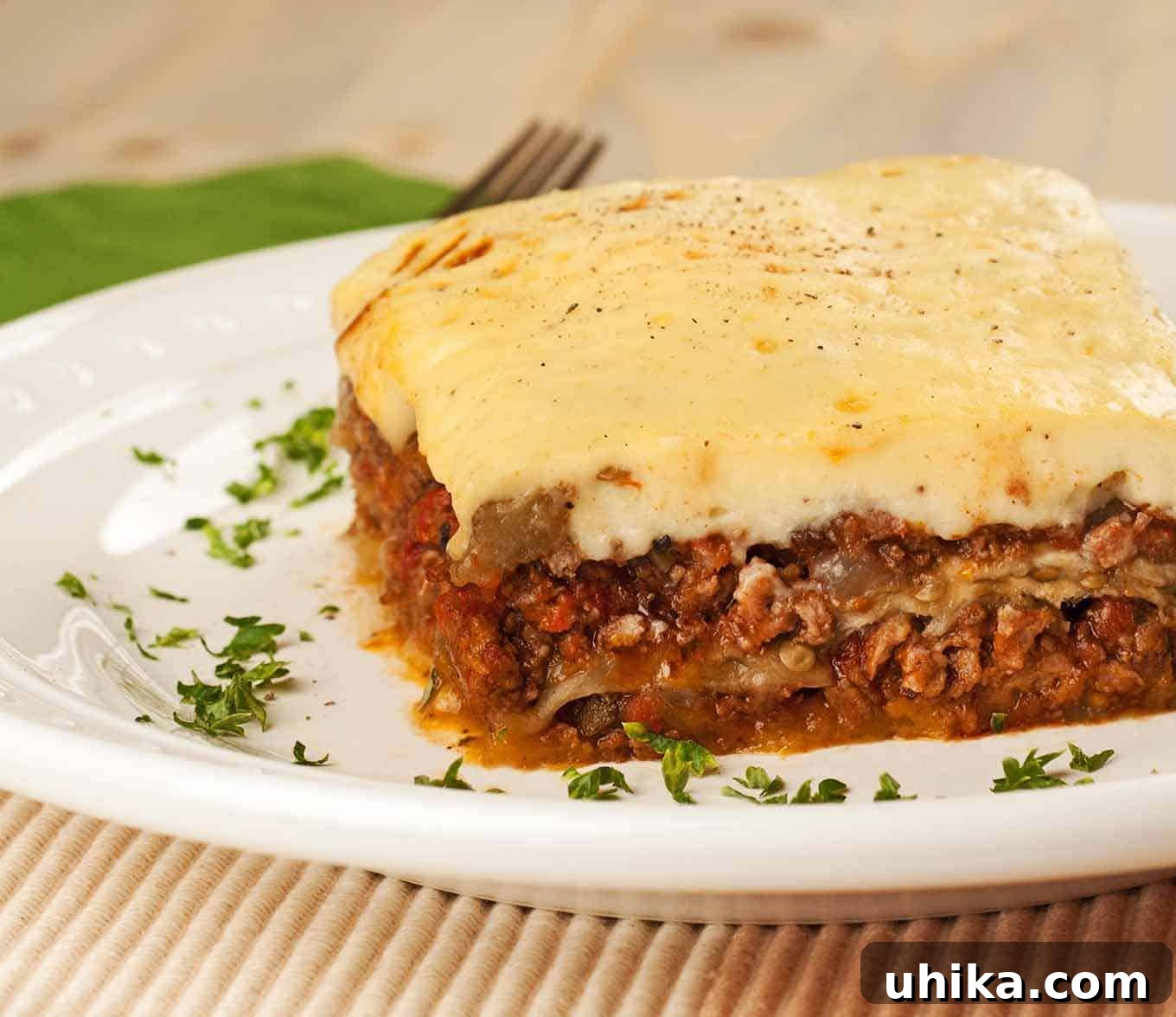
Embark on a delightful culinary journey to the heart of Greece with our authentic Moussaka recipe. This iconic Greek dish, often likened to a rich, layered lasagna, offers a symphony of flavors and textures that captivates the palate. Featuring tender layers of oven-roasted eggplant, a robustly seasoned ground lamb filling, and crowned with a luscious, golden-baked bechamel sauce, Moussaka is more than just a meal—it’s a cherished experience. Perfect for a cozy family dinner or entertaining friends, this make-ahead classic promises comfort and satisfaction with every forkful.
Beyond its delicious taste, Moussaka stands out as a versatile dish. It’s relatively easy to prepare, making it accessible for home cooks looking to explore Mediterranean cuisine. Its ability to be assembled in advance makes it an ideal choice for busy weeknights or special occasions, allowing flavors to meld beautifully. We suggest pairing it with our Classic Skordalia for an irresistible appetizer and a crisp green salad dressed with a refreshing Greek-style vinaigrette to complete your Mediterranean feast.
The Heart of Greek Cuisine: Understanding the Enduring Appeal of Moussaka
Moussaka holds a cherished place in Greek culinary traditions, a testament to its enduring popularity and comforting appeal. While variations exist across the Balkans and the Middle East, the Greek version, with its distinctive bechamel topping, is arguably the most famous. Its origins trace back centuries, with influences from Ottoman cuisine, though the addition of bechamel sauce is a more modern, French-inspired touch popularized in the 20th century by chef Nikolaos Tselementes, who sought to “Europeanize” Greek cooking. Today, it’s a staple in Greek tavernas and households, revered as the ultimate Greek comfort food.
At its core, Moussaka is a layered casserole designed to deliver a harmonious blend of flavors. Each component plays a crucial role in creating the dish’s signature profile. The earthy sweetness of eggplant provides a sturdy, yet tender foundation. The savory depth of spiced ground lamb (or another preferred meat) forms the flavorful heart, absorbing aromatic herbs and spices like cinnamon and allspice. Finally, the creamy, nutmeg-infused bechamel sauce blankets the layers, providing a rich, custardy top that bakes to a beautiful golden perfection, tying all the elements together.
Why Moussaka is a Must-Try Make-Ahead Meal for Any Occasion
One of Moussaka’s greatest virtues is its suitability as a make-ahead meal. Preparing it in advance not only saves time on the day of serving but also allows the intricate flavors to deepen and meld, resulting in an even more delicious dish. The layers settle, and the spices have ample time to infuse throughout the lamb and eggplant, creating a richer, more cohesive taste experience. This makes Moussaka an excellent choice for entertaining, as you can do most of the work beforehand and simply bake it when your guests arrive. It’s also incredibly forgiving, adapting well to various dietary preferences with simple substitutions, making it a truly versatile and beloved dish that brings warmth and comfort to any table.
Crafting the Perfect Moussaka: A Detailed Recipe Guide
Moussaka
This traditional Greek Moussaka, with its tender eggplant, seasoned lamb, and creamy bechamel, is a delightful make-ahead dish perfect for any gathering.
By: Lynne Webb
- Prep Time: 25 mins
- Cook Time: 1 hr 20 mins
- Total Time: 1 hr 45 mins
- Servings: 8 servings
Rate Recipe
Print Recipe
Ingredients
For the Eggplant:
- 3 medium eggplant, about 2-1/2 lbs
- Olive oil, for brushing
- Salt and freshly ground black pepper, to taste
For the Meat Mixture:
- 1-1/2 lbs ground lamb
- 2 tablespoons olive oil
- 1-1/2 cups onion, chopped
- 2 stalks celery, chopped
- 3 cloves garlic, finely chopped
- 1/2 teaspoon ground allspice
- 3/4 teaspoon ground cinnamon
- 1 teaspoon dried oregano
- 1-1/2 teaspoons salt
- Freshly ground black pepper, to taste
- 1/3 cup red wine
- 1-1/2 cups diced tomatoes, undrained
- 2 tablespoons tomato paste
- 2 tablespoons fresh parsley, chopped
For the Bechamel Sauce:
- 3 cups whole milk
- 1 bay leaf
- 6 whole allspice berries
- 6 tablespoons butter
- 6 tablespoons flour
- 1 large egg, lightly beaten
- 1/4 cup grated parmesan cheese
- 1/2 teaspoon nutmeg, freshly grated for best flavor
Instructions
- Prepare the Eggplant: Preheat your oven to 425°F (220°C). Lightly coat two large baking sheets with nonstick cooking spray or a thin layer of olive oil. Peel the eggplants and cut them lengthwise into slices about 3/8-inch thick. Arrange the slices in a single layer on the prepared baking sheets. Brush the tops of the eggplant slices with a little olive oil and season generously with salt and freshly ground black pepper. Roast for 8 to 10 minutes, or until the eggplant is just tender when gently pierced with a fork. Remove from the oven and set aside to cool slightly. Reduce the oven temperature to 350°F (175°C) for later baking.
- Prepare the Meat Mixture: While the eggplant roasts, heat 1 tablespoon of olive oil in a large, heavy-bottomed pan or Dutch oven over medium-high heat. Add the ground lamb and cook, breaking it up with a wooden spoon, until it is thoroughly browned and cooked through. This browning step adds significant flavor. Drain any excess fat from the pan, then return the pan to the stove over medium heat. Add the remaining tablespoon of olive oil, along with the chopped onion, celery, and finely chopped garlic. Sauté, stirring frequently, until the vegetables soften and become translucent, which should take about 5 to 7 minutes.
- Season the Meat: Stir in the ground allspice, ground cinnamon, dried oregano, 1-1/2 teaspoons of salt, and a few generous grinds of fresh black pepper. Mix thoroughly to coat the meat and vegetables evenly, and cook for an additional minute to allow the spices to bloom and release their full aromatic potential.
- Simmer the Meat Sauce: Pour in the red wine, scraping up any browned bits from the bottom of the pan to deglaze and add depth of flavor. Add the diced tomatoes (undrained) and tomato paste. Bring the mixture to a gentle simmer, then reduce the heat to medium-low and cook, stirring occasionally, for 8 to 10 minutes, or until the sauce has thickened nicely. Taste the sauce and adjust the seasoning with more salt or pepper if needed. Remove the pan from the heat and stir in the fresh chopped parsley. Set aside.
- Prepare the Bechamel Sauce: While the meat mixture simmers, begin making the rich bechamel sauce. In a small saucepan, gently warm the whole milk with the bay leaf and whole allspice berries over low heat. Be careful not to boil it. In a separate, medium-sized saucepan, melt the butter over medium heat. Once melted, whisk in the flour, stirring constantly to create a smooth roux. Continue cooking the roux for 3 to 5 minutes, or until it develops a rich golden color and a nutty aroma. This step is crucial for developing flavor and preventing a raw flour taste.
- Finish the Bechamel: Carefully remove the bay leaf and allspice berries from the warm milk. Gradually add the warmed milk to the roux, whisking continuously and vigorously to ensure a smooth, lump-free sauce. Continue to cook the bechamel sauce over medium heat, stirring constantly, for another 3 to 4 minutes, until it thickens to a creamy consistency. Remove the sauce from the heat and allow it to cool for 5 minutes, stirring occasionally to prevent a skin from forming. Slowly whisk in the lightly beaten egg, grated parmesan cheese, and the freshly grated nutmeg until the sauce is smooth, well blended, and beautifully glossy. Set the finished bechamel sauce aside.
- Assemble the Moussaka: Lightly coat a 13 x 9 x 2-inch (33 x 23 x 5 cm) casserole dish thoroughly with nonstick cooking spray or olive oil. Arrange an even layer of the roasted eggplant slices over the bottom of the dish, slightly overlapping if necessary to create a solid base.
- Layering the Moussaka: Spread about half of the prepared meat mixture evenly over the eggplant layer. Top with another layer of eggplant slices, ensuring good coverage. Spread the remaining meat mixture over this second eggplant layer, then finish with a final layer of the remaining eggplant slices.
- Add Bechamel and Bake: Pour the luscious bechamel sauce evenly over the entire casserole, using a spatula to gently smooth the top if needed, ensuring all the layers are completely covered with the creamy sauce.
- Bake to Perfection: Cover the casserole dish loosely with aluminum foil. Bake in the preheated 350°F (175°C) oven for 35 minutes. After 35 minutes, carefully remove the foil and return the dish to the oven for an additional 15 to 20 minutes, or until the top of the bechamel sauce turns a beautiful golden brown and the Moussaka is bubbling around the edges.
- Rest and Serve: Once baked, remove the Moussaka from the oven and allow it to rest for at least 10-15 minutes before slicing and serving. This crucial resting period allows the layers to set, making it much easier to cut neat, appealing slices. Patience will be rewarded with a picture-perfect presentation and perfectly integrated flavors.
Notes & Pro Tips for Perfect Moussaka
Pre-Cooking Eggplant is Key: We strongly recommend partially cooking the eggplant slices before assembling the Moussaka. This step is vital for two main reasons: it reduces the amount of moisture the eggplant releases during baking, preventing a watery final dish, and it ensures the eggplant is perfectly tender without being mushy. Roasting also brings out the natural sweetness of the eggplant, adding depth to the casserole, and saves you from the mess and extra oil of frying.
Meat Alternatives: While traditional Greek Moussaka typically uses ground lamb for its distinctive flavor, we understand that not everyone prefers lamb or has easy access to it. If lamb is not to your taste or unavailable, ground pork, chicken, or beef can be excellent substitutes. A mixture of ground beef and pork can also yield a wonderfully rich flavor profile. Remember to adjust seasoning as necessary to complement your chosen meat, as some meats absorb spices differently.
The Secret to Smooth Bechamel: Achieving a perfectly smooth and creamy bechamel sauce is essential for Moussaka. To avoid lumps, ensure your milk is warm when you gradually add it to the roux, and whisk continuously and vigorously. If lumps do unfortunately form, a quick pass with an immersion blender or through a fine-mesh sieve can easily salvage your sauce, making it silky smooth again.
Enhancing Flavor: Don’t skip the step of blooming the spices in the meat mixture for an extra minute after adding them; this helps release their full aromatic potential. For the bechamel, fresh nutmeg grated directly into the sauce provides a far superior aroma and taste compared to pre-ground nutmeg, which can lose its potency over time.
Resting Time is Crucial: Allowing the Moussaka to rest after baking is not just a suggestion—it’s a must. This resting period lets the layers firm up and the sauces settle, making for cleaner, more defined slices and preventing the dish from falling apart when served. Serving it too soon can result in a messy presentation. Allow at least 10-15 minutes, but 20-30 minutes will yield even better results.
Serving Suggestions for Your Greek Feast
A true Greek feast extends beyond just the main course. To complement your rich and comforting Moussaka, consider serving a variety of refreshing side dishes. Our Classic Skordalia, a pungent garlic potato dip, offers a fantastic contrast in texture and flavor, perfect for dipping crusty bread or fresh vegetables. A simple yet vibrant green salad, perhaps with mixed greens, crisp cucumber, ripe tomatoes, red onion, Kalamata olives, and crumbled feta cheese, dressed with a light lemon-oregano vinaigrette, cuts through the richness of the Moussaka beautifully, adding a fresh counterpoint. For a complete meal, a side of roasted vegetables like zucchini or bell peppers, or a hearty lentil salad, would also be excellent additions. Don’t forget a bottle of a dry red Greek wine, such as an Agiorgitiko or Xinomavro, to perfectly pair with the lamb and aromatic spices of the Moussaka.
Variations and Customizations: Making Moussaka Your Own
While our recipe provides an authentic foundation, Moussaka is a wonderfully adaptable dish. Feel free to experiment and tailor it to your preferences, making it uniquely yours:
- Vegetarian Moussaka: For a delicious meat-free version, replace the ground lamb with a hearty mixture of sautéed mushrooms, lentils, or a combination of finely diced vegetables like carrots, zucchini, and bell peppers. You can also incorporate crumbled plant-based ground “meat” substitutes for a similar texture and savory depth.
- Cheese Choices: While Parmesan is traditionally used in the bechamel, a sprinkle of authentic Greek cheeses like Kefalotyri or Graviera on top of the bechamel before baking will give it an even more pronounced Greek flavor and a wonderfully crispier, golden crust.
- Spice Variations: Adjust the amounts of allspice, cinnamon, and oregano to your liking, depending on your preference for warmth and aroma. Some recipes also include a hint of ground cloves or a bay leaf in the meat mixture for added complexity and depth.
- Vegetable Alternatives: If eggplant isn’t your favorite, or if you’re looking for a seasonal change, thinly sliced potatoes or zucchini can be used, either partially replacing or entirely substituting the eggplant layers. Just ensure they are pre-cooked until tender before layering to ensure proper cooking time and texture in the final dish.
- Additional Herbs: For a brighter, more aromatic profile, fresh herbs like chopped mint or dill can be added to the lamb mixture, complementing the existing spices beautifully.
Storing and Reheating Your Moussaka: Practical Tips
One of the many advantages of Moussaka is how well it stores and reheats, making it an excellent option for meal prepping or enjoying leftovers:
- Refrigeration: Leftover Moussaka can be stored, tightly covered with plastic wrap or aluminum foil, in the refrigerator for up to 3 days. Ensure it cools completely to room temperature before refrigerating to maintain freshness and safety.
- Reheating: To reheat, individual slices can be warmed gently in the microwave until heated through, though this may soften the bechamel crust slightly. For best results and to preserve the crust, reheat larger portions or the entire casserole in an oven preheated to 325°F (160°C) until thoroughly warmed through. This typically takes about 20-30 minutes for slices or 45-60 minutes for a whole dish. Covering it loosely with foil for the first part of reheating helps prevent it from drying out, removing the foil for the last 10-15 minutes helps crisp the top.
- Freezing: Moussaka freezes beautifully, making it an excellent freezer-friendly meal. You can freeze an entire baked and cooled casserole or individual slices. Wrap tightly in several layers of plastic wrap and then aluminum foil to prevent freezer burn and protect its flavors. It can be stored in the freezer for up to 3 months. Thaw overnight in the refrigerator before reheating in the oven as described above.
The Enduring Appeal of Moussaka: A Culinary Legacy to Share
Moussaka is more than just a dish; it’s a celebration of Greek hospitality and culinary heritage. Its rich, satisfying layers, imbued with aromatic spices and crowned with a creamy bechamel, create a truly unforgettable dining experience. Whether you’re making it for a special occasion, introducing friends to Greek cuisine, or simply craving a taste of the Mediterranean, this classic Greek Moussaka recipe will bring warmth and flavor to your table. It’s a dish that invites sharing, lingering, and savoring every single bite, embodying the very spirit of Greek comfort food and tradition. Enjoy the process of creating this culinary masterpiece, and delight in the appreciative smiles of those you share it with.