
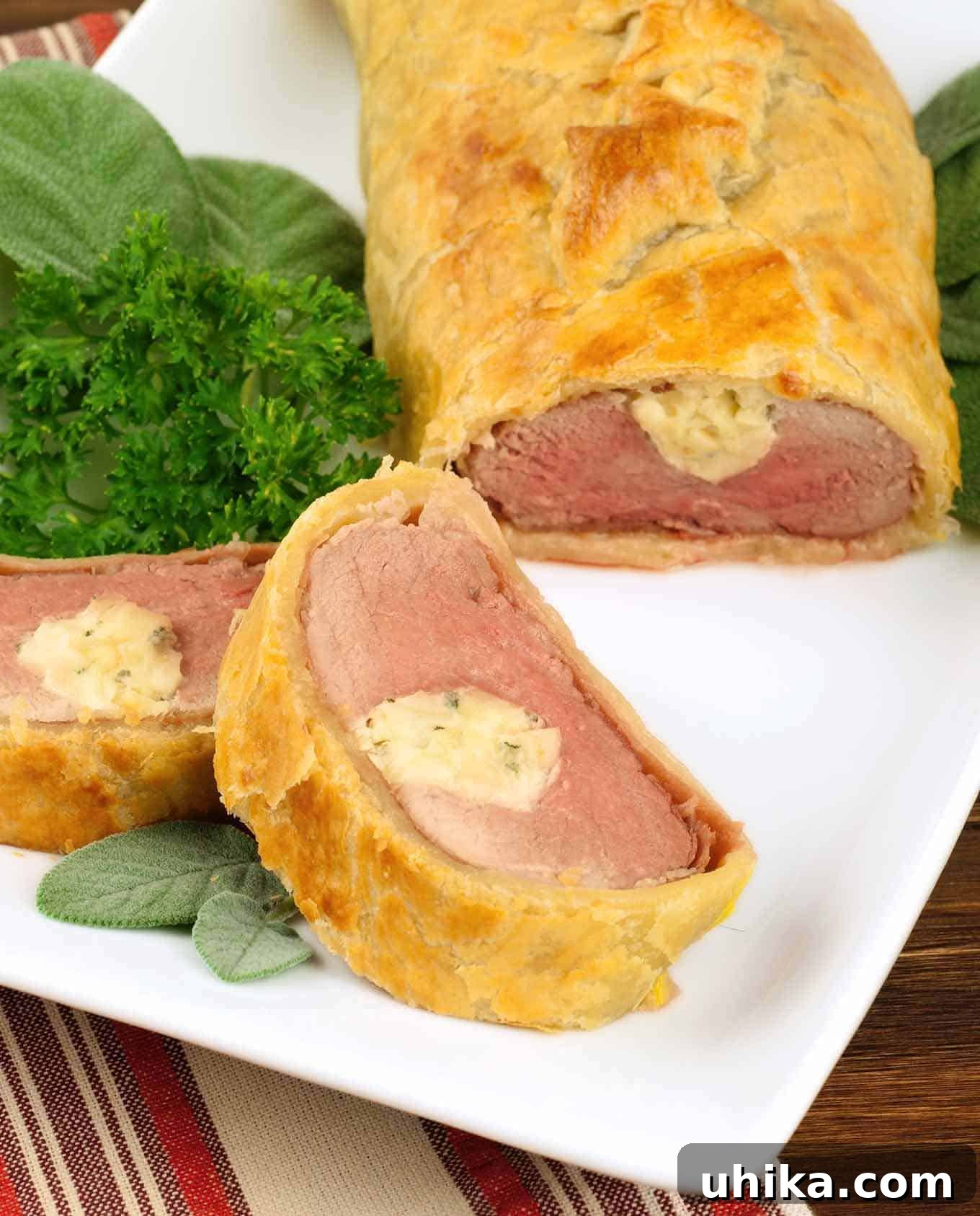
Elevate Your Dinner: Gourmet Pastry-Wrapped Pork Tenderloin with Brandy-Cider Reduction
Are you searching for a show-stopping recipe that combines exquisite flavor with an elegant presentation, perfect for your next special dinner party? Look no further. This Pastry-Wrapped Pork Tenderloin with Brandy-Cider Reduction is designed to impress your guests, yet it is surprisingly approachable for home cooks. With a bit of forward planning, you’ll find that crafting this gourmet dish requires minimal last-minute stress, allowing you to enjoy the company of your guests as much as the meal itself. It’s a culinary masterpiece that promises a memorable dining experience, blending rich flavors and textures into every bite.

Pastry-Wrapped Pork With Brandy-Cider Reduction
Lynne Webb
15 mins
35 mins
50 mins
8 servings
Print Recipe
Ingredients
Gather these high-quality ingredients to create the distinct layers of flavor for your gourmet pastry-wrapped pork. Each component plays a vital role in achieving the perfect balance of sweet, savory, and aromatic notes.
For the filling:
- 4 ounces cream cheese, softened to room temperature
- 1/2 cup dried apples, finely chopped for even distribution
- 1 clove garlic, very finely chopped or minced
- 1 tablespoon fresh sage, finely chopped, adding a fragrant, earthy note
For the pork:
- 2 pork tenderloins, each weighing about 1 pound, trimmed
- 10 to 12 paper-thin slices prosciutto, for wrapping and flavor
- 2 tablespoons olive oil, for searing the pork
- 2 sheets frozen puff pastry, thawed according to package directions
- 1 large egg, beaten with 1 tablespoon water for an egg wash
For the sauce:
- 2 tablespoons unsalted butter
- 1 medium shallot, finely chopped (yields about 1 tablespoon)
- 1-1/4 cups apple cider, preferably unfiltered
- 3 tablespoons brandy, for a rich, aromatic depth
- 2 teaspoons cornstarch
- 4 teaspoons cold water
- 1 tablespoon fresh sage, finely chopped, for the finishing touch
Instructions
Follow these detailed steps to prepare your impressive Pastry-Wrapped Pork Tenderloin, from the savory filling to the perfect golden crust and rich sauce.
-
Preheat your oven to a precise 400°F (200°C). Line a large, shallow baking pan with parchment paper; this crucial step prevents sticking and ensures a beautiful, easy transfer of your finished dish.
-
In a small bowl, combine the softened cream cheese, finely chopped dried apples, minced garlic, and finely chopped fresh sage. Mix these ingredients thoroughly until they are well blended and form a cohesive filling. Set this flavorful mixture aside.
-
Prepare the pork tenderloins by trimming away any silver skin or excess fat. Silver skin can be tough and chewy, so removing it ensures a tender final product. Then, using a sharp knife, carefully cut a 3/4-inch deep slit down the entire length of each tenderloin, creating a pocket for your savory filling.
-
Divide the cream cheese mixture evenly between the two tenderloins. Spread half of the filling inside each prepared slit. Gently press the tenderloins back together to enclose the filling, being careful not to squeeze the delicious contents out.
-
Lay out 5 or 6 paper-thin slices of prosciutto on a sheet of wax paper, overlapping the top edges slightly to create a continuous blanket. The exact number of slices will depend on the length of your tenderloins. Place one filled tenderloin, seam-side down, on top of the prosciutto. Carefully wrap the prosciutto slices around the pork, ensuring it’s fully enclosed. Repeat this process with the second tenderloin. The prosciutto adds a delightful salty crunch and helps keep the pork moist.
-
Heat 1 tablespoon of olive oil in a large skillet over medium-high heat. The skillet should be large enough to comfortably accommodate the length of a tenderloin. Carefully place one prosciutto-wrapped tenderloin into the hot skillet and sear it lightly on all sides. This searing step is crucial as it “seals” the prosciutto, locking in juices and preventing it from unraveling later. Transfer the seared tenderloin to a plate. Add the remaining tablespoon of olive oil to the pan and repeat the searing process with the second tenderloin. Once both are seared, set them aside to cool for approximately 10 minutes.
-
Take one sheet of thawed puff pastry. Trim a strip about 1-inch wide from one side of the pastry sheet and reserve this strip for optional decorative cutouts. Roll each pastry sheet to form a 12 x 15-inch rectangle. Place one cooled tenderloin, filling side down, onto the center of each rolled-out pastry sheet. Bring the long sides of the pastry up and over the tenderloins, pressing the edges firmly together to create a secure seal. Gently turn the wrapped tenderloin right side up, then crimp the ends and fold them underneath to fully seal the pastry.
-
If you wish to add a decorative touch, use the reserved pastry strips to cut out shapes (e.g., leaves, braids) and place them on top of each pastry-wrapped tenderloin. This adds an extra layer of elegance to your presentation.
-
Carefully place the pastry-wrapped tenderloins, seam side down, onto the prepared baking sheet. Brush the top and sides of the pastry evenly with the egg wash (1 beaten egg mixed with 1 tablespoon water). If you added any decorative cutouts, gently press them onto the pastry, then brush them with a second coat of egg wash to ensure a beautiful golden-brown finish and adherence.
-
Bake for 20 to 30 minutes, or until the puff pastry achieves a rich golden-brown color and appears flaky. The pork itself should reach an internal temperature of 140°F (60°C). Use a meat thermometer inserted into the thickest part of the pork to ensure accuracy.
-
Once baked, remove the tenderloins from the oven and allow them to rest for 7 to 8 minutes before slicing. This resting period is vital, allowing the juices to redistribute throughout the meat, ensuring a tender and moist final product.
-
While the tenderloins are baking, begin preparing the exquisite sauce. Melt the butter in a small saucepan over medium-high heat. Add the finely chopped shallot and cook, stirring occasionally, until it softens and becomes fragrant, which typically takes about 3 to 4 minutes. Pour in the apple cider and brandy, then increase the heat to bring the mixture to a rapid simmer. Continue to cook until the liquid volume is reduced to about 1 cup, usually taking 10 to 12 minutes. This reduction concentrates the flavors beautifully.
-
In a separate small bowl, whisk together the cornstarch and cold water to create a slurry. Add this slurry to the simmering cider mixture, stirring constantly until the sauce thickens slightly to your desired consistency. Stir in the finely chopped fresh sage, cook for just 1 minute longer to infuse the herb flavor, then transfer the finished sauce to a serving bowl.
-
To serve this magnificent dish, slice the rested pork into 1/2 to 3/4-inch thick slices. A long serrated knife, like a bread knife, is highly recommended for cleanly cutting through the flaky puff pastry without crumbling it. Arrange the beautiful slices on a serving platter and pass the warm brandy-cider reduction at the table for guests to drizzle over their portions.
Notes & Expert Tips
Recipe Notes:
If your pork tenderloins taper significantly at one end, you can either fold the thinner ends underneath themselves prior to wrapping with prosciutto to create a more uniform thickness, or trim them off and reserve for another culinary use.
This recipe concept was inspired by the innovative creations found in Cuisine at Home Magazine, adapted and perfected for your home kitchen.
Chef’s Tips for Success:
- Puff Pastry Handling: Ensure your puff pastry is thoroughly thawed but still cold when working with it. This makes it easier to handle and helps achieve maximum puffiness during baking. Avoid overworking the dough, which can make it tough.
- Internal Temperature: For perfectly cooked and juicy pork, always rely on a meat thermometer. Pork tenderloin is lean and can dry out quickly if overcooked. The carryover cooking during the resting period will bring the temperature up a few degrees, so removing it at 140°F is ideal for medium-rare to medium doneness.
- Dried Apples vs. Fresh: While fresh apples can be used, dried apples offer a more concentrated sweetness and chewier texture, which holds up better within the filling during baking. If using fresh, make sure they are finely diced and perhaps sautéed lightly to remove excess moisture.
- Make Ahead Option: You can prepare the pork tenderloins with their filling and prosciutto wrap, and even encase them in puff pastry, up to 24 hours in advance. Store them wrapped tightly in plastic wrap in the refrigerator. Just before baking, brush with the egg wash. This allows for an even smoother dinner party experience.
- Brandy Alternative: If brandy is not preferred or available, a dry sherry or even a bit of applejack could offer a similar depth to the reduction sauce. For a non-alcoholic option, use a high-quality apple cider vinegar combined with extra apple cider to balance the tang.
Why This Recipe Shines: A Culinary Deep Dive
This Pastry-Wrapped Pork Tenderloin isn’t just a meal; it’s an experience. The genius of this dish lies in the harmonious interplay of its components. Pork tenderloin, known for its lean texture and mild flavor, acts as a perfect canvas, readily absorbing the rich tastes surrounding it. The cream cheese filling provides a luxurious, tangy counterpoint, beautifully complemented by the subtle sweetness of dried apples and the aromatic earthiness of fresh sage and garlic.
The prosciutto layer serves multiple purposes: it adds a salty, savory depth that enhances the pork, helps to keep the tenderloin incredibly moist, and provides an additional barrier that prevents the cream cheese filling from seeping into the puff pastry. Then comes the puff pastry itself – a golden, flaky, buttery embrace that elevates the entire dish from a simple roast to a culinary spectacle. Its crisp exterior contrasts wonderfully with the tender, juicy interior of the pork.
Finally, the brandy-cider reduction sauce ties everything together. The sweetness of apple cider is deepened by the robust notes of brandy and the savory kick of shallots and sage. This complex reduction acts as a sophisticated drizzle, adding moisture and a final layer of nuanced flavor that makes each bite unforgettable. It’s a dish that looks intimidating but rewards your efforts with every exquisite forkful.
Serving Suggestions & Pairings
To complete this elegant meal, consider serving your Pastry-Wrapped Pork Tenderloin with side dishes that complement its rich flavors without overpowering them. Roasted asparagus or green beans tossed with a touch of lemon zest make for a vibrant and fresh accompaniment. Creamy mashed potatoes or a parsnip puree would be a comforting and classic pairing, soaking up the delicious sauce. For a lighter touch, a simple green salad with a delicate vinaigrette can cut through the richness of the pastry and pork.
When it comes to wine pairings, a light-bodied red such as a Pinot Noir or a Beaujolais would beautifully complement the pork and the apple notes in the sauce. If you prefer white wine, an off-dry Riesling or a crisp Chardonnay with minimal oak could also be delightful. For non-alcoholic options, a sparkling apple cider or a ginger beer would be fantastic choices, echoing the cider reduction and adding a refreshing fizz.
Storage & Reheating Tips
Should you be fortunate enough to have leftovers, this dish can be stored effectively. Place any remaining slices of pastry-wrapped pork in an airtight container and refrigerate for up to 3 days. To reheat, it’s best to do so gently to maintain the integrity of the puff pastry and the tenderness of the pork. A conventional oven or toaster oven set to a low temperature (around 300°F/150°C) is ideal. Cover the slices loosely with foil to prevent the pastry from over-browning while the pork warms through, typically taking about 15-20 minutes. Avoid the microwave, as it can make the pastry soggy and the pork tough.
Like this recipe? We encourage you to rate and comment below!