
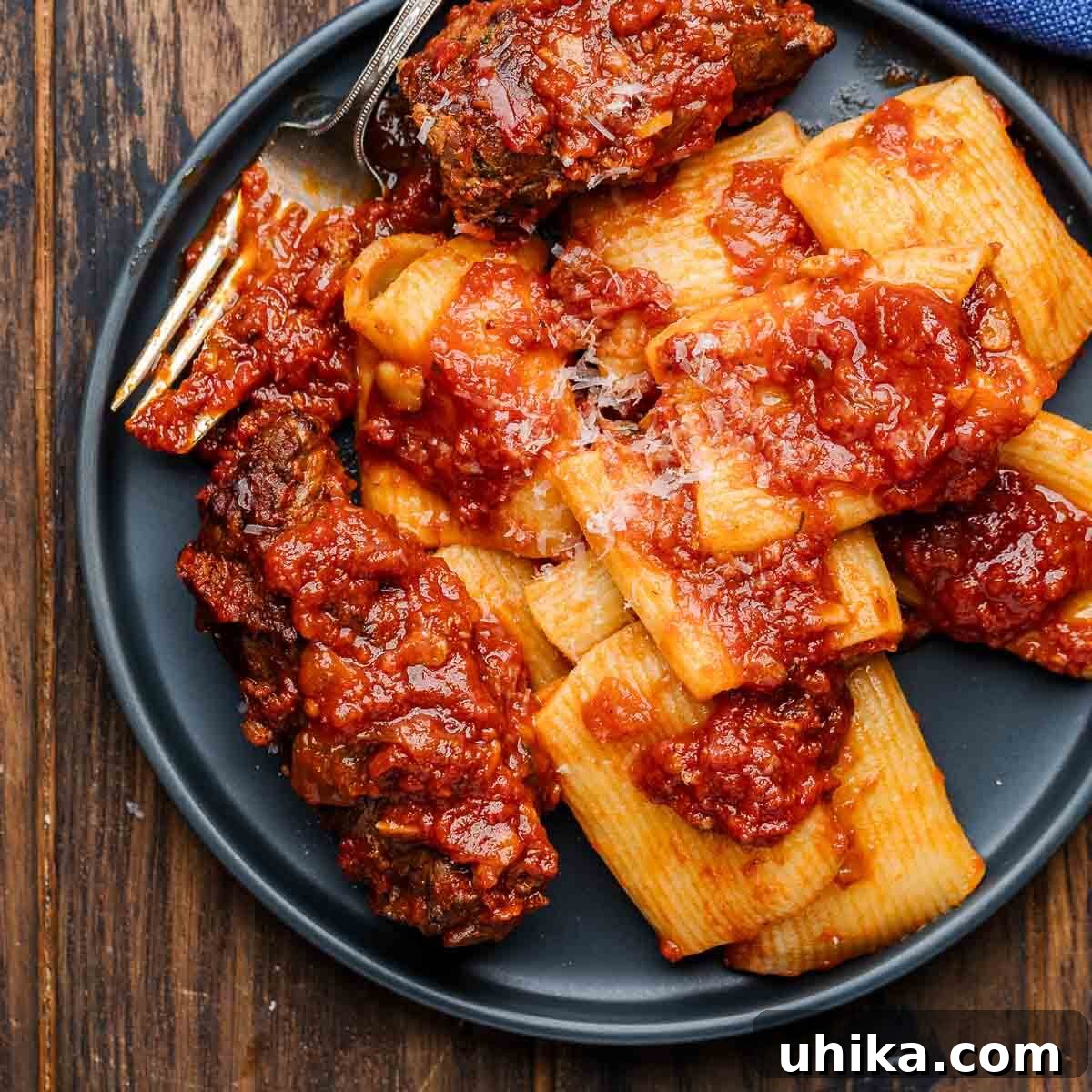
The Ultimate Beef Braciole: A Timeless Italian-American Tradition for Sunday Sauce
Nothing complements a rich Sunday sauce quite like a perfectly braised Beef Braciole. This iconic Italian-American staple, a beloved fixture in countless homes, transforms humble ingredients into a culinary masterpiece. Our cherished recipe features tender, thinly sliced beef, meticulously rolled and generously stuffed with a savory and subtly sweet filling of breadcrumbs, fragrant pine nuts, robust cheese, and succulent raisins. Each braciole is then slowly braised in a vibrant tomato sauce until it reaches an irresistible, melt-in-your-mouth tenderness. This dish isn’t just food; it’s a comforting hug, a taste of heritage, and the centerpiece of any memorable Italian-American family meal.
Discover the Magic of Beef Braciole (Video Guide)
(Video player for Beef Braciole recipe coming soon!)

Beef Braciole – The Cornerstone of Sunday Sauce!
For generations, beef braciole has held a special place at the Italian-American Sunday dinner table. Much like a cherished family story, every household boasts its own beloved rendition, passed down through grandmothers, mothers, and fathers. These variations are a testament to the rich culinary diversity within Italian-American culture, reflecting regional influences and personal preferences.
While some families opt for pork or pork skin (known as cotenne) to add a distinct richness, and others might even incorporate hard-boiled eggs into their stuffing, our particular version embraces a delightful Sicilian influence. This means we include the wonderful combination of sweet raisins and crunchy pignoli (pine nuts) in our filling, a pairing that adds a unique depth of flavor and texture. This very approach is also evident in our popular Sicilian meatballs, showcasing a consistent family tradition.
I often proudly feature braciole as a star component in my comprehensive Sunday sauce, alongside succulent meatballs. To complete this grand feast, I sometimes add sweet and hot Italian sausage or tender pork ribs, all served over a generous bed of pasta. The meal is beautifully rounded out with sides such as garlic-sautéed broccoli rabe and a crisp, refreshing green salad. It’s a symphony of flavors and textures that truly defines the essence of Italian-American comfort food – simply delicious!
Crafting the Perfect Braciole: Essential Ingredients
Creating an authentic and flavorful Beef Braciole begins with selecting the right ingredients. Below, you’ll find a visual guide to the components, followed by detailed notes to help you make the best choices for your dish. Each ingredient plays a crucial role in building the layered flavors that make this recipe so special.
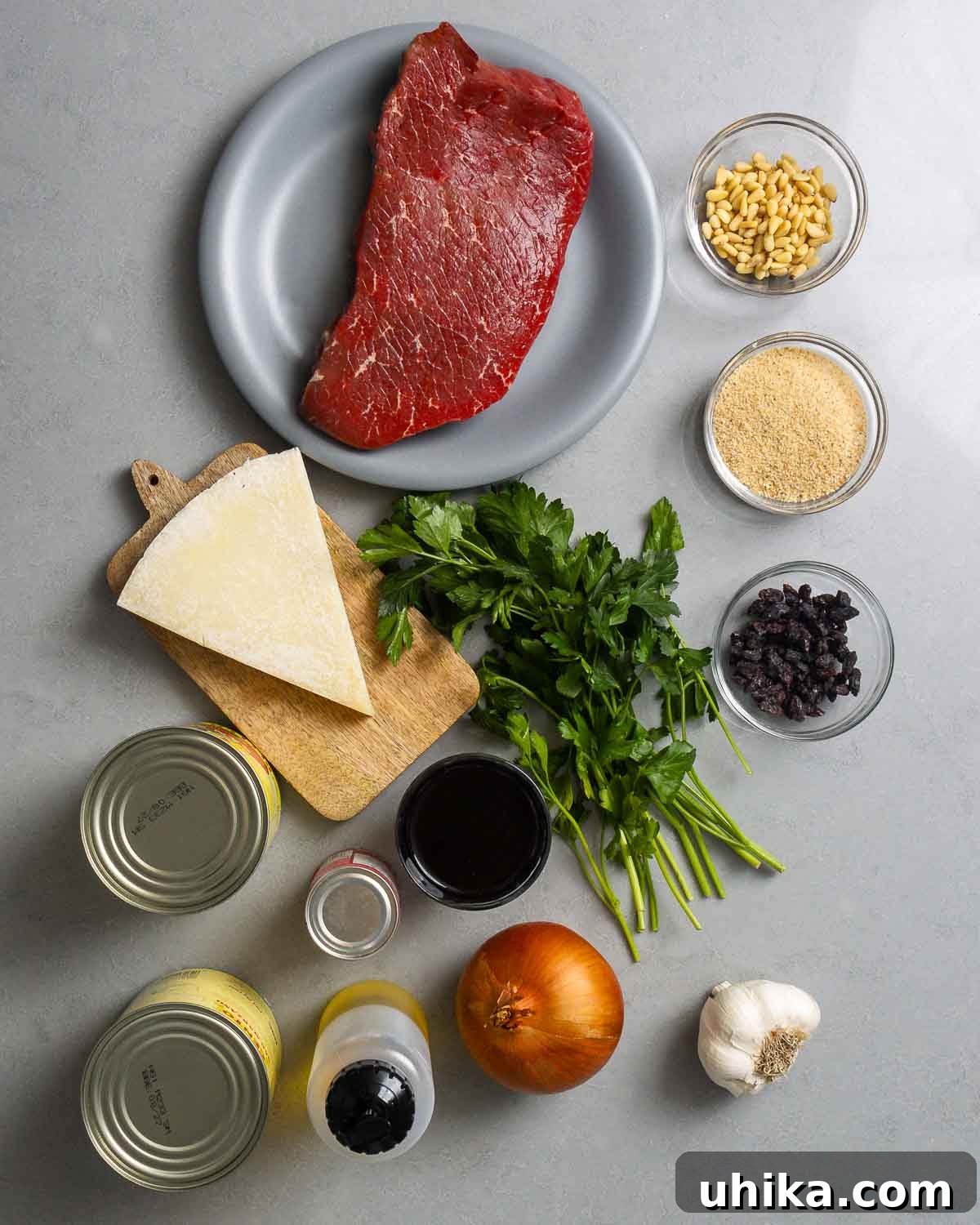
- Beef: The Foundation. For braciole, I consistently find that top round, often marketed as London broil, yields the best results. It’s an economical cut that, when properly prepared, becomes incredibly tender through slow braising. You might be fortunate enough to find thinly sliced top round labeled “for braciole” at your local butcher or supermarket. If not, don’t worry – the step-by-step instructions below will guide you through the simple process of filleting a whole top round to the ideal thickness. This versatile cut is also my go-to for other hearty beef dishes like steak pizzaiola, classic Swiss steak, and even German rouladen – a dish remarkably similar to braciole and equally delicious!
- Breadcrumbs: The Heart of the Stuffing. High-quality breadcrumbs are essential for the rich and satisfying stuffing. I typically use plain breadcrumbs as they provide a neutral base, allowing the other flavors to shine. However, if you prefer an added layer of seasoning, Italian-seasoned breadcrumbs are a perfectly acceptable alternative and will contribute their own aromatic notes.
- Cheese: The Salty Kick. My preference for the beef braciole filling is Pecorino Romano. This salty, tangy sheep’s milk cheese adds a distinctive sharpness that beautifully complements the other ingredients. If you find Pecorino Romano too assertive, or simply prefer a milder flavor, Parmigiano Reggiano or even a good quality domestic parmesan can be used as a delicious substitute.
- Pine Nuts (Pignoli) and Raisins: The Sicilian Secret. This delightful combination is what gives our braciole its unique Sicilian character. The pine nuts offer a buttery crunch and subtle nutty flavor, while the raisins provide bursts of natural sweetness and a hint of tang. It’s a truly winning flavor profile that elevates the dish. Remember to soak the raisins in warm water for about 10 minutes before using; this reconstitutes them, making them plump and juicy.
- Tomatoes: The Soul of the Sauce. A rich, slow-simmered tomato sauce is non-negotiable for braciole. This recipe calls for three 28-ounce cans of high-quality whole plum tomatoes, along with 2 ounces of tomato paste. This quantity ensures you’ll have ample sauce not only for braising the braciole but also enough to generously coat at least one pound of pasta. Having a little extra sauce is always a good thing!
- Red Wine: For Depth and Deglazing. A dry red wine, such as a Sangiovese, significantly deepens the flavor profile of the Sunday sauce. It adds complexity and a subtle fruity note that enhances the overall richness. While I strongly recommend its inclusion, you can certainly omit the wine if you prefer to cook without alcohol. I also utilize red wine to deglaze the pan after searing the braciole, capturing all those flavorful browned bits – this step is optional but highly recommended for maximizing flavor (refer to steps 13 and 14 in the instructions).
For a complete list of ingredients and precise quantities, please refer to the comprehensive recipe card below.
Want To Save This Recipe?
Enter your email and we’ll send it directly to your inbox. Plus, receive great new recipes from us every week!
Step-by-Step Guide to Irresistible Beef Braciole
Follow these detailed instructions to create tender, flavorful beef braciole that will become a new family favorite. Each step is carefully outlined to ensure perfect results, with corresponding photo collages to guide you visually through the process.
Preparing the Rich Sunday Sauce
- Begin by preparing your aromatics for the sauce. Dice 1 medium onion finely and mince 5 cloves of garlic. Heat a large, heavy-bottomed pot or Dutch oven over a heat setting just below medium. Add 1/4 cup of extra virgin olive oil. Once shimmering, add the diced onion and sauté gently for 7-10 minutes, or until the onion is soft and translucent but not browned. Then, add the minced garlic and cook for an additional 2 minutes, stirring constantly, until it becomes fragrant. (Photo #1)
- Stir in 2 ounces of tomato paste to the pot. Cook the tomato paste for approximately 5 minutes, using a wooden spoon to spread it around the bottom of the pot. This crucial step caramelizes the paste, deepening its flavor and enhancing the overall richness of the sauce. If the paste starts to stick or burn, add a small splash of water to cool the pan down and prevent scorching. (Photo #2)
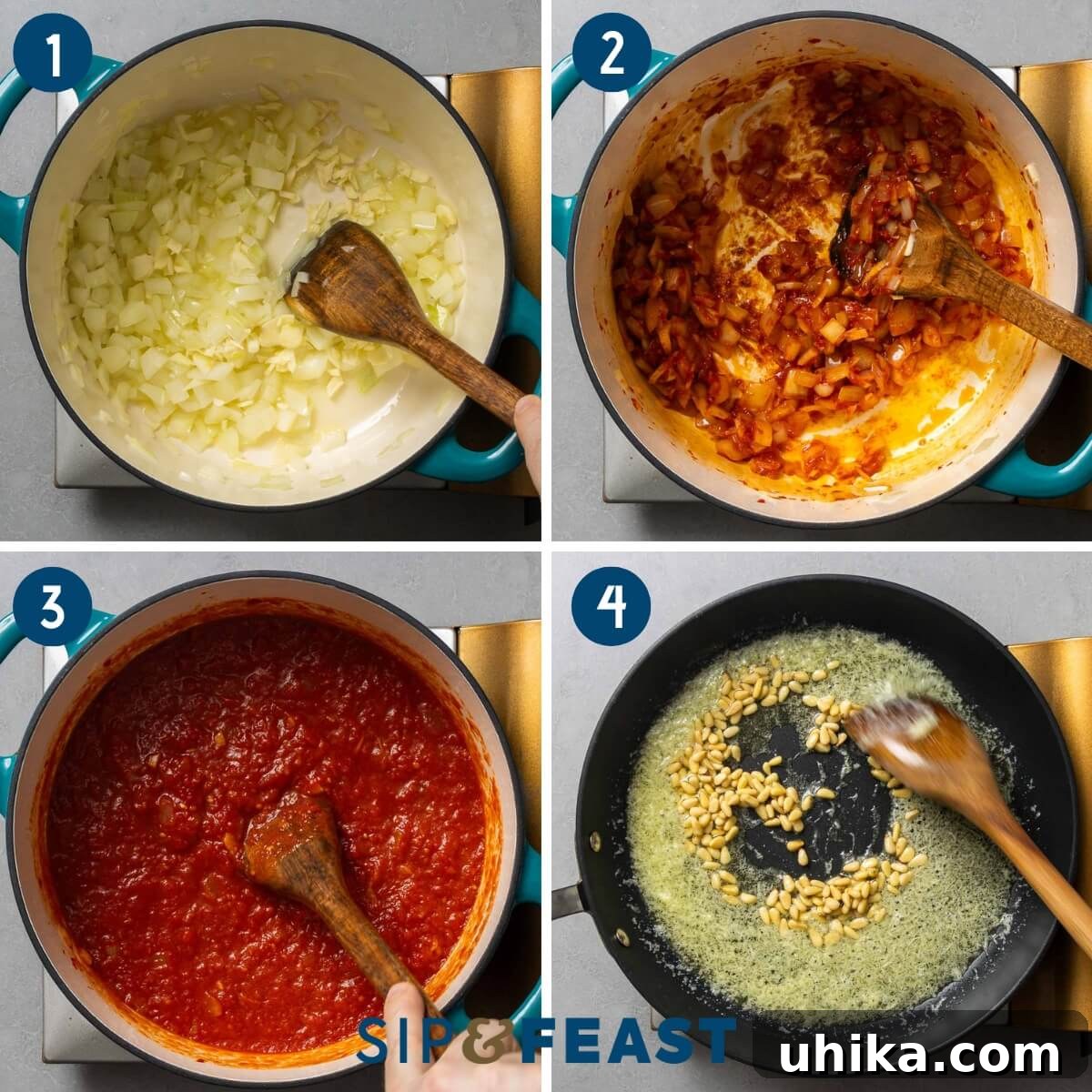
- Pour in 1/2 cup of dry red wine, scraping the bottom of the pan vigorously with your wooden spoon to loosen and incorporate any browned bits (fond) that have developed. Cook the wine for 2 minutes to allow the alcohol to evaporate. Next, add 3 28-ounce cans of plum tomatoes (which you can hand-crush for texture or pulse in a blender for a smoother sauce) along with a 1/2 cup of water. Bring the mixture to a gentle simmer. Once simmering, partially cover the pot with the lid slightly ajar, and reduce the heat to the absolute lowest setting. The sauce should maintain a bare, gentle bubble, allowing for a long, slow braise. (Photo #3)
- While the sauce simmers, prepare the braciole filling. Soak 1/4 cup of raisins in warm water for 10 minutes to plump them up, then drain them thoroughly. Mince 3 cloves of garlic and, using the flat side of your knife, press and smear them against the cutting board to create a smooth garlic paste. Finely mince 1/2 cup of fresh flat-leaf Italian parsley. Grate 1/2 cup of Pecorino Romano cheese. In a small pan, heat 1/4 cup of extra virgin olive oil over medium heat. Add the garlic paste and cook until it is lightly golden and aromatic. Then, add 1/4 cup of pine nuts and toast for 1-2 minutes until they are lightly golden as well. (Photo #4)
- Remove the pan from the heat. Stir in 1 cup of breadcrumbs, the minced parsley, and the drained raisins. Mix all the ingredients thoroughly until they form a cohesive paste. Once combined, add the grated Pecorino Romano cheese and mix again. Set this flavorful stuffing aside. (Photo #5)
- Take a 2-pound top round roast and carefully filet it to an even thickness of approximately 1/2 inch. This initial step is key to creating uniform braciole. (Photo #6)
Preparing the Flavorful Braciole Stuffing
Preparing and Stuffing the Beef
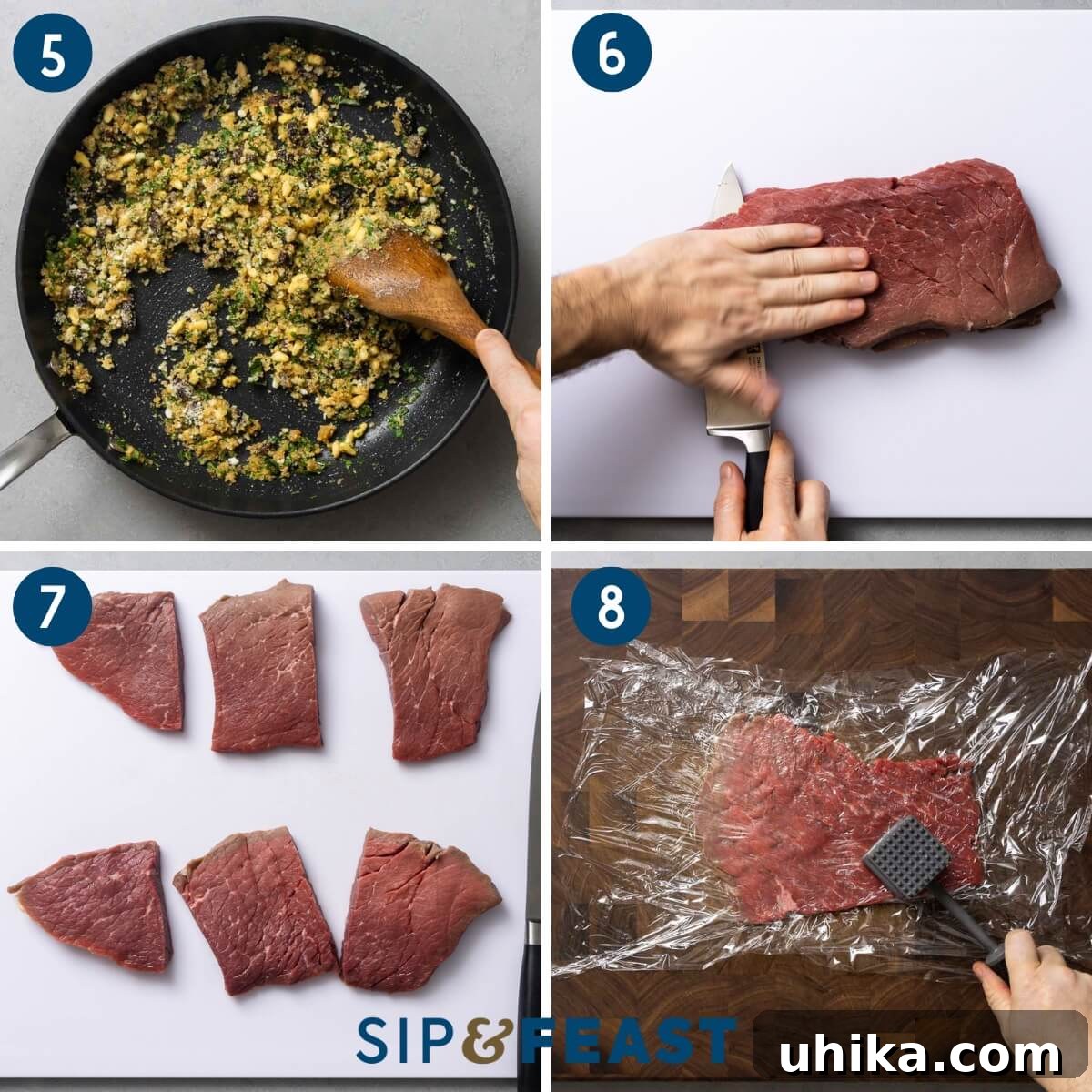
- Cut the filleted beef into individual rectangular pieces, roughly 3×4 inches in size. These will be your individual braciole. (Photo #7)
- Place each beef rectangle between two pieces of plastic wrap or parchment paper. Using a meat mallet, pound each piece until it is uniformly thin, about 1/4 inch thick. This process will significantly enlarge each piece and tenderize the meat. (Photo #8)
- Arrange the pounded beef pieces on a clean cutting board. Season both sides of each piece generously with salt and freshly ground black pepper. (Photo #9)
- Scoop an equal amount of the prepared filling onto each seasoned beef slice. Spread the filling evenly across the surface of the beef, making sure to leave a clear border of about 1/2 inch or more around all the edges. This margin helps to prevent the filling from oozing out during rolling and braising. (Photo #10)
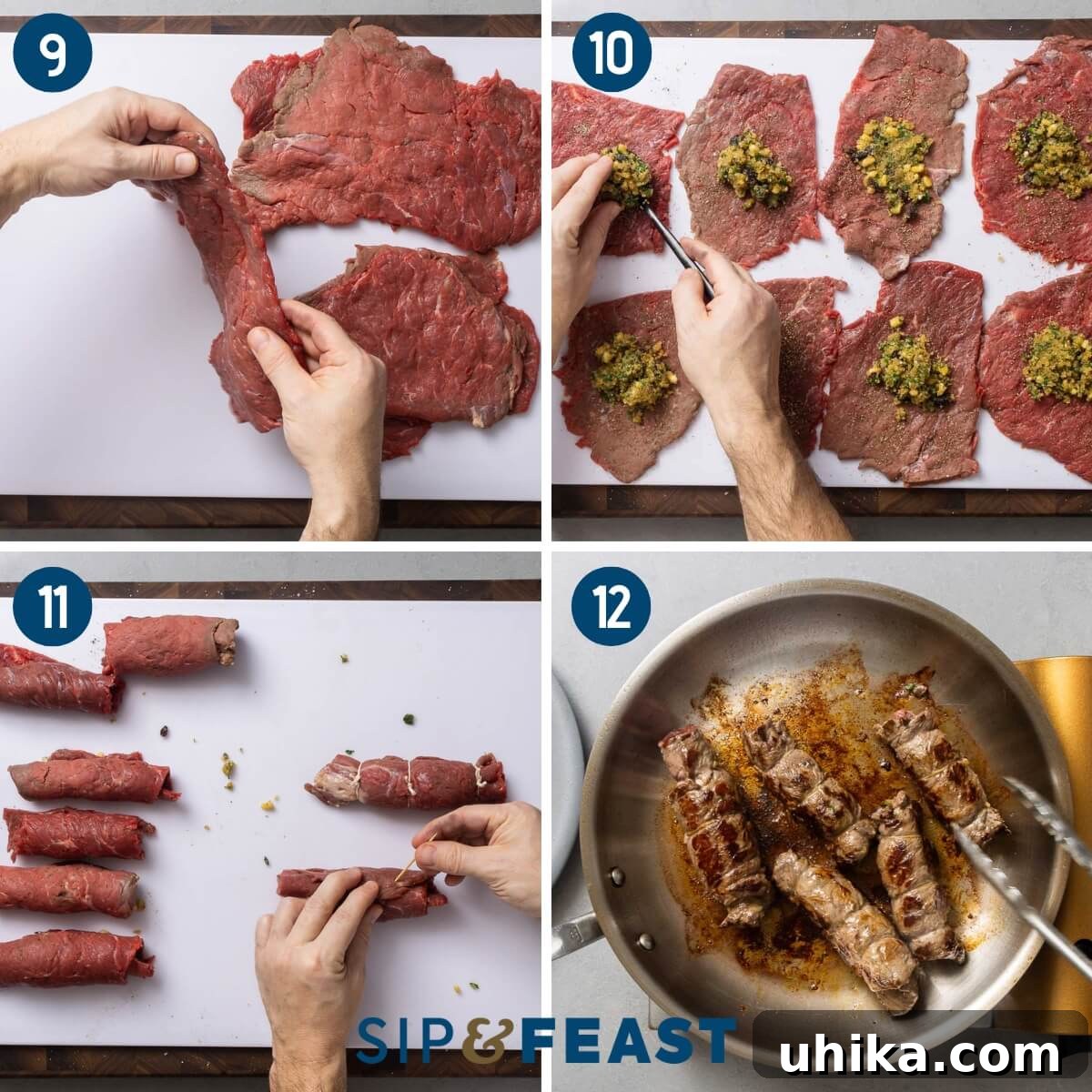
- Carefully roll each stuffed beef slice tightly from one end to the other. Once rolled, secure each braciole with either toothpicks or kitchen twine. While toothpicks are quicker and easier to remove later, kitchen twine tends to hold the rolls more securely during the long cooking process. Choose the method that you prefer. (Photo #11)
- Heat a separate large pan (preferably a heavy-bottomed skillet) over a heat setting just below medium, adding enough olive oil to coat the bottom. Sear the rolled braciole on all sides until beautifully browned. Work in batches to avoid overcrowding the pan, which would steam the meat instead of searing it. Once seared, remove the braciole and set them aside. (Photo #12)
- Inspect the searing pan. If the pan has browned bits (fond) but no burnt, black residue, it’s perfect for deglazing. Drain or carefully wipe away any excess fat from the pan. If, however, the pan is burnt black, you should skip deglazing as the burnt flavors will impart bitterness to your sauce. In that case, proceed directly to step 15. (Photo #13)
- If the pan is suitable for deglazing, add the remaining 1/2 cup of dry red wine to the hot pan. Immediately scrape the bottom of the pan with a flat-edged wooden spoon, dissolving all the flavorful browned bits into the wine. Allow the wine to reduce slightly, then pour these rich pan juices and wine directly into the pot of simmering tomato sauce and mix well to incorporate the flavors. (Photo #14)
Searing and Braising the Braciole
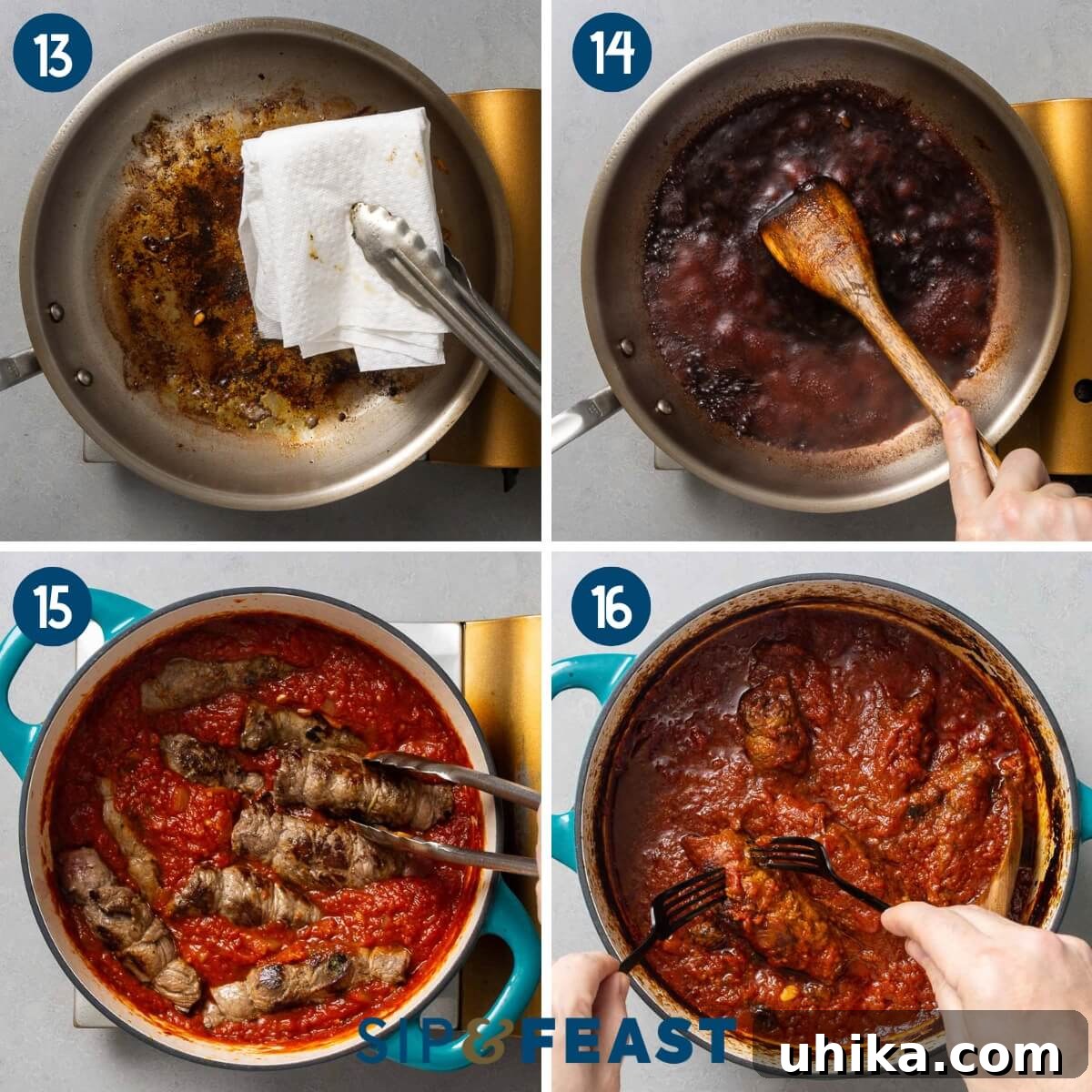
- Gently add the seared braciole to the pot of simmering sauce. Ensure they are submerged. Cover the pot with the lid slightly ajar and continue to cook on a very low heat for 2-3 hours, or until the braciole are incredibly fork-tender. Stir the sauce occasionally to prevent any sticking to the bottom of the pot. As an alternative cooking method, you can also place the covered pot of sauce and braciole in an oven preheated to 300°F (150°C) for the same 2-3 hour duration. (Photo #15)
- During the slow braise, if the sauce appears to reduce too much or thicken excessively, add a 1/2 cup of water, or more as needed, to achieve your desired consistency. Once the braciole are tender, carefully remove them from the sauce. Remove all the twine or toothpicks used to secure them. Taste the finished sauce and adjust the seasoning with salt and pepper as required. Serve your exquisite Beef Braciole generously with your favorite pasta, a sprinkle of grated cheese, and plenty of crusty bread for soaking up every last drop of that delicious sauce. Enjoy this classic Italian-American feast! (Photo #16)
Expert Tips for Braciole Perfection
- Embrace “Low and Slow”: This is perhaps the most critical rule for exceptional Beef Braciole. Since we’re working with a tougher cut of beef, rushing the cooking process will result in dry, chewy meat. The magic happens through patient, prolonged braising at a very low simmer. This extended cooking time allows the connective tissues in the beef to slowly break down, transforming it into incredibly tender, succulent meat that practically melts in your mouth while infusing deeply with the flavors of the rich tomato sauce. Plan to start your braciole early in the day to give it the time it deserves.
- The Art of Deglazing the Pan: After you’ve beautifully seared the braciole, the pan will be left with browned bits, known as “fond.” Deglazing with red wine is an excellent way to capture and incorporate these concentrated flavors back into your sauce. This step adds immense depth and complexity, preventing any deliciousness from going to waste. However, exercise caution: only deglaze if the drippings are a rich brown. If they are black or heavily burnt, skip this step entirely, as adding burnt bits will impart an unpleasant, bitter taste to your precious sauce. When in doubt, it’s better to omit than to risk it.
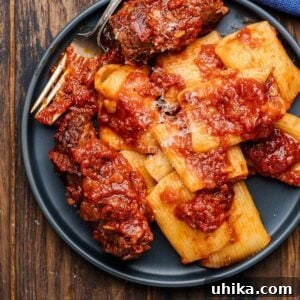
- Serving Your Braciole with Pasta: This recipe is thoughtfully designed to yield a generous amount of sauce – enough not only to perfectly braise the braciole but also to generously coat one pound of your favorite pasta. Consider pairing it with sturdy pasta shapes like rigatoni, paccheri, or ziti, which are ideal for catching and holding the rich sauce. Garnish with fresh basil or parsley and extra grated Pecorino Romano for a truly authentic experience. If you find yourself with leftover sauce and no plans for pasta, it can be stored in an airtight container in the refrigerator for 3-5 days, or frozen for up to 3 months, making it perfect for another meal.
- Make Ahead & Storage: Beef Braciole is an ideal make-ahead meal, as its flavors only deepen and meld further upon resting. Prepare the dish a day in advance, allow it to cool, then refrigerate. Gently reheat on the stovetop over low heat until warmed through. Leftovers, if any, can be stored in an airtight container in the refrigerator for up to 3 days. For longer storage, freeze portions in freezer-safe containers for up to 3 months. Thaw in the refrigerator overnight before reheating.
More Beef Recipes for Your Italian-American Table
If you’ve fallen in love with Beef Braciole and the comforting tradition of Sunday sauce, explore these other heartwarming Italian-American red sauce meals that I’m confident you’ll enjoy just as much!
- Hearty Italian Pot Roast (Stracotto)
- Baked Rice with Meat and Cheese (Riso al Forno)
- Savory Italian Meatloaf with Mushrooms
- Classic Italian Stuffed Peppers
- Traditional Lasagna with Ricotta
If you’ve enjoyed this Beef Braciole Recipe, please consider giving it a 5-star rating below. Your feedback helps us share more delicious recipes!
Join our culinary community by watching us on YouTube, following along on our Facebook Page, and becoming a Patreon member to receive exclusive access to full-meal videos and additional content.
Beef Braciole
Pin
Ingredients
For the sauce
- 1/4 cup (60g) extra virgin olive oil
- 1 medium onion diced
- 5 cloves garlic minced
- 2 ounces (30g) tomato paste
- 1/2 cup (120g) dry red wine
- 3 28-ounce cans plum tomatoes hand crushed or blender pulsed
- salt and pepper to taste
- 1/2 cup (120g) water plus more if required to thin sauce
For the braciole
- 2 pounds (908g) top round
- 1/4 cup (60g) extra virgin olive oil
- 3 cloves garlic paste
- 1/2 cup minced flat-leaf Italian parsley
- 1 cup (100g) breadcrumbs
- 1/4 cup (37g) raisins or currants soaked in water then drained
- 1/4 cup (35g) pine nuts
- 1/2 cup (45g) grated Pecorino Romano
- olive oil for shallow frying
- 1/2 cup (120g) dry red wine optional, see notes below
- salt and pepper to taste
Don’t Forget to Save This Recipe!
Enter your email below, and we’ll send this amazing Beef Braciole recipe straight to your inbox. You’ll also receive our weekly newsletter packed with delicious new recipes!
Instructions
For the sauce
-
Heat a large pot over a heat setting just below medium with the extra virgin olive oil. Add the onion and cook until soft (about 7-10 minutes) then add the garlic and cook for another 2 minutes or until fragrant.
-
Add the tomato paste and cook for 5 minutes, spreading the paste around with a wooden spoon. If it starts to burn, add a few ounces of water.
-
Add 1/2 cup of the wine and cook for 2 minutes while scraping the bottom of the pan to remove any brown bits.
-
Add the plum tomatoes and water and bring to a simmer. Once simmering, cover with the lid left slightly ajar, and lower the heat to the lowest level so that the sauce is barely bubbling. You can season with a touch of salt right now, but it’s best to wait since the sauce will reduce and concentrate.
For the braciole
-
Heat a small pan to medium heat with the extra virgin olive oil and add the garlic. Once lightly golden, add the pine nuts and cook for 1-2 minutes until golden. Add the breadcrumbs, parsley, and raisins. Mix well until a paste forms. Remove the pan from the heat, mix in the Pecorino Romano, and set aside.
-
Filet the top round to a 1/2″ thick. Cut the beef into rectangles approximately 3×4 inches. Pound each rectangle to roughly a 1/4″ thick which will make them substantially larger.
-
Arrange the pounded meat on a cutting board and season with salt and pepper. Leaving some space around the edges, evenly spread the paste onto each piece.
-
You should have a thin layer of the mixture on each piece of meat. Roll each piece tightly and secure them with toothpicks or kitchen twine.
-
Heat a large pan to a touch less than medium heat with olive oil. Sear the pieces on all sides, working in batches if required to not overcrowd the pan.
-
After the braciole are seared, add each one to the pot of sauce. If the pan isn’t burnt, pour off the fat from the pan and deglaze with the remaining 1/2 cup of dry red wine. Scrape the brown bits off the bottom of the pan. Pour the pan juices into the pot of sauce and mix to incorporate.
-
Cook for 2-3 hours, or until fork tender, on very low heat with the lid left slightly ajar, making sure to stir the sauce occasionally. If the sauce dries out during the cooking process, add a 1/2 cup of water or more as needed. Alternative method: Cover the pot and place it in the center of the oven at 300f for 2-3 hours or until tender.
-
Once tender, remove the braciole from the sauce and cut away the twine or remove the toothpicks. Taste the sauce and season with salt and pepper. Serve with pasta, grated cheese, and crusty bread. Enjoy!
Notes
- Besides top round, bottom round, eye of round, flank steak, or sirloin can be used. They should all be pounded flat to 1/4″ thick for easy rolling.
- Kitchen twine will hold more securely, but toothpicks work well and are far easier to remove.
- If the pan is burnt (very black) after searing the braciole, forgo deglazing the pan. If you want to try it anyway, simply deglaze and taste the mixture, checking for a burnt flavor, before adding it to the sauce.
- Leftovers can be stored in the fridge for up to 3 days. It will taste even better the next day. Just reheat on a stovetop until completely heated through. Freeze for up to 3 months.
Nutrition
Nutrition information is automatically calculated, so should only be used as an approximation.
This recipe was originally published on May 16, 2018. It was fully updated with new photos, detailed process shots, and expanded text on January 26, 2024, to enhance clarity and user experience.