
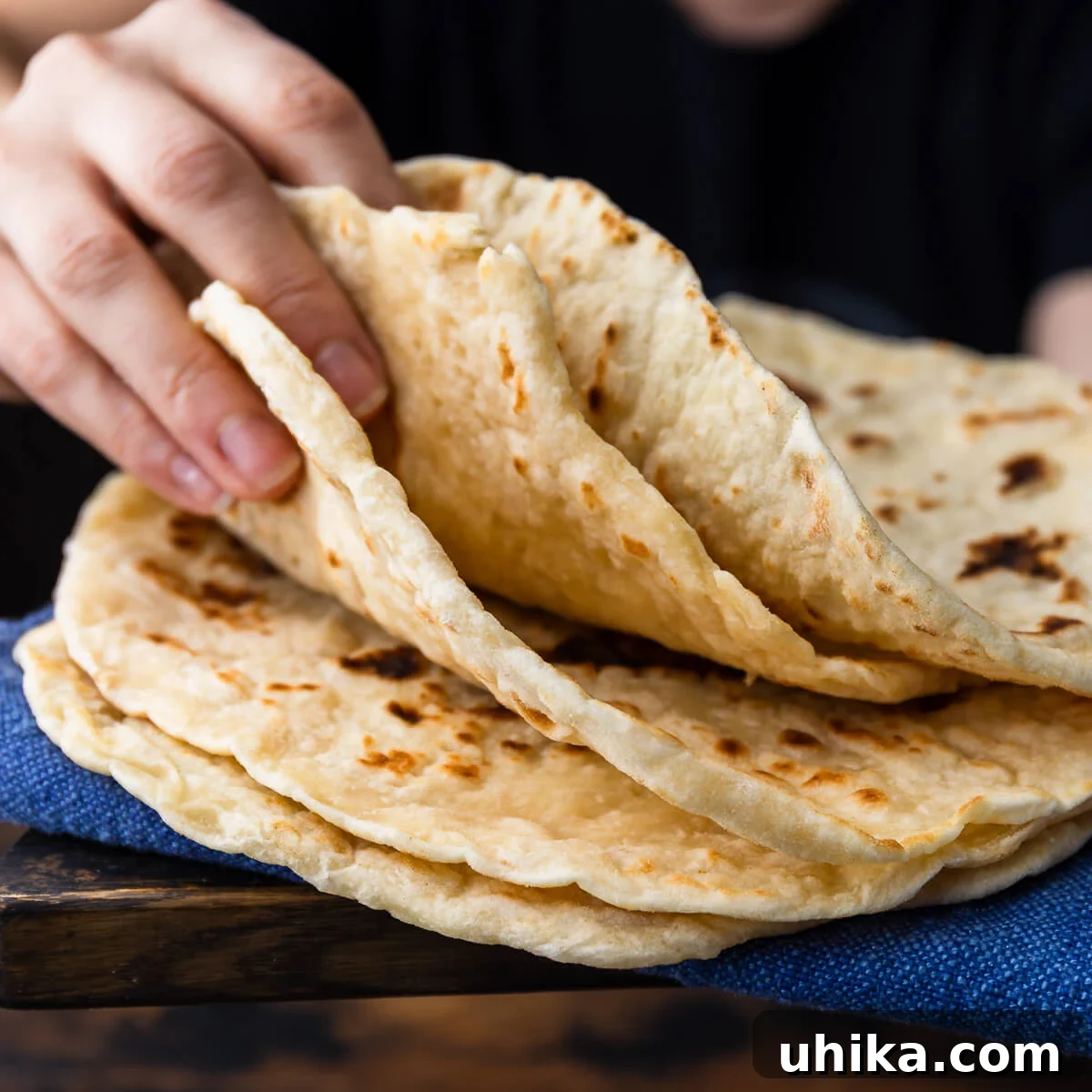
Effortless Homemade Flatbreads: Soft, Pillowy, and Yeast-Free!
Imagine soft, tender flatbreads, fresh from your kitchen, ready to be filled with your favorite ingredients or served alongside a delicious meal. This recipe makes that dream a reality – and it’s far simpler than you might think! Forget store-bought versions; once you try these easy, homemade flatbreads, you’ll never look back. They are the ultimate versatile companion for everything from gourmet sandwiches and hearty wraps to quick pizzas and dipping sauces.

Why Homemade Flatbread is a Game-Changer
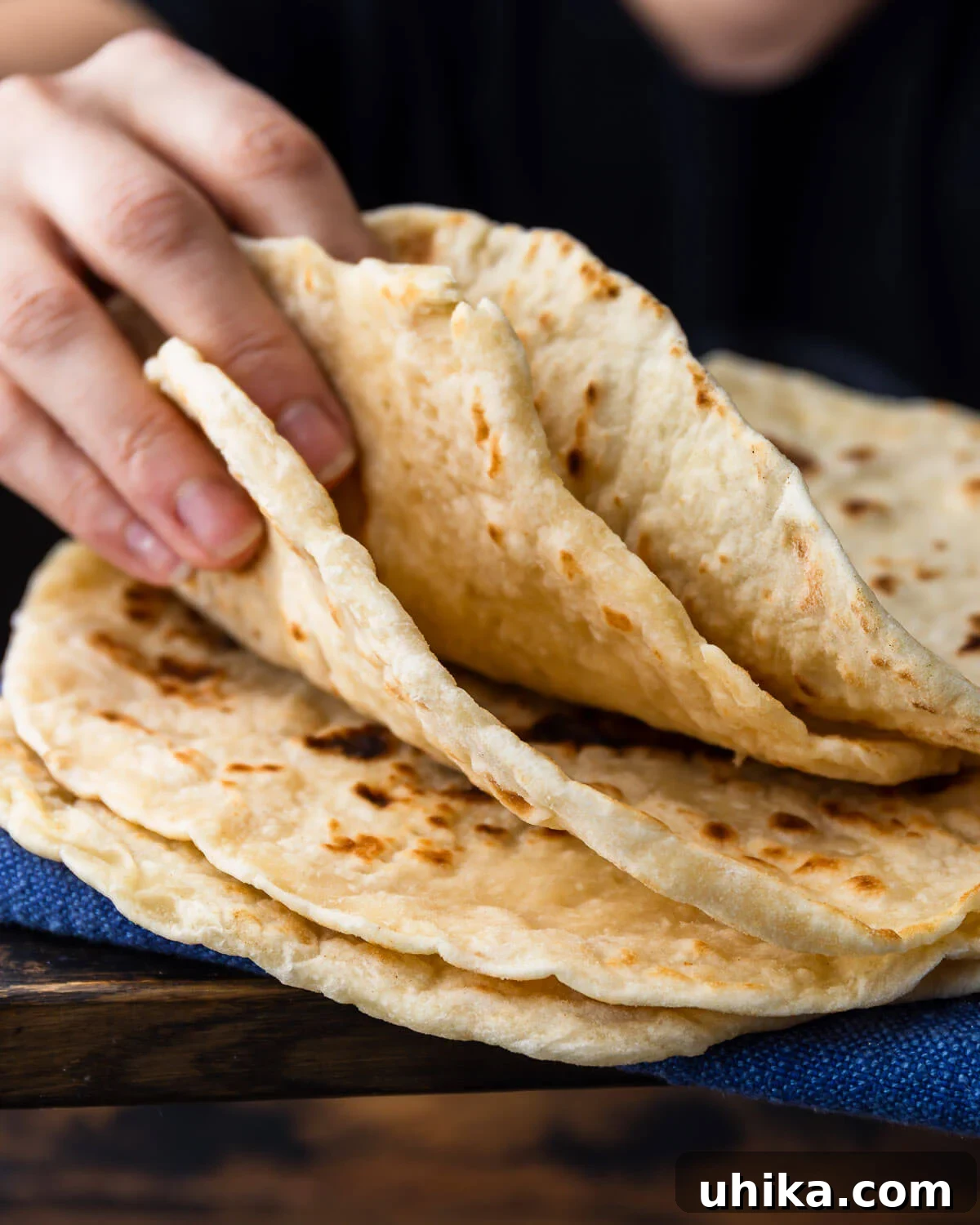
There’s something truly special about the aroma of freshly baked bread filling your home. These flatbreads are no exception. They bring an unparalleled tenderness and a subtly rich flavor that store-bought options simply can’t match. What makes this recipe particularly remarkable is its incredible ease. Unlike traditional bread, there’s no yeast involved, which means no lengthy proofing times. The dough is exceptionally soft and pliable, making it a joy to work with, even for novice bakers.
I often find myself whipping up a batch of these flatbreads for a quick, yet satisfying, meal. One of my personal favorite ways to enjoy them is by crafting a classic Italian-inspired sandwich: layers of thinly sliced mortadella, creamy stracciatella cheese, fresh arugula, and a generous drizzle of vibrant pesto. It’s reminiscent of a piadina, a traditional Italian flatbread, but the addition of yogurt in our recipe gives these flatbreads an extra boost of tenderness and a slight tang that is absolutely divine.
But the possibilities extend far beyond sandwiches! My family adores them topped with crumbled goat cheese, sweet figs, and salty prosciutto for a quick appetizer or light lunch. They also make fantastic wrappers for sliced grilled chicken thighs, juicy London broil, or any grilled meat and vegetables you desire. I genuinely encourage you to unleash your creativity and experiment with all your favorite fillings and toppings. The versatility of these flatbreads is truly endless!
The Simple Ingredients for Irresistible Flatbreads
Creating these delightful flatbreads requires only a handful of common ingredients, most of which you likely already have in your pantry. Simplicity is key to this recipe’s success, allowing the quality of each component to shine through. Below, you’ll find a visual guide to the main ingredients, followed by specific notes to ensure your flatbreads turn out perfectly every time.
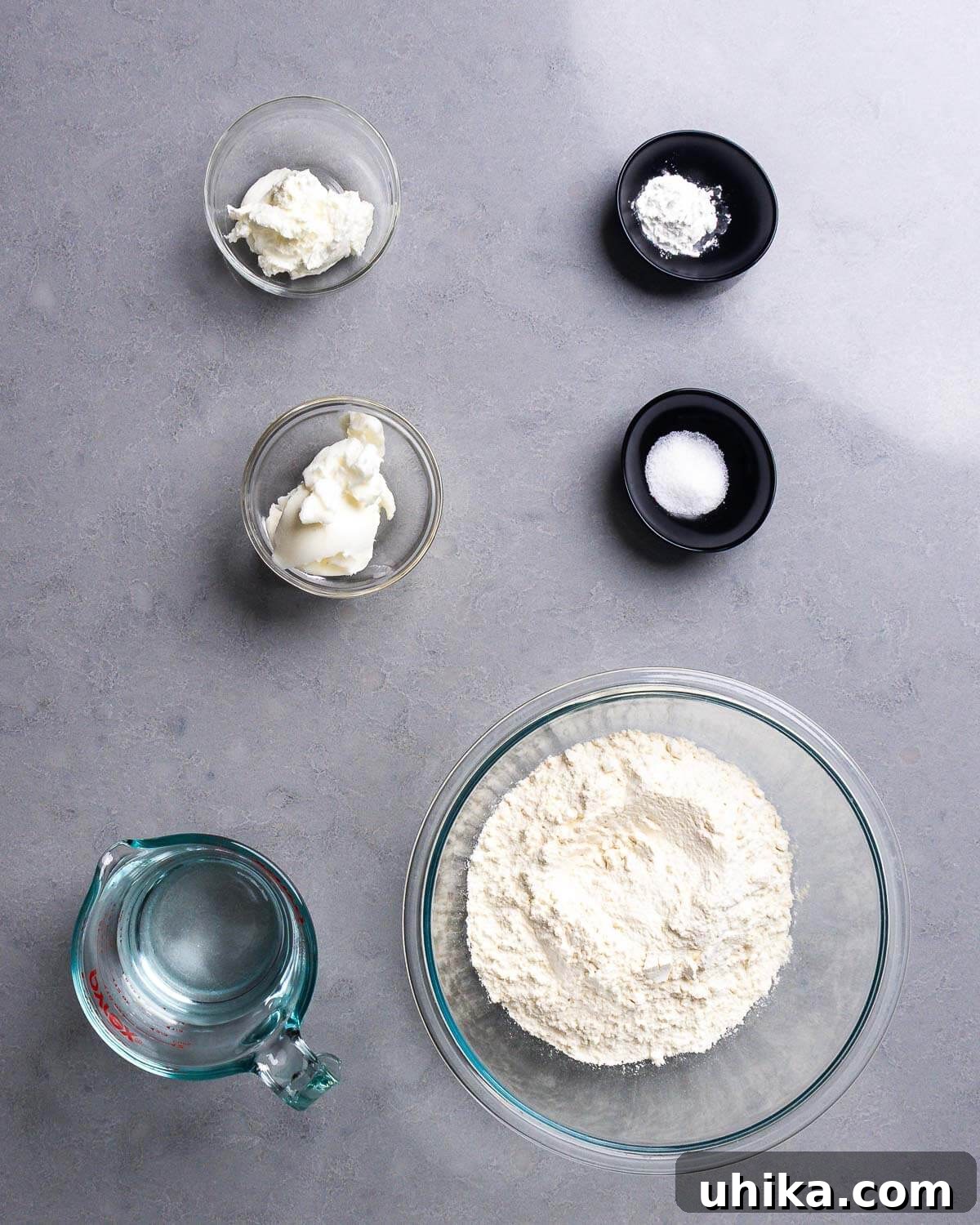
- All-Purpose Flour: This is the foundation of our flatbreads. All-purpose flour provides the ideal structure and texture, resulting in a tender yet slightly chewy flatbread. While other flours can be used, all-purpose is recommended for consistency in this recipe.
- Greek Yogurt: The secret ingredient for unparalleled softness and a subtle tangy flavor! Greek yogurt adds moisture and creates a wonderfully supple dough without the need for yeast. I typically use 2% Greek yogurt, but a 5% fat content will also work beautifully, potentially yielding an even richer result.
- Lard: My top choice for fat in flatbreads. Lard contributes to an incredibly tender, almost flaky texture and a depth of flavor that is hard to replicate. For a vegetarian alternative, Crisco is an excellent substitute, offering nearly identical results in terms of texture. If you prefer to use olive oil, note that your flatbreads might be a bit denser and less flaky, though still delicious.
- Baking Powder: Since this is a yeast-free recipe, baking powder is crucial. It acts as a leavening agent, creating tiny air pockets in the dough during cooking, which gives the flatbreads their characteristic slight rise and pillowy interior.
- Fine Sea Salt & Water: Essential for flavor balance and hydration, respectively. Ensure your water is at a comfortable room temperature to help the ingredients combine smoothly.
For the precise measurements and quantities of each ingredient, please refer to the comprehensive recipe card provided below.
Want To Save This Recipe?
Enter your email and we’ll send it to you. Plus, get great new recipes from us every week!
How to Master Homemade Flatbreads: A Step-by-Step Guide
Making these flatbreads is a straightforward process that yields incredibly rewarding results. Follow these simple steps to create perfectly soft and tender flatbreads every time. Each numbered instruction corresponds to the process photos below, guiding you through the journey from raw ingredients to delicious, cooked flatbreads.
- Begin by combining all the dry dough ingredients (flour, baking powder, salt) in a large mixing bowl. Using your hands, work in the room temperature lard until the mixture resembles coarse crumbs with no large lumps of fat remaining. In a separate bowl, whisk together the wet ingredients (water and Greek yogurt). Gradually add the dry mixture to the wet mixture, stirring until a rough dough mass forms.
- Once a cohesive mass is achieved, cover the dough with plastic wrap and let it rest at room temperature for at least 30 minutes. This resting period is crucial, allowing the flour to fully hydrate and the gluten to relax, which will result in a more tender and easier-to-handle dough.
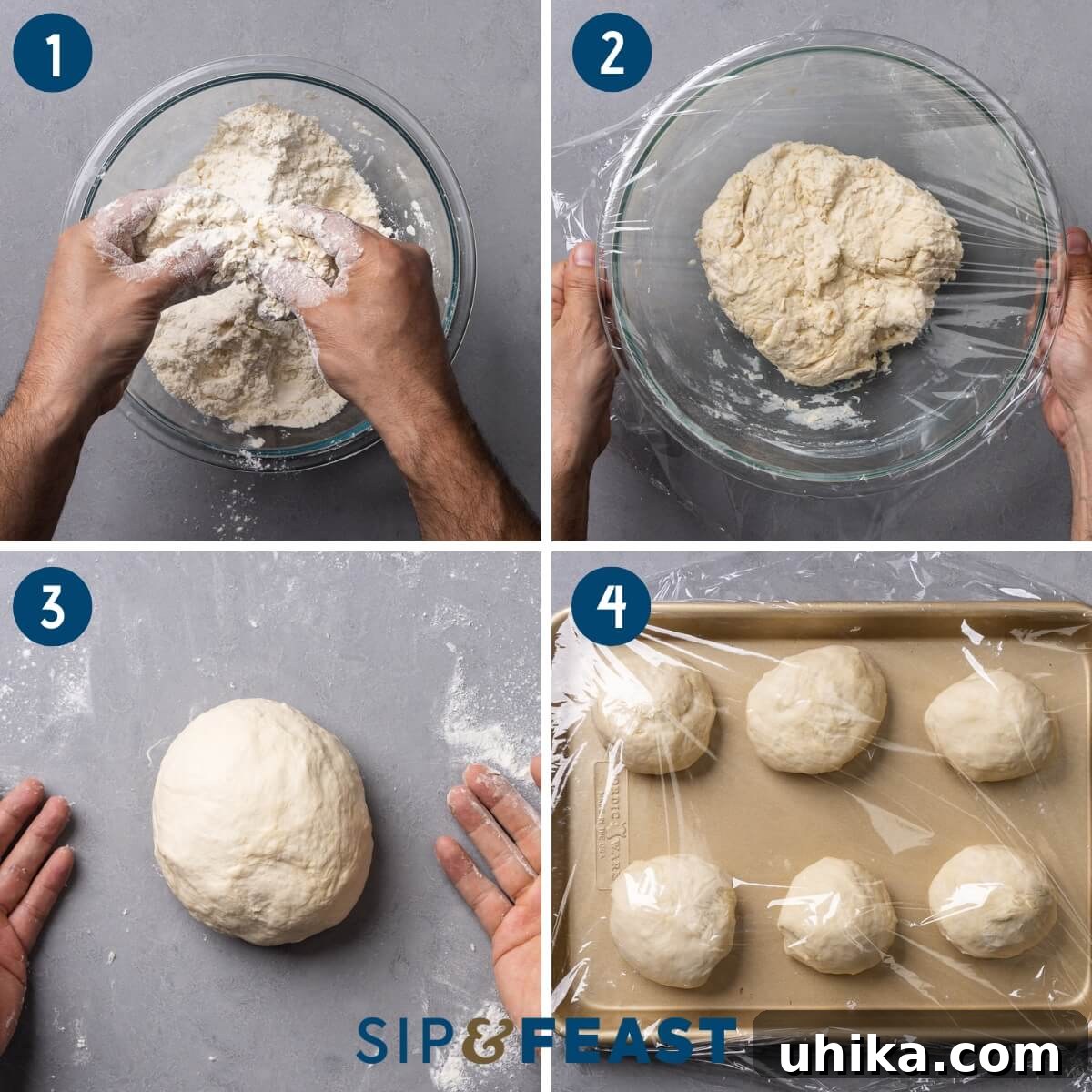
- Turn the rested dough out onto a lightly floured surface. Knead the dough gently for just 2 minutes. The goal is not to develop strong gluten, but rather to bring the dough together smoothly. If the dough feels too sticky, add a very small amount of extra flour, one tablespoon at a time, until it’s easier to handle without sticking. Avoid adding too much flour, as this can make the flatbreads tough.
- Divide the kneaded dough into 6 equal-sized balls. The exact size will depend on how large you want your flatbreads. Cover the dough balls with a clean kitchen towel or plastic wrap and let them rest for another 15 minutes. This second rest period helps the dough relax further, making it easier to roll out evenly.
- Working with one dough ball at a time, place it on a lightly floured surface. Using a floured rolling pin, roll the dough into a thin, approximately 8-10 inch (20-25 cm) diameter disk. Aim for an even thickness across the entire disk. Once rolled, use a fork to gently poke several dimples across the surface of the dough. This helps prevent the flatbread from puffing up too much in the center during cooking.
- Heat a nonstick pan or cast-iron skillet over medium heat. Add a tiny drop of olive oil, then use a paper towel to wipe the pan clean, leaving just a thin, invisible film of oil. Place one rolled flatbread disk into the hot pan. Cook for approximately 2-3 minutes total, flipping the flatbread every 30 seconds or so. This ensures even cooking and prevents burning. You’re looking for golden-brown spots and a slightly puffed appearance.
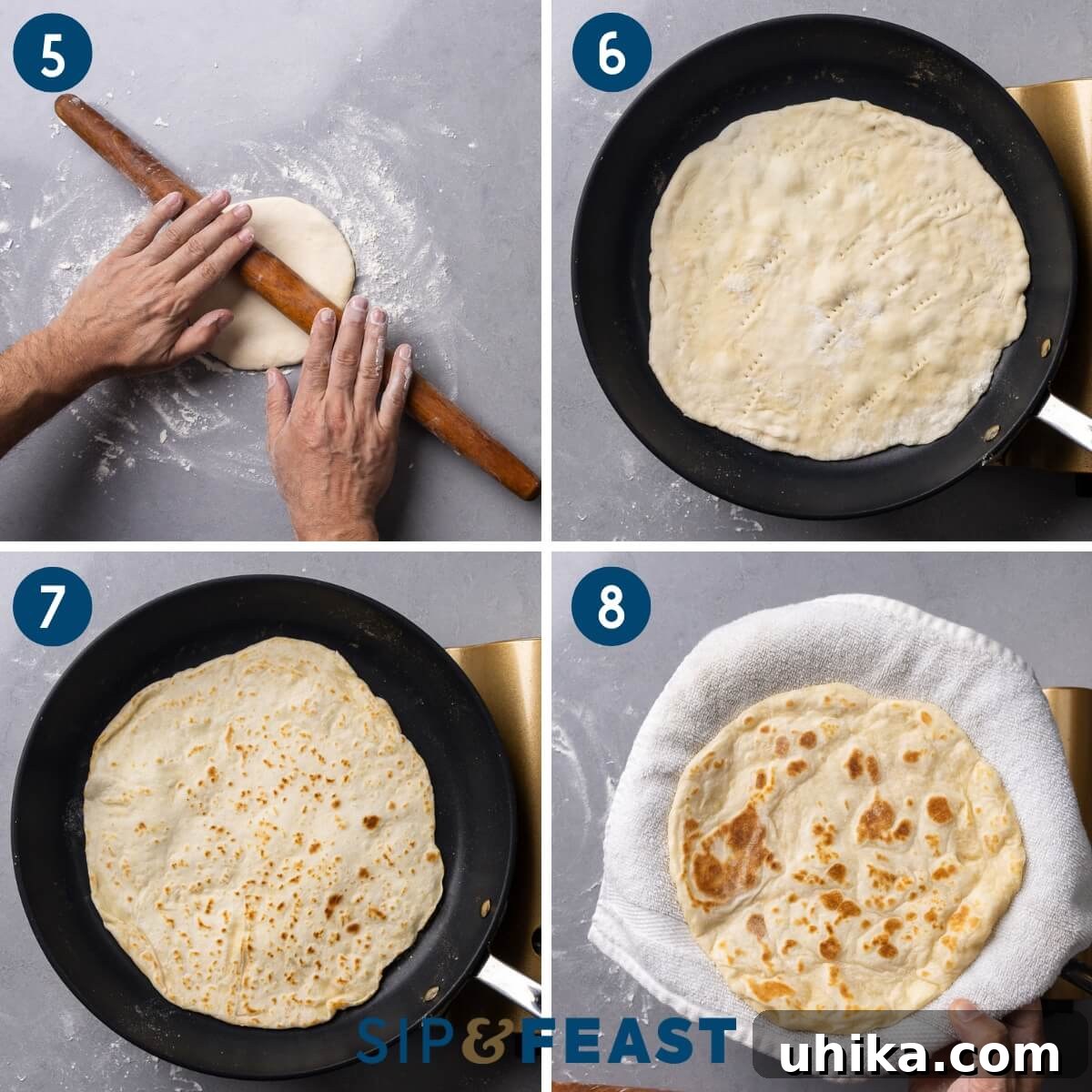
- As each flatbread finishes cooking, immediately transfer it to a plate lined with a clean kitchen towel. Cover it with another towel while you continue cooking the remaining flatbreads. This technique traps the steam, keeping the flatbreads warm and incredibly soft until you’re ready to serve.
- Serve your freshly made flatbreads right away with your favorite sandwich fillings, wraps, or as a side with dips and stews. Enjoy the wonderful taste and texture of these homemade delights!
Expert Tips for Perfect Flatbreads
- Avoid Overkneading: These flatbreads are prized for their exceptional softness and tender chew. Unlike many bread recipes, they do not require extensive kneading to develop strong gluten. Adhere to the recommended 2-minute kneading time to ensure your flatbreads remain light and pliable, not tough.
- Scale Your Recipe: This recipe is designed to yield 6 delicious flatbreads, perfect for a family meal or a few days of sandwiches. However, it’s incredibly easy to double or even triple the recipe if you need a larger batch for entertaining or meal prep. You can also opt to make two larger, rectangular-shaped flatbreads instead of several small rounds, perfect for a sheet pan pizza or a substantial wrap.
- Storage Savvy: Leftover flatbreads are a treat! They can be stored in an airtight container in the refrigerator for up to 3 days. For longer storage, flash freeze them individually, then transfer to a freezer-safe bag for up to 6 months. Reheat gently in a warm pan or oven to restore their fresh texture.
- Serving Versatility: The possibilities are truly endless! Beyond the mortadella and fig suggestions, try stuffing them with creamy chicken salad, deli meats, cheese, and fresh greens for a satisfying lunch. For a panini-style sandwich, simply press two filled flatbreads together in a hot skillet or panini press until golden and warmed through. To transform them into a quick pizza, pile on your favorite toppings like tomato sauce, mozzarella, and pepperoni, then bake in the oven at 400-450°F (200-230°C) for 10-12 minutes, or until the cheese is bubbly and crust is slightly crisp.
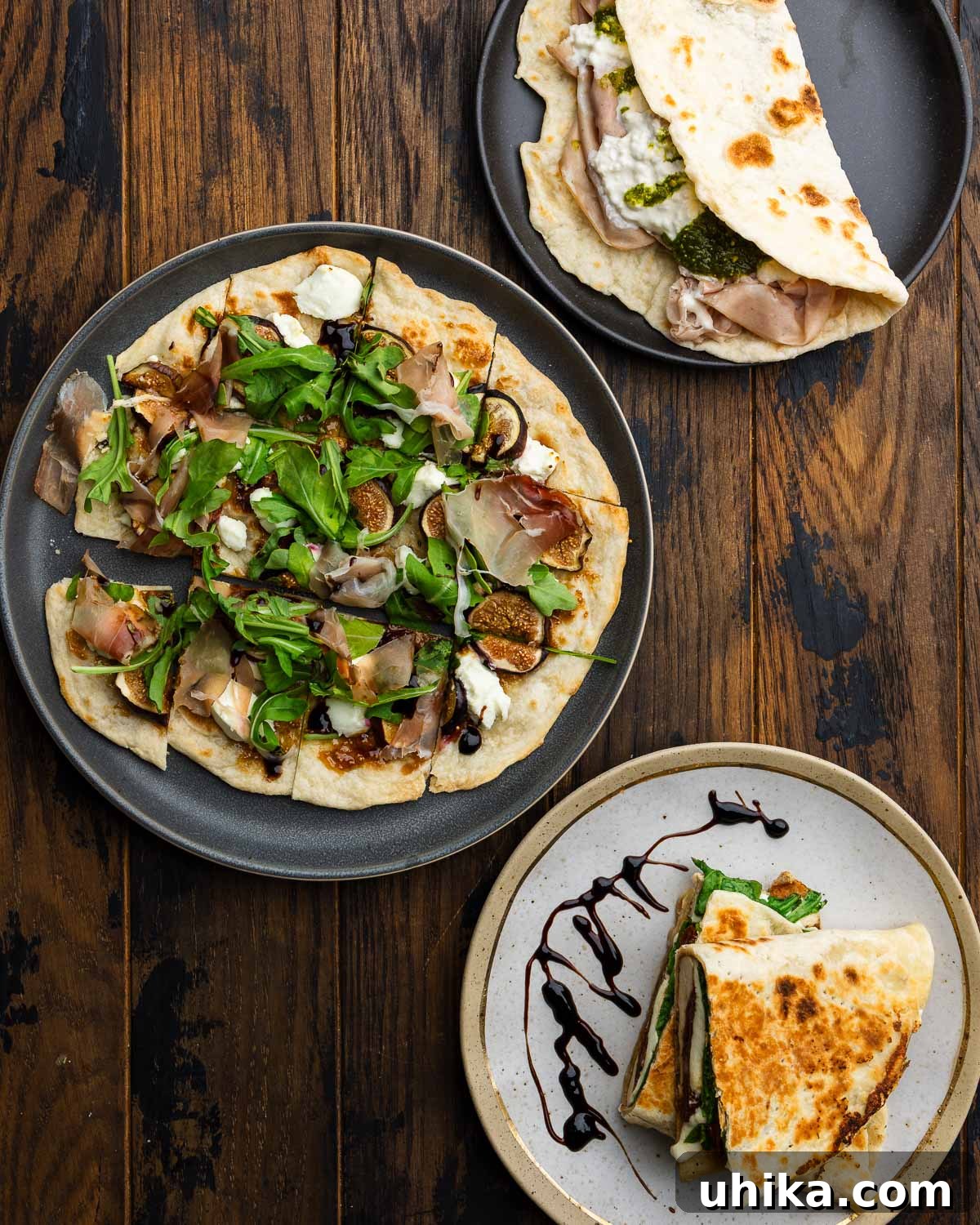
For a visual walkthrough and more in-depth demonstration of making these flatbreads and exploring 3 different ways to use them (as pictured above), consider checking out my most recent Patreon video. Sign up today to become a Patreon member and unlock this exclusive content and much more! Producer-level patrons (our highest tier) will also receive a complimentary copy of our upcoming new cookbook later this year!
If you’ve enjoyed this Easy Flatbread recipe, please consider leaving a 5-star rating below!
Don’t miss out on our latest culinary adventures! Watch us on YouTube and follow along on our Facebook Page for more delicious recipes and cooking tips.
Easy Flatbreads (No Yeast)
James Delmage
15
30
2
3 45
6 flatbreads
Pin
Ingredients
For the Dough
- 1 cup (240ml) water
- 1/4 cup (60g) 2% Greek yogurt
- 3 cups (405g) all-purpose flour
- 1 1/2 teaspoons baking powder
- 1 teaspoons (6g) fine sea salt
- 1/3 cup (80g) lard room temperature
For Cooking the Flatbreads
- 1 ~30 ounce (835g) dough ball from recipe above
- olive oil for frying
Want To Save This Recipe?
Enter your email and we’ll send it to you. Plus, get great new recipes from us every week!
Instructions
For the Dough
-
Place the Greek yogurt and water into a large bowl and whisk them together until well combined.
-
In a separate, smaller bowl, combine the all-purpose flour, baking powder, and fine sea salt. Add the room temperature lard to the dry ingredients. Using your fingertips or a pastry blender, work the lard into the flour mixture until it resembles coarse crumbs and there are no large lumps of lard remaining.
-
Gradually add the dry ingredients to the liquid mixture (yogurt and water), mixing thoroughly with a spoon or your hands until a rough, shaggy dough mass begins to form. Once combined, cover the bowl tightly with plastic wrap and let the dough rest at room temperature for 30 minutes. This resting period is essential for hydration and gluten relaxation.
-
Turn the rested dough out onto a lightly floured surface. Knead the dough gently for just 2 minutes until it becomes smooth and pliable. If the dough feels too sticky, add a very small amount of extra flour (1 tablespoon at a time) to prevent sticking, but avoid adding too much, which can make the flatbreads tough. Divide the dough into 6 equal-sized balls. Cover these dough balls with a clean kitchen towel or plastic wrap and let them rest for another 15 minutes.
For Cooking the Flatbreads
-
Take one dough ball and place it on a lightly floured surface. Using a floured rolling pin, roll the dough into an 8-10 inch (20-25 cm) circular disk, aiming for an even thickness. With a fork, gently poke several dimples across the entire surface of the rolled dough to help prevent large air pockets from forming during cooking.
-
Heat a nonstick pan or cast-iron skillet over medium heat. Add just a tiny drop of olive oil to the pan, then use a paper towel to wipe out any excess, leaving only a very thin, almost invisible film. Place one rolled flatbread disk into the heated pan. Cook for approximately 30 seconds, or until the dough sets and small bubbles appear on the surface. Flip the flatbread and continue cooking, flipping every 20-30 seconds, for a total cooking time of 2-3 minutes per flatbread. Look for golden-brown spots on both sides.
-
As each flatbread is cooked, immediately transfer it to a plate lined with a clean kitchen towel. Cover the cooked flatbread with another towel to trap the steam and keep it warm and soft while you cook the remaining dough balls.
-
Your delicious flatbreads can be served immediately with your favorite fillings or toppings. Alternatively, they can be cooled completely and then stored for later use. Enjoy your homemade flatbreads!
Notes
- Lard Substitutes: For a vegetarian version of these flatbreads, you can use Crisco in the same amounts as lard. If you opt for olive oil, be aware that the resulting flatbreads will be denser and less flaky, though still tasty. Butter can also be used, but may yield a slightly different texture than lard or Crisco.
- Storage Guidelines: Once cooled completely, individual flatbreads should be wrapped tightly in plastic wrap, then an additional layer of aluminum foil. Stored this way, they will keep fresh in the refrigerator for up to 3 days. For longer preservation, they can be frozen for up to 6 months.
- Reheating Instructions: To bring frozen flatbreads back to life, you can gently reheat them in a dry nonstick pan over medium-low heat until warm and pliable. If using them for pizza, bake them with toppings at 400-425°F (200-220°C). They are also perfect for making hot sandwiches in a panini press or by pressing them in a pan with a burger press for a crispy exterior.
Nutrition
Calories: 353kcal
|
Carbohydrates: 52.2g
|
Protein: 7.5g
|
Fat: 13.4g
|
Saturated Fat: 5.2g
|
Cholesterol: 13mg
|
Sodium: 387mg
|
Potassium: 222mg
|
Fiber: 1.8g
|
Sugar: 0.9g
|
Calcium: 86mg
|
Iron: 3mg
Nutrition information is automatically calculated and should be considered an approximation.
Enjoyed this recipe? Leave a comment below!
Check us out on Instagram at @sipandfeast or tag #sipandfeast!