
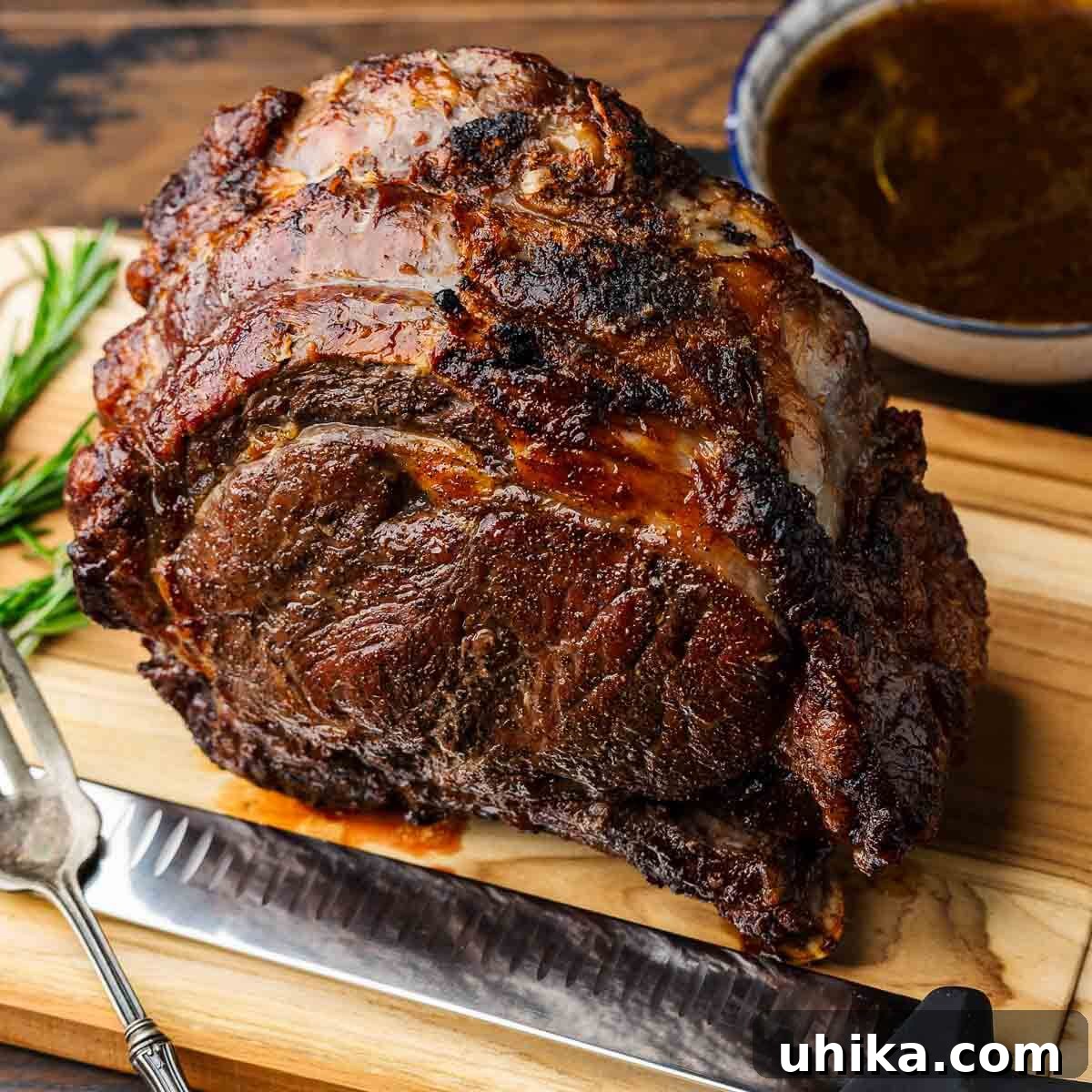
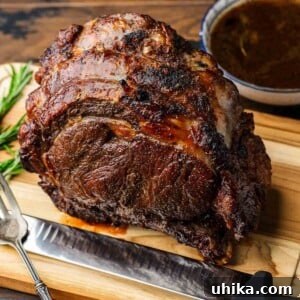
For those truly special moments and unforgettable feasts, nothing quite compares to a perfectly roasted Prime Rib au jus. This comprehensive guide will walk you through every step, ensuring you achieve a succulent, melt-in-your-mouth prime rib with a rich, savory au jus that will impress even the most discerning palates. Say goodbye to dry, overcooked roasts and hello to a show-stopping centerpeice for your holiday table.
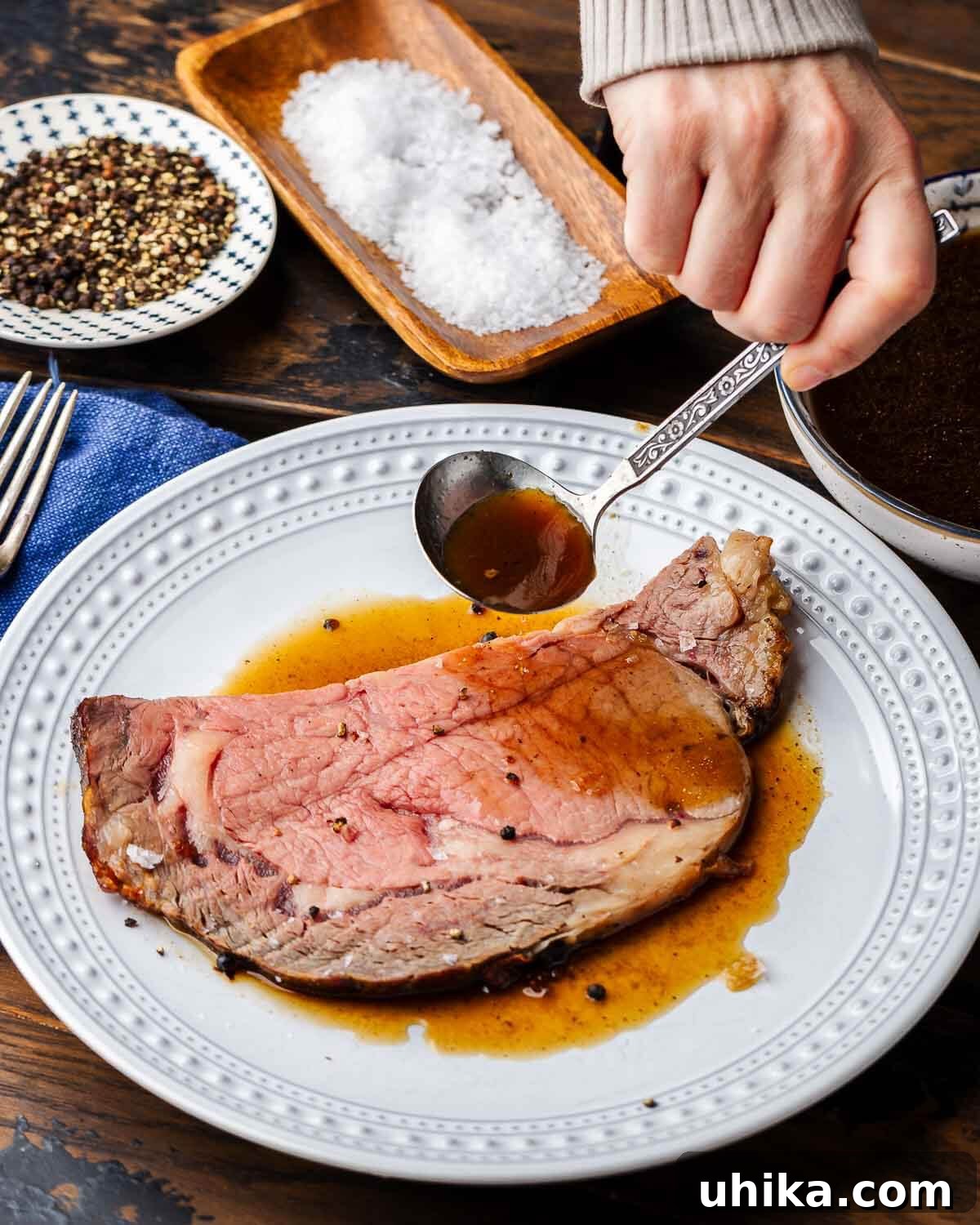
Why This Prime Rib Au Jus Recipe is Your Go-To for Holidays
The anticipation of holiday meals, with their array of cookies, delectable sides, and festive spirit, always brings joy. Yet, for many, the ultimate highlight remains a beautifully cooked Prime Rib. For over two decades, I’ve perfected the art of roasting this magnificent cut of beef, particularly for Christmas Day. The secret lies in a meticulous low and slow roasting method, followed by a quick, high-heat sear, which guarantees an incredibly juicy, tender, medium-rare prime rib roast every single time.
Beyond the flawless roast, a truly exceptional prime rib experience isn’t complete without a deeply flavorful au jus. This recipe also provides clear, step-by-step instructions for crafting the best homemade jus, transforming pan drippings and aromatic ingredients into a rich, savory accompaniment that elevates every bite. We’ll also cover delicious side pairings, such as our popular homemade horseradish sauce, creamy roasted garlic mashed potatoes, and vibrant roasted Brussels sprouts and carrots, ensuring your holiday spread is nothing short of spectacular.
The Magic of Low-and-Slow Roasting for Prime Rib
The “low and slow” method, also known as the reverse sear, is truly the key to achieving prime rib perfection. Unlike traditional roasting, which often results in an overcooked exterior and an unevenly cooked interior, this technique ensures the roast cooks gently and evenly from edge to edge. By starting at a low oven temperature (around 250°F / 120°C), the meat’s internal temperature rises gradually, allowing enzymes to break down tough connective tissues, resulting in unparalleled tenderness. This slow process also minimizes the gray band typically seen in conventionally roasted meats, leaving you with a beautiful, consistent pink doneness throughout.
Once the prime rib reaches its ideal internal temperature (typically 120-125°F for medium-rare), it rests, allowing the juices to redistribute and ensuring maximum succulence. The final step is a quick sear at a very high temperature, often under a broiler or in a very hot oven. This creates a glorious, caramelized crust, enhancing the flavor and texture of the roast with the coveted Maillard reaction. This two-stage approach provides the best of both worlds: a perfectly tender interior and a deliciously browned, crisp exterior, making it the superior method for a truly unforgettable prime rib.
Recipe Ingredients for Prime Rib and Au Jus
Quality ingredients are the foundation of an outstanding Prime Rib au Jus. Below, you’ll find a detailed list of what you’ll need, along with special notes to help you select the best for your festive meal. The picture below illustrates all the components for both the roast and the accompanying au jus.
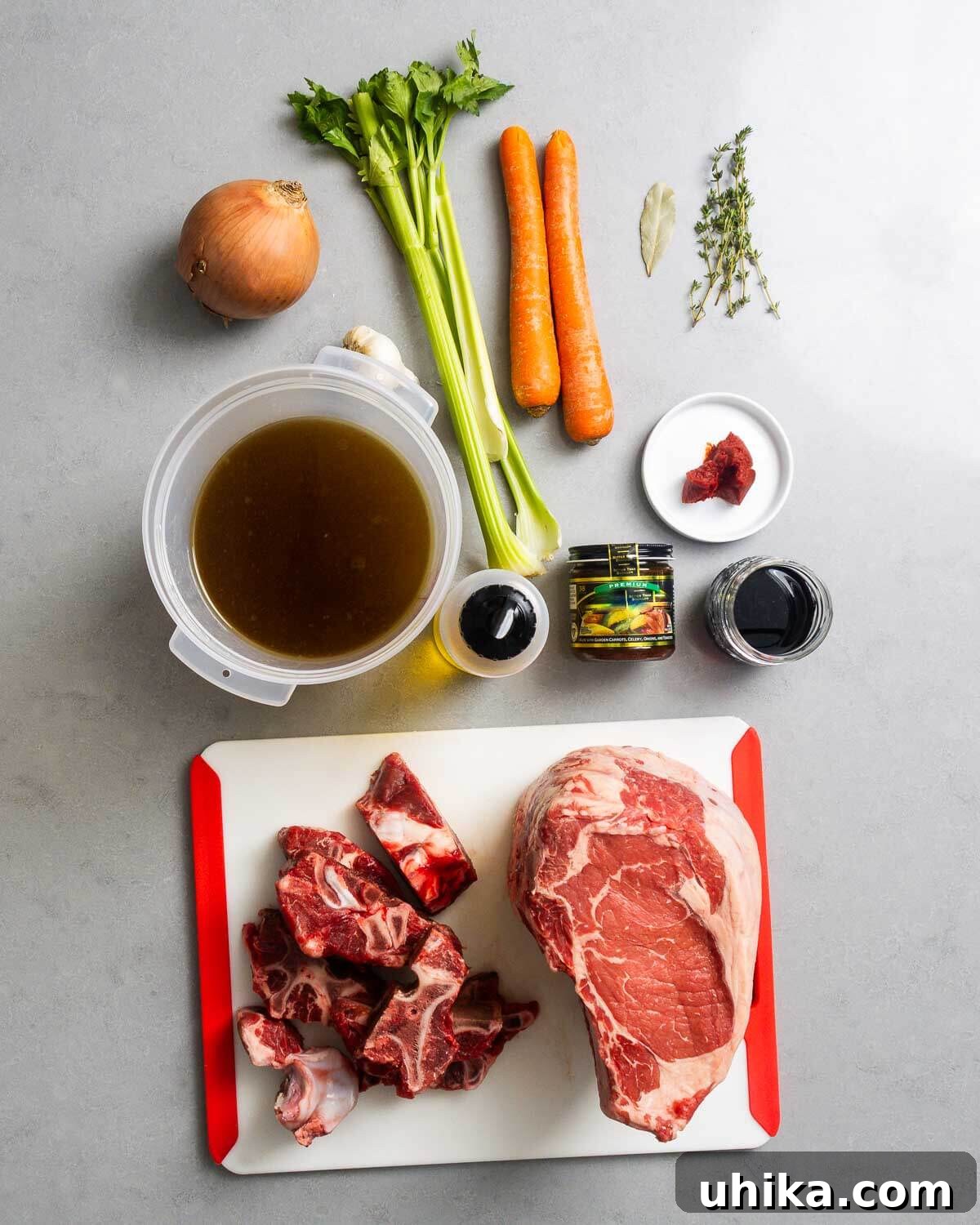
- Prime Rib Roast. This recipe is tailored for a 6-pound bone-in rib roast, which typically contains 2 bones and comfortably serves 6 people. While a larger roast can certainly be used, remember to adjust cooking times accordingly. We opted for a USDA Choice roast, which offers excellent marbling and flavor, especially when prepared with this low-and-slow method. USDA Prime grade meat, though more expensive, boasts superior marbling. When selecting your roast, consider a “first cut” from ribs 10-12; this section contains a larger, more uniform, and incredibly tender portion of the rib-eye muscle. Regardless of the exact grade or cut, a quality rib roast, cooked meticulously and seared to perfection, will yield an exceptional dining experience. Bone-in roasts often offer more flavor and can act as a natural rack for the meat during cooking.
- Kosher Salt. Essential for dry brining the prime rib. This process draws out moisture, creates a flavorful crust, and helps tenderize the meat. Diamond Crystal Kosher salt is generally preferred for its flakiness and even coverage, but Morton’s Kosher salt works equally well; just use slightly less (2 tablespoons instead of 3) due to its denser crystal structure.
- Coarse Black Pepper. A simple yet crucial seasoning that complements the rich beef flavor.
- Beef Bones. For the au jus, don’t skimp on flavor. Use meaty beef bones like oxtails or neck bones. These bones are rich in collagen and marrow, which render a deeply flavored, gelatinous, and luxurious jus. You can often ask your butcher for these.
- Beef Stock. Homemade beef stock will always yield the most superior au jus, offering unparalleled depth of flavor and control over sodium levels. If homemade isn’t an option, choose a high-quality, low-sodium store-bought beef stock. Brands like Better Than Bouillon are excellent for creating a rich base.
- Aromatics. A classic mirepoix of carrots, celery, and onion forms the aromatic backbone of the au jus, adding sweetness and complexity. Fresh thyme and a bay leaf infuse the liquid with subtle, herbaceous notes that perfectly complement the beef.
- Red Wine. A dry red wine, such as Cabernet Sauvignon or Merlot, is used to deglaze the pan and add a layer of sophisticated flavor to the au jus. Its acidity helps scrape up flavorful fond (browned bits) from the bottom of the pot.
- Tomato Paste. A small amount of tomato paste contributes a concentrated umami richness and a beautiful deep color to the au jus.
- Olive Oil. For searing the beef bones and sautéing the vegetables for the au jus.
- Garlic. Fresh garlic cloves add pungent depth to the au jus.
For precise measurements and detailed quantities, please refer to the complete recipe card provided below.
How to Roast a Prime Rib: A Step-by-Step Guide to Perfection
Roasting a prime rib might seem daunting, but with this detailed guide, you’ll achieve a perfectly cooked, tender, and flavorful roast every time. Each numbered step below corresponds to the process, ensuring clarity and ease. Remember, precision with a meat thermometer is your best friend here!
- Butcher Preparation (Optional but Recommended): For easier carving later, you can ask your butcher to remove the rib bones from the bottom portion of your 6-pound roast and then tie them back onto the roast. This allows the roast to cook evenly with the bones, which provide flavor and act as a natural rack, but makes carving a breeze after cooking. If your butcher has already done this, or if you prefer to roast it as is, you can skip this step. (Photo #1)
- Tying the Roast (If Not Done by Butcher): If you removed the rib section yourself, place it back under the roast. Use kitchen twine to tie the entire roast tightly, ensuring the bones are securely attached. This helps maintain the roast’s shape and facilitates even cooking. (Photo #2)
- The Essential Dry Brine: Place your 6-pound rib roast on a wire rack set inside a baking sheet. Season generously on all sides with 3 tablespoons of Diamond Crystal Kosher salt (or 2 tablespoons of Morton’s Kosher salt) and 1 tablespoon of coarsely ground black pepper. This dry brine is crucial for enhancing flavor and ensuring a tender, juicy interior. Refrigerate the seasoned roast, uncovered, for at least overnight, and ideally for 2 full nights. Allowing it to sit uncovered helps to dry out the exterior, contributing to a crispier crust. (Photo #3)
- Bring to Room Temperature and Prepare for Roasting: Approximately 4 to 5 hours before you plan to cook, remove the prime rib from the refrigerator. Allowing it to come closer to room temperature promotes more even cooking throughout the roast. Preheat your oven to a low 250°F (120°C) and adjust your oven rack to the middle level. Place the prime rib, fat-side up, on the rack of a roasting pan with a wire insert. Insert a reliable digital oven-safe thermometer into the thickest part of the roast, ensuring it doesn’t touch any bone. Set the thermometer to alert you when the internal temperature reaches 120°F (49°C) for a perfect medium-rare. (Photo #4)
- Slow Roasting and Resting: Place the prepared prime rib in the preheated oven. Roast until the internal temperature reaches your set target of 120°F (49°C). For a 6-pound roast, this typically takes between 2 1/2 to 3 1/2 hours, but always rely on your thermometer, not just the clock. Once the target temperature is reached, carefully remove the roast from the oven. Lightly tent the cooked rib roast with foil and allow it to rest undisturbed for a full 30 minutes. This resting period is critical, as it allows the juices to redistribute throughout the meat, ensuring maximum tenderness and succulence. (Photo #5)
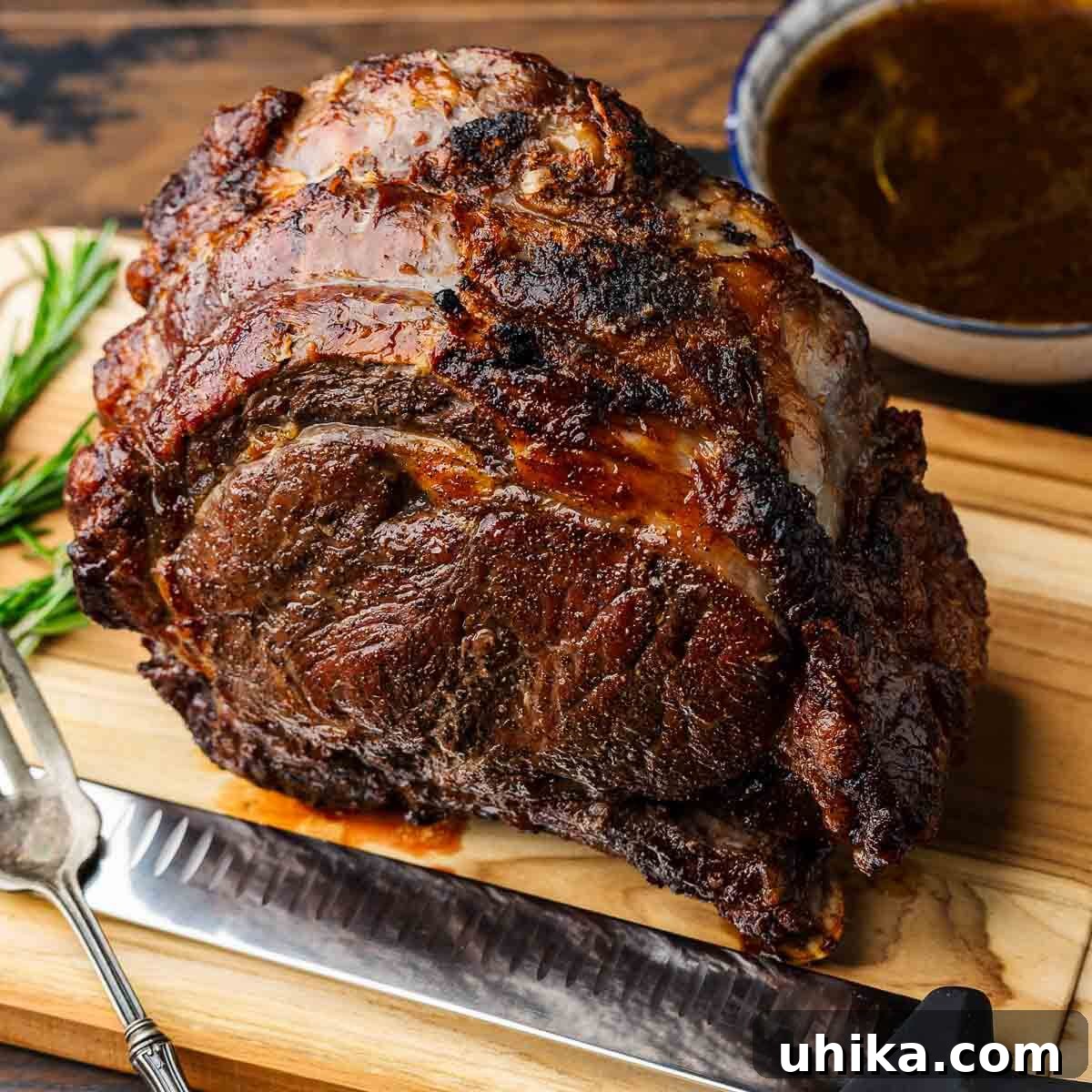
- The Perfect Sear (Broil): While the prime rib rests, prepare your oven for searing. Set one oven rack to the lowest level and line it with aluminum foil. This step is important to catch any drippings and prevent smoke, which can often trigger fire alarms during broiling. Move the second rack to the middle level and turn on your oven’s broiler to high. After the 30-minute resting period, carefully place the roast on the middle rack and broil it until a deep golden brown crust forms on all sides. This usually takes about 2 minutes per side. Use sturdy tongs to carefully maneuver the roast. Once beautifully seared, remove it from the oven and transfer it to a carving board. (Photo #6)
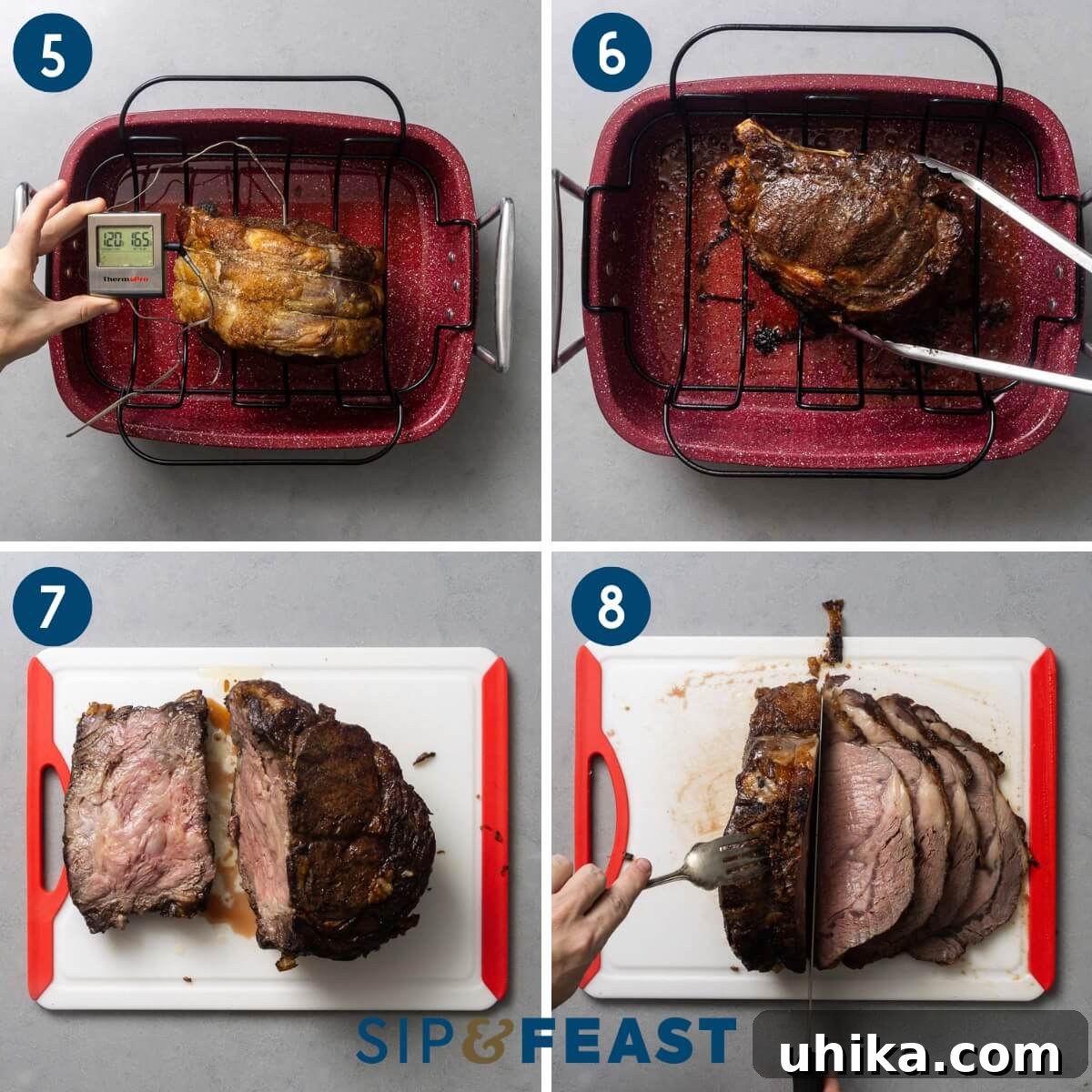
- Carve and Serve: Since the roast has already completed its crucial resting phase, you can carve it immediately after searing. Carefully remove any kitchen twine and separate the bones from the roast. (Photo #7)
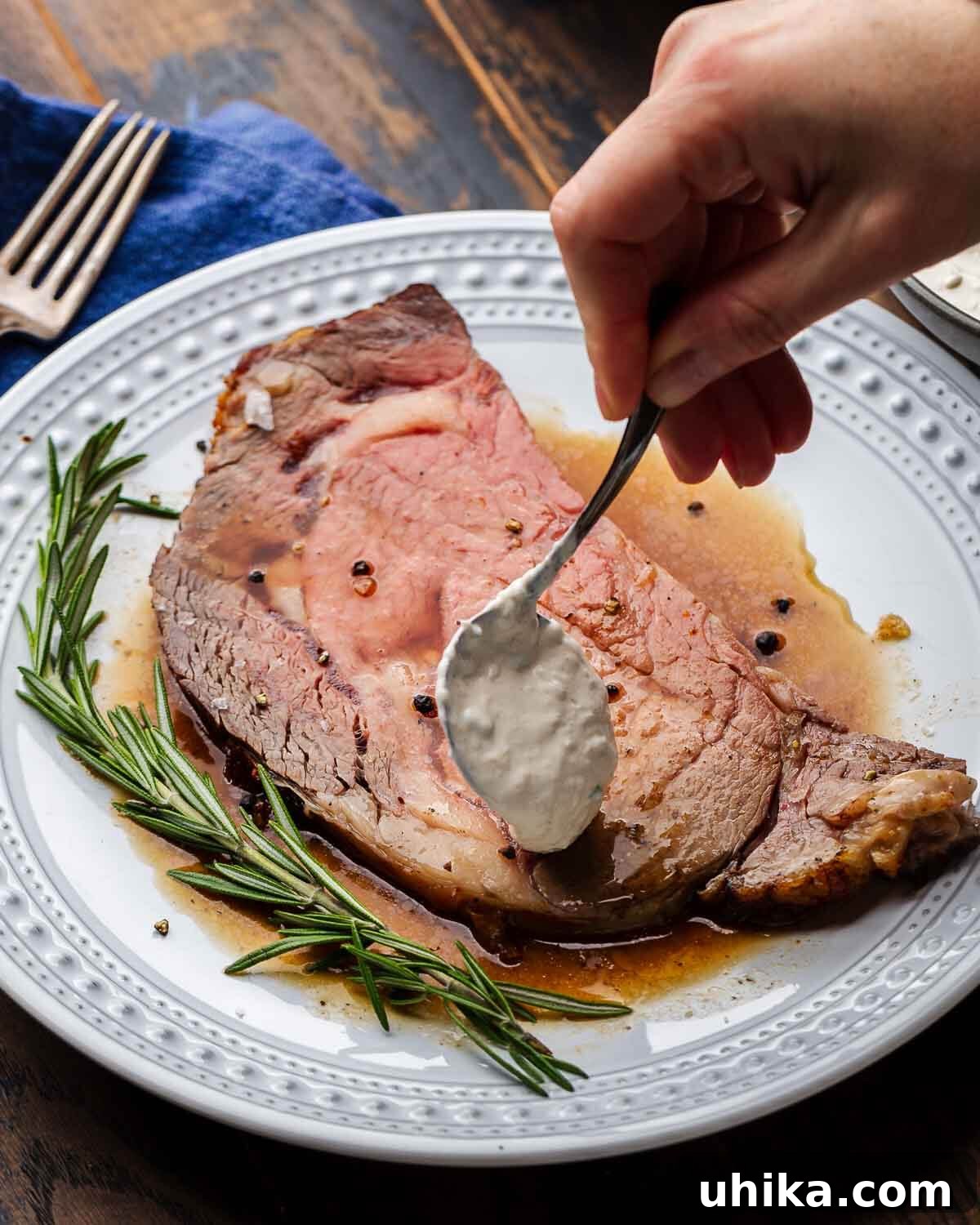
- Enjoy Your Masterpiece: Using a sharp carving knife or a dedicated slicing knife (like this excellent slicing knife), slice the roast into desired portions. Serve immediately with the freshly prepared au jus and/or your favorite horseradish sauce. Prepare for a truly memorable meal! (Photo #8)
How to Make the Ultimate Prime Rib Au Jus
The au jus is more than just a sauce; it’s the concentrated essence of beef and aromatics, a perfect complement to your prime rib. For convenience and optimal flavor development, begin preparing the au jus right after you place the prime rib in the oven. The 2.5 to 3.5 hours the roast spends cooking is ample time to create a rich, delicious au jus.
Each numbered step below corresponds to the written instructions, guiding you through the process.
- Prepare Bones and Aromatics: Begin by roughly chopping 2 large carrots, 3 ribs of celery, and 1 large onion. Heat a large, heavy-bottomed pot or Dutch oven over medium heat. Add 3 tablespoons of olive oil. Using paper towels, thoroughly pat dry 3 pounds of meaty beef bones (such as oxtails or beef neck bones). Add the dried bones to the hot pot and brown them deeply on all sides, turning occasionally. This step is crucial for developing rich color and complex flavor. This process should take about 10-15 minutes. (Photo #1)
- Sauté Vegetables and Garlic: Once the bones are well-browned, add 1 tablespoon of tomato paste, along with the chopped onions, celery, and carrots to the pot. Add a pinch of salt to help draw out their moisture. Cook, stirring occasionally, until the vegetables have softened, which will take approximately 10 minutes. Then, add 5 cloves of minced garlic and continue to cook for another 1-2 minutes until fragrant, being careful not to burn the garlic. (Photo #2)
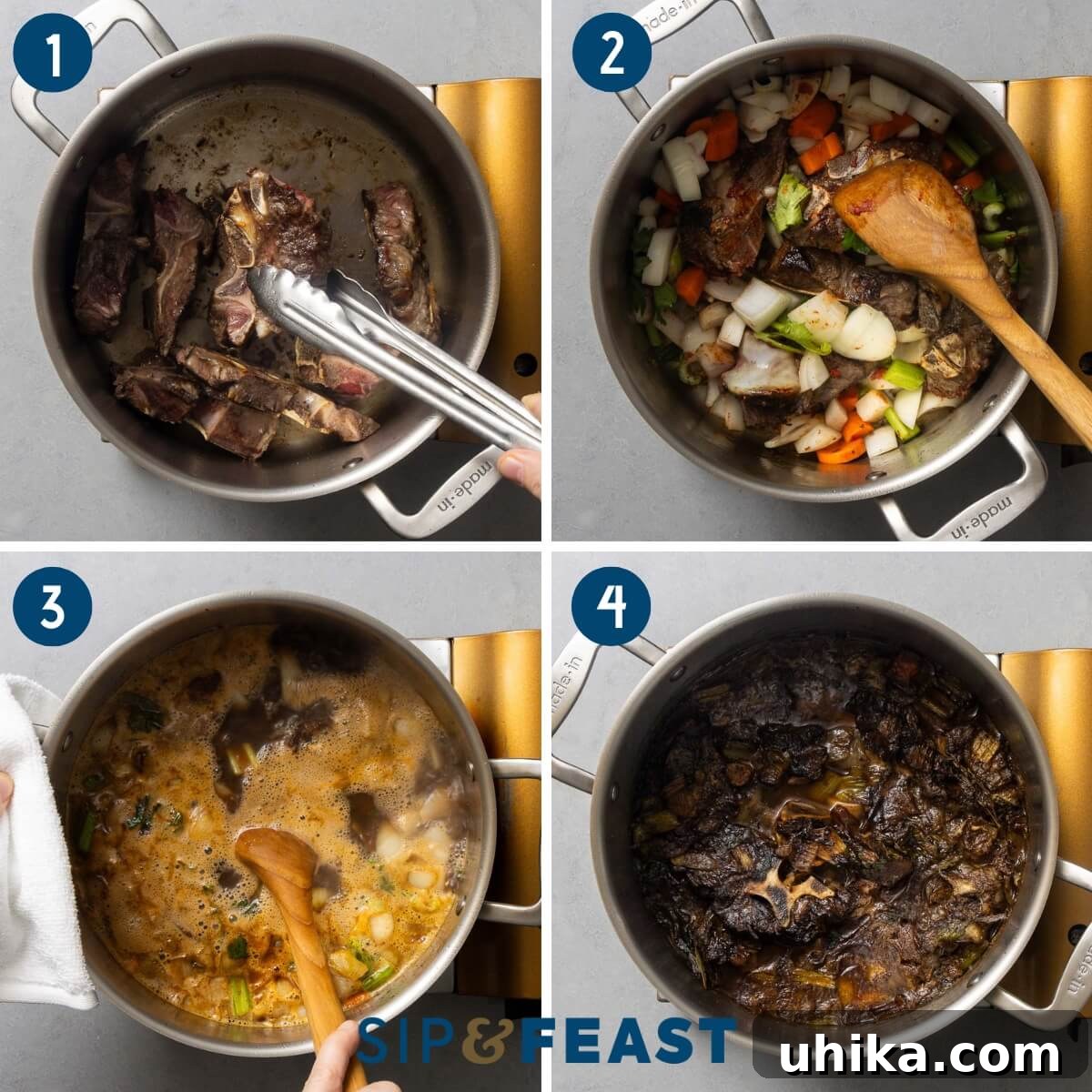
- Deglaze and Simmer: Pour in 1/2 cup of dry red wine. Using a wooden spoon, scrape the bottom of the pot to dislodge any flavorful brown bits (fond) that have accumulated. This deglazing step adds incredible depth. Next, add 6 cups of homemade beef stock (or good quality store-bought low-sodium beef stock), 1 teaspoon of Better Than Bouillon beef base, 2 sprigs of fresh thyme, and 1 large bay leaf. Bring the mixture to a rolling boil. If using homemade beef stock, just the 1 teaspoon of beef base is sufficient. If using store-bought, prepare 6 cups of beef stock using the reduced-sodium Better Than Bouillon beef base according to package instructions, ensuring a balanced flavor. (Photo #3)
- Slow Simmer for Flavor: Once boiling, reduce the heat to a very low simmer. Allow the au jus to cook uncovered, gently bubbling, until the prime rib roast is finished cooking. This slow simmering period allows all the flavors from the bones, vegetables, and herbs to meld and deepen, creating a truly rich and concentrated jus. (Photo #4)
- Strain the Au Jus: Carefully strain the finished au jus through a fine mesh strainer into a separate heatproof bowl. Press down on the solids to extract as much liquid and flavor as possible. Discard the solids. At this point, the strained au jus can be covered and kept warm in a clean saucepot over very low heat while you wait for the prime rib drippings from the roasting pan. (Photo #5)
- Deglaze the Roasting Pan: Once the prime rib is removed from the oven and resting, place the empty roasting pan (the one the prime rib cooked in) on a burner over medium-high heat. Ladle in enough of the strained au jus into the roasting pan to cover the bottom. Using a wooden spoon, vigorously scrape up all the delicious brown bits (drippings and fond) from the bottom of the pan. These drippings are packed with incredible beef flavor and will significantly enhance your au jus. (Photo #6)
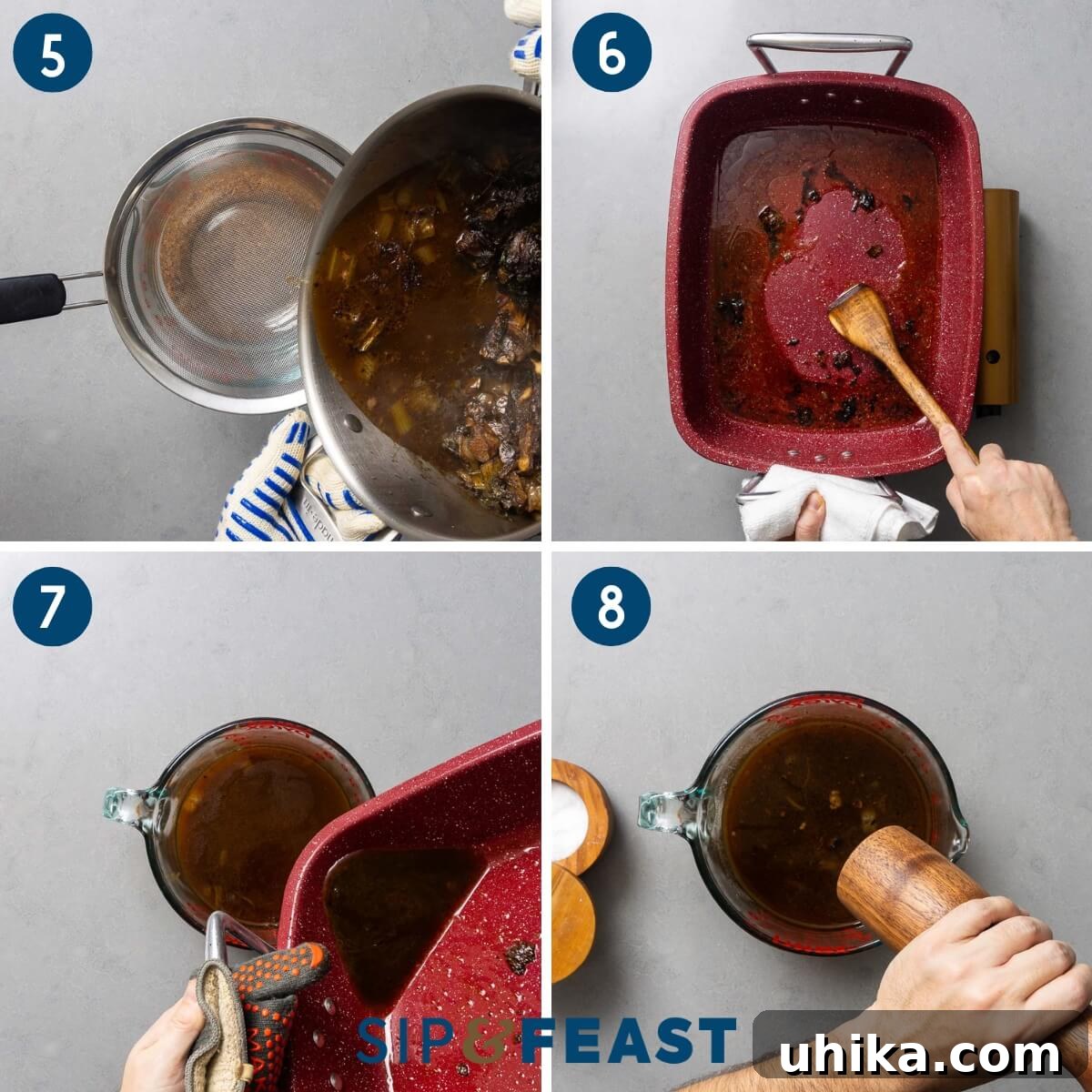
- Combine and Finish: Pour the deglazed liquid and all the rich pan drippings from the roasting pan back into the bowl with your strained au jus. Stir to combine. (Photo #7)
- Taste, Season, and Defat: Taste the au jus and adjust seasoning with additional salt and pepper as needed. Before serving, you may wish to defat the au jus. Fat will rise to the top as it sits. You can skim it off with a ladle, soak it up gently with a paper towel, use a slice of bread to absorb it, or employ a specialized fat separator for the cleanest result. Serve your perfectly crafted au jus alongside your succulent prime rib. (Photo #8)
Expert Tips for Prime Rib Perfection
Achieving the perfect prime rib and au jus is all about attention to detail and a few clever techniques. Here are our top tips to ensure your holiday roast is a resounding success:
- Invest in a Digital Meat Thermometer. This is perhaps the most crucial tool for cooking prime rib accurately. Precision is key to avoid overcooking and achieving your desired doneness. I highly recommend using a combination of an oven-safe probe thermometer, which stays in the roast during cooking and alerts you when it reaches temperature, alongside a separate instant-read digital thermometer to double-check temperatures in various spots once the roast is out of the oven.
- Master the Broiling Technique. The final high-heat sear under the broiler is essential for a beautiful, flavorful crust. Be aware that this process can generate significant smoke, potentially setting off a smoke alarm. To mitigate this, line the bottom of your oven with aluminum foil to catch any stray drippings. If possible, have someone assist you in maneuvering the roast with tongs while broiling, ensuring an even sear on all sides. An excellent alternative, if available, is to sear the roast on an outdoor grill. This completely eliminates the risk of smoke inside your kitchen and often provides an even more robust crust.
- The Power of Homemade Stock. While quality store-bought beef stock is acceptable, making your own homemade beef stock truly elevates the flavor of your au jus to another level. Not only does it provide a richer, more complex taste, but it also gives you complete control over the sodium content, which is especially important for balancing the flavors of the final dish.
- Communicate with Your Butcher. Your butcher is an invaluable resource when it comes to prime rib. To save time and effort, ask them to expertly remove the chine bone (a part of the backbone that needs a meat bandsaw) and the rib bones, then tie the rib bones back onto the roast. This small request will make a huge difference in ease of carving and overall presentation. They can also advise on the best grade and cut for your needs.
- Don’t Skip the Dry Brine. The overnight (or 2-night) dry brine with kosher salt is transformative. It draws out moisture, then the salt is reabsorbed, seasoning the meat deeply from within and helping to tenderize it. The dry surface also aids in developing a crispy, flavorful crust during the searing process.
- Proper Resting is Non-Negotiable. After the roast comes out of the oven, it’s crucial to let it rest, tented loosely with foil, for at least 30 minutes. This allows the internal temperature to equalize and the juices to redistribute throughout the meat. Cutting into the roast too soon will cause the precious juices to run out, resulting in a drier, less flavorful slice.
Serving Suggestions for Your Prime Rib Feast
A magnificent Prime Rib au Jus deserves equally impressive accompaniments. Here are some serving suggestions to complete your holiday or special occasion meal:
- Creamy Horseradish Sauce: A classic pairing, the tangy, spicy kick of homemade horseradish sauce perfectly cuts through the richness of the prime rib.
- Garlic Mashed Potatoes: Fluffy, rich mashed potatoes infused with roasted garlic are an essential side, perfect for soaking up the delicious au jus.
- Roasted Vegetables: Roasted Brussels sprouts and carrots, or perhaps asparagus or green beans, provide a vibrant, fresh counterpoint to the rich beef.
- Yorkshire Pudding: These savory popovers are a traditional British accompaniment to roast beef and are excellent for sopping up any remaining au jus.
- Creamed Spinach: A rich and decadent side that complements the prime rib beautifully.
- Wine Pairing: A robust red wine like Cabernet Sauvignon, Merlot, or a Bordeaux blend would be an ideal choice to pair with your prime rib.
Storage and Leftover Ideas
Should you have the delightful fortune of having leftovers, proper storage and reheating will ensure you can enjoy your prime rib for days to come. Store leftover prime rib and au jus separately in airtight containers in the refrigerator for up to 3-4 days.
To reheat prime rib without drying it out, slice the cold roast into desired portions. Place slices in a baking dish, pour a generous amount of au jus over them, and cover tightly with foil. Reheat in a 275°F (135°C) oven until just warm through. Avoid high heat, as it can quickly toughen the meat.
Leftover prime rib is incredibly versatile! Here are some ideas:
- Prime Rib Sandwiches: Thinly slice and serve on crusty bread with horseradish sauce, caramelized onions, or melted cheese.
- Prime Rib Hash: Dice the meat and potatoes, then sauté with onions and bell peppers for a hearty breakfast or brunch.
- Beef Tacos or Quesadillas: Shred the meat and use it in your favorite Mexican-inspired dishes.
- Stir-fry: Slice thinly and add to a quick stir-fry with your favorite vegetables.
More Holiday Roast Recipes You’ll Love
- Roasted Boneless Leg of Lamb
- Beef Top Round Roast with Onion Gravy
- Roasted Pork Loin
- Greek Leg of Lamb
- Spatchcocked Turkey
- Brown Sugar Glazed Spiral Ham
If you’ve enjoyed this Prime Rib Au Jus Recipe or any recipe on this site, give it a 5-star rating and tell us about it in the comments below.
We strive to satisfy a number of learning styles. If you are someone who prefers to learn by watching, you can find most of our recipes on YouTube and our Facebook Page.
Prime Rib Au Jus
Pin
SaveSaved
Ingredients
- 1 6 pound (2.7kg) Prime rib or beef rib roast rib bones removed and tied back up (ask the butcher)
- 3 tablespoons (30g) Diamond Crystal Kosher salt or 2 tablespoons Morton’s Kosher salt
- 1 tablespoon (8g) coarse black pepper
For the au jus
- 3 tablespoons (45g) olive oil
- 3 pounds (1.4kg) oxtails, neck bones, meaty beef bones
- 1 teaspoon Better than Bouillon beef base see notes below
- 6 cups (1.4kg) low-sodium beef stock
- 1/2 cup (120g) dry red wine
- 5 cloves garlic
- 2 large carrots chopped
- 3 ribs celery chopped
- 1 large onion chopped
- 1 tablespoon (15g) tomato paste
- 2 sprigs thyme
- 1 large bay leaf
- salt and pepper to taste
Want To Save This Recipe?
Enter your email and we’ll send it to you. Plus, get great new recipes from us every week!
Instructions
Salt 1 day before
-
Season the roast with salt and pepper on all sides then place on a wire rack lined baking sheet and refrigerate uncovered overnight.
Roast the prime rib
-
4-5 hours before cooking, remove the prime rib from the fridge to bring it close to room temp for more even cooking.
-
Preheat the oven to 250°F and set the rack to the middle level. Place a digital probe into the center of the roast and set it to go off at 120°F.
-
Place the roast in the oven and remove once the roast achieves 120°F (anywhere from 2 1/2 – 3 1/2 hours). Lightly tent the roast with foil for 30 minutes.
-
Set one oven rack to the lowest level and line it with foil (to prevent drippings from smoking and setting off the fire alarm). Set the second rack to the middle level and turn on the broiler.
-
Broil the roast on the middle level until well browned on all sides (about 2 minutes per side – use tongs to move) then remove from the oven and set it on a carving board. Remove the strings and bones and slice the roast into pieces. Enjoy!
Meanwhile, make the au jus during the roasting process
-
Heat a large heavy pot or Dutch oven to medium heat. Add the olive oil to the pot. Dry off the bones with paper towels then add them to the pot and brown on all sides (about 10 minutes).
-
Add the tomato paste, onion, carrot, celery, and a pinch of salt to the pot and cook for 10 minutes or until soft then add the garlic and cook for another 1-2 minutes.
-
Add the wine, beef base, beef stock, and herbs to the pot and bring to a boil. Dislodge all of the brown bits from the pot with a wooden spoon. Once boiling, lower to a simmer and cook uncovered until the roast is finished.
-
Strain the au jus through a fine mesh strainer. Add a ladle of the au jus to the roasting pan to deglaze and dislodge any brown bits, then pour the drippings from the roasting pan into the au jus. Taste test and season with salt and pepper before serving with the Prime rib.
Notes
- If using homemade beef stock, only use 1 teaspoon of beef base. If not using homemade beef stock, use 6 cups of mixed beef stock from reduced sodium Better than Bouillon beef base.
- The exact cooking time will vary based on the size of a roast. For an almost 7 pound roast, our cooking time to 120°F took exactly 3 hours.
- A bone-in roast will serve approximately 1 person per pound, so a 6-pound bone-in roast would serve 6, and so forth.
- Use a meat thermometer for the utmost precision for a perfectly cooked roast.
- Leftovers can be saved for up to 3 days in the fridge and can be reheated covered with foil in a 275°F oven until warm.
- Almost all commercially sold rib roasts will be sold with the chine (part of the backbone) removed. If you come across a roast sold with the chine bone you should ask the butcher to remove it since it needs to be cut off with a meat bandsaw. The rib bones should be saved and tied back onto the roast. Again, ask your butcher.
Nutrition
Nutrition information is automatically calculated, so should only be used as an approximation.
Like this? Leave a comment below!Check us out on Instagram at @sipandfeast or tag #sipandfeast!