
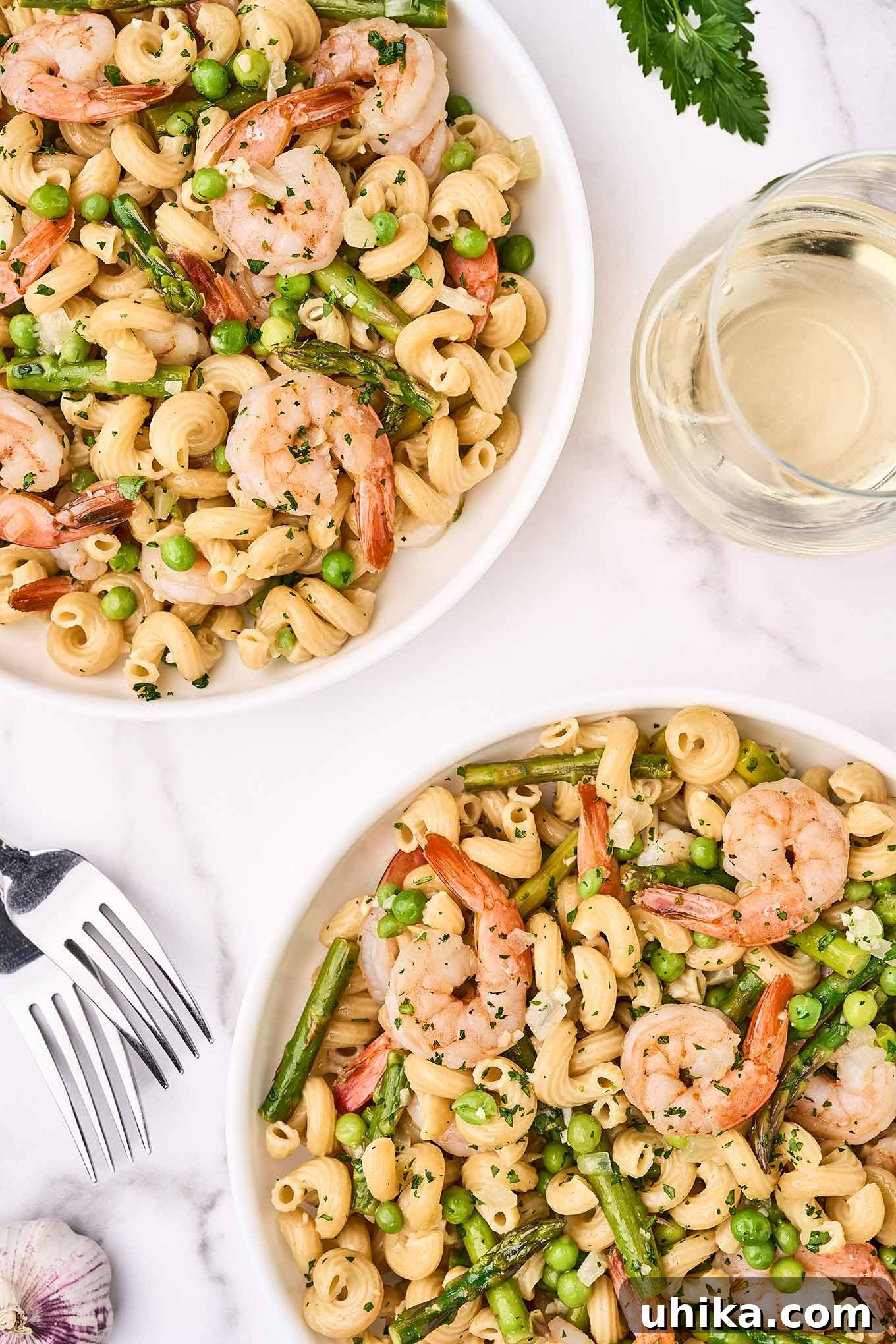
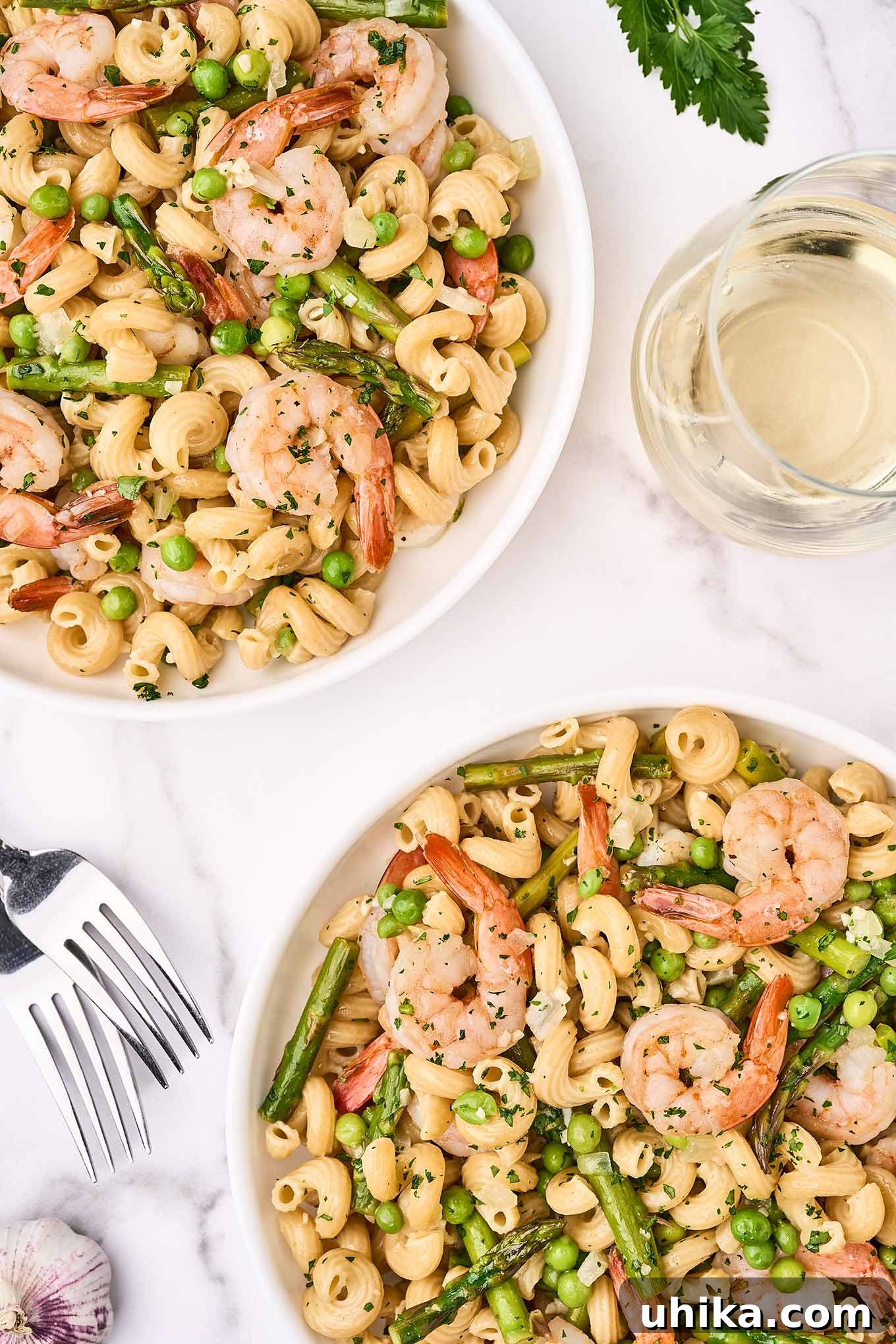
Effortless Shrimp Pasta Primavera: A Fresh & Flavorful Weeknight Meal
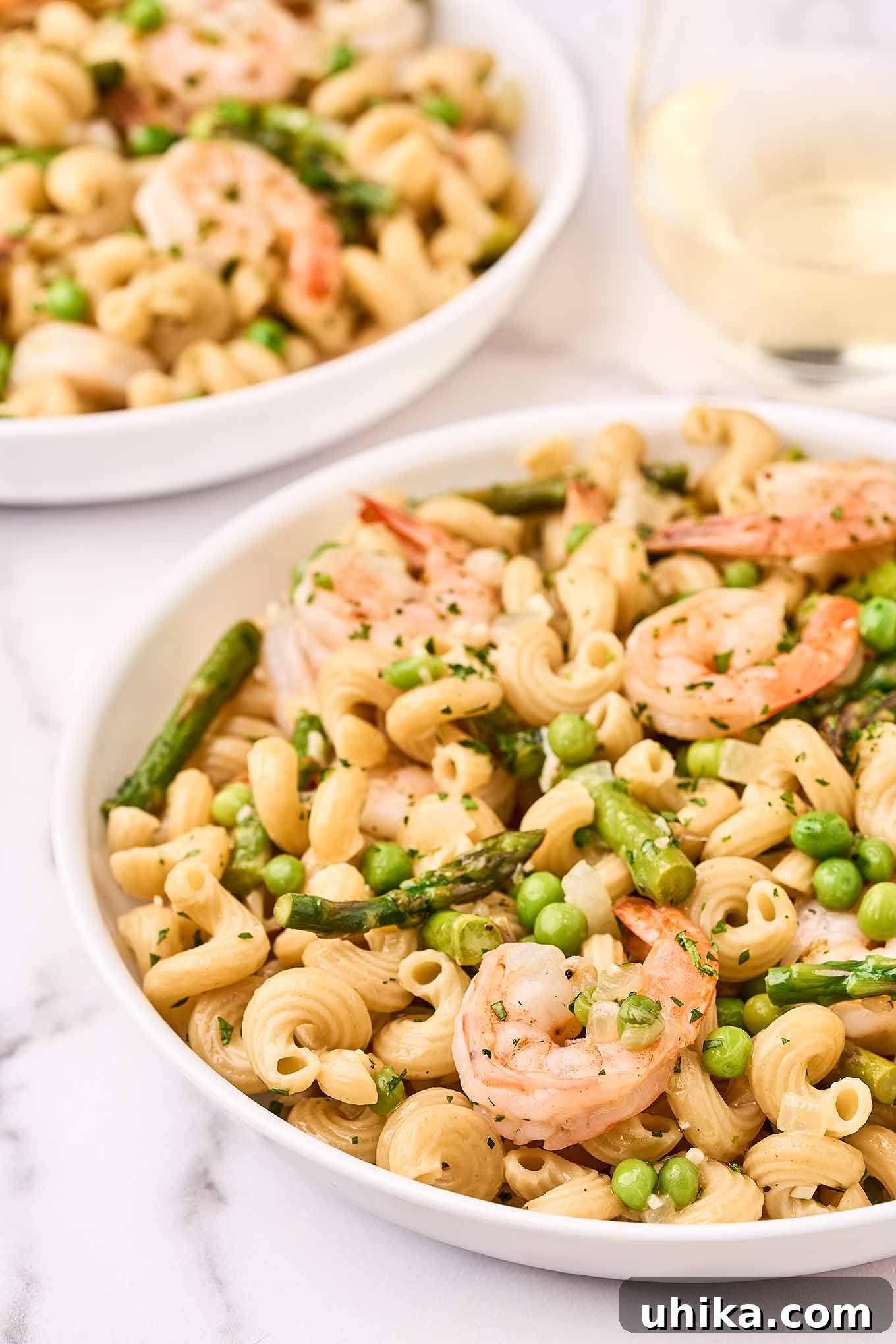
When the warmer months arrive, bringing an abundance of fresh, seasonal produce, our cravings naturally shift towards lighter, more vibrant meals. This Shrimp Pasta Primavera recipe is the perfect answer, offering a delightful blend of tender, quick-cooking shrimp, crisp asparagus, sweet peas, and your favorite pasta, all coated in a bright, savory garlic white wine sauce. It’s a dish that perfectly captures the essence of spring and summer, making it an ideal choice for a refreshing yet satisfying dinner.
If you’re looking for an incredibly easy weeknight meal that doesn’t compromise on gourmet flavor, this easy pasta primavera with shrimp will quickly become a household favorite. Especially during spring, when fresh asparagus spears are at their peak, this recipe shines. Requiring just a handful of pantry staples alongside its fresh ingredients, you can have this flavorful dish on your table in under 30 minutes. It’s the ultimate combination of speed, simplicity, and exquisite taste, making it a healthy and delicious option for any busy evening.
Why You’ll Love This Shrimp Pasta Primavera
- Quick & Easy: Ready in about 30 minutes, it’s perfect for busy weeknights.
- Fresh & Seasonal: Highlights vibrant spring and summer vegetables like asparagus and peas.
- Light & Flavorful: A delicate white wine garlic sauce perfectly complements the shrimp and veggies without being heavy.
- Healthy & Wholesome: Packed with lean protein from shrimp and nutrients from fresh vegetables.
- Customizable: Easily adaptable with various proteins and seasonal vegetables.
Key Ingredients for the Best Shrimp Pasta Primavera
Crafting the perfect Shrimp Pasta Primavera starts with selecting high-quality ingredients. Below is a guide to the essential components of this dish. For the precise quantities, please refer to the detailed recipe card at the end of this article.
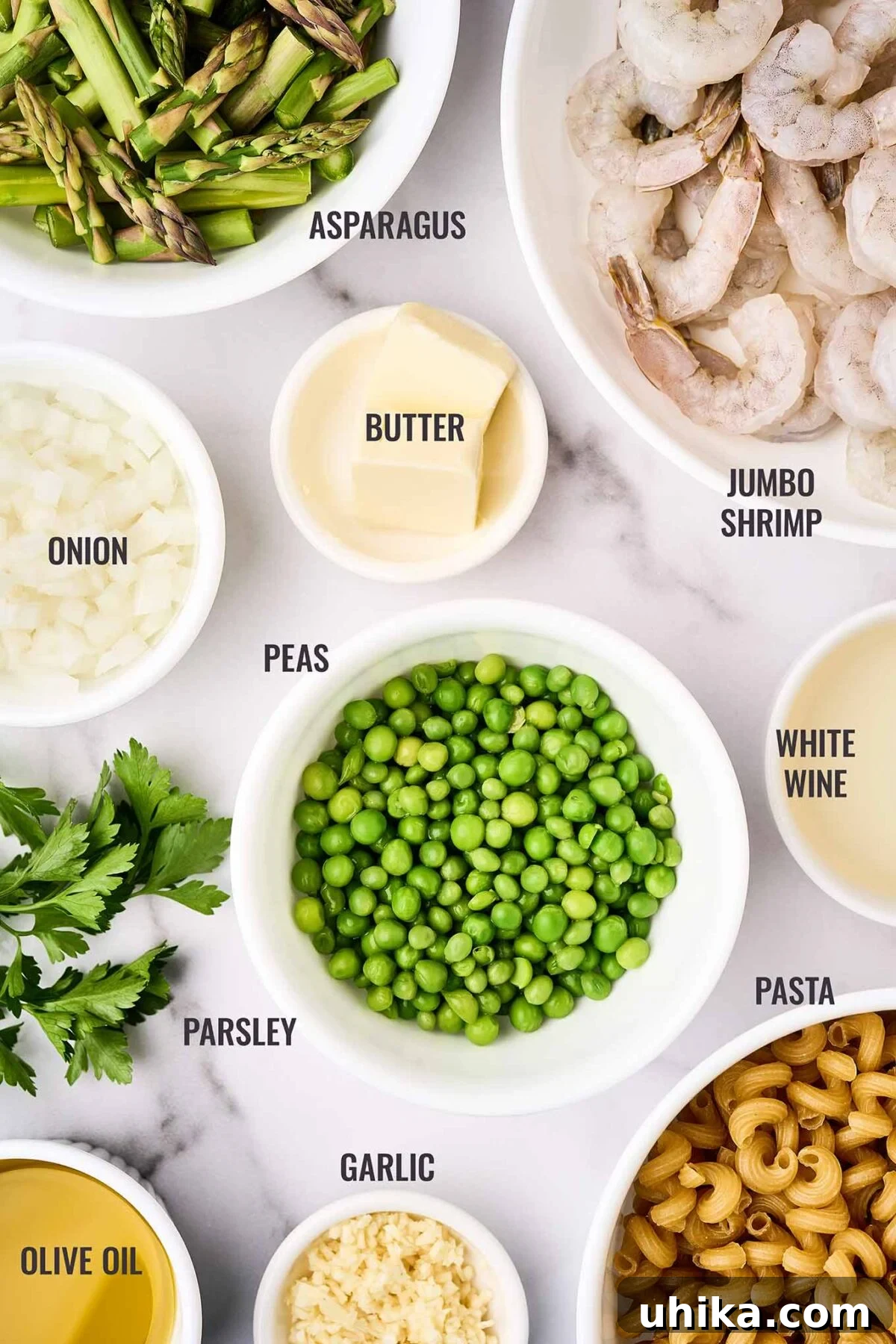
- Shrimp: For a substantial and satisfying bite, we highly recommend using either jumbo (16 to 20 shrimp per pound) or extra-large (21 to 25 shrimp per pound) shrimp. These sizes cook beautifully and add a delightful presence to the dish. While we often leave the tails on for an extra layer of flavor during the sautéing process, feel free to remove them before cooking if you prefer a cleaner eating experience at the table. Always ensure your shrimp are peeled and deveined for convenience.
- Asparagus: The star of the spring season, fresh asparagus is crucial. When shopping, look for relatively thin spears. They will cook more quickly and evenly, becoming perfectly tender within the light wine sauce, and offering a more delicate texture compared to thicker, woodier spears. Snap off the tough, woody ends before cutting the spears into 1.5-inch pieces.
- Peas: Frozen peas are an excellent and convenient choice for this recipe and can be used directly from the freezer without thawing. We particularly enjoy the petite variety for their sweetness and tender texture, but regular sweet peas work just as wonderfully, adding a burst of fresh flavor and vibrant color.
- Pasta: The right pasta shape can make all the difference in how well the sauce clings to each bite. Choose a cut of pasta with ridges, spirals, or tubes that can effectively hold the delicate garlic wine sauce. Cavatappi, with its corkscrew shape, is a fantastic option, as are penne or rotini. Feel free to explore other shapes like farfalle (bowties) or even linguine if you prefer a longer noodle, ensuring the sauce is well-distributed.
- Dry White Wine: A good dry white wine, such as Pinot Grigio or Sauvignon Blanc, is key for deglazing the pan and building the foundation of our light pasta sauce. These wines impart a crisp, slightly acidic note that beautifully complements the seafood and vegetables. An added bonus is that the same wine you use for cooking will pair wonderfully with the finished dish. If you prefer not to use alcohol, a good quality low-sodium chicken broth or vegetable broth makes an excellent substitute, offering a rich savory depth.
- Olive Oil & Butter: A combination of olive oil and butter provides the perfect fat base for sautéing, adding richness and flavor to both the aromatics and the shrimp.
- Garlic & Onion: These aromatic staples form the flavor backbone of the sauce. Freshly minced garlic and finely chopped onion are essential for building a deep, savory foundation.
- Fresh Parsley: A generous sprinkle of fresh flat-leaf parsley at the end brightens the dish with its vibrant color and herbaceous flavor, tying all the elements together.
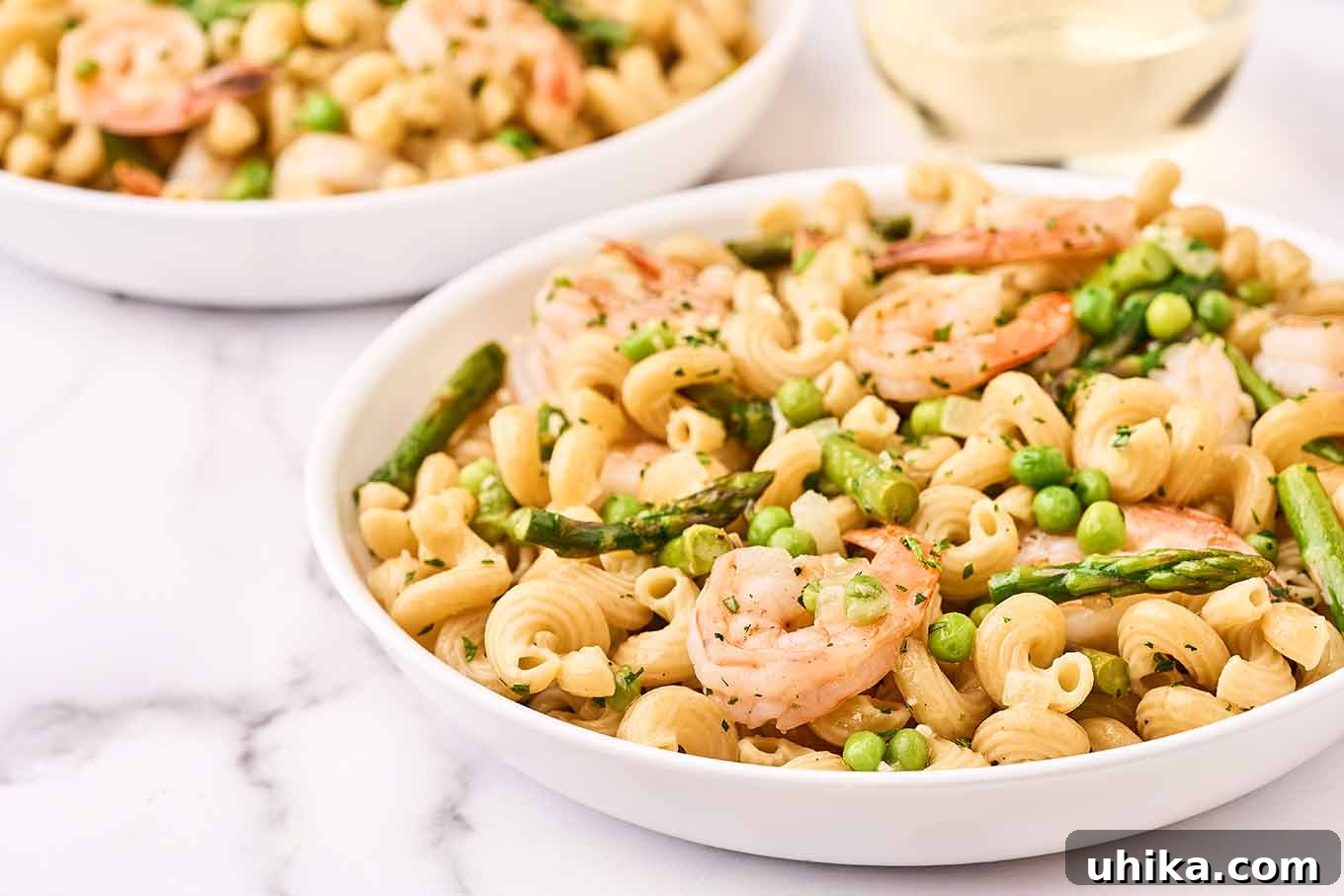
Prep Overview
How to Make Flavorful Shrimp Pasta Primavera
Creating this delicious Shrimp Pasta Primavera is a straightforward process, designed for efficiency and maximum flavor. Here’s a detailed overview of each step to guide you. For precise measurements and a printable version, please scroll down to the full recipe card.
Preparation Steps:
- Start the Pasta Water: Begin by bringing a large pot of generously salted water to a rolling boil. A good rule of thumb is to add about a tablespoon of salt per quart of water. This ensures your pasta is seasoned from the inside out, providing a foundation of flavor.
- Sauté Aromatics: In a large, deep skillet or Dutch oven, heat 4 tablespoons of olive oil over medium heat. Add the finely chopped onion and sauté gently until it becomes soft and translucent, which usually takes 3 to 4 minutes. Be careful not to brown it. Next, stir in the minced garlic and cook for just 1 to 2 minutes more, until it’s fragrant and barely golden. Watch closely, as garlic can burn quickly and become bitter.
- Deglaze the Pan: Pour in the dry white wine (or chicken broth) to deglaze the pan. Use a wooden spoon to scrape up any delicious browned bits from the bottom of the skillet. These “fond” bits are packed with flavor and will enrich your sauce. Allow the wine to simmer for a minute or two, letting the alcohol cook off slightly and the flavors meld.
- Cook the Pasta: While the aromatics are cooking, add your chosen pasta to the boiling salted water. Cook according to package directions until it’s al dente – firm to the bite. Before draining, make sure to reserve about ¾ cup of the starchy pasta cooking water. This liquid is gold for your sauce, helping to emulsify it and create a silky texture. Drain the pasta and return it to its pot. Toss immediately with 1 tablespoon each of olive oil and butter to prevent sticking and add a touch of richness, then set aside.
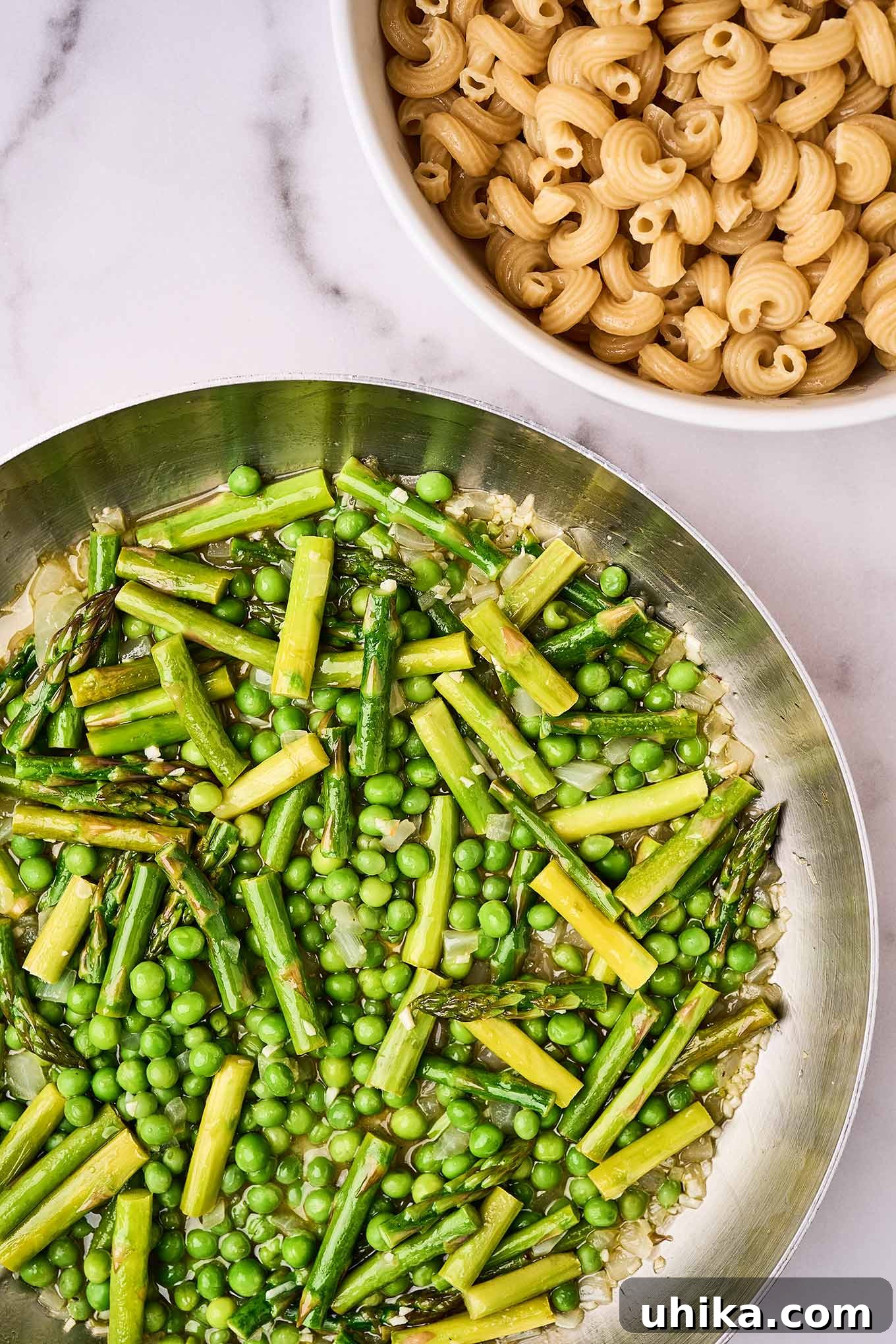
- Cook Asparagus and Peas: Return to your skillet with the onion and garlic mixture. Add the trimmed and cut asparagus along with about half of the reserved pasta water. Increase the heat slightly to medium-high and cook, stirring occasionally, until the asparagus is crisp-tender, about 3 to 4 minutes. You want it vibrant green with a slight bite. Season lightly with salt and pepper to taste. Stir in the frozen peas and cook for just 1 minute longer; they only need a quick warm-through. Transfer these cooked vegetables to the pot with the pasta and gently combine.
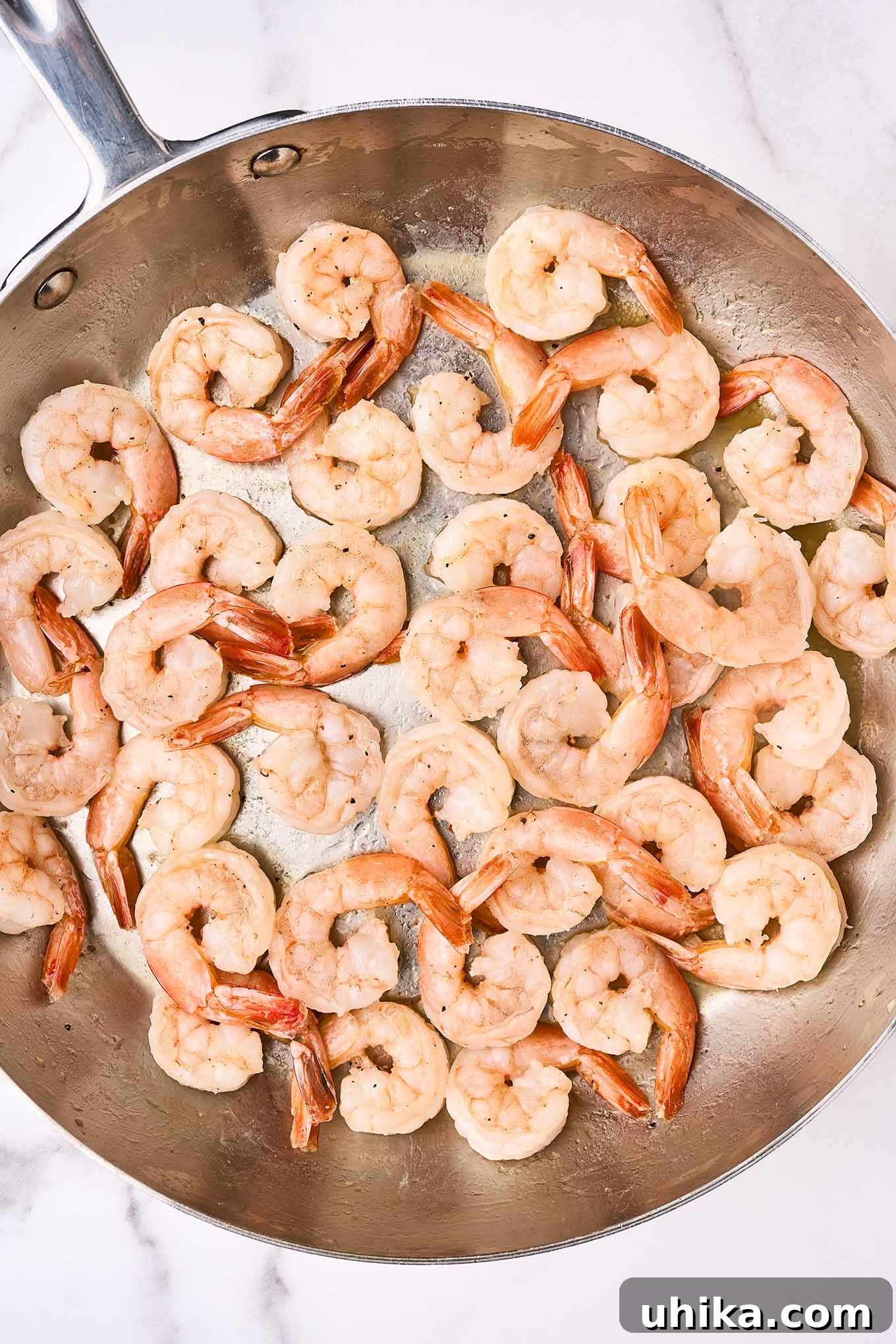
- Sauté the Shrimp: Using the same skillet, add the remaining 1 tablespoon of butter and 1 tablespoon of olive oil. Increase the heat to medium-high. Once shimmering, add the peeled and deveined shrimp. Season the shrimp with a pinch of salt and pepper. Sauté for only 1.5 to 2 minutes per side, or until they turn pink and opaque. Overcooking will make the shrimp tough, so keep a close eye on them!
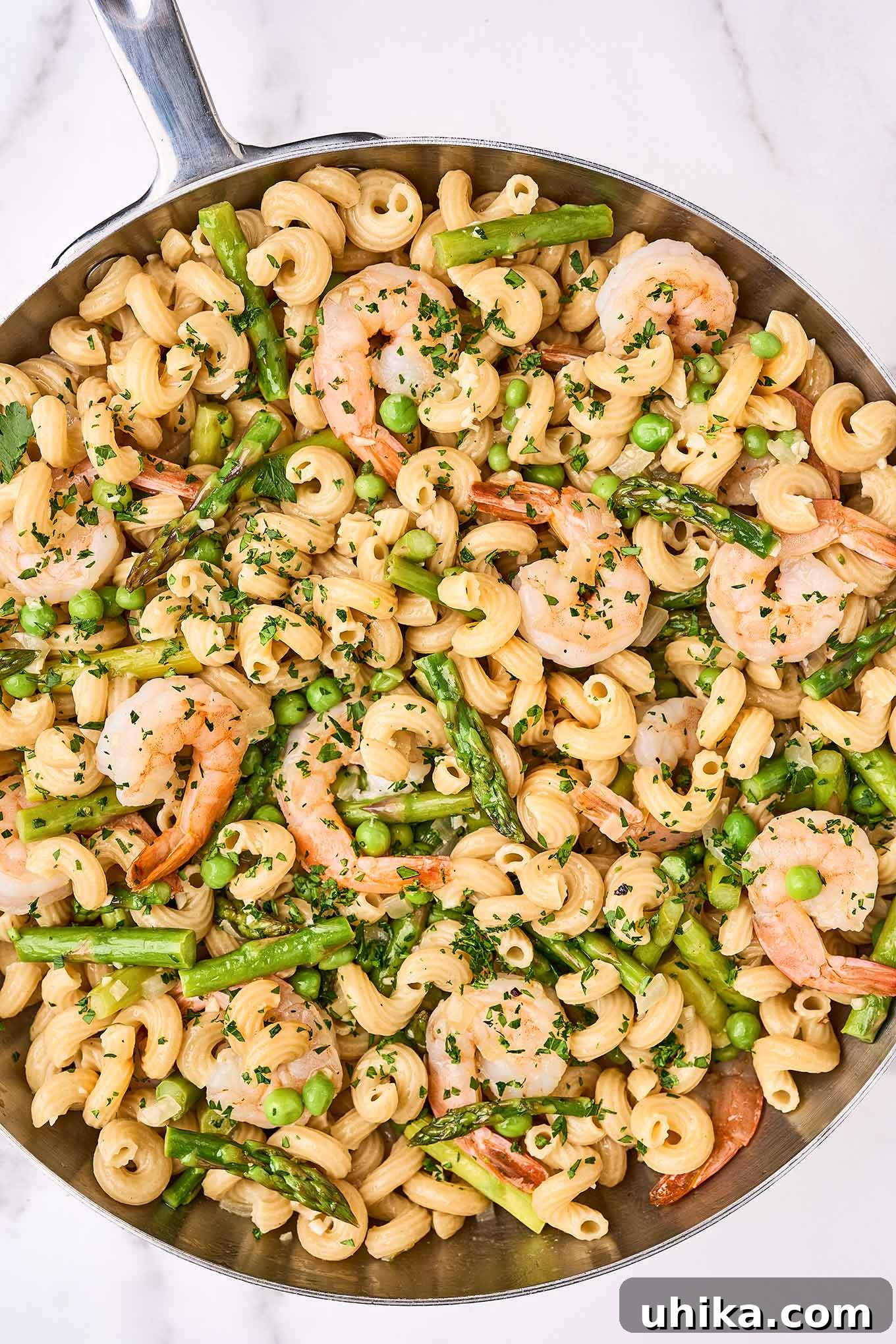
- Combine and Finish: Return the pasta and vegetable mixture to the skillet with the cooked shrimp. Add the chopped fresh parsley. Toss everything together gently until all components are thoroughly heated through and coated in the flavorful sauce. If the mixture appears a little dry, gradually add a splash more of the reserved pasta water until you reach your desired consistency. Taste the dish and adjust the seasoning with additional salt and pepper if needed.
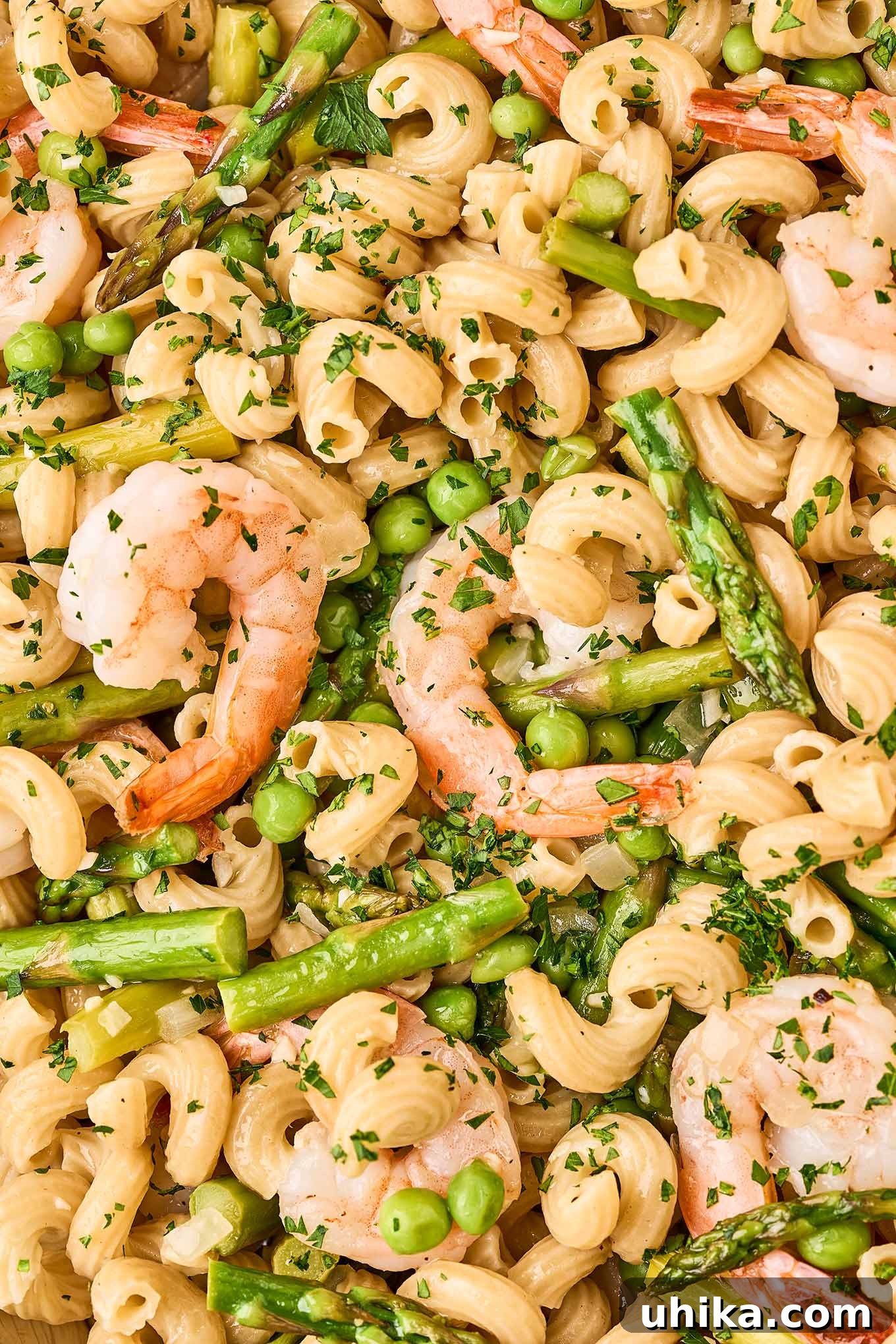
- Serve: Plate individual servings immediately. For a beautiful finish, sprinkle with extra fresh parsley and a crack of fresh black pepper over the top. Serve hot and enjoy the fresh, vibrant flavors of your homemade Shrimp Pasta Primavera!
Easy Recipe Variations for Your Pasta Primavera
This Shrimp Pasta Primavera recipe is incredibly versatile, allowing for simple modifications to suit your taste, dietary needs, or whatever ingredients you have on hand. Don’t hesitate to get creative!
- Switch Proteins: While shrimp is a fantastic choice, you can easily swap it for other quick-cooking proteins. Consider diced chicken tenderloins (cut into 1-inch pieces) for a heartier dish, or pre-cooked diced ham for an even faster meal. Flaked salmon, seared scallops, or even crispy pan-fried tofu cubes could also make excellent alternatives. For a vegetarian option, skip the meat entirely and load up on extra veggies or add some cannellini beans for protein.
- Switch or Add Vegetables: The beauty of primavera is its celebration of vegetables. Feel free to customize your mix! Sugar snap peas add a delightful crunch and sweetness. Shredded carrots can boost color and nutrients. Diced zucchini and fresh green beans are wonderful additions. Other fantastic options include bell peppers (any color), cherry tomatoes (halved), fresh spinach (stirred in at the very end until wilted), or even thinly sliced mushrooms. Adjust cooking times based on the vegetables you choose, ensuring they are cooked until crisp-tender.
- Make it Creamy: For a richer sauce, stir in a splash of heavy cream or a tablespoon or two of cream cheese along with the pasta water at the end.
- Add a Citrus Burst: A squeeze of fresh lemon juice or a sprinkle of lemon zest at the very end can brighten all the flavors beautifully.
- Herb Alternatives: If you don’t have parsley, fresh basil or a mix of Italian herbs can also work well.
- Spice it Up: For a touch of heat, add a pinch of red pepper flakes when sautéing the garlic and onion.
Explore More Delicious Shrimp Pasta Recipes
Keeping a bag of frozen, peeled, and deveined shrimp on hand is one of our favorite kitchen hacks. They defrost quickly in about 20 minutes in a bowl of cool water, making them perfect for those busy evenings when dinner plans haven’t quite come together. If you love shrimp and pasta as much as we do, here are a few more incredible recipes to inspire your next easy and flavorful dinner:
- Spanish Spaghetti with Shrimp and Chorizo (A smoky, spicy, and deeply delicious fusion)
- Mediterranean Shrimp and Pasta Salad (Featuring artichokes, olives, feta, and a vibrant dressing)
- Sautéed Shrimp with Orzo (Enjoy with classic garlic butter or a fresh Greek-style twist with feta and dill)
- Shrimp Fra Diavolo (A classic Italian preparation with ripe tomatoes, a kick of spicy red pepper, and fragrant basil)
- Pasta with Sautéed Shrimp and Zucchini (Linguine tossed with garlicky sautéed shrimp, tender zucchini, and sweet bell pepper)
Shrimp Pasta Primavera
Shrimp Pasta Primavera is a light yet incredibly satisfying dish that marries tender sautéed shrimp, a delicate white wine garlic sauce, and crisp-tender fresh vegetables with pasta. It’s a perfect balance of flavor and simplicity, all cooked in one pan for an easy, delightful meal.
Rate Recipe
Print Recipe
Ingredients
- 6 tablespoons olive oil, divided
- 4 cloves garlic, minced
- 1/2 cup onion, finely chopped
- 1/4 cup dry white wine (or low-sodium chicken broth)
- 10 ounces pasta (cavatappi, rotini, or penne recommended)
- 2 tablespoons butter, divided
- 1/2 lb asparagus, trimmed and cut into 1 1/2-inch pieces
- 1 cup frozen peas, preferably petite
- 1 lb jumbo shrimp, peeled and deveined (tails on or off, your preference)
- 2 tablespoons flat-leaf parsley, chopped, plus more for garnish
- Salt and freshly cracked black pepper, to taste
Instructions
- Bring a large pot of generously salted water to a boil for the pasta.
- Heat 4 tablespoons of olive oil in a large skillet over medium heat. Add the finely chopped onion and sauté until soft and translucent, 3 to 4 minutes. Add the minced garlic and continue cooking, stirring frequently, until barely golden and fragrant, 1 to 2 minutes longer.
- Deglaze the pan with the wine, scraping up any browned bits that may have accumulated on the bottom of the skillet. Allow to simmer for 1-2 minutes.
- Meanwhile, cook the pasta in the boiling water according to package directions until al dente. Before draining, reserve ¾ cup of the pasta cooking water. Return the drained pasta to its pot. Add 1 tablespoon each of olive oil and butter, toss to coat, and set aside.
- Add the asparagus and about half of the reserved pasta water to the onion-garlic mixture in the skillet. Increase the heat to medium-high and cook until the asparagus is tender-crisp and vibrant green, 3 to 4 minutes. Season to taste with salt and pepper.
- Stir in the frozen peas and cook for 1 minute longer, just until heated through. Transfer these cooked vegetables to the pot with the pasta and gently combine.
- Return the frying pan to the stove over medium-high heat and add the remaining butter and olive oil (1 tablespoon each). Add the shrimp, season with a little salt and pepper, and sauté just until they turn pink and opaque, 1 ½ to 2 minutes per side. Be careful not to overcook.
- Add the chopped parsley, along with the pasta and vegetables, to the skillet with the shrimp. Continue cooking for about a minute, tossing everything together until thoroughly heated through and well combined. If the mixture seems a little dry, add a bit more of the reserved pasta water, a tablespoon at a time, until it reaches your desired consistency. Taste and adjust the seasoning if needed.
- To serve, plate individual servings, sprinkle with extra fresh parsley, and crack a little black pepper over the top. Serve hot.
Nutrition
Nutrition information is an estimate based on ingredients and preparation methods. Actual values may vary.