
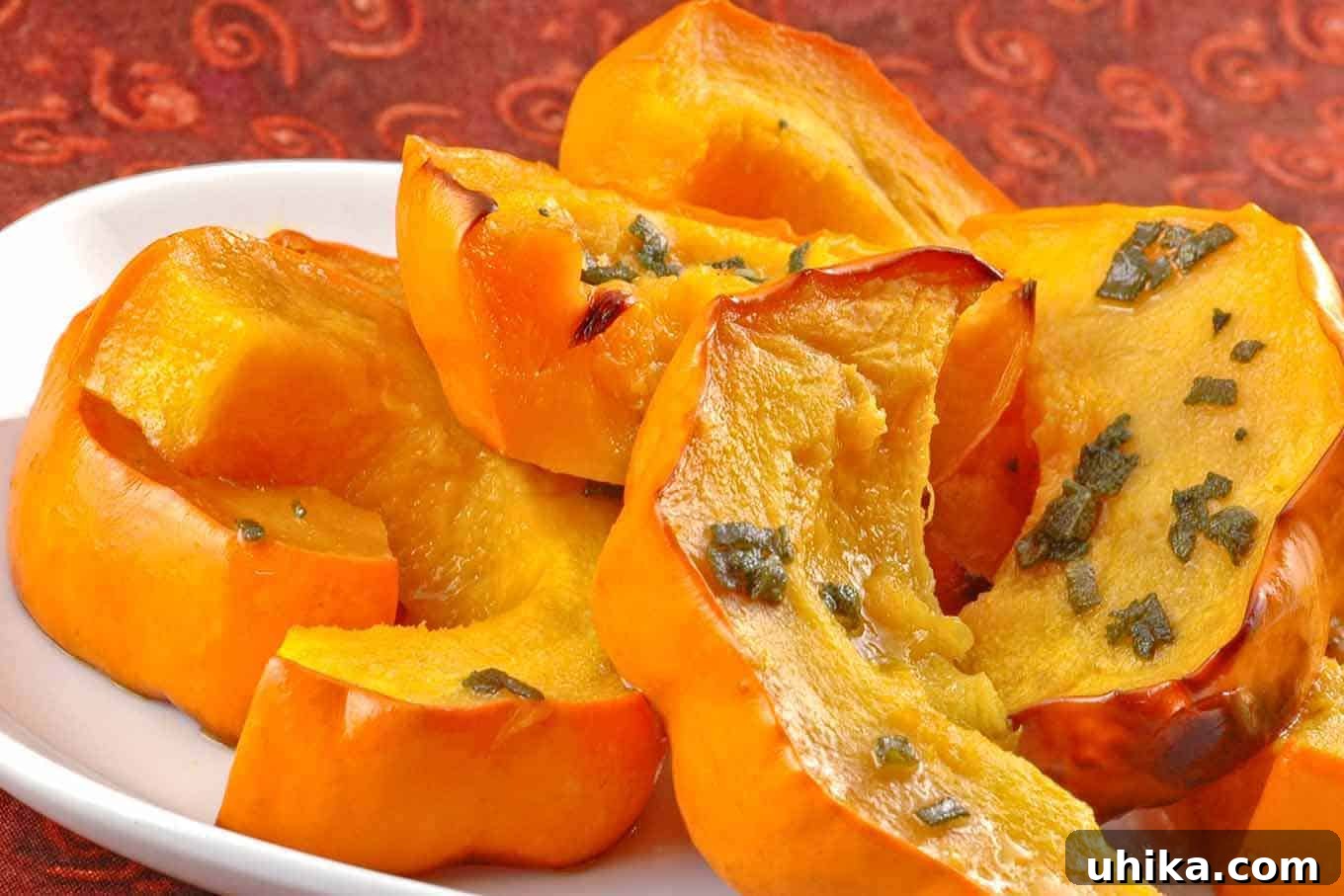
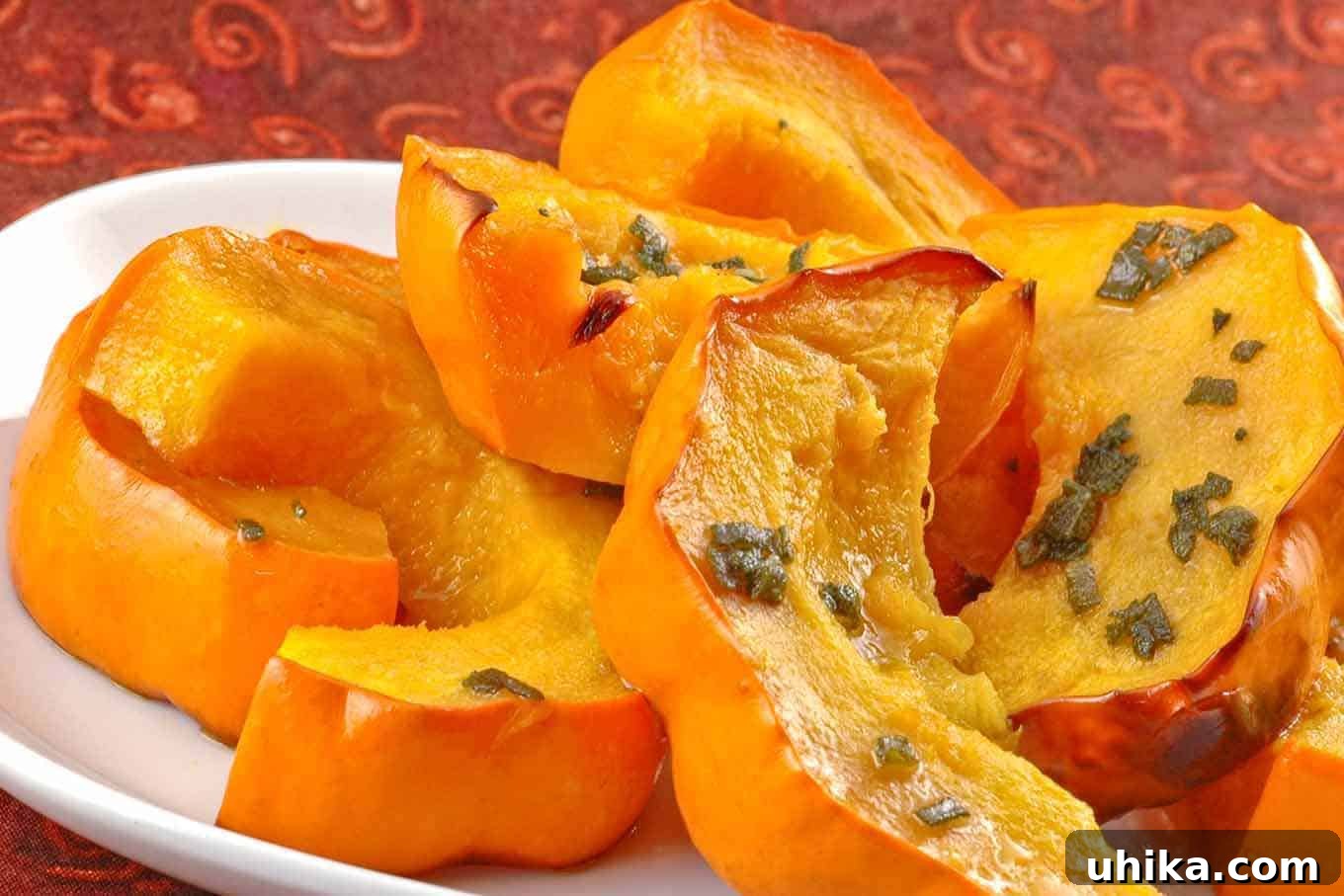
Golden Acorn Squash with Sage and Honey: An Exquisite Autumn Side
Acorn squash, a delightful member of the winter squash family, is celebrated for its distinctive shape and sweet, nutty flavor. It’s also remarkably simple to prepare, making it a favorite for both weeknight dinners and special occasions. This particular recipe highlights acorn squash’s natural sweetness with just a hint of honey, allowing the fresh, earthy aroma of sage to truly shine through. The combination is pure culinary harmony, creating a side dish that’s both comforting and elegant.
This roasted golden acorn squash recipe made a fantastic accompaniment to our Gruyere-Stuffed Chicken with Caramelized Apples and Onions, proving its versatility with rich, savory main courses. Its vibrant color and appealing texture also make it a beautiful addition to any holiday spread, from Thanksgiving to Christmas.
Rated 4.67 out of 5 stars by 3 users
Golden Acorn Squash With Sage And Honey
By Lynne Webb
Winter squash and sage are a classic pairing, and the mild sweetness added by the honey in this recipe beautifully accents that flavor combination.
Pin Recipe
Rate Recipe
Print Recipe
Ingredients
- 2 small golden acorn squash, about 1 lb each
- 3 tablespoons butter, melted
- 2 teaspoons honey
- Kosher salt and freshly ground black pepper, to taste
- 1 tablespoon fresh sage, finely chopped
Instructions
- Preheat your oven to 425°F (220°C). Thoroughly scrub the acorn squash to remove any dirt or debris. Carefully cut each squash in half lengthwise. Using a spoon, scoop out the seeds and any stringy pulp from the center. You can reserve the seeds for toasting later if desired.
- Once halved, cut each squash half lengthwise again, creating quarters. Then, slice these quarters crosswise into uniform 3/4-inch thick pieces. This ensures even cooking and beautiful presentation.
- In a small bowl, combine the melted butter with the honey, stirring until well mixed. Arrange the squash slices in a single layer on a large baking sheet, making sure not to overcrowd the pan. Lightly brush each piece with half of the butter and honey mixture, reserving the other half for later.
- Season the squash pieces lightly with kosher salt and freshly ground black pepper. Cover the baking sheet loosely with aluminum foil. Roast in the preheated oven for 20 minutes.
- While the squash roasts, add the finely chopped fresh sage to the remaining butter-honey mixture and stir to combine.
- After 20 minutes, carefully remove the squash from the oven. Using tongs, flip each piece over. Brush the squash again with the reserved sage-butter-honey mixture, ensuring all sides are coated for maximum flavor. Season again with a touch more salt and pepper if desired.
- Return the baking sheet to the oven, this time uncovered, and continue to roast for another 10 minutes, or until the squash is tender and beautifully golden brown at the edges.
- Serve immediately and enjoy this wonderfully aromatic and subtly sweet side dish!
The Versatility of Acorn Squash: A Winter Gem
Acorn squash, named for its distinctive acorn-like shape, is a truly versatile and nutritious winter vegetable. While often associated with its more common dark green rind, the golden variety offers a stunning orange hue both inside and out, making it visually appealing on any plate. Some gourmands suggest that golden acorn squash has a slightly sweeter flesh and a more delicate skin than its green counterpart, which can be a pleasant surprise for those who typically find winter squash a bit too fibrous. Regardless of the color, acorn squash provides a good source of vitamins A and C, dietary fiber, and potassium, making it a healthy choice for your diet.
Preparing acorn squash is surprisingly straightforward. Its relatively soft skin, compared to other winter squashes like butternut or hubbard, makes it easier to cut. A sharp, heavy knife and a stable cutting surface are your best friends here. Once cut and deseeded, it can be roasted, baked, steamed, or even microwaved. For this recipe, roasting is preferred as it caramelizes the natural sugars, creating a deeper, richer flavor and a tender, melt-in-your-mouth texture.
A Symphony of Flavors: Sage and Honey
The pairing of sage and honey with acorn squash is a classic for a reason. Sage, with its slightly peppery, earthy, and piney notes, provides a beautiful contrast to the inherent sweetness of the squash. It elevates the dish from a simple roasted vegetable to something truly sophisticated. When using fresh sage, as in this recipe, the aromatic oils are released during cooking, infusing every bite with its distinct herbaceous character. If fresh sage is unavailable, you can substitute with about 1 teaspoon of dried rubbed sage, though the flavor will be more concentrated, so adjust to your preference.
Honey adds a delicate, natural sweetness that enhances the squash without overpowering it. Unlike granulated sugar, honey contributes a complex floral or caramel undertone depending on its variety. It also helps in achieving that beautiful golden-brown crust during roasting. For a richer, deeper flavor, consider using local artisanal honey. Maple syrup is another excellent alternative if you prefer a different kind of natural sweetness.
Tips for Perfect Roasted Acorn Squash
- Choosing Your Squash: Look for acorn squash that are firm, heavy for their size, and have dull, not shiny, skin. Avoid any with soft spots or significant blemishes.
- Safe Cutting: Acorn squash can be a bit tricky to cut. For safety, first slice a small piece off the bottom or top to create a flat, stable surface. Then, carefully cut it in half lengthwise. A sturdy chef’s knife is recommended.
- Even Slices: Aim for uniform 3/4-inch slices to ensure all pieces cook at the same rate. This prevents some pieces from being undercooked while others are overcooked.
- Don’t Overcrowd the Pan: Give your squash pieces space on the baking sheet. If they’re too close together, they’ll steam instead of roast, leading to a less desirable texture. Use two baking sheets if necessary.
- The Foil Trick: Covering the squash loosely with foil for the initial roasting period helps to steam it slightly, ensuring it becomes tender without drying out. Removing the foil allows for the delicious caramelization and browning in the final stage.
- Flavor Infusion: Adding sage to the reserved butter-honey mixture for the second brush ensures the herb’s flavor is fresh and prominent, rather than burning off during the initial long roast.
Serving Suggestions and Pairings
This Golden Acorn Squash with Sage and Honey is incredibly versatile and can complement a wide array of main courses. Beyond our recommended Gruyere-Stuffed Chicken, here are some other ideas:
- Roast Meats: It pairs beautifully with roast chicken, turkey (making it a fantastic Thanksgiving side!), pork loin, or even a classic pot roast.
- Fish: The delicate sweetness and savory herbs work well with baked salmon or cod.
- Vegetarian Mains: Serve it alongside a lentil loaf, mushroom risotto, or a hearty vegetarian casserole for a complete meal.
- Breakfast/Brunch: Don’t limit it to dinner! Roasted squash can be a unique addition to a brunch spread, perhaps alongside eggs or a frittata.
- Salads: Let it cool slightly and add it to a warm autumn salad with mixed greens, goat cheese, and toasted pecans.
For an even more elaborate side dish, consider garnishing the finished squash with toasted chopped walnuts or pecans, a sprinkle of crumbled feta or goat cheese, or a drizzle of balsamic glaze for an extra tang.
Creative Variations to Try
While this recipe is perfect as written, feel free to experiment and make it your own! Here are a few ideas for customization:
- Spice It Up: Add a pinch of cinnamon, nutmeg, or allspice to the butter-honey mixture for a warmer, spicier flavor profile, especially fitting for fall.
- Herb Alternatives: If sage isn’t your favorite, try fresh thyme or rosemary. Their robust flavors also complement squash wonderfully.
- Sweetener Swap: As mentioned, maple syrup is a great substitute for honey. Brown sugar or a touch of molasses could also be used for a different depth of sweetness.
- Garlic Infusion: Minced garlic can be added to the butter mixture along with the sage for an extra savory kick.
- Citrus Brightness: A squeeze of fresh orange juice or a bit of orange zest added to the butter mixture can provide a lovely bright counterpoint to the richness of the squash.
- Make it Cheesy: A sprinkle of Parmesan cheese in the last few minutes of roasting can add a salty, umami dimension.
Storage and Reheating
Leftover roasted acorn squash can be stored in an airtight container in the refrigerator for up to 3-4 days. To reheat, you can gently warm it in the microwave, but for the best texture, reheat it in the oven at 350°F (175°C) for about 10-15 minutes, or until heated through. This helps to restore some of its roasted crispness.
This dish also freezes well. Allow it to cool completely, then spread it in a single layer on a baking sheet and freeze until solid. Transfer the frozen pieces to a freezer-safe bag or container and store for up to 3 months. Reheat from frozen in the oven until tender and hot.
Like this recipe? Rate and comment below!
Share your thoughts and feedback with us!
Your feedback is important! Please share your experience with this recipe in the comments section below. We’d love to hear how it turned out for you.