
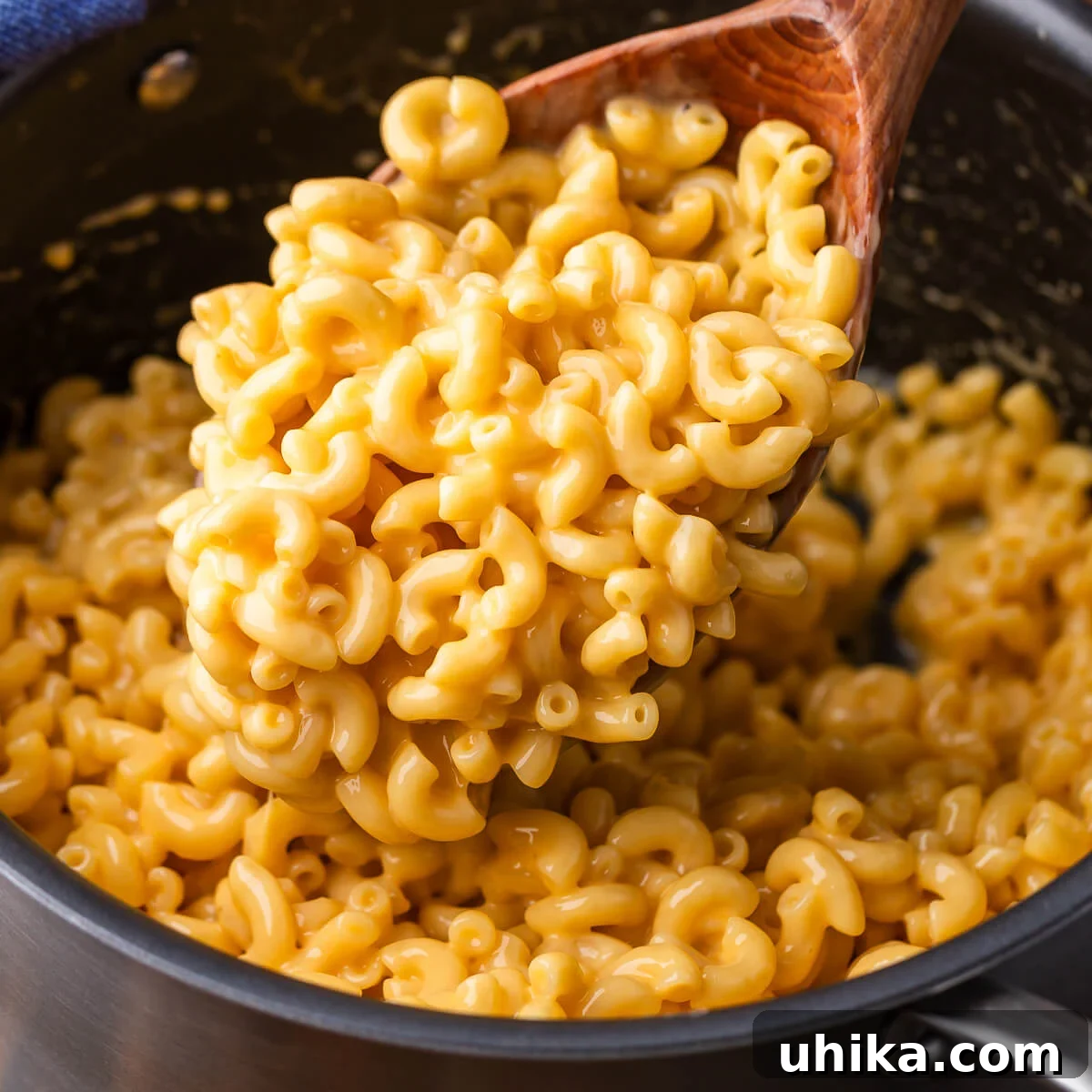
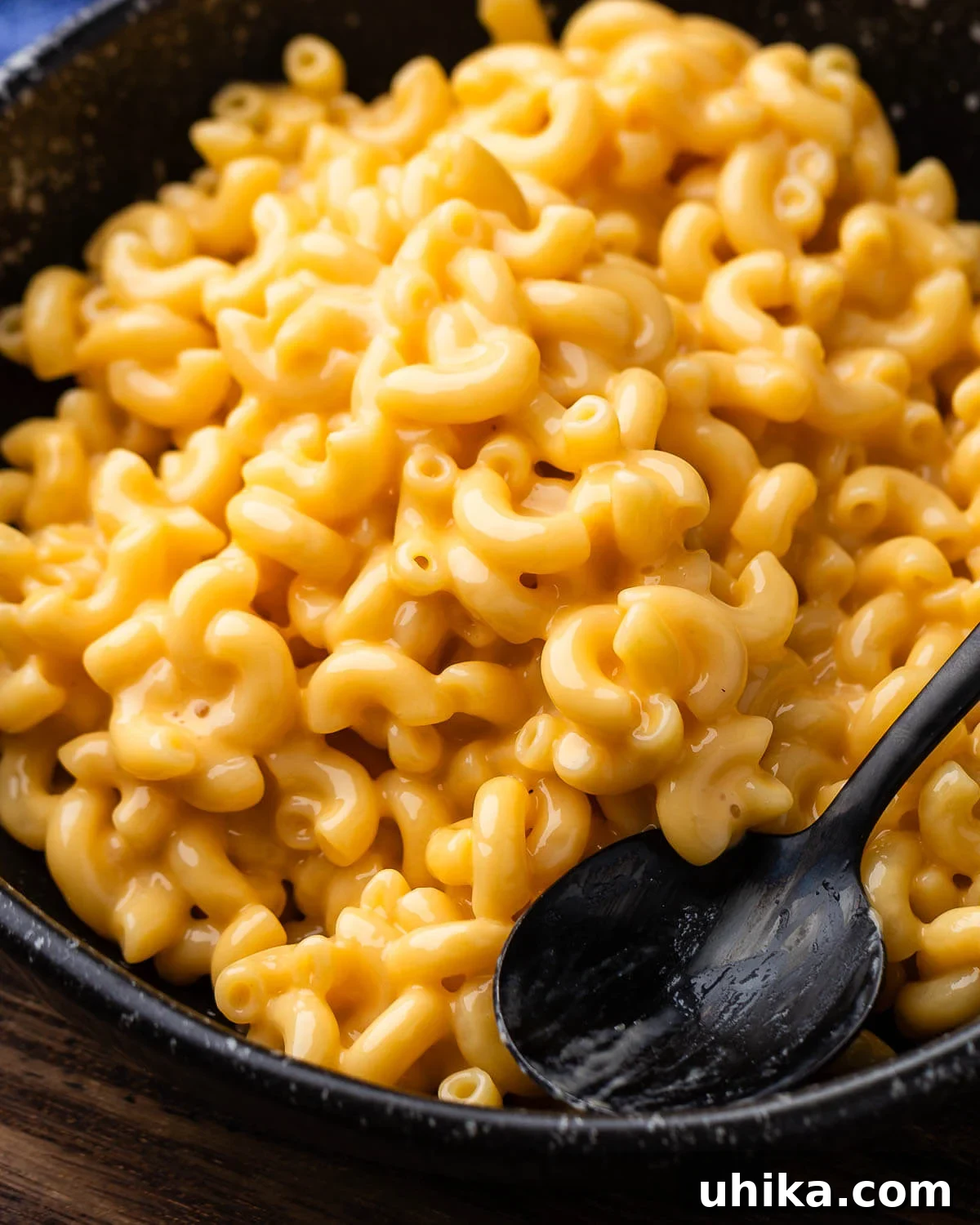
Creamy Stovetop Mac and Cheese isn’t just a side dish; it’s a warm, comforting hug in a bowl that pairs beautifully with virtually any meal. This recipe promises an exceptionally smooth and rich cheese sauce, crafted from sharp cheddar and robust Pecorino Romano, gently simmered with milk and then generously tossed with your favorite pasta. One bite is all it takes to transport you back to childhood, reminding you of the simple joy of perfectly prepared comfort food.
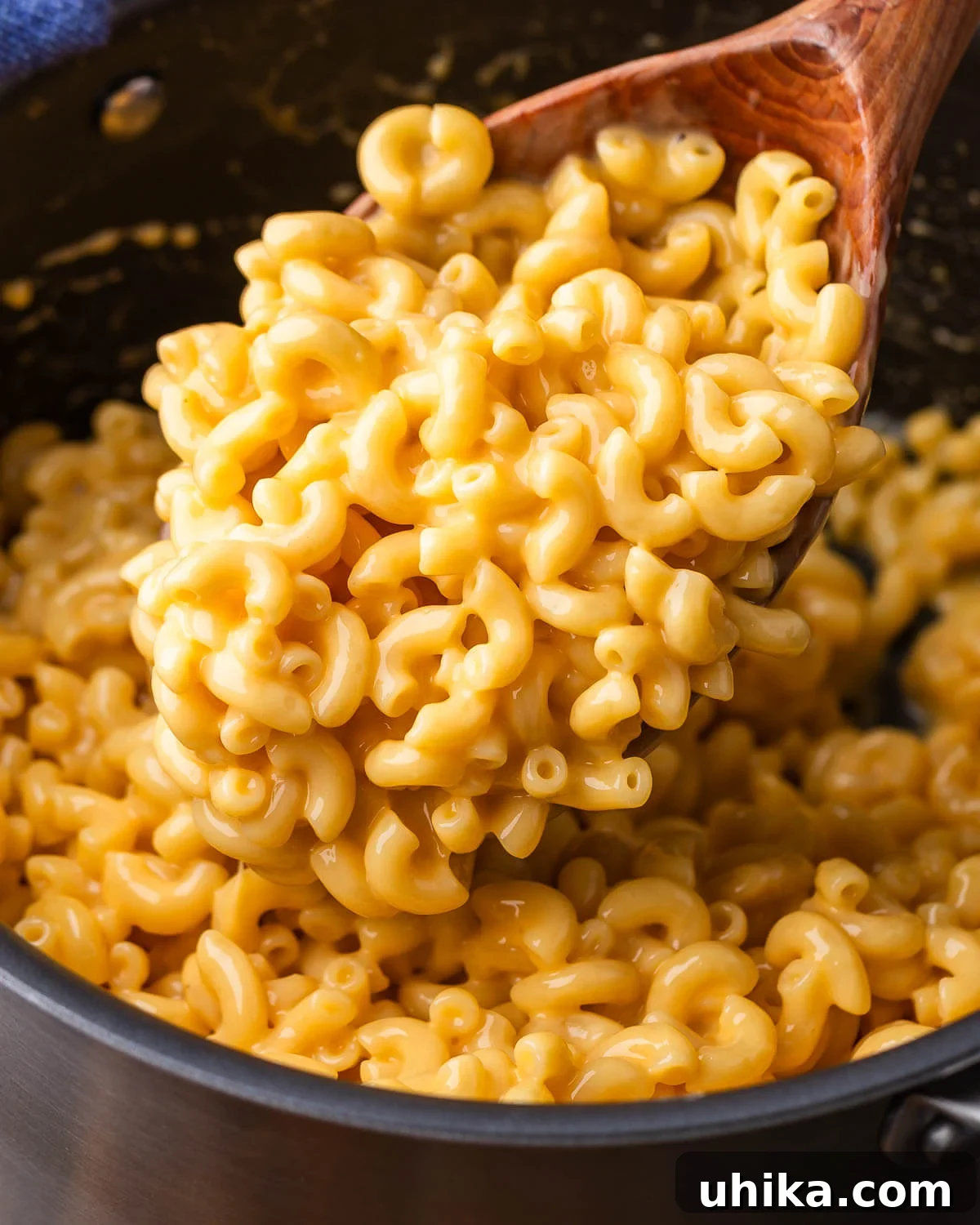
Whether you prefer the crispy top of a baked mac and cheese or the luscious silkiness of a stovetop mac and cheese, this dish consistently ranks as a family favorite. It’s not only incredibly easy to prepare but also guaranteed to win over even the pickiest eaters. What truly sets this particular recipe apart is its remarkable ability to maintain its irresistible creaminess, even when reheated the following day, making leftovers an absolute delight.
This versatile mac and cheese makes an excellent accompaniment to a variety of main courses. Serve it alongside crispy Italian chicken cutlets, tender easy baked chicken legs, or vibrant roasted Brussels sprouts and carrots for a complete and satisfying meal.
The Secret to Stovetop Perfection: Key Ingredients for Creamy Mac and Cheese
Achieving that flawlessly smooth and rich cheese sauce is all about selecting the right ingredients and understanding their roles. Below, we delve into the essential components that make this stovetop mac and cheese truly exceptional.
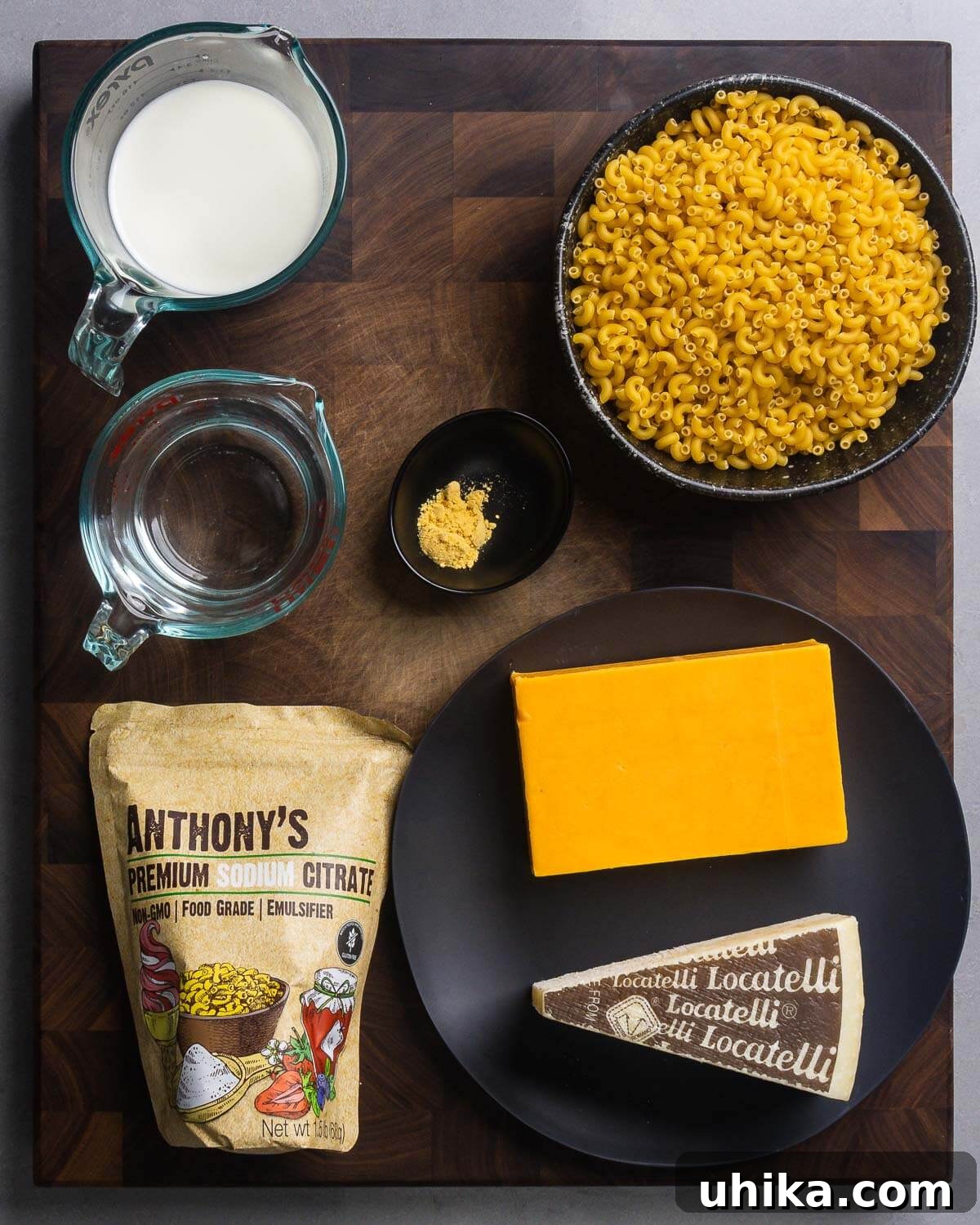
- Pasta: The Foundation of Flavor
While classic elbow macaroni and small shell pasta are traditionally associated with mac and cheese, their shape isn’t just for tradition; it’s functional. Their curves and hollows are perfect for capturing and holding onto every drop of that luscious cheese sauce, ensuring a burst of flavor with each spoonful. Feel free to experiment with other small to medium-sized pasta shapes like ditalini, rotini, or even cavatappi, which also do an excellent job of clinging to the sauce. The key is to cook your pasta al dente, providing a pleasant textural contrast to the creamy sauce.
- Cheese: The Heart of the Dish
For this recipe, we’ve chosen a harmonious blend of sharp cheddar and Pecorino Romano. Sharp cheddar provides that beloved tangy, robust cheese flavor we all crave in mac and cheese, while Pecorino Romano introduces a salty, complex, and slightly nutty depth that elevates the dish beyond the ordinary. For the best results and smoothest melt, always grate your cheese from the block rather than using pre-shredded varieties, which often contain anti-caking agents that can interfere with the sauce’s consistency. If you’re looking to explore other flavor profiles, Gruyere offers a wonderful nutty and earthy note, while Fontina provides incredible meltability and a milder, buttery taste. For those who prefer a taste reminiscent of classic boxed mac and cheese, a combination of mild cheddar and American cheese can deliver that familiar, comforting profile.
- Food-Grade Sodium Citrate: The Emulsification Marvel
This is truly the *game-changer* for achieving a consistently creamy and smooth stovetop mac and cheese, completely free from clumping or greasiness. Sodium citrate acts as an emulsifier, preventing the fat and protein in cheese from separating when heated. It’s the secret ingredient behind the silky texture of many processed cheese products, deli slices, and even fondue. By incorporating sodium citrate, you can melt cheese directly into liquids at a higher temperature without it “breaking” or becoming grainy. It allows for a stable, velvety smooth cheese sauce every single time. Many reputable food-grade brands are available online; we personally recommend Anthony’s Premium Sodium Citrate for its quality and effectiveness.
- Milk & Water: The Liquid Base
Whole milk is preferred for its richness, contributing to a more luxurious texture and flavor. The addition of water helps to create the ideal liquid base for the sodium citrate to work its magic, ensuring the cheese melts into a smooth, pourable sauce without becoming overly thick too quickly.
- Mustard Powder: The Flavor Enhancer
A touch of mustard powder might seem unusual, but it’s a classic secret ingredient in cheese sauces. It doesn’t make your mac and cheese taste like mustard; instead, it subtly amplifies and deepens the savory notes of the cheese, making the overall flavor more complex and pronounced.
- Salt and Pepper: Seasoning to Taste
These fundamental seasonings are crucial for balancing and enhancing all the flavors in the dish. Adjust them to your preference for a perfectly seasoned mac and cheese.
For detailed measurements and exact quantities, please refer to the comprehensive recipe instructions below.
How to Make the Ultimate Creamy Stovetop Mac and Cheese: Step-by-Step
Follow these simple steps to create a macaroni and cheese that’s rich, creamy, and undeniably delicious. Each step is designed to ensure a perfect outcome every time.
- Prepare the Pasta: Begin by bringing a large pot of generously salted water to a rolling boil. Add 1 pound of elbow macaroni or shell pasta and cook according to package directions until it reaches an al dente texture – tender but still firm to the bite. Before draining, remember to reserve 1 cup of the starchy pasta water; this will be your secret weapon for adjusting the sauce consistency later. Drain the cooked macaroni in a colander and set aside.
- Shred the Cheese: While the pasta cooks, shred 4 cups of sharp cheddar cheese and grate 1/2 cup of Pecorino Romano. Freshly grated cheese melts more smoothly than pre-shredded varieties.
- Create the Emulsified Cheese Base: In a separate large, heavy-bottomed pot or Dutch oven, combine 1 1/4 cups of whole milk, 1 1/4 cups of water, and 1 tablespoon (14g) of food-grade sodium citrate. Heat this mixture over medium-low heat, stirring occasionally, until it reaches a gentle simmer. It’s important not to bring it to a vigorous boil.
- Gradually Add Cheese for a Silky Sauce: Once the liquid is simmering gently, begin adding the shredded cheeses to the pot, just 1-2 tablespoons at a time. Whisk continuously as you add each batch of cheese. This gradual addition, combined with the sodium citrate, is key to achieving a perfectly smooth, velvety sauce without any clumps. Continue this process until all the cheese has been incorporated and the sauce is completely smooth and homogeneous. If you encounter any stubborn clumps, an immersion blender can be used briefly to achieve ultimate smoothness.
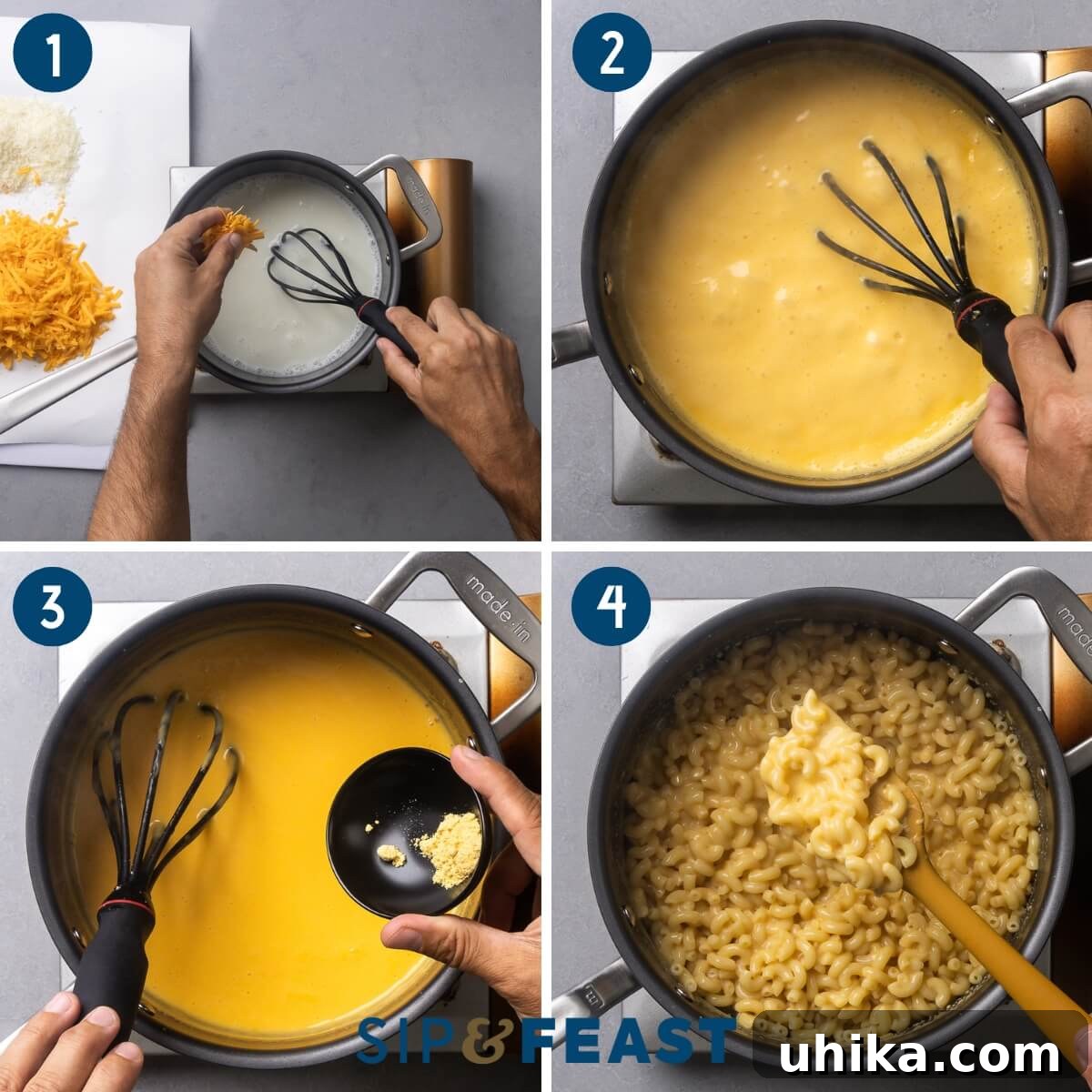
- Season and Perfect the Sauce: Once your cheese sauce is beautifully smooth and creamy, stir in 1 teaspoon of mustard powder. Whisk well to combine. Taste the sauce and season with salt and freshly ground black pepper to your liking. If the sauce appears too thin, simply continue to cook it for a few more minutes over low heat, stirring constantly, to allow some of the liquid to evaporate and thicken it slightly. The sauce is ready when it coats the back of a spoon thoroughly.
- Combine Pasta and Sauce: Now it’s time to bring it all together! Add half of the drained pasta to the pot with the cheese sauce. Stir gently to coat. Then, gradually add more of the pasta until you reach your desired consistency – some prefer a very saucy mac and cheese, while others like it a bit less so. If the mac and cheese appears too thick, add a tablespoon or two of the reserved pasta water, stirring until it loosens to your perfect consistency. Give it one final taste test and make any last-minute adjustments to the seasoning.
- Serve Immediately: Stovetop mac and cheese is best enjoyed fresh off the stove when it’s at its peak creaminess. Serve warm and savor every bite!
Expert Tips for Mac and Cheese Mastery
Elevate your stovetop mac and cheese from great to extraordinary with these insider tips:
- Start with Half the Sauce: When combining the pasta and sauce, it’s wise to start with about half of the cheese sauce and add more incrementally. This allows you to achieve your preferred level of sauciness without overdoing it. A great trick is to serve any leftover warm cheese sauce on the side for those who simply can’t get enough cheesy goodness.
- Prep Ahead for Convenience: The cheese sauce is incredibly forgiving and can be made up to 5 days in advance. Store it in an airtight container in the refrigerator, and gently reheat on the stovetop over low heat, whisking frequently, when ready to use. You can even freeze the sauce for up to 2 months; just be sure to thaw it completely in the refrigerator before reheating.
- Don’t Discard Your Pasta Water: Always remember to save a cup of the starchy pasta water. This cloudy, flavorful liquid is a lifesaver if your mac and cheese sauce becomes too thick. A tablespoon or two can help loosen it up and bring it back to that perfect, creamy consistency without diluting the flavor.
- Grate Your Own Cheese: While pre-shredded cheese is convenient, it often contains anti-caking agents like cellulose that can make your sauce slightly grainy. For the smoothest, silkiest cheese sauce, always take the extra few minutes to grate your own cheese from a block.
- Embrace an Immersion Blender: If you’re aiming for absolute perfection, an immersion blender can be your best friend. After all the cheese has been added and whisked, a quick blitz with an immersion blender will ensure an impeccably smooth, lump-free sauce.
- Customize Your Mac: Don’t be afraid to make this recipe your own! Add cooked bacon bits, a sprinkle of chives, a dash of hot sauce for a kick, or even some sautéed mushrooms or spinach for added flavor and nutrition.
Frequently Asked Questions (FAQ)
Can I make this recipe without sodium citrate?
Yes, you *can* attempt to make mac and cheese without sodium citrate, but be forewarned: the cheese will almost certainly clump and separate into an oily, grainy mess very quickly. Sodium citrate is the “magic” emulsifying ingredient that creates the smooth, stable cheese sauce found in professional fondue, cheese sauces for Philly cheesesteaks, and, yes, even processed deli cheese. It prevents the cheese proteins from coagulating and ensures a uniform, creamy texture. If you are reluctant to use it, you could substitute evaporated milk for whole milk. Interestingly, evaporated milk often contains stabilizers, which can include sodium citrate! So, if you’re willing to use evaporated milk, you might find that following this recipe with food-grade sodium citrate achieves an even better, more consistent result.
Why is my cheese sauce grainy?
Grainy cheese sauce is a common issue and usually occurs when the cheese overheats or separates. This is precisely what sodium citrate helps to prevent by acting as an emulsifier, stabilizing the cheese proteins. If you’re not using sodium citrate, trying to melt cheese directly into hot liquid often leads to a grainy texture. Additionally, using pre-shredded cheese with anti-caking agents can contribute to graininess. For the creamiest result, always grate cheese from the block and ensure your liquid base is at a gentle simmer, not a rapid boil, when adding the cheese slowly.
More Comforting Side Dishes to Love
If you’re a fan of rich, creamy, and utterly comforting side dishes, you’ll definitely want to give these recipes a try. They pair perfectly with a variety of meals or can stand proudly on their own:
- Creamed Spinach: A decadent and surprisingly easy side that balances richness with fresh greens.
- Scalloped Potatoes: Layers of thinly sliced potatoes baked in a creamy, cheesy sauce.
- Roasted Garlic Mashed Potatoes: Fluffy mashed potatoes infused with the sweet, mellow flavor of roasted garlic.
Conclusion: Savor the Creamy Goodness
This Creamy Stovetop Mac and Cheese recipe is more than just food; it’s an experience. It’s the perfect blend of simplicity, comfort, and gourmet taste, proving that a truly satisfying meal doesn’t have to be complicated. With the right ingredients and a few simple techniques, you can achieve a restaurant-quality mac and cheese right in your own kitchen.
We hope you thoroughly enjoy preparing and savoring this delightful dish. If you’ve tried and enjoyed this Creamy Stovetop Mac and Cheese Recipe or any other recipe on our site, we would be incredibly grateful if you would give it a 5-star rating and share your thoughts in the comments below. Your feedback helps us continue to create and share delicious recipes with our community!
For those who prefer to learn visually, many of our recipes are available with step-by-step video guides on our YouTube channel and our Facebook Page.
For exclusive access to never-before-seen FULL MEAL RECIPE VIDEOS and to support our culinary journey, consider becoming a Patreon member today!
Creamy Stovetop Mac and Cheese
By James Delmage
Prep Time: 15 mins
Cook Time: 20 mins
Total Time: 35 mins
Servings: 6

Stovetop mac and cheese is the creamy, comforting side dish that goes well with everything! It combines shredded cheddar and Pecorino Romano cheese with milk that’s simmered until creamy and tossed with shell or elbow pasta.
Ingredients
- 1 pound elbow macaroni or medium or small shells
- 1 1/4 cups milk (whole milk recommended)
- 1 1/4 cups water
- 4 cups shredded sharp cheddar cheese (from block)
- 1/2 cup grated Pecorino Romano (from block)
- 1 tablespoon (14g) sodium citrate
- 1 teaspoon mustard powder
- Salt and pepper to taste
Instructions
- Bring a large pot of salted water to boil. Cook macaroni until al dente. Reserve 1 cup of pasta water, then drain the macaroni in a colander. Set aside.
- In a large, heavy-bottomed pot, combine the milk, water, and sodium citrate. Bring the mixture to a gentle simmer over medium-low heat, stirring occasionally.
- Once simmering, gradually add the shredded cheeses (1-2 tablespoons at a time) to the pot, whisking continuously until all the cheese is completely melted and the sauce is smooth. An immersion blender can be used for extra smoothness if needed.
- After the cheese sauce is smooth, add the mustard powder and stir to combine. Taste the sauce and season with salt and pepper as needed. If the sauce is too thin, cook for a few more minutes to evaporate some liquid until it coats the back of a spoon.
- Combine the cooked pasta with about half of the cheese sauce to start. Add more sauce until your mac and cheese reaches the desired consistency. If it becomes too thick, add a touch of the reserved pasta water to loosen it up. Give it one final taste and adjust seasoning if necessary. Serve immediately. Enjoy!
Notes
- It’s recommended to start by combining the pasta with only half of the cheese sauce, then adding more until you reach your preferred consistency. Serving extra hot cheese sauce on the side is a great option for those who like more.
- This recipe is adapted from insights found in Modernist Cuisine.
- If your cheese sauce accidentally breaks (separates), bring the mixture to a boil and process it with an immersion blender to re-emulsify.
- The cheese sauce can be prepared up to 5 days in advance and stored in the refrigerator. Reheat gently on the stovetop, whisking often, until smooth and warm.
Nutrition
Nutrition information is automatically calculated and should be used as an approximation.
- Calories: 525kcal
- Carbohydrates: 54.8g
- Protein: 26.7g
- Fat: 21.5g
- Saturated Fat: 13.8g
- Cholesterol: 68mg
- Sodium: 470mg
- Potassium: 190mg
- Fiber: 2.3g
- Sugar: 3g
- Calcium: 513mg
- Iron: 3mg