
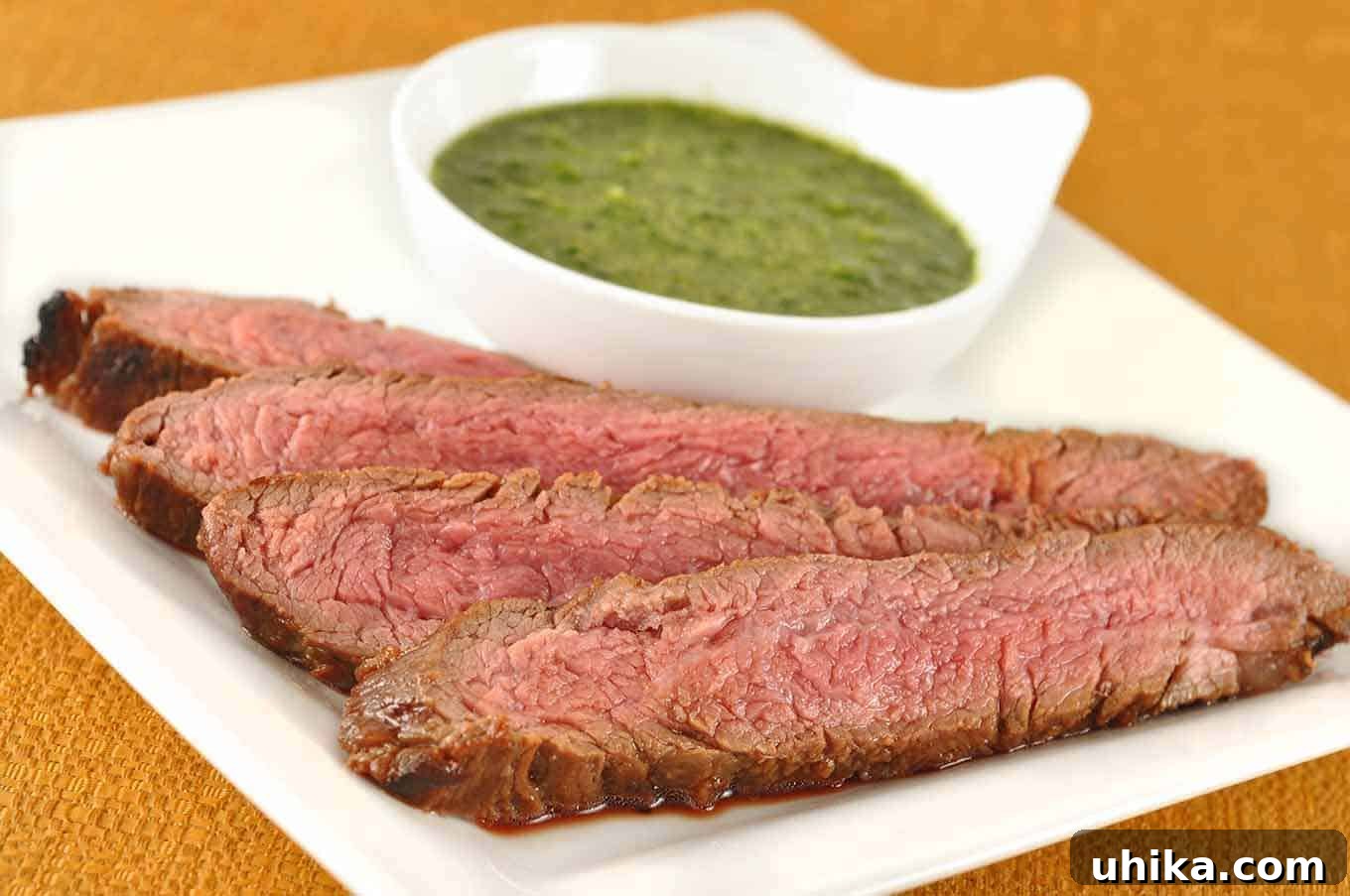
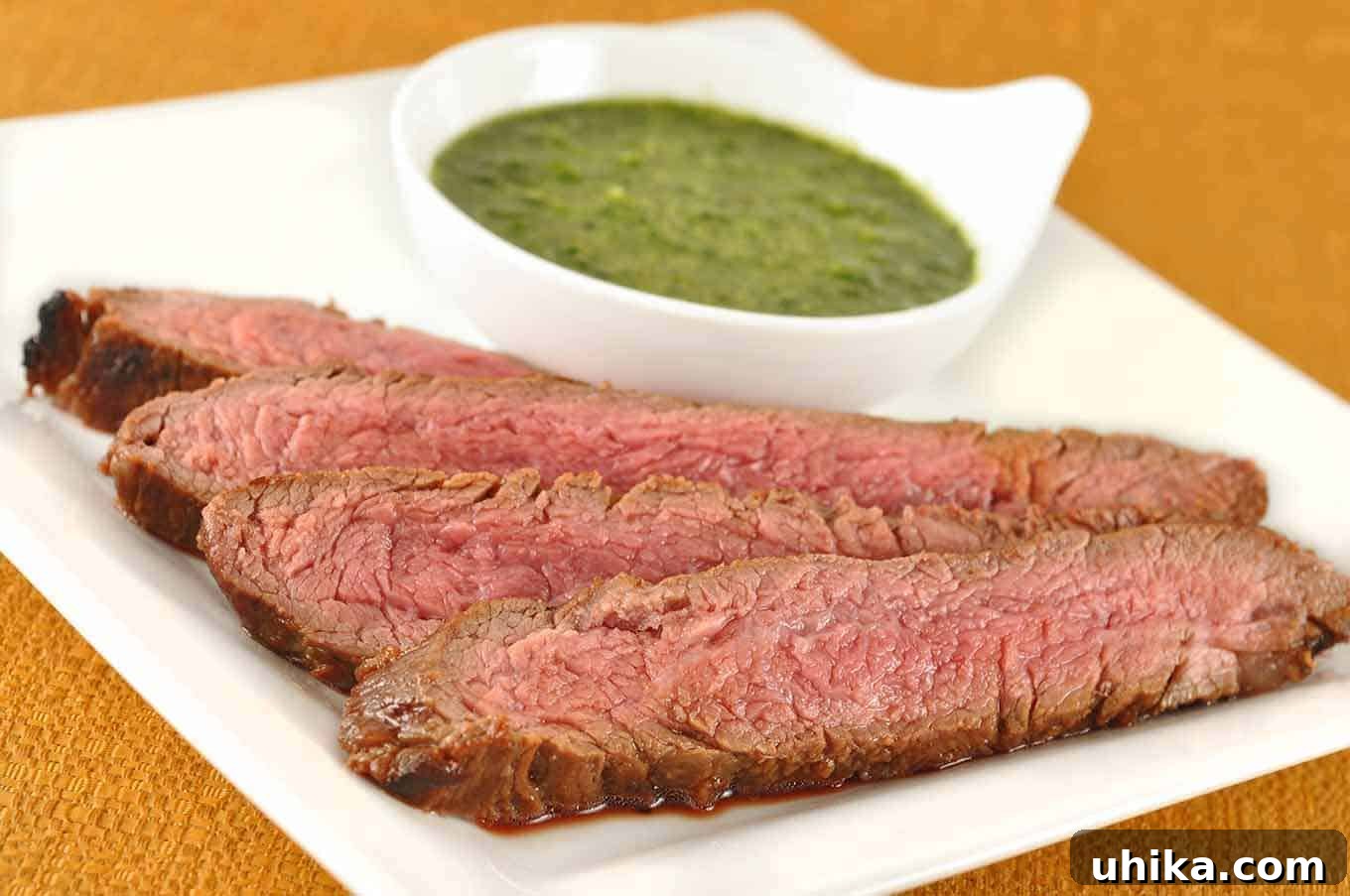
Mirin-Marinated Flank Steak with Vibrant Asian Chimichurri
Flank steak is a true culinary gem, celebrated for its rich, robust beefy flavor and delightful texture when prepared with care. We appreciate its versatility and how well it lends itself to various culinary inspirations. While we’ve previously explored the classic South American approach with our Grilled Flank Steak with Traditional Chimichurri, this recipe embarks on an exciting new journey, embracing the aromatic and complex flavors of Asia.
Prepare to elevate your grilling game with a Mirin-Marinated Flank Steak, perfectly complemented by a refreshingly zesty Asian Chimichurri. This dish masterfully fuses the hearty goodness of beef with a symphony of East Asian and Southeast Asian influences, creating a meal that is both familiar and exotic. Our flank steak is tenderized and infused with a savory-sweet marinade featuring mirin, soy sauce, and fragrant garlic, then grilled to juicy perfection. The accompanying chimichurri takes a bold detour from its Argentinian roots, replacing traditional parsley with a vibrant blend of cilantro, basil, and mint, delivering an unforgettable burst of fresh, herbaceous notes.
Why Flank Steak is a Fantastic Choice
Often overlooked, flank steak is an economical cut that offers exceptional flavor. It’s lean, flavorful, and known for its distinctive grain. While it can be tougher if overcooked or sliced incorrectly, its fibrous nature makes it an ideal candidate for marinades. The marinade penetrates the meat, breaking down some of the muscle fibers and infusing it with deep flavor, resulting in a surprisingly tender and juicy outcome. When cooked quickly over high heat and then sliced thinly against the grain, flank steak transforms into a melt-in-your-mouth experience that rivals more expensive cuts.
Beyond its taste and texture, flank steak is incredibly versatile. It’s perfect for grilling, pan-searing, or broiling, making it suitable for a quick weeknight dinner or a relaxed weekend barbecue. Its broad, flat shape also ensures even cooking and a beautiful presentation. For this recipe, the combination of a sweet-savory marinade and a bright, fresh sauce truly allows the flank steak to shine, making it a star on any plate.
Mirin-Marinated Steak with Asian Chimichurri
Print Recipe
Ingredients
For the Mirin Marinade:
- 1-3/4 to 2 lb beef flank steak
- 1/2 cup mirin, see notes
- 1/4 cup soy sauce
- 2 tablespoons toasted sesame oil
- 2 cloves garlic, finely chopped
- 1 teaspoon sriracha
For the Asian Chimichurri:
- 1 shallot
- 1 clove garlic
- 1 small jalapeño pepper, sliced
- 1 tablespoon fresh ginger, chopped
- 2/3 cup packed fresh cilantro leaves and stems
- 1/2 cup packed fresh basil, or Thai basil leaves
- 1/2 cup packed fresh mint leaves
- 2 tablespoons olive oil
- 2 tablespoons vegetable oil
- 2 tablespoons rice wine vinegar
- 1 tablespoon fish sauce or soy sauce
- 1/4 teaspoon ground black pepper
- 1/4 to 1/2 teaspoon salt, if needed
Instructions
-
Marinate the Steak: In a small bowl, whisk together the mirin, soy sauce, toasted sesame oil, minced garlic, and sriracha until well combined. Pour this marinade into a shallow dish or a resealable plastic bag, ensuring it’s just large enough to hold the flank steak. Add the steak, turning it several times to ensure it is thoroughly coated. Cover the dish or seal the bag and refrigerate for a minimum of 4 hours, or ideally, overnight, turning the steak once halfway through the marinating time to ensure even flavor distribution.
-
Prepare the Asian Chimichurri: Begin by finely mincing the shallot and garlic in the work bowl of a food processor with a few quick pulses. Add the chopped fresh ginger and pulse again to integrate. Next, add the fresh cilantro, basil, and mint leaves. Pulse until the herbs are finely chopped but not pureed into a paste – you want a slightly coarse texture. Pour in the olive oil, vegetable oil, rice wine vinegar, and your choice of fish sauce or soy sauce, along with the ground black pepper. Process until the mixture is well blended. Taste the chimichurri and adjust seasoning with salt if necessary. Transfer the finished sauce to a serving dish, cover, and refrigerate until you are ready to serve. This allows the flavors to meld beautifully.
-
Grill the Steak: Preheat your grill, grill pan, or broiler to high heat. Once hot, carefully place the marinated flank steak on the cooking surface. Cook for approximately 2-1/2 to 3 minutes per side for a perfect rare to medium-rare doneness. Cooking times may vary based on the thickness of your steak and the intensity of your heat source. For medium, add another minute per side. Once cooked, remove the steak from the heat and allow it to rest for 5 to 7 minutes on a cutting board. This crucial resting period allows the juices to redistribute throughout the meat, ensuring a tender and flavorful result. Finally, slice the steak thinly against the grain, which is essential for maximum tenderness. Serve immediately with generous dollops of the Asian chimichurri sauce for dipping.
Notes
About Mirin:
Mirin is a popular condiment used extensively in Japanese cooking, known for its mild sweetness and ability to add a subtle tang and glossy finish to dishes. It’s a type of rice wine with a lower alcohol content and higher sugar content than sake. Varieties with very low alcohol content (sometimes labeled as “aji-mirin” or mirin-style seasoning) are widely available in the Asian or ethnic grocery sections of most supermarkets. Mirin not only imparts a unique flavor but also helps to tenderize the meat and prevent it from drying out during cooking, making it an excellent base for marinades. If genuine mirin is unavailable, a dry sherry or white wine with a pinch of sugar can serve as a substitute, though the flavor profile will differ slightly.
Ingredient Tips & Substitutions:
Soy Sauce: For a gluten-free option, tamari can be used. Low-sodium soy sauce is also a good choice if you’re mindful of salt intake.
Sriracha: Adjust the amount of sriracha in the marinade to your preferred level of heat. For a milder touch, use less, or omit entirely. For more heat, a dash of chili oil can be added to the chimichurri.
Herbs for Chimichurri: While cilantro, basil, and mint provide a distinct Southeast Asian profile, feel free to experiment with other fresh herbs like Thai basil for an extra layer of anise-like flavor. Ensure your herbs are fresh and vibrant for the best chimichurri.
Oils: The combination of olive oil and vegetable oil in the chimichurri offers a balanced flavor and texture. You can use all olive oil for a richer taste, or a neutral oil like grapeseed for a lighter touch.
Fish Sauce: Fish sauce adds a wonderful umami depth characteristic of Southeast Asian cuisine. If you prefer not to use it or need a vegetarian alternative, simply use an additional tablespoon of soy sauce.
The Role of Mirin in Enhancing Flavor and Texture
Mirin, a staple in Japanese cuisine, is a sweet rice wine that plays a vital role in marinades and sauces. Its gentle sweetness balances savory flavors, while its alcohol content helps to tenderize meat and carry flavors deep into the fibers. In our flank steak marinade, mirin works synergistically with soy sauce and garlic, creating a complex flavor profile that is both savory and slightly sweet, with a hint of umami. This combination not only infuses the steak with incredible taste but also helps to achieve that desired juicy tenderness after grilling.
An Asian Twist on a Classic: The Chimichurri Reimagined
Traditional Argentinian chimichurri is known for its vibrant blend of fresh parsley, oregano, garlic, red wine vinegar, and olive oil. It’s a bold, herbaceous sauce that perfectly cuts through the richness of grilled meats. For this recipe, we’ve taken the fundamental concept of chimichurri – a fresh, uncooked herb sauce – and infused it with distinct Asian flavors. Our Asian Chimichurri substitutes the classic parsley and oregano with a refreshing trifecta of cilantro, basil, and mint. These herbs, characteristic of Southeast Asian culinary traditions, bring a bright, aromatic, and slightly cooling quality to the sauce.
The addition of fresh ginger and shallots provides a zesty, pungent base, while a small jalapeño pepper offers a gentle, invigorating kick. Rice wine vinegar and a touch of fish sauce (or extra soy sauce for a vegetarian option) replace the red wine vinegar, adding an authentic Asian acidity and umami depth. The result is a sauce that is incredibly fresh, bursting with complex herbal notes, and perfectly complements the rich, marinated flank steak. This Asian Chimichurri isn’t just for steak; it’s also fantastic with grilled chicken, fish, or even as a vibrant dressing for salads and roasted vegetables, showcasing its incredible versatility.
Achieving Grilling Perfection for Flank Steak
Grilling flank steak requires attention to detail to ensure it’s tender and full of flavor. The key is high heat and quick cooking. A properly preheated grill, grill pan, or broiler will create a beautiful sear on the outside while keeping the inside juicy. Flank steak cooks relatively fast, typically just a few minutes per side, depending on your desired doneness. For the best results and to preserve its tenderness, aim for rare to medium-rare. Overcooking flank steak can make it tough and dry.
Equally important is the resting period after cooking. Once the steak is off the heat, resist the urge to slice into it immediately. Letting it rest for 5-7 minutes allows the muscle fibers to relax and reabsorb the juices, ensuring a more tender and flavorful bite. Finally, slicing against the grain is non-negotiable for flank steak. The “grain” refers to the visible lines running through the meat. Cutting perpendicular to these lines shortens the muscle fibers, making each slice much more tender and enjoyable to chew.
Perfect Pairings and Serving Suggestions
This Mirin-Marinated Flank Steak with Asian Chimichurri is a complete meal in itself, but it truly shines when paired with complementary sides. Consider serving it alongside a bowl of fluffy jasmine rice to soak up all the delicious juices and sauce. For a lighter option, a simple green salad with a ginger-sesame dressing, or stir-fried Asian greens like bok choy or gai lan, would be exquisite. Roasted asparagus or green beans also make excellent accompaniments. For a more adventurous pairing, try it with a light noodle salad or fresh spring rolls.
When it comes to beverages, a crisp, dry white wine like Sauvignon Blanc or Pinot Grigio would beautifully cut through the richness of the steak and complement the fresh herbs of the chimichurri. A light, refreshing lager or a Japanese sake would also be excellent choices to enhance the Asian-inspired flavors of the dish.