
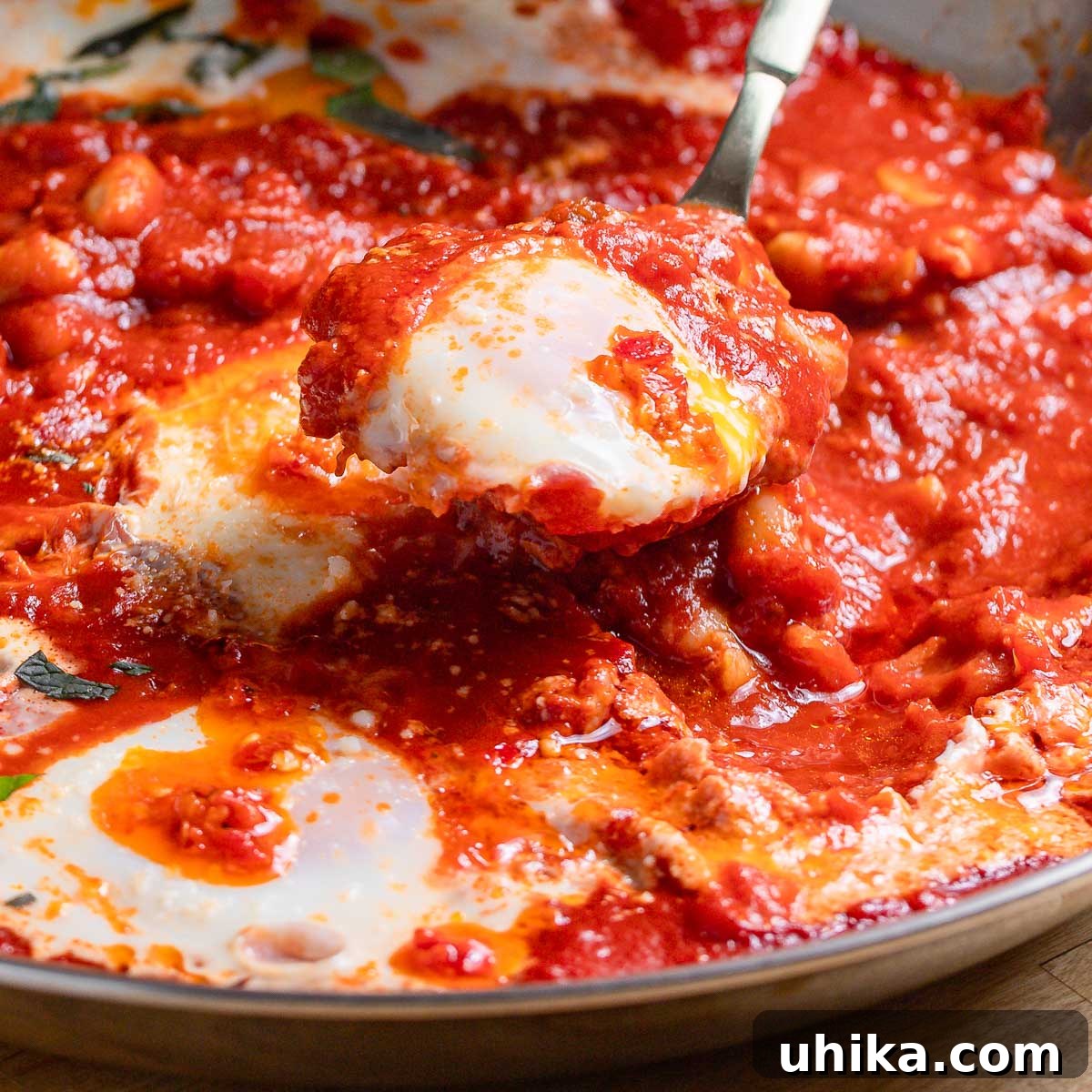
Discover the heartwarming delight of Eggs in Purgatory (Uova in Purgatorio), a traditional Roman dish that transforms simple, staple ingredients into an extraordinary culinary experience. This beloved recipe features fresh eggs gently poached in a rich, garlicky stew of ripe tomatoes and tender cannellini beans. Crowned with savory Pecorino Romano cheese, fragrant fresh basil, and a vibrant drizzle of Calabrian chili oil, it’s a dish that promises both comfort and an exciting kick of flavor. Perfectly paired with crusty bread for dipping, Eggs in Purgatory is the ultimate versatile meal, equally at home at a leisurely brunch or a satisfying weeknight dinner.
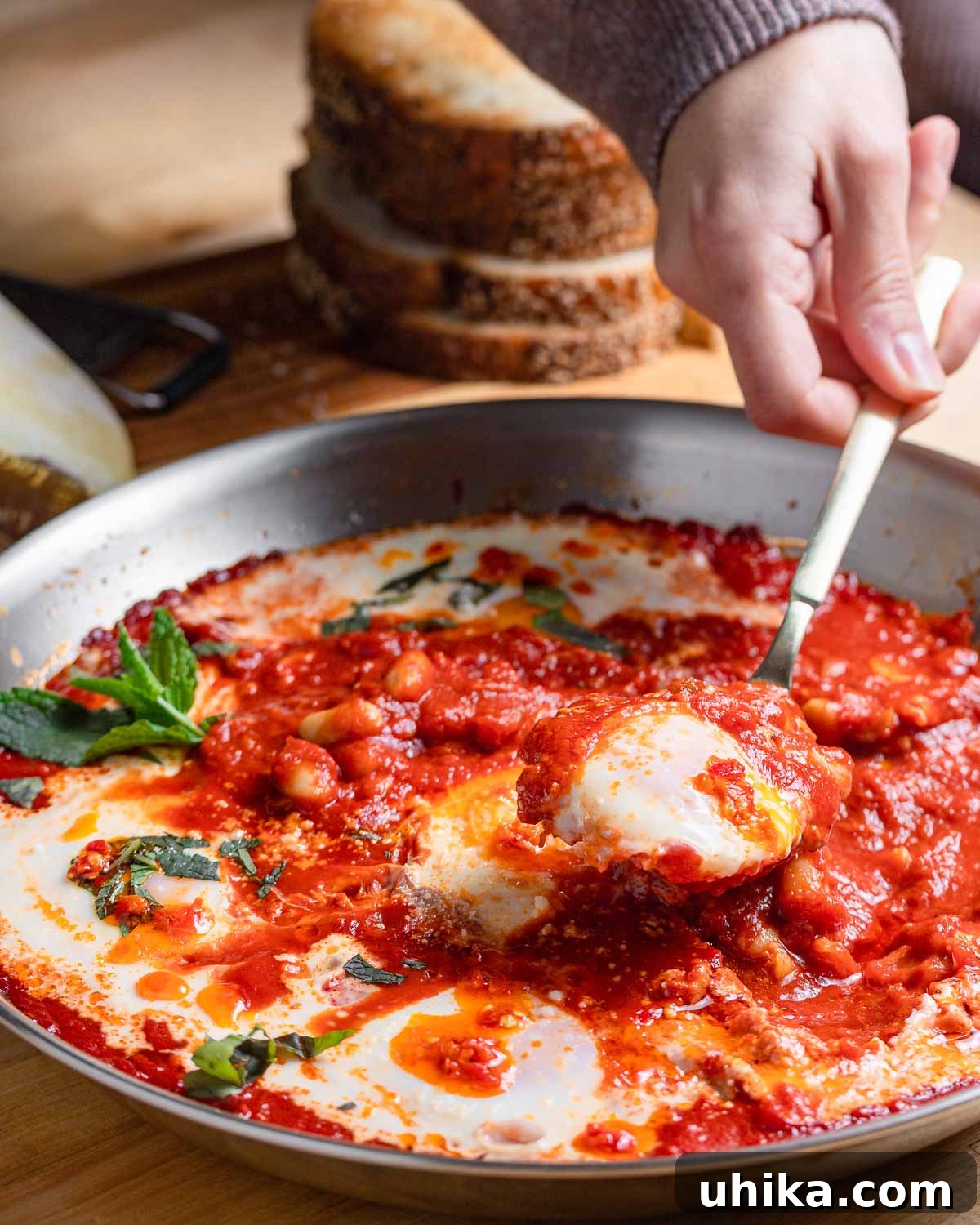
There are few dishes that capture the essence of comfort food quite like Eggs in Purgatory. For me, it’s an undeniable favorite, a culinary hug in a bowl that never fails to satisfy. The simple act of tearing off a piece of crusty bread and dipping it into the luscious mixture of runny egg yolk and spicy, tangy tomato sauce is pure bliss. Each bite is a symphony of textures and flavors – the soft yolk, the robust tomato, the creamy beans, and the subtle heat of the chili oil.
Beyond its incredible taste, what truly elevates this Roman classic is its remarkable simplicity and speed. In a world where time is a precious commodity, a one-pan meal that requires minimal effort yet delivers maximum flavor is a treasure. This is precisely why Eggs in Purgatory frequently makes an appearance on my dinner table, transcending its traditional role as a breakfast or brunch staple. The ease of preparation and minimal cleanup make it an ideal choice for any meal, any day of the week.
This dish isn’t just a meal; it’s an experience. It’s a testament to how humble ingredients, when combined thoughtfully, can create something truly spectacular and deeply comforting.
What is Eggs in Purgatory (Uova in Purgatorio)? A Roman Culinary Journey
Eggs in Purgatory, known in Italy as Uova in Purgatorio, is a rustic and beloved Roman dish characterized by eggs gently poached directly in a vibrant, bubbling tomato sauce. While its origins are deeply rooted in Italian culinary traditions, particularly from Rome and Southern Italy, its concept is elegantly simple and universally appealing. The beauty of this dish lies in its foundational ingredients: high-quality eggs and a rich, flavorful tomato base.
Our particular rendition of this classic takes a delightful turn by incorporating cannellini beans, transforming it into an even heartier and more substantial meal. These creamy white beans not only add a wonderful texture but also contribute a satisfying earthiness and a boost of protein and fiber, making the dish more filling and nutritious without adding excessive calories. This thoughtful addition helps to “stretch” the meal, making it perfect for feeding a family or enjoying as a complete vegetarian main course.
While the sauce itself is robust and full-bodied, our version maintains a relatively low-calorie profile, making it a fantastic option for those seeking wholesome and satisfying food. As a tribute to its Roman heritage, we recommend finishing the dish with a generous sprinkle of freshly grated Pecorino Romano cheese. Its sharp, salty, and slightly tangy flavor perfectly complements the rich tomato and egg. However, if your preference leans towards a milder, nuttier profile, Parmigiano Reggiano is an excellent alternative.
Eggs in Purgatory vs. Shakshuka: A Culinary Comparison
It’s impossible to discuss Eggs in Purgatory without drawing parallels to its Middle Eastern cousin, Shakshuka. Both dishes share the fundamental concept of eggs poached in a flavorful sauce, often tomato-based. However, their distinct spice profiles and accompanying herbs set them apart. Shakshuka typically features warming spices like cumin and paprika, sometimes incorporating chili, and is traditionally garnished with fresh cilantro.
Eggs in Purgatory, on the other hand, embraces a more Italian flavor palette. Our recipe emphasizes the bright freshness of basil and the subtle coolness of mint, which provide a beautiful aromatic contrast to the rich tomato. While these herbs are our preferred choice, the dish’s versatility allows for experimentation. Fresh parsley can be a lovely addition, or you can opt to omit herbs entirely if you prefer a simpler taste. The defining heat in our Roman version comes from the Calabrian chili oil, offering a distinctive Italian spice rather than the broader Middle Eastern spice blend found in Shakshuka.
Understanding these differences highlights the unique cultural influences that shape each dish, offering a wonderful journey for the palate through both Italian and Middle Eastern culinary traditions.
Where Does the Name “Eggs in Purgatory” Originate?
The intriguing name “Eggs in Purgatory” (Uova in Purgatorio) sparks curiosity and adds a layer of mystique to this humble dish. While there’s no single, universally agreed-upon origin story, the most widely accepted explanation is a beautiful and poetic metaphor.
Many believe the dish serves as an edible allegory, with the perfectly white poached eggs representing “souls” trapped within the fiery red depths of purgatory. In Catholic theology, purgatory is understood as an intermediate state between heaven and hell, where souls undergo purification before entering heaven. The vibrant, simmering tomato sauce, with its warm, sometimes spicy, embrace, vividly symbolizes this cleansing realm. The eggs, suspended within the bubbling sauce, appear as if they are indeed in “purgatory,” awaiting their delicious release.
This evocative naming tradition speaks to the deep cultural and religious underpinnings of Italian cuisine, where even everyday dishes can carry profound meaning. If purgatory were anything as delicious and comforting as this dish, perhaps the journey wouldn’t be so bad after all! It’s a testament to the Italian knack for finding beauty and narrative in the simplest of ingredients and preparations.
Mastering Eggs in Purgatory: A Step-by-Step Guide
Crafting a perfect batch of Eggs in Purgatory is a straightforward process, making it accessible even for novice cooks. Follow these detailed steps to achieve a truly delicious result.
- Prepare the Chili Oil: Begin by combining 1 teaspoon of fiery Calabrian chili paste with 1 tablespoon of high-quality extra virgin olive oil in a small bowl. Stir them together until well blended and set this aromatic oil aside. This infused oil will be drizzled over the finished dish, providing a final layer of heat and flavor.

- Sauté the Garlic: Heat a large, sturdy pan (preferably 12 inches or larger to accommodate the eggs) over medium-low heat for about 2 minutes. Add 3 tablespoons of extra virgin olive oil to the warmed pan. Once the oil shimmers, add the thinly sliced garlic. Sauté gently, stirring occasionally, until the garlic turns a beautiful golden color and becomes fragrant, typically about 2-3 minutes. Be careful not to burn the garlic, as this can impart a bitter taste to the sauce.
- Simmer the Tomato Sauce: Pour the crushed plum tomatoes into the pan with the sautéed garlic. Bring the sauce to a gentle simmer. Allow it to cook uncovered for approximately 10 minutes. This simmering time is crucial as it allows some of the water from the tomatoes to evaporate, intensifying their flavor and thickening the sauce to the perfect consistency for poaching eggs.
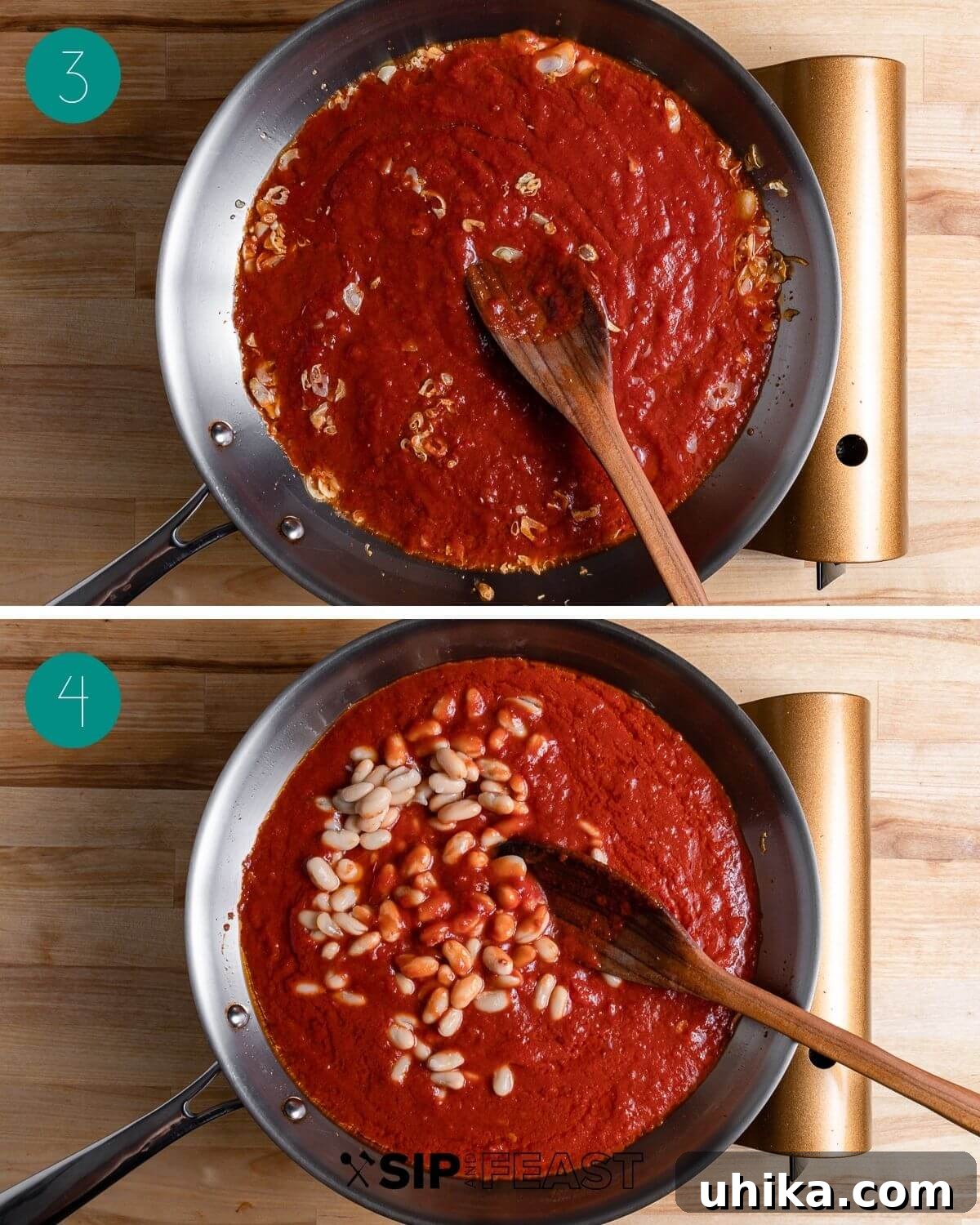
- Incorporate the Beans and Season: Stir in the drained cannellini beans and continue to simmer for a few more minutes, just long enough for the beans to warm through and absorb the flavors of the tomato sauce. Give the sauce a good stir and taste test. Adjust the seasoning with salt as needed; remember, the Pecorino Romano cheese added later will also contribute salinity.
- Poach the Eggs: Using the back of a spoon, gently create small indentations or “wells” in the simmering sauce, each just large enough to cradle an egg. Carefully crack an egg directly into each well. Repeat this process until all 6 eggs are nestled into the sauce. Expert Tip: For easier handling and to prevent shell fragments, crack each egg individually into a small bowl first, then gently tip it into its designated well in the sauce. This method also allows you to check for any imperfections before adding the egg to the main dish.

- Cover and Cook: Once all the eggs are in place, cover the pan tightly with a lid. Allow the eggs to poach and solidify. For perfectly runny yolks, cook for approximately 7-10 minutes. The cooking time can vary based on your stove and pan, so keep a close eye on them. The whites should be set and opaque, while the yolks remain beautifully liquid.
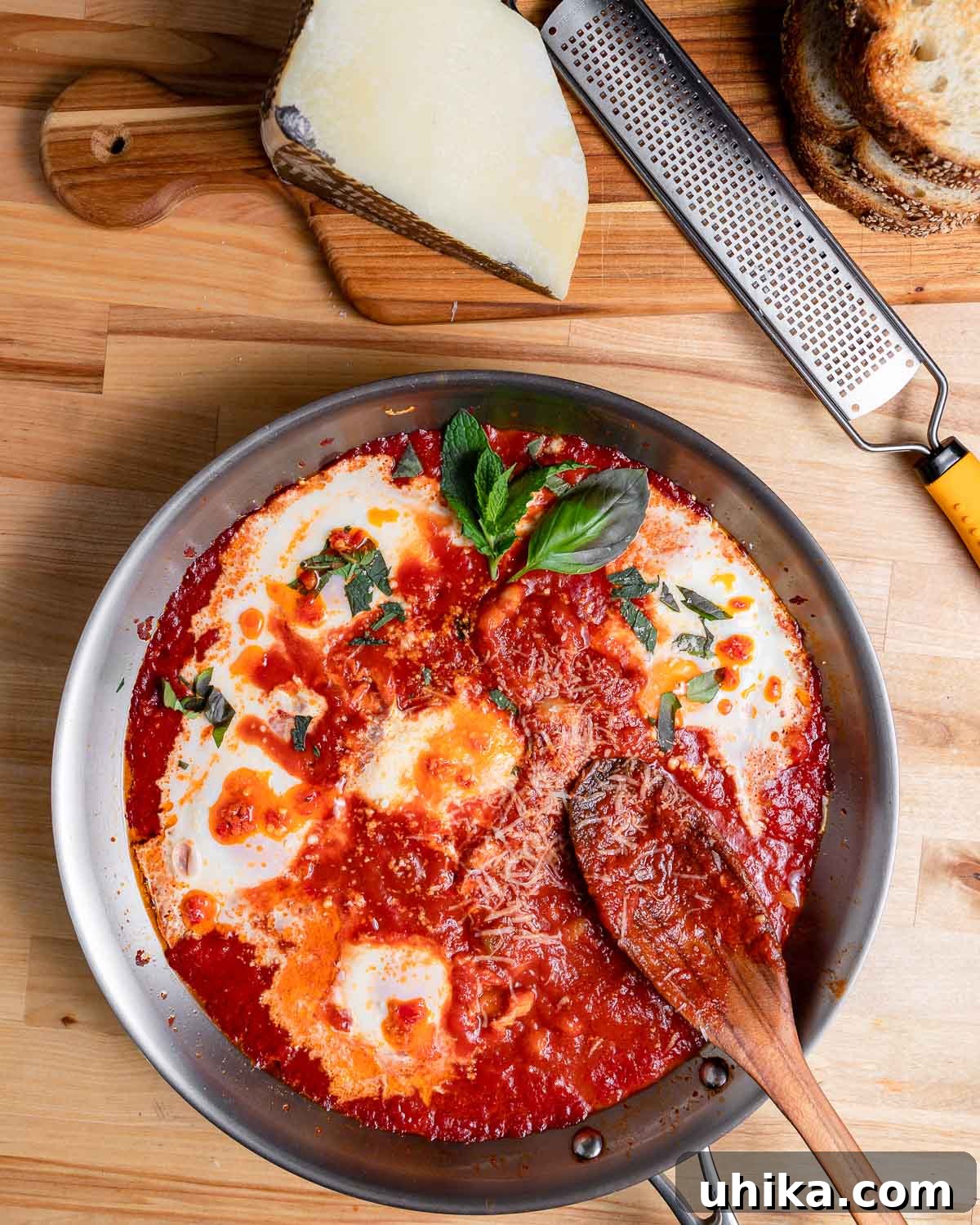
- Check for Doneness: The eggs should resemble the image below (pic 7). They will have taken on a distinct shape within the sauce, with firm whites and a glistening, still-runny yolk.

- Garnish and Serve: Turn off the heat. Liberally sprinkle the grated Pecorino Romano cheese over the entire dish, allowing its warmth to gently melt into the sauce. Scatter the fresh basil and mint (or parsley) over the eggs. Season each egg with a final pinch of salt and a generous drizzle of the prepared Calabrian chili oil. Serve immediately with plenty of warm, crusty Italian bread – it’s essential for soaking up every last drop of the delectable sauce. Enjoy this delightful and comforting meal!
Exciting Variations for Your Eggs in Purgatory
One of the most appealing aspects of Eggs in Purgatory is its inherent versatility. While the classic recipe is undeniably delicious, it also serves as a fantastic canvas for culinary creativity. You can easily adapt it to suit your preferences, what you have on hand, or to explore new flavor dimensions.
Bean Alternatives
Our preferred recipe includes tender cannellini beans for their creamy texture and ability to add substance. However, if cannellini beans aren’t readily available or if you simply prefer a different legume, chickpeas are an excellent substitute. They offer a slightly firmer texture and a nutty flavor that pairs wonderfully with the tomato sauce. For those who prefer a lighter dish or simply don’t care for beans, feel free to omit them entirely; the sauce and eggs alone are still incredibly satisfying.
Add Fresh Greens
Elevating the nutritional value and complexity of this dish is as simple as adding some fresh greens. Hearty options like Swiss chard, baby spinach, kale, escarole, or even slightly bitter dandelion greens would all work exceptionally well. These can be wilted directly into the tomato sauce a few minutes before adding the eggs, adding a pleasant earthiness and vibrant color. The gentle bitterness of some greens can also provide a lovely counterpoint to the richness of the eggs and sauce.
Tomato Choices
While high-quality canned plum tomatoes (crushed or whole, then crushed by hand) are a pantry staple and provide a consistent base, fresh cherry tomatoes offer a truly unique experience. For this recipe, you would typically need about 3-4 pints of cherry tomatoes to substitute one standard 28-ounce can of plum tomatoes. Halve or quarter the cherry tomatoes and add them to the pan to simmer until they burst and release their juices. The use of cherry tomatoes introduces another delightful dimension of texture, and there’s a certain joy in the burst of warm, sweet-tart flavor you get when a cherry tomato pops in your mouth. This fresh approach can brighten the dish significantly.
Beyond the Basics
- Spice it Up: For an extra layer of heat, consider adding a pinch of red pepper flakes along with the garlic, or even a dash of smoked paprika for a deeper, more complex flavor profile.
- Cheese Variations: While Pecorino Romano is traditional, don’t hesitate to experiment with other hard Italian cheeses like Grana Padano, or even a dollop of fresh ricotta or burrata at the end for an extra creamy touch.
- Herbal Infusion: Beyond basil and mint, consider fresh oregano or marjoram for a different aromatic twist.
- Additional Vegetables: Finely diced bell peppers or onions can be sautéed with the garlic to build a more complex flavor base. A handful of chopped artichoke hearts or pitted olives could also be a delicious addition.
More Delicious Breakfast & Brunch Ideas
As emphasized, Eggs in Purgatory is wonderfully adaptable and can be savored at any time of day. However, its reputation as a beloved breakfast or brunch item is well-deserved. If you’re planning a weekend spread or simply looking for delightful morning meal inspiration, I wholeheartedly encourage you to add this Roman gem to your menu!
For those eager to explore more fantastic breakfast and brunch recipes that are sure to impress, here are some additional ideas to complement your culinary repertoire:
- Sweet Potato Frittata: A fluffy, savory frittata loaded with sweet potato, creamy goat cheese, and fresh spinach – perfect for a crowd.
- Semolina French Toast with Lemon and Blueberries: A unique take on French toast, using semolina bread for a delightful texture, brightened with lemon and sweet blueberries.
- Pepper and Egg Sandwiches: A classic Italian-American comfort food, simple yet incredibly satisfying, featuring scrambled eggs and sautéed bell peppers in a crusty roll.
- Scrambled Eggs with Spicy Chorizo: A protein-packed and flavorful dish, combining fluffy scrambled eggs with the bold, smoky spice of chorizo sausage.
- Peach Bellini with Grapefruit Rose Vodka: A sophisticated and refreshing cocktail, perfect for a celebratory brunch, offering a floral and fruity twist on the classic Bellini.
- Aperol Spritz: The quintessential Italian aperitif, a vibrant and bubbly cocktail that brings a taste of the Mediterranean sunshine to any gathering.
- Cranberry Mimosa: A festive and colorful twist on the traditional mimosa, using cranberry juice for a tart and sweet balance.
We hope these suggestions inspire your next brunch adventure! If you’ve enjoyed this Eggs in Purgatory recipe or any other recipe from our site, please consider leaving a 5-star rating and sharing your experience in the comments below. Your feedback is invaluable, helping us improve and showcasing your successes to other home cooks. Thank you for being a part of our culinary community!
Follow us on YouTube, Instagram, Pinterest, and Facebook.
Eggs in Purgatory
James Delmage
5 minutes
25 minutes
30 minutes
4

Pin
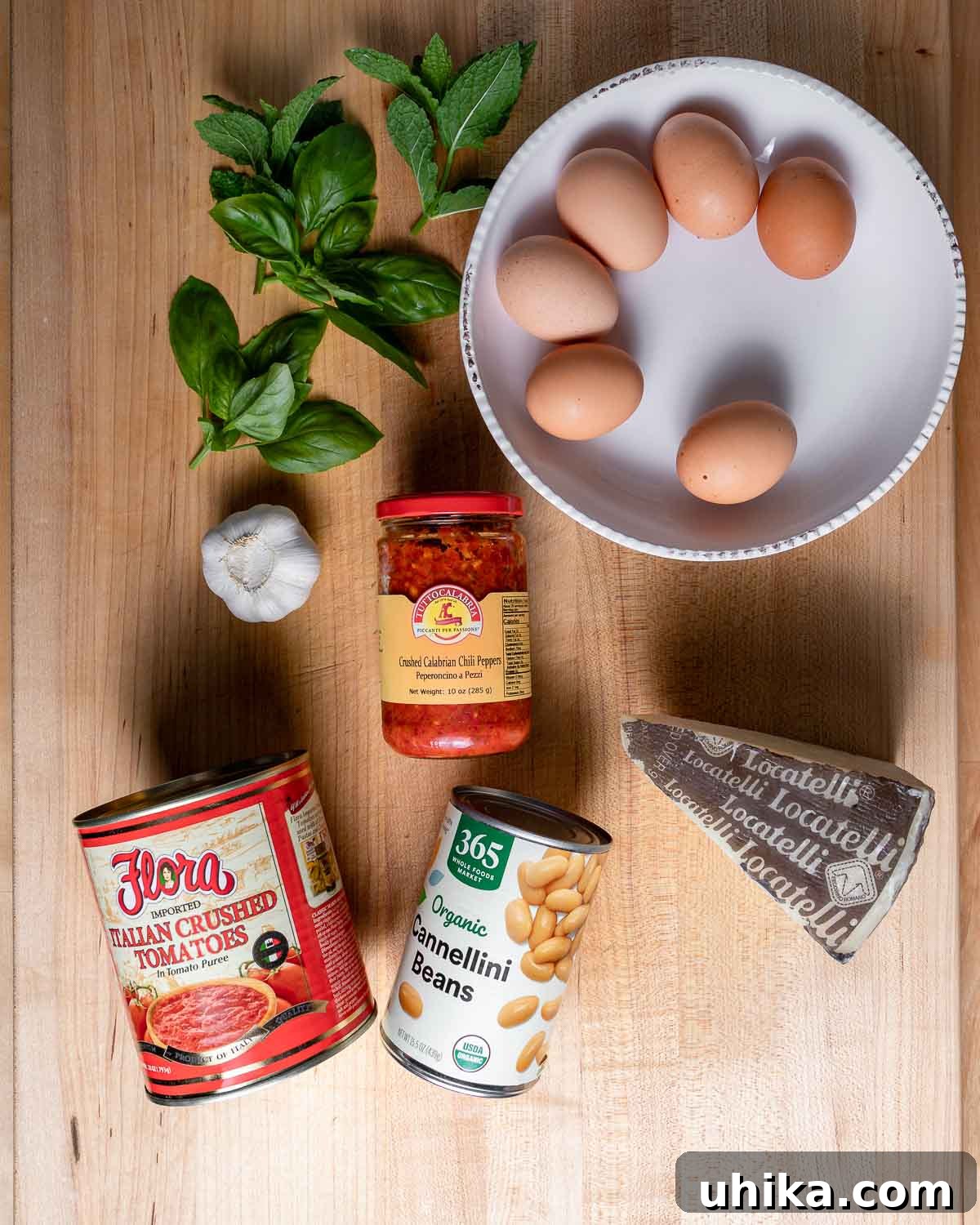
Ingredients
-
6
large
eggs -
1/4
cup
extra virgin olive oil
divided -
1
28-ounce can
plum tomatoes
crushed -
3
cloves
garlic
sliced -
1
15-ounce can
cannellini beans
drained -
1
teaspoon
Calabrian chili paste
-
3
tablespoons
Pecorino Romano
grated -
salt
to taste -
2
tablespoons
basil
chopped, optional -
2
tablespoons
mint or parsley
chopped, optional
Want To Save This Recipe?
Enter your email and we’ll send it to you. Plus, get great new recipes from us every week!
You can bookmark this page or subscribe to our newsletter for more delicious recipes delivered straight to your inbox.
Instructions
-
Mix 1 teaspoon of Calabrian chili paste with 1 tablespoon of extra virgin olive oil and set aside.
-
In a 12 inch or larger pan, sauté the garlic in the remaining extra virgin olive oil over medium-low heat until golden (about 2-3 minutes).
-
Add in the tomatoes and bring sauce to a simmer (let it cook for about 10 minutes to lose some water and thicken). Add in the beans and cook for a few minutes until warm. Stir together, and taste test. Adjust salt to taste.
-
Make small wells with a spoon and carefully crack an egg into each spot. Make 6 spots and repeat for all the eggs. Cover with a lid and let the eggs solidify (about 7-10 minutes if you like the yolk runny).
-
Turn off the heat and sprinkle with the Pecorino Romano and the chopped fresh herbs (basil and mint/parsley). Season each egg with a bit of salt and a drizzle of the prepared Calabrian chili oil.
-
Serve hot with plenty of crusty Italian bread to soak up all the delicious sauce. Enjoy!
Notes
- For the best flavor and texture, use the freshest, preferably free-range eggs you can find.
- The calorie amounts provided are for 6 eggs in the sauce. Feel free to add more eggs if desired, adjusting cooking time accordingly. Calories do not include any bread used for dipping.
- Both fresh cherry tomatoes and high-quality canned crushed plum tomatoes work exceptionally well in this recipe, offering slightly different flavor and texture profiles. Choose based on preference and availability.
- Fresh herbs, such as basil, mint, or parsley, are optional but add a wonderful aromatic freshness to the dish. Feel free to use your favorite combination.
Nutrition
Calories:
222
kcal
|
Carbohydrates:
17.6
g
|
Protein:
17
g
|
Fat:
9
g
|
Saturated Fat:
3.1
g
|
Cholesterol:
283
mg
|
Sodium:
687
mg
|
Potassium:
110
mg
|
Fiber:
4
g
|
Sugar:
3.1
g
|
Calcium:
135
mg
|
Iron:
3
mg
Nutrition information is automatically calculated, so should only be used as an approximation.
Like this? Leave a comment below!
Check us out on Instagram at @sipandfeast or tag #sipandfeast!