
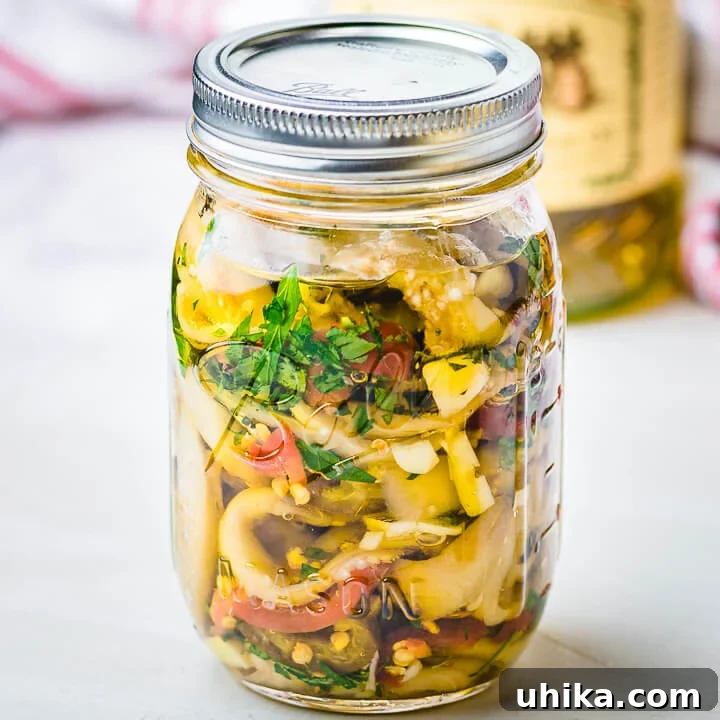
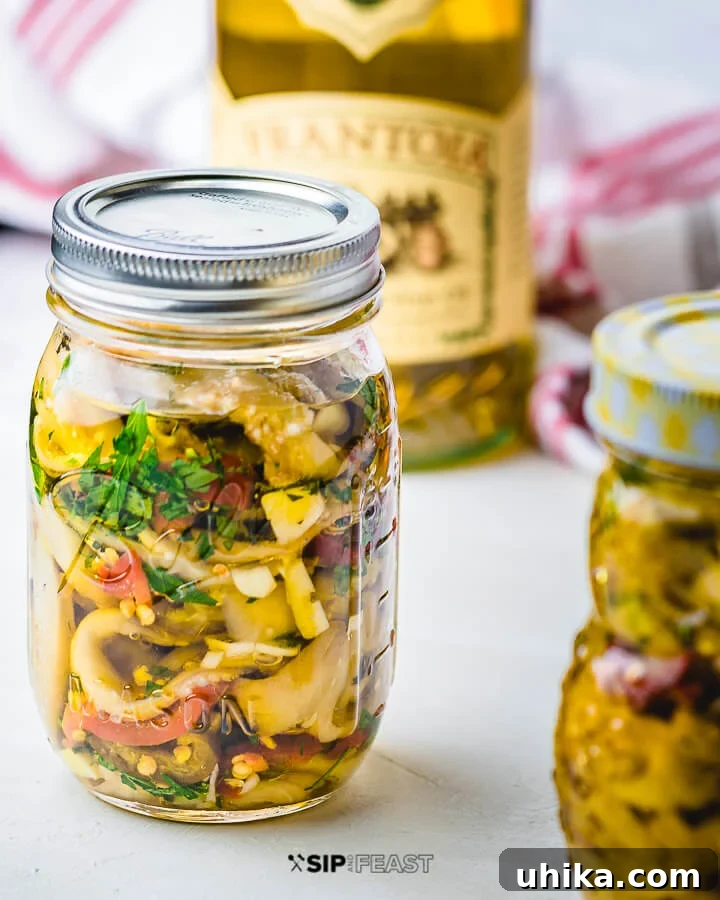
Experience a taste of authentic Italian heritage with this beloved recipe for Italian Pickled Eggplant, known as Melanzane Sott’olio. This traditional condiment, a staple in countless Italian-American households, captures the essence of Mediterranean flavors in every bite. While gourmet Italian specialty stores often sell small jars of this delicacy at a premium, mastering the art of making it yourself is not only significantly more economical but also incredibly rewarding. Prepare to embark on a culinary journey that brings the vibrant flavors of Italy right into your kitchen with ease and enjoyment.
The Enduring Charm of Melanzane Sott’olio: A Culinary Tradition
The tradition of preserving vegetables in oil, or “sott’olio,” is deeply rooted in Italian culinary history, born from the need to extend the harvest’s bounty through the lean winter months. Among these preserved treasures, pickled eggplant holds a special place. Its tender yet firm texture, infused with aromatic garlic, zesty cherry peppers, and fresh parsley, all bathed in rich extra virgin olive oil, creates a complex flavor profile that tantalizes the palate. This recipe isn’t just about food; it’s about connection, memory, and heritage.
When I recently shared the process of preparing a fresh batch of these pickled eggplant strips on my Instagram page, the response was overwhelming. I received more messages and engagement than any other recipe I’ve ever posted. It resonated deeply with many Italian-Americans, particularly those who grew up in the bustling New York metropolitan area, sparking nostalgic memories of childhoods filled with these homemade delights.
One gentleman, now residing in Las Vegas but originally from the Bronx, shared a vivid anecdote about his family’s annual pickling ritual. He recounted how they would dedicate an entire bathtub to the salting process of the eggplant – a testament to the scale and significance of this tradition in their home. His genuine excitement upon seeing me recreate this cherished family recipe was truly heartwarming. These stories highlight the powerful link between food and identity, forging a sense of camaraderie among those who appreciate the rich tapestry of Italian culinary traditions. If you have your own fond memories or unique stories related to pickled eggplant, please share them in the comments below. We absolutely love hearing these personal tales; they enrich our community and strengthen the bond we share with fellow food enthusiasts who follow Sip and Feast.
Beyond the Antipasto Platter: Versatile Serving Suggestions
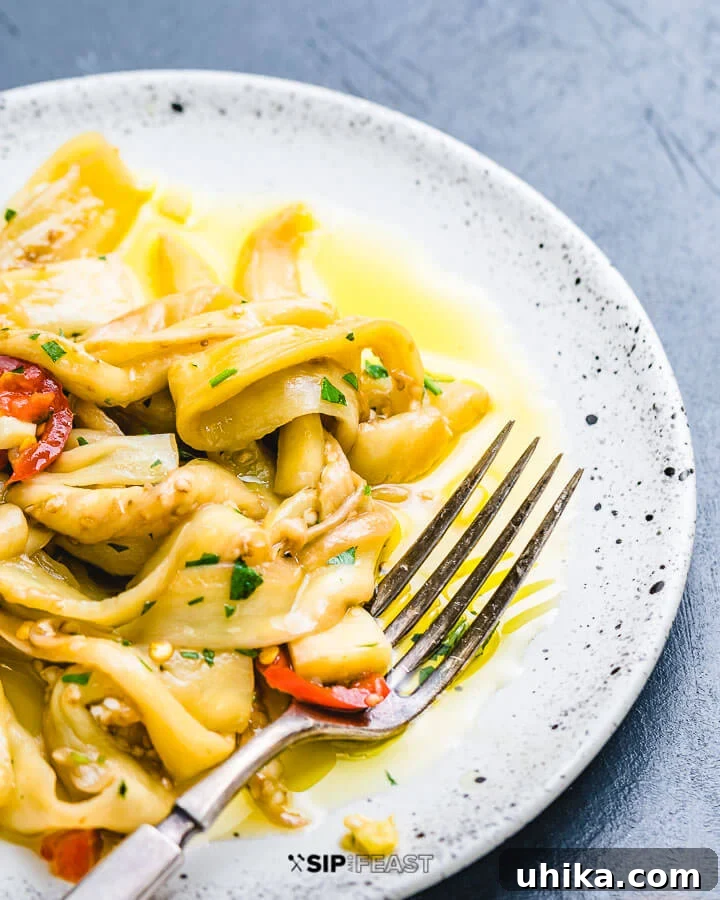
Italian pickled eggplant is undeniably an exquisite addition to any antipasto platter, where its tangy, savory, and slightly spicy notes perfectly complement cured meats, cheeses, and other pickled vegetables. However, its versatility extends far beyond a simple starter. Imagine serving these glistening strips alongside a fresh, crusty loaf of artisanal Italian bread, perhaps with a sprinkle of sea salt and a wedge of aged Pecorino Romano or creamy fresh mozzarella. The combination of the bread soaking up the flavorful olive oil and the eggplant’s tangy bite is pure culinary bliss.
But don’t stop there! Pickled eggplant can elevate numerous dishes. Consider incorporating it into gourmet sandwiches or paninis, adding a layer of sophisticated flavor. It’s fantastic chopped and tossed into green salads or pasta salads for an Italian twist. You can even use it as a topping for homemade pizzas or focaccia, or finely chop it to mix into an omelet or frittata. For a simple yet elegant side, serve it alongside grilled chicken, fish, or a hearty steak. The possibilities are endless for this humble yet mighty condiment.
Crafting Perfect Pickled Eggplant: A Step-by-Step Guide
Achieving perfectly pickled eggplant involves a few crucial steps that ensure optimal texture and flavor. Follow these detailed instructions to create a batch that rivals any store-bought version.
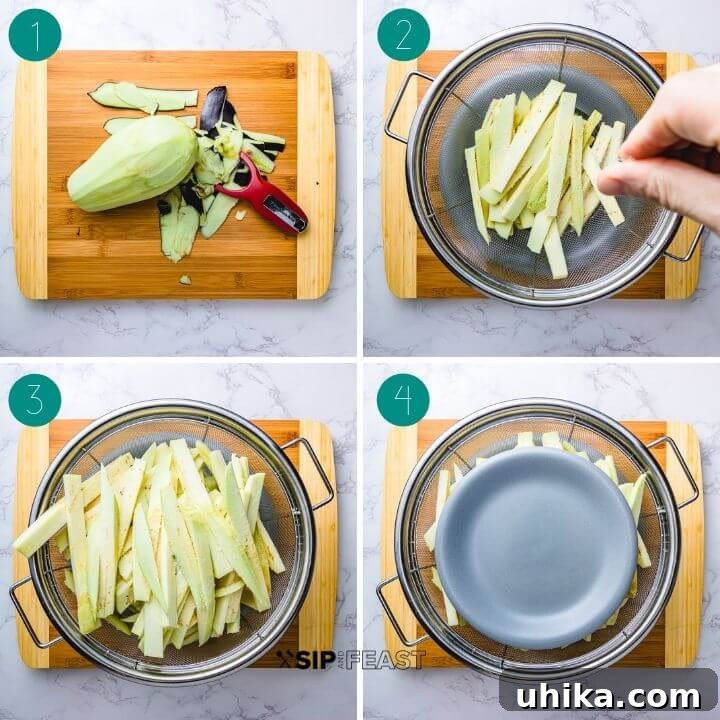
- Prepare the Eggplant: Begin by carefully peeling the eggplants. Then, slice them into long, uniform strips, aiming for roughly 1 inch in width and 1/4 inch in thickness. Precision isn’t paramount, but consistency helps ensure even cooking and pickling.
- Salt and Drain: In a large colander, place a thin layer of eggplant strips. Generously sprinkle kosher salt over them. Continue layering eggplant and salt, repeating every inch or so, to ensure most of the eggplant surfaces are coated. Approximately 2 tablespoons of salt should suffice for a typical batch. The exact amount is not critical as the salt will be thoroughly rinsed off later; its primary purpose is to draw out moisture and bitterness from the eggplant. Place a plate underneath the colander to collect the draining liquid.
- Complete the Layering: Keep layering the eggplant and salt until the colander is full.
- Press and Drain: To expedite the water release, place a heavy plate directly on top of the salted eggplant. For extra weight, consider adding a large can of tomatoes or another heavy object on top of the plate. Regularly check the plate underneath the colander and discard the accumulated water every hour or so. Alternatively, you can simply place the colander in your kitchen sink for the entire draining process. This salting and pressing stage is vital for achieving the desirable firm texture of pickled eggplant and preventing it from becoming watery.
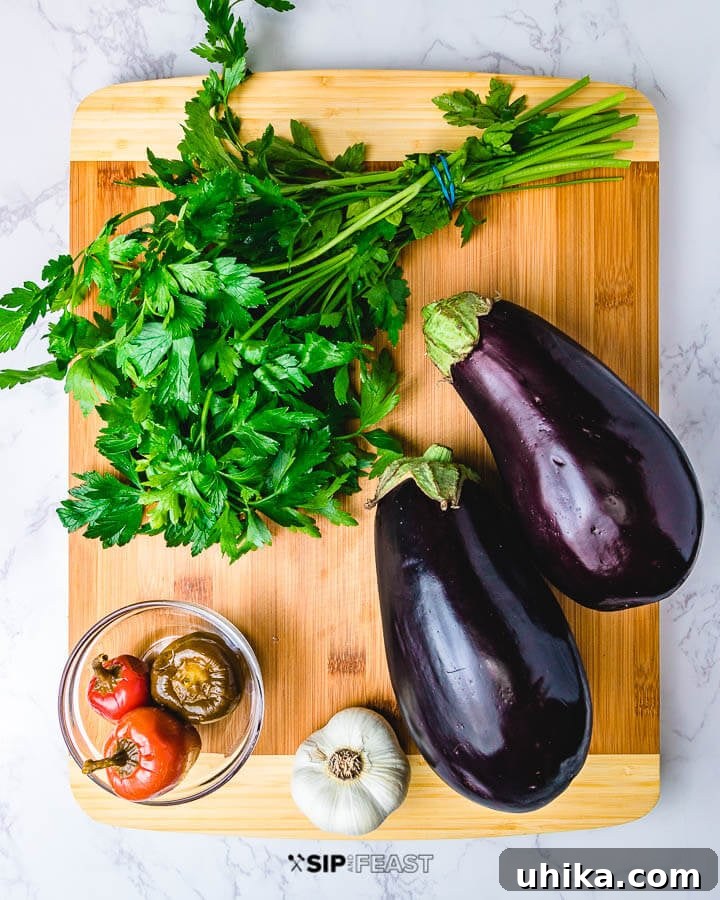
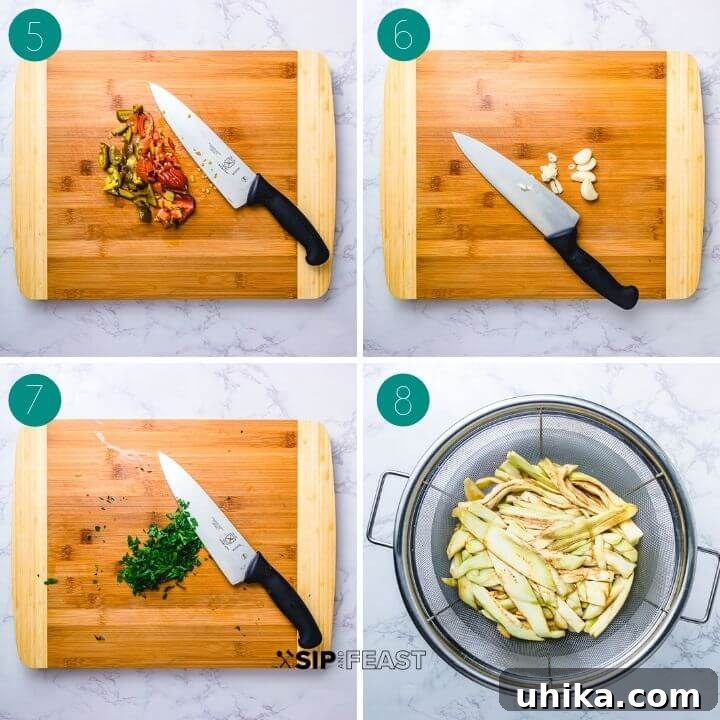
- Chop the Cherry Peppers: Finely chop about a quarter cup of vibrant cherry (vinegar) peppers. These add a wonderful tang and a subtle kick to the eggplant.
- Mince the Garlic: Mince two cloves of fresh garlic. Chef’s Note: Garlic flavor intensifies over time as the eggplant marinates. For those who prefer a milder garlic presence, consider using less or even omitting it from some jars. Feel free to experiment with the quantity to suit your taste; you might even prepare one jar with less and another with more to discover your preference.
- Chop the Parsley: Chop a quarter cup of fresh parsley. This herb not only adds a burst of fresh flavor but also brightens the visual appeal of your pickled eggplant.
- Rinse and Squeeze Eggplant: After approximately 6 hours, the eggplant strips will have significantly reduced in volume, having released a considerable amount of water. As demonstrated in step 8 of the visual guide, they will occupy much less space in the colander. Now, thoroughly rinse the eggplant strips under cool tap water to remove excess salt. After rinsing, firmly squeeze out as much remaining liquid as possible from the eggplant. This step is crucial for preventing a watery end product and allowing the eggplant to properly absorb the olive oil later. Set the squeezed eggplant aside.
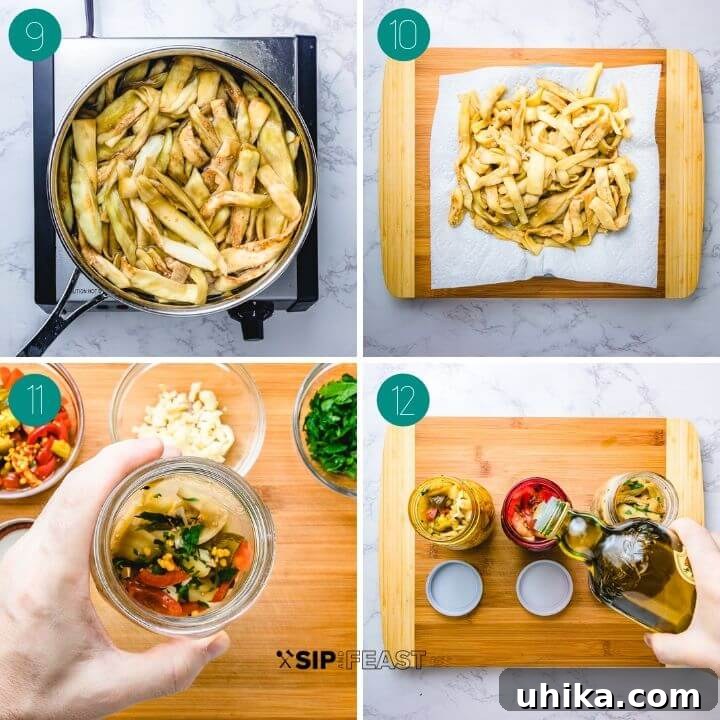
- Blanch the Eggplant: In a large pot, bring a mixture of 1 cup of vinegar and 2 cups of water to a rolling boil. For larger batches, maintain this 1:2 vinegar-to-water ratio. Once the mixture is boiling vigorously, add the squeezed eggplant strips and cook them for precisely 2-3 minutes. Do not exceed this cooking time, as over-boiling can result in mushy eggplant. Immediately strain the blanched eggplant in a colander to allow it to cool and dry.
- Final Drying: After the eggplant has cooled sufficiently and is no longer excessively hot, give it one final squeeze to remove any lingering excess water. Then, spread the strips out onto several layers of paper towels to air dry for a short period, ensuring they are as dry as possible before jarring. This step further aids in achieving the perfect texture and absorption of olive oil.
Jarring Your Pickled Eggplant
The final stage is assembling your jars, layering the ingredients beautifully, and ensuring proper preservation for optimal flavor and shelf life.
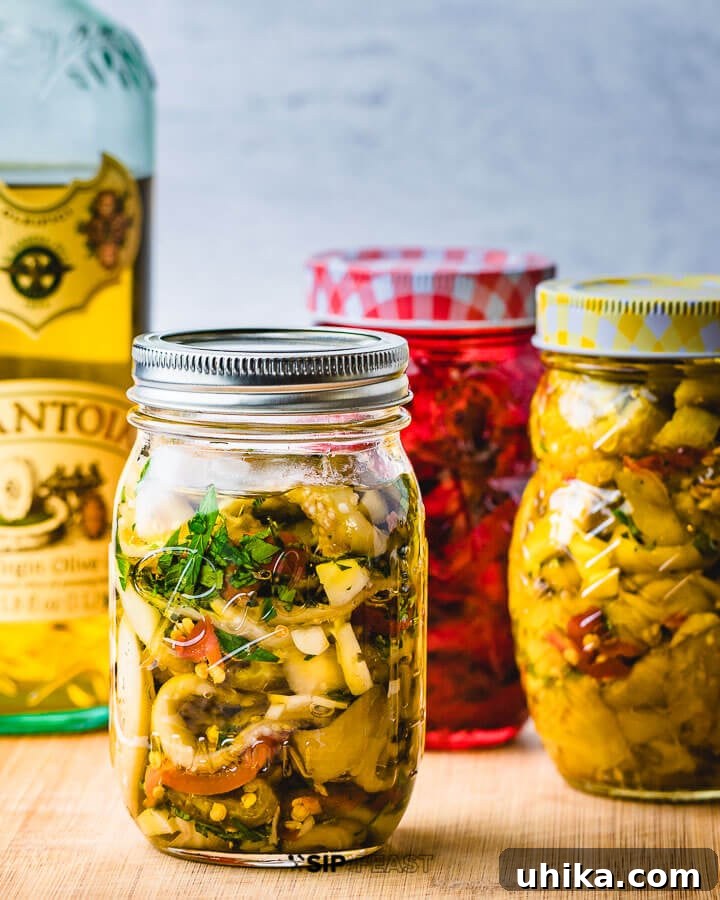
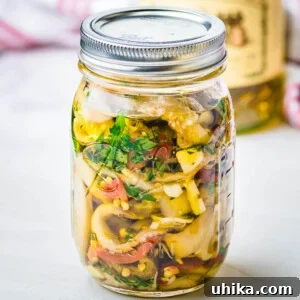
- Layering in Jars: Begin the jarring process. In clean, sterilized jars, place a layer of the prepared eggplant strips. Follow with a sprinkle of fresh parsley, a touch of minced garlic, and some chopped cherry peppers. Continue to build up these layers, alternating eggplant with the aromatics, until your jars are filled. Ensure an even distribution of ingredients for consistent flavor.
- Cover with Olive Oil: Carefully pour high-quality extra virgin olive oil into each jar, making sure to completely submerge the eggplant and other ingredients. Use a spoon or a clean utensil to gently press down the eggplant, releasing any trapped air bubbles and ensuring all solids are covered by the oil. This step is critical for preservation. Let the contents settle for a few minutes, then top off with more olive oil if needed to ensure everything remains fully covered. Cap the jars tightly and immediately refrigerate. The eggplant will continue to develop a richer, more profound garlic flavor each day, reaching its peak pickling perfection after a few days.
Expert Tips for Perfect Pickled Eggplant
- Squeeze for Success: Do not underestimate the importance of thoroughly squeezing out water from the eggplant after both the salting and blanching processes. This is perhaps the most critical step, as it prevents the eggplant from becoming soggy and ensures it can properly absorb the flavorful olive oil, yielding a superior texture and concentration of taste.
- Avoid Mushiness: When blanching the eggplant, stick strictly to the 2-3 minute boiling time. Overcooking the eggplant strips will make them soft and mushy, compromising the desired firm-tender texture.
- Serve at the Right Temperature: When retrieving a jar from the refrigerator for serving, the extra virgin olive oil may have congealed. To loosen it up and restore its fluid consistency, simply run the jar under warm tap water for about 5 minutes. This makes serving easier and allows the full flavor of the oil to shine.
- Storage and Longevity: Your homemade pickled eggplant can be stored in the refrigerator for up to 1 week. While some traditionalists might stretch this longer, for optimal quality and safety, adhering to this timeframe is recommended. If you’ve prepared a larger batch, freezing is an excellent option for extended preservation. Store portions in large plastic freezer-safe containers. This method effectively locks in the flavors. When you’re ready to enjoy, simply defrost a batch, transfer it to jars with fresh olive oil, and consume within one week. Ensure jars are always kept refrigerated.
- Sterilization for Safety: While not explicitly mentioned in the quick steps, for any form of home preservation, sterilizing your jars and lids is good practice. You can achieve this by washing them thoroughly in hot soapy water, rinsing, and then boiling them in water for 10 minutes or running them through a hot dishwasher cycle. This helps prevent spoilage and ensures a safer product.
- Quality Ingredients Matter: The success of your pickled eggplant heavily relies on the quality of your ingredients. Use fresh, firm eggplants, good quality kosher salt, and most importantly, a robust extra virgin olive oil. The oil isn’t just a medium for preservation; it’s a key flavor component.
Explore More Italian Condiment Recipes
Enhance your antipasto spread and delight your guests with these other fantastic homemade Italian condiments, all perfect for pairing with crusty bread or enriching your favorite dishes!
- Homemade Roasted Red Peppers: Learn to make sweet and smoky roasted red peppers, a versatile classic for sandwiches, salads, and more.
- Homemade Giardiniera: Discover the vibrant flavors of Italian pickled vegetables, a tangy and crunchy accompaniment to any meal.
- Easy Sun Dried Tomato Tapenade: Whip up a quick and flavorful spread bursting with the intense taste of sun-dried tomatoes, perfect for crostini or pasta.
We hope you’ve thoroughly enjoyed this Italian Pickled Eggplant (Melanzane Sott’olio) Recipe! Your feedback is invaluable to us. If you’ve made this, or any other recipe from our site, please consider giving it a 5-star rating and sharing your experience in the comments section below.
We understand that everyone learns differently. If you are someone who prefers to learn by watching, you’ll be pleased to know that most of our recipes feature engaging video tutorials available on our YouTube Channel and our Facebook Page. Follow us for step-by-step visual guidance and cooking inspiration!
For exclusive, never-before-seen FULL MEAL RECIPE VIDEOS, consider joining our community and become a Patreon member today! Gain access to premium content and support our passion for sharing authentic Italian cuisine.
Italian Pickled Eggplant (Melanzane Sott’olio)
James Delmage
15 minutes
15 minutes
6 hours
6 hours
30 minutes
8
Pin
Save
Saved
Ingredients
-
2
pounds
eggplant -
1/4
cup
hot cherry peppers
-
1/4
cup
parsley -
2
cloves
garlic -
2
cups
extra virgin olive oil -
2
Tbsp
kosher salt -
1
cup
vinegar -
2
cups
water
Want To Save This Recipe?
Enter your email and we’ll send it to you. Plus, get great new recipes from us every week!
Instructions
-
Peel and cut eggplants into strips that are roughly 1″ wide and a 1/4″ thick. Place a thin layer of eggplant strips in a large colander and sprinkle with kosher salt. Repeat this process with all eggplant strips, so salt touches all of the strips.
-
Place a heavy plate on top of the eggplant and a plate underneath the colander to catch water. Let the eggplant release its water for 6 hours. Check and dump the water from the bottom plate every hour or so. The eggplant will release a lot of water.
-
Mince 2 cloves of garlic, a 1/4 cup of cherry peppers and a 1/4 cup of fresh parsley.
-
Bring a large pot to boil with 2 cups of water and 1 cup white vinegar. After the eggplant has released its water, rinse the salt off in colander. Try to squeeze out more liquid from the eggplant, then boil in the water/vinegar for 2-3 minutes max.
-
Strain eggplant strips and rinse to cool. Squeeze out more moisture one more time and lay eggplant on paper towels to dry.
-
In 3 clean 16 ounce jars, evenly layer the eggplant strips, cherry peppers, garlic and parsley. Keep layering equally into all the jars and then top with extra virgin olive oil. Press down the eggplant with a spoon and top the jars with extra virgin olive oil. The eggplant should be completely covered.
-
Store the jars in the fridge for up to 1 week and serve with toasted Italian bread. Enjoy!
Notes
- Squeeze out the water after rinsing the salt off. This is an important step to ensure the eggplant can absorb the olive oil, and to not have too much water in the jars.
- Do not boil the eggplant strips for longer than 3 minutes, so as to prevent mushiness.
- When pulling a jar out of the fridge for serving, run it under warm water for 5 minutes or so to loosen up the congealed olive oil.
- Eggplant can be stored in the fridge for up to a week (I’ve done way longer, but do that at your own risk!). Also, if you make a lot of pickled eggplant, storing it in the freezer in large plastic containers is a good option. The flavors will be locked in. When needed, defrost a batch, put in jars and use over the next week.
Nutrition
Calories:
462
kcal
|
Carbohydrates:
7
g
|
Protein:
1.2
g
|
Fat:
50.6
g
|
Saturated Fat:
7.2
g
|
Sodium:
400
mg
|
Potassium:
263
mg
|
Fiber:
4.1
g
|
Sugar:
3.4
g
|
Calcium:
12
mg
Nutrition information is automatically calculated, so should only be used as an approximation.
Like this? Leave a comment below!
Check us out on Instagram at @sipandfeast or tag #sipandfeast!