
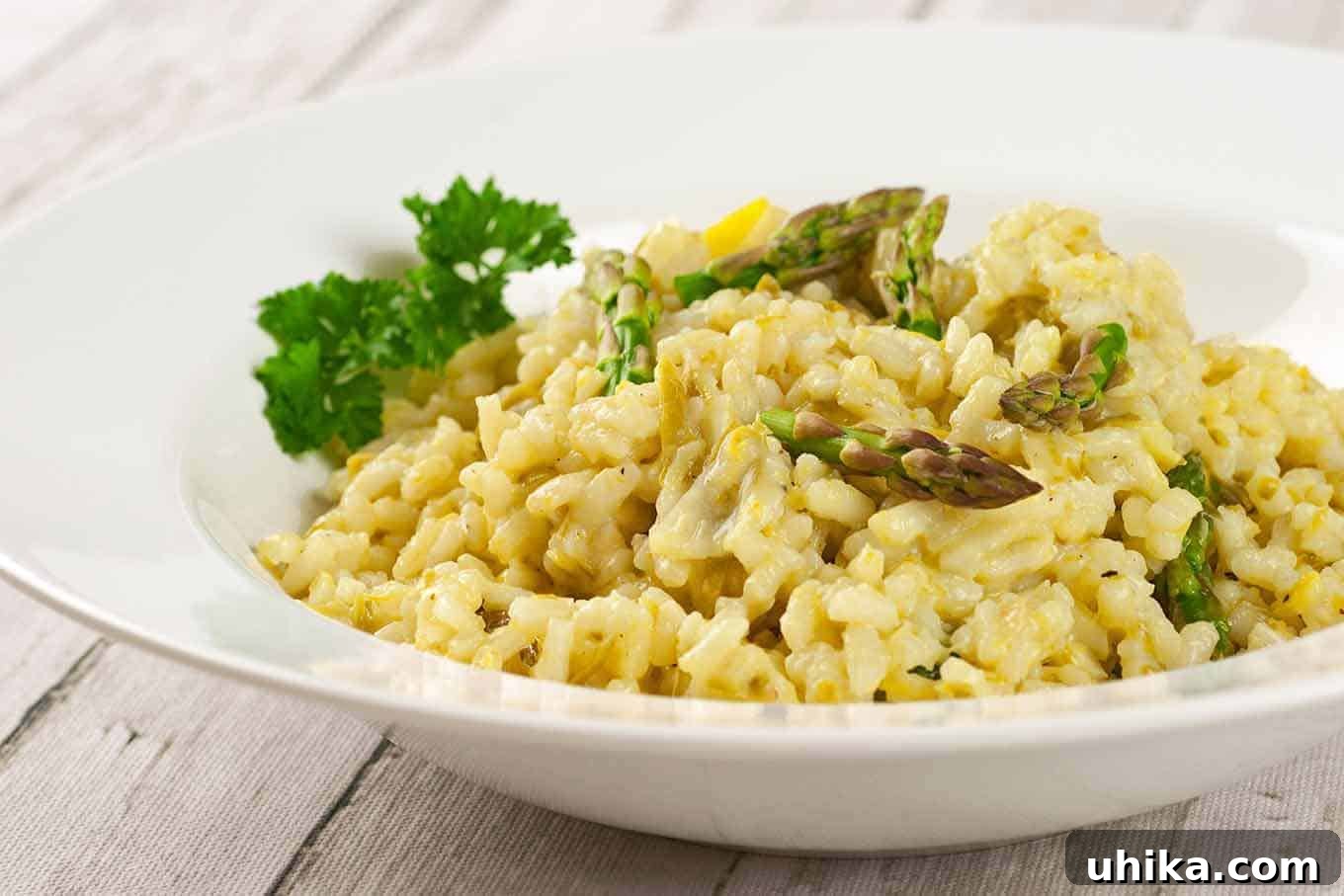
Welcome to a culinary journey that celebrates the vibrant flavors of spring with a dish that is both elegant and comforting: Asparagus and Lemon Risotto. Risotto, a classic Italian rice dish, is renowned for its irresistibly rich and creamy texture, making it an ideal foundation for a diverse array of satisfying, wholesome meals. In this particular recipe, we elevate the traditional risotto by infusing it with the delicate essence of fresh asparagus and the bright zest of a whole lemon, complemented by the subtle depth of extra virgin olive oil and a hint of garlic. The result is a light yet deeply flavorful dish that perfectly captures the spirit of the season.
This delightful risotto serves as an excellent standalone meal, offering a complete and nourishing experience in a single bowl. Its vegetarian nature makes it a fantastic option for meatless Mondays or for anyone seeking a fresh, plant-forward dinner. To truly round out your meal, consider serving this luscious risotto alongside a crisp salad of tender field greens, lightly dressed with a simple white wine vinaigrette. This combination provides a beautiful contrast in textures and flavors, ensuring a memorable dining experience.
Beyond its exquisite taste, this Asparagus and Lemon Risotto is surprisingly straightforward to prepare, making it accessible for home cooks of all skill levels. While risotto traditionally requires a bit of attentive stirring, the process is meditative and rewarding, culminating in a dish that tastes like it came straight from a gourmet kitchen. Join us as we explore the art of creating this sensational springtime risotto, perfect for any occasion from a casual weeknight dinner to an elegant gathering.

Asparagus and Lemon Risotto
Lynne Webb
10 mins
35 mins
45 mins
6 servings
Rate Recipe
Print Recipe
Ingredients
Crafting the perfect Asparagus and Lemon Risotto begins with selecting quality ingredients that bring out the best in this dish. Each component plays a vital role in achieving that sought-after creamy texture and bright, balanced flavor profile.
- 1 lb asparagus
- 1 whole lemon, preferably organic, scrubbed
- 5 tablespoons extra virgin olive oil, divided
- 3 tablespoons water
- 1 lb arborio rice
- 1 large shallot, finely chopped
- 2 cloves garlic, very finely chopped
- 1/2 cup dry white wine
- 4-1/2 to 5 cups low-sodium chicken broth (or vegetable broth for vegetarian option)
- Salt and freshly ground black pepper, to taste
- Grated Parmigiana-Reggiano cheese, for serving (optional)
A Note on Ingredients:
- Asparagus: Look for firm, bright green spears with tight tips. The thinner spears tend to be more tender. Asparagus brings a lovely earthy-green flavor and a delicate crunch to the risotto.
- Lemon: Using a whole lemon, especially organic, ensures you capture the full spectrum of its flavor, from the aromatic zest to the tangy pulp. Scrubbing it thoroughly is key if you’re using the peel.
- Arborio Rice: This short-grain Italian rice is the star of any risotto. Its high starch content is essential for developing the characteristic creamy texture as it cooks and releases starch into the broth. Do not rinse arborio rice, as this washes away the very starch you need.
- Broth: Low-sodium chicken broth provides a savory base without overpowering the delicate spring flavors. For a strictly vegetarian or vegan dish, a good quality vegetable broth is an excellent substitute. Ensure your broth is warm throughout the cooking process; adding cold broth can shock the rice and impede starch release.
- White Wine: A dry white wine, like Sauvignon Blanc or Pinot Grigio, adds a layer of complexity and acidity that brightens the overall flavor of the risotto. The alcohol cooks off, leaving behind a nuanced taste.
Instructions
Preparing this Asparagus and Lemon Risotto is an enjoyable process that yields incredible results. Follow these steps to create a truly memorable meal:
-
Begin by preparing your asparagus. Bring a large pot of generously salted water to a rolling boil. Simultaneously, fill a medium bowl with ice water and set it nearby; this will be crucial for stopping the cooking of the asparagus.
-
Rinse the asparagus thoroughly. Snap off the tough, woody ends – they will naturally break where the tender part begins. Carefully remove the delicate tips of the asparagus spears and set them aside; these will be used for garnish and added at the very end to maintain their vibrant color and slight crunch. Chop the remaining asparagus stems into approximately 1-1/2-inch pieces. Drop these chopped stems into the boiling water and cook until they are bright green and crisp-tender, typically 3 to 4 minutes. Immediately drain the asparagus and transfer it to the bowl of ice water to halt the cooking process and preserve its vibrant color. Once cooled, drain again and place the asparagus stems into the work bowl of a food processor. Pulse the processor on and off until the asparagus is puréed. A few small chunks are perfectly fine and will add texture to the risotto. Transfer this asparagus purée to a separate bowl and set aside.
-
Next, prepare the lemon purée. Using a sharp paring knife or a vegetable peeler, carefully remove the peel from the scrubbed lemon, trying to leave as much of the white pith attached to the fruit as possible, as the pith can be bitter. Add the lemon peel to the work bowl of the food processor. Slice the peeled lemon in half crosswise and remove as many seeds as you can. Then, using a spoon, scoop the juicy lemon segments into the food processor. Discard the remaining thick white pith. Add 3 tablespoons of the extra virgin olive oil, the 3 tablespoons of water, and a pinch of salt and pepper to the food processor with the lemon. Pulse until the mixture is puréed. Again, small pieces of lemon peel are acceptable and will distribute flavor beautifully. Combine this vibrant lemon mixture with the reserved asparagus purée, stirring gently to combine, then set aside.
-
In a medium saucepan, bring 4-1/2 cups of the chicken or vegetable broth to a gentle simmer over medium heat. Keep it warm throughout the cooking process, as adding cold broth can lower the temperature of the rice and affect its creamy development.
-
In a large, heavy-bottomed pan or Dutch oven, heat the remaining 2 tablespoons of extra virgin olive oil over medium heat. Add the finely chopped shallot and sauté, stirring occasionally, until it becomes soft and translucent, which should take about 2 minutes. Add the very finely chopped garlic and continue to sauté for just 1 minute longer, being careful not to burn the garlic. Add the arborio rice to the pan and stir constantly for about 1 minute to ensure each grain is thoroughly coated with the oil. This step, known as “toasting” or “nacratura,” is crucial for helping the rice maintain its shape and achieve that signature al dente texture. Pour in the dry white wine and stir until it has been almost completely absorbed by the rice.
-
Now, begin the gradual addition of the warm broth. Add 1/2 cup of the hot broth to the rice, stirring constantly. Continue cooking and stirring until the broth has been almost completely absorbed by the rice. The key to creamy risotto is to add the broth in increments, allowing each addition to be absorbed before adding more. This slow, steady process encourages the rice to release its starches, creating a luxurious, creamy sauce. You will need to stir almost continuously as the risotto cooks. Season to taste with salt and freshly ground black pepper as you go along. The total cooking time for the rice is approximately 18 to 20 minutes, but start tasting the rice after about 15 minutes. Stop adding broth when the risotto reaches your desired consistency – it should be creamy but still have a slight bite (al dente) in the center of each grain. You might not use all 5 cups of broth, or you might need a little more; adjust as necessary based on the rice’s absorption.
-
Once the risotto has reached its perfect al dente stage, stir in the reserved asparagus and lemon purée. Cook for just 1 minute to allow the flavors to meld and the purée to warm through. Finally, add the reserved asparagus tips and cook for 1 minute longer, just enough to warm them through while keeping their vibrant green color and slight crispness. To serve, immediately plate individual servings and, if desired, garnish generously with freshly grated Parmigiana-Reggiano cheese. A final drizzle of olive oil or a sprinkle of fresh parsley can add an extra touch of elegance.
Notes
Risotto Cooking Tip:
As risotto cooks and the exterior starch begins to break down, it’s sometimes hard to determine when the last broth addition has been fully absorbed, especially with the continuous stirring.
The easiest way to tell if the broth is absorbed and it’s time for the next addition is to drag a wooden spoon across the bottom of the pan to make a “path.”
If the bottom of the pan remains visible for a second or two as you draw the spoon across, the broth has been absorbed, and you can add more liquid. If the gap fills in immediately behind your spoon with liquid, you need to cook a little longer before adding the next increment of broth.
Beyond the Recipe:
This risotto recipe is incredibly versatile. For an extra layer of richness, you can stir in a tablespoon of butter and a generous handful of freshly grated Parmesan cheese at the very end, just before serving. This technique is known as “mantecare” and helps create an even creamier, more emulsified texture.
Consider experimenting with other fresh herbs like chives or dill for a slightly different flavor profile. For a heartier dish, you could incorporate grilled shrimp, pan-seared scallops, or shredded chicken after the risotto is cooked.
Nutrition Information (per serving)
Total Fat: 17g,
Sodium: 333mg,
Carbohydrates: 39g,
Fiber: 2g,
Sugar: 3g,
Protein: 22g
Nutrition information is automatically calculated and should only be used as an approximation. Actual values may vary based on specific ingredients and preparation methods.
Enjoyed this recipe? Share your thoughts and rate it below! Your feedback helps us grow.
The Allure of Risotto: More Than Just Rice
Risotto is a staple in Italian cuisine, cherished for its incredibly creamy texture, which comes from the traditional method of cooking. Unlike other rice dishes, risotto involves slowly adding warm broth to Arborio rice, stirring continuously to encourage the grains to rub against each other and release their natural starches. This process creates a rich, velvety sauce that coats each grain of rice, resulting in a dish that is deeply satisfying and luxurious without being overly heavy.
What makes risotto truly special is its adaptability. It acts as a blank canvas, eagerly absorbing the flavors of whatever ingredients you choose to introduce. This particular Asparagus and Lemon Risotto showcases how well the dish can embrace fresh, seasonal produce, transforming simple components into a harmonious and elegant meal. It’s a testament to the idea that some of the best culinary experiences arise from simple, high-quality ingredients and a thoughtful cooking process.
Celebrating Spring: Asparagus and Lemon
The combination of asparagus and lemon is a classic pairing that embodies the essence of spring. Asparagus, with its tender spears and subtly earthy flavor, is one of the first vegetables to emerge after winter, signaling new beginnings. It’s packed with vitamins K, A, C, and folate, making it not just delicious but also incredibly nutritious.
Lemon, on the other hand, provides a bright, acidic counterpoint that cuts through the richness of the risotto, adding a refreshing zest and enhancing all the other flavors. Using the entire lemon – peel and pulp – in a purée ensures that you capture its full aromatic complexity, from the oils in the zest to the tangy juice. This method prevents any part of the lemon’s vibrant flavor from going to waste and integrates it seamlessly into the creamy rice. Together, these two ingredients create a symphony of fresh, clean flavors that are both invigorating and deeply comforting.
Tips for Risotto Perfection
Achieving a perfect risotto every time involves a few key techniques:
- Mise en Place: Have all your ingredients prepped and ready before you start cooking. This includes chopping your shallots and garlic, preparing your asparagus and lemon purées, and having your warm broth simmering. Risotto requires continuous attention, so you won’t have time to chop mid-cook.
- Warm Broth is Essential: Always keep your broth warm in a separate saucepan. Adding cold broth to hot rice will lower the temperature of the pan, shock the rice, and hinder the even release of starch, which is vital for that creamy consistency.
- The Toasting Stage (Nacratura): Don’t skip toasting the Arborio rice in olive oil and aromatics before adding any liquid. This step creates a protective barrier around each grain, helping it absorb liquid slowly and cook evenly, preventing it from becoming mushy.
- Gradual Broth Addition: This is the hallmark of risotto. Adding broth gradually and stirring allows the rice to slowly release its starch, creating a creamy texture. Stirring should be frequent but not frantic; enough to prevent sticking and encourage starch release.
- Al Dente Perfection: Risotto should always be served al dente – firm to the bite, with a slight resistance in the center of each grain. It should not be soft or mushy. Begin tasting the rice a few minutes before the suggested cook time to hit this sweet spot.
- Manteca (Stir in Butter/Cheese): While this recipe relies on the purees for flavor and some creaminess, a traditional “mantecare” step at the end (stirring in a knob of cold butter and grated Parmigiana-Reggiano off the heat) can enhance richness and create an even more luxurious, emulsified finish.
Serving Suggestions and Pairing
This Asparagus and Lemon Risotto is a complete meal on its own, but it truly shines when paired thoughtfully. A simple green salad with a light vinaigrette, as suggested, offers a refreshing textural contrast. For a heartier meal, consider serving it with some crusty artisan bread to soak up any leftover creamy goodness on the plate.
When it comes to wine pairings, a crisp, dry white wine that echoes the lemon notes in the dish would be perfect. Think Sauvignon Blanc, Pinot Grigio, or even a light Chardonnay (unoaked). These wines complement the dish without overpowering its delicate flavors.
For those looking to add a protein, grilled shrimp, pan-seared scallops, or a lightly seasoned chicken breast would integrate beautifully with the fresh spring flavors. Vegetarians could also consider crumbled goat cheese or a sprinkle of toasted pine nuts for added texture and richness.
A Dish for All Seasons (with variations)
While this recipe highlights spring’s bounty, the core technique of risotto allows for endless variations throughout the year. In summer, you might try a tomato and basil risotto, or a zucchini and mint version. Autumn could bring mushroom and truffle risotto, while winter calls for butternut squash and sage. The beauty of risotto lies in its versatility, making it a beloved dish for home cooks seeking to embrace seasonal ingredients.
This Asparagus and Lemon Risotto stands as a testament to simple ingredients yielding extraordinary results. It’s a celebration of freshness, comfort, and the meditative joy of cooking. We encourage you to try this recipe and savor the delightful flavors of spring on your plate. Enjoy every creamy, zesty bite!