
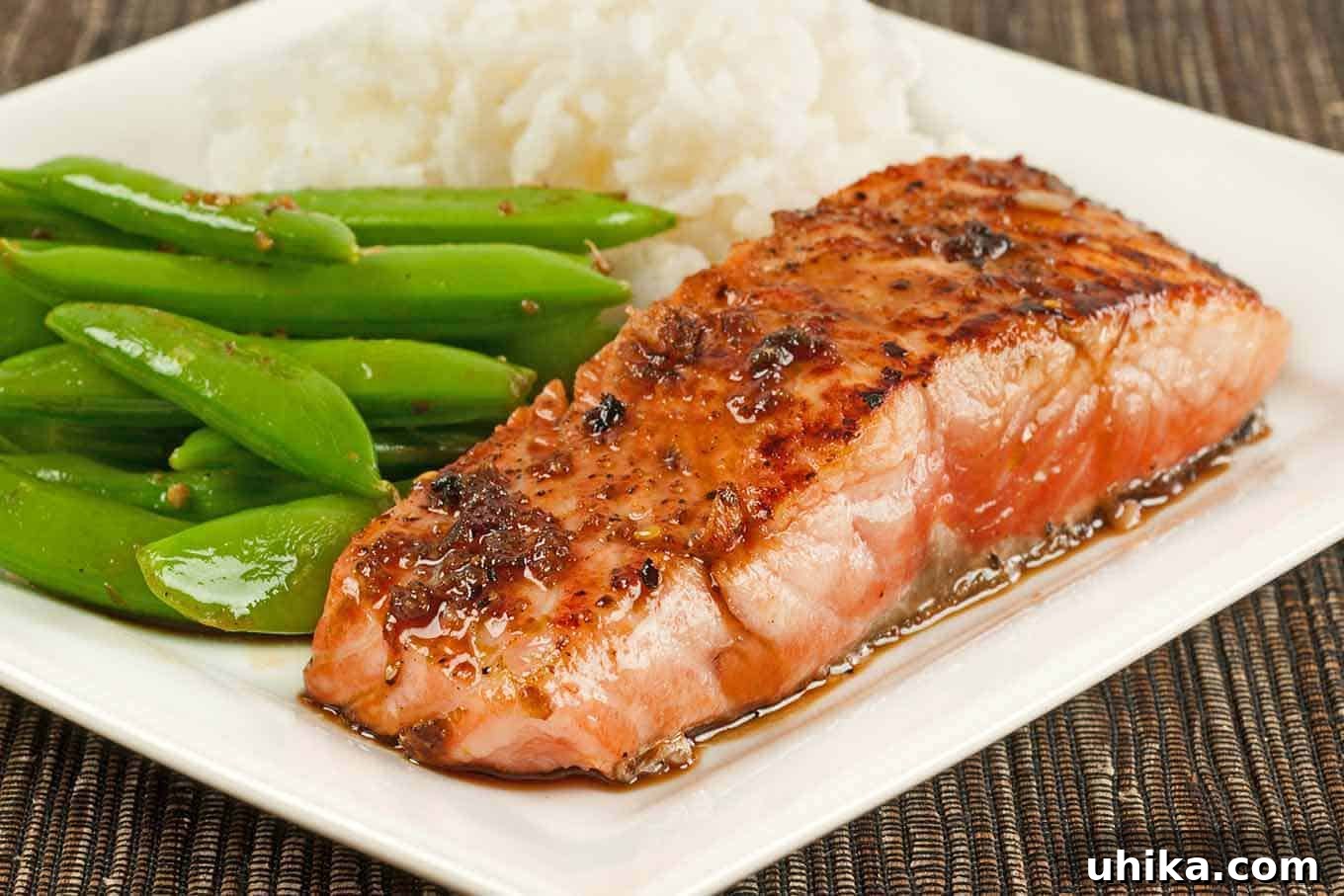
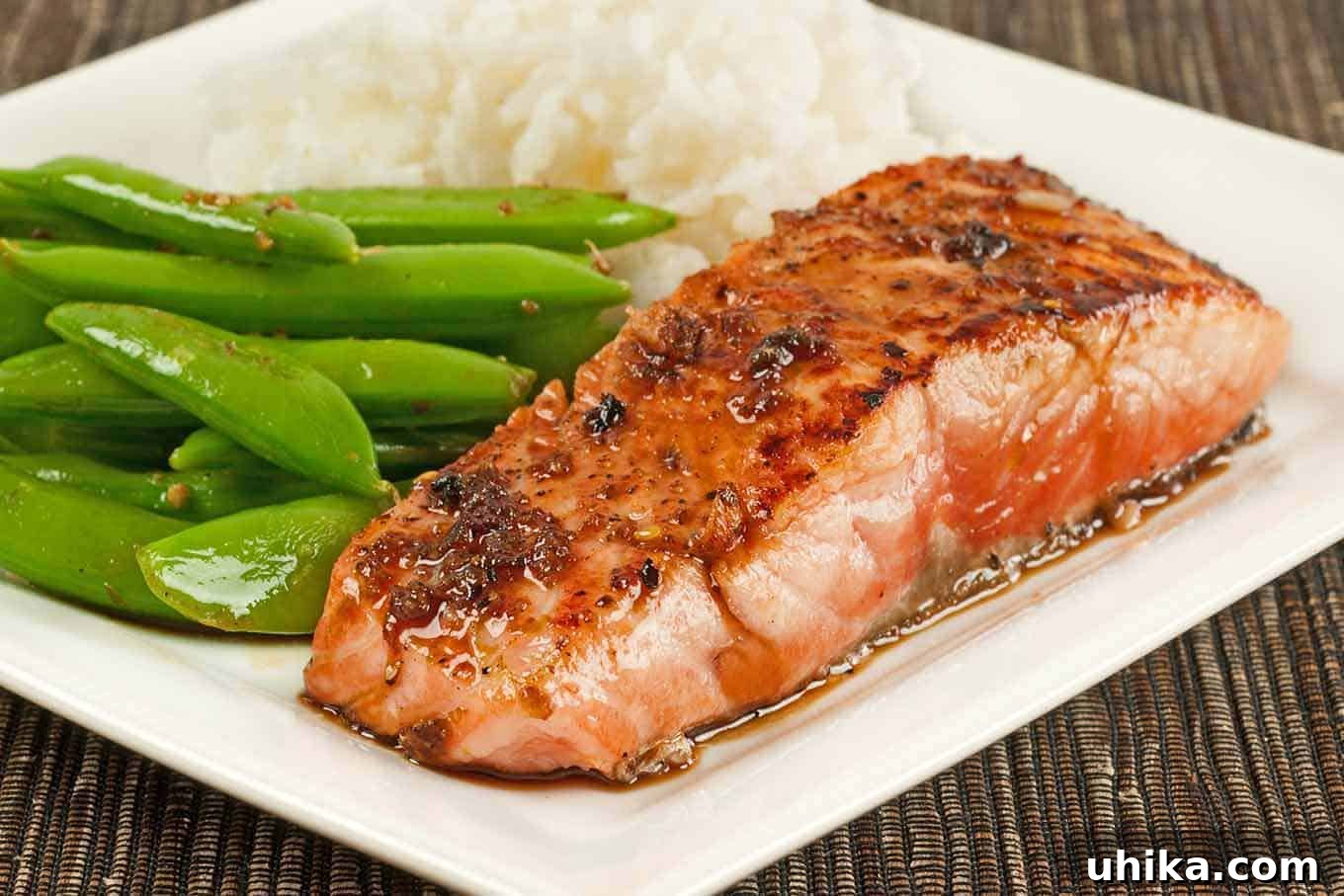
Salmon Fillets with Garlic-Soy Pan Sauce: Your Ultimate 15-Minute Asian-Inspired Dinner
Craving a quick, healthy, and incredibly flavorful dinner that transports your taste buds straight to Asia? Look no further than these sensational Salmon Fillets with Garlic-Soy Pan Sauce. This recipe is an absolute game-changer for busy weeknights, delivering gourmet taste in just 15 minutes from start to finish. Perfectly pan-seared salmon, crispy on the outside and tender within, is generously coated in a simple yet profound sauce that balances the aromatic punch of garlic with the savory depth of soy, the zesty brightness of lime juice, and a subtle hint of brown sugar sweetness. It’s a symphony of flavors that will quickly become a staple in your culinary repertoire.
Forget complicated techniques or lengthy ingredient lists. This dish champions simplicity without compromising on taste. The magic lies in the ease of pan-searing, which locks in the salmon’s natural juices, and the lightning-fast preparation of a truly addictive pan sauce. Serve it alongside fluffy steamed white rice and vibrant stir-fried sugar snap peas, and you have a complete, well-rounded meal that feels both wholesome and indulgent.
Why This Garlic-Soy Salmon Recipe Will Become Your Favorite
This recipe isn’t just another fish dish; it’s a culinary hack for deliciousness. Here’s why it deserves a permanent spot in your recipe rotation:
- Lightning Fast: From prep to plate, you’re looking at just 15 minutes. This makes it an ideal solution for those hectic evenings when time is a luxury.
- Bursting with Flavor: The pan sauce is a masterpiece of balance – sweet, savory, tangy, and deeply garlicky. It complements the rich, buttery flavor of salmon beautifully, creating a harmonious and addictive profile.
- Healthy & Nutritious: Salmon is a nutritional powerhouse, packed with heart-healthy Omega-3 fatty acids, high-quality protein, and essential vitamins and minerals. It’s a smart choice for a balanced and wellness-focused diet.
- Effortlessly Elegant: Despite its quick preparation, this dish looks impressive and sophisticated, making it suitable for both casual family dinners and when you want to impress guests without stress.
- Versatile & Customizable: Easily adaptable to your taste preferences and whatever fresh ingredients you have on hand. It pairs wonderfully with a variety of side dishes.
- Minimal Cleanup: Pan-searing means fewer dishes and less fuss, perfect for a no-stress cooking experience.
Pan-Seared Salmon with Garlic-Soy Sauce
Pin Recipe
Ingredients
For the Salmon:
- 4 (6-ounce) salmon fillets, skin on (about 1.5 lbs total)
- 1 tablespoon toasted sesame oil, or neutral vegetable oil (for drizzling on salmon before searing)
- Salt and freshly ground black pepper, to taste
- Vegetable oil, for searing (a small amount for the pan)
For the Pan Sauce:
- 2 cloves garlic, very finely chopped or minced
- 3 tablespoons soy sauce (use low-sodium for a healthier option, or ponzu sauce for extra citrusy notes)
- 1/4 cup water
- 2 tablespoons freshly-squeezed lime juice (from about 1 medium lime)
- 2 tablespoons light brown sugar, packed
Instructions
- Prepare the Sauce: In a small bowl, combine the finely chopped garlic, soy sauce (or ponzu), water, freshly-squeezed lime juice, and brown sugar. Whisk or stir well until the brown sugar is completely dissolved. Set this flavorful sauce aside.
- Prepare the Salmon: Gently pat the salmon fillets dry with paper towels. This crucial step helps achieve crispy skin. Arrange them skin-side down on a clean plate or cutting board. Drizzle the salmon with the toasted sesame oil (or regular vegetable oil) and generously season both sides with salt and freshly ground black pepper.
- Sear the Salmon: Heat a heavy skillet (a high-quality nonstick pan or a well-seasoned cast iron skillet works best) over medium-high heat until it’s properly hot. Add a small amount of neutral vegetable oil to coat the bottom of the pan. Once the oil shimmers, carefully place the salmon fillets, skin-side down, into the hot skillet. Cook without moving them for 2 to 3 minutes, or until the skin is beautifully golden-brown and crispy, and the fillets release easily from the pan.
- Finish Cooking: Carefully turn the fillets over with tongs and continue cooking for an additional 2 to 4 minutes, or until the salmon reaches your desired level of doneness. The flesh should be flaky but still moist and translucent in the center for medium-rare, or fully opaque for well-done.
- Rest the Salmon: Transfer the cooked salmon fillets to a clean plate and cover them loosely with aluminum foil. This keeps them warm and allows the fish to rest for a few minutes, which helps the juices redistribute, resulting in a more tender and moist fillet.
- Create the Pan Sauce: Keeping the same pan over medium-high heat (do not clean it, as the caramelized bits of fond add incredible flavor), pour in the prepared sauce mixture. Bring it to a rapid simmer, stirring constantly. Cook for 2 to 3 minutes, or until the sauce slightly thickens and reduces. Remember, this will be a lighter, tangy sauce that coats the fish, not a thick, syrupy glaze.
- Serve Immediately: To serve, plate individual salmon fillets and generously drizzle with the warm pan sauce. For a complete and authentic Asian-inspired meal, serve with fluffy steamed white rice and crunchy stir-fried sugar snap peas. Garnish with a sprinkle of toasted sesame seeds, thinly sliced green onions, or a touch of fresh cilantro for added visual appeal and flavor. Enjoy your quick and delicious meal!
Mastering the Pan-Sear: Tips for Perfectly Cooked Salmon
Achieving restaurant-quality pan-seared salmon with flaky interior and irresistibly crispy skin is simpler than you might think. Follow these expert tips for success every time:
- Pat it Bone Dry: This cannot be stressed enough. Moisture on the fish surface prevents searing and crust formation. Use paper towels to thoroughly blot both sides of the salmon fillets before seasoning.
- Even Thickness is Key: If your salmon fillets vary greatly in thickness, try to gently press the thicker parts down slightly before cooking, or choose fillets of similar size to ensure even cooking. This prevents thinner ends from overcooking while thicker parts remain undercooked.
- Preheat Your Pan Properly: Heat your skillet over medium-high heat until it’s properly hot, but not smoking. A good test is to flick a drop of water into the pan; if it sizzles and evaporates immediately, it’s ready for the oil.
- Always Start Skin-Side Down: This protects the delicate flesh from overcooking while allowing the skin to crisp up beautifully. The fat rendered from the skin also acts as a natural non-stick layer, aiding in release.
- Don’t Crowd the Pan: Cook salmon in batches if necessary, especially if you have a smaller skillet. Overcrowding lowers the pan’s temperature and steams the fish instead of searing it, preventing a good crust from forming.
- Resist the Urge to Move It: Once the salmon hits the hot pan, leave it undisturbed. Let it cook on the skin side until it naturally releases from the pan. This indicates a good crust has formed and it’s ready to be flipped.
- Check for Doneness: Salmon is cooked when it flakes easily with a fork at its thickest part. For a precise measurement, an instant-read thermometer inserted into the thickest part should register 145°F (63°C) for fully cooked salmon. For medium-rare to medium, aim for around 125-135°F (52-57°C) and then let it rest.
- Resting is Essential: Just like with steak, letting salmon rest for a few minutes after cooking allows the juices to redistribute throughout the fillet. This results in a noticeably more tender, moist, and flavorful piece of fish.
Elevate Your Meal: Serving Suggestions and Pairings
While steamed white rice and stir-fried sugar snap peas are classic and highly recommended accompaniments for this garlic-soy salmon, don’t hesitate to get creative with your serving choices to suit your palate and dietary needs:
- Grain Alternatives: Swap traditional white rice for nutty brown rice, fluffy quinoa, or even a lighter, healthier cauliflower rice for a low-carb option. Jasmine rice or sticky rice also work wonderfully.
- Diverse Vegetable Medley: Beyond sugar snap peas, consider serving with other Asian-inspired vegetables like sautéed broccoli florets, tender asparagus spears, crisp bok choy, green beans, or even a colorful bell pepper stir-fry. Roasted carrots or sweet potatoes can also offer a delightful contrast.
- Fresh Salad: A simple mixed green salad with a light sesame-ginger vinaigrette can add a refreshing, crisp contrast to the richness of the salmon.
- Noodle Bowls: Serve the pan-seared salmon, sliced into chunks, over a bed of warm ramen noodles, soba noodles, or rice vermicelli tossed in a light dressing or a splash of the pan sauce.
- Garnish for Flair: A sprinkle of toasted sesame seeds (black or white), chopped fresh cilantro, thinly sliced green onions (scallions), or a pinch of red pepper flakes (for a touch of heat) can add both visual appeal and an extra layer of flavor and texture. A wedge of fresh lime on the side is also a great addition.
The Health Benefits of Incorporating Salmon into Your Diet
Salmon isn’t just delicious; it’s also a nutritional powerhouse that offers a wealth of health advantages. Regular inclusion of salmon in your diet can contribute significantly to your overall well-being:
- Rich in Omega-3 Fatty Acids: Salmon is one of the best dietary sources of EPA and DHA, essential omega-3 fatty acids. These are renowned for their powerful anti-inflammatory properties and play a crucial role in promoting brain health, reducing the risk of heart disease, and supporting optimal joint function.
- Excellent Source of High-Quality Protein: A single serving of salmon provides a substantial amount of complete protein, which is vital for muscle repair, growth, maintaining lean body mass, and numerous bodily functions.
- Packed with B Vitamins: Salmon is loaded with a spectrum of B vitamins, including B12, B6, niacin, and riboflavin. These vitamins are indispensable for energy production, converting food into fuel, DNA repair, and maintaining a healthy nervous system.
- Contains Powerful Antioxidants: Astaxanthin, the carotenoid responsible for salmon’s vibrant pink-orange hue, is a potent antioxidant. It helps protect cells from oxidative damage caused by free radicals and has been linked to benefits for skin health and reduced risk of chronic diseases.
- Good Source of Potassium: This essential mineral found in salmon plays a critical role in blood pressure regulation and maintaining proper fluid balance in the body.
- May Support Bone Health: Salmon contains both Vitamin D and phosphorus, two nutrients that are important for building and maintaining strong bones, contributing to overall skeletal health.
- Thyroid Support: It provides selenium, a trace mineral vital for thyroid function and antioxidant defense.
Variations and Customizations: Make it Your Own!
While the classic Garlic-Soy Pan Sauce is perfect as is, this recipe is incredibly flexible. Feel free to experiment and tailor it to your specific taste preferences or available ingredients:
- Spice it Up: For those who enjoy a bit of heat, a dash of sriracha, chili garlic sauce, or a pinch of red pepper flakes added to the pan sauce will provide a pleasant warmth and kick.
- Ginger Infusion: Incorporate 1 teaspoon of freshly grated ginger into the sauce mixture along with the garlic for an added layer of aromatic depth that complements the Asian flavors beautifully.
- Different Citrus: While lime is traditional and offers a bright tang, fresh lemon juice can be used as a substitute for a slightly different, equally delicious tangy profile.
- Sweetener Swap: Honey or maple syrup can replace brown sugar for a natural alternative sweetener. Adjust the amount to taste, as these can be sweeter than brown sugar.
- Gluten-Free Option: To make this recipe suitable for individuals with gluten sensitivities or celiac disease, simply use tamari instead of regular soy sauce. Tamari is a gluten-free alternative that maintains the savory umami flavor.
- Herbal Freshness: A sprinkle of fresh chopped cilantro, parsley, or even mint at the end can brighten the dish even further and add a fresh aromatic touch.
- Thicker Sauce: If you prefer a slightly thicker sauce, you can mix 1 teaspoon of cornstarch with 1 tablespoon of cold water and stir it into the simmering sauce. Cook for another minute until it reaches your desired consistency.
Frequently Asked Questions (FAQs)
- How can I tell if my salmon is cooked through without overcooking it?
- The easiest way is by checking if it flakes easily with a fork in the thickest part of the fillet. The flesh should be opaque throughout, but still moist. For precision, an instant-read thermometer inserted into the thickest part should read 145°F (63°C) for fully cooked salmon. For a medium-rare finish, aim for 125-135°F (52-57°C).
- Can I use skinless salmon fillets for this recipe?
- Absolutely! While skin-on salmon provides a delightfully crispy texture and helps retain moisture during cooking, skinless fillets work perfectly well. You might find they cook a bit faster, so keep an eye on them.
- Can I prepare the pan sauce in advance?
- Yes, you certainly can! Mix all the sauce ingredients a day or two ahead of time and store it in an airtight container in the refrigerator. This advance prep makes weeknight cooking even faster and more convenient.
- How should I store and reheat leftovers?
- Store any leftover salmon and sauce in an airtight container in the refrigerator for up to 2-3 days. To reheat, gently warm the salmon in a skillet over low heat or in the microwave on a low setting until just warmed through. Be careful not to overheat, as this can dry out the fish.
- Can I bake or grill the salmon instead of pan-searing?
- Yes, you can adapt this recipe for other cooking methods. For baking, preheat your oven to 400°F (200°C), place salmon fillets on a baking sheet lined with parchment paper, and bake for 12-18 minutes, or until cooked to your liking. For grilling, lightly oil your grill grates, place salmon skin-side down (if applicable), and grill for about 4-6 minutes per side, depending on thickness. Pour the prepared sauce over the salmon just before serving.
- What’s the difference between soy sauce and ponzu sauce?
- Soy sauce is a savory, fermented condiment made from soybeans, wheat, salt, and water. Ponzu sauce is a citrus-based soy sauce, typically made with soy sauce, citrus juice (often yuzu or lemon), vinegar, mirin, and dashi. Ponzu offers a brighter, tangier flavor, which works beautifully in this recipe.
Ready to Cook?
This Salmon Fillets with Garlic-Soy Pan Sauce recipe is more than just a meal; it’s a testament to how incredible simple ingredients can be when combined thoughtfully. It’s perfect for anyone seeking a healthful, quick, and undeniably delicious dinner that satisfies cravings and impresses palates. With minimal effort and maximum flavor, you’ll have a restaurant-quality meal on your table in no time. So, gather your ingredients, fire up your skillet, and prepare to enjoy a truly magnificent Asian-inspired culinary experience that will leave everyone asking for seconds.
If you loved this recipe, please consider leaving a comment and sharing your experience! Your feedback helps us grow and inspires others to try new dishes.