
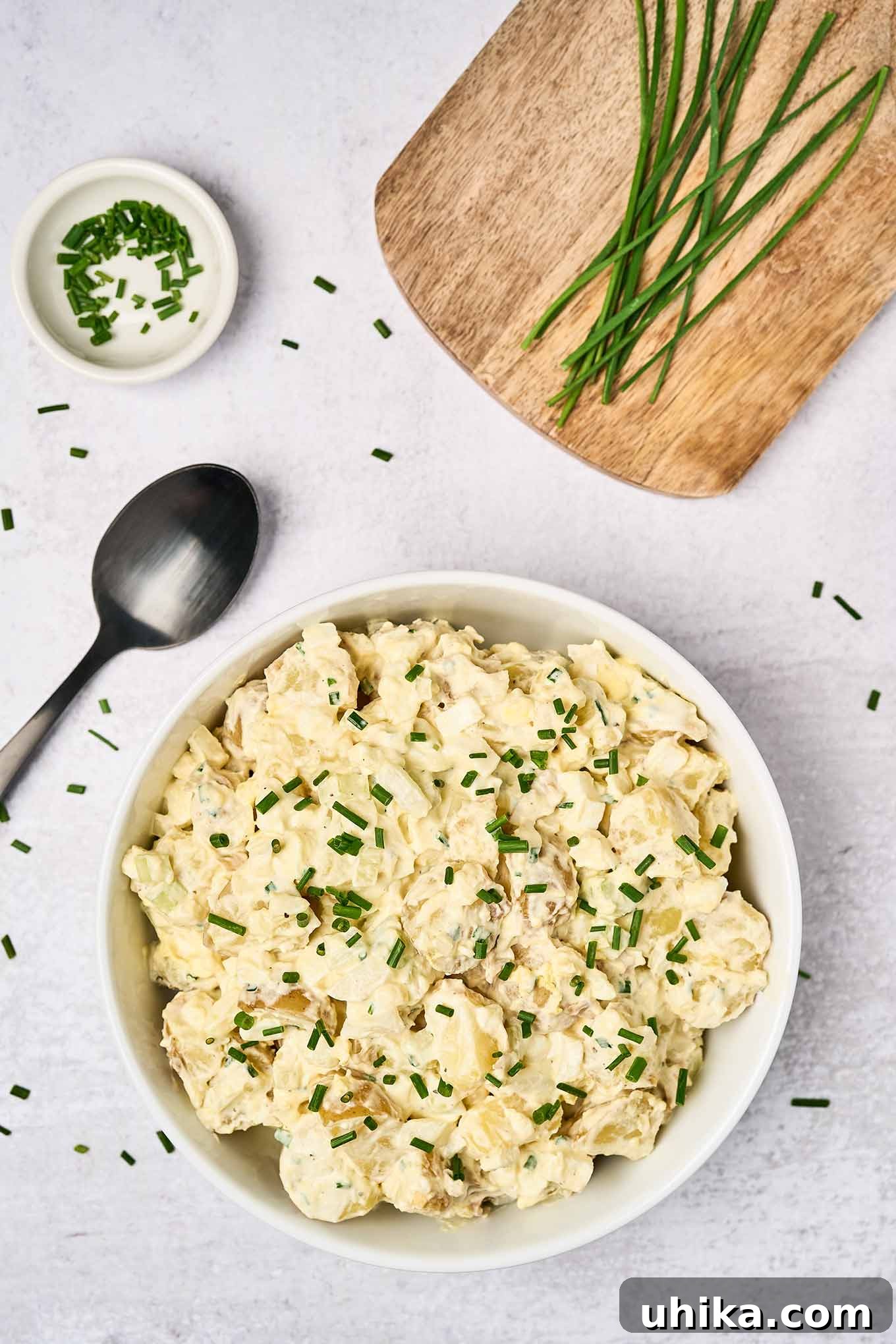
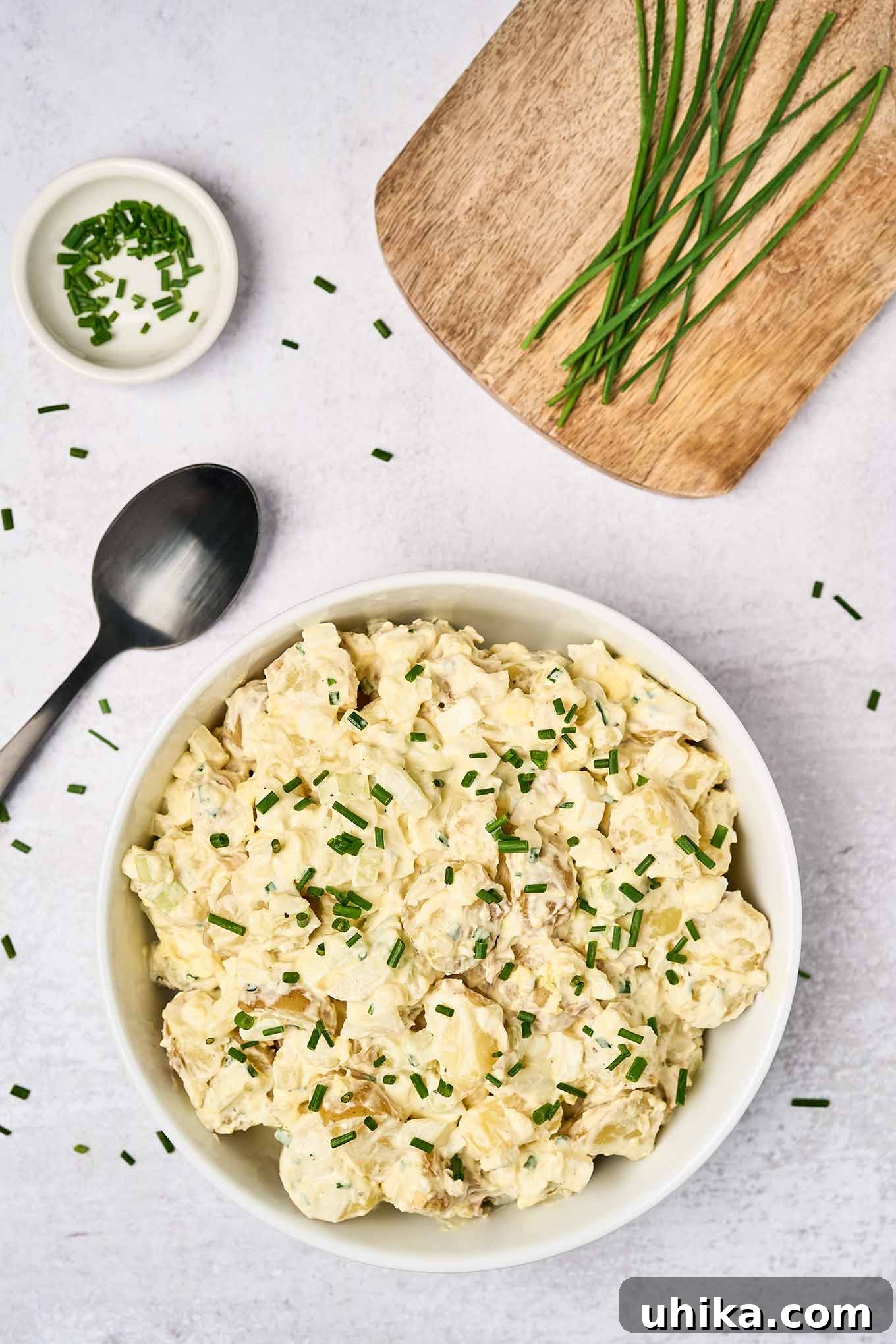
Light & Creamy Sour Cream Potato Salad: A Refreshing Twist on a Classic Side Dish
Discover the ultimate refreshing side dish with our exquisite Sour Cream Potato Salad. If you’ve been searching for a lighter, yet equally satisfying, alternative to traditional mayonnaise-heavy potato salads, your quest ends here. This recipe delivers a wonderfully creamy texture, a delightful tang, and a vibrant flavor profile that never feels heavy. It’s the perfect companion for any occasion, from casual backyard barbecues and summer picnics to elegant potlucks and festive family gatherings.
Our unique dressing significantly cuts back on the mayonnaise, allowing the bright, tangy notes of sour cream to take center stage. The result is a potato salad that boasts all the beloved creaminess and satisfaction of a classic, but with a noticeably lighter and more sophisticated finish. Prepare to impress your guests and delight your family with this easy-to-make, incredibly delicious side that is sure to become a cherished addition to your recipe collection.
Elevate Your Meal: The Benefits of a Sour Cream-Based Potato Salad
Choosing sour cream as the primary base for your potato salad dressing offers several distinct advantages over a solely mayonnaise-driven version. The inherent tanginess of sour cream introduces a refreshing zest that brightens the entire dish, cutting through the richness of the potatoes and creating a more balanced flavor profile. This makes the salad feel less heavy and allows the other fresh ingredients to truly sing. Furthermore, sour cream often results in a silkier, smoother dressing consistency that coats each potato chunk beautifully without becoming overly thick or greasy. For those seeking a healthier option, a sour cream-based dressing can often contain fewer calories and less fat than a purely mayonnaise dressing, especially if opting for reduced-fat sour cream, without compromising on flavor or creaminess.
Unleash Your Inner Chef: Creative Customizations for Your Potato Salad
Potato salad is a remarkably versatile canvas, practically inviting you to experiment with flavors and textures. This sour cream potato salad recipe serves as an excellent foundation, easily adaptable to a myriad of culinary traditions and personal preferences. Don’t hesitate to personalize it and make it uniquely yours:
- Mediterranean Magic: Transform your salad into a Greek-inspired delight. Substitute fresh dill for chives, add a zesty splash of lemon juice instead of vinegar, and consider replacing a portion of the sour cream with creamy Greek yogurt for an even deeper tang. Crumbled feta cheese and a handful of Kalamata olives will complete this authentic Mediterranean twist.
- French Sophistication: Infuse your potato salad with a touch of French elegance. Swap the sweet onion for finely minced shallots, introduce briny capers in place of celery for a unique salty burst and texture, and incorporate fragrant fresh tarragon and parsley to complement the delicate flavors. A hint of white wine vinegar can further elevate this sophisticated rendition.
- Spice It Up: For those who appreciate a kick, finely diced jalapeños, a pinch of cayenne pepper, or a dash of hot sauce can introduce a delightful warmth. Smoked paprika can also add a wonderful smoky depth to the dressing.
- Herb Garden Freshness: Beyond chives, experiment with other fresh herbs like cilantro for an earthy note, mint for a cooling sensation, or even a touch of finely chopped rosemary for a unique aromatic profile.
- Added Crunch and Texture: Elevate the textural complexity by incorporating crispy bacon bits, toasted pecans, sunflower seeds, or even finely diced bell peppers (red, yellow, or orange) for additional color and a refreshing crunch.
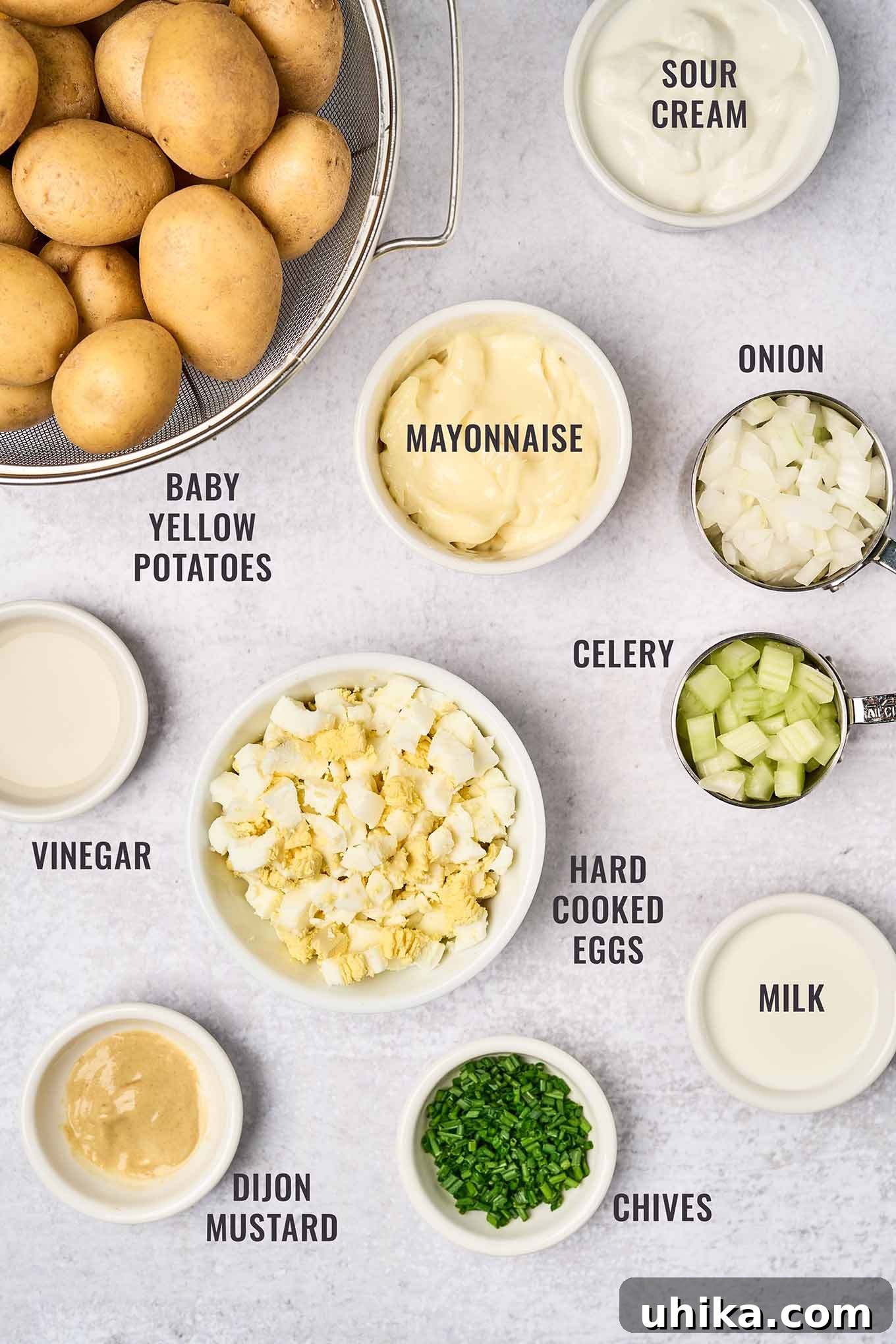
Key Ingredients for Your Perfect Sour Cream Potato Salad
The secret to an exceptional potato salad lies in selecting high-quality ingredients and understanding their role. Here’s a closer look at the essential components of this recipe and tips for choosing and preparing them for optimal flavor and texture. The complete list, including precise quantities, is in the detailed recipe section below.
Potatoes: The Foundation of Flavor and Texture
Choosing the correct potato variety is absolutely critical for a potato salad that holds its shape and boasts a delightful, creamy texture without becoming mushy. **Baby yellow potatoes** are highly recommended due to their naturally tender, waxy texture and conveniently thin skins, which means no laborious peeling is needed – a fantastic time-saver! Their creamy flesh readily absorbs the dressing beautifully.
- Best Varieties: In addition to baby yellow, other waxy potato varieties such as **Yukon Golds**, **red new potatoes**, or **fingerling potatoes** are excellent alternatives. These types have a lower starch content compared to starchy potatoes like Russets, which prevents them from disintegrating during cooking and mixing, thus maintaining their desirable structural integrity.
- To Peel or Not to Peel: You can choose to leave the skins on for added nutrients, a more rustic appearance, and textural interest, or peel them after boiling for a smoother, more uniform texture. Whichever you choose, ensure the potatoes are cooked just until tender—never overcooked—to preserve their shape.
Sour Cream: The Star of the Dressing
Our dressing’s primary component, **regular full-fat sour cream**, provides a wonderfully rich, creamy texture and its signature tangy flavor. This tang is absolutely crucial for brightening the salad, providing a refreshing counterpoint to the potatoes and preventing the dish from tasting overly rich. It’s this vibrant balance that truly sets this recipe apart.
- Reduced-Fat Option: If you’re aiming for a slightly lighter version, reduced-fat sour cream can be used. However, it tends to be thinner in consistency. To ensure the dressing remains adequately creamy and thick enough to coat the potatoes, you might want to omit the milk from the dressing recipe or slightly increase the amount of sour cream to compensate for the reduced thickness.
Mayonnaise: A Touch of Creamy Harmony
While sour cream is the star, a modest amount of **mayonnaise** plays an important supporting role. Its inclusion helps to mellow the intense tang of the sour cream, adding a subtle richness and enhancing the dressing’s velvety texture. The goal is to create a harmonious blend where the mayonnaise complements rather than overpowers the fresh, tangy character of the sour cream.
Fresh Chives: Delicate Flavor and Visual Appeal
**Fresh chives** are a key ingredient, offering a delicate, mild onion flavor that beautifully complements the potatoes and the creamy dressing. Their vibrant green color also adds an appealing visual pop to the finished potato salad.
- Alternative Fresh Herbs: If chives are unavailable or you wish to explore different flavors, several other fresh herbs make excellent substitutes:
- Fresh Parsley: A classic and versatile herb, providing a clean, slightly peppery herbaceous note.
- Fresh Dill: Ideal for a more pronounced, slightly anise-like flavor, particularly if you’re leaning towards a Mediterranean or Scandinavian twist.
- Fresh Tarragon: Offers a sophisticated, slightly licorice-like aroma, perfect for a French-inspired variation.
- Chopped Scallions (Green Onions): For a slightly more potent, yet still mild, onion flavor, the green parts of scallions are a great alternative, contributing both taste and attractive color.
Celery and Sweet Onion: Essential Crunch and Aromatic Depth
Finely **chopped celery** is indispensable in this recipe, providing that crucial crisp texture and refreshing bite that contrasts beautifully with the tender potatoes. It prevents the salad from becoming monotonous and adds a delightful textural dynamic. **Sweet onion**, such as Vidalia or Walla Walla, offers a mild, naturally sweet allium flavor that adds depth and complexity to the salad without the overpowering pungency of stronger onion varieties.
- Textural Alternatives: For celery, consider finely diced bell peppers (red or yellow) for vibrant color and a touch of sweetness, or even thinly sliced radishes for a peppery crunch.
- Onion Variations: A finely minced shallot offers an even more delicate and refined onion flavor, while red onion, used sparingly, can add a sharper bite and beautiful purple streaks.
Hard-Cooked Eggs: A Classic Creamy Addition
Diced **hard-cooked eggs** are a beloved and traditional component of many potato salads, and they are a welcome addition to this sour cream version. They contribute a creamy richness, a satisfying, tender texture, and a boost of protein, making the salad more substantial and well-rounded.
- Tip for Perfect Hard-Boiled Eggs: To ensure easy peeling and prevent the unattractive green ring around the yolk, place eggs in a saucepan and cover with cold water. Bring to a rolling boil, then immediately remove from heat, cover the pan, and let sit for 10-12 minutes. Promptly transfer the eggs to an ice bath for several minutes before peeling.
Milk, Vinegar, and Dijon Mustard: The Unsung Flavor Boosters
A small amount of **milk** (any variety, dairy or non-dairy) is used to achieve the ideal consistency for the dressing, ensuring it’s perfectly pourable and coats the potatoes evenly without being too thick. **Rice wine vinegar** introduces a subtle yet vital acidity that brightens all the flavors, cutting through the richness and enhancing the tang of the sour cream. Finally, **Dijon mustard** provides a savory, slightly pungent kick that expertly rounds out the dressing, adding layers of depth and a touch of sophisticated complexity without making the salad overtly “mustardy.”
- Vinegar Alternatives: White wine vinegar or apple cider vinegar can be used as effective substitutes for rice wine vinegar, offering similar acidic notes that enhance the overall flavor profile.
Crafting Your Creamy Sour Cream Potato Salad: A Detailed Step-by-Step Guide
Making this delightful sour cream potato salad is a straightforward and rewarding process. Follow these simple steps carefully to ensure a perfectly balanced, flavorful, and textured dish. Detailed, step-by-step instructions with all quantities are provided in the full recipe card below.
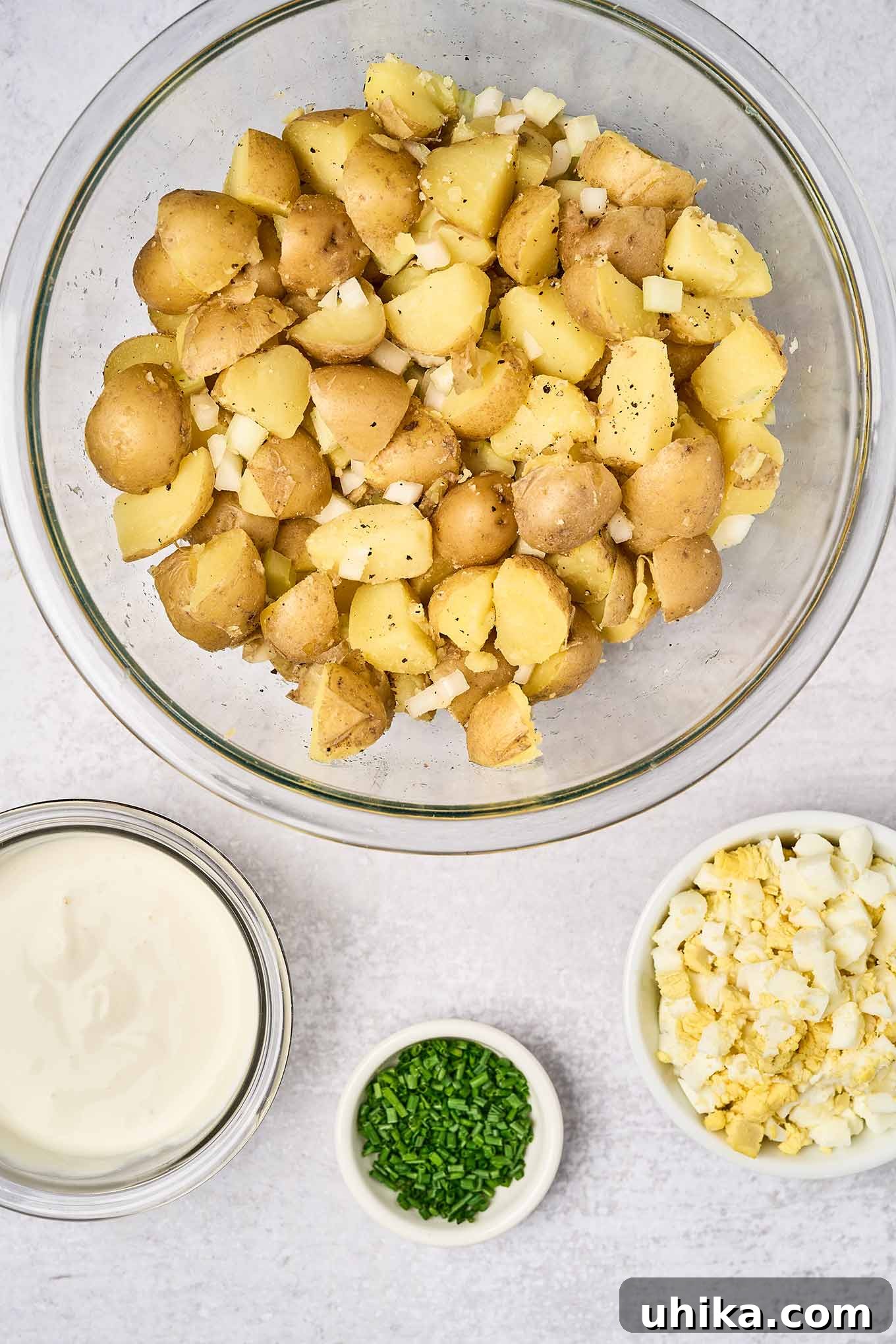
1. Prepare the Potatoes to Perfection
Begin by thoroughly scrubbing your baby yellow potatoes under cold running water. Place the clean potatoes in a large saucepan and cover them completely with cold water. Add approximately 1 teaspoon of salt to the water. Bring the water to a rolling boil over medium-high heat. Once boiling, reduce the heat slightly to maintain a gentle simmer and cook the potatoes for about 12 to 15 minutes, or until they are easily pierced with the tip of a knife. It’s crucial not to overcook them, as mushy potatoes will negatively impact the salad’s final texture. Drain the cooked potatoes completely in a colander and set them aside to cool for about 10 minutes, or until they are comfortable enough to handle. This short cooling period helps them firm up slightly before you proceed to chop them.
2. Assemble the Flavorful Base Ingredients
Once the potatoes have cooled sufficiently, cut them into rough 1-inch chunks. Transfer these chunks into a large mixing bowl. Add the finely chopped celery and the finely chopped sweet onion to the bowl. Season this mixture generously with about 1/2 teaspoon of salt and several generous grinds of freshly ground black pepper. Using a large spoon or spatula, gently combine these ingredients. Be careful not to mash the potato chunks; the goal is to mix them just enough to distribute the seasonings and vegetables evenly. This initial seasoning helps to build layers of flavor from the very beginning of the preparation.
3. Whisk Together the Tangy Sour Cream Dressing
In a separate medium-sized bowl, prepare the star of this dish: the creamy sour cream dressing. Combine the sour cream, mayonnaise, milk, rice wine vinegar, and Dijon mustard. Whisk these ingredients together vigorously until the mixture is completely smooth, lump-free, and well-combined. The dressing should have a pourable yet rich and creamy consistency. Taste the dressing at this stage and adjust seasonings if necessary, ensuring a perfect balance of tang, savory notes, and richness. This step allows you to fine-tune the core flavor of your potato salad.
4. Gently Combine All Ingredients
Pour the freshly prepared sour cream dressing over the potato mixture in the large mixing bowl. Next, add the diced hard-cooked eggs and the vibrant fresh chopped chives. Using a large spatula or spoon, gently fold all the ingredients together until the potato chunks, celery, onion, and eggs are evenly coated with the creamy dressing. The key here is to be gentle to avoid breaking down the potato pieces, preserving their distinct texture and visual appeal. Ensure everything is thoroughly mixed so that every bite offers a medley of flavors and textures.
5. Allow Flavors to Mingle and Chill for Perfection
Once all ingredients are combined, set the potato salad aside at room temperature for about 10 minutes. This short resting period is crucial, as it allows the dressing to begin permeating the potatoes and the flavors to start marrying and developing a deeper complexity. After resting, taste the salad again and adjust the seasoning as needed. You might find it benefits from a little more salt, pepper, or an extra splash of vinegar to enhance its brightness. For optimal flavor development and a wonderfully refreshing chill, transfer your potato salad to a wide, shallow container. This shape helps accelerate the cooling process. Cover it tightly and chill in the refrigerator for at least two hours before serving. Chilling it overnight is even better, as it allows the flavors to fully meld and deepen, resulting in an even more delicious potato salad.
Kitchen Insights for Potato Salad Perfection
Achieving the ideal potato salad texture and flavor is a culinary art that becomes simple with a few key insights. Understanding your ingredients and how to treat them makes all the difference.
- The Importance of Waxy Potatoes: The most crucial tip for any potato salad is to always use a **waxy type of potato**. The term “waxy” refers to potato varieties that possess thinner skins and a lower starch content compared to their starchy counterparts (such as Russets or Idaho potatoes). Excellent examples of waxy potatoes include new potatoes, baby potatoes, red bliss potatoes, and Yukon Golds. These characteristics are vital because waxy potatoes are known for retaining their firm texture and integrity after cooking. They are significantly less likely to break down and become mushy when tossed with dressing and other ingredients, ensuring your potato salad maintains its desirable structure and pleasant bite. Starchy potatoes, conversely, absorb a lot of moisture and tend to fall apart, leading to a pasty or gluey texture that is generally undesirable in a refreshing potato salad.
- Cooling Your Potatoes Properly: Another key tip for success is to allow the cooked potatoes to cool sufficiently after boiling but before mixing them with the dressing. Warm potatoes will absorb the dressing too rapidly, which can result in a dry salad, or cause the dressing to become excessively thin as the heat from the potatoes thins it out. Cooling them down allows the potatoes to firm up slightly and ensures that the creamy dressing coats them beautifully and remains at the desired consistency. Ideally, they should be cool to the touch or even slightly warm, but not hot.
- Gentle Mixing is Key: Always mix your potato salad with a gentle hand. Over-mixing can easily break down the delicate potato chunks, leading to a gluey or mashed consistency. Use a large, flexible spatula or a wide spoon and fold the ingredients together carefully until they are just combined and evenly coated. This technique helps preserve the individual textures of all the components.
- Seasoning in Layers: Don’t just season at the end. Season the potatoes after cooking and chopping, and season the dressing separately. This layering approach ensures that every component of your potato salad is flavorful, leading to a much more complex and delicious final dish. Always taste and adjust seasonings at various stages.
More Delectable Side Salad Recipes to Explore and Enjoy
If you’re a devoted fan of hearty and satisfying side dishes, much like our creamy sour cream potato salad, you’ll be thrilled to discover these other fantastic recipes. Each offers a unique flavor profile and a refreshing take on classic salads, perfect for complementing any meal or serving as a delightful light lunch on their own.
- Warm German Potato Salad: A beloved classic that offers a completely different experience from mayonnaise or sour cream-based versions. This robust salad foregoes creamy dressings in favor of a savory, warm vinaigrette. It’s typically made with tender sliced potatoes, crispy bacon, pungent red onion, and a tangy mustard-vinegar dressing. This comforting side is particularly excellent when served warm or at room temperature, making it a perfect accompaniment to roasted meats, sausages, or schnitzel.
- Fresh Corn and Tomato Salad: For those seeking something truly light, vibrant, and summery, this salad is a true celebration of seasonal produce. It artfully combines sweet corn kernels (freshly cut from the cob or thawed frozen corn), juicy cherry tomatoes, and a bright, zesty lemon-chive vinaigrette. This incredibly refreshing and colorful salad makes an ideal companion to grilled chicken, fish, or any lighter main course on a warm day.
- Mediterranean Couscous Salad with Feta and Tomatoes: Transport your taste buds directly to the sunny shores of the Mediterranean with this wonderfully flavorful couscous salad. Light and fluffy couscous forms the base, tossed with cubes of tangy feta cheese, sun-ripened cherry tomatoes, crisp cucumber, and fragrant fresh mint. All these fresh ingredients are brought together by a light and bright lemon-olive oil dressing, creating a harmonious medley of flavors. It’s a fantastic make-ahead salad that’s perfect for picnics, packed lunches, or as a vibrant side to grilled lamb, chicken, or seafood.
Sour Cream Potato Salad: The Complete Recipe
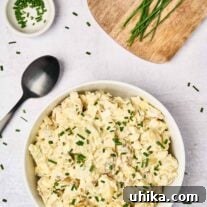
Sour Cream Potato Salad
By Lynne Webb
This light, creamy potato salad combines tender chunks of baby yellow potatoes with crisp celery, sweet onion, and diced hard-cooked eggs, all coated in a tangy sour cream dressing. It offers a refreshing and delightful alternative to richer, mayonnaise-only versions, making it a perfect side dish for any meal or gathering.
Prep Time: 20 minutes
Cook Time: 25 minutes
Chilling Time: 2 hours
Total Time: 2 hours 45 minutes
Servings: 6 servings
Jump to Instructions
Ingredients List
- 2 lbs baby yellow potatoes
- 1/2 cup chopped celery
- 1/2 cup chopped sweet onion
- Salt and freshly ground black pepper (to taste)
- 2/3 cup sour cream
- 3 tablespoons mayonnaise
- 2 tablespoons milk
- 1 tablespoon rice wine vinegar
- 1 teaspoon Dijon-style mustard
- 3 hard-cooked eggs, peeled and diced
- 2 tablespoons chopped fresh chives
Step-by-Step Instructions
- Thoroughly scrub the potatoes. Place them in a large saucepan, cover with cold water, and add 1 teaspoon of salt.
- Bring the water to a boil, then reduce heat and simmer for 12 to 15 minutes, or until the potatoes are tender when pierced with the tip of a knife. Drain the potatoes and set them aside to cool for approximately 10 minutes, or until they are cool enough to handle.
- Cut the cooled potatoes into 1-inch chunks and transfer them to a large mixing bowl. Add the chopped celery and onion. Season with 1/2 teaspoon of salt and a few generous grinds of black pepper, then gently combine.
- In a separate bowl, whisk together the sour cream, mayonnaise, milk, rice wine vinegar, and Dijon mustard until smooth and well-combined. Pour this dressing mixture over the potatoes. Add the diced hard-cooked eggs and chopped fresh chives, then gently fold all ingredients together until everything is evenly coated.
- Set the potato salad aside for 10 minutes to allow the flavors to meld and develop. Taste and adjust the seasoning (salt, pepper, or a touch more vinegar) as needed. Transfer the potato salad to a wide, shallow container, cover tightly, and chill in the refrigerator for at least 2 hours before serving. For best results and fully developed flavors, chilling overnight is highly recommended.
Nutrition Information (Approximate)
Per Serving: Calories: 248, Total Fat: 11g, Cholesterol: 106mg, Sodium: 226mg, Carbohydrates: 30g, Fiber: 4g, Sugar: 3g, Protein: 8g
Disclaimer: Nutrition information is automatically calculated based on typical ingredient values and should be used as an approximation only. Actual values may vary depending on specific brands, preparation methods, and ingredient adjustments.
We hope you love this refreshing sour cream potato salad as much as we do! Share your experience or any delicious twists you’ve added in the comments below.