
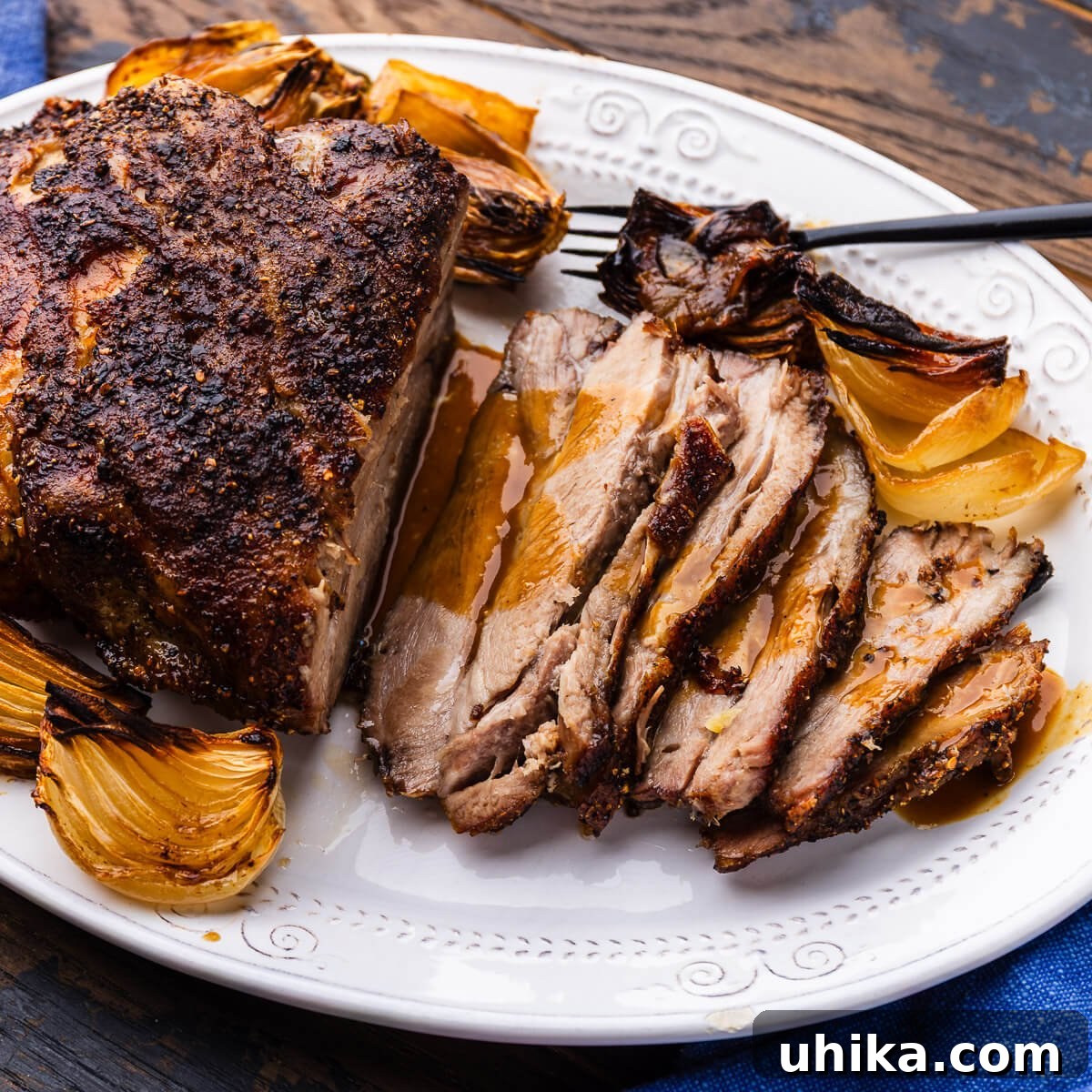
Experience Culinary Excellence: Italian-Style Roasted Pork Shoulder with Aromatic Herbs
Whether you’re crafting a memorable holiday feast or elevating your Sunday dinner, our Italian-style Roasted Pork Shoulder recipe is an absolute must-try. This exquisite pork roast is slow-cooked to unparalleled tenderness, infused with the vibrant zest of orange, the earthy notes of sage and rosemary, and the warm, distinctive aroma of fennel seeds, all crowned with a luscious, homemade gravy. Prepare to make this succulent, flavorful roast a beloved staple in your culinary repertoire!
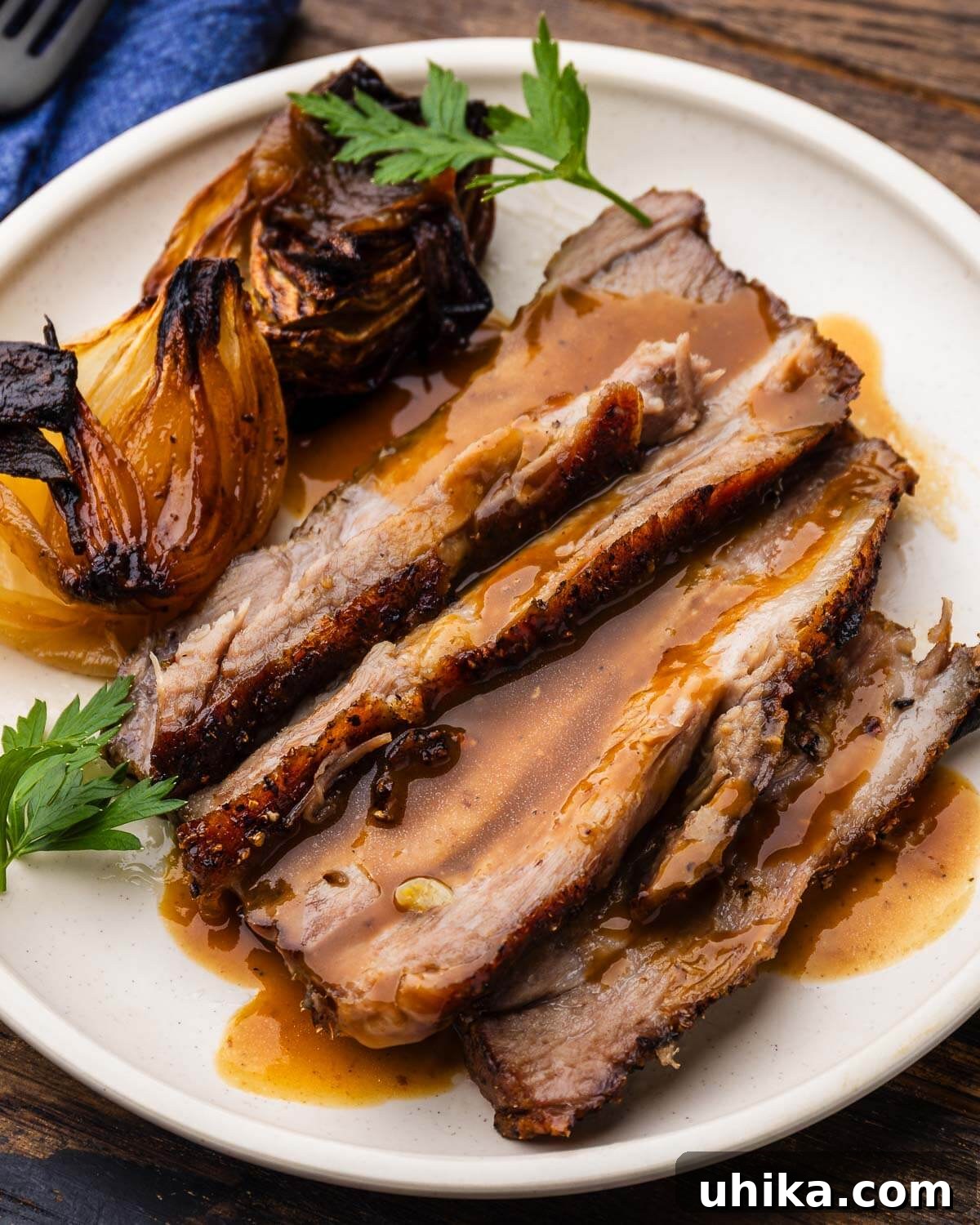

The Quintessential Budget-Friendly Holiday Roast
When planning a holiday meal, the thought of extravagant cuts like prime rib, beef tenderloin, or leg of lamb often comes with a hefty price tag. But an extraordinary feast doesn’t have to break the bank! This Italian-style roasted pork shoulder offers all the grandeur and flavor of a premium roast at a fraction of the cost, making it the perfect choice for festive gatherings or a special family dinner.
Don’t let the term “inexpensive” mislead you; this roast is anything but lacking. Its rich marbling ensures a moist and tender result, while the aromatic blend of orange, fennel, sage, and rosemary creates a symphony of flavors that perfectly complements the succulent pork. The deeply flavored gravy, made from the pan drippings, truly “seals the deal,” adding another layer of irresistible taste. And let’s not forget the onions, which roast alongside the pork, caramelizing and absorbing all those wonderful juices to become an incredibly delicious accompaniment!
I find this pork shoulder roast pairs beautifully with a variety of side dishes. My personal favorites include creamy garlic mashed potatoes, velvety polenta, or light rice pilaf. For a touch of green, a simple side of roasted broccoli completes the meal perfectly.
Key Ingredients for Your Aromatic Pork Shoulder
Crafting this remarkable Italian-style roasted pork shoulder begins with a selection of fresh, high-quality ingredients. Each component plays a vital role in building the deep, complex flavors that define this dish.
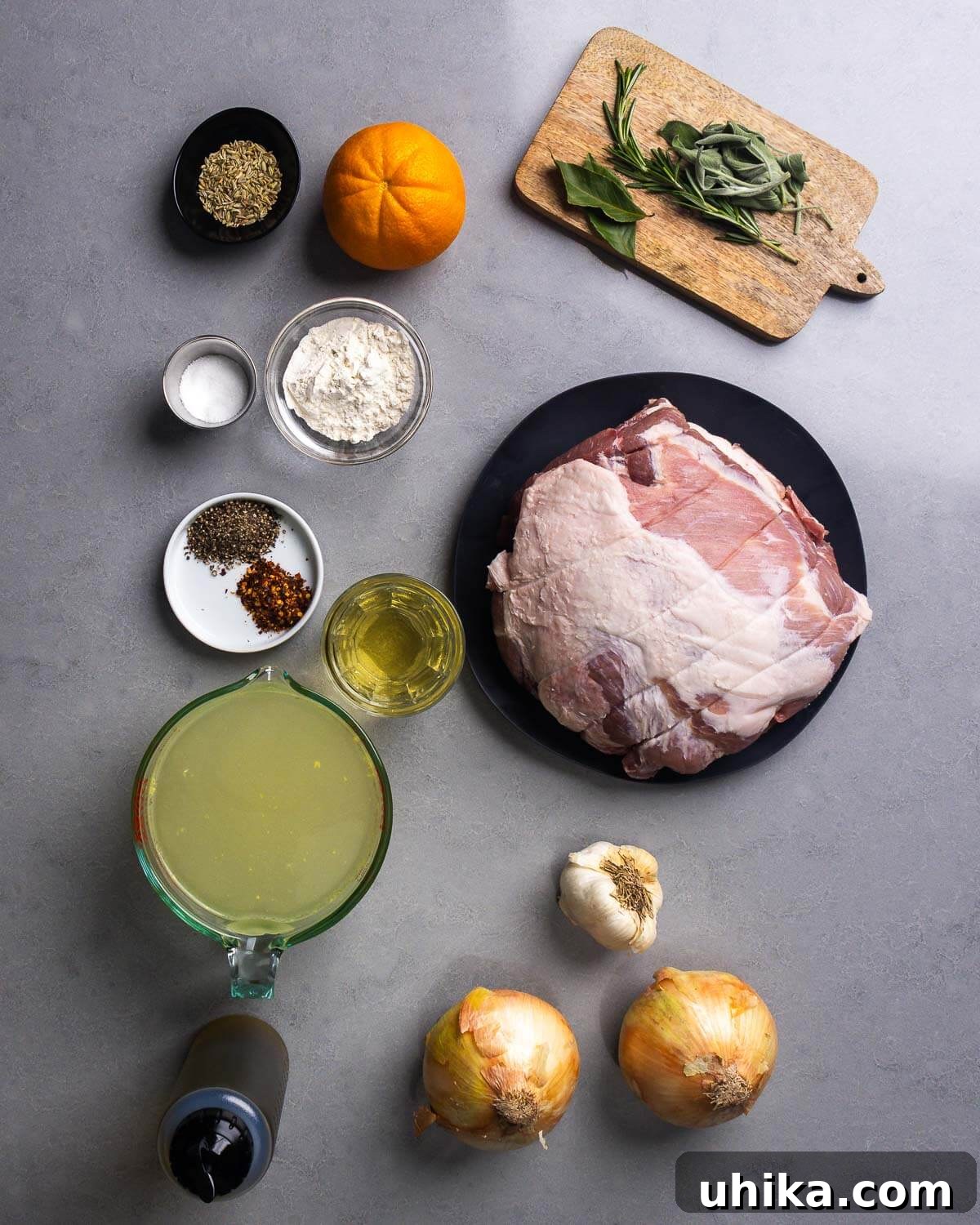
- Pork Shoulder: For this recipe, I typically use a 6-7 pound boneless pork shoulder, also known as Boston butt. This cut is rich in marbling, which renders beautifully during slow roasting, resulting in incredibly tender and juicy meat. A picnic roast, the lower portion of the shoulder, can also be used; just aim for an internal temperature of at least 205°F if you plan on shredding it.
- Orange: The fresh juice from a large orange adds a bright, zesty counterpoint to the richness of the pork and the earthiness of the herbs. It’s a flavor profile I adore, reminiscent of other favorite recipes like my porchetta roast.
- Garlic: We use about 10 cloves of garlic, slivered and inserted directly into the pork. This method allows the pungent garlic aroma to permeate the meat from within, creating pockets of intense flavor.
- Fresh Herbs: A generous combination of fresh rosemary, sage leaves, and bay leaves are essential. These classic Italian herbs impart a fragrant, savory depth that is synonymous with Mediterranean cooking, elevating the entire roast.
- Dry White Wine: A dry white wine, such as Sauvignon Blanc, is perfect for deglazing the pan and contributing a subtle acidity and complexity to the roasting liquid, which later forms the base of our savory gravy.
- Chicken Stock: Low-sodium chicken stock provides a foundational liquid for both roasting and gravy. It keeps the pork moist and adds a savory depth to the pan drippings.
- Seasoning Blend: A simple yet powerful blend of olive oil, Diamond Crystal kosher salt, black pepper, and crushed red pepper flakes creates a fantastic crust and infuses the pork with delicious flavor. The red pepper flakes add a subtle warmth without overpowering.
- Fennel Seeds: Ground fennel seeds are a signature flavor in Italian pork dishes. Their unique anise-like essence pairs remarkably well with the pork, offering a sweet and aromatic complexity.
- Onions: Large onions, quartered, roast in the pan alongside the pork, caramelizing and contributing a wonderful sweetness and depth to the pan drippings.
For precise measurements and detailed ingredient quantities, please refer to the complete recipe card below.
Want To Save This Recipe for Later?
Enter your email address below, and we’ll send this delicious recipe directly to your inbox. Plus, you’ll receive our weekly newsletter featuring more fantastic new recipes!
How to Prepare This Mouthwatering Italian Roast Pork Shoulder
Follow these detailed steps to achieve a perfectly tender, aromatic, and flavorful Italian-style roasted pork shoulder. Each step is designed to maximize flavor and ensure a stunning result.
Part 1: Preparing and Seasoning the Pork
- Preheat your oven to 275°F (135°C) and ensure the oven rack is positioned in the middle.
- Using a sharp knife, make several deep slits (about 1-inch deep) all over the pork shoulder. Carefully insert the slivered garlic cloves into these slits, ensuring they are well distributed to infuse flavor throughout the meat.
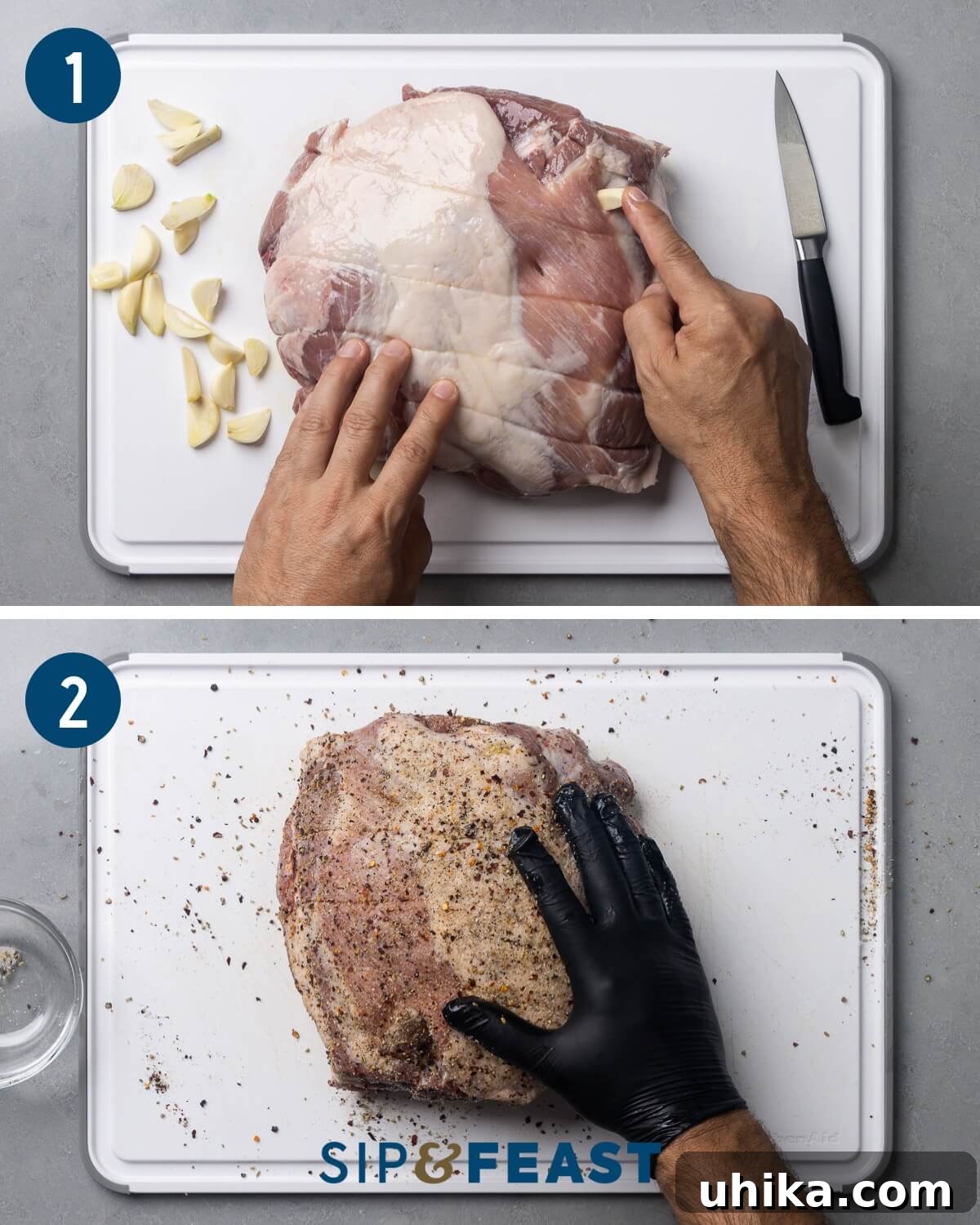
- Thoroughly pat the pork dry with paper towels. This crucial step helps create a crispier skin. In a small bowl, grind the fennel seeds (using a coffee/spice grinder or mortar and pestle) and mix them with the kosher salt, black pepper, and crushed red pepper flakes to create your spice rub. Rub the olive oil generously over the entire surface of the pork, then evenly apply the spice rub, pressing it into the meat from all sides.
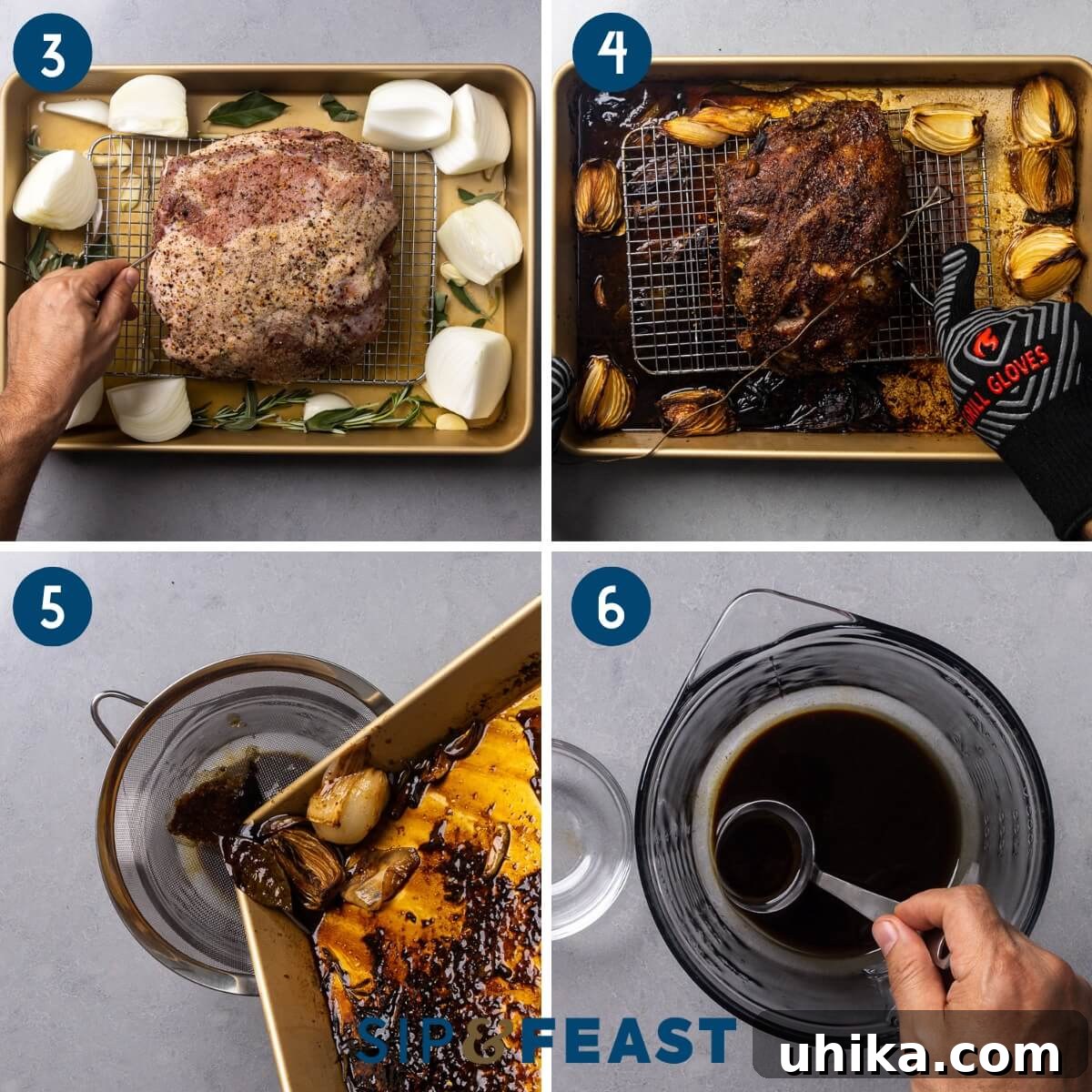
- Place the seasoned pork shoulder, skin side up, onto a sturdy roasting rack set in a large roasting pan. Pour the dry white wine, fresh orange juice, and chicken stock into the bottom of the pan. Scatter the quartered onions, bay leaves, rosemary sprig, sage leaves, and any remaining garlic pieces around the pork in the liquid. These aromatics will create a fragrant steaming environment and contribute immensely to the gravy base.
Part 2: Slow Roasting for Tenderness and a Crispy Finish
- Roast the pork in the preheated 275°F (135°C) oven until the internal temperature, measured with an instant-read thermometer inserted into the thickest part of the meat (avoiding bone), reaches 190°F (88°C). This slow roasting process typically takes about 5 to 6 hours, depending on the exact weight and shape of your pork shoulder. Check the roast every hour or so, adding another cup of stock or water to the pan if the liquid level appears too low, ensuring the bottom doesn’t dry out.
- Once the pork reaches 190°F (88°C), carefully remove it from the oven and increase the oven temperature to 475°F (245°C). Return the pork to the high-heat oven and cook for an additional 20-30 minutes, or until the skin achieves a beautiful, golden-brown crisp. This final blast of heat is key for that desirable crackling. Remove the finished pork from the oven and transfer it to a cutting board. Tent it loosely with foil and allow it to rest for at least 20-30 minutes before carving. This resting period is vital for the juices to redistribute, ensuring a moist and tender roast.
Part 3: Crafting the Perfect Gravy
- While the pork rests, prepare the gravy. Carefully strain all the pan drippings through a fine mesh strainer into a heatproof bowl or measuring cup. Reserve the tender, roasted onion pieces; they are delicious served alongside the pork.
- Allow the drippings to settle for a few minutes, then skim and separate about 5 tablespoons of the fat that has risen to the top.
- Heat a medium saucepot over medium heat. Add the reserved 5 tablespoons of fat and then gradually whisk in the all-purpose flour. Cook this roux for approximately 5 minutes, stirring constantly to prevent burning, until it turns a lovely golden-brown color. This develops a rich, nutty flavor.
- Slowly pour in the chicken stock while continuously whisking to prevent any lumps from forming. Bring the mixture to a boil, whisking gently.
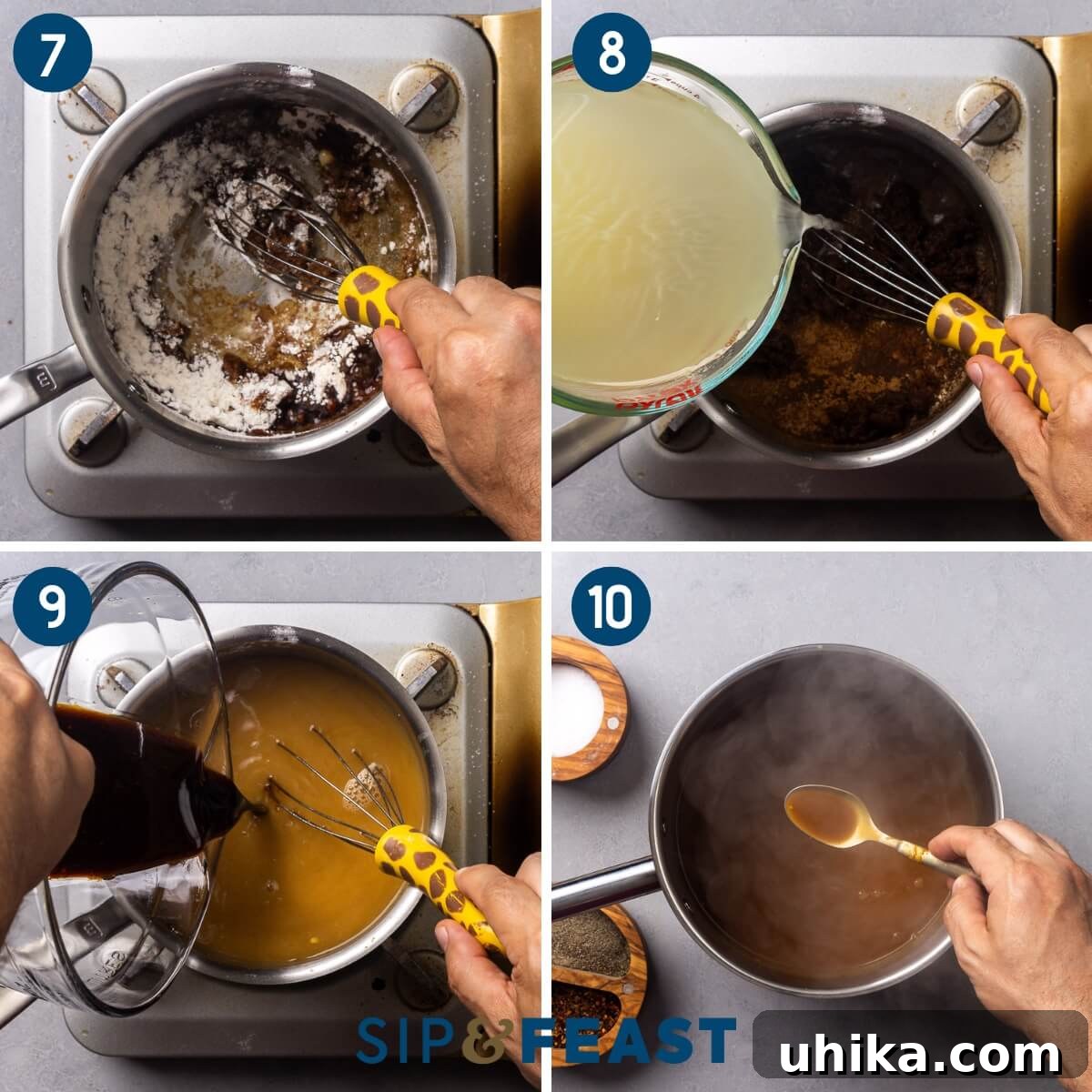
- Once boiling, continue to boil for 3 minutes to thicken, then reduce the heat to a simmer. For an even more intense pork flavor, feel free to whisk in more of the reserved pan drippings, a tablespoon at a time, until you reach your desired taste.
- If the gravy isn’t thick enough to your liking after simmering, simply bring it back to a boil briefly and cook until it reaches the desired consistency. Remove from the heat and season generously with salt and pepper to taste.
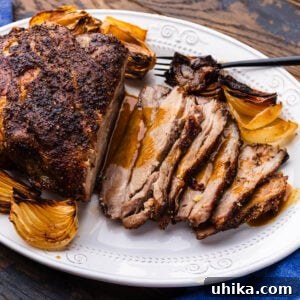
- Once rested, slice the roasted pork shoulder and serve immediately, generously spooning the homemade gravy over each slice. Enjoy your incredible Italian-style feast!
Top Tips for a Flawless Roasted Pork Shoulder
- Enhance Flavor with Overnight Prepping: While you can certainly season and roast the pork shoulder immediately, for truly exceptional results, I highly recommend prepping it a day in advance. After applying the spice rub, place the pork in the fridge, uncovered, overnight. This allows the salt to penetrate deeper into the meat for more even seasoning and helps to dry out the exterior, contributing to a wonderfully crispy skin.
- Mastering the Roasting Temperature for Perfect Tenderness: The key to a tender roasted pork shoulder lies in achieving the correct internal temperature. Roast the pork until it’s fork or knife-tender and registers at least 190°F (88°C) with an instant-read thermometer. For slices that are tender but hold their shape beautifully, aim for 190-195°F (88-90°C). If you prefer a fall-apart, shreddable pork, continue roasting until it reaches 205°F (96°C) or higher. Always rely on a thermometer, as cooking times can vary. It’s better to start the roast earlier than anticipated, as it can rest, tented with foil, for a considerable amount of time before serving and can be easily reheated if needed.
- Achieving Irresistible Crispy Skin: To get that coveted crispy crackling, ensure your pork shoulder is thoroughly patted dry before seasoning. The final blast of high heat (475°F/245°C) after the initial slow roast is what transforms the skin into a golden, crunchy delight.
- The Critical Resting Period: Don’t skip resting the pork! Once removed from the oven, tent it loosely with foil and let it rest for at least 20-30 minutes (or even longer for larger roasts). This allows the juices, which have gathered at the center during cooking, to redistribute throughout the meat, resulting in a significantly more moist and flavorful roast.
- Savory Leftover Ideas: Leftover slices of roasted pork shoulder are incredibly versatile. They are fantastic served cold or reheated with other sides, but they truly shine in sandwiches. Try them Cubano style with ham, Swiss cheese, pickles, and mustard, or pile them high on crusty bread with provolone and sautéed broccoli rabe for an authentic Italian-American twist. You can also shred the leftovers for tacos, enchiladas, or a hearty chili.
- Storage and Reheating: Store leftover roasted pork shoulder in an airtight container in the refrigerator for up to 3 days. For longer storage, it can be frozen for up to 3 months. To reheat, place slices in a baking dish with a splash of chicken stock or water, cover with foil, and warm in a 325°F (160°C) oven until heated through.
Explore More Holiday Roast Recipes
If this delicious roasted pork shoulder has inspired you, and you’re searching for more impressive holiday roast ideas, be sure to give these beloved recipes a try!
- Bacon-Wrapped Pork Tenderloin with Creamy Mustard Sauce
- Italian-Stuffed Pork Loin with Prosciutto and Spinach
- Sweet and Savory Brown Sugar Glazed Spiral Ham
Love This Italian-Style Roasted Pork Shoulder?
If you’ve enjoyed making and savoring this recipe, we’d be thrilled if you could give it a 5-star rating below!
Stay connected with our culinary journey! Watch our latest videos on YouTube, follow along on our Facebook Page, and consider becoming a Patreon member for exclusive access to full-meal videos and additional content.
Like this? Leave a comment below!
Check us out on Instagram at @sipandfeast or tag #sipandfeast to share your culinary creations with our community!
Roasted Pork Shoulder (Italian-Style)
James Delmage
15 mins
5 hrs 30 mins
5 hrs 45 mins
8
Pin Recipe
This incredible roasted pork shoulder is roasted until tender, seasoned with orange, sage, rosemary, and fennel seeds, and finished with a simple gravy. This is the roast you’ll make on repeat!
Ingredients
- 6 pound boneless pork shoulder (boston butt)
- 1/4 cup olive oil
- 1 1/2 tablespoons Diamond Crystal kosher salt
- 1 teaspoon crushed red pepper flakes
- 2 teaspoons black pepper
- 1 tablespoon fennel seeds
- 10 cloves garlic, slivered
- 2 large onions, quartered
- 2 large bay leaves
- 10 large sage leaves
- 1 sprig rosemary
- 1 large orange, juiced
- 1 cup dry white wine
- 1 cup low-sodium chicken stock
For the Gravy
- 5 tablespoons separated fat from pan drippings
- 1/3 cup all-purpose flour
- 3 cups low-sodium chicken stock
- Salt and pepper to taste
Want To Save This Recipe for Later?
Enter your email address below, and we’ll send this delicious recipe directly to your inbox. Plus, you’ll receive our weekly newsletter featuring more fantastic new recipes!
Instructions
- Preheat oven to 275°F (135°C) and set the rack to the middle level.
- Make slits all over the pork and insert the slivers of garlic.
- Dry the pork thoroughly with paper towels. Grind the fennel seeds with a coffee/spice grinder or mortar and pestle and mix with the salt, pepper, and crushed red pepper flakes to make the spice rub. Rub the olive oil all over the pork then rub the seasoning on all sides of the pork.
- Place the roast onto a roasting rack in a roasting pan, skin side up. Pour the wine, orange juice, and stock into the pan. Place the onions, bay leaves, rosemary, sage leaves, and any remaining pieces of garlic into the pan (not on the pork).
- Roast the pork until the center of the roast reaches an internal temp of 190°F (88°C). (Around 5 hours depending on the weight). Check the roast every hour or so, and add another cup of stock or water to the pan if it starts to dry out.
- Remove the pork from the oven and turn the heat up to 475°F (245°C). Return the pork back to the oven and cook until the skin is crispy (about 20-30 more minutes). Remove the pork from the oven and place it on a cutting board to rest tented with foil.
- Slice the pork and serve with the gravy. Enjoy!
For the Gravy
- Strain the pan drippings through a fine mesh strainer. Separate 5 tablespoons of fat. Note: Any pieces of roasted onions can be saved for plating.
- Heat a saucepot to medium heat with the reserved 5 tablespoons of fat/drippings and add the flour. Cook for 5 minutes, stirring to prevent burning, or until it starts to turn golden.
- Slowly pour the stock into the pan while whisking, then bring to a boil. Boil for 3 minutes then lower the heat to a simmer. If the gravy isn’t thick enough for your liking, simply bring to a boil again, and cook until satisfied. Remove the pot from the heat and season with salt and pepper to taste. Note: For extra pork flavor, whisk more of the reserved drippings into the gravy if you like.
Notes
- Salting overnight: Though you can roast it right after seasoning, it’s better to place the spice-rubbed pork shoulder in the fridge, uncovered, overnight. The salt will more evenly distribute into the roast, and the fridge time will dry off the exterior moisture, contributing to a crispier skin.
- Cook time: 5 hours is a rough estimate. Roast until the pork is fork or knife tender and at least 190°F (88°C) internal temperature when checked with an instant-read thermometer. A 190-195°F (88-90°C) roast will yield tender, almost fall-apart slices, while a 205°F (96°C) or higher roast will begin to shred. It’s best to start the roast earlier than you think, since it can rest for a long time before serving and can be easily reheated in a warm oven.
- Gravy: The quick gravy is a nice touch, but the roast will be flavorful and juicy enough that it can be served on its own.
- Leftover ideas: The leftover slices are great for sandwiches with provolone and broccoli rabe or for making a Cubano.
- Leftovers: Roasted pork shoulder can be refrigerated for up to 3 days or frozen for up to 3 months. Reheat in a 325°F (160°C) oven until warm.
Nutrition
Calories: 867 kcal |
Carbohydrates: 8.6 g |
Protein: 60.9 g |
Fat: 62.7 g |
Saturated Fat: 22.8 g |
Cholesterol: 219 mg |
Sodium: 1034 mg |
Fiber: 1 g |
Sugar: 1.9 g |
Calcium: 12 mg |
Iron: 5 mg
Nutrition information is automatically calculated and should be used as an approximation only.