
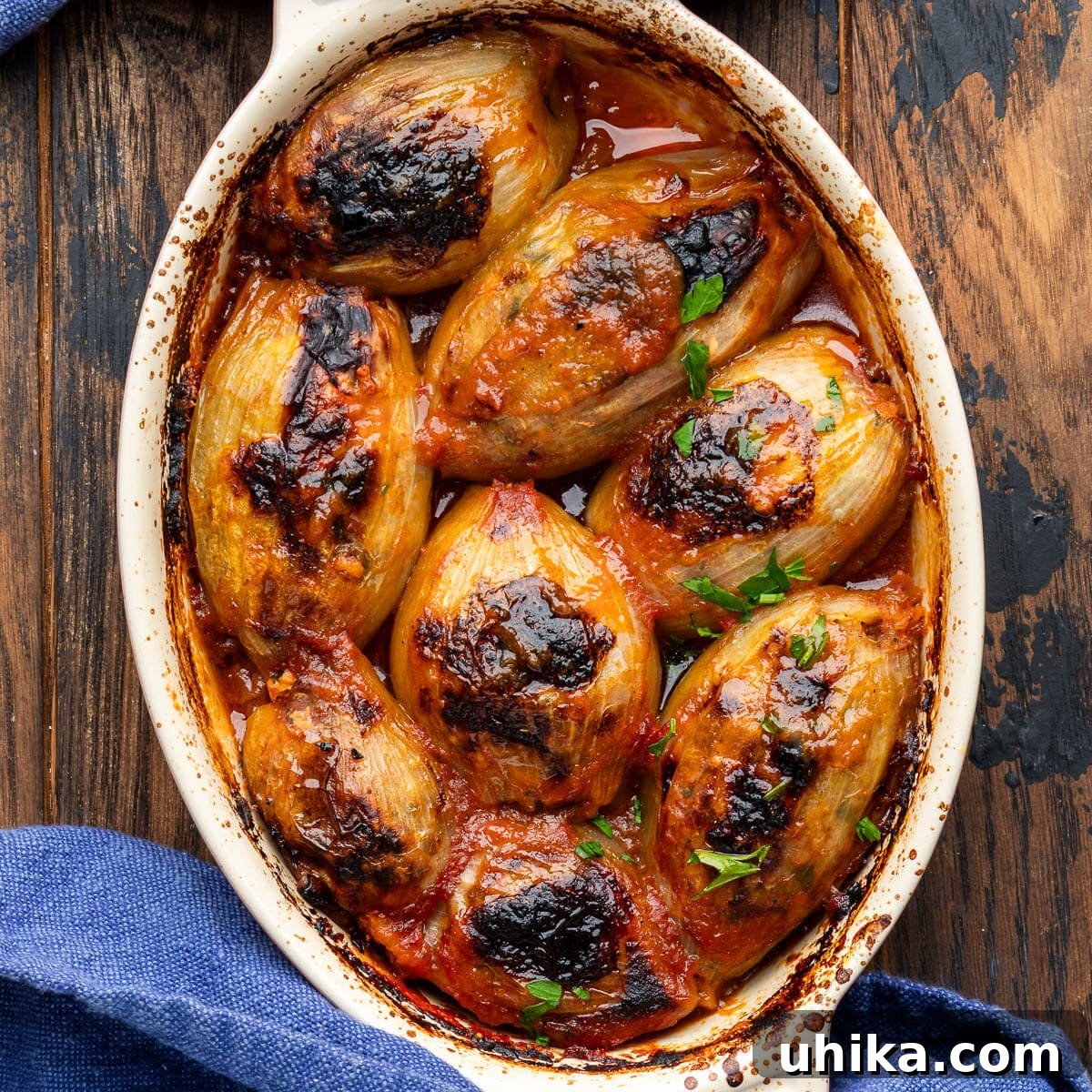
Hearty & Delicious: Authentic Greek Stuffed Onions Recipe (Yemista Kremmidia)
Embark on a culinary journey to the heart of Greece with this incredible recipe for Greek Stuffed Onions, also known as Yemista Kremmidia. Far more than just a side dish, these tender, caramelized onions are stuffed with a savory and aromatic blend of seasoned ground beef, fluffy rice, fresh herbs like mint and parsley, and a touch of tangy feta cheese. Baked slowly in a rich tomato sauce, each bite offers a perfect harmony of sweet, savory, and herbaceous flavors, culminating in a deeply satisfying comfort food experience. This dish is designed to warm your soul and impress your palate, making it a staple for family dinners and special occasions alike.
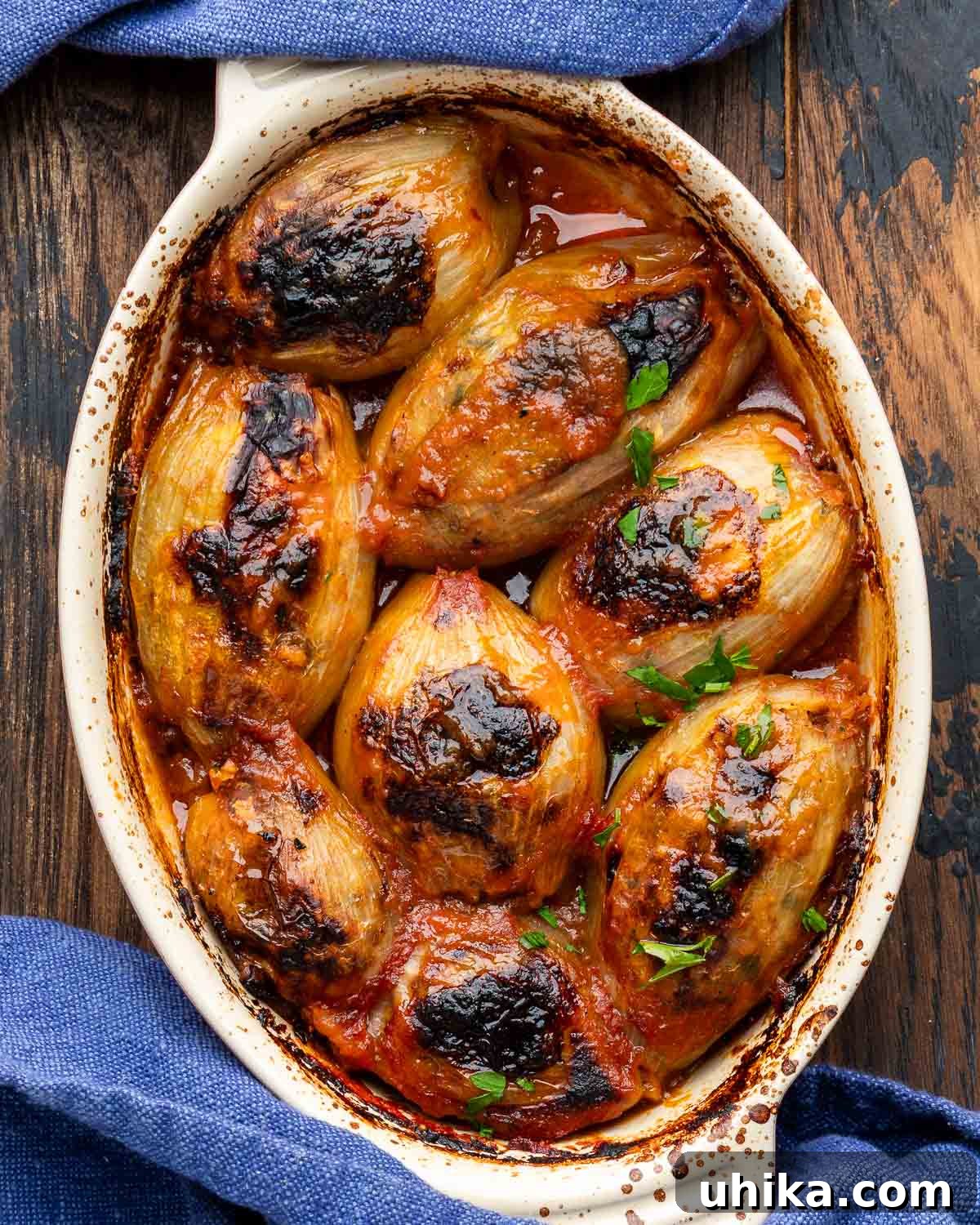

The Unsung Hero: Why Onions Deserve the Spotlight
As a chef, I incorporate onions into countless dishes, often as a foundational element, a crucial part of the aromatic mirepoix that kickstarts so many recipes. However, there’s a special joy in transforming the humble onion from a background player into the undisputed star of a meal. From the sweet and savory notes in Pasta alla Genovese, to the comforting depth of French Onion Soup, and now these exquisite Greek Stuffed Onions, this versatile vegetable consistently proves its extraordinary capacity to shine. This recipe truly celebrates the onion, allowing its natural sweetness and tender texture to complement a robust and flavorful filling.
These Greek Stuffed Onions are bursting with classic Mediterranean flavors, featuring fragrant mint, earthy oregano, and the salty richness of feta cheese. The combination of succulent ground beef and hearty rice ensures a substantial and incredibly satisfying meal. Plus, it’s naturally gluten-free, making it an excellent option for a wide array of dietary preferences.
While these flavorful stuffed onions are substantial enough to be a standalone meal, they pair beautifully with traditional Greek accompaniments. Consider serving them alongside fluffy Greek Lemon Potatoes, light and aromatic Lemon Rice, or a vibrant spinach and rice pilaf like Spanakorizo to complete your Mediterranean feast.
Why You’ll Love This Authentic Greek Stuffed Onions Recipe
- Unforgettable Flavor: A delightful balance of sweet caramelized onions, savory ground beef, aromatic herbs, and tangy feta.
- Hearty & Satisfying: Packed with protein and rice, these onions make for a deeply fulfilling meal.
- Comfort Food Perfection: This dish embodies the warmth and tradition of home-cooked Greek cuisine.
- Naturally Gluten-Free: A fantastic option for those seeking gluten-free dinner ideas.
- Great for Meal Prep: Leftovers taste even better the next day and freeze wonderfully.
Essential Ingredients for Perfect Greek Stuffed Onions
Crafting these exquisite stuffed onions begins with selecting the right ingredients. Below, you’ll find a visual guide to the components, along with detailed notes to help you make the best choices for a truly authentic and flavorful experience.
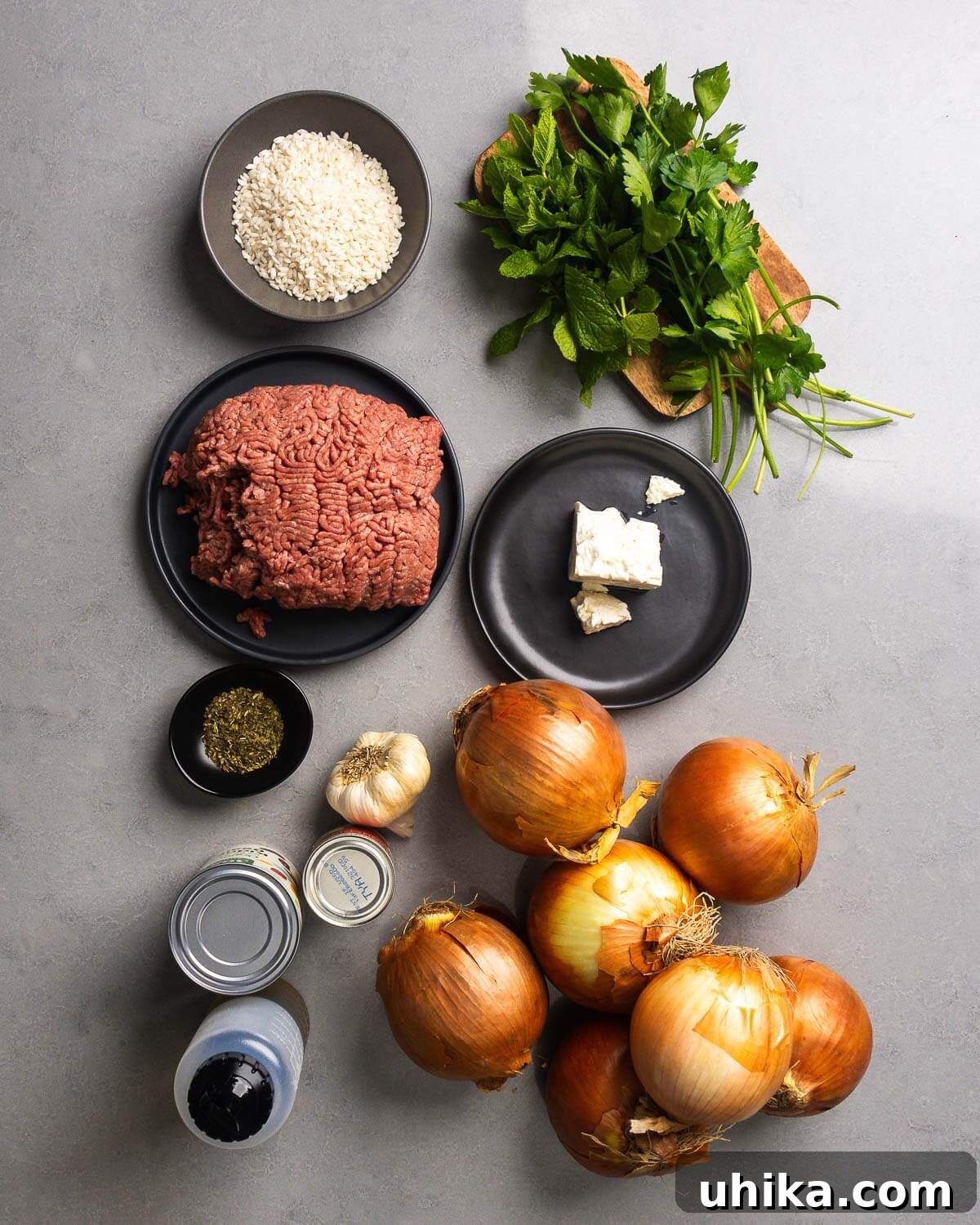
- Onions: The star of our dish! Large yellow onions are highly recommended for their ideal size and sweet caramelization when baked. Their layers are robust enough to hold the generous filling. While yellow onions offer the best balance, you can use red or white onions if they are large enough. Remember, you’ll need two types of onion preparation: 6 large onions for stuffing, and 1 additional large onion, finely diced, for the savory filling. This dual use amplifies the onion flavor throughout the dish.
- Ground Meat: I prefer using ground chuck for its rich flavor profile and optimal fat content, which adds moisture and depth to the filling. However, feel free to substitute with leaner options like ground sirloin or ground turkey. For an even more authentic Greek touch, a combination of ground lamb and beef, similar to my popular Greek Meatballs and Potatoes, would be absolutely sensational.
- Rice: Arborio rice is my choice here due to its creamy texture and ability to absorb flavors, contributing beautifully to the filling’s consistency. However, other medium-grain rice varieties or even long-grain rice can be used successfully. Ensure you rinse the rice thoroughly until the water runs clear to remove excess starch, which helps prevent the filling from becoming overly sticky.
- Feta Cheese: While not universally present in every traditional Greek stuffed onion recipe, I find that crumbled feta adds an indispensable layer of salty, tangy complexity that elevates the dish significantly. Its creamy texture melts slightly, integrating perfectly with the other ingredients. Choose a good quality feta, preferably from sheep or goat’s milk, for the best flavor.
- Fresh Herbs: The soul of Greek cuisine! A generous blend of fresh mint and flat-leaf parsley provides a vibrant, aromatic freshness that cuts through the richness of the meat and balances the sweetness of the onions. Dried oregano adds an earthy, classic Mediterranean note. Don’t skimp on these fresh herbs; they are key to the authentic taste.
- Tomato Paste & Crushed Tomatoes: These form the backbone of the savory sauce, providing a concentrated tomato flavor and rich color. The tomato paste offers deep umami, while crushed plum tomatoes contribute a brighter, fresher tomato base for the baking liquid.
- Extra Virgin Olive Oil: A staple in Mediterranean cooking, good quality olive oil is essential for sautéing the aromatics and adding a silky richness to the entire dish.
- Garlic: Freshly minced garlic is crucial for adding a pungent, aromatic foundation to the filling, complementing the other savory ingredients.
- Seasoning: Simple fine sea salt and black pepper are used to enhance and balance all the flavors. Adjust to your personal preference throughout the cooking process.
For precise measurements and quantities, please refer to the comprehensive recipe card located below. It contains all the detailed information you’ll need to create this magnificent dish.
Want To Save This Recipe?
Enter your email and we’ll send it to you. Plus, get great new recipes from us every week!
Step-by-Step Guide: Crafting Greek Stuffed Onions
Follow these detailed steps to create a truly memorable dish. Each step below corresponds to the process photos, ensuring you can follow along with ease.
- Prepare the Onions for Stuffing: Begin by carefully making a single, lengthwise slit down one side of each large onion. This incision is crucial for allowing the onion layers to separate easily after boiling, making them perfect for stuffing. Don’t cut them completely in half, as you want large, intact layers.
- Boil and Separate Onion Layers: Bring a large pot of salted water to a rolling boil. Carefully add the slit onions to the boiling water and cook until they are tender but still hold their shape, typically about 10-15 minutes. This par-cooking softens the onions, making them pliable and reducing their raw pungency. Crucially, *save the flavorful onion broth* after boiling. Once the onions are cool enough to handle, gently separate the largest outer layers – you should get about 3-4 usable layers from each onion. Set aside the smaller inner centers and any remaining parts; these will be used for the rich tomato sauce.
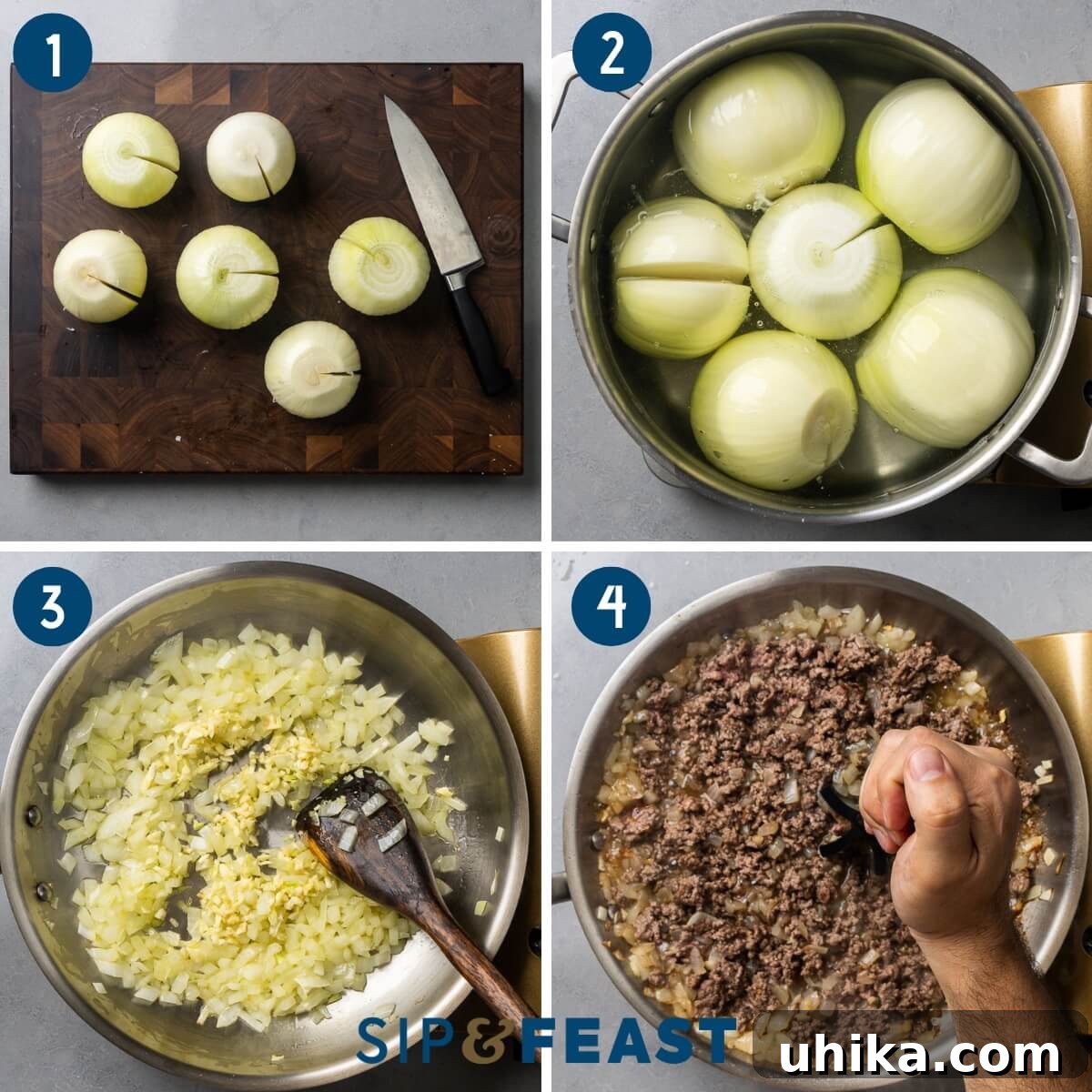
- Sauté Aromatics: In a large, heavy-bottomed pan or Dutch oven, heat the extra virgin olive oil over medium heat. Add the finely diced onion (the one reserved for the filling, not the stuffed layers) and cook until softened and translucent, about 5-7 minutes. Then, add the minced garlic and cook for another 1-2 minutes until fragrant, being careful not to burn it.
- Brown the Ground Beef: Increase the heat to medium-high. Add the ground beef to the pan, breaking it up with a spoon. Cook until the beef is thoroughly browned and no pink remains, draining any excess fat if necessary. This step is vital for developing rich flavor in the filling.
- Simmer with Tomatoes: Season the browned beef and aromatics with salt and black pepper. Stir in the crushed plum tomatoes, bringing the mixture to a gentle simmer. Allow it to cook for about 5-10 minutes, letting the flavors meld and the sauce slightly thicken.
- Add Rice and Herbs: Once the filling mixture has thickened, stir in the rinsed arborio rice, ensuring it’s well combined with the beef and tomato sauce. Remove the pan from the heat. Now, incorporate the fresh oregano, minced parsley, chopped fresh mint, and crumbled feta cheese. Mix gently but thoroughly. Taste the filling and adjust the seasoning with more salt and pepper if needed to achieve your desired flavor profile.
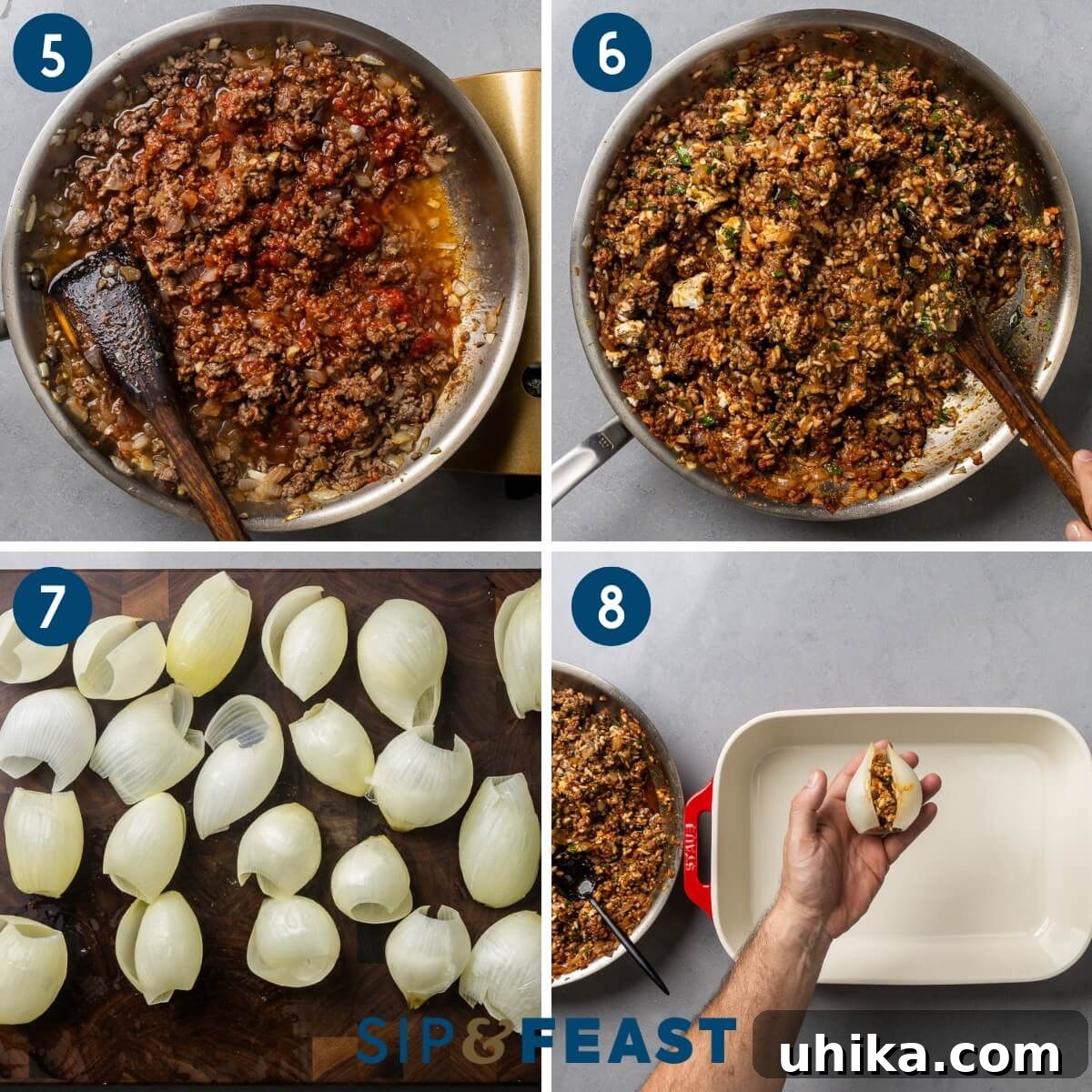
- Stuff the Onion Layers: Lay the separated outer onion layers flat on a clean cutting board.
- Roll and Arrange: Scoop about 1-2 tablespoons of the prepared filling onto the wider end of each onion piece. Carefully roll each onion layer into a neat cylindrical shape, similar to a small cabbage roll. Place each stuffed onion, seam-side down, snugly into a 9×13-inch baking dish. Arrange them closely together; this helps them hold their shape during baking and prevents them from unraveling. Depending on the size of your onions and the amount of filling, you may require a second baking dish.
- Prepare the Tomato Sauce: In a large measuring cup or bowl, combine the tomato paste with 3 cups of the reserved onion broth (from boiling the onions) and 1 cup of the finely chopped onion centers (also reserved from boiling). Use an immersion blender (or carefully transfer to a stand blender) to puree the mixture until it is completely smooth and uniform. This creates a wonderfully flavorful and velvety sauce base.
- Season and Pour Sauce: Taste the pureed sauce and season generously with salt and pepper to your liking. Pour the smooth tomato sauce over the arranged stuffed onions in the baking dish. The sauce should mostly cover the onions. If more liquid is needed to achieve this, add additional hot onion broth until they are almost fully submerged, ensuring they cook evenly and stay moist.
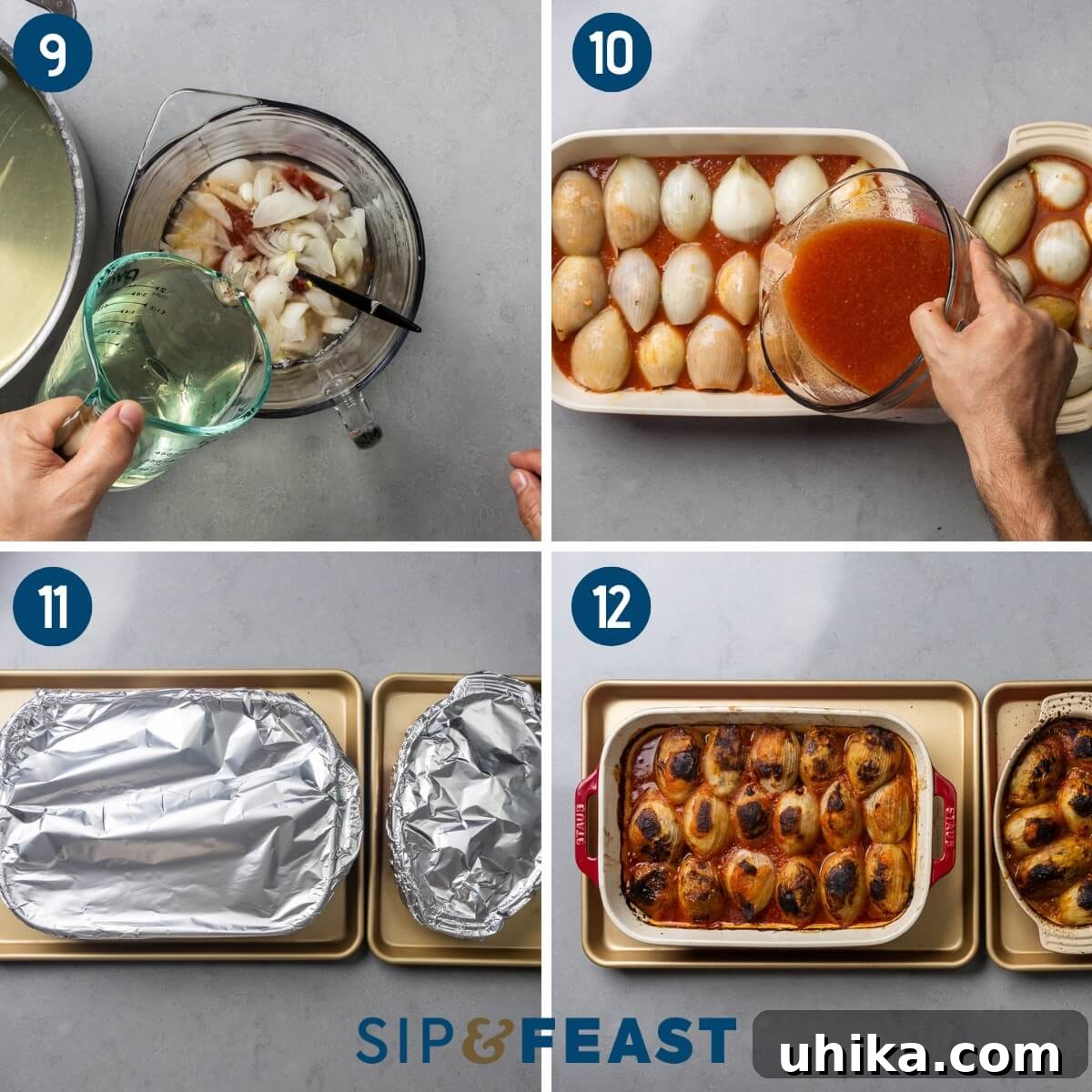
- Cover and Bake: Preheat your oven to 375°F (190°C). Tightly cover the baking dish (or dishes) with aluminum foil. For easier handling and to catch any potential spills, place the covered baking dish on a larger baking sheet before transferring it to the oven.
- Final Baking & Caramelization: Bake on the middle rack of the preheated oven for 1 hour. After an hour, carefully remove the foil. Continue baking for an additional 30 minutes, or until the tomato sauce has significantly thickened, the onions are incredibly tender, and their tops have begun to caramelize to a beautiful golden-brown. If you prefer a more pronounced charred or darker caramelization, you can briefly place the dish under the broiler for the last minute or so. However, watch them *very carefully* during this step, as they can burn quickly. Serve your glorious Greek Stuffed Onions hot, perhaps garnished with extra crumbled feta, alongside warm pita bread, or my easy homemade flatbreads. Enjoy this rich and comforting meal!
Expert Tips for Perfect Greek Stuffed Onions
- Precision in Onion Preparation: The initial cut down one side of the onion is critical. This allows the layers to separate cleanly after boiling, giving you ample, intact pieces for stuffing. Resist the urge to cut the onions in half completely, as this will result in smaller, harder-to-fill layers. The goal is pliable, yet large ‘cups’ for your filling.
- Maximize Flavor with Onion Broth: Do not discard the water used to boil the onions, nor the inner centers of the onions you don’t use for stuffing. These are goldmines of flavor! The reserved onion broth and boiled onion centers are essential components of the rich, smooth tomato sauce, adding incredible depth and authentic taste that cannot be replicated with plain water or store-bought broth.
- Achieving Ideal Caramelization: Greek stuffed onions typically require a baking time of approximately 1 hour and 30 minutes. The final 30 minutes, baked uncovered, is where the magic happens – the sauce thickens and the onion tops develop a beautiful, slightly charred caramelization. If you desire a deeper browning or a crispier finish, utilize your oven’s broiler for the very last minute or two. Keep a vigilant eye on them during this stage, as broilers can quickly turn golden-brown to burnt.
- Don’t Overfill: While it’s tempting to pack the filling into each onion layer, resist the urge. Overfilling can cause the onions to burst open during baking or make them difficult to roll. Aim for a generous tablespoon or two, allowing the onion to enclose it securely.
- Snug Fit in the Baking Dish: Arranging the stuffed onions tightly together in the baking dish is not just about fitting them all in. It helps prevent them from unraveling during the long baking process, ensuring they maintain their shape and that the filling stays securely inside.
More Stuffed Vegetable Recipes to Explore
If you savor the comforting and flavorful experience of these Greek stuffed onions, you’ll undoubtedly enjoy trying these other fantastic stuffed vegetable recipes. They offer similar hearty satisfaction with diverse flavors.
- Sausage-Stuffed Zucchini Boats: A light yet satisfying dish featuring zucchini halves filled with savory sausage and cheese.
- Classic Italian Stuffed Peppers: Bell peppers brimming with a delicious blend of meat, rice, and tomato sauce, baked to tender perfection.
- Stuffed Cubanelle Peppers: A milder, sweeter alternative to bell peppers, these cubanelles are perfect for a flavorful meat and rice stuffing.
- Traditional Stuffed Cabbage Rolls: Tender cabbage leaves wrapped around a hearty mixture of meat and rice, simmered in a rich tomato sauce.
- Roman Stuffed Tomatoes: A vibrant dish with ripe tomatoes filled with a savory mixture, often featuring breadcrumbs and herbs.
If you’ve enjoyed preparing and tasting this Greek Stuffed Onions recipe, please consider leaving it a 5-star rating below!
Connect with us for more culinary inspiration! Watch our cooking tutorials on YouTube, follow along with our daily updates on our Facebook Page, and for exclusive full-meal videos and behind-the-scenes content, become a Patreon member.
Greek Stuffed Onions (Yemista Kremmidia)
Pin
SaveSaved
Ingredients
Base ingredients
- 6 large yellow onions
For the filling
- 4 tablespoons extra virgin olive oil
- 1 large onion finely diced, for the filling
- 5 cloves garlic minced
- 1 1/2 pounds (680g) ground chuck
- 1 teaspoon fine sea salt
- 1/2 teaspoon black pepper
- 1 14-ounce can crushed plum tomatoes
- 1 cup (200g) arborio rice rinsed until water runs clear
- 1/4 cup minced fresh flat-leaf Italian parsley
- 1/4 packed cup fresh mint chopped
- 2 teaspoons dried oregano
- 1/2 cup crumbled feta cheese
For the sauce
- 1 6-ounce can tomato paste
- 3 cups (720ml) reserved onion broth
- 1 cup boiled onion centers finely diced and reserved
- salt and freshly ground black pepper to taste
Instructions
Boil and prep the onions
-
Preheat your oven to 375°F (190°C) and adjust the oven rack to the middle position.
-
Bring a large pot of generously salted water to a rolling boil. While the water heats, prepare your large onions: carefully cut off both the top and bottom ends, then gently remove their papery outer skins. Make a single, deep slit lengthwise down one side of each onion, taking care not to cut all the way through. Place the slit onions into the boiling water and cook for approximately 10-15 minutes, or until they are tender enough to separate but still hold their shape. Once cooked, carefully remove the onions and reserve *all* of the flavorful onion broth. When the onions are cool enough to handle, gently separate the largest outer layers (you should get about 3-4 per onion) that are suitable for stuffing. Set aside the smaller inner centers and any remaining onion pieces; these will be used later for the sauce.
Make the savory filling
-
Heat the extra virgin olive oil in a large, sturdy pan or Dutch oven over medium heat. Add the finely diced onion (the one dedicated to the filling) and sauté until it becomes soft and translucent, typically 5-7 minutes. Stir in the minced garlic and continue to cook for another 1-2 minutes until it becomes wonderfully fragrant, being careful not to let it brown or burn.
-
Add the ground beef to the pan, breaking it up with a wooden spoon or spatula. Increase the heat to medium-high and cook the beef thoroughly until it is nicely browned and all pink has vanished. Season the meat generously with fine sea salt and black pepper, then stir in the crushed plum tomatoes. Bring the mixture to a gentle simmer and let it cook for about 5-10 minutes, allowing the flavors to deepen and the sauce to thicken slightly. Once thickened, add the rinsed arborio rice and mix well to thoroughly combine all ingredients.
-
Remove the pan from the heat. Carefully fold in the dried oregano, minced fresh parsley, chopped fresh mint, and crumbled feta cheese. Stir everything until evenly distributed. Taste the filling mixture and adjust the seasoning with additional salt and pepper if you believe it needs more flavor.
Stuff the onions and pour over the sauce
-
Take each separated onion layer and scoop about 1-2 tablespoons of the prepared filling onto the wider end. Carefully roll the onion layer into a neat cylindrical shape, ensuring the filling is securely enclosed. Place each stuffed onion, seam-side down, into a 9×13-inch baking dish. Arrange them very closely together, nestled against each other; this helps them hold their shape and prevents them from opening during baking. Note: Depending on the size of your onions and the amount of filling, you may need a second baking dish to accommodate all the stuffed onions.
-
In a large measuring cup or bowl, combine the can of tomato paste with 3 cups of the reserved onion broth and 1 cup of the finely diced boiled onion centers. Use an immersion blender to puree the mixture until it is completely smooth and free of lumps. Alternatively, you can use a stand blender for this step. Taste the prepared sauce and season it with a touch of salt and pepper as desired. Pour this vibrant, smooth sauce evenly over the stuffed onions in the baking dish until they are mostly covered. If necessary, add a little more hot onion broth to ensure adequate liquid for baking. Tightly cover the baking dish with aluminum foil.
-
Transfer the covered baking dish to your preheated 375°F (190°C) oven and bake for 1 hour. After this time, carefully remove the foil. Continue to bake for another 30 minutes, or until the liquid has thickened into a rich sauce and the tops of the onions have beautifully caramelized. For a deeper golden-brown finish, you can carefully broil them for a couple of minutes during the final stage, but monitor closely to prevent burning.
-
Serve your delicious Greek Stuffed Onions hot, perhaps garnished with additional crumbled feta cheese and accompanied by warm pita bread or crusty artisan bread for scooping up the flavorful sauce. Enjoy this comforting and authentic Greek meal!
Notes
- Onion Quantity: This recipe calls for 6 very large onions. If your onions are smaller in size, you may need to use more to yield enough suitable layers for stuffing. Prioritize using only the largest, most intact outer layers that can fully wrap around the filling. Any leftover smaller onion parts or trimmings can be wonderfully utilized in the sauce or saved for other culinary purposes, like making a flavorful stock.
- Ground Beef Variations: While ground chuck is recommended for its robust flavor and ideal fat content, feel free to substitute with leaner cuts such as ground round or ground sirloin if you prefer. Adjust cooking time for leaner meats as they may cook faster.
- Exploring Other Proteins: For a different take on this classic, ground turkey or ground lamb can be excellent substitutes for beef. Ground lamb, in particular, will lend an even more distinctively Greek flavor to the dish.
- Leftovers and Storage: Greek stuffed onions are a fantastic dish for meal prepping! Leftovers can be stored in an airtight container in the refrigerator for up to 3 days, often tasting even better the next day as the flavors continue to meld. For longer storage, they can be frozen for up to 3 months. To reheat, place the defrosted stuffed onions in a 350°F (175°C) oven, covered tightly with foil, until thoroughly heated through.
Nutrition
Please note that nutrition information is an automated calculation and should be used as an approximation only.
Loved this recipe? Leave a comment below!Join our community on Instagram at @sipandfeast or tag #sipandfeast to share your creations!