
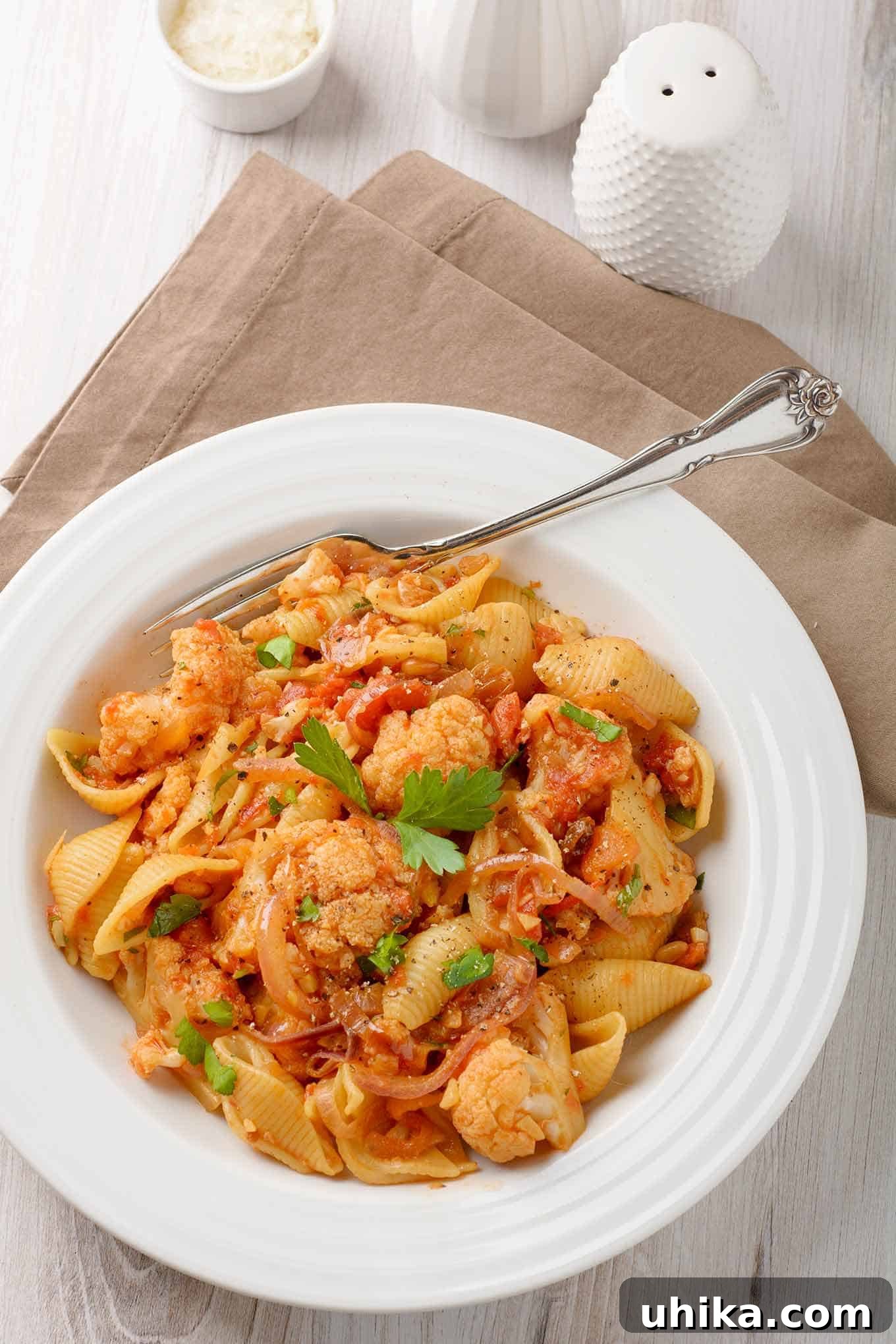

Embark on a culinary journey to the sun-drenched island of Sicily with this exquisite Sicilian Pasta with Cauliflower. A symphony of flavors, this dish artfully combines seemingly unusual ingredients like anchovies, saffron, golden raisins, and pine nuts into a harmonious and deeply satisfying meal. Far from being overpowering, these classic Sicilian components meld seamlessly, creating subtle layers of sweet, savory, and umami notes that transform humble cauliflower and pasta into a gourmet experience. It’s a testament to the rich culinary traditions of Sicily, offering a unique and authentic taste that’s both comforting and sophisticated.
The Heart of Sicilian Flavors: A Culinary Legacy
Sicilian cuisine stands as a vibrant mosaic, reflecting centuries of cultural influences from Greek, Roman, Arab, Norman, and Spanish settlers. This diverse heritage has shaped a cooking style renowned for its bold contrasts and innovative use of local ingredients. The island’s strategic location in the Mediterranean fostered a tradition of integrating fresh seafood, aromatic herbs, nuts, dried fruits, and spices from afar, culminating in a pantry distinct from mainland Italy.
In this meatless cauliflower pasta recipe, we delve into some of Sicily’s most characteristic flavor profiles:
- Anchovies: The Umami Secret: Often misunderstood, anchovies are the backbone of many Sicilian sauces, providing a profound depth of umami rather than a fishy taste. When cooked, they dissolve, enriching the sauce with a savory complexity that elevates all other ingredients without asserting a dominant fish flavor. They are indispensable for building a robust foundation for this dish.
- Saffron: The Golden Elixir: Known as “red gold,” saffron imbues dishes with its distinctive delicate floral aroma and a beautiful golden hue. A precious spice, its presence speaks to Sicily’s historical trade routes and its flair for luxurious yet balanced flavors. In this pasta, saffron adds a subtle warmth and elegance that perfectly complements the other ingredients.
- Golden Raisins & Pine Nuts: A Sweet-Savory Dance: This classic Sicilian duo brings delightful textural contrast and a nuanced sweet-savory balance. The plump, naturally sweet raisins offer bursts of fruitiness, while the buttery, earthy pine nuts add a satisfying crunch and nutty aroma. Together, they create a complex flavor dimension that is quintessentially Sicilian.
These ingredients, meticulously balanced, transform a simple easy pasta dinner into an exploration of Sicily’s culinary soul, making it a perfect dish for both everyday enjoyment and special occasions.
Tips for Culinary Perfection: Unlocking Maximum Flavor
Creating this delicious authentic Sicilian pasta dish hinges on mastering a few crucial techniques that ensure each unique flavor shines through without overwhelming the others. Paying close attention to these steps will elevate your homemade pasta to restaurant-quality standards.
Prepare Saffron and Raisins with Care
In a recipe with a relatively quick cooking time, saffron needs a little help to release its full aromatic potential. The easiest method is to draw off about half a cup of the starchy pasta water once it begins to simmer vigorously. Divide this hot water between two small bowls:
- Steep the Saffron: Add the crushed saffron threads to one bowl. The heat from the pasta water helps to “bloom” the saffron, allowing its distinct floral notes and vibrant color to infuse the liquid, which will later be incorporated into the sauce. This process extracts maximum flavor, far more effectively than adding dry saffron directly.
- Plump the Raisins: Place the golden raisins in the second bowl with the remaining hot pasta water. Soaking them rehydrates the dried fruit, making them beautifully plump, sweeter, and more tender. This also ensures they blend seamlessly into the sauce, contributing a juicy texture and natural sweetness.
Remember, these simple pre-preparation steps are vital for the dish’s depth of flavor.
Achieving the Perfect Toast on Pine Nuts
Pine nuts (pignoli) possess a rich, delicate, buttery flavor that is significantly enhanced by a brief toasting. The transformation is remarkable, bringing out their essential oils and adding a delightful nutty aroma and crunch.
- Dry Pan Method: The most reliable way to toast pine nuts is in a dry, ungreased skillet over medium heat.
- Constant Motion is Key: It takes only about 1 to 1½ minutes, but watch them diligently! Pine nuts can go from perfectly toasted to burnt in seconds. Keep shaking the pan continuously to ensure even browning and prevent scorching.
- Quick Removal: As soon as they turn a light golden color and become fragrant, immediately transfer them from the hot pan to a small bowl to cool and prevent further cooking from residual heat. This preserves their delicate crunch.
Embrace the Magic of Anchovies
For any truly exceptional pasta dish, the sauce is paramount, and in this anchovy cauliflower pasta, anchovies are the secret weapon. Fear not their strong presence in the jar; when cooked down, they provide a foundational savory quality that is far from fishy.
- Building the Base: Begin your sauce by sautéing thinly sliced red onion and minced garlic in a generous amount of good quality olive oil until the onion is lightly caramelized and fragrant.
- Melting Umami: Once the onions reach this stage, add the finely chopped anchovy fillets (after rinsing them to remove excess salt). As they cook gently, they will literally “melt” into the onion and garlic mixture, dissolving completely. This process releases their deep umami, creating an incredibly rich, savory base that enhances every other ingredient without leaving any trace of a “fishy” taste.
Strategic Short Simmering for Sauce Harmony
Once you’ve established the rich flavor base, the next step is to introduce the diced tomatoes, the rehydrated raisins, and the saffron along with its steeping water.
- Preserving Freshness: Stir these ingredients into the pan, then cover and allow them to simmer gently for just a few minutes while your pasta finishes cooking. This brief simmering period is intentional. It allows the individual flavors to meld and harmonize just enough to create a cohesive sauce, but it prevents the ingredients from becoming overcooked or losing their distinct characteristics. The goal is a light, fresh sauce that coats the pasta beautifully.
The Art of the Finishing Touches
Once your chosen pasta is cooked al dente, it’s time to bring all the elements together.
- Combine and Toss: Drain the pasta and add it directly to the sauce with the steamed cauliflower florets. Toss gently to ensure every piece of pasta and cauliflower is coated in the flavorful sauce.
- Freshness and Color: Stir in a generous handful of fresh, chopped flat-leaf parsley. Parsley not only adds a burst of vibrant green color but also a fresh, herbaceous note that brightens the entire dish.
- Serve and Garnish: Plate individual servings immediately. Finish each bowl with a sprinkle of freshly ground black pepper and a generous grating of high-quality Italian cheese. We highly recommend Pecorino, a sharp, salty sheep’s milk cheese, or Parmigiano-Reggiano, known for its intense, nutty flavor. Both cheeses complement the complex flavors of the dish without overpowering them, adding another layer of savory deliciousness.
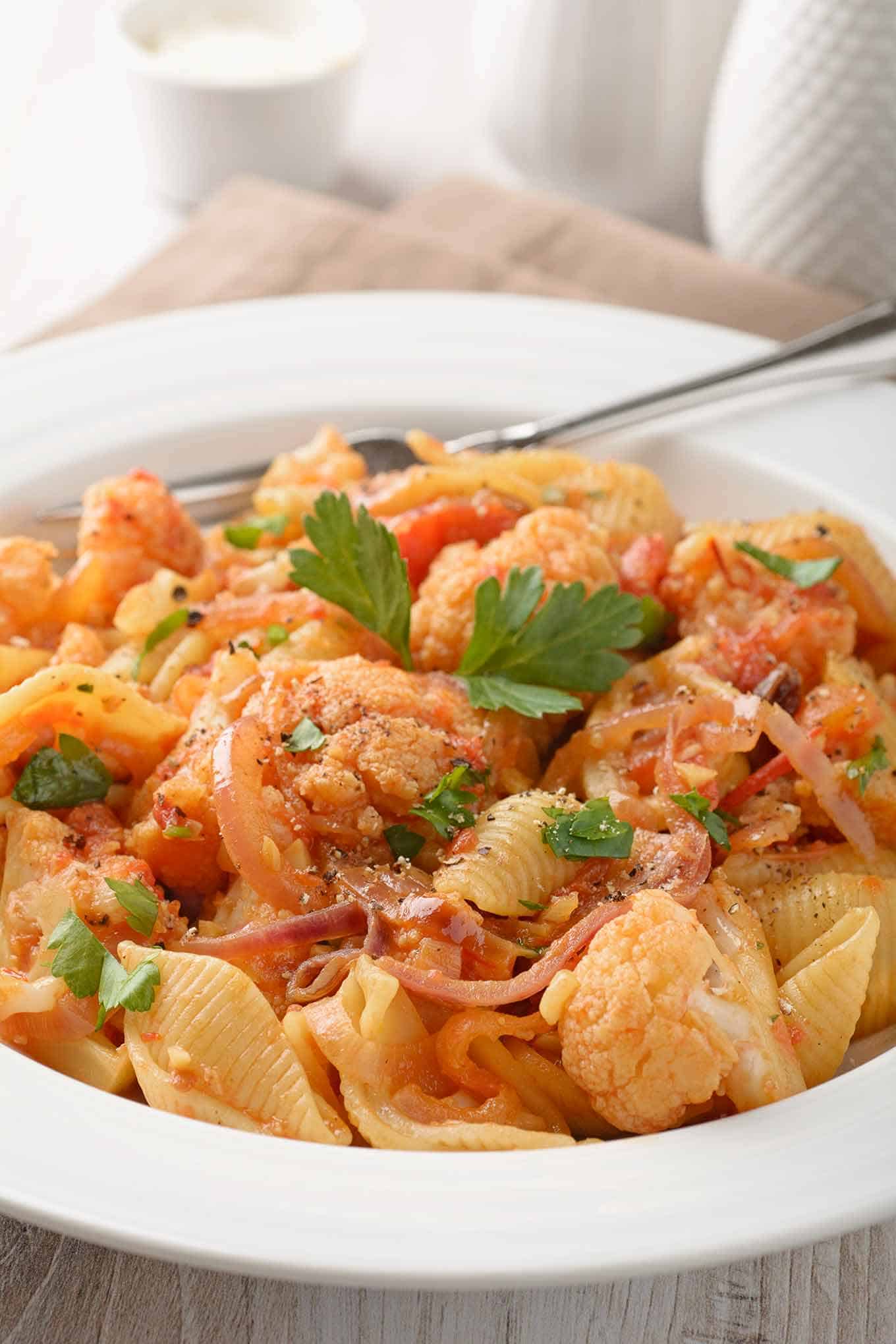
5 from 1 vote
Sicilian Pasta with Cauliflower and Saffron: A Meatless Delight
Lynne Webb
10
30
40
4
servings
Pin Recipe
Rate Recipe
Print Recipe
Ingredients
- 10 ounces pasta, such as shells, rotini, or penne
- 1/2 teaspoon crushed saffron threads
- 1/4 cup golden raisins
- 1/4 cup pine nuts
- 1 medium head cauliflower, cored and separated into florets
- Salt and freshly ground black pepper, to taste
- Olive oil, for sautéing
- 1/2 medium red onion, thinly sliced
- 4 anchovy fillets, rinsed and finely chopped
- 3 cloves garlic, minced
- 1 cup diced tomatoes, with their juices
- 2 tablespoons fresh flat-leaf parsley, chopped
- Pecorino or Parmigiano-Reggiano cheese, for grating and serving
Instructions
-
Bring a large pot of generously salted water to a rolling boil for the pasta.
-
Once the pasta water begins to simmer, carefully ladle off about half a cup. Divide this hot water equally between two small prep bowls. Add the crushed saffron threads to one bowl to steep, and the golden raisins to the other bowl to rehydrate and plump. Set both aside. This crucial step ensures the saffron’s full flavor develops and the raisins become tender and sweet.
-
Heat a large, dry sauté pan over medium heat. Add the pine nuts and shake the pan continuously over the heat until they are lightly golden and fragrant, about 30 seconds to 1 minute. Watch them very carefully as they burn quickly. Immediately transfer the toasted pine nuts to a small bowl and set aside to cool.
-
Add the cored and separated cauliflower florets to the same sauté pan. Season with a pinch of salt and pepper, then pour in about 1/2-inch of water.
-
Place the pan over medium-high heat, cover, and simmer the cauliflower until it is tender-crisp when pierced with a knife, typically 7 to 10 minutes. Once cooked, transfer the cauliflower to a plate and set it aside.
-
Wipe the sauté pan dry, add a drizzle of olive oil, and return it to medium heat. Add the thinly sliced red onion and sauté until it becomes translucent and lightly caramelized, about 4 to 5 minutes. Stir in the minced garlic and cook for another minute until fragrant.
-
Add the rinsed and finely chopped anchovy fillets to the pan. Continue cooking, stirring frequently, until the anchovies have completely broken down and dissolved into the onion and garlic mixture, which usually takes 3 to 4 minutes. This creates a rich, umami-packed base for your sauce.
-
Stir in the diced tomatoes (with their juices) and the saffron along with its steeping liquid. Drain the plumped raisins and add them to the pan as well. Cover the pan, reduce the heat to medium-low, and let the sauce gently simmer for 8 to 9 minutes while the pasta cooks.
-
While the sauce simmers, add your chosen pasta to the boiling salted water and cook according to package directions until al dente.
-
Return the tender cauliflower florets to the simmering tomato sauce and heat through for 1 minute. Drain the cooked pasta, then add it to the pan with the sauce, along with the toasted pine nuts and fresh parsley. Toss everything together thoroughly to combine and coat the pasta evenly.
-
Serve individual portions immediately, topping each with freshly ground black pepper and a generous grating of Pecorino or Parmigiano-Reggiano cheese. Enjoy your authentic taste of Sicily!
Notes
- Steeping the saffron to fully develop its aroma and color.
- Plumping the raisins to make them tender and sweet.
- Toasting the pine nuts to unleash their rich, nutty flavor.
- Allowing the anchovies to fully dissolve into the sauce for a deep umami foundation.
Nutrition
Calories:
363
,
Total Fat:
14
g
,
Cholesterol:
12
mg
,
Sodium:
442
mg
,
Carbohydrates:
49
g
,
Fiber:
7
g
,
Sugar:
12
g
,
Protein:
14
g
Nutrition information is automatically calculated, so should only be used as an approximation.
Exploring Variations and Personalizing Your Sicilian Cauliflower Pasta
While the classic cauliflower pasta recipe is a culinary masterpiece on its own, its versatility allows for exciting variations that cater to different tastes and dietary preferences. Sicilian cooking often embraces regional differences and seasonal ingredients, providing ample room for creative adaptations.
Authentic Tomato-Free Versions
It’s worth noting that the most authentic and traditional Sicilian versions of this dish often omit tomatoes entirely. Historically, tomatoes were not a staple in Italian cuisine until after the discovery of the Americas. Instead, these traditional preparations rely on a combination of flavorful vegetable broth and a generous quantity of high-quality olive oil to create a light yet rich sauce that coats the pasta and cauliflower beautifully. If you wish to try this more traditional approach, simply replace the diced tomatoes with an equal amount of vegetable broth, possibly adding a splash more olive oil for richness. This variation highlights the delicate interplay of saffron, anchovies, raisins, and pine nuts even more prominently.
Vegetable Swaps for Seasonal Appeal
While cauliflower is fantastic, other vegetables can be substituted or added to change the character of the dish:
- Broccoli or Broccolini: These are excellent alternatives to cauliflower, offering a slightly different texture and flavor profile. Prepare them in a similar manner, steaming until tender-crisp.
- Artichoke Hearts: For an additional layer of Mediterranean flavor, consider adding marinated artichoke hearts (drained and chopped) along with the tomatoes.
- Fennel: Sauté thinly sliced fennel bulb with the red onion for a subtle anise flavor that pairs wonderfully with the other ingredients.
- Zucchini or Eggplant: Diced and lightly pan-fried or roasted zucchini or eggplant can add a hearty element and absorb the rich flavors of the sauce.
Protein Alternatives and Additions
Although this is a delightful meatless meal, you can easily introduce other proteins:
- Sardines: Some Sicilian variations use sardines instead of anchovies, providing a more pronounced fish flavor and texture. Fresh sardines can be filleted and pan-fried, while good quality canned sardines can be flaked and added to the sauce.
- Shrimp: Quickly sautéed shrimp can be added at the very end for a luxurious seafood touch.
- Plant-Based Options: For a heartier vegan version, consider adding chickpeas or white beans to the sauce. Their creamy texture and earthy flavor would complement the dish well. If omitting anchovies for a fully vegan meal, increase the seasoning and perhaps add a tablespoon of capers for a briny, salty kick that mimics some of the umami.
Adjusting Flavors and Spice
Feel free to customize the spice level and herbal notes:
- Chili Flakes: A pinch of red pepper flakes added with the garlic can provide a subtle warmth and a touch of heat.
- Fresh Herbs: Beyond parsley, a sprinkle of fresh mint or basil at the end can add an extra layer of freshness, particularly if using a tomato-free sauce.
Don’t hesitate to experiment with these ideas to make this meatless pasta dish uniquely your own, always keeping the spirit of Sicilian culinary artistry in mind.
Serving Suggestions and Wine Pairings
This easy Sicilian dinner is wonderfully satisfying on its own, but a few simple additions can complete the meal. A crisp green salad with a light vinaigrette provides a refreshing counterpoint to the rich pasta. Don’t forget a generous basket of crusty Italian bread to soak up every last drop of the delectable sauce. For wine enthusiasts, this dish pairs beautifully with light-bodied white wines that echo the Mediterranean sunshine. Consider a vibrant Sicilian Grillo, a refreshing Vermentino, or a crisp Pinot Grigio. If you prefer red, a very light-bodied and aromatic red like a Sicilian Frappato would also be an excellent choice, complementing the subtle sweetness and savory notes without overpowering them.
Conclusion: A Taste of Sicily at Your Table
This Sicilian Pasta with Cauliflower is more than just a meal; it’s an invitation to experience the depth and diversity of Sicilian flavors. With its unique blend of sweet, savory, and umami ingredients, it proves that a meatless dish can be profoundly satisfying and memorable. Simple to prepare yet rich in character, this recipe offers an accessible way to bring the authentic taste of Sicily into your home. We encourage you to try it and savor every delicious bite of this comforting and elegant culinary gem.
Like this recipe? Rate and comment below!