
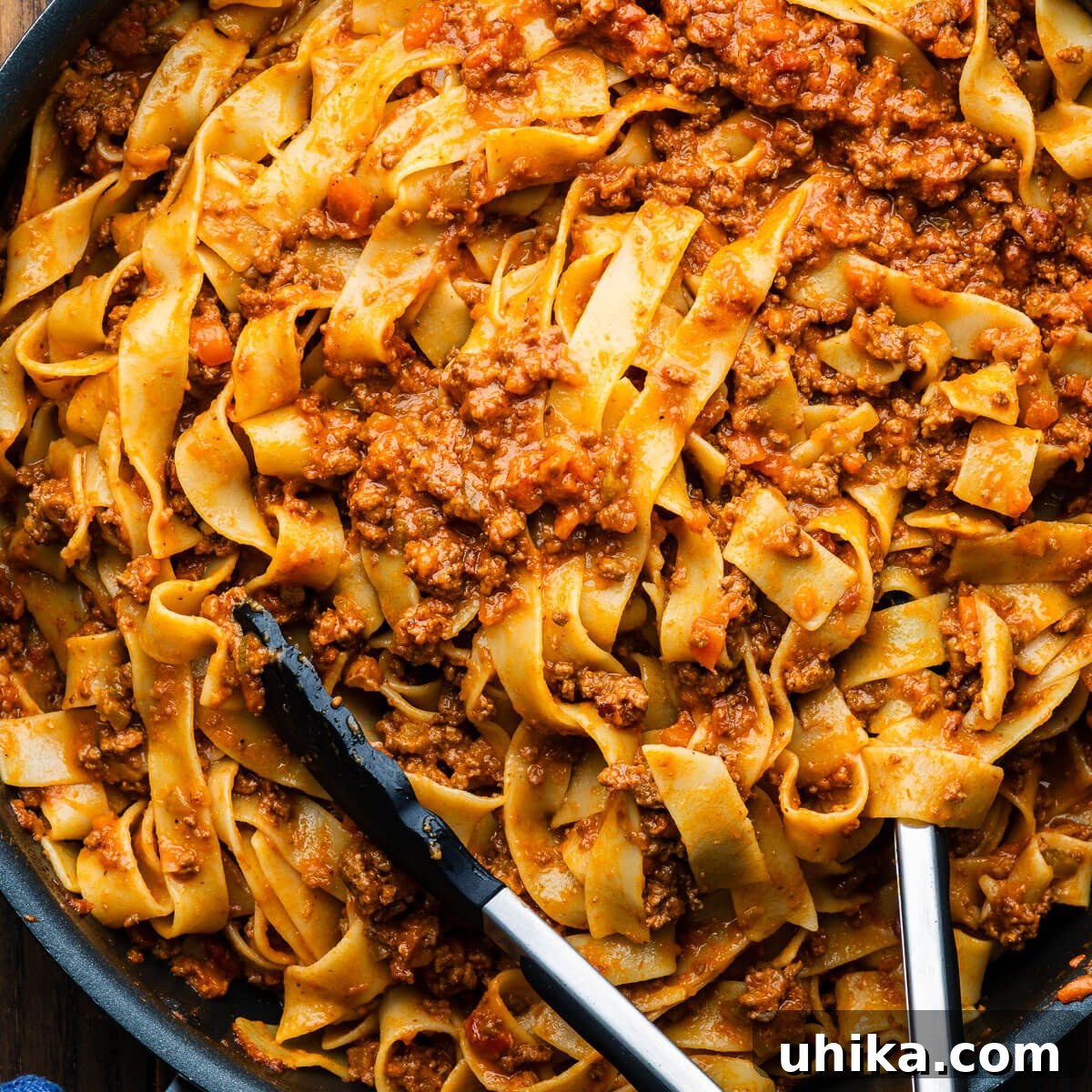
The Ultimate Pappardelle Bolognese: A Slow-Cooked Masterpiece
There are few dishes as comforting and deeply satisfying as a well-made Bolognese, especially when generously coated over broad, tender pappardelle pasta. My Pappardelle Bolognese recipe isn’t just a meal; it’s an experience – a journey into the heart of Italian slow-cooking tradition, delivering big, robust flavors that linger on your palate. The secret lies in a rich, slow-simmered ragu, perfectly matched with the substantial texture of pappardelle, designed to embrace every drop of that luxurious sauce. This isn’t just any weeknight dinner; it’s an invitation to gather around the table, enjoy a glass of your favorite red wine, and savor truly epic comfort food. Prepare for your kitchen to be filled with an intoxicating aroma that promises an unforgettable culinary delight.
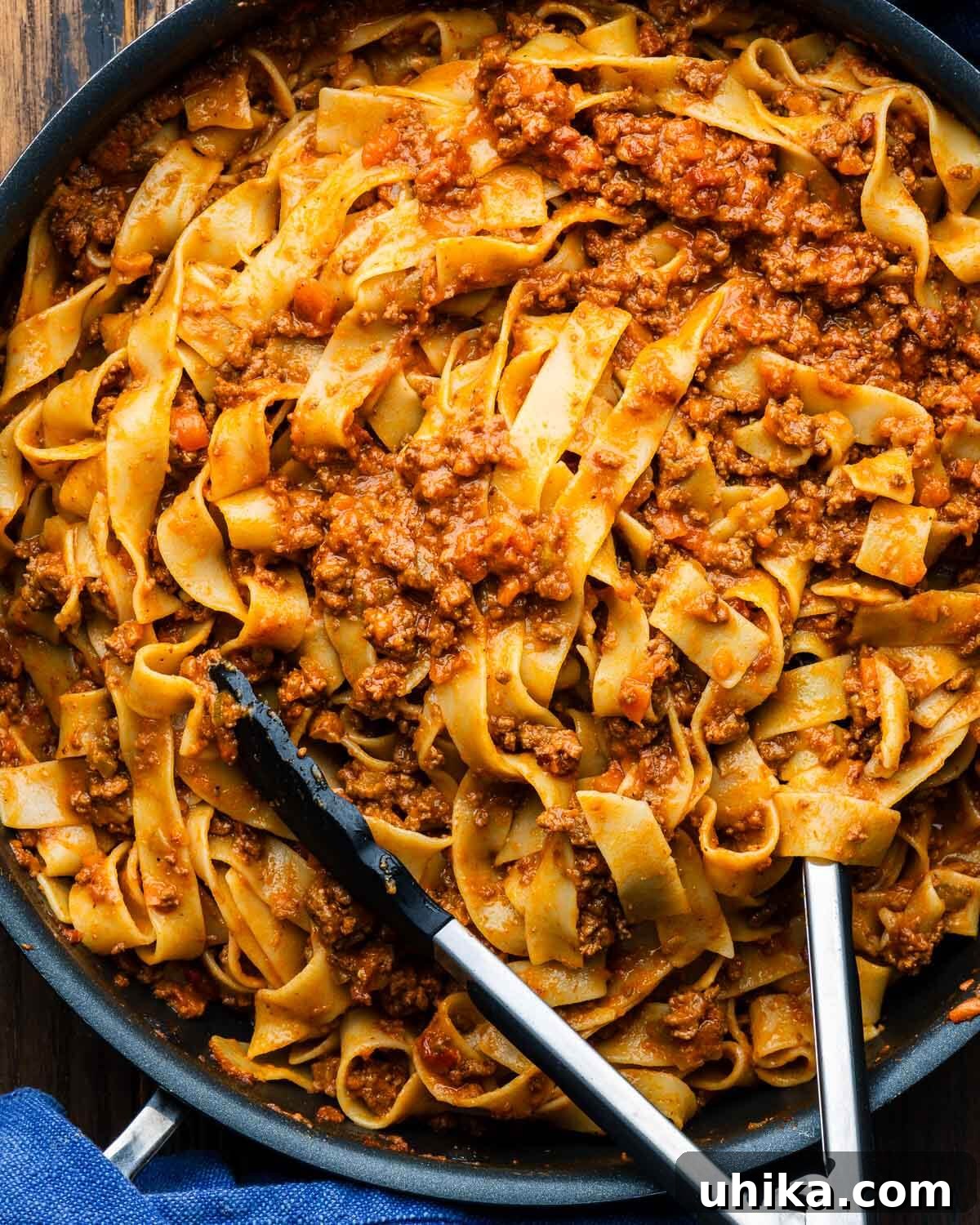

Revisiting a Beloved Classic: Enhancing the Bolognese Experience
As a passionate cook, I believe in constantly refining and personalizing recipes. While my original Pappardelle alla Bolognese recipe, a staple on my website for years, adhered closely to the guidelines set by the Bologna Chamber of Commerce (with a slight departure by using beef stock), I felt it was time for a thoughtful evolution. This revisited version is a testament to my belief that every recipe can be made uniquely your own, and I’ve poured my heart into subtle tweaks that elevate the flavor profile of this magnificent Bolognese ragù to new heights.
The core essence of the dish remains, but the nuances are what truly shine. For this enhanced recipe, I’ve incorporated a few key additions: a couple of anchovy fillets for an incredible depth of umami (fear not, they melt away and leave no fishy taste, only richness!), a generous rind of Parmigiano Reggiano to slowly infuse the sauce with nutty, savory notes as it cooks, two fragrant bay leaves for an aromatic layer, and a delicate pinch of freshly grated nutmeg, which adds a surprising warmth and complexity that truly distinguishes an exceptional Bolognese. These minor adjustments create a significant impact, transforming a great ragu into an extraordinary one.
While Pappardelle Bolognese is a dish I could happily indulge in any night, its rich flavors and the beauty of its slow cooking process make it an especially perfect choice for a leisurely Sunday meal. The hours spent simmering allow the ingredients to meld beautifully, creating a depth of flavor that can’t be rushed. Pair this magnificent pasta dish with your favorite green side, such as vibrant garlic sautéed broccoli rabe or classic garlic sautéed broccoli, to complement its richness and complete a truly wholesome and satisfying spread.
Essential Ingredients for an Authentic Pappardelle Bolognese
Crafting the perfect Pappardelle Bolognese begins with selecting the right ingredients. Each component plays a vital role in building the layered flavors of this classic Italian ragu. Below, you’ll find a visual guide and detailed notes on the key elements that make this recipe truly special.
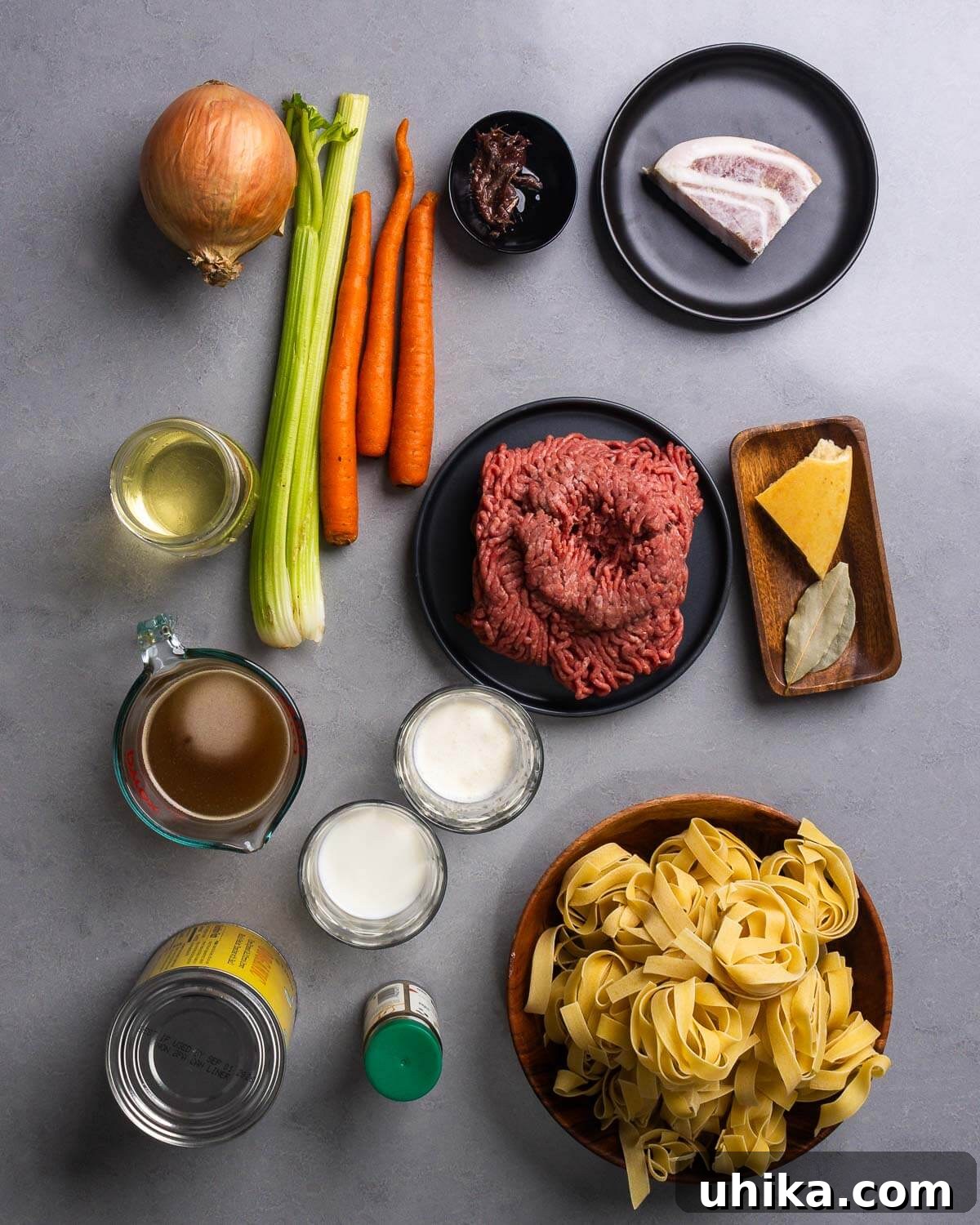
- Pappardelle: The Perfect Pasta Partner. When creating a truly hearty ragu, like this Bolognese or my short rib ragu and ragu alla genovese, the choice of pasta is paramount. Pappardelle, with its wide, flat ribbons, is my absolute go-to. Its substantial surface area and delicate texture are ideal for clinging to and soaking up a rich, heavy sauce, ensuring every bite is bursting with flavor. Other excellent choices include tagliatelle or paccheri, which also stand up beautifully to robust meat sauces.
- Beef: The Heart of the Ragu. For maximum flavor and a luscious texture, I highly recommend using 80/20 ground chuck. The higher fat content renders slowly, adding incredible richness and moisture to the sauce. If you prefer a leaner option, 90/10 ground beef can be used, though you might consider adding a touch more olive oil when browning. For an even more complex flavor profile, a blend of half beef and half ground pork is a fantastic variation, commonly found in traditional Bolognese recipes.
- Pancetta: The Unsung Hero. This uncured, unsmoked pork belly is a cornerstone of authentic Bolognese and crucial for developing the foundational flavors of our ragu. It renders slowly, releasing savory fat that forms the base for sautéing our vegetables. You can often find cubed pancetta at Italian specialty stores or the deli counter of well-stocked grocery stores. If pancetta is unavailable, a neutral-flavored smoked bacon can be a decent substitute, or you can simply use good quality olive oil, though you’ll miss a layer of traditional flavor.
- Anchovies: The Umami Secret. While not always found in the most strict traditional recipes, anchovy fillets are my secret ingredient for boosting the umami depth in this Pappardelle Bolognese. They dissolve completely into the sauce during cooking, leaving no fishy taste, only an intensely savory background note that makes the entire dish more complex and irresistible. You can use whole anchovy fillets (oil-packed) or a spoonful of anchovy paste. If you have an aversion to anchovies, they can be omitted entirely, but I encourage you to try them for that extra layer of flavor.
- White Wine: Deglazing and Flavor. A dry white wine, such as Sauvignon Blanc or Pinot Grigio, is essential for deglazing the pot, releasing all the flavorful browned bits from the bottom. This step adds acidity and a nuanced layer that brightens the rich meat sauce. Choose a wine you enjoy drinking, as its flavor will concentrate in the ragu.
- Milk and Cream: For Velvety Richness. The addition of dairy helps to tenderize the meat and contributes to the ragu’s luxurious, velvety texture. If you are using fresh pappardelle, which is naturally richer and heavier, using only milk is often sufficient. However, for dried pasta (which I use in this recipe), the addition of a little heavy cream alongside the milk ensures a wonderfully creamy consistency that perfectly coats the noodles without making the dish overly heavy. This balance is key to achieving that authentic, melt-in-your-mouth quality.
For a complete list of all ingredients and precise quantities, please refer to the comprehensive recipe card located further down.
Want To Save This Recipe?
Enter your email and we’ll send it to you. Plus, get great new recipes from us every week!
How to Make Pappardelle Bolognese: A Step-by-Step Guide
Creating this rich and flavorful Pappardelle Bolognese is a labor of love, but the process is straightforward and incredibly rewarding. Follow these steps carefully to achieve a truly magnificent ragu that will impress everyone at your table. Each step is designed to build layers of flavor, resulting in a deeply satisfying meal. The images below illustrate the key stages of the cooking process.
- Prepare Your Meat: Begin by preheating your oven to 300°F (150°C). In a large Dutch oven or heavy-bottomed pot, cook the pancetta over medium heat until most of its fat has rendered and it’s slightly crispy, about 7-10 minutes. Remove the pancetta and set aside, leaving the rendered fat in the pot. Add the ground chuck to the hot fat and brown it thoroughly, using a meat masher or wooden spoon to break it into small pieces, about 7-10 minutes. Season the beef generously with salt and freshly ground black pepper as it cooks. Once browned, transfer the beef to the plate with the pancetta and set aside, reserving any drippings in the pot.
- Sauté the Soffritto: To the same pot with the rendered fat and beef drippings, add the finely diced celery, carrot, and onion (known as soffritto in Italian cuisine), along with a pinch of salt. Sauté these vegetables over medium-low heat until they are incredibly soft and translucent, about 12-15 minutes. This slow cooking allows their sweetness to develop, forming the aromatic foundation of your ragu. If the vegetables start to stick or brown too quickly, add a splash of water or turn down the heat. Now is the time to add the anchovy fillets; they will dissolve and contribute immense umami flavor without any fishy taste.
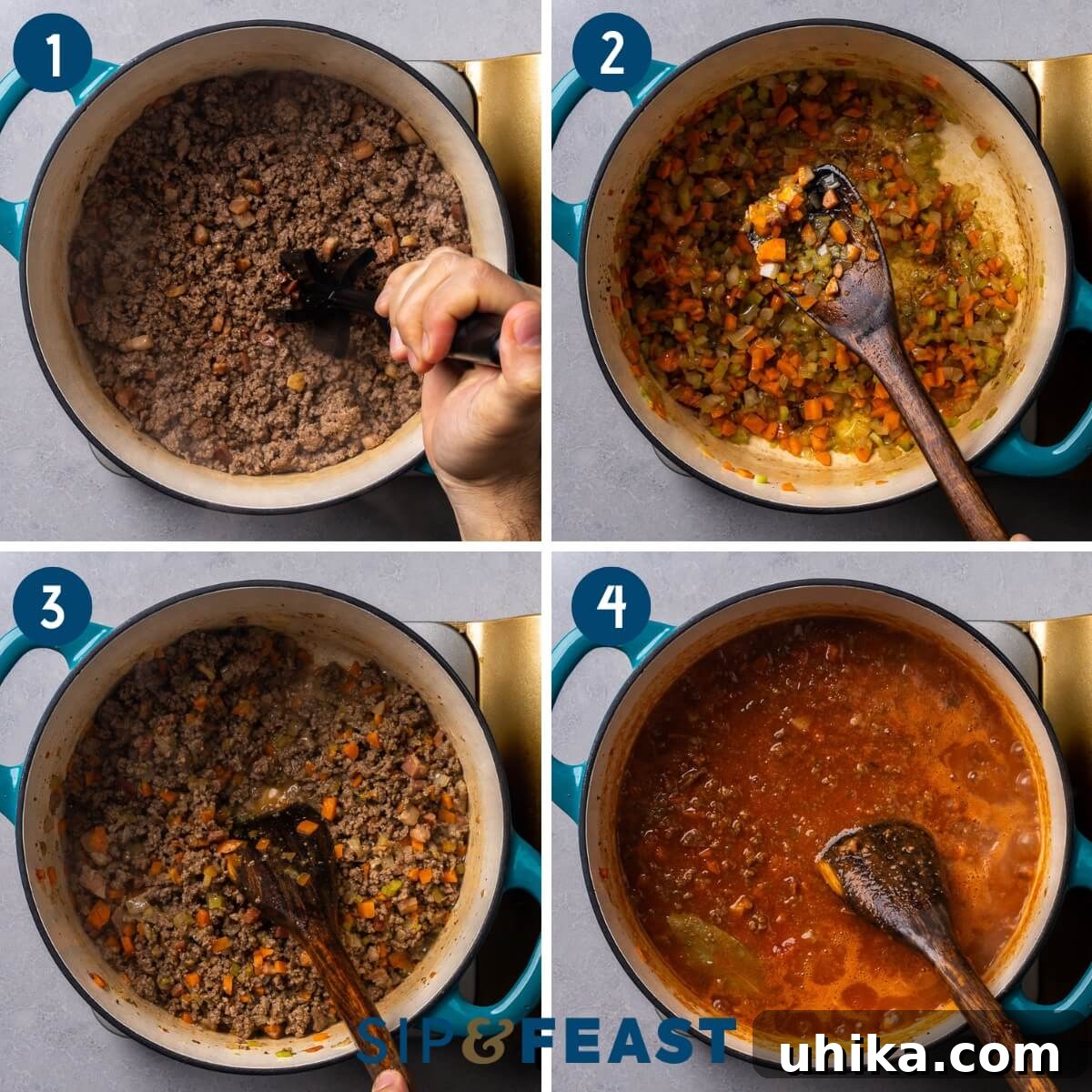
- Deglaze and Build the Sauce Base: Return the browned beef and pancetta to the pot with the softened vegetables. Pour in the dry white wine and increase the heat to high. Use your wooden spoon to scrape up any flavorful brown bits (fond) stuck to the bottom of the pot – this is crucial for adding depth to your sauce. Allow the wine to simmer and reduce until it has almost completely evaporated.
- Add Liquids and Aromatics: Once the wine has reduced, add the low-sodium beef stock, half of the milk, the hand-crushed or blender-pulsed plum tomatoes, the Parmigiano Reggiano rind, and the bay leaves. Stir everything together to combine, then bring the mixture to a gentle boil on the stovetop.
- Slow Cook in the Oven: Once boiling, turn off the heat on the stovetop. Cover the Dutch oven with a tight-fitting lid and carefully transfer it to your preheated 300°F (150°C) oven. Let the ragu cook for 2 1/2 hours. Halfway through the cooking time, give it a good stir and check its consistency; if it seems too dry, add a touch more beef stock. After 2 1/2 hours, remove the lid and return the pot to the oven for another 30 minutes. This uncovered period allows the sauce to thicken slightly and deepen in color. (Note: While oven cooking is preferred for even heat, you can also simmer the Bolognese on the stovetop over very low heat, stirring occasionally to prevent burning.)
- Finish the Ragu: After a total of 3 hours of slow cooking, you’ll notice a beautiful layer of rendered fat floating on top, and the ragu will have thickened considerably. Remove the pot from the oven. Stir in the remaining milk and the optional heavy cream (if using dried pasta). Bring the sauce to a gentle simmer on the stovetop and cook for another 15-30 minutes, allowing the flavors to meld and the sauce to achieve its final rich consistency. Taste the ragu and adjust the seasoning with more salt and pepper as needed. This final simmer ensures a perfectly balanced flavor.
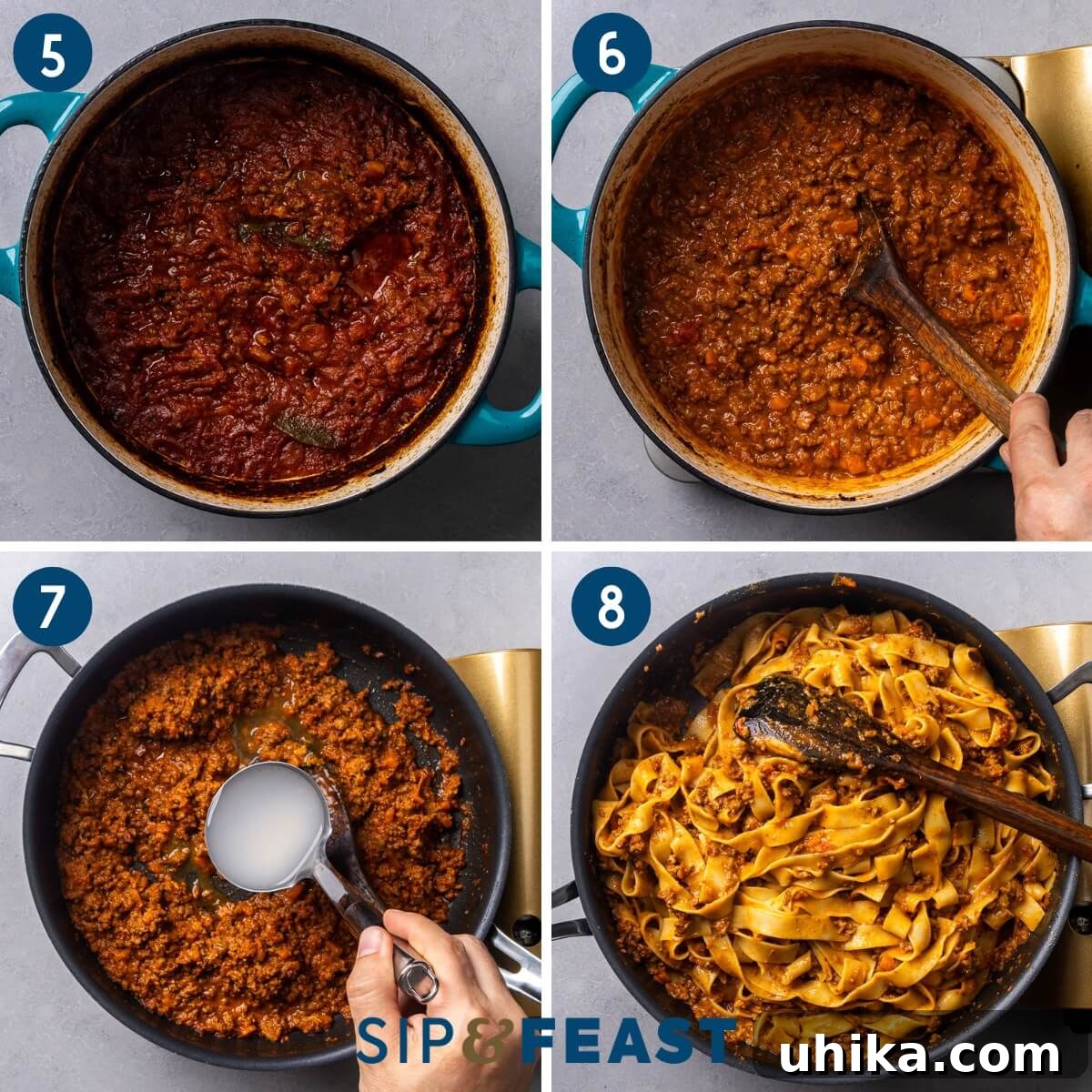
- Cook the Pappardelle: While the ragu is finishing, bring a large pot of generously salted water to a rolling boil. Add your pappardelle and cook it until it’s about 1-2 minutes less than al dente, as indicated on the package. Remember, it will finish cooking in the sauce. Before draining, reserve approximately 1 cup of the starchy pasta water – this liquid is invaluable for emulsifying the sauce and ensuring perfect consistency.
- Sauce the Pasta and Serve: In a separate large saucepan or skillet, add about 3 cups of the Bolognese ragu and 1/2 cup of the reserved pasta water. Place this over medium-low heat. Add the slightly undercooked pappardelle directly into the pan with the sauce. Toss or gently move the pasta with tongs, allowing it to absorb the rich sauce and finish cooking to a perfect al dente texture. Add more sauce or pasta water as needed to achieve your desired consistency. Finally, stir in a pinch of freshly grated nutmeg. Serve immediately, garnished generously with freshly grated Parmigiano Reggiano cheese. The leftover ragu can be served alongside the pasta or stored for another delicious meal. Enjoy the fruits of your labor!
Top Tips for Perfect Pappardelle Bolognese
Achieving a truly outstanding Pappardelle Bolognese involves a few key techniques and considerations. These tips will help you maximize flavor and ensure a delicious outcome every time:
- Make the Ragu Ahead for Enhanced Flavor: While the aroma of a freshly made Bolognese is tempting, patience is a virtue here. The flavors of the ragu deepen and meld beautifully overnight, making it even more delicious the next day. If you plan to make it ahead, cook the ragu fully and refrigerate it. Only cook the pasta right before you intend to serve, then reheat the sauce gently and combine with the freshly cooked noodles. This allows the sauce to truly shine.
- Handle Nutmeg with Care: Nutmeg is a powerful spice that can easily overpower other flavors. For this reason, I recommend adding just a pinch towards the very end of the cooking process, or even as you’re tossing the pasta with the sauce. You can always serve extra freshly grated nutmeg at the table for those who enjoy a more pronounced flavor. Start small and adjust to your preference.
- Opt for Homemade Stock: Whenever possible, elevate your Bolognese by using homemade beef stock. The difference in flavor between homemade and store-bought is incomparable. Homemade stock provides a richer, more nuanced base and allows you to control the sodium content of your dish, ensuring a perfectly seasoned final product.
- Proper Browning is Key: Don’t rush the browning of the pancetta and ground beef. Allowing the meat to develop a deep, rich brown crust creates a layer of complex flavor that will form the backbone of your ragu. These browned bits, or “fond,” are crucial for deglazing.
- Don’t Skimp on the Soffritto: The finely diced onion, celery, and carrot (soffritto) need ample time to soften and release their aromatic sweetness. Sautéing them slowly over medium-low heat is vital, as this develops a foundational layer of flavor for the entire dish.
- Toss Pasta in the Sauce: While some prefer to simply ladle sauce over pasta, tossing the almost-cooked pappardelle directly into a pan with the warm ragu and a splash of pasta water is a game-changer. This technique allows the pasta to absorb the sauce, creating a perfect emulsion and ensuring every strand is beautifully coated and flavorful.
More Hearty Pasta Recipes to Savor
If the rich, comforting flavors of Pappardelle Bolognese have captured your heart, you’ll undoubtedly love these other robust and satisfying pasta dishes from our kitchen. Each recipe offers its own unique charm and depth of flavor, perfect for any occasion when you’re craving a hearty, soulful meal:
- Pasta alla Zozzona: A Roman classic that’s unapologetically decadent, combining guanciale, sausage, eggs, and Pecorino for a truly indulgent experience.
- One Pot Creamy Beef and Shells: A convenient and comforting dish, perfect for busy weeknights, featuring tender beef and pasta in a creamy, savory sauce, all made in a single pot.
- Pasta alla Boscaiola: A rustic “woodsman’s pasta” featuring mushrooms, sausage, and often a touch of cream, evoking the flavors of the Italian countryside.
- Meatballs and Sunday Sauce: The quintessential Italian-American comfort food, slow-simmered rich tomato sauce with tender meatballs, perfect for a family feast.
If you’ve enjoyed this Pappardelle Bolognese recipe, please consider giving it a 5-star rating to show your support!
Stay connected and explore more culinary inspiration with us! You can watch our cooking demonstrations on YouTube, follow along with our latest updates on our Facebook Page, and become a Patreon member to unlock exclusive full-meal videos and behind-the-scenes content.
Pappardelle Bolognese Recipe
James Delmage
15 mins
4 hrs
4 hrs 15 mins
6
Pin
Ingredients
- 1 pound (454g) pappardelle or tagliatelle
- 1/3 pound (150g) pancetta
- 1 1/2 pounds (680g) ground chuck
- salt and pepper to taste
- 2 ribs celery finely diced
- 1 large carrot finely diced
- 1 medium onion finely diced
- 3 anchovy fillets optional
- 1 cup (240ml) dry white wine
- 1 1/2 cups (360ml) low-sodium beef stock
- 1 28-ounce can plum tomatoes hand crushed or blender pulsed
- 1 parmesan rind
- 2 large bay leaves
- 1/2 cup (120ml) milk
- 1/4 cup (60ml) heavy cream
- 1 pinch nutmeg
- 1 cup (240ml) reserved pasta water (will most likely not need it all)
Want To Save This Recipe?
Enter your email and we’ll send it to you. Plus, get great new recipes from us every week!
Instructions
- Preheat your oven to 300°F (150°C).
- In a large Dutch oven or heavy pot, cook the pancetta over medium heat until most of the fat has rendered (about 7-10 minutes). Add in ground beef and sauté until brown (about 7-10 minutes) while breaking it up with a wooden spoon or meat masher. Season the beef with a bit of salt and pepper.
- Remove the meat with a slotted spoon to a plate and set aside. Add the diced celery, carrot, onion, and anchovies (if using) to the pot along with a pinch of salt. Sauté until the vegetables are very soft (about 12-15 minutes). Add a splash of water or reduce the heat if the vegetables start to burn.
- Add the meat back to the pot along with the dry white wine and turn the heat to high. Scrape the bottom of the pot with a wooden spoon to dislodge any browned bits (fond). Once the wine evaporates, add the beef stock, half of the milk, crushed tomatoes, parmesan rind, and bay leaves. Bring to a boil.
- Once boiling, turn off the heat, cover with a tight-fitting lid, and place the pot into the preheated oven. Cook for 2 1/2 hours, stirring at the halfway point. If the pot seems too dry, add a touch more stock. After 2 1/2 hours, remove the lid and return to the oven for another 30 minutes to allow the sauce to thicken slightly.
- After a total of 3 hours, the ragu will have thickened. Add the remaining milk and the optional heavy cream and stir to combine. Cook on the stovetop at a simmer for 15-30 minutes more. Taste and season with additional salt and pepper if required.
- Bring a large pot of salted water to boil. Cook the pappardelle until 1-2 minutes less than al dente. Reserve 1 cup of pasta water before draining.
- To sauce the pasta, add 3 cups of the Bolognese ragu and 1/2 cup of reserved pasta water to a separate pan over medium-low heat. Add the ‘less than al dente’ pasta and cook until al dente, tossing with tongs so the pasta absorbs the sauce. Add extra sauce or pasta water as needed. Add a pinch of nutmeg and serve immediately with grated Parmigiano Reggiano cheese. The leftover ragu can be served at the table or saved for future use. Enjoy!
Notes
- Serving. This recipe yields approximately 4 generous portions or 6 smaller servings.
- Milk/Cream. When preparing with fresh pasta, typically only milk is necessary. For dry pasta, the additional 1/4 cup of cream is recommended for optimal richness.
- Sauce. Tossing the pasta directly in the pan with the sauce is an optional but highly recommended step, as it helps the sauce adhere better to the noodles.
- Overnight Tip. Allowing the sauce to rest overnight and reheating it the next day significantly enhances its depth of flavor.
- Pasta Shape. Wide, flat noodles such as pappardelle, fettuccine, and tagliatelle are best suited for this hearty ragu as they effectively hold the rich sauce.
- Leftovers. Cooked Pappardelle Bolognese can be stored in the refrigerator for up to 3 days or frozen for up to 6 months.
Nutrition
Nutrition information is automatically calculated and should be used as an approximation.
Like this? Leave a comment below!
Check us out on Instagram at @sipandfeast or tag #sipandfeast!
This recipe was originally published on September 17, 2019. It was completely updated and enhanced on June 16, 2025.