

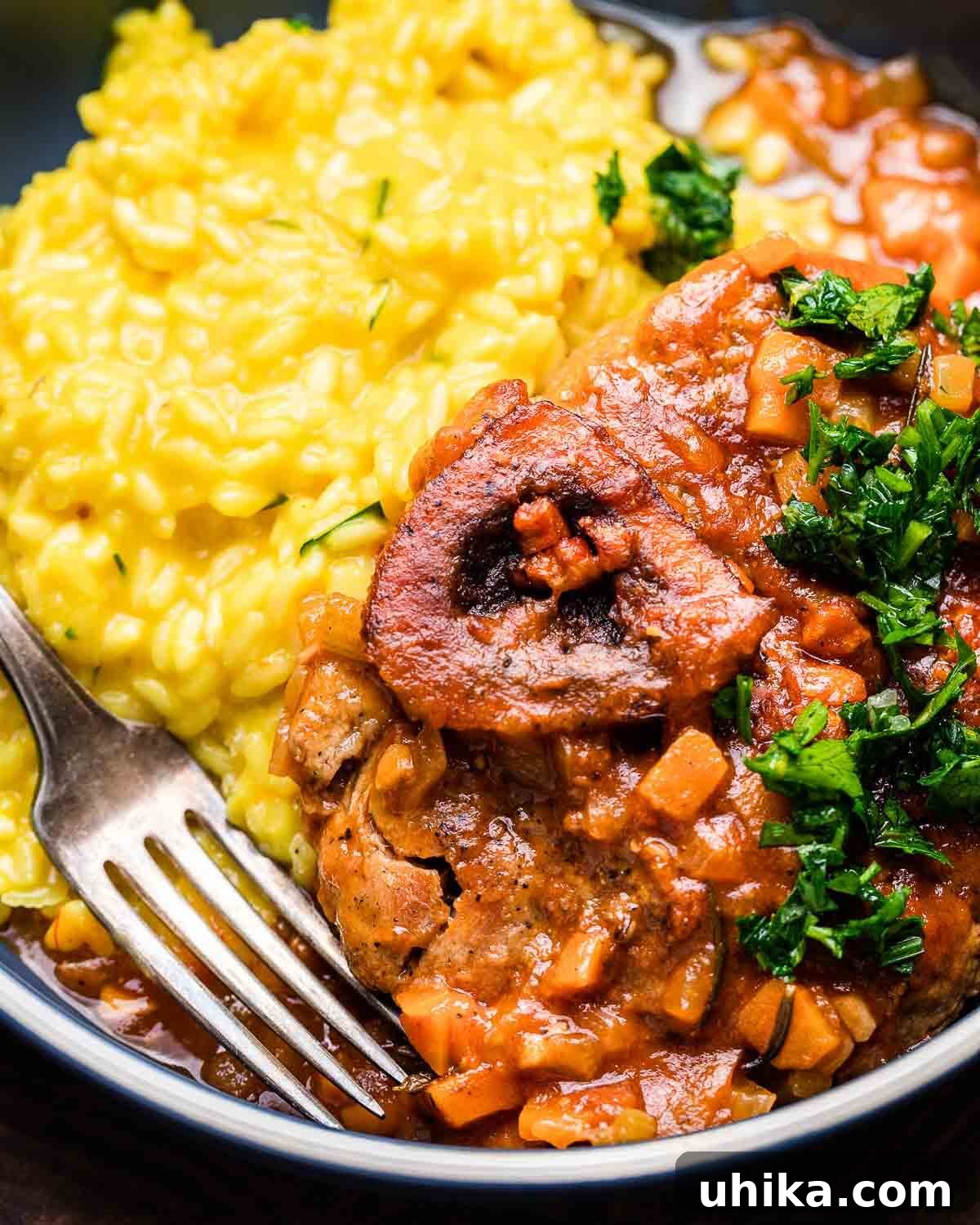
Osso Buco, a celebrated jewel of Northern Italian cuisine, represents the epitome of comfort and sophisticated flavor. This iconic dish features succulent veal shanks, slow-braised to fork-tender perfection in a luxurious white wine sauce, traditionally enriched with vegetables and aromatic herbs. The final touch, a bright and zesty gremolata – a vibrant mix of fresh parsley, garlic, and lemon zest – cuts through the richness, elevating the entire experience. While traditionally paired with creamy risotto Milanese, Osso Buco is equally delightful served with creamy polenta or comforting mashed potatoes, making it a versatile choice for any special gathering.
The Heart and Soul of Osso Buco: Understanding the “Hole in Bone”
The name “Osso Buco” itself, which translates from Italian to “hole in bone,” offers a profound insight into one of the dish’s most cherished elements. The exposed bone marrow within the center of the veal shank is not just for show; it’s an integral part of the culinary experience. As the veal braises, this marrow melts into the sauce, contributing an incredible depth of flavor and silken texture that is truly unparalleled. Diners are encouraged to extract this prized marrow, often with a tiny spoon, to savor its buttery richness – whether spread on crusty bread, stirred into the accompanying risotto or polenta, or enjoyed simply on its own.
This dish, often reserved for special occasions, showcases the art of slow cooking, transforming humble veal shanks into an exquisite meal that delights the senses. Its origins lie in the Lombardy region of Italy, particularly Milan, where it has been refined over centuries. The careful balance of tender meat, savory sauce, and vibrant gremolata is a testament to the timeless appeal of authentic Italian cooking. The extended braising process ensures that the meat absorbs all the complex flavors of the sauce, resulting in a dish that is both profoundly comforting and elegantly sophisticated. It’s a culinary journey that rewards patience with an unforgettable gastronomic experience.
Beyond Veal: Exploring Meat Variations for Osso Buco
While traditional Osso Buco is inextricably linked with veal shanks, the principles of braising make this recipe remarkably adaptable to other cuts of meat, allowing for delicious and equally satisfying variations. For those who prefer alternatives to veal, pork shanks offer a similar bone-to-meat ratio and yield wonderfully tender results, often with a slightly sweeter flavor profile that complements the rich sauce beautifully. Beef shanks or even lamb shanks can also be successfully substituted, though they may require adjustments to braising time to achieve the desired tenderness and might introduce a bolder, more gamey flavor to the sauce. Experimenting with cuts like oxtails can also produce an incredibly rich, gelatinous braise with a distinct, yet equally satisfying, texture.
Regardless of the chosen meat, the core technique remains largely the same: a meticulous searing to develop rich color and foundational flavor, followed by a long, slow braise in an aromatic liquid. The robust sauce, featuring a classic mirepoix (onions, carrots, celery) and a hint of tomato paste, along with dry white wine and savory stock, creates a flavorful cocoon that tenderizes the meat beautifully. This slow transformation ensures that every bite is imbued with deep, complex flavors. Fans of rich, braised dishes will find our braised short rib recipe shares a strikingly similar sauce profile, a testament to the enduring appeal of these fundamental Italian flavors and the magic of low-and-slow cooking.
Table of Contents
- How to Master Osso Buco
- Essential Tips for Perfect Osso Buco
- Hearty Braised Meat Dishes to Explore
- Osso Buco Recipe Card

How to Master Osso Buco: A Step-by-Step Guide
Crafting the perfect Osso Buco is a rewarding culinary journey that transforms simple ingredients into an extraordinary meal. Follow these detailed steps to achieve a truly memorable dish, complete with helpful insights for each stage, ensuring a rich and tender result every time.
1. Preparing Your Ingredients and Veal Shanks
- Begin by preheating your oven to 325°F (160°C). Position the oven rack to the middle level, which ensures even heat distribution, crucial for the long, gentle braising process.
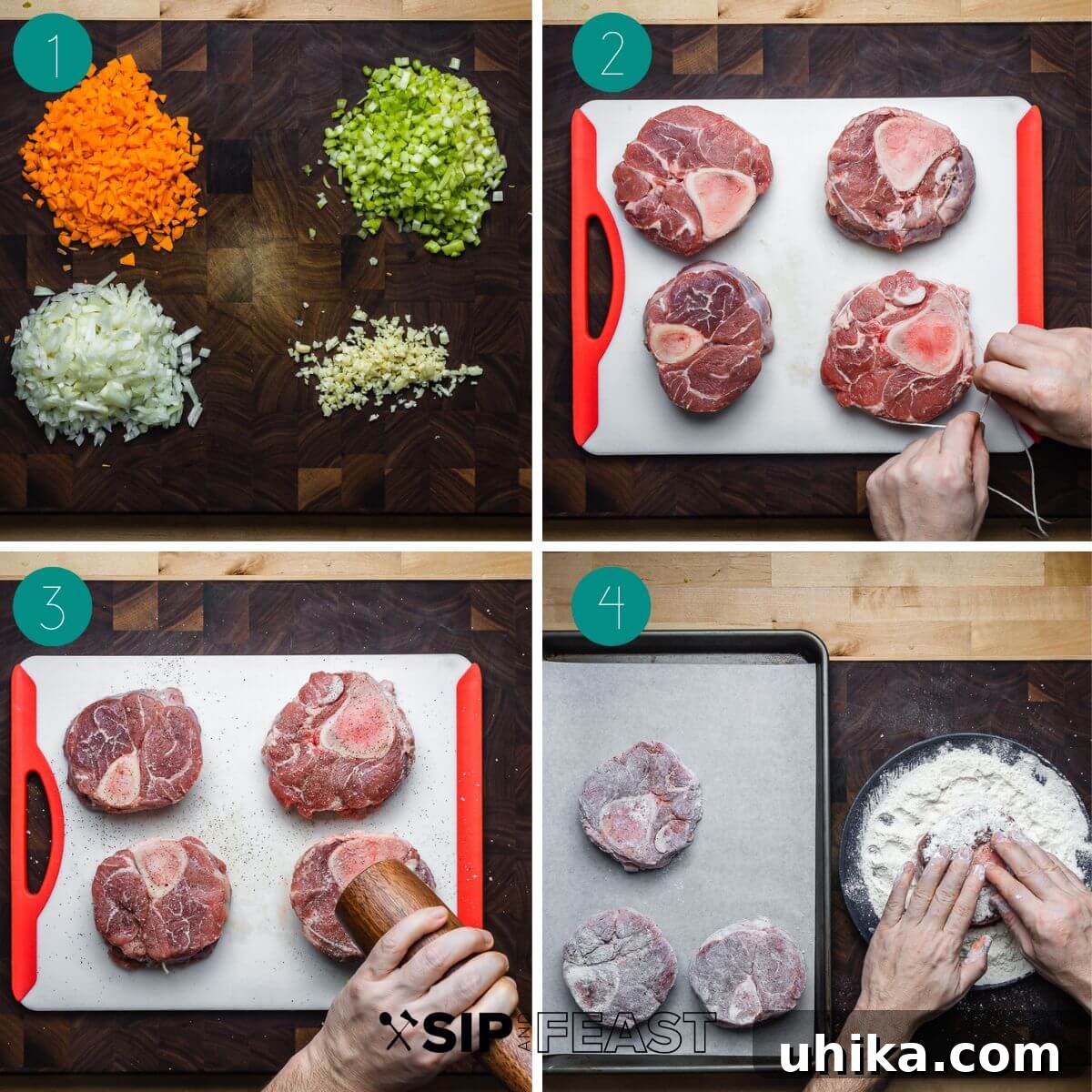
- Finely mince your aromatic vegetables: one large onion, three medium carrots, three celery ribs, and five cloves of garlic. The key here is to aim for very small, uniform pieces. These will form the foundation of your sauce and should almost “melt” during braising, contributing flavor without noticeable texture. If precise knife work is challenging, a food processor can quickly achieve this fine chop.
- For the vibrant gremolata (an optional but highly recommended topping), finely mince 1/2 cup of fresh flat-leaf parsley, one clove of garlic, and zest 1-2 teaspoons of fresh lemon (or orange) zest. Keep these separate until serving.
- Prepare your veal shanks for cooking. If your butcher has not already done so, use kitchen twine to tie the four 1-pound shanks securely. This step is crucial as it helps the meat maintain its cylindrical shape during searing and braising, promoting even cooking and an appealing presentation. For an extra measure to prevent curling, make a few shallow, vertical cuts (about 1/4-inch deep) around the perimeter of each shank. This lessens the tension in the connective tissue and reduces the tendency for the meat to curl significantly.
2. Searing the Veal Shanks to Build Flavor
- Heat a large, heavy-bottomed pan, such as a Dutch oven or a large stainless steel pot, over medium-high heat. Achieving a good sear is vital for developing deep, rich flavors.
- Pat the veal shanks thoroughly dry with paper towels. Excess moisture will prevent browning and lead to steaming instead of searing. Season generously on all sides with salt and freshly ground black pepper.
- Lightly dredge each seasoned shank in about 1/2 cup of all-purpose flour, tapping off any excess. This thin coating of flour helps create a beautiful golden-brown crust during searing and also aids in slightly thickening the sauce later.
- Add 2 tablespoons of olive oil to the hot pan. Carefully place the shanks into the pan, ensuring not to overcrowd it. If necessary, work in batches to allow proper browning. Sear each side for approximately 3 minutes, or until a deep, golden-brown crust forms. This caramelization is crucial for flavor development (Maillard reaction). Once seared, remove all the shanks from the pan and set them aside on a plate.

3. Crafting the Rich Aromatic Sauce
- Reduce the heat to medium-low. Add 2 tablespoons of butter to the same pan (no need to clean it; the browned bits add flavor) along with the minced onions, carrots, and celery. Sprinkle with a pinch of salt to help draw out moisture. Sauté patiently, stirring occasionally, for about 10-12 minutes, or until the vegetables are very soft and translucent. This slow cooking allows their natural sugars to caramelize and sweeten the base of the sauce, creating a complex flavor profile.
- Add the minced garlic and cook for another 1-2 minutes until it becomes fragrant. Be vigilant here, as garlic can burn quickly and turn bitter.
- Stir in 3 ounces of tomato paste. Cook the tomato paste for 5 minutes, stirring frequently. This critical step, often called “cooking out” the tomato paste, deepens its flavor, enhances its sweetness, and removes any raw, metallic taste. If the paste starts to stick or burn, reduce the heat slightly or add a splash of water or chicken stock.
- Pour in 1 1/2 cups of dry white wine. A crisp Pinot Grigio or Sauvignon Blanc works wonderfully, contributing acidity and fruit notes to the sauce. Increase the heat to high.
- Using a wooden spoon or spatula, vigorously scrape up all the flavorful brown bits (known as “fond”) from the bottom of the pan. Bring the wine to a rolling boil for just 1 minute to allow the alcohol to evaporate, leaving behind only its rich essence. This deglazing step is paramount for integrating all the caramelized flavors developed during searing and sautéing into your sauce.

4. The Braising Process: Slow Cooking to Utmost Tenderness
- Reduce the heat to a gentle simmer. Add one large bay leaf, three sprigs of fresh thyme, and one sprig of fresh rosemary to the sauce. These herbs will infuse the liquid with their aromatic essence over the long braise. Taste the sauce and season carefully with salt and pepper. Remember not to over-salt at this stage, as the sauce will reduce and its flavors will concentrate significantly.
- Carefully pour the rich, aromatic sauce into a sturdy roasting pan or a deep baking dish large enough to comfortably hold the veal shanks.
- Arrange the seared veal shanks in the dish, nestled within the sauce. Pour in enough low-sodium chicken stock (approximately 2 1/2 cups, though the exact amount will depend on the size and shape of your baking dish) to almost submerge the shanks. The liquid should cover about two-thirds to three-quarters of the meat, allowing the tops to gently caramelize and brown while the bottom braises.
- Cover the roasting pan very tightly with aluminum foil. This creates a tight seal, trapping moisture and heat, which is essential for the meat to become incredibly tender in a steamy, low-temperature environment. Bake in the preheated oven for 2 hours, making sure to carefully flip the shanks over at the halfway point (after 1 hour) to ensure even cooking and consistent moisture distribution.
- After the initial 2 hours, carefully remove the foil. Continue to cook for another 30-60 minutes, or until the veal is remarkably fork-tender but still holding its shape. It should not be falling apart completely at this stage, as a delicate balance of tenderness and integrity is desired. Again, flip the shanks halfway through this final cooking period to ensure even cooking and browning.

5. Finishing Touches and Serving Your Osso Buco
- Once the veal shanks are perfectly tender, carefully remove them from the oven and transfer them to a serving platter. Tent them loosely with aluminum foil to keep them warm and allow them to rest while you finalize the sauce.
- Skim any excess grease from the surface of the braising sauce using a fat separator, several sheets of paper towel, a bulb baster, or simply by carefully spooning it off. Remove and discard the bay leaf, thyme, and rosemary sprigs, as their work is done.
- If you find the sauce appears too thin for your liking, transfer it to a pot and bring it to a high simmer on the stovetop, allowing it to reduce until it reaches your desired, slightly thickened consistency. Otherwise, if you are satisfied with its richness, serve it as is. Taste the sauce one last time and make any final adjustments to salt and pepper to ensure perfect seasoning.
- To make the vibrant gremolata: In a small bowl, combine the minced parsley, garlic, lemon zest, 1-2 tablespoons of extra virgin olive oil, and 1/4 teaspoon of kosher salt. Stir everything together thoroughly until well mixed. Taste and adjust salt or zest as needed, aiming for a bright, fresh, and slightly pungent flavor that will contrast beautifully with the rich veal.
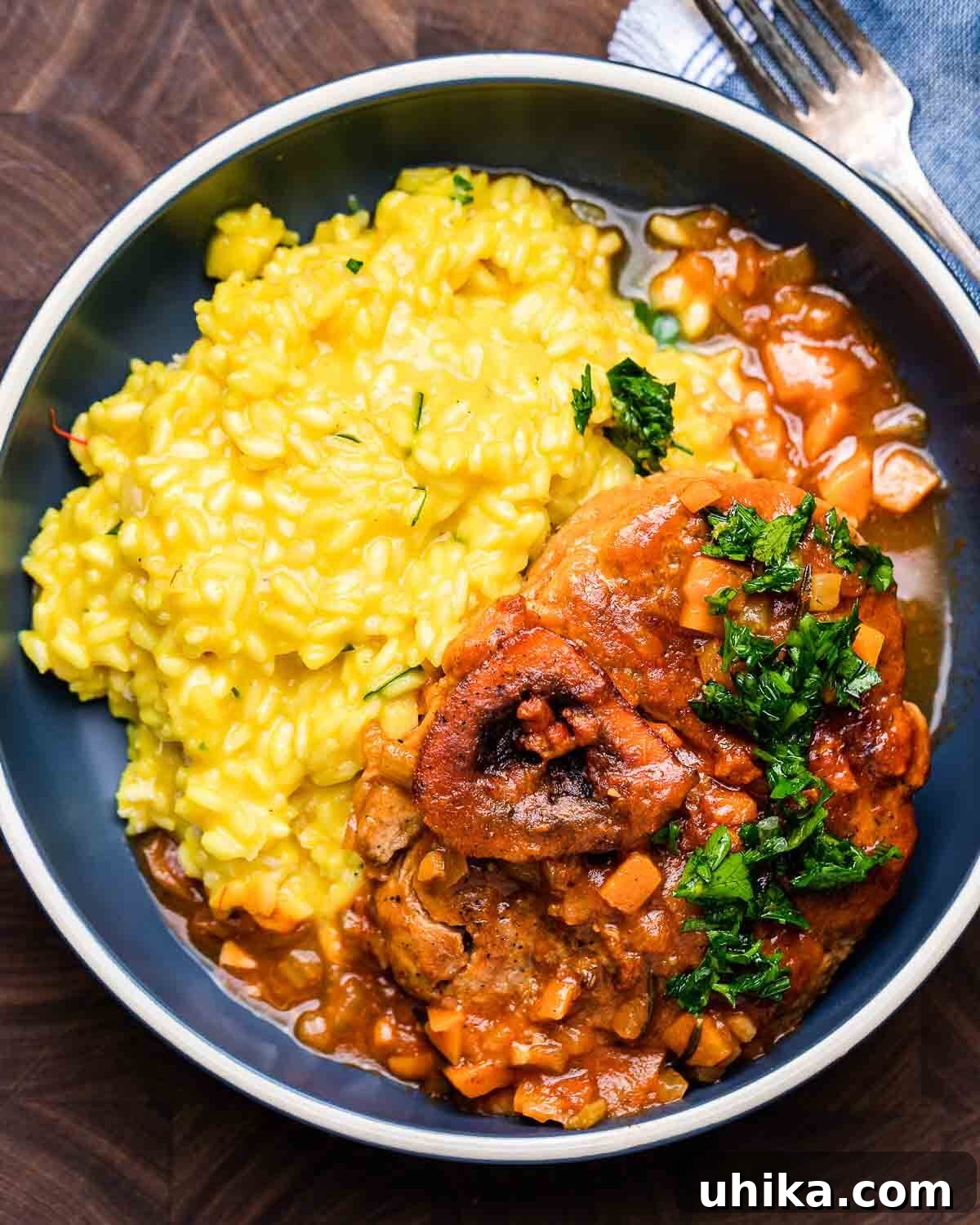
- Serve the magnificent Osso Buco immediately. Traditionally, it is accompanied by creamy risotto Milanese, which is the classic pairing. However, its robust flavors also pair wonderfully with other comforting starchy sides such as smooth, creamy polenta or fluffy, roasted garlic mashed potatoes. Garnish generously with the freshly prepared gremolata, allowing its bright, zesty flavors to perfectly complement the rich, slow-cooked veal. Enjoy this true taste of Northern Italy and savor the culmination of your culinary efforts!

Essential Tips for Perfect Osso Buco
Achieving a truly outstanding Osso Buco involves understanding a few key principles and techniques. These expert tips will guide you in mastering this classic Northern Italian dish:
- Choosing and Preparing Veal: Osso Buco is traditionally made with cross-cut veal shanks, typically from the hindshank, which are prized for their substantial bone-to-meat ratio and central marrow. Each shank usually weighs around 1 pound and should be about 1 to 1 1/2 inches thick for ideal portioning and cooking. When selecting, look for shanks with a good amount of meat and visible marrow. If veal isn’t available or preferred, consider pork shanks as a flavorful and texturally similar alternative. Beef or lamb shanks can also be used, but be prepared for slightly different flavor profiles and potential adjustments to braising times. Always remember to tie the shanks with kitchen twine before searing to help them maintain their shape and prevent excessive curling. Additionally, making a few shallow vertical cuts (about 1/4-inch deep) evenly spaced around the perimeter of the shank can further reduce the tendency for the meat to curl during cooking, ensuring a more uniform braise.
- The Importance of Finely Minced Vegetables: The aromatic base, or mirepoix, consisting of onions, carrots, and celery, is fundamental to the depth of flavor in Osso Buco. Mincing or dicing these vegetables very small is crucial. This fine chop ensures that they will almost “melt” into the sauce during the long braising process, creating a seamless, rich texture without large chunks of vegetables. If your knife skills aren’t perfectly honed, don’t hesitate to use a food processor for a quick and consistent fine chop; just be careful not to over-process them into a paste.
- Crafting the Perfect Braising Sauce: Our recipe utilizes a dry white wine and a touch of tomato paste to create a balanced and flavorful braising liquid. The white wine provides essential acidity and helps deglaze the pan, capturing all the delicious browned bits (fond) from searing. If you prefer a sauce that is more brown than red, you can slightly decrease the amount of tomato paste. The goal is to build layers of flavor that will slowly infuse into the veal shanks, resulting in a complex and savory sauce that complements the meat beautifully. Always taste and adjust seasoning throughout the process, especially before the long braise, as flavors will concentrate.
- Achieving Ideal Braising Consistency: The hallmark of perfectly cooked Osso Buco is veal that is incredibly tender – easily pierced with a fork – but still intact and holding its shape on the bone. It should not be falling apart completely, which indicates overcooking. Braising time is often an estimate; while our recipe provides a general timeframe, factors like the fat composition, exact size, and even the age of your shanks can influence how long they need to cook. Therefore, always prioritize tenderness over strict adherence to the clock. Check for doneness by gently probing the meat with a fork.
- Savoring the Bone Marrow: The very essence of “Osso Buco” lies in the bone (osso) with its “hole” (buco), which provides easy access to the rich, gelatinous marrow. This savory delicacy is a prized component of the dish and is absolutely meant to be eaten. Don’t let it go to waste! Use a small spoon to carefully scoop it out. Its rich, almost buttery flavor and creamy texture make it exceptional when spread on a piece of crusty bread, stirred into your risotto Milanese or polenta for an extra layer of decadence, or simply enjoyed on its own for a truly authentic and indulgent experience.
- The Bright Finish: Gremolata: Gremolata is an optional yet highly traditional and recommended topping for Osso Buco. Its fresh, vibrant, and aromatic profile provides a much-needed counterpoint to the richness and depth of the slow-cooked meat and sauce. The simple blend of finely minced fresh parsley, garlic, and bright lemon zest invigorates the entire dish, adding a burst of freshness that cleanses the palate with each bite. If you prefer not to make a full gremolata, even a simple sprinkle of fresh lemon or orange zest at the very end will add a delightful and impactful burst of freshness that elevates the flavors significantly.
- Traditional and Alternative Serving Suggestions: Hailing from Milan in Italy’s Lombardia region, Osso Buco finds its most traditional and celebrated accompaniment in risotto Milanese, a creamy, saffron-infused rice dish that perfectly soaks up the rich braising sauce. However, its robust flavors pair wonderfully with other comforting starchy sides. Consider serving it with velvety creamy polenta, which offers a smooth texture and acts as an excellent vehicle for the sauce, or with comforting roasted garlic mashed potatoes for a universally loved and deeply satisfying pairing.
Hearty Braised Meat Dishes to Explore
If you’ve fallen in love with the comforting depth of flavor found in slow-braised dishes like Osso Buco, there’s a whole world of other hearty, soul-satisfying recipes waiting to be discovered. Beyond the rich braised short ribs we mentioned earlier, these Italian-inspired options offer equally satisfying culinary experiences, perfect for a cozy evening or a gathering with loved ones:
- Peposo – A rustic and intensely flavorful Tuscan beef stew, renowned for its bold character derived from red wine and an abundance of black pepper. It’s a dish that embodies the robust simplicity of Tuscan cooking.
- Braised Lamb Shanks – Tender, fall-off-the-bone lamb shanks slow-cooked to perfection with red wine, aromatic carrots, celery, onion, and a fragrant bouquet of fresh herbs. This dish offers a rich and slightly gamey alternative to veal.
- Italian Beef Stew – Also lovingly referred to as Spezzatino di Manzo, this classic Italian stew offers a delightful combination of succulent, tender beef and savory root vegetables simmered in a rich, tomato-based sauce, often infused with red wine and herbs. It’s a hearty and versatile dish perfect for colder months.
We sincerely hope you’ve enjoyed this detailed guide to creating an authentic Osso Buco, a true masterpiece of Northern Italian cuisine. Your feedback is incredibly valuable to us! If you’ve tried this recipe or any others on our site, please consider leaving a 5-star rating and sharing your experience in the comments below. We love hearing from our community!
For those who prefer a visual learning experience, many of our recipes, including this one, are beautifully demonstrated on our YouTube channel and our Facebook Page. Be sure to follow us there for more delicious culinary inspiration, cooking tips, and behind-the-scenes content!
Osso Buco Recipe
Classic Northern Italian Veal Shanks
by James Delmage
Rating: 5 out of 5 stars (from 4 votes)

Prep Time: 10 mins
Cook Time: 3 hrs 30 mins
Total Time: 3 hrs 40 mins
Servings: 4
Pin Recipe
Osso buco is a northern-Italian dish consisting of veal shanks braised in a white wine sauce and served with risotto Milanese, offering an incredibly rich and satisfying meal perfect for special occasions.
Ingredients
- 4 (1-pound) tied veal shanks (about 1 to 1 1/2-inches thick)
- 1/2 cup all-purpose flour (for dredging)
- Salt and freshly ground black pepper, to taste
- 2 tablespoons olive oil
- 2 tablespoons butter
- 1 large onion, minced
- 3 medium carrots, minced
- 3 celery ribs, minced
- 5 cloves garlic, minced
- 3 ounces tomato paste
- 1 1/2 cups dry white wine (e.g., Pinot Grigio, Sauvignon Blanc)
- 1 large bay leaf
- 1 sprig fresh rosemary
- 3 sprigs fresh thyme
- 2 1/2 cups low sodium chicken stock (or enough to almost cover the shanks)
Gremolata (optional)
- 1/2 cup Italian flat-leaf parsley, minced
- 1 clove garlic, minced
- 1-2 teaspoons lemon zest (from 1 large lemon)
- 1/4 teaspoon kosher salt
- 1-2 tablespoons extra virgin olive oil
Instructions
- Preheat oven to 325°F (160°C) and set the rack to the middle level.
- Heat a large stainless steel pan or Dutch oven over medium-high heat. Pat the veal shanks thoroughly dry with paper towels and season liberally with salt and pepper on all sides. Dredge the shanks in flour, shaking off excess. Add the olive oil to the pan and sear the shanks on both sides until well browned (about 3 minutes per side). Work in batches if necessary to avoid overcrowding. Set all seared shanks aside.
- Turn the heat down to medium-low. Add the butter along with the minced onions, carrots, and celery. Sprinkle with a pinch of salt and sauté for about 10-12 minutes or until very soft and translucent. Once soft, add the minced garlic and cook until fragrant (about 2 minutes), being careful not to burn it.
- Next, add the tomato paste and cook for 5 minutes, stirring frequently. This step deepens its flavor. If the paste starts to stick, add a small amount of water or stock.
- Add the white wine and turn the heat to high. Scrape the brown bits from the bottom of the pan with a wooden spoon and bring to a boil for 1 minute to evaporate the alcohol.
- Lower the heat to a simmer and add the bay leaf, thyme, and rosemary. Taste the sauce and season with a bit of salt and plenty of pepper. Be mindful not to over-salt at this stage, as the sauce will reduce and concentrate its flavors.
- Pour the sauce into a roasting pan or deep baking dish, then carefully place the veal shanks into the same dish. Pour in enough low-sodium chicken stock to almost submerge the shanks (about two-thirds to three-quarters). Cover very tightly with aluminum foil and bake for 2 hours, turning the shanks over at the halfway point. After 2 hours, remove the foil. Continue to cook until the meat is fork-tender but still holding its shape (around 30-60 more minutes), flipping the shanks again halfway through this final cooking period.
- Once tender, remove the shanks from the oven and transfer them to a platter, tented loosely with foil to keep warm. Degrease the sauce by skimming any excess fat from the surface with a fat separator, paper towels, or a spoon. Remove and discard the herbs. To thicken the sauce, transfer it to a pot and bring to a high simmer on the stovetop, reducing until desired consistency. Otherwise, serve as is. Taste the sauce and make any final adjustments to salt and pepper.
- Serve the Osso Buco with traditional risotto Milanese, creamy polenta, or fluffy mashed potatoes. Top generously with the optional gremolata. Enjoy this hearty and flavorful Italian masterpiece!
- For the gremolata (optional): In a small bowl, mix together the minced parsley, garlic, lemon zest, 1-2 tablespoons of extra virgin olive oil, and 1/4 teaspoon of kosher salt. Stir well, then taste and adjust salt and/or zest if required to achieve a bright and balanced flavor.
Notes
- Veal shanks for Osso Buco are typically sold in individual portions, weighing around 1 pound each and cut to about 1 to 1 1/2 inches thick. Don’t hesitate to ask your butcher for guidance on the best cut.
- Cooking time is a rough estimate. The ultimate goal is fork-tender veal, which might take slightly more or less than the estimated 3 hours of braising time. Factors like the fat composition and exact size of the shanks can influence this.
- Osso Buco often develops even deeper and richer flavors when prepared a day in advance! If you have the time, cook it the day before. Separate the shanks and the sauce, then refrigerate both overnight. The next day, any excess fat will have solidified on top of the sauce, making it incredibly easy to spoon off and remove for a cleaner, richer flavor. Reheat both together gently over medium-low heat on the stovetop or in a covered dish in the oven at 350°F (175°C) until thoroughly heated through.
- Leftovers can be refrigerated in an airtight container for up to 3 days. For longer storage, Osso Buco freezes exceptionally well for up to 3 months. Thaw overnight in the refrigerator before reheating.
Nutrition
Nutrition information is automatically calculated and is an approximation per serving (based on 4 servings). Actual values may vary.
- Calories: 886 kcal
- Carbohydrates: 13.6 g
- Protein: 109.8 g
- Fat: 34.1 g
- Saturated Fat: 11.8 g
- Cholesterol: 437 mg
- Sodium: 482 mg
- Potassium: 1525 mg
- Fiber: 2.8 g
- Sugar: 7.6 g
- Calcium: 160 mg
- Iron: 5 mg
Like this recipe? We’d love to hear from you! Leave a comment below!
Connect with us on social media! Check us out on Instagram at @sipandfeast or tag your culinary creations with #sipandfeast to share your delicious journey with our community!