
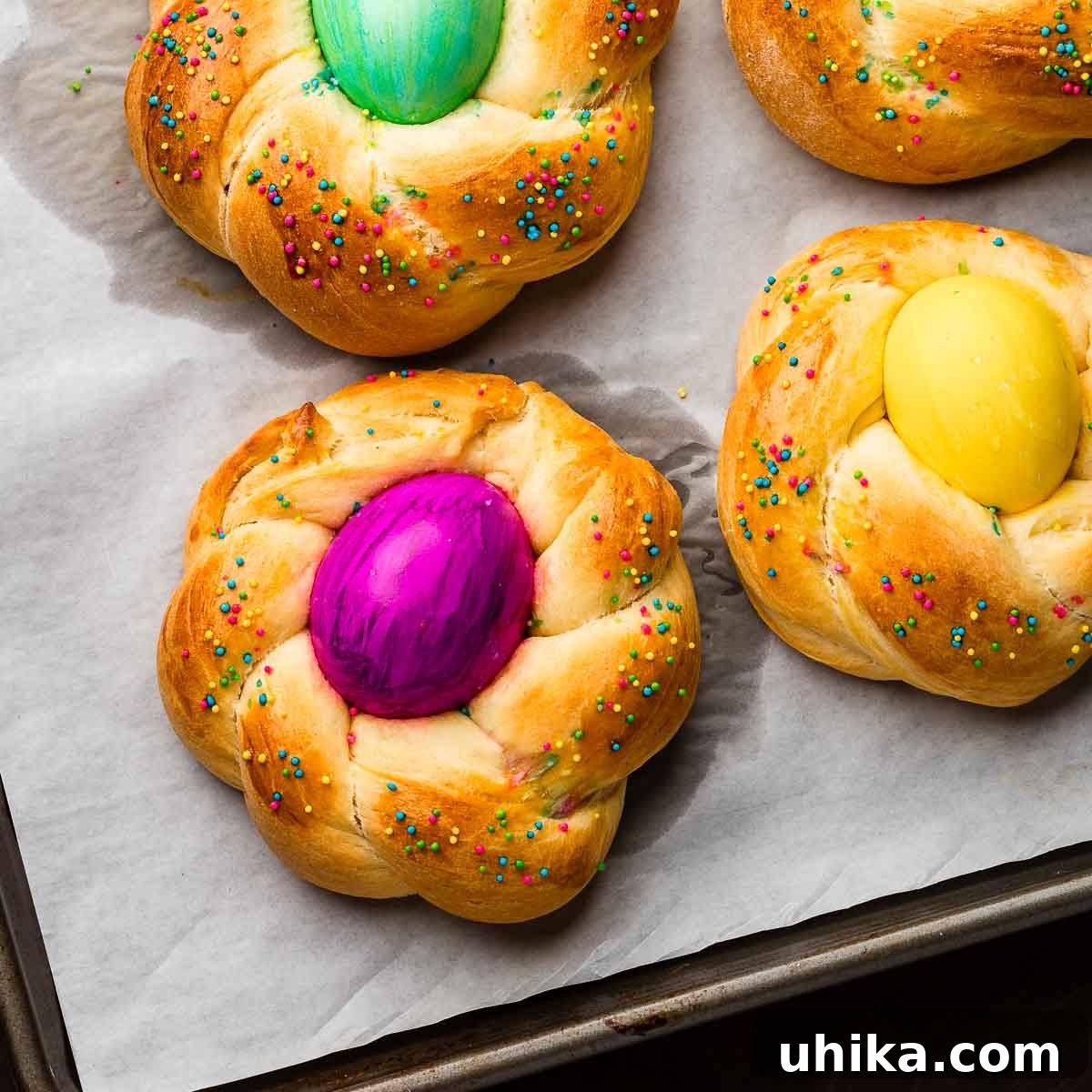
Italian Easter bread, known as Pane di Pasqua, is a cherished culinary tradition, symbolizing renewal and celebration during the Easter holiday. This delightful sweet brioche bread is distinctively characterized by its beautiful braided shape and a colorful, symbolic Easter egg nestled right in its center. More than just a treat, it’s a centerpiece, bringing joy and a touch of Italian heritage to any Easter morning table.
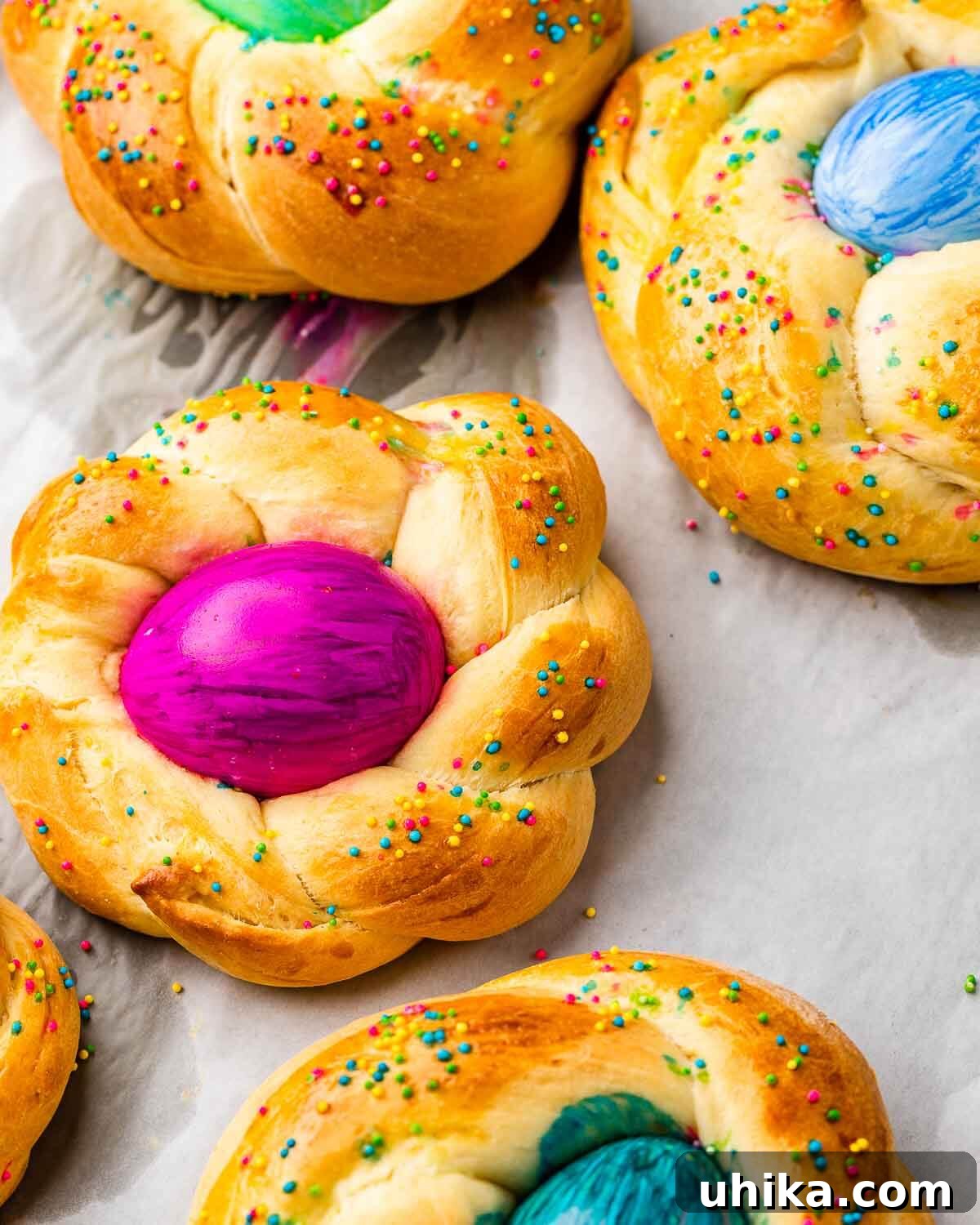
Celebrate Easter with Homemade Italian Brioche Bread
Imagine waking up on Easter morning to the comforting aroma of freshly baked bread. Our Italian Easter bread recipe offers just that – a slightly sweet, rich brioche dough that bakes into golden perfection. This festive bread is a perfect breakfast treat, symbolizing the joyous spirit of Easter with its vibrant colors and inviting taste. It’s a wonderful project for bakers of all skill levels, promising a rewarding experience and a delicious result.
One of the most charming aspects of this Italian tradition is the inclusion of uncooked, colored eggs within the braided dough. These eggs don’t just serve as beautiful decorations; they bake alongside the bread, emerging perfectly hard-boiled and ready to enjoy. They can be eaten on their own, or repurposed for other delicious Easter dishes like classic deviled eggs or a flavorful deli-style egg salad, ensuring no part of this festive bread goes to waste.
The beauty of this sweet brioche dough lies in its versatility and make-ahead potential. You can prepare and braid the dough a day in advance, storing it in the refrigerator overnight. This allows for a stress-free Easter morning – simply pull the shaped breads from the fridge, let them come to temperature, and bake them fresh. The result is a wonderfully light, airy, and slightly sweet bread that’s both fun to make and an absolute delight to eat.
Beyond Bread: Discover More Italian Easter Flavors
While Italian Easter bread is a star, the holiday table in Italy is often laden with an array of savory and sweet delights. If you’re a fan of egg-based dishes, we also highly recommend exploring Torta Pasqualina. This savory green pie, typically filled with ricotta, spinach, and whole eggs, is another traditional dish often served on Easter morning, offering a delightful contrast to the sweet bread.
How to Make Italian Easter Bread: A Step-by-Step Guide
Crafting this beautiful Italian Easter bread is a journey of simple steps, culminating in a festive and delicious reward. Follow these detailed instructions to bring this cherished tradition into your kitchen.
Preparing the Dough
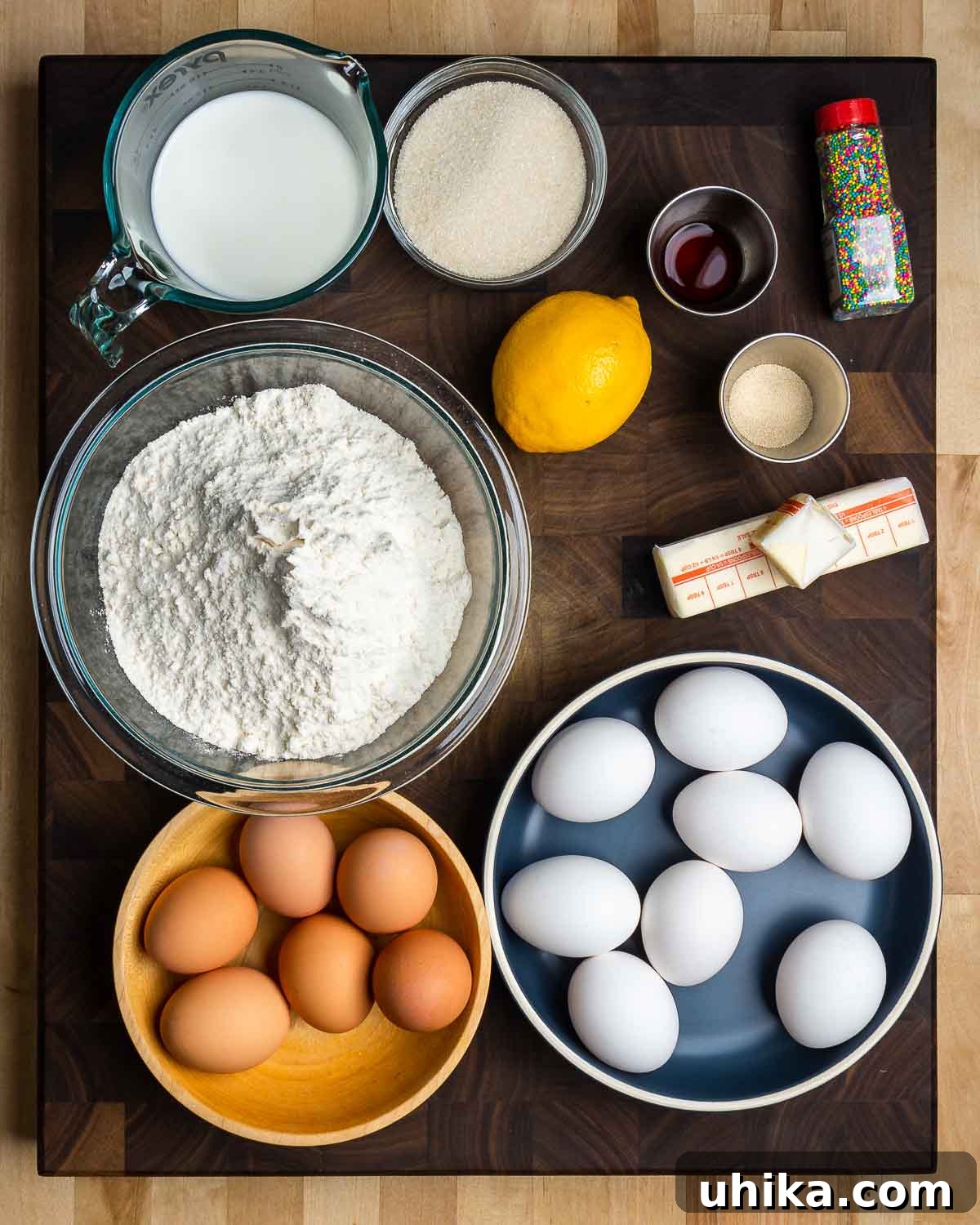
- In the spacious bowl of a stand mixer, fitted with a paddle attachment, combine the dry ingredients: 5 cups (625 grams) of all-purpose flour, 3 teaspoons of instant dry yeast, 1/2 teaspoon of fine sea salt, 1/2 cup (120 grams) of granulated sugar, and 2 tablespoons of freshly grated lemon zest. Mix these on low speed until they are thoroughly combined and uniformly distributed.
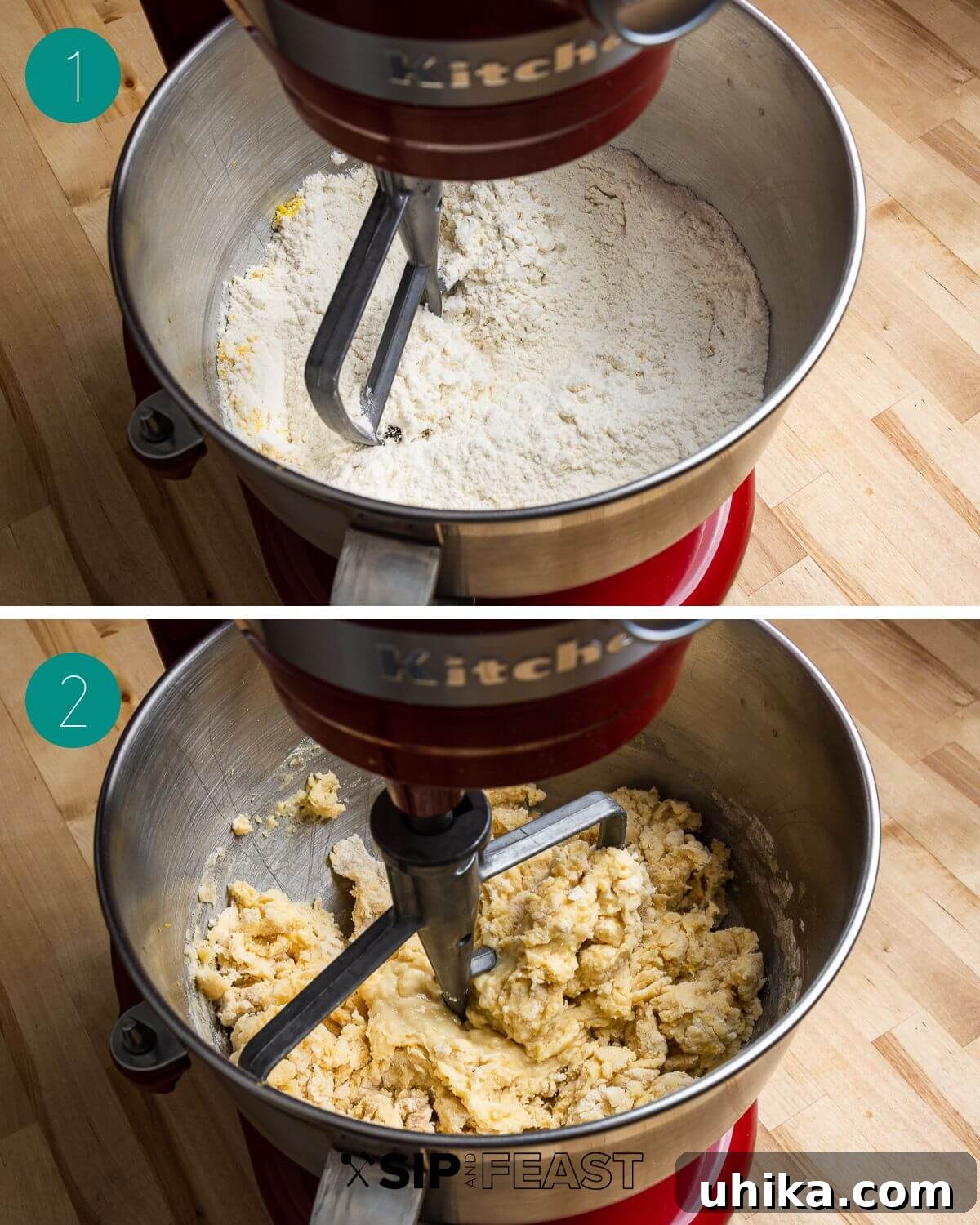
- In a separate bowl, lightly beat 3 large eggs. Once beaten, add them to the stand mixer bowl with the dry ingredients, along with 1 cup (240 grams) of warmed whole milk, 11 tablespoons (156 grams) of melted unsalted butter, and 1 tablespoon of vanilla extract. Continue mixing with the paddle attachment for about 1 minute, allowing the wet and dry ingredients to come together.
- Remove the paddle attachment from your stand mixer and replace it with the dough hook. Knead the dough on a low to medium speed for a full 8 minutes. This crucial step develops the gluten, resulting in a tender and elastic brioche.
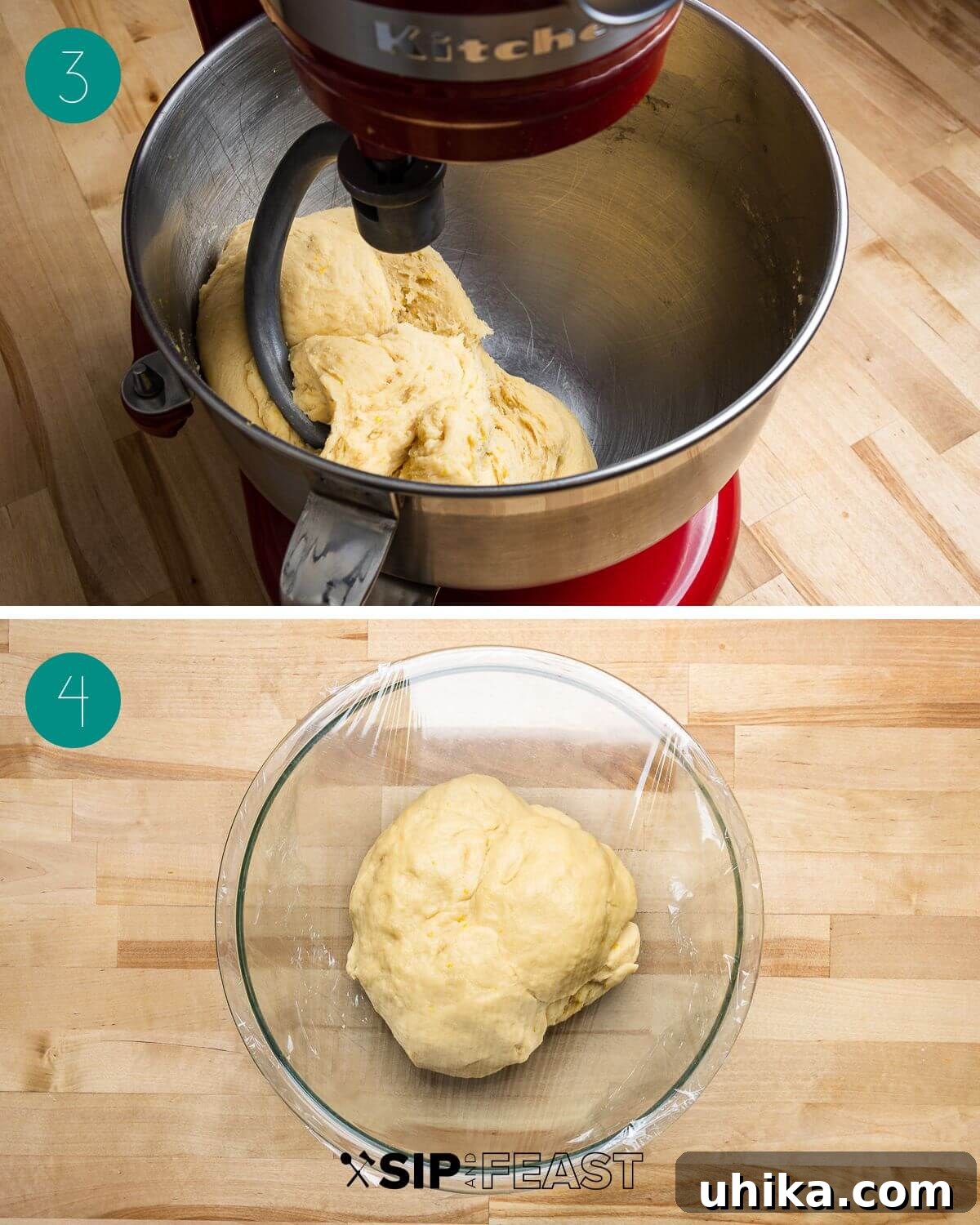
- Once kneaded, gently remove the dough from the mixer bowl and transfer it to a lightly oiled clean bowl. Cover the bowl tightly with plastic wrap to prevent a skin from forming. Place the dough in a warm, draft-free spot and allow it to rise for 2-3 hours, or until it has visibly doubled in size. This first rise is essential for developing flavor and texture.
Coloring the Easter Eggs
- While your dough is undergoing its first rise, prepare your Easter eggs. Begin by coloring 8 large, uncooked eggs with your chosen food coloring. Traditional methods involve dyes, but food-safe markers are a quicker alternative. Allow the eggs to dry completely after coloring. Before incorporating them into the dough, give each egg a quick, light rinse under cool water and gently pat them dry. This small step helps minimize the risk of the egg color bleeding onto your beautiful bread during baking.
Shaping and Baking Your Easter Bread
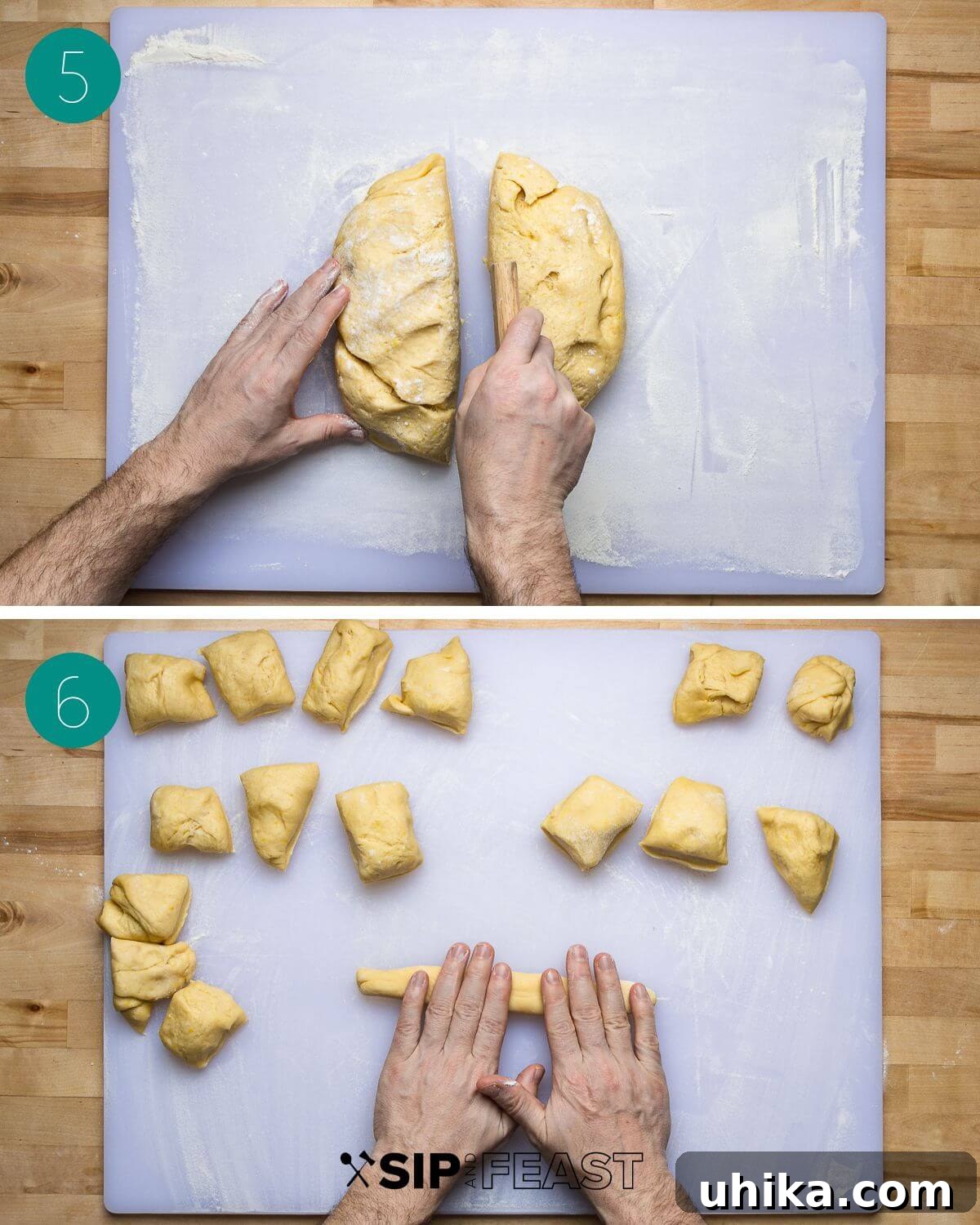
- After the dough has doubled in size (approximately 2-3 hours), transfer it to a lightly floured work surface. Gently deflate the dough and cut it into 8 equal-sized pieces. Then, cut each of these 8 pieces in half, resulting in a total of 16 smaller dough pieces. These will be used to form your braids.
- Take each of the 16 dough pieces and roll them out into a rope, approximately 10-12 inches long. Aim for an even thickness throughout each rope for consistent braiding.
- To form your individual bread wreaths, take two ropes and firmly attach them together at one end. A slight dampness on the ends can help them adhere better, especially if your work surface is well-floured.
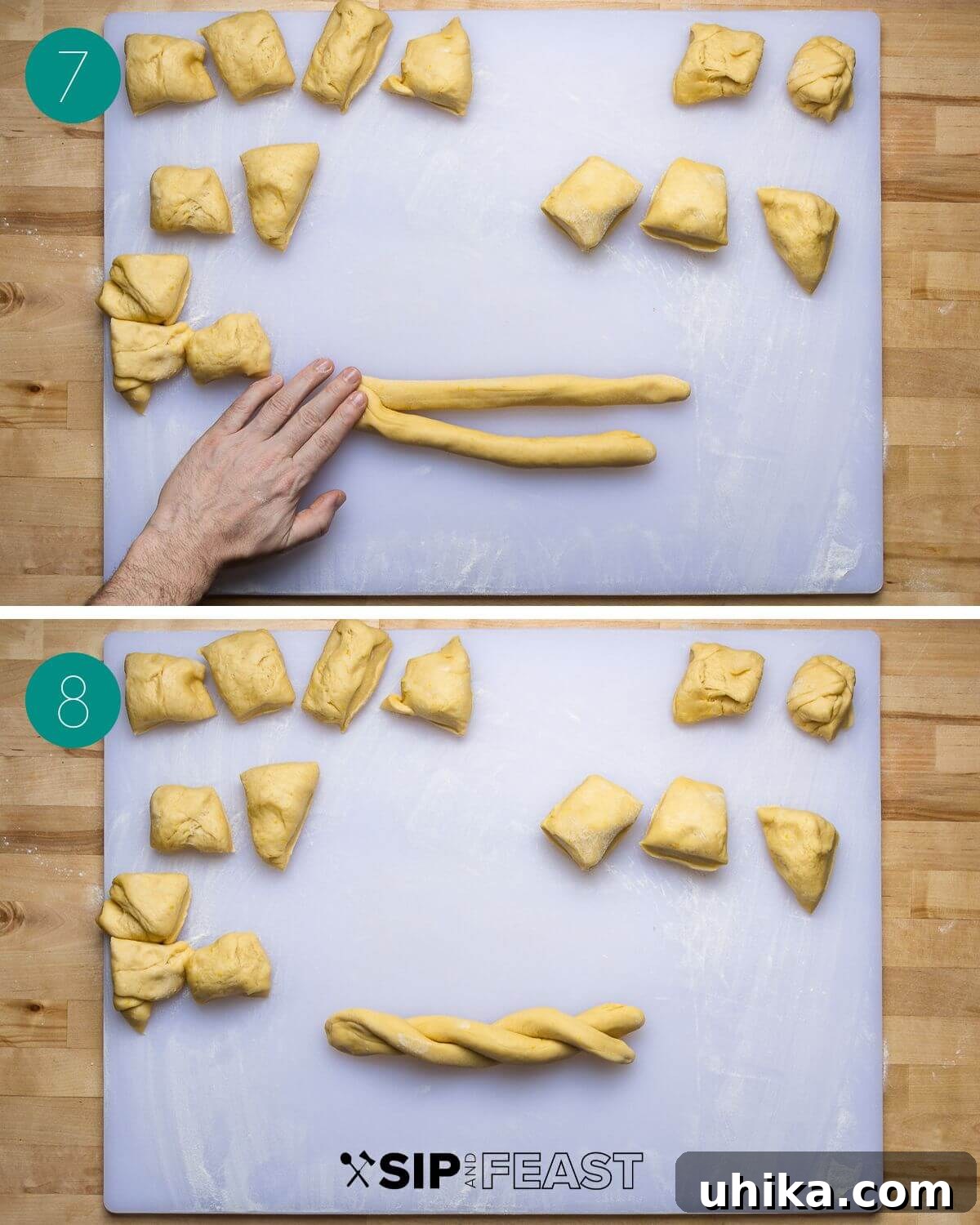
- Carefully braid the two dough ropes together, creating a beautiful, intricate pattern.
- Once braided, bring the two ends of the braided dough together to form a circular wreath or nest shape. Pinch the ends firmly to seal them, ensuring the circle holds its form during baking. Place each shaped dough wreath onto a baking sheet lined with parchment paper. Cover the baking tray with plastic wrap and let the Easter bread rise for an additional 30 minutes. During this second rise, preheat your oven to 350°F (175°C). For a larger, more elaborate presentation, you can use more dough to create longer double wreaths or nests.
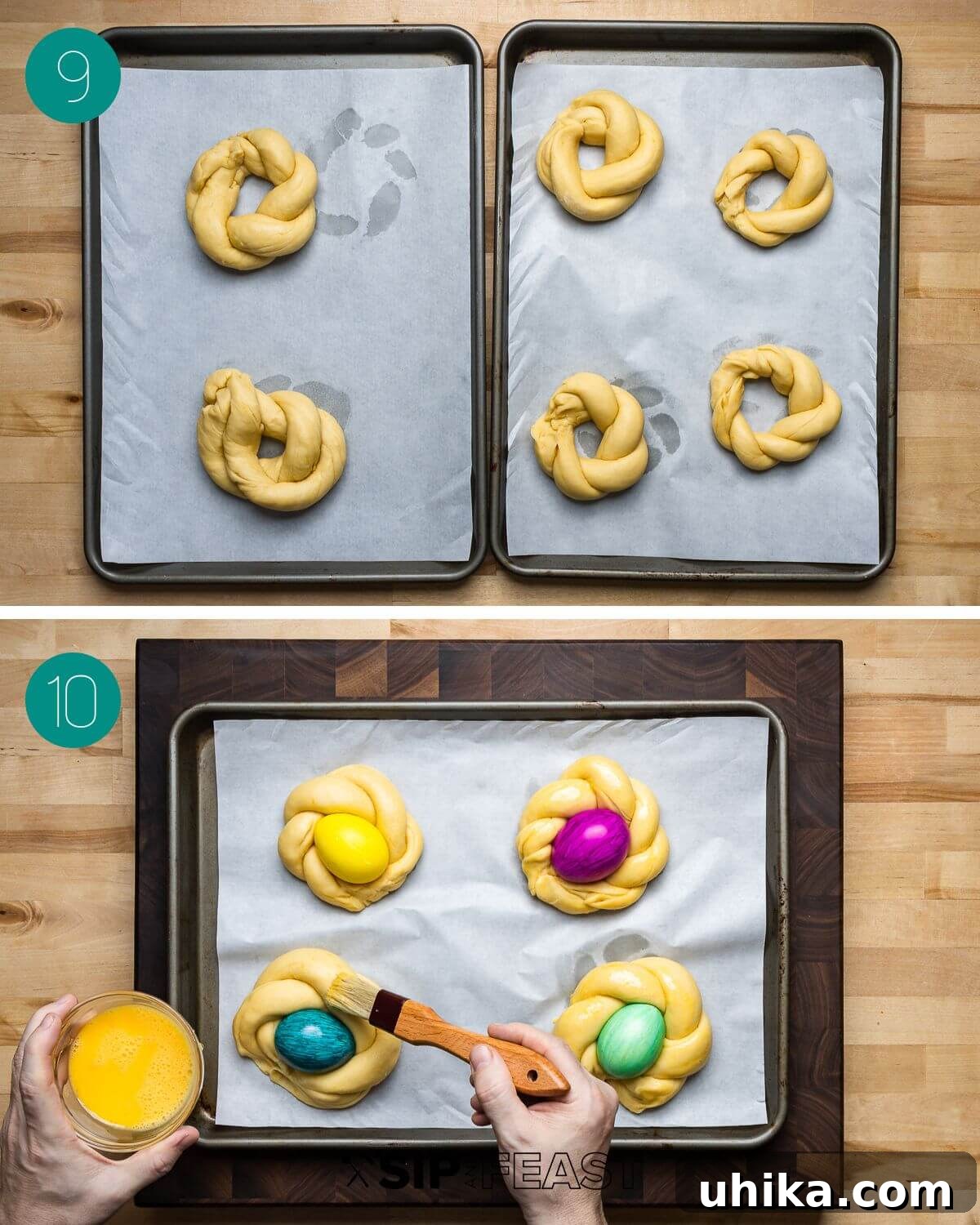
- After the 30-minute second rise, gently insert one of your colored, uncooked eggs into the center of each dough wreath. Beat one large egg with 1 tablespoon of water to create an egg wash. Using a pastry brush, generously paint the egg wash over the braided dough. This will give your bread a beautiful golden shine and help the sprinkles adhere.
- Liberally sprinkle your Easter breads with festive pastel sprinkles. These add a final touch of whimsy and color, making the bread even more appealing.
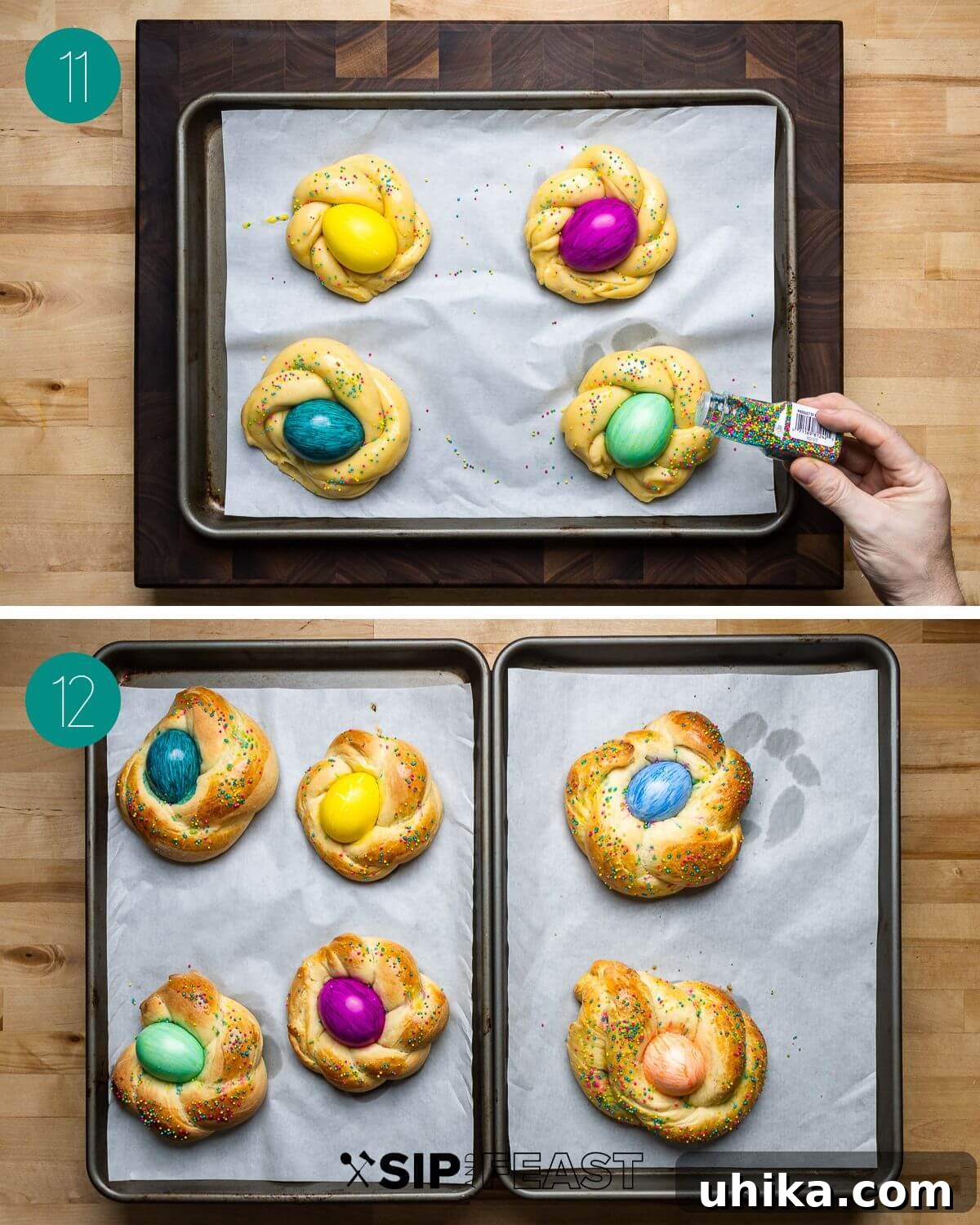
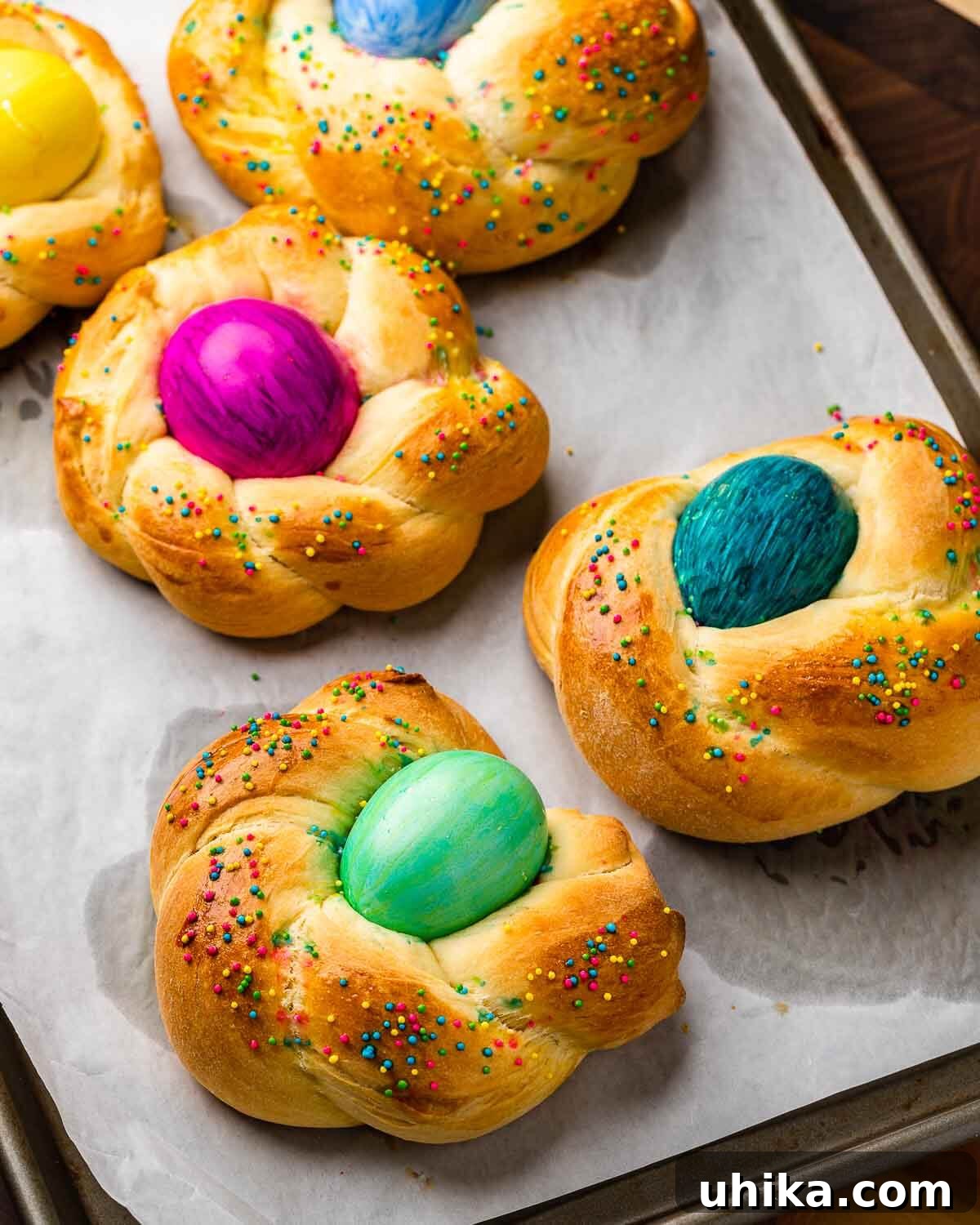
- Bake the prepared Easter bread in the preheated oven for 20-25 minutes, or until the bread is beautifully golden brown and sounds hollow when tapped. The egg in the center will also be perfectly hard-boiled. Serve immediately while warm, and savor every delicious bite!
Expert Tips for a Perfect Italian Easter Bread
- Precision in Baking: Use a Kitchen Scale. For consistent and professional baking results, especially with yeast breads, we strongly recommend measuring your ingredients by weight (grams) rather than by volume (cups). Cup measurements can fluctuate significantly based on how ingredients are spooned or packed, humidity levels, and the type of measuring cups used. Investing in a digital kitchen scale is a game-changer for any serious baker, ensuring accuracy and repeatable success.
- Achieving Golden Brown Perfection. If you desire an even deeper, more golden brown crust on your Easter bread, consider incorporating 1-2 teaspoons of diastatic malt powder into your dough along with the dry ingredients. Diastatic malt acts as a natural enhancer, helping the yeast to work more efficiently and promoting a richer crust color through caramelization.
- Mastering Egg Color and Placement. For coloring the raw eggs, food-safe markers specifically designed for Easter eggs offer a quick and vibrant option. While the classic dye bath is fun, markers save time. To minimize the chance of the egg color bleeding onto your beautiful brioche dough during baking, remember to lightly rinse and thoroughly pat dry your colored eggs before nestling them into the dough. Even with care, some slight bleeding can occur. For an absolutely pristine appearance, a clever trick is to bake the bread with uncolored, white eggs, and then swap them out for brightly colored ones just before serving.
- Optimal Enjoyment: Serving Suggestions. For the ultimate deliciousness, we highly recommend enjoying your Italian Easter bread and the accompanying hard-boiled egg shortly after they emerge from the oven. The warmth enhances the sweet, buttery flavors of the brioche, and the texture is at its peak. Serve with coffee, tea, or a glass of milk for a traditional Easter breakfast.
- Planning Ahead: Overnight Preparation. To alleviate stress on Easter morning, you can prepare the dough and assemble the braided wreaths the day before. After shaping, instead of the second rise, cover the baking sheets tightly with plastic wrap and refrigerate them overnight. On Easter morning, remove them from the fridge and allow them to come to room temperature and rise for 2-3 hours before inserting the eggs and baking. This prevents the egg color from potentially bleeding into the dough during a longer, overnight contact. Any leftover bread is fantastic for making a luxurious French toast, adding a unique sweet flavor to your next breakfast!
More Essential Italian Easter Delights
Easter is a vibrant and joyous occasion for many, a day marked by celebration and, importantly, a feast of delicious food, especially significant after the Lenten fast. Here are a few more of our favorite traditional Italian Easter foods that you might enjoy alongside your sweet bread:
- Pizzagaina (Pizza Rustica) – A hearty and savory Italian pie, also known as pizza rustica, brimming with a rich filling of ricotta, mozzarella, mortadella, salami, and other cured meats. It’s a substantial dish perfect for feeding a crowd.
- Struffoli – These delightful little fried dough balls are a sweet Neapolitan tradition. After frying, they are typically tossed in a warm honey-orange glaze and piled high, often adorned with colorful nonpareils.
- Pastiera Napoletana – A quintessential Neapolitan grain pie, Pastiera is a fragrant and rich dessert. It features a sweet shortcrust pastry filled with ricotta cheese, cooked wheat berries, candied fruit, and orange zest, making it a must-have for Easter celebrations.
- Roasted Boneless Leg of Lamb – A succulent and impressive main course, this roasted boneless leg of lamb is infused with aromatic rosemary and garlic. It cooks to tender perfection, providing a wonderfully juicy and flavorful centerpiece for your Easter dinner.
We hope you’ve enjoyed learning about and preparing this delightful Traditional Italian Easter Bread Recipe. If you’ve tried this recipe or any others on our site, we’d love for you to share your experience by leaving a 5-star rating and a comment below. Your feedback helps our community of home cooks!
For those who prefer visual learning, you can find most of our recipes demonstrated on our YouTube channel and our Facebook Page.
Unlock exclusive, never-before-seen FULL MEAL RECIPE VIDEOS by becoming a Patreon member today!
Italian Easter Bread
by James Delmage
- Prep Time: 30 mins
- Cook Time: 20 mins
- Dough Proofing Time: 2 hrs 30 mins
- Total Time: 3 hrs 20 mins
Servings: 8 breads
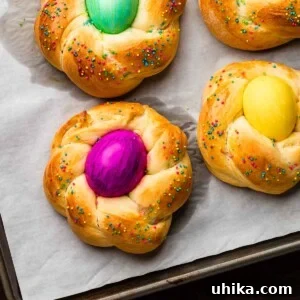
Italian Easter bread is a slightly sweet brioche-style braided bread. Characterized by an Easter egg nestled in the center, and a dusting of sprinkles, this bread is a wonderful treat to serve for Easter breakfast!
Ingredients
For the dough
- 5 cups (625 grams) all-purpose flour
- 3 teaspoons instant dry yeast
- 1/2 teaspoon fine sea salt
- 1/2 cup (120 grams) granulated sugar
- 2 tablespoons lemon zest (or the zest of 2 lemons)
- 11 tablespoons (156 grams) unsalted butter, melted
- 1 cup (240 grams) whole milk, warmed
- 3 large eggs, beaten
- 1 tablespoon vanilla extract
Remaining ingredients
- 8 large eggs, whole uncooked eggs in their shells
- Food coloring for eggs
- 1 large egg for egg wash
- Easter pastel sprinkles
Instructions
For the dough
- Combine the flour, yeast, salt, sugar, and lemon zest in the bowl of a stand mixer and mix on low speed until combined.
- Add the beaten eggs, warmed milk, melted butter, and vanilla extract. Use the paddle attachment to mix for 1 minute, then switch to the dough hook and knead for 8 minutes on a low to medium speed.
- Remove the dough and transfer to a lightly oiled bowl, then cover it with plastic wrap. Allow the dough to rise in a warm place for 2-3 hours, or until it doubles in size.
Coloring the eggs
- Color raw (preferably white) eggs with your choice of food coloring, then let them dry completely. Before using, lightly rinse and dry the eggs to help prevent the color from bleeding onto the dough.
Making the Easter bread
- After the first rise, transfer the dough to a lightly floured work surface. Cut the dough into 8 equal-sized pieces, then cut each of those pieces in half, for a total of 16 pieces.
- Shape and roll each piece into a roughly 10-12 inch rope.
- Attach two pieces together on one end, then braid them. Bring the ends of the braid together to form a circle shape and pinch to seal. Place each circle on a parchment paper-lined baking sheet. Repeat for the remaining dough.
- Cover the baking tray with plastic wrap and allow the Easter bread to rise for another 30 minutes. During this time, preheat your oven to 350°F (175°C).
- After the second rise, insert a colored egg into the center of each wreath.
- Prepare an egg wash by beating 1 large egg with 1 tablespoon of water.
- Lightly brush each circle of braided dough with the egg wash, then top generously with Easter pastel sprinkles. Bake the Easter bread for 20-25 minutes, or until golden brown. Serve immediately and enjoy!
Notes
- Using a kitchen scale is highly recommended for accurate baking results, though this recipe is somewhat forgiving. If using cups, avoid packing the flour.
- Diastatic malt powder (no more than 2 teaspoons) can be added to the dough to enhance browning and crust development.
- The bread is best when baked and eaten on the same day. However, the dough can be prepared a day in advance and refrigerated overnight. If refrigerating, allow the dough to warm up for 2-3 hours outside the fridge before shaping and baking the next day.
- Leftovers can be stored for up to 5 days and make for excellent French toast.
Nutrition information is automatically calculated and should only be used as an approximation. Per serving (1 bread): Calories: 519kcal | Carbohydrates: 62.4g | Protein: 16.1g | Fat: 22.8g | Saturated Fat: 12g | Cholesterol: 287mg | Sodium: 211mg | Potassium: 214mg | Fiber: 1.7g | Sugar: 15.2g | Calcium: 92mg | Iron: 4mg