
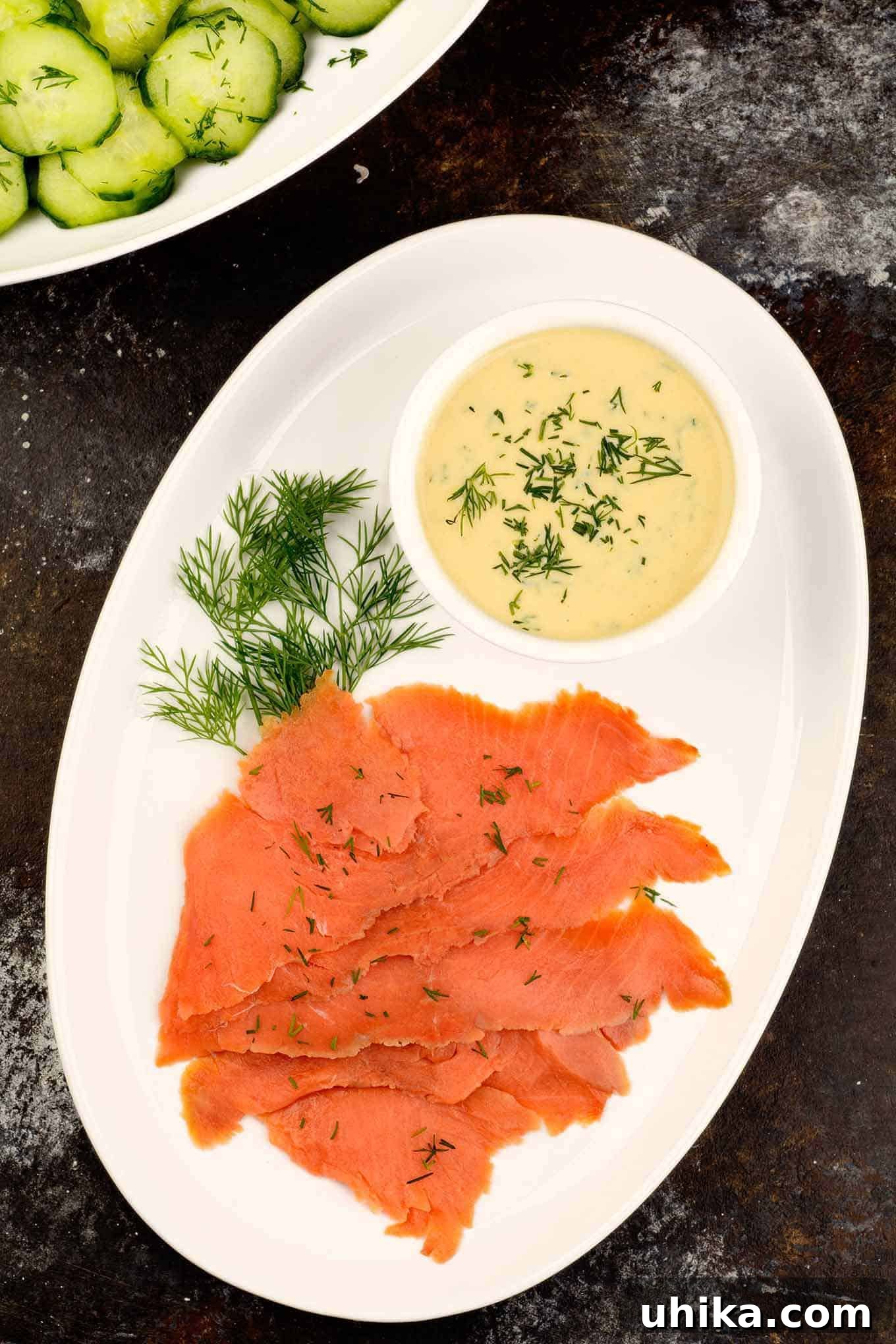
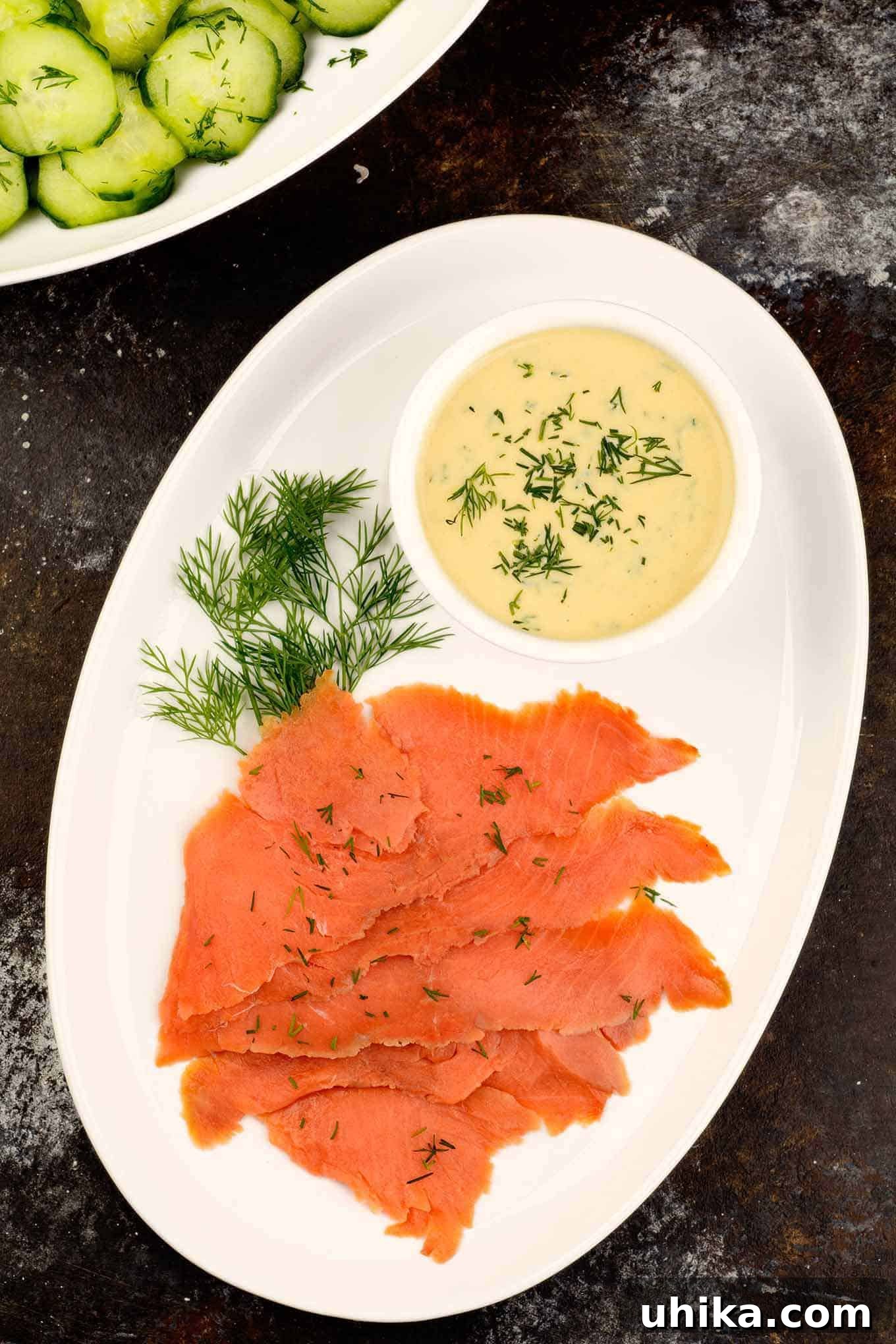
Homemade Gravlax with Creamy Mustard-Dill Sauce: A Scandinavian Delicacy
Gravlax, a traditional Nordic cured salmon, offers a captivating blend of salty, sweet, and herbaceous flavors that effortlessly elevates any dining experience. While often perceived as a complex dish reserved for gourmet restaurants, preparing gravlax at home is surprisingly straightforward and incredibly rewarding. This guide will walk you through the simple steps to create a beautiful, melt-in-your-mouth cured salmon, perfectly complemented by a rich and tangy mustard-dill sauce. Get ready to impress your guests and delight your palate with this authentic Scandinavian appetizer.
What is Gravlax? Unveiling the Nordic Cured Salmon
At its heart, gravlax (pronounced “GRAHV-lahks”) is a Scandinavian delicacy consisting of raw salmon that has been cured, rather than cooked. The term “gravlax” literally translates to “grave salmon,” a nod to its historical preparation method where fishermen would salt salmon and bury it in the sand above the high-tide line to lightly ferment. Today, the process is far more refined and hygienic, involving a dry cure of salt, sugar, and fresh dill.
Unlike smoked salmon, which involves actual smoking, or lox, which is typically brined and cold-smoked, gravlax relies solely on the transformative power of the curing mixture. This mixture draws out moisture from the fish, firms its flesh, and infuses it with exquisite flavor, resulting in a tender, translucent texture and a distinctively fresh, aromatic taste. It’s a staple in Scandinavian cuisine, frequently found as part of a traditional smorgasbord or served during festive occasions.
Why Make Gravlax at Home? The Joy of Homemade Curing
There are numerous compelling reasons to try making gravlax in your own kitchen. Firstly, it offers a remarkable sense of accomplishment, transforming a simple salmon fillet into a gourmet dish. Secondly, homemade gravlax often surpasses store-bought versions in terms of freshness and flavor complexity, allowing you to control the quality of ingredients and the balance of the cure. While the hands-on preparation time is minimal (typically under 30 minutes), the curing process requires a couple of days, demanding a bit of foresight. However, this waiting period is largely passive, making it an ideal project for a weekend prep. The result is a truly impressive appetizer that tastes luxurious but is surprisingly budget-friendly compared to purchasing pre-made gravlax.
Choosing the Perfect Salmon for Gravlax: Quality Matters
Because gravlax is made with raw salmon, the quality of your fish is paramount. It’s crucial to select the freshest, highest-quality salmon available. Ideally, purchase your fillet from a reputable fishmonger whom you know and trust. While you might occasionally see fish labeled “sushi-grade,” it’s important to understand that this term lacks official regulatory definition. It generally signifies that the vendor considers it to be of the highest quality suitable for raw consumption, often handled and processed with extra care to minimize parasitic risks. However, always confirm freshness directly with your fishmonger.
When selecting your salmon fillet for gravlax, look for a piece that is vibrant in color, firm to the touch, and has a mild, fresh aroma of the sea, not an overpowering “fishy” smell. Choose a fillet with the skin on, as the skin provides structure during the curing process. Aim for a relatively uniform thickness of about 1 to 1-1/4 inches, which allows for even curing throughout the entire piece.
The Science Behind the Cure: Salt, Sugar, and Time
The magic of gravlax lies in its simple yet effective curing process, which is a testament to culinary chemistry. The combination of salt and sugar, known as a dry cure, works through osmosis. Salt draws moisture out of the salmon cells, dehydrating the fish and inhibiting bacterial growth, thus preserving it. Sugar balances the intense salinity, contributes to the flavor profile, and helps maintain a desirable texture, preventing the fish from becoming too tough. The fresh dill not only imparts its signature herbaceous aroma and flavor but also contains enzymes that contribute to the tenderization and unique taste of gravlax.
As the salmon rests under the cure and gentle pressure, its flesh gradually firms up, and its color deepens, becoming more translucent. This transformation is a visual indicator that the curing process is successfully underway. Flipping the salmon periodically ensures that the cure is evenly distributed and the moisture is drawn out consistently from both sides, leading to a perfectly cured fillet.

Gravlax with Creamy Mustard-Dill Sauce Recipe
By Lynne Webb
Salt and sugar cured salmon, known as gravlax, is a traditional Scandinavian delicacy that is surprisingly simple to prepare at home, yielding exceptional results for any special occasion. This recipe includes a delightful creamy mustard-dill sauce, perfect for serving.
Prep Time: 25 minutes
Curing Time: 2-3 days
Total Time: Approximately 2 days and 25 minutes (active prep + passive curing)
Servings: 8 servings
Rating: 5 out of 5 stars (from 1 vote)
Pin Recipe
Ingredients for Gravlax
- 2 to 2-1/2 lbs salmon fillet, skin on
- 1/2 cup granulated sugar
- 1/4 cup light brown sugar
- 1/2 cup kosher salt
- 2 teaspoons coarsely ground black pepper
- 1 large bunch chopped fresh dill, stems included – about 1 cup
For the Creamy Mustard-Dill Sauce:
- 3 tablespoons light brown sugar
- 3 tablespoons apple cider vinegar
- 3 tablespoons Dijon-style mustard
- 1/4 cup sour cream, or more to taste
- 3 tablespoons fresh dill, finely chopped
Instructions for Preparing Homemade Gravlax
- Lay the salmon skin side down on a clean, flat surface. Gently run your finger over the flesh of the fillet to detect any small pin bones. Using a pair of fish tweezers, carefully remove any bones you find. This ensures a smooth and pleasant texture in your finished gravlax.
- Cut the salmon fillet crosswise into two pieces of roughly equal size. This makes the salmon easier to handle during the curing process and promotes more even curing.
- In a small bowl, thoroughly combine the granulated sugar, light brown sugar, kosher salt, and coarsely ground black pepper. Stir well until all ingredients are evenly mixed; this is your gravlax curing mixture.
- Spread a portion of the prepared curing mixture evenly across the bottom of a shallow baking pan. Place one piece of salmon, skin side down, onto the mixture, pressing it firmly to ensure the skin is well-coated. Repeat with the second piece of salmon.
- Take a large sheet of plastic wrap and lay the salmon pieces, skin side down, on it. Now, evenly spread a generous crust of the remaining salt-sugar mixture over the flesh side of each fillet, gently patting it down to help it adhere to the fish.
- Distribute the chopped fresh dill evenly over the cured surface of each salmon fillet. Next, place one piece of salmon on top of the other, skin sides facing outwards, creating a “salmon sandwich” with the dill and curing mixture nestled in between the two flesh sides.
- Tightly wrap the entire salmon package in several layers of plastic wrap, ensuring it is completely sealed. Then, place the wrapped salmon in a large zip-top food storage bag (or a second layer of plastic wrap for extra security) and position it in the coldest part of your refrigerator. For optimal and even curing, flip the bag over twice a day for a total of 36 to 48 hours. It’s highly advisable to place the bag in a shallow dish or tray to catch any potential liquid leaks that may occur as moisture is drawn from the salmon.
- Throughout the curing process, the salmon will naturally release some liquid and become noticeably firmer to the touch. If you can observe the ends of the fillets through the wrapping, you will also notice the fish’s color deepen and develop a characteristic translucent sheen, indicating that it is properly cured and ready for serving.
Preparing the Creamy Mustard-Dill Sauce and Serving
- While the salmon cures, or just before you plan to serve, prepare the essential mustard-dill sauce. In a small bowl, combine the light brown sugar and apple cider vinegar, stirring diligently until the sugar is completely dissolved.
- Next, whisk in the Dijon-style mustard and sour cream until the sauce is perfectly smooth and creamy. Just before serving, stir in the finely chopped fresh dill, which adds a vibrant fresh note. Transfer the finished sauce to a small serving bowl.
- Once the salmon has completed its curing time, carefully unwrap it. Thoroughly rinse off all traces of the curing mixture with cold running water. Pat the salmon meticulously dry with paper towels to remove any excess moisture.
- To slice the gravlax, lay it skin side down on a clean, flat cutting surface. Using a very sharp, long knife, start at the thickest end of the fillet. Position your knife at a shallow 45-degree angle and carefully cut very thin, translucent slices, going down to, but not through, the skin.
- Continue slicing in this manner, separating each thin piece from the skin as you work. Arrange the beautifully sliced gravlax artfully on a serving plate. Garnish with fresh sprigs of dill for an elegant presentation and serve immediately alongside the creamy mustard-dill sauce and thin-sliced pumpernickel toast, traditional Swedish crispbread, blini, or your favorite crackers.
Creative Serving Suggestions for Gravlax
Gravlax is incredibly versatile and can be served in a myriad of ways beyond the traditional pumpernickel toast. Its delicate flavor profile pairs wonderfully with a variety of accompaniments. Consider serving gravlax:
- On small blini or potato pancakes with a dollop of sour cream or crème fraîche.
- As part of a brunch spread alongside scrambled eggs, capers, red onion, and cream cheese.
- Draped over a fresh green salad with a light vinaigrette.
- In open-faced sandwiches (smørrebrød) with thinly sliced cucumber and a squeeze of lemon.
- As an elegant canapé on cucumber slices or endive leaves.
- Alongside boiled new potatoes and a sprinkle of chives for a hearty side.
Always garnish with fresh dill or a lemon wedge to enhance its natural appeal.
Storage Tips for Your Homemade Gravlax
Proper storage is key to enjoying your homemade gravlax safely and for as long as possible. Once cured and rinsed, gravlax should be stored in the coldest part of your refrigerator. For best results, wrap any unsliced portions tightly in plastic wrap to prevent air exposure, then place them in an airtight container. Gravlax can be stored in the refrigerator for up to 5-7 days. If you’ve sliced it, consume it within 2-3 days for optimal freshness and texture. Gravlax also freezes exceptionally well; tightly wrapped portions can be stored in the freezer for up to 1-2 months. Thaw slowly in the refrigerator overnight before serving.
Gravlax FAQs: Your Questions Answered
- Is gravlax safe to eat raw?
- Yes, when prepared correctly with high-quality, fresh salmon and proper hygiene, gravlax is safe to eat raw. The curing process with salt and sugar inhibits bacterial growth and transforms the fish, making it suitable for consumption without cooking. Always ensure you purchase salmon from a reputable source.
- How long does homemade gravlax last?
- Properly stored in an airtight container in the refrigerator, homemade gravlax can last for 5-7 days. For longer storage, it can be frozen for up to 1-2 months.
- Can I freeze gravlax?
- Absolutely! Gravlax freezes very well. After curing and slicing (or leaving as a block), wrap it tightly in plastic wrap, then in foil or place it in a freezer-safe bag. Thaw it in the refrigerator overnight before serving.
- What’s the difference between gravlax and lox?
- While both are cured salmon, the preparation differs. Gravlax is typically cured with a dry mixture of salt, sugar, and dill. Lox, on the other hand, is usually brined and then cold-smoked, giving it a distinct smoky flavor and often a saltier profile. Gravlax generally has a fresher, more herbaceous taste.
- Can I make gravlax with different types of fish?
- While salmon is the traditional choice, similar curing methods can be applied to other fatty fish like trout or even arctic char, yielding delicious results with slightly different flavor nuances.
Mastering homemade gravlax is a rewarding culinary journey that opens up a world of fresh, Nordic flavors right in your own kitchen. With its simple ingredients, minimal active preparation, and impressive outcome, this cured salmon dish is sure to become a cherished addition to your recipe repertoire. Enjoy the process, savor the exquisite taste, and share the delight of this Scandinavian classic with your friends and family.