
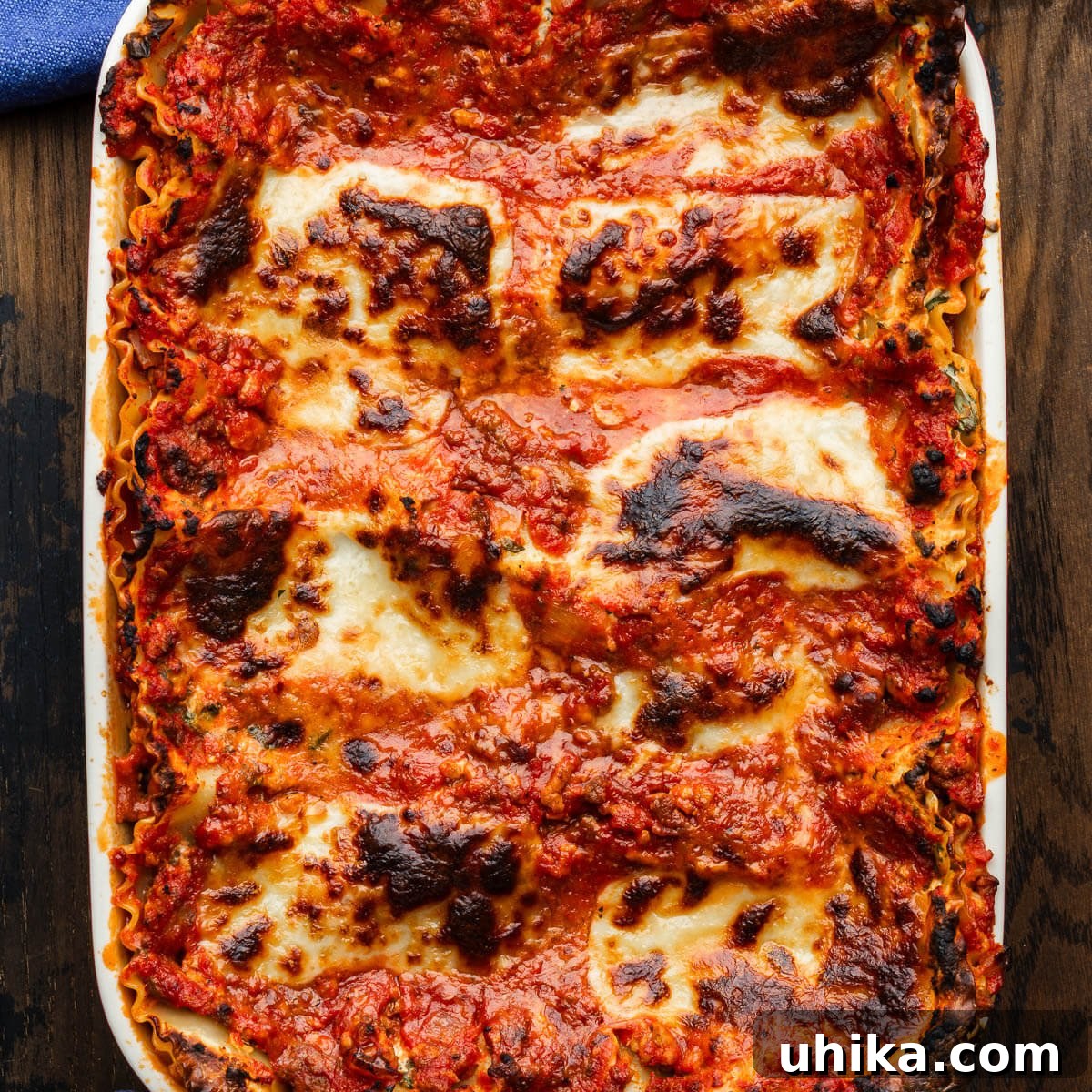
The Ultimate Italian-American Lasagna: A Timeless Family Classic
When the craving for true comfort food strikes, Italian-American Lasagna invariably tops the list. This iconic baked pasta dish is a culinary masterpiece, celebrated for its rich flavors and deeply satisfying layers. Imagine a golden-brown, bubbly top, crisp at the edges, giving way to an irresistible interior. Here, tender pasta sheets cradle a creamy, herbed ricotta mixture, hearty meat ragu, and generous blankets of melted mozzarella and sharp Pecorino Romano. Each forkful is a symphony of textures and tastes, making it more than just a meal – it’s an experience, a tradition, and a beloved centerpiece for any gathering.
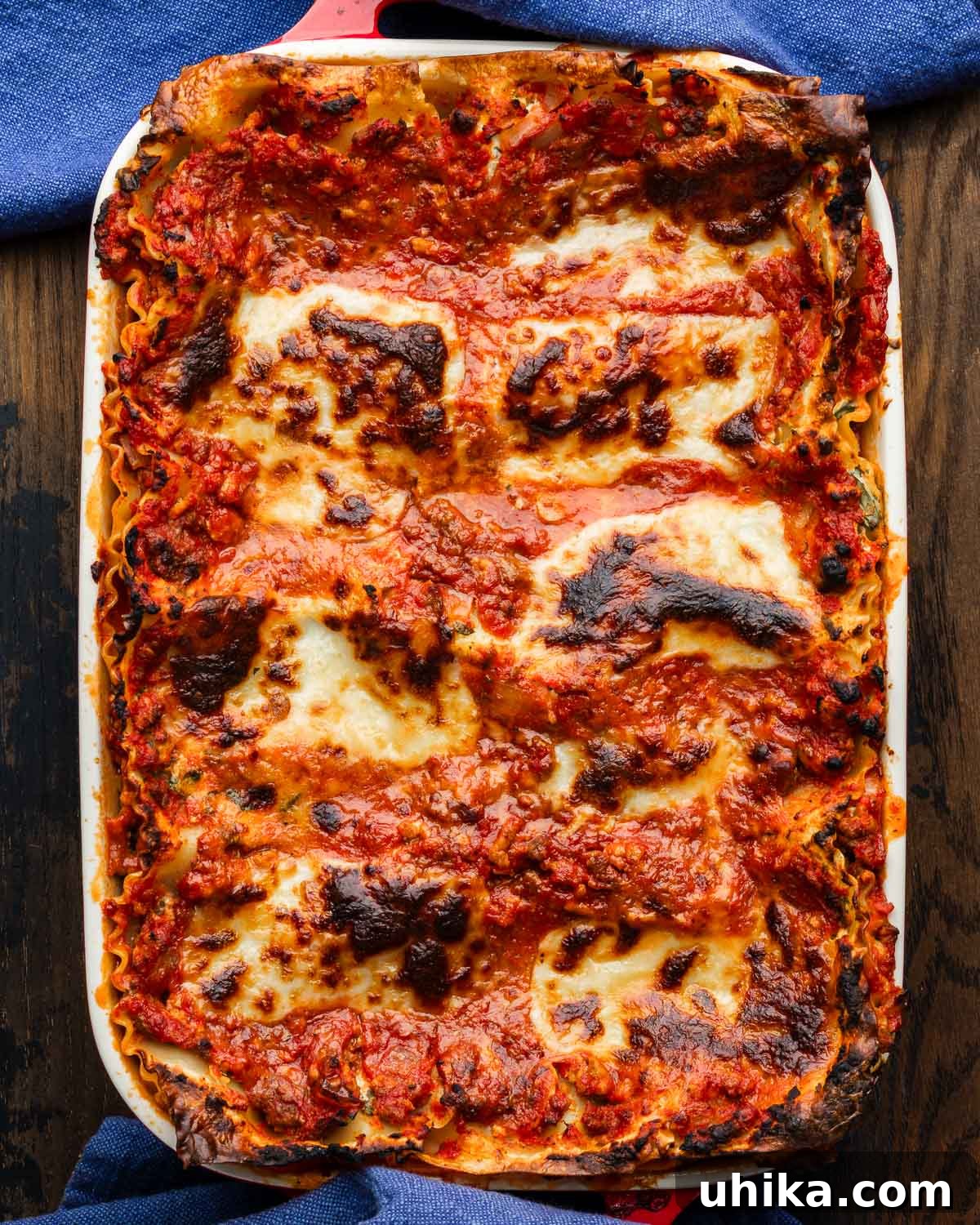

Italian-American Lasagna: A Cherished Holiday Tradition
For many, including myself, Italian-American lasagna isn’t just another dish; it’s a staple, a beacon of home cooking found in countless Italian eateries and pizzerias across places like New York. But its true magic unfolds within the walls of a family home, especially during the holidays. In my family, this substantial baked pasta is a non-negotiable part of our festive celebrations, particularly Thanksgiving. While some might opt for lighter starters, a hearty lasagna, or occasionally manicotti, sets the perfect tone before the main event of the turkey.
The thought of preparing lasagna for a holiday might seem daunting, conjuring images of hours spent slaving in the kitchen. And yes, there is an art and a labor of love involved. However, one of the greatest advantages of this recipe is its make-ahead potential. You can assemble and even bake this magnificent dish weeks in advance and simply freeze it, freeing up precious time on the day of your celebration. This flexibility makes it an ideal choice for busy hosts who refuse to compromise on flavor and tradition.
If you’re pressed for time but still yearn for those comforting lasagna flavors, you might enjoy my quick and easy lasagna soup, which brings all the essence of lasagna to your table in under an hour!
Essential Ingredients for an Authentic Italian-American Lasagna
Crafting the perfect Italian-American lasagna starts with selecting high-quality ingredients. Each component plays a vital role in building those beloved layers of flavor and texture. Below are the key ingredients you’ll need, along with specific notes to guide your selection and preparation.
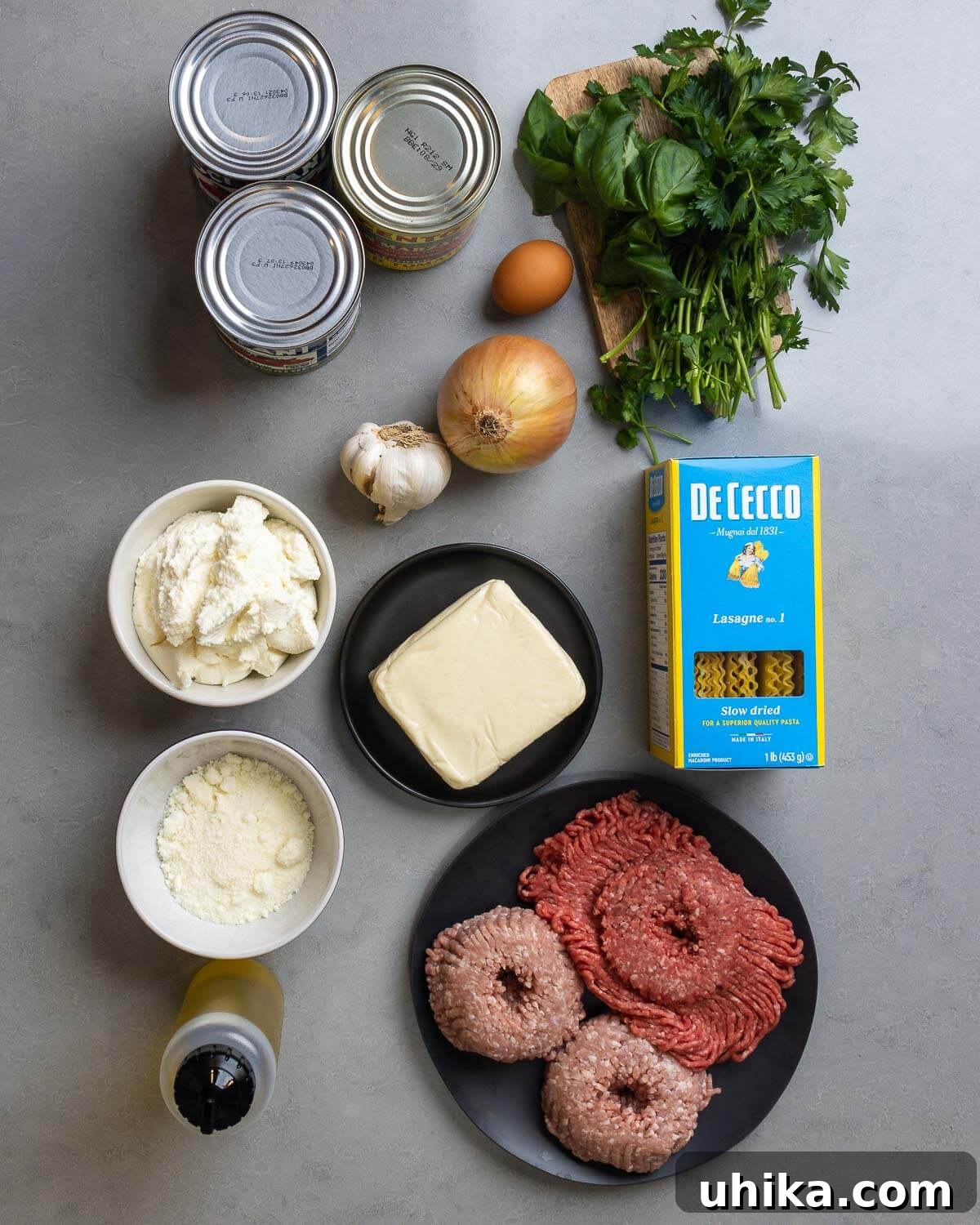
- Lasagna Pasta. For this recipe, I highly recommend using traditional, store-bought lasagna sheets that require pre-cooking. While no-boil noodles offer convenience, they tend to absorb more liquid, potentially altering the sauce consistency in this specific recipe. Cooking your pasta to a very al dente stage ensures it holds up perfectly during baking and contributes to the lasagna’s satisfying bite.
- A Trio of Cheeses. The cheese combination is fundamental to Italian-American lasagna.
- Ricotta Cheese: Opt for whole milk ricotta for a richer, creamier texture. Draining it overnight is crucial to prevent a watery lasagna. While whole milk is preferred, skim milk ricotta can also be used.
- Mozzarella Cheese: Use a low-moisture, block mozzarella, ideally whole milk. Avoid fresh mozzarella as it releases too much water during baking. Slicing or shredding it yourself ensures better melt and less moisture.
- Pecorino Romano Cheese: This sharp, salty hard cheese adds a wonderful depth of flavor. If you prefer a milder taste, Parmigiano Reggiano or even a good quality domestic Parmesan can be excellent substitutes.
- The Rich Meat Sauce (Ragu). Unlike traditional Italian lasagna, which often features a Bolognese ragu and béchamel sauce, Italian-American lasagna is defined by its robust, tomato-based meat sauce. My recipe uses a combination of ground beef and ground pork for a balanced, rich flavor profile. However, you have flexibility here:
- For a vegetarian version, simply omit the meat and let the tomatoes shine.
- You can use all ground beef or all ground pork if you have a preference.
- Consider adding a splash of red wine for extra depth during simmering.
- Egg. A single egg acts as a crucial binder for the ricotta cheese filling. It helps to set the cheese mixture, ensuring it stays intact and creamy within the layers rather than oozing out.
- Fresh Herbs. Freshly chopped parsley and basil are non-negotiable. They introduce a bright, aromatic freshness that beautifully complements the richness of the cheese and meat sauce, preventing the dish from feeling too heavy.
Please refer to the detailed recipe instructions below for precise quantities and additional notes on preparation.
Crafting Your Homemade Italian-American Lasagna: A Step-by-Step Guide
Making a truly exceptional Italian-American lasagna is a rewarding culinary journey. Follow these detailed steps to assemble a dish that will impress and delight. Each step is carefully designed to build incredible flavor and ensure perfect texture.
- Prepare the Meat Sauce Base: Begin by heating a large, heavy-bottomed pot or Dutch oven over medium heat with the olive oil. Add the ground chuck and ground pork, breaking it up with a spoon or meat masher as it browns. Cook until the meat is fully rendered and browned. Once cooked, transfer the meat to a plate, leaving any excess fat in the pot, and set aside.
- Sauté the Aromatics: In the same pot, add the diced onions. If the pot appears dry, add a touch more olive oil. Season the onions with a pinch of salt to help them release their moisture. Sauté until they are softened and translucent, about 5-7 minutes. Then, add the sliced garlic and cook for another 1-2 minutes until fragrant, being careful not to burn it.
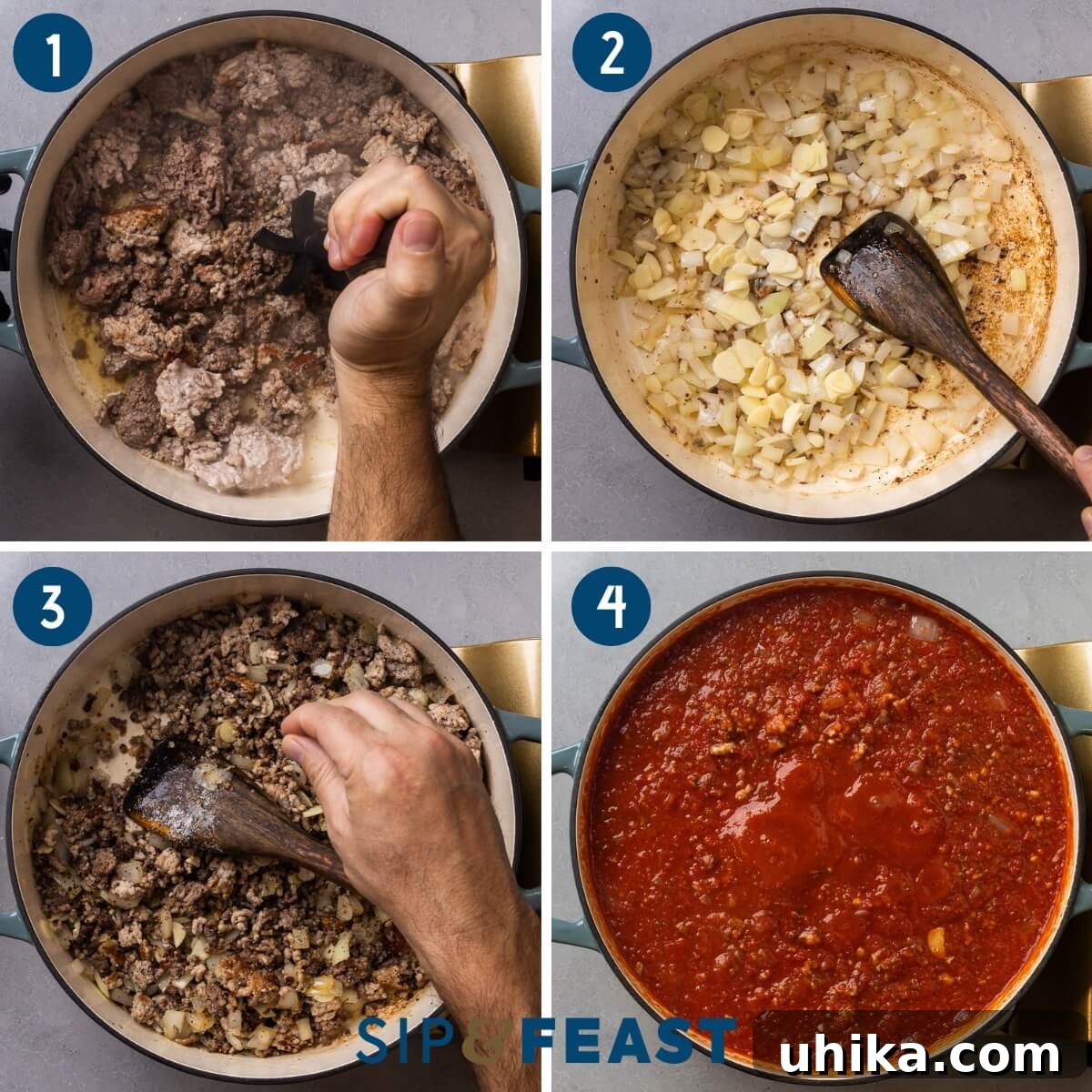
- Build the Sauce’s Flavor: Return the browned meat to the pot with the sautéed onions and garlic. Stir in the crushed red pepper flakes for a subtle kick (adjust to your preference). Season the meat mixture generously with salt and black pepper to taste, ensuring the flavors are well integrated.
- Simmer the Ragu: Pour in the hand-crushed or blender-pulsed plum tomatoes. Stir everything together, bringing the sauce to a lively simmer. Once simmering, reduce the heat to low, cover the pot, and leave the lid slightly cracked to allow steam to escape. Let the sauce gently simmer for at least an hour, or ideally longer (2-3 hours), stirring occasionally. This slow simmer allows the flavors to meld and deepen beautifully. Taste and adjust salt and pepper as needed throughout the simmering process.
- Pre-cook the Lasagna Noodles: While the sauce simmers, bring a large pot of heavily salted water to a rolling boil. Add about 1/2 teaspoon of olive oil to the pasta water – this is one of the rare instances where it’s recommended, as it helps prevent the large lasagna noodles from sticking together. Cook the lasagna sheets in batches to a very al dente stage, typically about 3-4 minutes less than the package instructions suggest. Using a mesh strainer or pasta spider, immediately transfer the par-cooked noodles into a bowl of ice water to shock them and halt the cooking process. This ensures they remain firm for layering.
- Prepare Noodles for Assembly: Once shocked, carefully remove the noodles from the ice water. Lay them flat on sheets of parchment paper or clean kitchen towels. This crucial step prevents them from sticking to each other, making the assembly process much smoother.
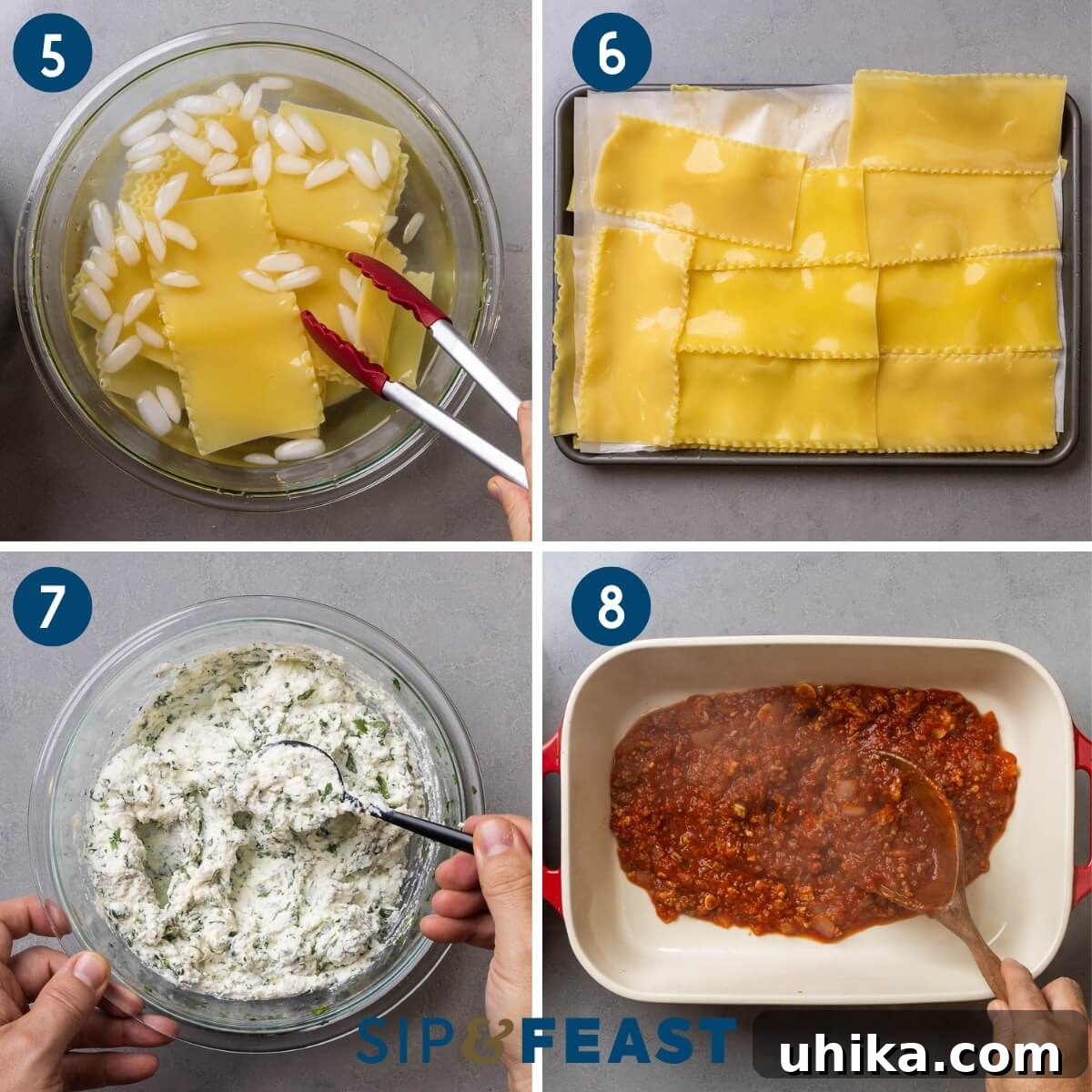
- Prepare the Ricotta Filling: In a large mixing bowl, combine the drained ricotta cheese, minced fresh parsley, and chopped fresh basil. Mix these ingredients thoroughly. Taste the mixture and season generously with salt and freshly ground black pepper. Finally, add the beaten egg and mix until just combined. The egg acts as a binder, helping the filling hold its shape.
- Prepare the Baking Dish: Lightly grease a 9×13-inch baking dish with a drop of olive oil, spreading it evenly across the bottom and up the sides. Spoon a generous, thick layer of your rich meat sauce onto the bottom of the dish, ensuring it completely coats the surface. This prevents the first layer of noodles from sticking and provides a flavorful base.
- Begin Layering – First Level: Carefully place 6 lasagna noodles over the sauce, arranging them to slightly overlap. This creates a solid foundation for your lasagna. Spread half of the creamy ricotta mixture evenly over the noodles, then follow with a layer of one-third of the sliced mozzarella cheese.
- Continue Layering: Add another thick layer of meat sauce over the mozzarella. Sprinkle a generous amount of Pecorino Romano cheese. Repeat this entire process for the next two layers: noodles, remaining ricotta mixture, another third of mozzarella, meat sauce, and Pecorino. For the very top layer, after the final noodles, simply add a generous layer of meat sauce, followed by the remaining mozzarella and Pecorino Romano. This ensures a beautiful, cheesy crust.
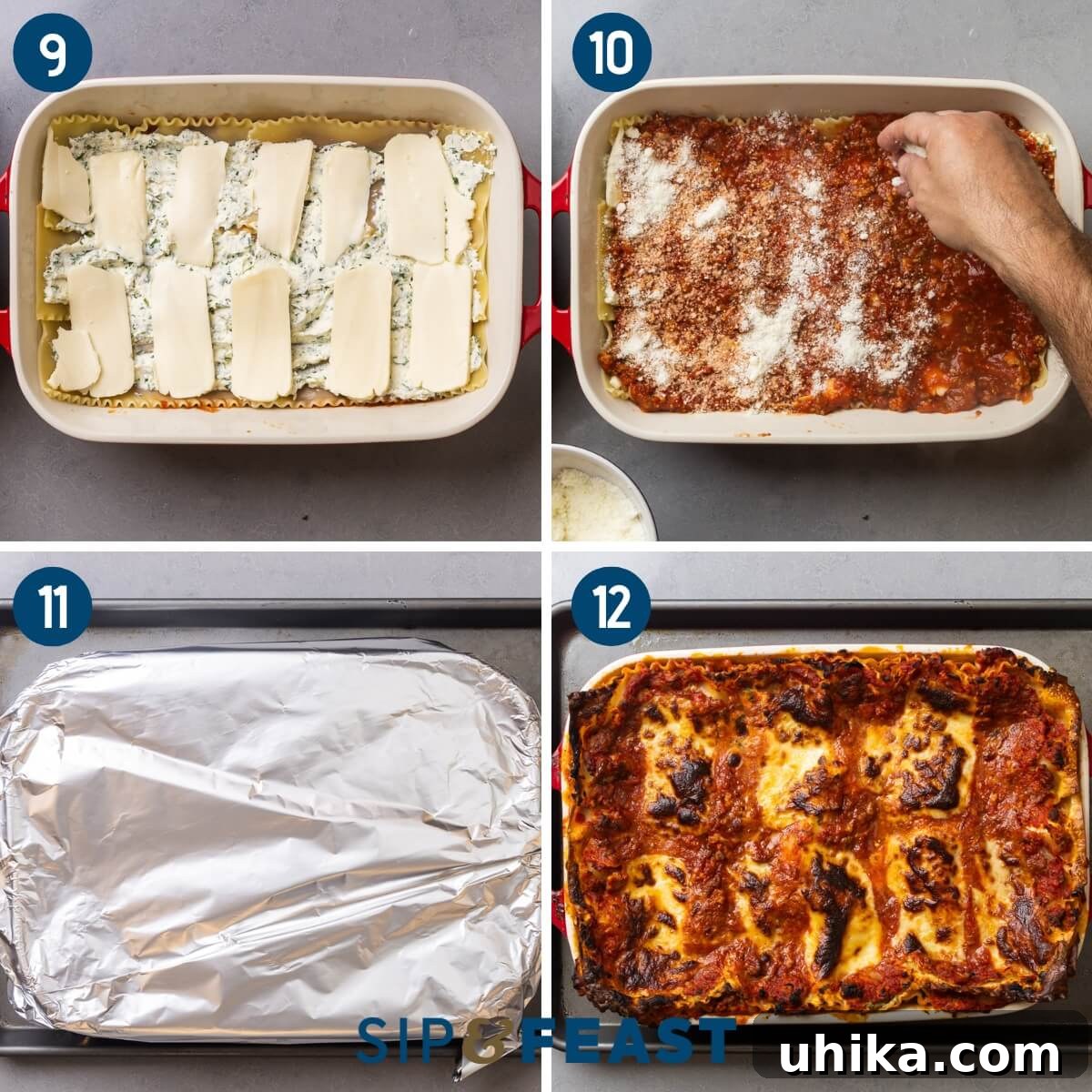
- First Bake: Cover the baking dish securely. First, lay a sheet of parchment paper directly over the lasagna, then cover tightly with aluminum foil. This parchment layer is crucial to prevent the cheese from sticking to the foil. Bake in a preheated 375°F (190°C) oven on the middle rack for 45 minutes.
- Second Bake & Finish: After 45 minutes, carefully remove the parchment paper and foil covering. Return the lasagna to the oven and continue baking for another 15-20 minutes, or until the cheese is beautifully melted and bubbly, and the noodles around the edges begin to crisp up. If you desire a crispier, golden-brown top, you can broil it for 1-2 minutes, but watch it very carefully to prevent burning. Once out of the oven, allow the lasagna to rest for at least 30 minutes before slicing and serving. This resting period is vital for the layers to set, ensuring clean, perfect slices. Enjoy your magnificent creation!
Expert Tips for Lasagna Success
Achieving lasagna perfection often comes down to a few key techniques and considerations. Heed these expert tips to ensure your Italian-American lasagna is always a triumph:
- The Parchment Paper Trick for Baking. Always place a sheet of parchment paper directly on top of the lasagna before covering it with aluminum foil for the initial bake. This simple barrier prevents the glorious melting cheese from sticking to the foil, ensuring a perfectly intact and beautiful top layer.
- The Crucial Resting Time. Perhaps the most important tip for any baked pasta, especially lasagna, is allowing it ample time to rest after baking. A minimum of 30 minutes is essential, but 45 minutes to an hour is even better. This resting period allows the cheese filling to firm up and the layers to settle, making for cleaner, more defined slices that won’t collapse on your plate. Patience is a virtue when it comes to serving perfect lasagna!
- Mastering Make-Ahead Lasagna. Lasagna is a fantastic dish for meal prepping and entertaining, thanks to its make-ahead capabilities.
- Assemble Ahead: You can fully assemble the lasagna a day before you plan to serve it. Cover it tightly and refrigerate. On the day of, simply bring it to room temperature for about 30 minutes before baking as directed.
- Bake and Reheat: Alternatively, you can bake the entire lasagna a day in advance. Let it cool completely, then refrigerate. To rewarm, cover loosely with foil and heat in a 350°F (175°C) oven until heated through.
- Freezing for Later: Lasagna freezes exceptionally well. You can freeze an unbaked or fully baked lasagna for up to 3 months. For unbaked lasagna, thaw overnight in the refrigerator before baking. For baked lasagna, you can reheat from frozen (covered) in a 350°F (175°C) oven for about 1.5-2 hours, or until heated through.
- Perfecting the Crispy Top. For that coveted golden-brown, slightly crispy cheese crust, remove the foil and parchment for the last 15-20 minutes of baking. If it’s still not as crisp as you’d like, a quick 1-2 minute broil at the very end (with constant supervision!) will do the trick.
- Storing Leftovers. Any leftover lasagna can be stored in an airtight container in the refrigerator for up to 3 days. It also freezes well for up to 3 months. Reheat individual portions in the microwave or a larger piece in a 350°F (175°C) oven until warmed through.
More Comforting Baked Pasta Dishes
If you adore the comforting combination of tender pasta, savory sauce, and melted, crispy cheese, then you’ll love exploring these other delightful baked pasta recipes:
- Stuffed Shells with Spinach and Ricotta
- Classic Baked Ziti
- Lasagna Pie
If you’ve enjoyed this Italian-American Lasagna recipe, we’d love for you to share your feedback!
Watch us on YouTube, follow along on our Facebook Page for daily inspiration and culinary adventures.
Italian-American Lasagna Recipe Card
James Delmage
4.96 from 44 votes
30
1
30
2
9
Pin Recipe
Ingredients
For the Meat Sauce
- 1/4 cup extra virgin olive oil
- 1 pound ground pork
- 1 pound ground chuck
- 1 medium onion diced
- 5 cloves garlic sliced
- 1 teaspoon crushed red pepper flakes
- 3 28-ounce cans plum tomatoes hand crushed or blender pulsed
- salt and pepper to taste
For the Ricotta Mixture
- 1 1/2 pounds ricotta drained overnight
- 1/4 cup minced flat-leaf Italian parsley
- 1/4 cup chopped basil
- 1 egg beaten
- salt and pepper to taste
For the Lasagna Assembly
- 5 cups meat sauce plus more as needed
- 1 pound lasagna noodles see notes below
- 1 pound sliced mozzarella cheese
- 1 cup grated Pecorino Romano
- 1 teaspoon olive oil
Instructions
For the Meat Sauce
-
Heat a large pot to medium heat with the olive oil. Add the ground chuck and pork. Once the meat is brown, break it up with a wooden spoon or meat masher then remove it to a plate.
-
Add the onions and a pinch of salt. If the pot is dry add a bit more olive oil. Once the onions are soft and translucent, add the garlic and cook until fragrant (about 2 minutes). Add the hot red pepper flakes and the meat back to the pot and stir to combine. Season the meat with salt and pepper to taste.
-
Add the plum tomatoes and bring the sauce to a lively simmer. Once simmering, turn the heat down to low and cover the pot, leaving the lid slightly cracked. Taste the sauce and add salt and pepper if required.
For the Lasagna Assembly
-
Preheat the oven to 375°F (190°C) and set the rack to the middle level.
-
Bring a large pot of salted water (along with a 1/2 teaspoon of olive oil) to boil. Boil the lasagna noodles (work in batches and stir well to avoid sticking) to very al dente (about 3-4 minutes less than box instructions). Scoop out sheets with a mesh strainer or pasta spider and shock in ice water. Lay flat the lasagna noodles on parchment paper or clean dish towels.
-
In a large bowl combine all the ricotta mixture ingredients except the egg. Taste test the mixture and season with salt and pepper then mix in the egg.
-
In a 9×13 baking dish place a drop of olive oil and wipe the bottom and sides. Next add a thick layer of meat sauce, completely coating the bottom of the baking dish.
-
Place 6 lasagna noodles on the first level (they should slightly overlap). Spread half of the ricotta mixture onto the noodles, then layer 1/3 of the mozzarella, another thick layer of meat sauce, and finally 1/3 of the grated Pecorino Romano cheese. Repeat the process on the next two layers. On the top layer just add the sauce, mozzarella, and Pecorino Romano cheese.
-
Cover the lasagna with parchment paper then foil to prevent sticking.
-
Bake for 45 minutes. Remove the covering and bake for 15-20 minutes more until the side noodles are crispy and the cheese is bubbly. If a crisper top is desired, broil for 1-2 minutes but watch carefully. Let the lasagna sit for at least 30 minutes to settle before eating. Enjoy!
Notes
- Lasagna sheets. I recommend De Cecco brand lasagna. One box will yield approximately 22 sheets, leaving a few left over in case they break. Any broken lasagna noodles can still be used; they work best in the middle, reserving the good pieces for the outside edge. Make sure to cook the lasagna noodles to very al dente (about 4 minutes) in batches. Lay out the noodles on clean kitchen towels or parchment paper to make an easy assembly process.
- Avoid sticking. Cover the lasagna with parchment paper, then foil, to prevent sticking. Remove the paper and foil for the last 15 minutes to get the noodles nice and crispy. Broiling for 2 minutes right at the end works great but watch carefully!
- Resting time. After removing the lasagna from the oven, allow it to sit for at least 30 minutes before serving. This will allow the lasagna to settle and will help prevent it from collapsing once you’ve sliced it.
- Make ahead. You can choose to assemble lasagna a day before you serve it, then bake it the day of. You can also assemble and bake the day before and then rewarm it in the oven. You can also freeze the lasagna for up to 3 months.
- Leftovers. Lasagna can be saved in the fridge for up to 3 days or frozen for up to 3 months. It can be reheated in a 350°F (175°C) oven or in the microwave.
Nutrition
Nutrition information is automatically calculated, so should only be used as an approximation.
Like this? Leave a comment below!Check us out on Instagram at @sipandfeast or tag #sipandfeast!
This recipe was originally published on November 11, 2020. It was completely updated on October 31, 2025.