
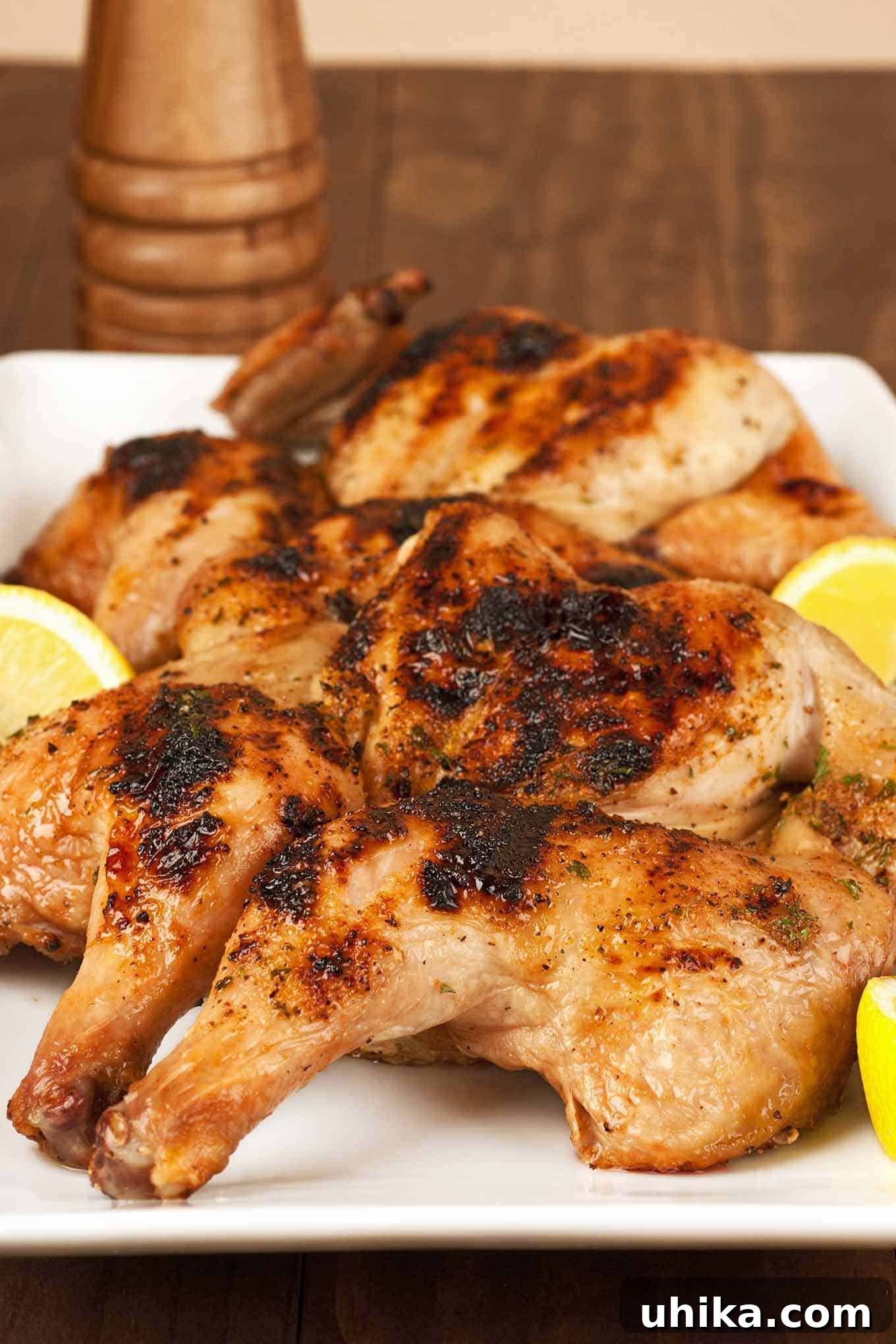
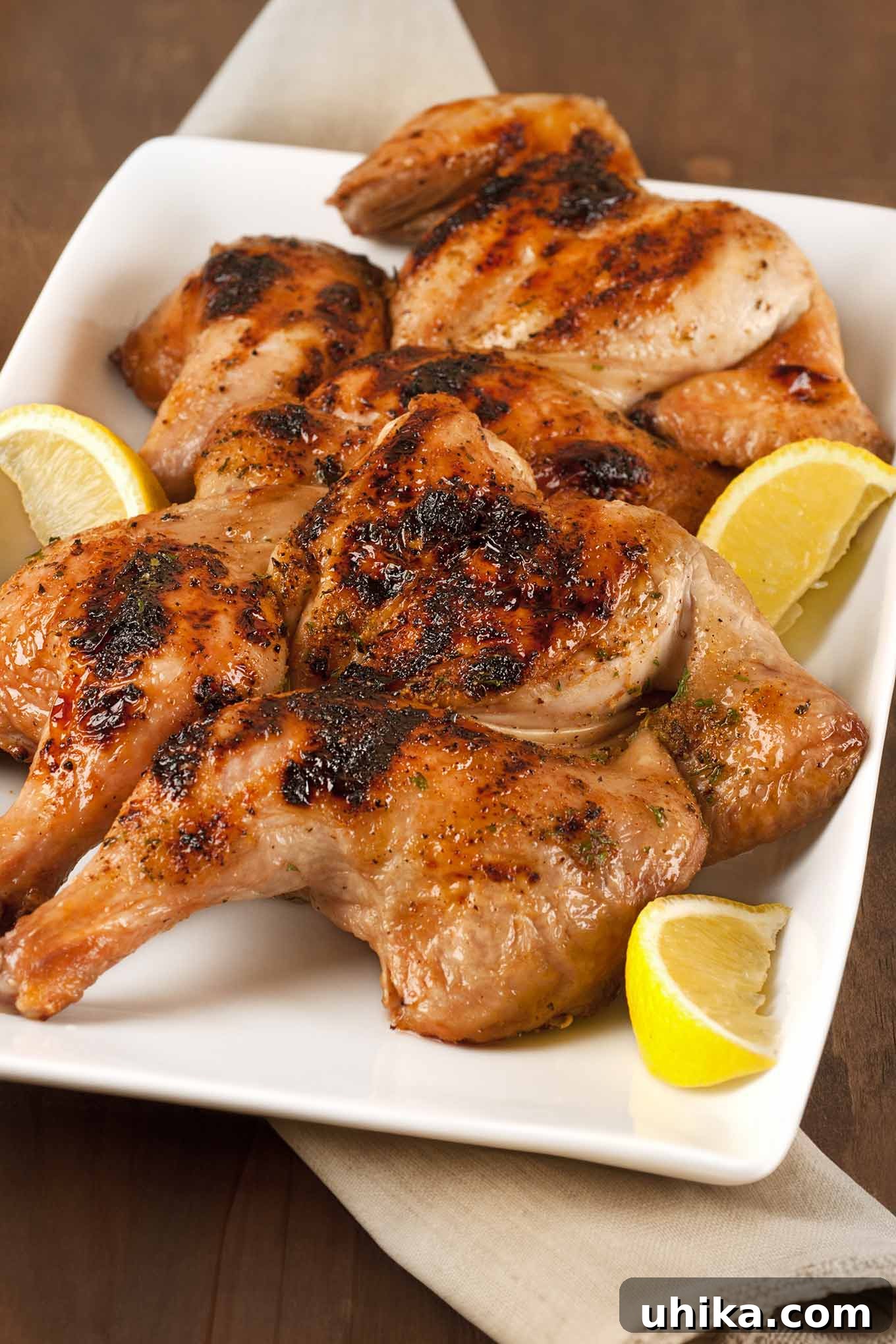
Mastering Grilled Cornish Hens: A Simple Guide to Juicy, Flavorful Poultry
There’s something uniquely satisfying about preparing a meal that’s both elegant and effortlessly delicious, especially when it comes off the grill. For those seeking an alternative to traditional chicken that promises impressive results without the fuss, Cornish hens are an exceptional choice. Their naturally tender meat, coupled with a smaller size perfect for individual servings, makes them an ideal candidate for grilling. Once split and flattened – a technique known as spatchcocking – these miniature birds cook remarkably fast, ensuring a consistently moist and juicy interior with delightfully crispy skin. Best of all, their inherent rich flavor means they require very little in the way of elaborate seasoning, allowing their natural taste to shine through.
Our featured recipe embraces this simplicity, calling for just a hint of salt, a dash of freshly ground black pepper, and a touch of garlic powder to enhance the hens’ inherent goodness. The real magic comes at the end, with a luminous finishing glaze crafted from golden honey and vibrant fresh lemon juice. This combination creates a perfect balance of savory and sweet with a zesty finish that elevates the dish. This method is not only easy and quick but also pairs beautifully with classic summer accompaniments like sweet corn on the cob, a refreshing green salad, or perhaps some grilled asparagus, making it an excellent option for weeknight dinners or casual backyard gatherings.
Why Choose Cornish Hens for Your Grill?
Cornish game hens, often simply called Cornish hens, are a breed of broiler chicken that is specifically bred for its small size and tender meat. Typically weighing between 1 to 2 pounds, they offer a host of advantages that make them a standout choice for grilling, distinguishing them from their larger chicken counterparts.
Perfect Portions for Every Plate
One of the most appealing aspects of Cornish hens is their size. Each hen usually serves one person, providing a gourmet individual portion that looks incredibly appealing on the plate. This eliminates the need for carving a large bird, making serving a breeze and ensuring everyone receives a perfect, unblemished piece of poultry. Their uniform size also contributes to more consistent cooking results, which can be a challenge with larger chickens where different parts cook at varying rates.
Rapid Cooking Time for Busy Lives
Thanks to their smaller stature and the spatchcocking technique, Cornish hens cook significantly faster than whole chickens. This makes them a fantastic option for weeknight meals when time is often limited. You can go from prep to plate in under an hour, meaning less time tending the grill and more time enjoying the company of family and friends. For outdoor entertaining, this speed also means you can easily grill multiple batches if you’re feeding a crowd, keeping fresh, hot food coming off the grill.
Inherent Flavor and Moisture
Cornish hens are renowned for their delicate texture and naturally sweet, rich flavor. This inherent deliciousness means they don’t need heavy marinades or complex spice rubs to taste incredible. A simple seasoning is often all that’s required to bring out their best. Furthermore, their rapid cooking time helps to preserve their natural moisture, resulting in exceptionally juicy meat every time, especially when grilled correctly.
Versatility in Flavor Profiles
While our honey-lemon glaze is a fantastic starting point, the mild flavor of Cornish hens makes them incredibly versatile. They can easily adapt to a wide array of culinary influences, from Mediterranean herbs to spicy Asian marinades or robust BBQ sauces. This versatility allows you to experiment with different seasonings and flavors, ensuring that grilled Cornish hens never become boring and can fit any meal theme or occasion.
The Art of Spatchcocking: A Grilling Game-Changer
If you’re not already familiar with spatchcocking, prepare to have your grilling world transformed. This simple, yet incredibly effective, technique involves removing the backbone of the bird and flattening it out. While it might sound intimidating, it’s remarkably easy and yields superior results, especially on the grill.
What is Spatchcocking?
Spatchcocking, sometimes referred to as butterflying, is the process of removing the spine from a bird (chicken, turkey, or in this case, a Cornish hen) and pressing it flat. This flattens the bird, allowing it to cook more evenly and quickly. The term itself is thought to derive from “dispatch cock,” meaning to quickly prepare a rooster for cooking.
Key Benefits of Spatchcocking for Grilling
- Even Cooking: By flattening the hen, all parts are exposed to the heat source more uniformly. This means the breast and thighs cook at a similar rate, preventing the breast meat from drying out while waiting for the thighs to reach temperature.
- Crispier Skin: With the hen laid flat, more of the skin is exposed directly to the grill’s heat. This direct contact results in significantly crispier skin, which is often considered the best part of grilled poultry.
- Faster Cooking: A flattened hen has more surface area exposed to the heat, reducing the overall cooking time. This is a huge advantage when grilling, as it helps to maintain moisture and get dinner on the table faster.
- Enhanced Flavor Penetration: The increased surface area also means more seasoning and glaze can come into direct contact with the meat and skin, infusing every bite with delicious flavor.
How to Spatchcock a Cornish Hen
Spatchcocking is straightforward. You’ll need a good pair of kitchen or poultry shears, as they provide the best leverage for cutting through bone. First, place the hen breast-side down on a sturdy cutting board. Locate the backbone and use your shears to cut down one side of it, from the cavity to the neck. Repeat on the other side of the backbone to completely remove it. Discard the backbone (or save it for stock!). Flip the hen over so it’s skin-side up. With both hands, press firmly down on the breastbone until you hear a crack. This flattens the hen, preparing it for seasoning and grilling. It might seem a little forceful, but it’s necessary to achieve that perfect flat shape.

Grilled Honey-Lemon Cornish Hens
Lynne Webb
Easy and quick to cook, these grilled Cornish hens have so much natural flavor all they need is a little salt, pepper, a dash of garlic powder, and a light glaze made with honey and fresh lemon for a delightful finish.
10 mins
20 mins
30 mins
4 servings
Ingredients
- 4 Cornish game hens, 1-1/4 to 1-1/2 lbs each
- 3 tablespoons olive oil
- 1-1/2 teaspoons salt
- 3/4 teaspoon garlic powder
- Freshly ground black pepper, to taste
- 4 lemon wedges, for serving
For the glaze:
- 2 tablespoons honey
- 1 tablespoon freshly squeezed lemon juice
Equipment Needed
- Grill (gas or charcoal)
- Poultry shears or sharp kitchen scissors
- Small mixing bowls
- Pastry brush
- Tongs and a large spatula
- Instant-read meat thermometer
- Cutting board
- Serving platter
Instructions
-
Prepare Your Grill: Preheat a gas or charcoal grill to medium-high heat, aiming for an internal temperature of about 400°F (200°C). For charcoal grills, bank coals to one side for a two-zone cooking setup if desired.
-
Whisk the Glaze: In a small bowl, combine the honey and fresh lemon juice. Whisk until thoroughly mixed. Set this delicious glaze aside for later use.
-
Spatchcock the Hens: Place each Cornish hen breast-side down on a clean cutting board. Using a sturdy pair of poultry shears, carefully cut along both sides of the backbone, from the tail end up to the neck, to remove it completely. Discard the backbone or save it for making stock.
-
Flatten for Even Cooking: Once the backbone is removed, flip the hens over so they are skin-side up. With the heel of your hand, press down firmly on the breastbone until you hear a slight crack and the hen lies flat. This ensures even cooking and maximum crispiness.
-
Season Generously: In another small bowl, whisk together the olive oil, salt, garlic powder, and a generous amount of freshly ground black pepper. Brush this mixture liberally over both sides of each spatchcocked hen, ensuring they are well coated.
-
First Grill Stage: Once your grill is preheated, lightly oil the grates to prevent sticking. Carefully place the seasoned hens on the grill, skin side up. Close the grill lid and cook for 6 to 8 minutes. During this stage, the indirect heat helps to gently cook the meat.
-
Second Grill Stage & Temperature Check: Using tongs and a large spatula, carefully flip the hens so they are now skin side down. Close the grill lid again and continue cooking for another 6 to 8 minutes, or until an instant-read thermometer inserted into the thickest part of the thigh (avoiding the bone) registers 160°F (71°C).
-
Glaze and Finish: Turn the hens skin side up once more. Using a pastry brush, generously apply the honey-lemon glaze over the skin. The heat from the grill will caramelize the glaze beautifully.
-
Rest and Serve: Allow the glazed hens to cook on the grill for just 1 additional minute to set the glaze. Then, transfer the grilled Cornish hens to a clean serving platter. It is crucial to let them rest for at least 5 minutes before slicing and serving. This allows the juices to redistribute, ensuring the meat remains incredibly tender and moist.
Notes for Grilling Success
Because Cornish hens can vary slightly in size and grill temperatures, unlike precise ovens, can fluctuate significantly, it’s essential to actively monitor your hens throughout the cooking process. Keep a close eye on them to manage any potential flare-ups by moving the hens to a cooler part of the grill if needed. Always rely on an instant-read meat thermometer to ensure safety and perfect doneness. Start checking their internal temperature after a total of about 12 minutes of cooking time. Remember, you can always put the hens back on the grill for a few more minutes if they haven’t quite reached the target temperature of 165°F (74°C) in the thickest part of the thigh. However, there’s no way to rescue an overcooked, dry bird, so prioritize internal temperature over strict timing.
Safe Internal Temperature: While our recipe calls for 160°F during grilling for glazing, always ensure poultry reaches an internal temperature of 165°F (74°C) before consuming, especially after resting. The temperature will rise a few degrees as the hens rest.
Clean Grates: Start with clean grill grates to prevent sticking and ensure beautiful grill marks. Lightly oiling them before adding the hens also helps.
Don’t Peek Too Often: Resist the urge to constantly lift the grill lid. Each time you do, heat escapes, extending the cooking time and potentially drying out the hens. Only open the lid when it’s time to flip, glaze, or check the temperature.
Perfect Pairings: What to Serve with Your Grilled Cornish Hens
Grilled Cornish hens are a versatile main course that can complement a wide array of side dishes. The honey-lemon glaze offers a bright, slightly sweet, and tangy profile that pairs beautifully with both fresh, light options and richer, savory accompaniments. Here are some ideas to inspire your menu planning:
Classic Summer Companions
- Fresh Corn on the Cob: Whether grilled alongside the hens or boiled, sweet corn is an unbeatable summer staple.
- Green Salad with Vinaigrette: A crisp salad featuring seasonal greens and a light, tangy vinaigrette provides a refreshing contrast to the richness of the poultry.
- Grilled Asparagus or Broccolini: A simple toss with olive oil, salt, and pepper before a quick grill adds a lovely char and complements the hens wonderfully.
Heartier Sides
- Roasted or Grilled Potatoes: Small new potatoes, halved and tossed with herbs, or even sweet potato fries, can be roasted in the oven or on a cooler part of the grill.
- Quinoa or Rice Pilaf: A light, fluffy grain seasoned with herbs, vegetables, or even a splash of lemon juice will absorb the subtle flavors from the hens beautifully.
- Couscous with Roasted Vegetables: A quick and easy side that can be customized with your favorite vegetables like bell peppers, zucchini, and cherry tomatoes.
Fresh and Flavorful Additions
- Tomato and Cucumber Salad: A simple salad with a light dressing can offer a cool, crunchy texture.
- Fruit Salsa: A vibrant salsa made with mango, pineapple, red onion, and cilantro offers a tropical, tangy kick that harmonizes with the honey-lemon glaze.
Customizing Your Cornish Hens: Flavor Variations
While the honey-lemon glaze is incredibly delicious, the beauty of Cornish hens lies in their adaptability. Don’t hesitate to experiment with different seasonings and glazes to suit your taste or match a specific cuisine theme. Here are a few ideas to spark your culinary creativity:
- Herbaceous Delight: Rub the hens with a mixture of finely chopped fresh rosemary, thyme, sage, and a touch of lemon zest for an aromatic, earthy flavor profile.
- Smoky Paprika and Cumin: For a more robust and slightly smoky flavor, create a dry rub with smoked paprika, cumin, garlic powder, onion powder, and a pinch of cayenne pepper for heat.
- Spicy Chili-Lime: Combine chili powder, a hint of cayenne, garlic, and fresh lime juice for a zesty, spicy kick that’s perfect for a Tex-Mex inspired meal.
- Asian-Inspired Sesame-Ginger Glaze: Whisk together soy sauce, rice vinegar, sesame oil, grated fresh ginger, a touch of honey or maple syrup, and a minced garlic clove. Brush this glaze on during the last few minutes of grilling.
- Balsamic Glaze: Reduce balsamic vinegar with a spoonful of brown sugar until syrupy, then brush it over the hens for a rich, tangy, and slightly sweet finish.
Storage and Leftovers
Cooked Cornish hens, if stored properly, can be a delightful source of leftovers. Allow any remaining grilled hen to cool completely before transferring it to an airtight container. Refrigerate promptly and consume within 3-4 days. Leftover Cornish hen meat can be removed from the bone and used in a variety of ways:
- Chicken Salads: Shred the meat and mix with mayonnaise, celery, and herbs for a delicious sandwich filling or salad topper.
- Wraps and Tacos: Use the shredded meat in tortillas with your favorite fresh toppings for a quick lunch or dinner.
- Soups and Stews: Add leftover meat to a comforting chicken noodle soup or a hearty stew.
- Pasta Dishes: Toss with pasta, a light sauce, and some vegetables for an easy meal.
Grilled Cornish hens offer an exquisite yet approachable way to elevate your backyard grilling. Their ideal size, quick cooking time, and fantastic flavor, especially when enhanced by the simple honey-lemon glaze and the smart spatchcocking technique, make them a surefire hit. Whether you’re a seasoned grill master or a novice, this recipe provides a foolproof path to perfectly juicy and crispy poultry every time. So fire up your grill, embrace the ease, and prepare to delight in these magnificent miniature birds. They’re sure to become a cherished addition to your recipe rotation.
Try this recipe and share your experience!