
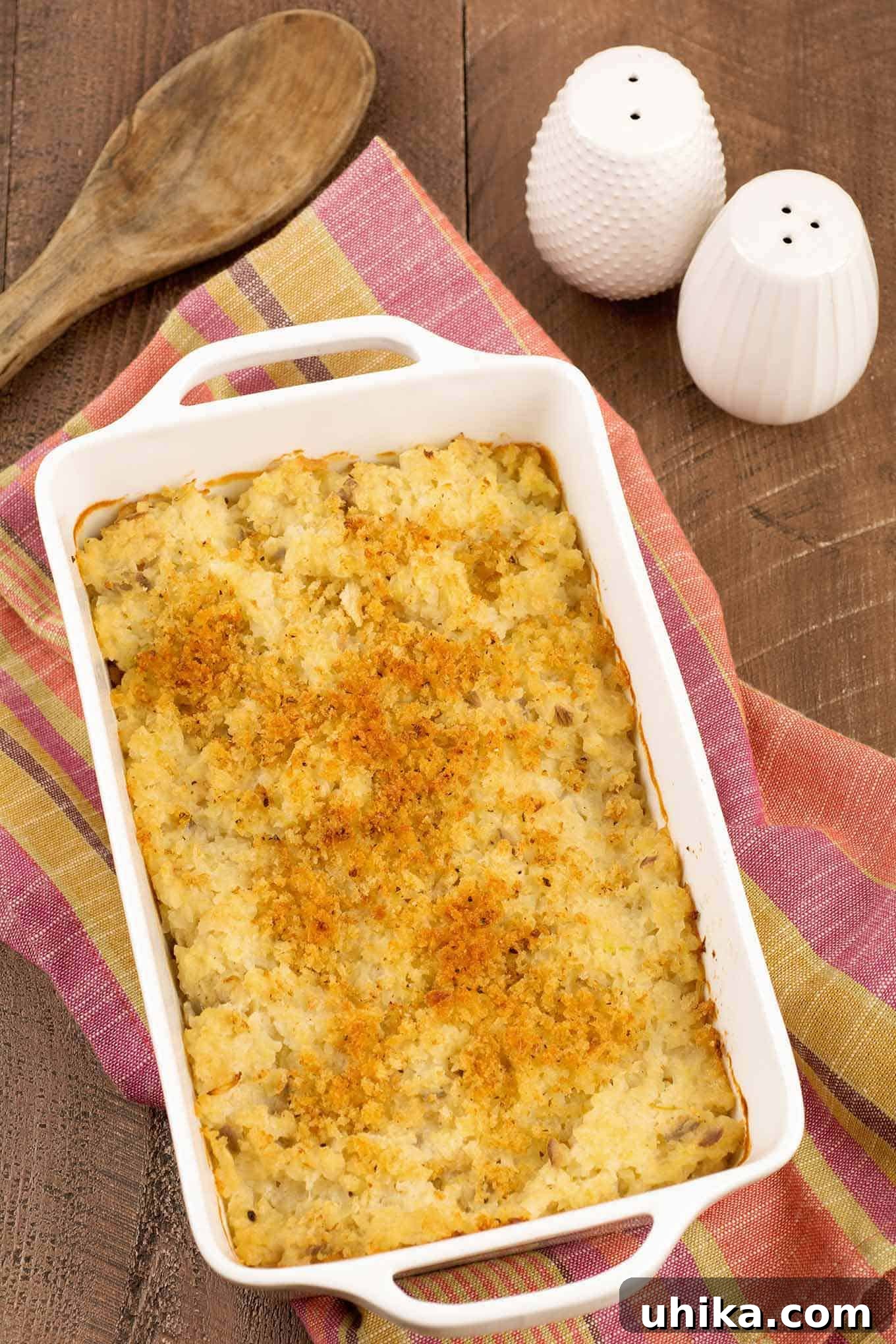
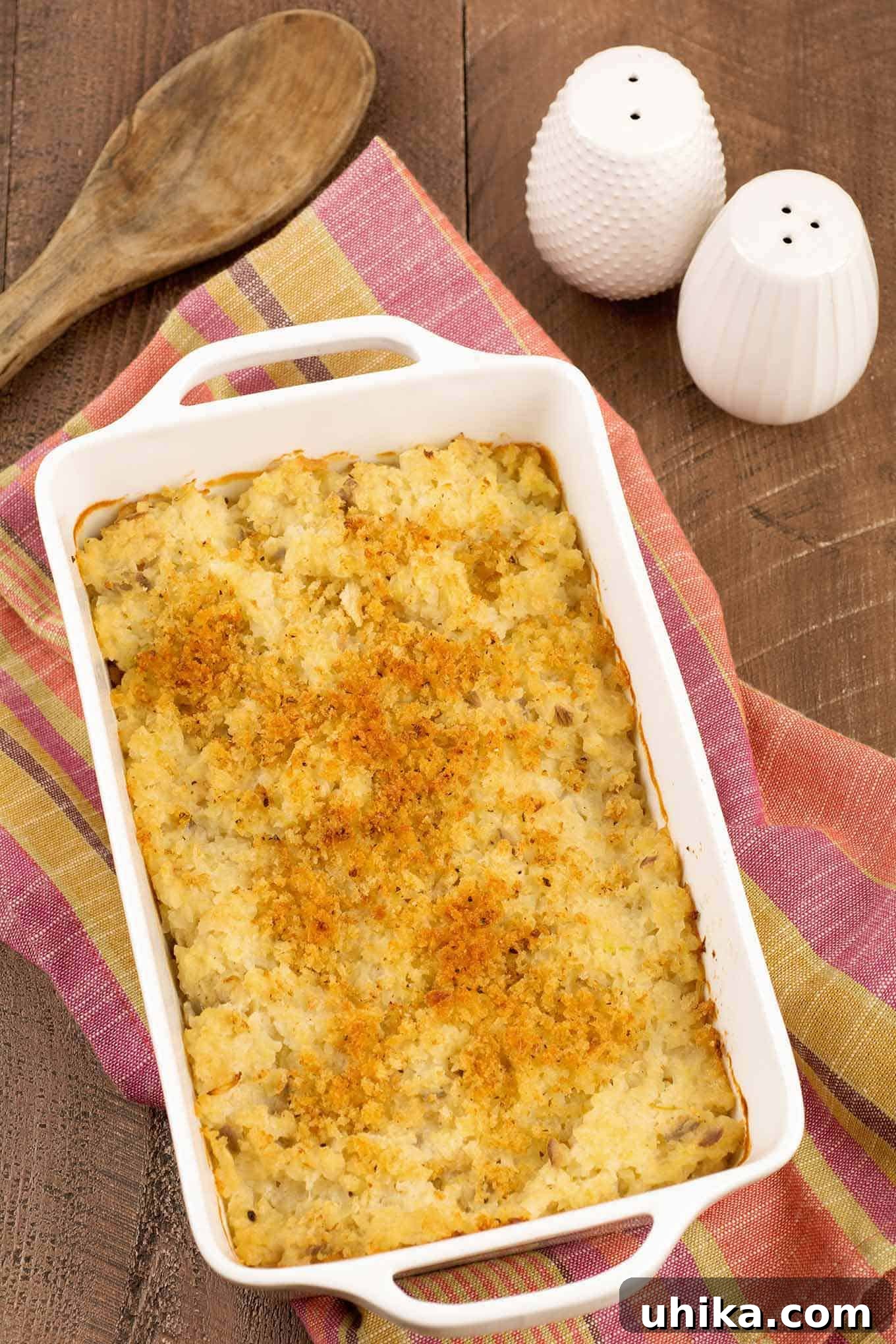
The Ultimate Riced Cauliflower Gratin: A Low-Carb Comfort Food Masterpiece
Cauliflower has long been celebrated for its versatility and nutritional benefits, making it a staple in healthy kitchens worldwide. However, preparing traditional cauliflower florets can sometimes be a test of patience, with uneven sizes leading to inconsistent cooking. This often results in smaller pieces crumbling before the larger ones reach tender perfection. Enter riced cauliflower – a culinary game-changer that transforms this humble vegetable into an incredibly convenient and easy-to-prepare ingredient.
Riced cauliflower offers the ideal solution for crafting satisfying, low-carb side dishes, and this simple-to-make gratin is a prime example. Whether you’re seeking a healthier alternative to potato or pasta dishes or simply looking to incorporate more vegetables into your diet, our Riced Cauliflower Gratin delivers on both flavor and health. This recipe is a cherished favorite as is, frequently appearing on our dinner tables, but it’s also wonderfully adaptable. Feel free to explore variations by adding other vegetables, fresh herbs, or a different selection of cheeses to suit your palate. It’s an effortless way to enjoy a creamy, cheesy, and utterly delicious gratin without the carb-heavy traditional ingredients.
Why Riced Cauliflower is Your New Favorite Vegetable Staple
Riced cauliflower has revolutionized how we approach healthy eating and vegetable preparation. Its finely chopped texture, resembling grains of rice, solves many common cooking dilemmas associated with whole cauliflower florets. Beyond convenience, riced cauliflower offers a neutral canvas that readily absorbs flavors, making it incredibly versatile for a multitude of dishes.
One of its most significant advantages is its role as a fantastic low-carb alternative. For those following ketogenic, paleo, or gluten-free diets, or simply looking to reduce their carbohydrate intake, riced cauliflower serves as an excellent substitute for traditional grains like rice, couscous, or even potatoes. In this gratin recipe, it replaces higher-carb ingredients without sacrificing the beloved creamy texture and comforting warmth of a classic gratin. Its mild flavor ensures that it complements the rich cheese sauce and savory seasonings beautifully, allowing the overall dish to shine.
Furthermore, using frozen riced cauliflower, as suggested in this recipe, streamlines the cooking process even further. It eliminates the need for chopping and ricing from scratch, saving valuable time and effort in the kitchen. This convenience makes preparing healthy, delicious meals more accessible for busy weeknights or when you simply want a quick and satisfying side dish.
Health Benefits of Embracing Cauliflower
Cauliflower is a nutritional powerhouse, packed with vitamins, minerals, and antioxidants that contribute to overall well-being. Incorporating this versatile vegetable into your diet, especially in a delicious preparation like a gratin, offers numerous health advantages:
- Rich in Nutrients: Cauliflower is an excellent source of Vitamin C, Vitamin K, and Folate. It also provides a good amount of Vitamin B6, pantothenic acid, potassium, and manganese.
- High in Fiber: Dietary fiber is crucial for digestive health, helping to regulate bowel movements and prevent constipation. Fiber also contributes to a feeling of fullness, which can aid in weight management by reducing overall calorie intake.
- Antioxidant Properties: Cauliflower contains several antioxidants, including sulforaphane and isothiocyanates, which help protect your body’s cells from damage by free radicals. These compounds are linked to anti-inflammatory effects and may play a role in reducing the risk of chronic diseases.
- Low in Calories and Carbs: As a non-starchy vegetable, cauliflower is remarkably low in calories and carbohydrates, making it an ideal choice for those looking to manage their weight or blood sugar levels. Substituting riced cauliflower for higher-carb ingredients can significantly lower the caloric and carbohydrate content of meals.
- Supports Bone Health: The presence of Vitamin K in cauliflower is essential for bone health, as it plays a role in calcium regulation and bone mineralization.
- Promotes Heart Health: Compounds in cauliflower, such as sulforaphane, may help improve blood pressure and kidney function, contributing to better cardiovascular health.
By choosing riced cauliflower for your gratin, you’re not only enjoying a delicious and comforting dish but also boosting your intake of vital nutrients in a flavorful way.
How to Make Fresh Riced Cauliflower at Home
While frozen riced cauliflower offers ultimate convenience, preparing it fresh at home is surprisingly simple and allows you to control the texture and freshness. All you need is a head of cauliflower and a food processor. One medium to large head of cauliflower typically yields 4 to 6 cups of riced cauliflower, which can be used immediately or stored for later use.
- Trim any green leaves from the cauliflower and cut it into quarters.
- Remove and discard the tough core from each quarter.
- Break one quarter into smaller florets and add them to a food processor. Avoid overcrowding the processor to ensure an even texture.
- Pulse the florets just until the cauliflower is broken down into rice-sized pieces. Be careful not to over-process, or you’ll end up with a purée.
- Transfer the riced cauliflower to a large bowl.
- Repeat the process with the remaining cauliflower, one quarter at a time, until all of it has been riced.
Once prepared, fresh riced cauliflower can be stored in airtight containers in the refrigerator for up to 3-4 days, or frozen for up to 3 months. Freezing it in single-serving portions can be particularly helpful for meal prepping and quick weeknight meals.

Riced Cauliflower Gratin
Ingredients
- 6 cups frozen, riced cauliflower (1-1/2 packages – see notes)
- 3 tablespoons butter, divided
- 3/4 cup onion, chopped
- 2 cloves garlic, minced
- 1 tablespoon flour
- 1-1/4 cups warm milk
- Salt and freshly ground black pepper
- 2 tablespoons panko crumbs
Instructions
-
Preheat the oven to 375°F (190°C) and coat a 1-quart baking dish with nonstick cooking spray. This ensures your gratin cooks evenly and prevents sticking.
-
In a large frying pan, melt 2 tablespoons of the butter over medium heat. Add the chopped onion and sauté gently until it becomes soft and barely golden, which typically takes about 4 to 5 minutes. Then, add the minced garlic and continue to sauté for another minute until fragrant, being careful not to burn the garlic.
-
Sprinkle the sautéed onion and garlic mixture with the flour, stirring well to combine and cook the raw flour taste out for about 1 minute. Slowly whisk in the warm milk, stirring constantly to prevent lumps. Bring the mixture to a gentle simmer and continue cooking, stirring, until the sauce is smooth and slightly thickened, approximately 2 to 3 minutes. This creates the rich base for your gratin.
-
Add the riced cauliflower to the sauce, about 2 cups at a time, combining thoroughly after each addition. Continue cooking, stirring frequently, until the cauliflower is tender and heated through, usually within 5 minutes. The cauliflower should be cooked but still have a slight bite.
-
Season the cauliflower mixture generously to taste with salt and freshly ground black pepper. Adjust seasonings as needed to ensure a flavorful base. Then, transfer the seasoned cauliflower mixture into your prepared baking dish, spreading it evenly.
-
In the same pan (no need to clean it), melt the remaining tablespoon of butter. Add the panko crumbs and stir to coat them thoroughly with the butter. This will create a crispy, golden topping.
-
Sprinkle the buttered panko crumbs evenly over the cauliflower mixture in the baking dish. Bake in the preheated oven for 12 to 15 minutes, or until the gratin is bubbly around the edges and the crumb topping is lightly browned and crispy. Serve this delightful gratin immediately as a comforting side dish.
Notes
Recipe Variation: Gratin of Riced Cauliflower and Greens
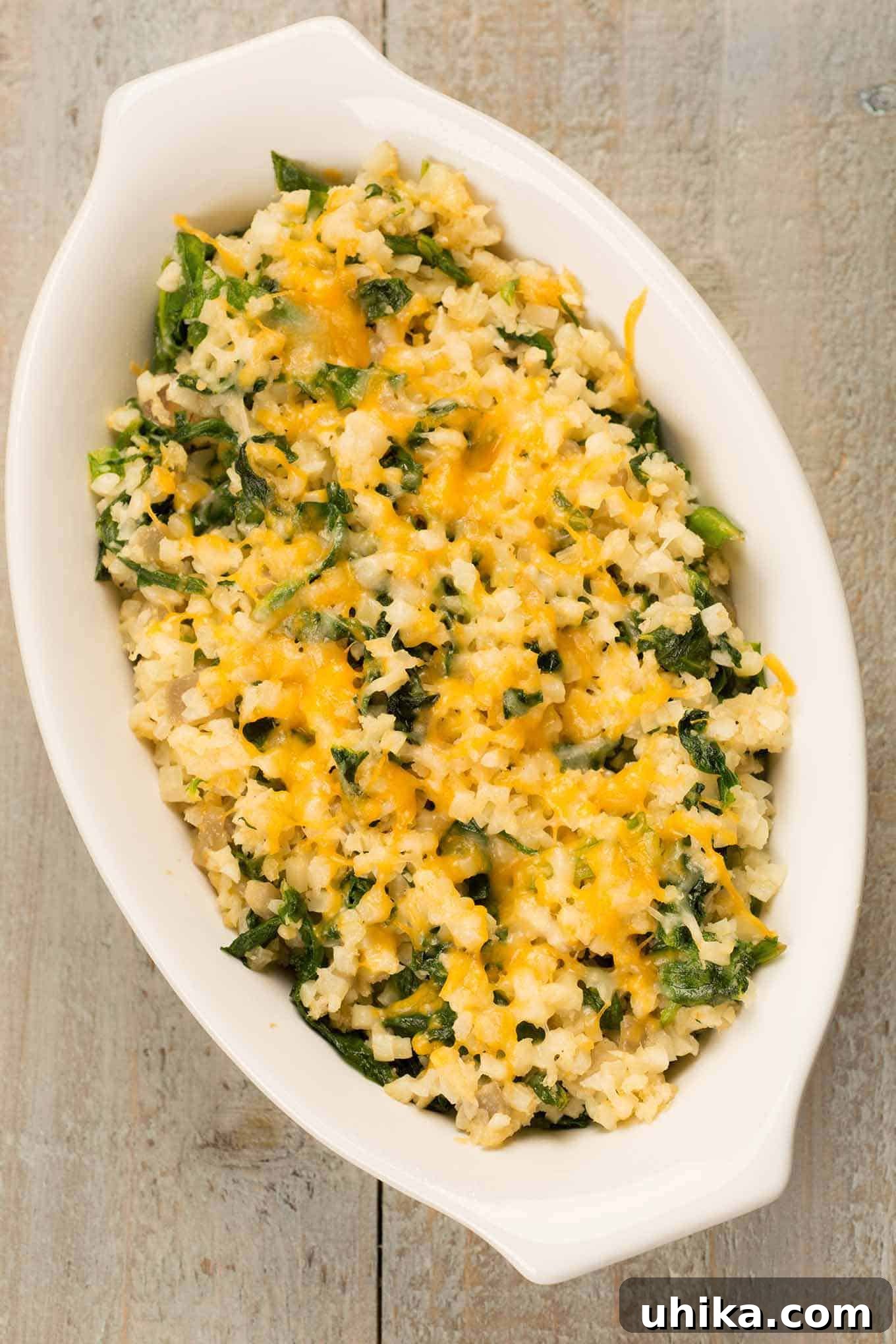
To prepare a vibrant and nutritious variation, follow the main recipe directions but reduce the quantity of riced cauliflower to 4 cups (equivalent to 1 package of frozen riced cauliflower). Additionally, incorporate 1/2 pound of chopped greens, such as fresh spinach, baby kale, or escarole, which have been lightly sautéed until tender. If you prefer a cheesy topping over panko crumbs, you can replace the buttered panko with a generous handful of shredded cheddar cheese or your favorite melting cheese. Bake as directed in the main instructions, ensuring the gratin is bubbly and the cheese is melted and slightly golden.
Nutrition
Total Fat: 12g,
Cholesterol: 30mg,
Sodium: 218mg,
Carbohydrates: 24g,
Fiber: 6g,
Sugar: 10g,
Protein: 8g
Nutrition information is automatically calculated, so should only be used as an approximation.
Tips for a Perfect Riced Cauliflower Gratin Every Time
Achieving a perfectly creamy and flavorful riced cauliflower gratin is simple with a few helpful tips:
- Don’t Overcook the Cauliflower: Whether using fresh or frozen riced cauliflower, ensure it’s cooked until tender but still retains a slight bite. Overcooked cauliflower can become mushy and release too much water, making the gratin watery.
- Drain Frozen Riced Cauliflower: If using frozen riced cauliflower, it’s a good idea to let it thaw slightly and then gently squeeze out any excess moisture. This prevents the gratin from becoming too watery and helps achieve a richer, creamier texture.
- Warm Milk for a Smooth Sauce: Using warm milk when making the roux helps prevent lumps and creates a smoother, more consistent sauce. Cold milk can cause the flour to seize up.
- Proper Seasoning is Key: Taste your sauce and cauliflower mixture before baking and adjust salt and pepper as needed. Cauliflower has a mild flavor, so proper seasoning enhances the entire dish. A pinch of nutmeg can also elevate the flavors in a cream-based gratin.
- Choose Your Cheese Wisely: While this recipe doesn’t call for cheese in the main mixture, a hint of Parmesan or Gruyère in the sauce or mixed into the panko topping can add an extra layer of savory depth.
- Baking Dish Size: A 1-quart baking dish is ideal for this recipe, ensuring the gratin bakes evenly and develops a nice crust without being too thin or too thick.
- Achieve a Golden Crust: For that irresistible golden-brown and crispy topping, keep an eye on your gratin during the last few minutes of baking. If it’s browning too quickly, you can loosely tent it with aluminum foil.
Customizing Your Gratin: Endless Flavor Possibilities
One of the best aspects of this riced cauliflower gratin recipe is its incredible adaptability. While delicious on its own, it serves as an excellent base for various additions and flavor profiles. Get creative and make it your own!
- Cheese Varieties: Experiment with different cheeses. Aside from the suggested cheddar in the greens variation, consider adding Gruyère, Parmesan, fontina, or even a smoked gouda for a deeper, more complex flavor. A mix of cheeses can also create a wonderful depth.
- Add More Vegetables: Enhance the nutritional value and texture by incorporating other finely chopped or sautéed vegetables. Broccoli florets, sliced mushrooms, diced bell peppers, or even roasted butternut squash can be excellent additions. Just ensure they are pre-cooked or tender before adding them to the gratin mixture.
- Herbs and Spices: Fresh herbs like chives, parsley, thyme, or rosemary can brighten the flavor. For a warm, earthy touch, consider a pinch of smoked paprika or a dash of cayenne pepper for a subtle kick.
- Protein Boost: Turn this side dish into a more substantial meal by mixing in cooked protein. Crispy bacon bits, shredded cooked chicken, diced ham, or even crumbled cooked sausage can add richness and make it a complete one-dish wonder.
- Spice it Up: For those who enjoy a little heat, a pinch of red pepper flakes or a dash of hot sauce in the cheese sauce can add an exciting zing.
- Different Toppings: While panko crumbs provide a wonderful crisp, you can also use crushed pork rinds for a grain-free, low-carb crunch, or simply an extra layer of shredded cheese for a gooey, bubbly top.
These variations not only keep the recipe exciting but also allow you to tailor the gratin to your preferences and what you have on hand, ensuring a delicious and unique dish every time.
Serving Suggestions for Your Delicious Gratin
This Riced Cauliflower Gratin is so comforting and flavorful that it can easily steal the show at any meal. Its rich, creamy texture and savory notes make it a perfect accompaniment to a wide range of main courses, or even a light vegetarian meal on its own.
- Classic Pairing: Serve it alongside roasted chicken, a tender beef roast, or baked fish for a wholesome and satisfying dinner. Its creamy consistency beautifully complements lean proteins.
- Holiday Favorite: This gratin makes an excellent low-carb alternative to traditional potato casseroles for holiday feasts like Thanksgiving or Christmas. It’s hearty enough to feel festive but light enough not to weigh you down.
- Vegetarian Main: For a lighter meal, pair a generous portion of the gratin with a fresh green salad dressed with a light vinaigrette. The contrast between the creamy gratin and crisp salad is delightful.
- Brunch Addition: Unexpected but surprisingly delicious, serve a smaller portion of this gratin as a savory component of a brunch spread, alongside eggs, bacon, or fresh fruit.
- Steakhouse Side: Elevate your home-cooked steak dinner by replacing traditional potato sides with this flavorful cauliflower gratin.
No matter how you choose to serve it, this Riced Cauliflower Gratin is sure to be a crowd-pleaser, offering both comfort and nutritional benefits.
Storage and Reheating Made Easy
Leftover Riced Cauliflower Gratin is just as delicious, if not more so, the next day. Proper storage and reheating will ensure you can enjoy this dish multiple times:
- Storage: Allow the gratin to cool completely before transferring it to an airtight container. Store it in the refrigerator for up to 3-4 days.
- Reheating in the Oven: For best results and to retain the crispy topping, reheat the gratin in a preheated oven at 350°F (175°C) for 15-20 minutes, or until heated through and bubbly. If the topping seems too dry, you can add a sprinkle of cheese or a few more panko crumbs for freshness.
- Reheating in the Microwave: While quicker, microwaving may soften the topping. Heat individual portions on high for 1-2 minutes, stirring halfway through, until warmed.
- Freezing: You can freeze cooked gratin for longer storage. Once cooled, wrap it tightly in plastic wrap and then foil, or place it in a freezer-safe container. It will keep for up to 2-3 months. Thaw overnight in the refrigerator before reheating in the oven.
Conclusion: Embrace the Delicious Versatility of Riced Cauliflower Gratin
From its humble beginnings as a simple cruciferous vegetable, cauliflower has transformed into a culinary superstar, largely thanks to the innovation of ricing. Our Riced Cauliflower Gratin recipe stands as a testament to this versatility, offering a dish that is both profoundly comforting and remarkably healthy. It artfully blends the creamy indulgence of a classic gratin with the nutritional powerhouse of cauliflower, creating a low-carb alternative that never compromises on flavor.
Whether you’re new to riced cauliflower or a seasoned fan, this gratin provides an easy and delicious way to enjoy a guilt-free side dish or even a light main course. Its simple preparation, coupled with the endless possibilities for customization, ensures that it can become a regular feature in your meal rotation, adaptable to any taste or occasion. So, gather your ingredients, follow our straightforward steps, and prepare to delight in a truly satisfying dish that proves healthy eating can be incredibly flavorful. Dive into the world of riced cauliflower gratin and discover your new favorite comfort food!