
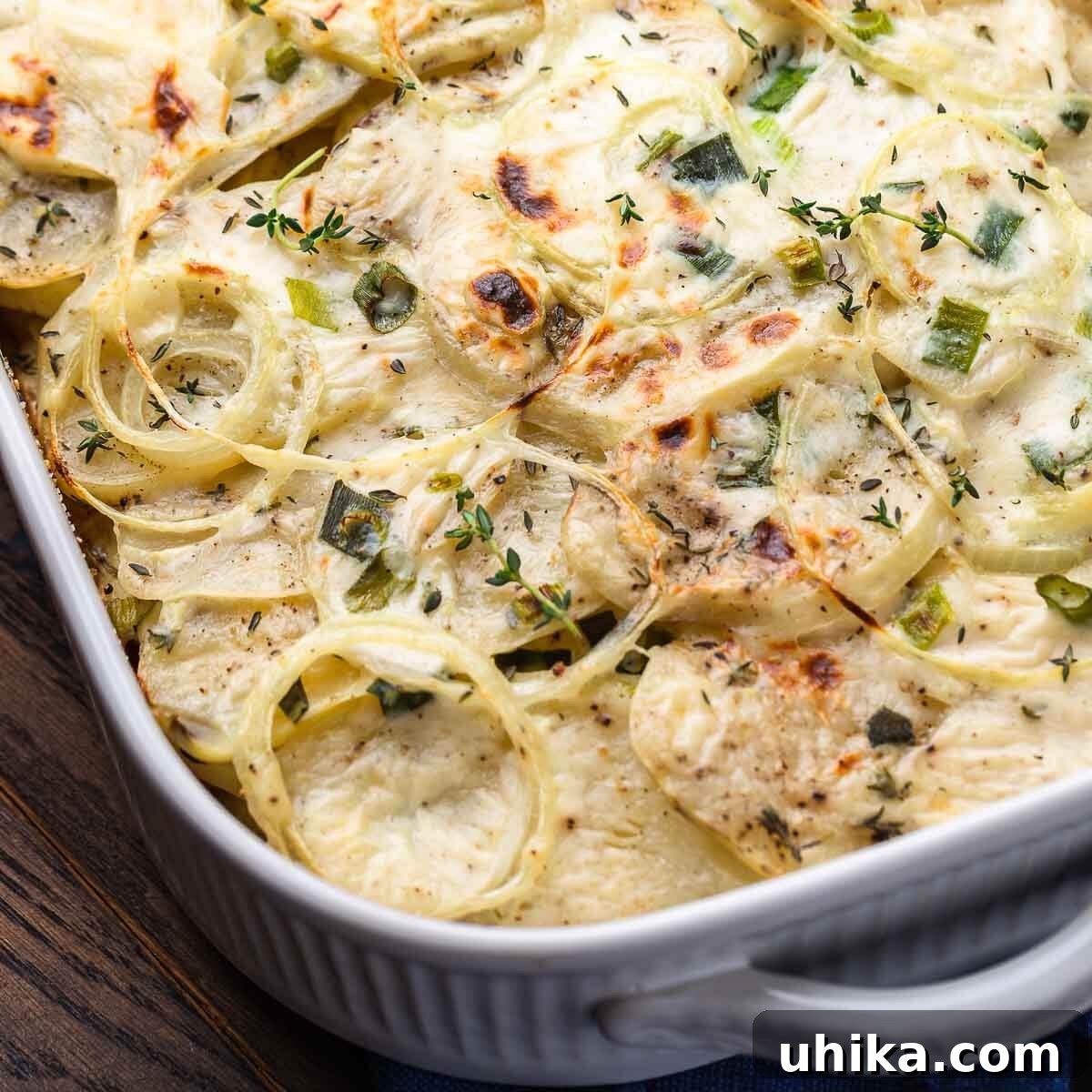
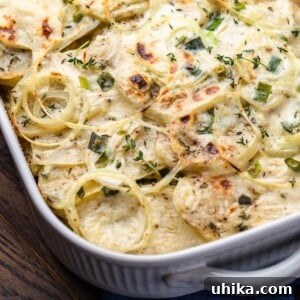
Indulge in the ultimate comfort food with this classic Scalloped Potatoes recipe. Thinly sliced potatoes and tender onions are lovingly layered in a rich, velvety cream sauce infused with fragrant herbs, then baked to golden perfection. This deeply satisfying side dish is a guaranteed crowd-plepleaser, ideal for enhancing any roasted meat or poultry, and perfect for special gatherings.
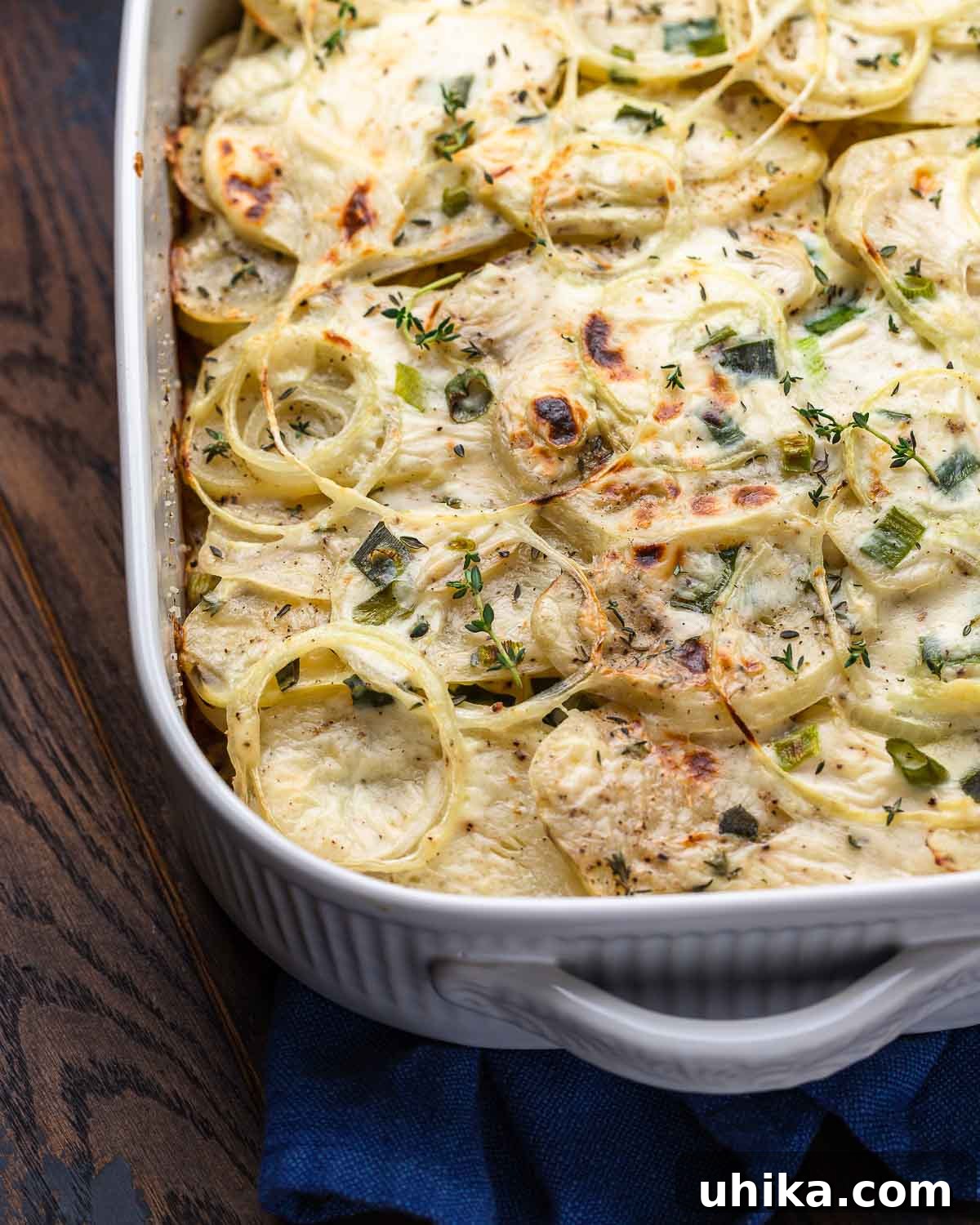
The Irresistible Charm of Scalloped Potatoes
Scalloped potatoes, often mistakenly called potatoes au gratin, are a timeless culinary delight. While both feature layers of sliced potatoes, scalloped potatoes traditionally forgo cheese in favor of a simpler, unadulterated creamy sauce that truly allows the potato flavor to shine. This dish is more than just a side; it’s a celebration of humble ingredients transformed into something extraordinary—a staple on dinner tables for generations.
There’s something inherently comforting about a generous serving of scalloped potatoes. Their rich, creamy texture and savory aroma instantly evoke feelings of warmth and home. While not an everyday meal due to their decadent nature, they are the quintessential dish we eagerly anticipate for special occasions, holidays, and family gatherings. From Thanksgiving feasts to festive Christmas dinners and vibrant Easter brunches, scalloped potatoes consistently earn their place as a cherished tradition.
Our particular affection for scalloped potatoes around Easter stems from the fresh, verdant notes of green onions and aromatic thyme. These herbs lend a bright, springtime essence to the dish, perfectly complementing the season’s lighter fare and heartier roasts. They create a harmonious pairing with holiday centerpieces like a succulent Italian stuffed pork loin, a glistening brown sugar glazed spiral ham, or a tender roasted boneless leg of lamb. The creamy potatoes provide a beautiful contrast to the savory meats, creating a balanced and unforgettable meal.
What Makes This Scalloped Potato Recipe Special?
- Velvety Smooth Sauce: Our recipe focuses on creating a luscious, perfectly seasoned cream sauce that coats every slice of potato without being overly heavy.
- Aromatic Herbs: Fresh thyme and green onions infuse the dish with a delightful depth of flavor and a touch of freshness.
- Perfectly Tender Potatoes: We guide you to achieve potatoes that are cooked through to tender perfection, never mushy, with a beautifully golden top.
- Simple Ingredients, Maximum Flavor: Using basic pantry staples, this recipe proves that extraordinary taste doesn’t require complex components.
Key Ingredients for Flawless Scalloped Potatoes
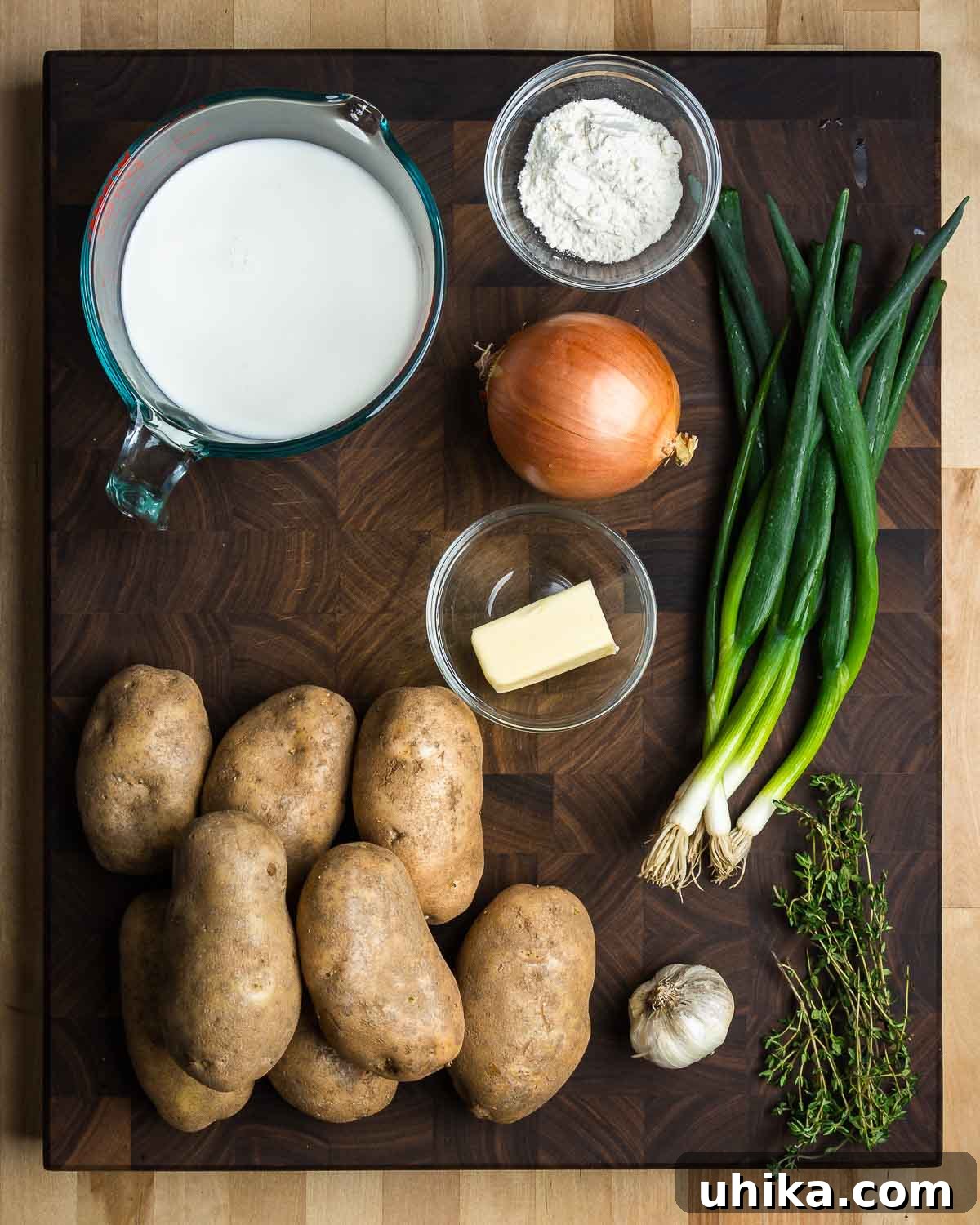
Crafting exceptional scalloped potatoes begins with selecting the right ingredients. Each component plays a vital role in achieving the dish’s signature taste and texture:
- Potatoes: We recommend Russet potatoes for their high starch content, which helps thicken the sauce and ensures a tender, creamy result. Their larger size also makes them easier to slice uniformly. Other starchy or all-purpose varieties like Yukon Golds can also be used, though they might yield a slightly firmer texture.
- Onion: One large white or yellow onion, thinly sliced, adds a delicate sweetness and savory depth that beautifully complements the potatoes.
- Green Onions (Scallions): These provide a mild, fresh onion flavor that brightens the rich cream sauce and hints at the dish’s springtime appeal.
- Butter: Unsalted butter forms the base of our roux, contributing richness and a silky mouthfeel to the sauce.
- Garlic: Freshly minced garlic infuses the sauce with an aromatic warmth that is simply indispensable.
- All-Purpose Flour: This is the key to thickening our cream sauce, creating a smooth and cohesive texture that binds all the layers together.
- Whole Milk: The foundation of our creamy sauce. Whole milk provides the ideal fat content for a rich, luscious consistency. For an even more decadent touch, a splash of heavy cream can be added.
- Fresh Thyme: The earthy, slightly peppery notes of fresh thyme pair beautifully with potatoes and cream, elevating the overall flavor profile.
- Salt and Black Pepper: Essential for seasoning each layer and the sauce, ensuring every bite is perfectly balanced. Adjust to your personal preference.
A Detailed Guide to Making Scalloped Potatoes
Follow these step-by-step instructions for perfect scalloped potatoes every time.
Preparation Steps
- Preheat Oven: Begin by preheating your oven to 350°F (175°C). Position an oven rack in the middle of your oven to ensure even cooking.
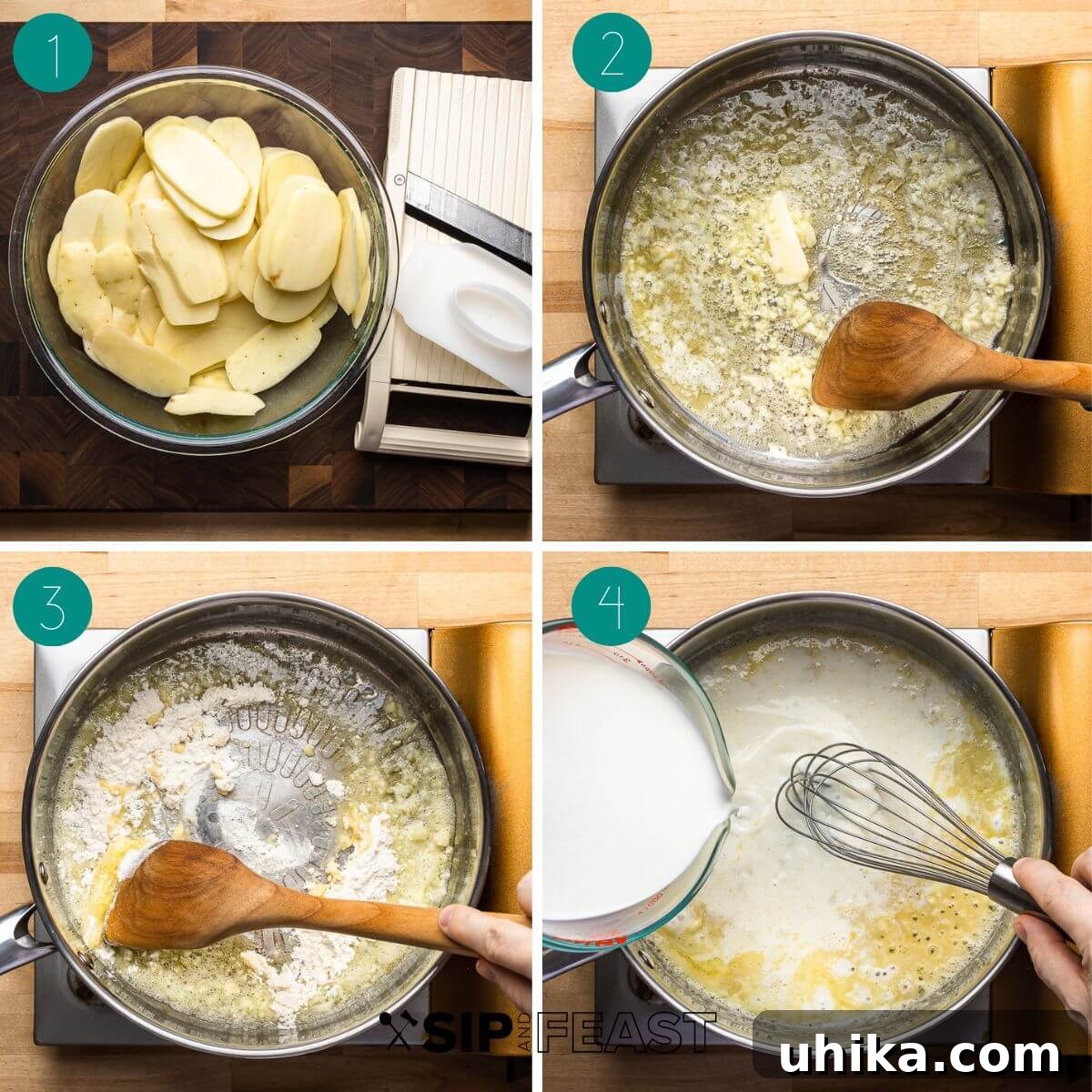
- Slice Potatoes and Onions: Using a mandoline slicer (with a guard for safety) or a very sharp chef’s knife, carefully slice 3 pounds of russet potatoes to an even 1/8-inch thickness. Slice 1 large onion even thinner, to about 1/16-inch thick. Uniform slices are crucial for even cooking and a beautiful presentation.
- Prepare Herbs and Aromatics: Chop 5 large green onions, mince 3 cloves of garlic, and gently remove 2 teaspoons of fresh thyme leaves from their stems. Set these aside.
Crafting the Cream Sauce
- Sauté Garlic: In a medium saucepan, melt 4 tablespoons of butter over medium-low heat. Add the minced garlic and cook gently for 1-2 minutes, stirring frequently, until the garlic becomes fragrant but does not brown. This gentle sauté releases its sweet aroma without any bitterness.
- Make a Roux: Sprinkle 1/4 cup of all-purpose flour into the melted butter and garlic. Whisk continuously for 1-2 minutes until the flour turns a light golden color and forms a smooth paste. This roux is essential for thickening the sauce and eliminating any raw flour taste.
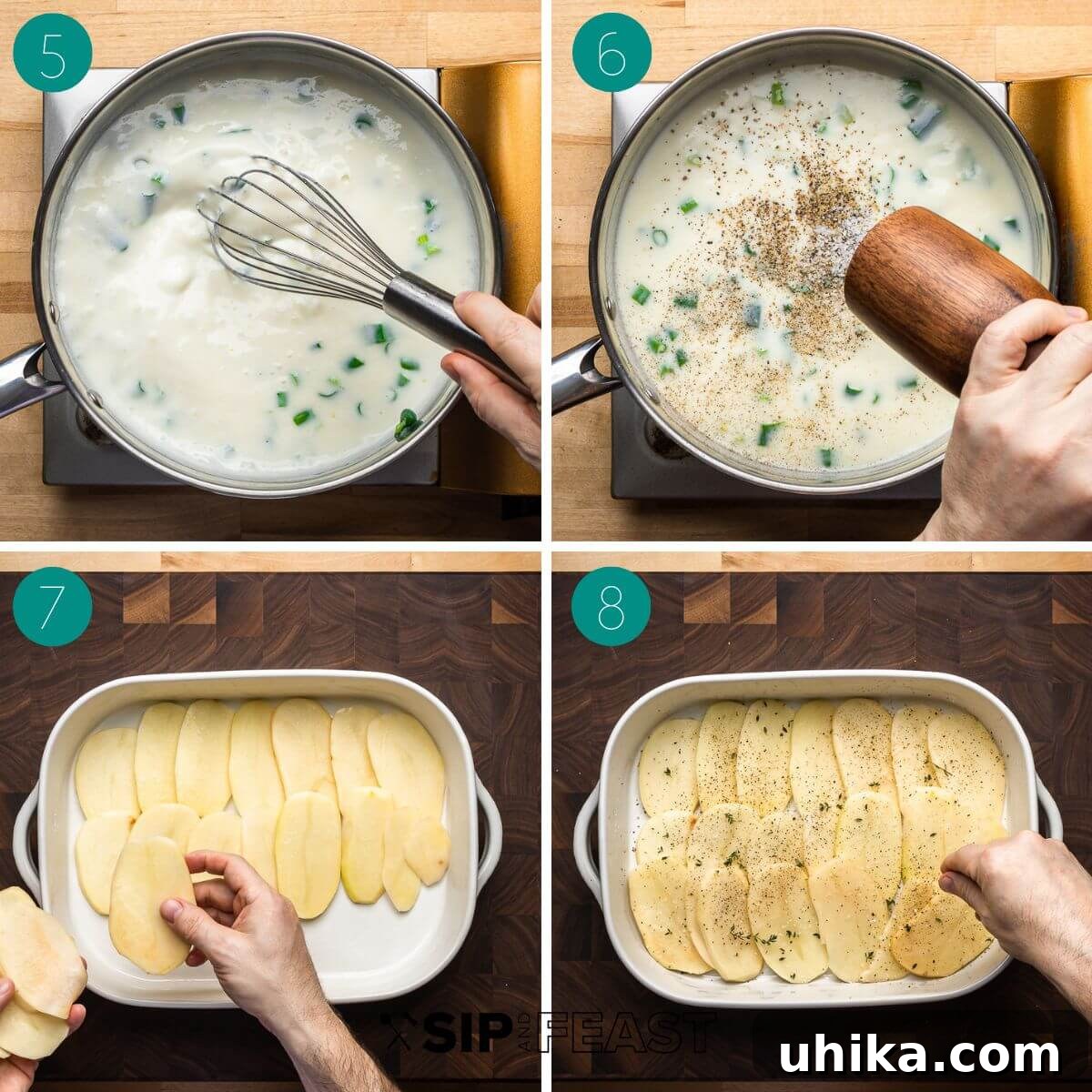
- Add Milk Gradually: Slowly pour 3 cups of whole milk into the saucepan while continuously whisking. This gradual addition prevents lumps and ensures a smooth, creamy sauce. Continue to whisk until the mixture is fully combined and smooth.
- Thicken the Sauce: Add the chopped green onions to the sauce. Increase the heat to medium-high and bring the sauce to a gentle simmer, continuing to whisk. The sauce will begin to thicken quickly as it heats.
- Season the Sauce: Once the sauce has thickened to your desired consistency (it should be thick enough to coat the back of a spoon), remove the saucepan from the heat. Season the sauce generously with salt and pepper to taste. Remember, you’ll be seasoning each potato layer as well, so don’t overdo it here, but ensure the sauce itself is flavorful.
Assembling and Baking
- Prepare Baking Dish: Lightly grease a 9×13-inch baking dish with butter. This prevents sticking and helps create a beautiful crust.
- First Layer: Arrange 1/3 of the thinly sliced potatoes in an even layer at the bottom of the prepared baking dish. Slightly overlap them for a seamless look.
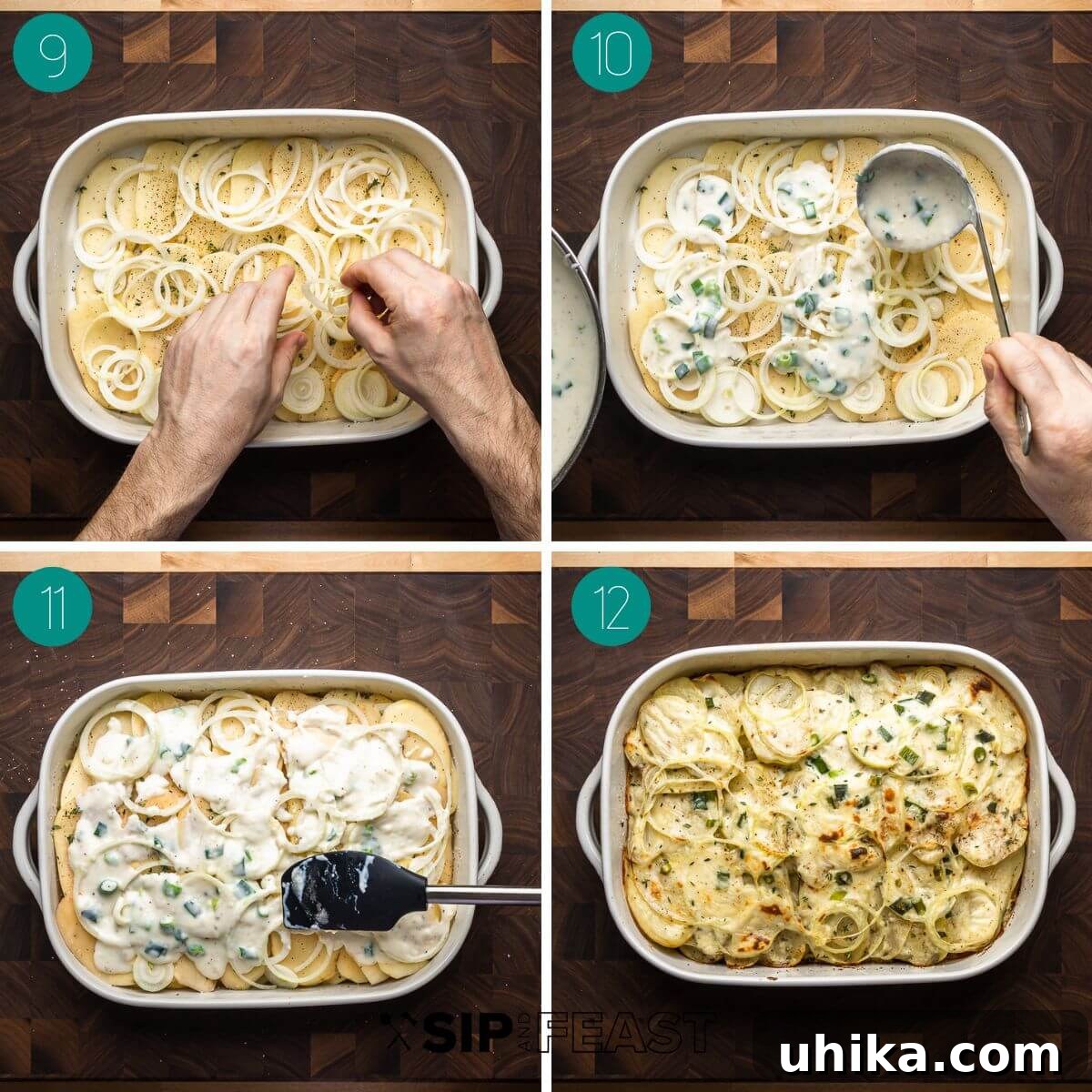
- Season and Onion Layer: Season this potato layer with 1/3 of the fresh thyme, a sprinkle of salt, and a dash of black pepper. Follow with a layer using 1/3 of the thinly sliced onions.
- Cream Sauce Layer: Evenly ladle 1/3 of the prepared cream sauce over the potato and onion layers. Ensure good coverage.
- Repeat Layers: Repeat steps 10-12 two more times, creating a total of three distinct layers of potatoes, seasonings, onions, and cream sauce. Ensure the top layer is finished with cream sauce.
- Initial Bake (Covered): Cover the baking dish tightly with aluminum foil. Bake in the preheated oven for 50 minutes. The foil helps steam the potatoes, ensuring they become perfectly tender without drying out.
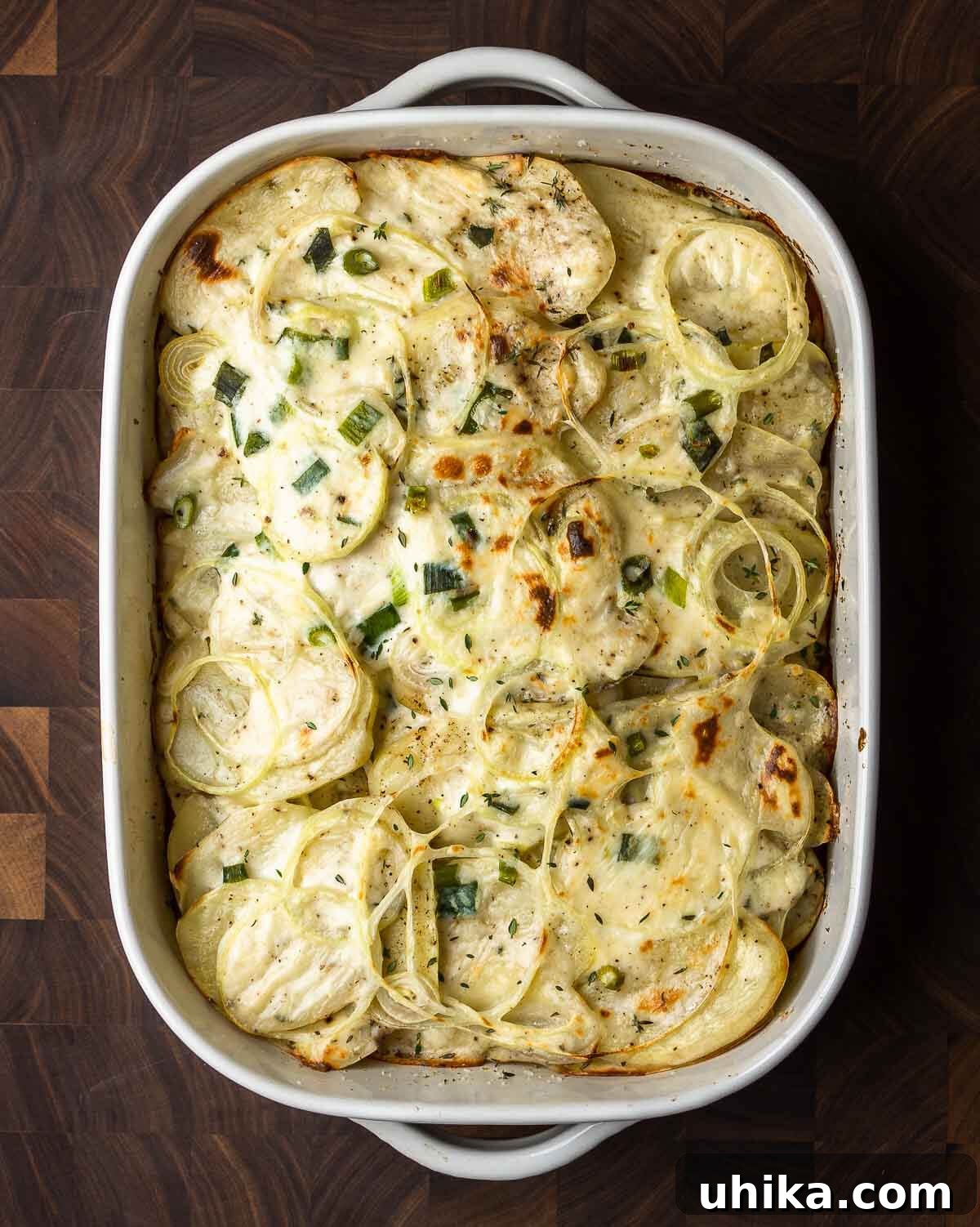
- Second Bake (Uncovered) and Broiling: Remove the foil and continue baking for another 30 minutes, or until the potatoes are completely tender when pierced with a fork and the top is lightly golden. For an even richer golden-brown crust, you can broil the top for 2-3 minutes at the very end. Watch carefully to prevent burning, as broilers can vary greatly in intensity.
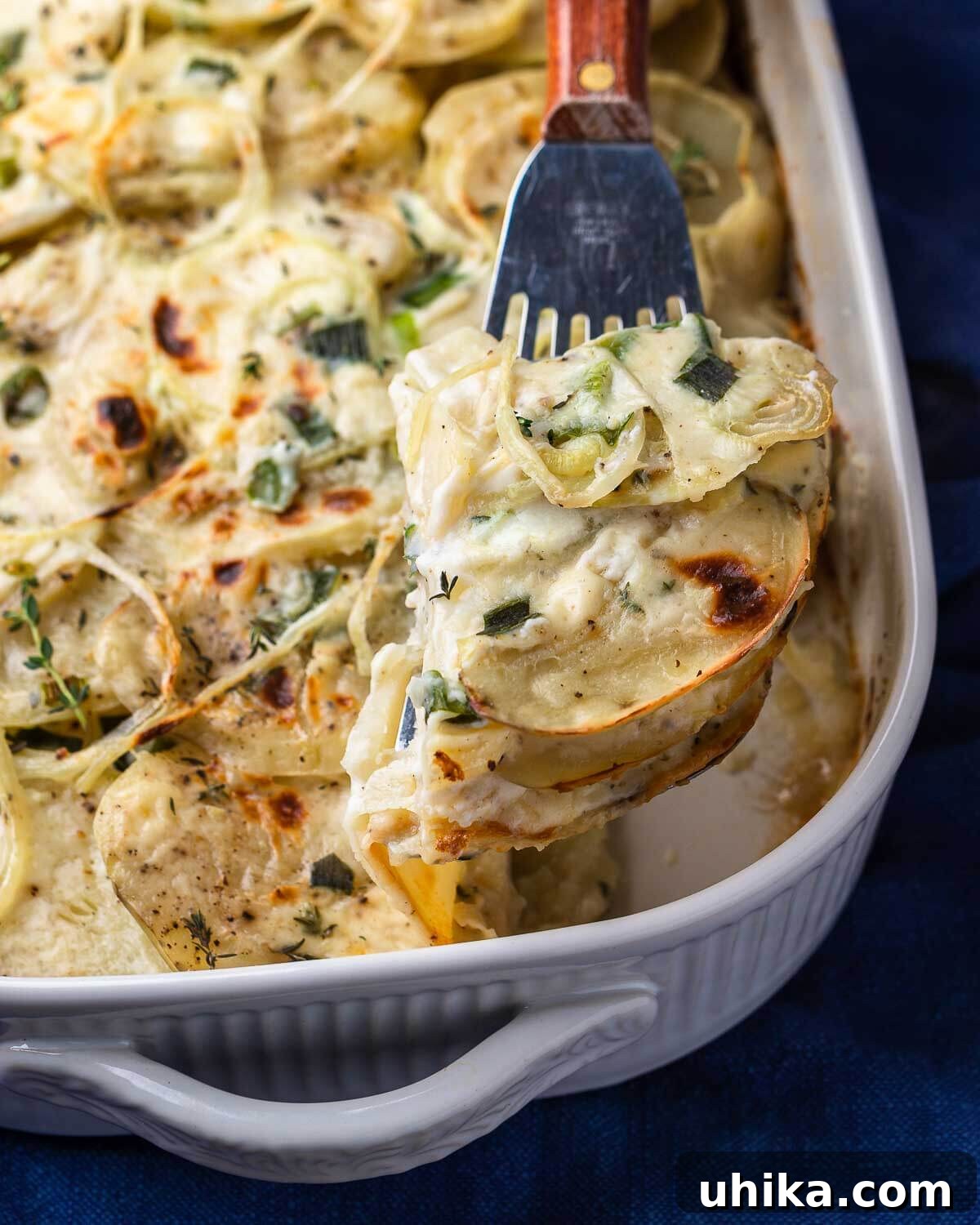
- Rest Before Serving: Once baked, remove the scalloped potatoes from the oven and let them rest for at least 15 minutes before serving. This crucial resting period allows the sauce to set and prevents the layers from falling apart when scooped. Enjoy your perfectly crafted scalloped potatoes!
Expert Tips for the Best Scalloped Potatoes
Achieve scalloped potato perfection with these tried-and-true tips:
- Potato Selection: While Russet potatoes are recommended for their starchiness and ease of slicing, Yukon Golds or other white potato varieties also work well. Just be aware that some varieties hold their shape more than others. Avoid waxy potatoes like red bliss, as they don’t absorb the sauce as effectively.
- Uniform Slicing is Key: Consistent potato and onion thickness ensures even cooking. A mandoline slicer is highly recommended for achieving uniform 1/8-inch potato slices and 1/16-inch onion slices, making the job much easier and safer (always use the guard!). If you don’t have a mandoline, a sharp chef’s knife and careful technique will suffice.
- Season Every Layer: Don’t just season the sauce. Lightly sprinkling salt, pepper, and thyme on each potato layer amplifies the flavor throughout the entire dish.
- Prevent Drying Out: Covering the dish tightly with foil for the initial baking period is crucial. It traps steam, ensuring the potatoes cook through and become tender without the sauce drying out or the top burning prematurely.
- Herb Variations: Fresh thyme is wonderful, but feel free to experiment with other complementary herbs like fresh parsley, rosemary, or tarragon. A blend can also be quite delightful.
- Adding Cheese (Optional): While traditional scalloped potatoes are cheese-free, many enjoy adding cheese for extra richness. If you prefer a cheesy version, sprinkle grated cheddar, Gruyere, or Parmesan between the layers or on top during the last 30 minutes of baking.
Serving Suggestions for Scalloped Potatoes
Scalloped potatoes are incredibly versatile and pair beautifully with a wide array of main courses and other side dishes. Their rich and creamy nature makes them an excellent companion to:
- Roasted Meats: They are a classic accompaniment to roasted chicken, turkey, ham, beef roasts, or pork loin.
- Holiday Feasts: Indispensable for Thanksgiving, Christmas, and Easter spreads.
- Casual Dinners: Pair them with simple grilled chicken breasts or pan-seared pork chops for an elevated weeknight meal.
- Other Side Dishes: Balance the richness with lighter vegetable sides.
More Great Side Dishes to Complement Your Meal
For those looking to round out their holiday menu or simply expand their side dish repertoire, here are a few more of our favorites:
- Baked Asparagus with Cheese Breadcrumbs – A fresh, bright, and flavorful vegetable side with a delightful crunch.
- Roasted Garlic Mashed Potatoes – Creamy, garlicky mashed potatoes that are pure comfort.
- Maple Roasted Carrots – Sweet and savory carrots glazed with maple syrup and fresh parsley.
Storage and Reheating
Storing Leftovers: Any leftover scalloped potatoes can be stored in an airtight container in the refrigerator for up to 3 days. While this casserole can technically be made ahead of time, it is generally at its best when enjoyed fresh, as the sauce can sometimes dry out slightly upon reheating. However, with proper care, leftovers are still incredibly delicious!
Reheating:
- Oven: For best results, reheat in the oven. Preheat to 300°F (150°C). Cover the dish loosely with foil and bake for 20-30 minutes, or until heated through. If it seems a little dry, you can add a splash of milk or cream before reheating.
- Microwave: Individual portions can be reheated in the microwave. Place a serving on a microwave-safe plate, cover, and heat on high for 1-2 minutes, or until warmed through.
Frequently Asked Questions (FAQs)
What is the difference between scalloped potatoes and potatoes au gratin?
The primary difference lies in the cheese. Scalloped potatoes typically feature thinly sliced potatoes baked in a rich cream sauce, often without cheese. Potatoes au gratin, on the other hand, always include cheese, usually Gruyere or Parmesan, often mixed into the sauce and topped with more cheese for a browned crust.
Can I make scalloped potatoes ahead of time?
Yes, you can. You can assemble the dish completely, cover it tightly, and refrigerate for up to 24 hours before baking. Allow it to come to room temperature for about 30 minutes before baking, and you might need to add an extra 10-15 minutes to the covered baking time.
Can I use different types of potatoes?
Russet potatoes are ideal for their starch content, which helps thicken the sauce. Yukon Gold potatoes are also a good choice, offering a slightly creamier texture that holds its shape well. Avoid waxy potatoes like red or new potatoes, as they don’t absorb the sauce as effectively and may result in a less creamy dish.
Why did my scalloped potatoes turn out dry?
This can happen if the dish wasn’t covered properly during the initial baking, allowing too much moisture to evaporate. It can also occur if the sauce wasn’t thick enough to begin with, or if the potatoes absorbed too much liquid. Ensure your sauce is adequately thick before layering, and keep the dish tightly covered for the majority of the baking time.
Can I freeze scalloped potatoes?
Freezing scalloped potatoes is possible, but the texture of the potatoes and sauce can sometimes become mealy or separate upon thawing and reheating. If you choose to freeze, allow the cooked dish to cool completely, then wrap it tightly in foil and plastic wrap. It can be frozen for up to 2-3 months. Thaw overnight in the refrigerator and reheat gently in the oven.
How do I get a golden brown top without burning?
Broiling is the best method for achieving a beautiful golden crust. Keep a very close eye on the dish when broiling, as it can go from perfectly golden to burnt in a matter of seconds. Place the dish on the middle or upper-middle rack and broil for only 2-3 minutes, rotating the dish if necessary for even browning.
If you’ve enjoyed this scalloped potato recipe or any other recipe on this site, we encourage you to give it a 5-star rating and leave a review. Your feedback is greatly appreciated!
We strive to satisfy a number of learning styles. If you are someone who prefers to learn by watching, you can find many of our recipes on our YouTube channel and our Facebook Page.
Scalloped Potatoes Recipe
by James Delmage
Scalloped potatoes are a wonderful casserole made with layers of thinly sliced potatoes and onions in a creamy green onion sauce topped with fresh thyme and baked until golden.
Ingredients
Main Ingredients
- 3 pounds russet potatoes, sliced to 1/8-inch thick
- 1 large onion, thinly sliced
- 5 large green onions, chopped
- Salt and pepper, to taste
For the Cream Sauce
- 4 tablespoons butter
- 3 cloves garlic, minced
- 1/4 cup all-purpose flour
- 3 cups whole milk
- 1 1/2 teaspoons kosher salt
- 1/2 teaspoon black pepper
- 2 teaspoons fresh thyme, leaves only
Instructions
- Preheat oven to 350°F (175°C) and set the rack to the middle level.
- Heat a saucepan to medium-low heat with the butter and minced garlic; cook until fragrant (about 1-2 minutes).
- Add the flour and cook for 1-2 minutes or until all of the white flour turns golden, forming a roux.
- Slowly add the milk into the pot while whisking to combine. Add the chopped green onions and turn the heat to medium-high; bring to a simmer while whisking continuously. Once the sauce simmers and thickens, remove the saucepan from the heat and season with salt and pepper to taste.
- Grease a 9×13″ baking dish with butter. Place 1/3 of the sliced potatoes into the dish. Layer 1/3 of the sliced onion on top. Season this layer with salt, pepper, and 1/3 of the fresh thyme. Pour 1/3 of the cream sauce over the layers. Repeat this process for two more layers until all ingredients are used.
- Cover the dish tightly with aluminum foil and bake for 50 minutes. Remove the foil and continue to bake until the potatoes are tender (approximately 30 more minutes) and the top is golden. For added color, broil the top for around 2-3 minutes, watching carefully to prevent burning.
- Allow the scalloped potatoes to rest for at least 15 minutes to set before serving. Enjoy!
Notes
- Scalloped potatoes are traditionally made without cheese, but feel free to add cheddar, Parmesan, or any cheese you like to the cream sauce or between layers.
- Using a mandoline is recommended for both the potatoes and onion (cut potatoes to about 1/8″ thickness and onions to 1/16″ thickness) to ensure uniform cooking.
- Leftovers can be saved in the fridge for up to 3 days and can be reheated in either the microwave or oven.
Nutrition
Calories: 316kcal | Carbohydrates: 46.9g | Protein: 8g | Fat: 11.3g | Saturated Fat: 6.8g | Cholesterol: 31mg | Sodium: 595mg | Potassium: 1118mg | Fiber: 6.2g | Sugar: 9.2g | Calcium: 145mg | Iron: 2mg
Nutrition information is automatically calculated and should only be used as an approximation.