
Table of Contents
- Introduction to Roasted Cornish Hens with Bourbon Glaze
- The Enduring Charm of Cornish Hens
- Essential Ingredients for Perfection
- Mastering the Roast: Step-by-Step Guide
- Expert Tips for Flawless Cornish Hens
- Perfect Pairings: What to Serve with Your Cornish Hens
- Roasted Cornish Hens with Bourbon Glaze Recipe
Introduction to Roasted Cornish Hens with Bourbon Glaze
Elevate your dinner table with a dish that combines elegance, flavor, and surprising ease: perfectly roasted Cornish hens. These petite, individual birds are renowned for their tender, juicy meat and delicate flavor, making them an ideal choice for a sophisticated dinner party, a romantic meal for two, or a memorable holiday feast. Our exquisite bourbon and honey glaze takes these delightful birds to a new level, imparting a sweet, slightly smoky aroma and a rich, golden-brown skin that’s irresistibly crispy. This recipe is designed to guide you through achieving succulent results every time, ensuring a spectacular presentation and a taste that will leave a lasting impression.
Forget the complexity often associated with roasting poultry. Cornish hens are remarkably forgiving and cook relatively quickly, making them a fantastic alternative to larger birds like turkey or chicken when you desire something special without the extended cooking time. The magic truly happens with the bourbon-infused honey glaze, which caramelizes beautifully in the oven, sealing in moisture and creating a flavorful crust that is both savory and sweet. Prepare to impress your guests and delight your family with this show-stopping recipe that promises a gourmet experience right in your home kitchen.
The Enduring Charm of Cornish Hens
My journey with roasted Cornish game hens began decades ago, back in the late 1970s. They were my go-to for creating a truly special occasion dinner for two, a dish that felt both intimate and grand. My early iterations often involved stuffing them with a savory wild rice pilaf and diced apples, then brushing them with a vibrant currant jelly glaze. The result was always consistently tender and incredibly delicious. Over the years, my cooking methods have evolved considerably. I’ve moved away from stuffing poultry, preferring to allow the natural flavors of the bird to shine through, complemented by thoughtfully crafted glazes. However, one fundamental truth about Cornish hens has remained unchanged: their ease of preparation and their inherent elegance make them an exceptional choice for any holiday dinner or significant celebration.
There’s a unique appeal to serving individual portions of poultry, and Cornish hens deliver precisely that. Each guest receives their own beautifully presented bird, creating a sense of luxury and personal indulgence. They cook more uniformly and quickly than a large chicken, which is a significant advantage when planning a meal for multiple guests. The compact size of these birds also makes them perfect for absorbing the rich flavors of marinades and glazes, leading to a more intense and satisfying taste experience. Whether it’s a quiet anniversary dinner or a bustling family gathering, Cornish hens consistently prove to be a delightful and practical choice, offering a sophisticated meal without the stress typically associated with grand culinary endeavors. This recipe celebrates that enduring charm, offering a modern twist with a glaze that’s both comforting and exciting.
Essential Ingredients for Perfection
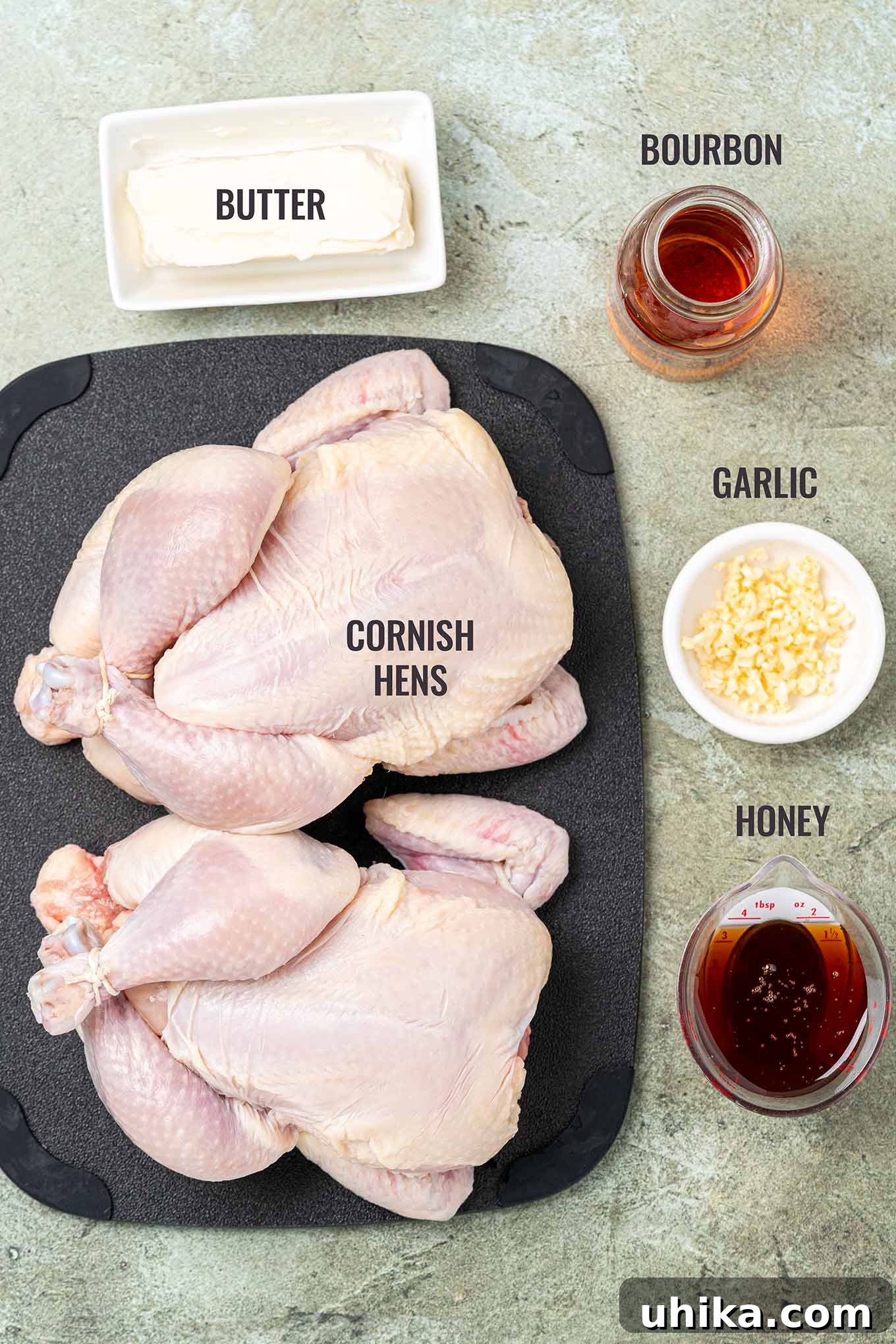
To ensure your roasted Cornish hens are nothing short of spectacular, understanding the role of each key ingredient is crucial. Here’s a closer look at what you’ll need and why it matters. The complete list with exact quantities is provided in the recipe card below.
- Cornish Hens: These small, young chickens typically weigh between 1.5 to 1.75 pounds each. While fresh Cornish hens can be a rare find, most grocery stores stock them in the freezer aisle. We recommend choosing hens on the smaller side for this recipe, as it’s designed for one hen per person, offering a generous and satisfying individual serving. Properly thawing them is essential for even cooking and tender results. Their lean meat and delicate bone structure cook quickly, making them an excellent choice for a relatively fast yet impressive meal.
- Bourbon: The star of our glaze! Bourbon brings a distinctive warmth, a subtle sweetness, and a wonderful complexity that pairs beautifully with poultry. Its oaky undertones and caramel notes infuse the glaze with a rich depth of flavor. If bourbon isn’t available or preferred, a good quality whiskey can be used as a substitute. Keep in mind that whiskey tends to be less sweet than bourbon, so you might consider slightly increasing the amount of honey to balance the flavors in your glaze.
- Honey: Honey serves a dual purpose in this recipe: it provides natural sweetness that complements the bourbon’s robust flavor, and it contributes to the glaze’s luscious, syrupy consistency. When heated, honey caramelizes beautifully, creating that desirable golden, slightly sticky skin on the hens. Maple syrup can be a suitable alternative, but be aware that it has a thinner consistency than honey. If you opt for maple syrup, you’ll likely need to simmer the glaze a bit longer to achieve the ideal thickness for coating the hens evenly.
- Unsalted Butter: Butter is indispensable for both basting the hens and forming the base of the glaze. When rubbed over the hen’s skin, it promotes browning and adds a rich flavor, helping to create that crispy exterior. In the glaze, butter lends a smooth, velvety texture and helps to emulsify the ingredients, making the glaze coat the hens more effectively. Always choose unsalted butter to have full control over the salt content of your dish.
- Fresh Garlic: Minced garlic adds an aromatic punch to the glaze, providing a savory counterpoint to the sweetness of the honey and bourbon. Its pungent flavor mellows and sweetens as it cooks, infusing the glaze with an irresistible fragrance. Ensure you don’t brown the garlic, as this can make it bitter; merely cook it until it’s soft and fragrant.
- Salt and Freshly Ground Black Pepper: Simple yet essential seasonings. They enhance the natural flavors of the hen and the glaze, bringing all the components into harmonious balance. Don’t be shy with seasoning the hens generously both inside and out for maximum flavor.
Mastering the Roast: Step-by-Step Guide
Crafting these delectable roasted Cornish hens with bourbon glaze is a straightforward process, but paying attention to each step will ensure perfect results. Here’s a quick overview of the cooking process. You’ll find detailed, step-by-step instructions with specific measurements in the printable recipe card at the end of this article.
Before You Begin: Preparation is key for a seamless cooking experience. Start by preheating your oven to a consistent 400°F (200°C). Position oven racks in the lower third of your oven. Prepare two medium-sized roasting pans by placing racks in the bottom of each and coating them thoroughly with nonstick cooking spray. This setup ensures even air circulation around the hens, promoting uniform cooking and crispy skin, while also preventing them from sticking.
Preparing the Hens for Roasting: The foundation of a flavorful roast lies in proper seasoning. Begin by patting each Cornish hen thoroughly dry with paper towels. This crucial step helps achieve a crisper skin. Next, generously season the cavity of each hen with salt and freshly ground black pepper. Then, take a tablespoon of softened unsalted butter and rub it all over the exterior skin of each hen. This butter not only contributes to the rich flavor but also helps the skin achieve a beautiful golden hue and desired crispness. Finish by seasoning the exterior evenly with more salt and pepper. For a neater presentation and more even cooking, tie the legs of each hen together with kitchen twine. This keeps the legs and wings tucked in, preventing them from drying out too quickly.
Roasting the Cornish Hens: Carefully arrange three prepared hens, breast side up, in each roasting pan. Ensure there’s a little space between each bird to allow for proper heat circulation. Pour approximately 1/2-inch of water into the bottom of each pan. This water helps to create a humid environment, keeping the hens moist, and prevents pan drippings from burning, which will later be used for basting. Place both pans into the preheated oven. Roast the hens for the initial 25 minutes. After this time, carefully remove the pans from the oven and baste the hens generously with the flavorful pan juices. Return the pans to the oven, rotating their positions (e.g., top pan to bottom rack, front to back) to ensure all hens cook evenly. Continue roasting for an additional 20 minutes, or until an instant-read thermometer inserted into the thickest part of the breast (avoiding bone) registers 160°F (71°C).
Crafting the Bourbon Glaze: While your hens are roasting, it’s time to prepare the star glaze. In a small saucepan, melt two tablespoons of butter over medium heat. Add the minced garlic and cook gently until it becomes soft and fragrant, which typically takes 2 to 3 minutes. Be careful not to brown the garlic, as this can lead to a bitter taste. Season the garlic with a pinch of salt and pepper, then pour in the bourbon. Bring the mixture to a gentle simmer, allowing the alcohol to cook off slightly. Stir in the honey and continue cooking, stirring frequently, for 8 to 10 minutes, or until the mixture thickens to a beautiful, syrupy consistency that will coat a spoon. Once thickened, cover the saucepan and keep the glaze warm until the hens are ready for their final touch.
Glazing and Finishing the Hens: Once the hens have reached the initial internal temperature of 160°F (71°C), remove them from the oven. Increase the oven temperature to 450°F (230°C). Liberally brush each hen with the warm bourbon glaze, ensuring an even coating. Return the glazed hens to the now hotter oven for just long enough for the glaze to caramelize into a sticky, golden-brown crust, typically about 5 minutes. Watch them closely to prevent burning. Remove the hens from the oven and, if desired, brush with any remaining glaze for an extra sheen and burst of flavor. Finally, and crucially, let the hens rest uncovered for at least 10 minutes before carving and serving. This resting period allows the juices to redistribute throughout the meat, resulting in incredibly tender and moist poultry.
Expert Tips for Flawless Cornish Hens
Achieving perfectly roasted Cornish game hens with a delectable glaze is easier than you think, especially with these helpful tips and tricks:
How to Defrost Cornish Hens Properly: Given that most Cornish hens are sold frozen, proper thawing is a critical first step. The safest and most recommended method is to defrost them slowly in the refrigerator for 24 to 30 hours. For a quicker option, if you’re pressed for time, you can defrost them in a container of cool water. Keep the hens in their original wrappers and submerge them in cool water, changing the water every 20 to 30 minutes. This method typically takes about 90 minutes for a couple of hens. Remember, quick defrosting is best suited for smaller quantities (2 to 4 hens) to ensure food safety.
Scaling This Recipe for Different Serving Sizes: This recipe is wonderfully adaptable, making it easy to adjust for 2, 4, or 6 servings. If you’re preparing dinner for two, simply halve the quantities for the bourbon glaze. For four servings, the glaze recipe can remain as is; you might have a little extra, but since it hasn’t come into contact with raw poultry, it can be served tableside for anyone desiring an additional drizzle. When reducing the number of hens, keep in mind that roasting times might be slightly reduced (perhaps by 5 minutes) due to better heat circulation in the oven. Always rely on an instant-read thermometer for accuracy, ensuring the internal temperature reaches 165°F (74°C) in the thickest part of the breast.
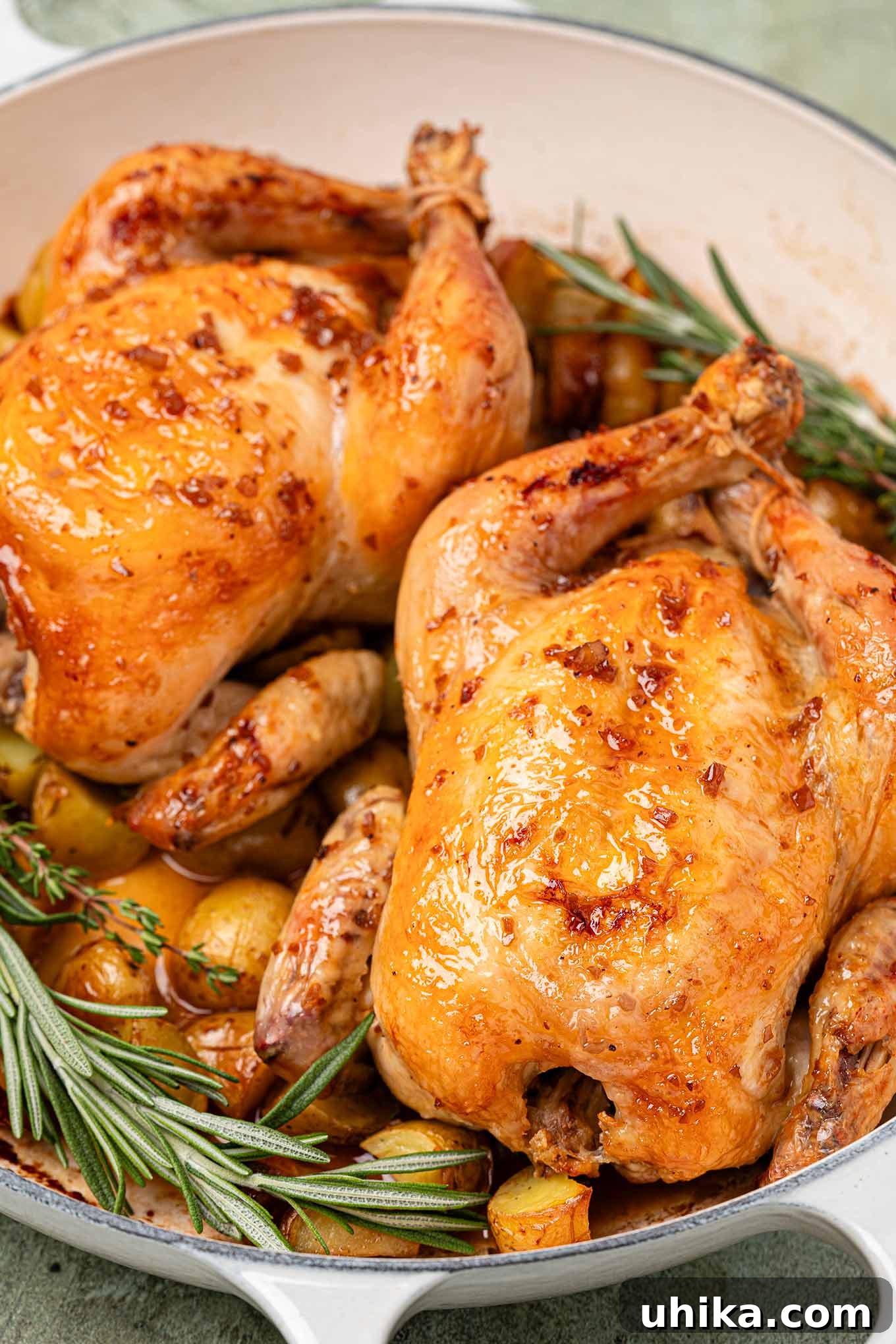
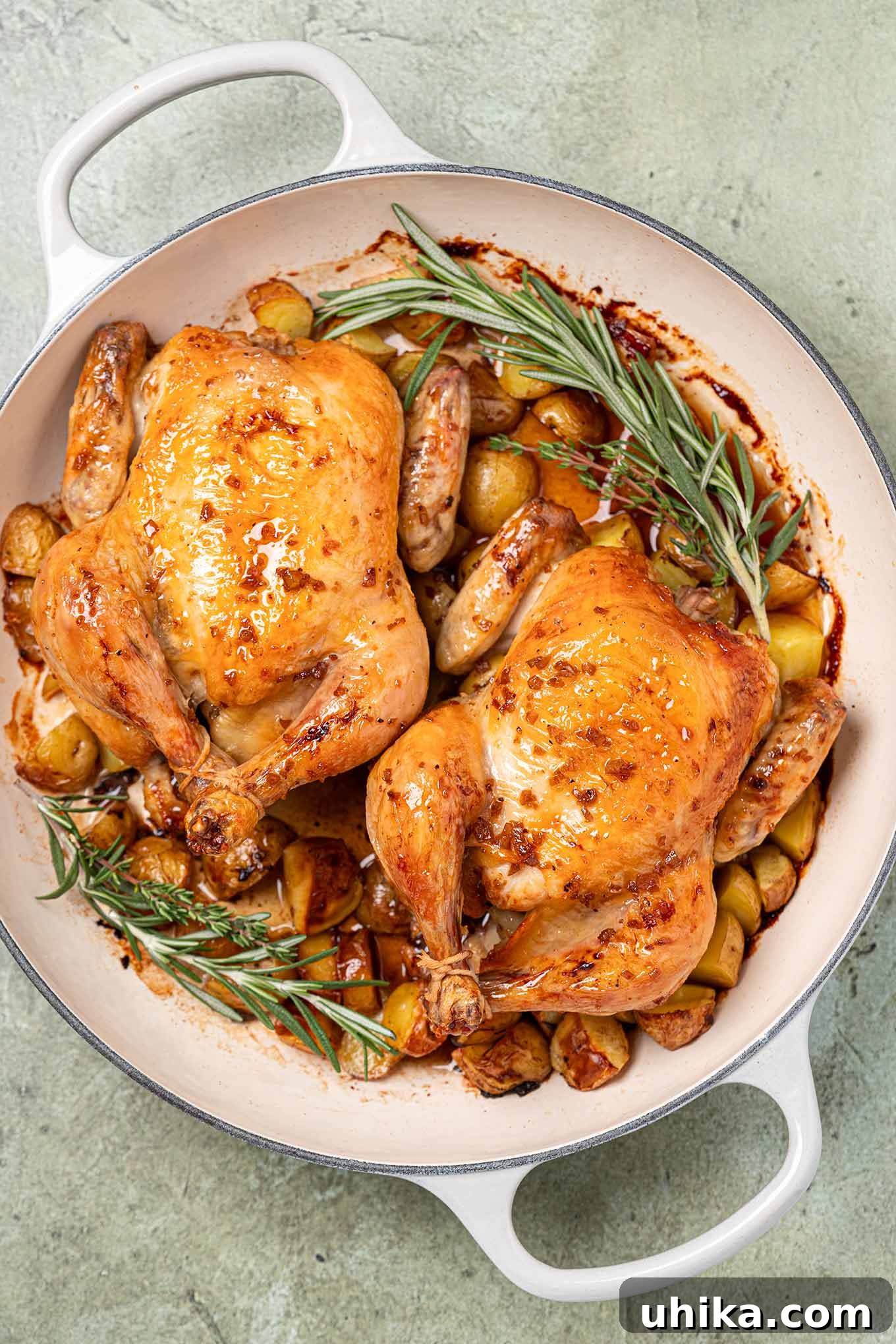
Roasting Hens with a Bed of Potatoes: For a delightful one-pan meal, consider roasting your Cornish hens atop a bed of baby yellow potatoes. As seen in our latest photos, this method infuses the potatoes with all the savory pan drippings and rich flavors from the hens and glaze, creating an incredibly flavorful side dish. Plan for approximately 6 ounces of potatoes per hen (per person). Toss the potatoes in a little melted butter and season them generously with salt and freshly ground black pepper before spreading them in the roasting pan. Lay the seasoned hens directly on top of the potato bed and follow the recipe instructions as written. The potatoes will emerge perfectly tender and incredibly delicious, absorbing all the wonderful juices.
Infusing with Fresh Herbs: To impart a subtle yet aromatic herb flavor, tuck a sprig each of fresh rosemary and thyme inside the cavity of each hen before roasting. As the hens cook, these herbs will release their fragrant oils, permeating the meat with a delicate, earthy essence. If you opt to roast with potatoes, you can also scatter a sprig or two of rosemary and thyme over the potatoes for an added layer of flavor and a beautiful presentation. Alternatively, for a more pronounced herb flavor on the skin, you can finely chop the herbs and mix them into the softened butter before rubbing it onto the hens.
Achieving the Crispiest Skin: The key to crispy skin lies in several factors. First, ensure the hens are thoroughly patted dry before seasoning. Moisture is the enemy of crispiness. Second, the initial high roasting temperature helps to render the fat under the skin. Finally, the final high-temperature blast after glazing is crucial for caramelizing the glaze and crisping up the skin to perfection. Avoid covering the hens during the resting period, as this can trap steam and soften the skin you’ve worked so hard to achieve.
Using an Instant-Read Thermometer: This is arguably the most important tool for perfectly roasted poultry. An instant-read thermometer takes the guesswork out of cooking, ensuring your hens are cooked safely and to optimum juiciness. Insert it into the thickest part of the breast, making sure not to touch the bone, as bone temperatures can be misleading. While the recipe aims for 160°F before the final glaze, the USDA recommends an internal temperature of 165°F (74°C) for cooked poultry, which will be reached during the final glazing and resting period.
Perfect Pairings: What to Serve with Your Cornish Hens
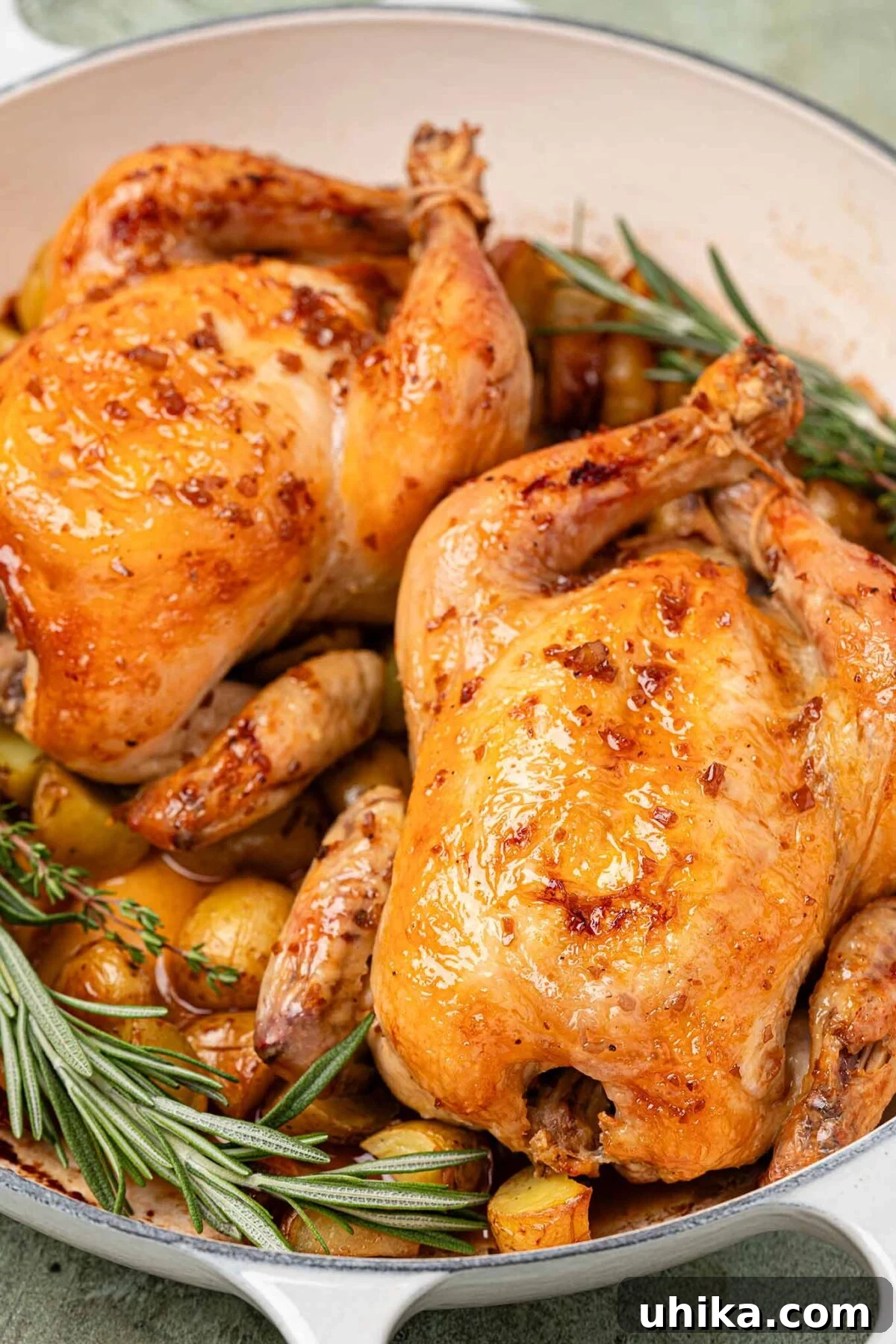
Roasted Cornish hens, especially when bathed in a rich bourbon glaze, offer a versatile canvas for a variety of side dishes. While they pair beautifully with almost anything that complements chicken, the sweet and smoky notes of the bourbon glaze naturally lean towards comforting, Southern-style accompaniments. Here are some thoughtfully selected options to complete your gourmet meal:
- Southern Style Green Beans: Slow-cooked to perfection with smoky bacon and sweet onions, these green beans offer a savory depth and a tender texture that contrasts wonderfully with the crispy hens. The smoky elements in the green beans echo the subtle smokiness from the bourbon, creating a cohesive flavor profile.
- Cornbread Stuffing with Bacon: More bacon? Yes, please! This stuffing offers a delightful blend of textures and flavors – the comforting crumbly cornbread, savory herbs, and the irresistible crunch and saltiness of bacon. It’s a hearty and satisfying side that perfectly soaks up any lingering glaze or pan juices.
- Rustic Mashed Potatoes: Creamy, buttery, and infused with fresh herbs, these mashed potatoes provide a comforting and rich accompaniment. Their smooth texture is a lovely contrast to the hen’s crispy skin, and their mild flavor allows the bourbon glaze to truly shine.
- Creamed Spinach: A timeless classic that never disappoints. The rich, creamy texture and slightly earthy flavor of creamed spinach provide a luxurious counterpoint to the roasted hens. It’s a simple yet elegant side that adds a touch of sophistication to your plate.
- Lemony Sweet Potatoes and Apples with Fresh Sage: This vibrant side dish offers a delightful balance of sweet and tart, with the earthy aroma of sage. The natural sweetness of the sweet potatoes and apples complements the honey in the glaze, while a hint of lemon brightens the entire meal, providing a refreshing contrast to the richness of the poultry.
- Roasted Asparagus or Broccoli: For a lighter, fresher option, simply roasted asparagus spears or broccoli florets tossed with olive oil, salt, and pepper can add a vibrant green color and a slight bitterness that cleanses the palate, balancing the richness of the main course.
- Wild Rice Pilaf: Returning to a classic, a simple wild rice pilaf, perhaps with some toasted pecans or dried cranberries, offers a nutty flavor and satisfying texture that works beautifully with the hens. It’s an elegant and wholesome alternative to potatoes.
No matter your choice, ensure your sides complement the savory-sweet profile of the bourbon-glazed Cornish hens. Aim for a balance of textures and flavors to create a truly memorable dining experience.
Roasted Cornish Hens With Bourbon Glaze
By Lynne Webb
Roasted Cornish hens glazed with a simple mix of bourbon, honey, and garlic are an easy yet elegant choice for a small holiday celebration or a special occasion dinner for two. This recipe yields tender, juicy birds with a beautiful, caramelized skin.
Prep Time: 15 mins
Cook Time: 55 mins
Total Time: 1 hr 10 mins
Servings: 6 servings
Ingredients
- 6 Cornish game hens (approx 1-1/2 lbs each)
- 6 tablespoons unsalted butter, softened
- Salt and freshly ground black pepper, to taste
For the Glaze:
- 2 tablespoons butter
- 2 cloves garlic, minced
- 2/3 cup bourbon
- 1/4 cup honey
Instructions
- Preheat your oven to 400°F (200°C). Position oven racks in the bottom third of the oven. Prepare two medium-sized roasting pans by placing racks in the bottom and coating them with nonstick spray.
- Pat each hen thoroughly dry with paper towels. Season the cavity of each hen generously with salt and pepper. Rub a tablespoon of softened butter all over the exterior skin of each hen. Season the exterior evenly with more salt and pepper. Tie the legs of each hen together with kitchen twine for even cooking and a tidy presentation.
- Arrange 3 hens, breast side up, in each prepared roasting pan, ensuring a little space between them. Add approximately 1/2-inch of water to the bottom of each pan. Place both pans in the preheated oven.
- Roast the hens for 25 minutes. Carefully remove the pans from the oven and baste the hens generously with the pan juices. Return them to the oven, rotating the position of the roasting pans (e.g., swapping top and bottom, or front to back) to promote even cooking.
- Continue roasting the hens for an additional 20 minutes, or until an instant-read thermometer inserted into the thickest part of the breast (avoiding bone) registers 160°F (71°C).
- While the hens are roasting, prepare the glaze: In a small saucepan, melt 2 tablespoons of butter over medium heat. Add the minced garlic and cook until soft and fragrant, about 2 to 3 minutes. Be careful not to let the garlic brown. Season with a pinch of salt and pepper, then pour in the bourbon.
- Bring the mixture to a simmer, then stir in the honey. Continue cooking, stirring frequently, for 8 to 10 minutes, or until the mixture thickens to a syrupy consistency. Cover the saucepan and keep the glaze warm until ready to use.
- Once the hens have reached 160°F, remove them from the oven. Increase the oven temperature to 450°F (230°C). Liberally brush the hens with the warm bourbon glaze. Return them to the hotter oven for just long enough for the glaze to caramelize and become golden brown, about 5 minutes. Watch closely to prevent burning. Remove and brush with any remaining glaze.
- Allow the roasted hens to rest uncovered for 10 minutes before serving. This allows the juices to redistribute, ensuring tender and moist meat.
Notes
- HOW TO DEFROST CORNISH HENS: Most Cornish hens are sold frozen. The best way to defrost them is in the refrigerator for 24 to 30 hours. If you’re in a hurry, you can defrost them in a container of cool water for about 90 minutes. Keep the hens in their wrappers and change the water every 20 to 30 minutes. This quick defrosting method is most effective for 2 to 4 hens.
- SCALING THIS RECIPE FOR TWO OR FOUR: This recipe is easily adjustable. For two servings, halve the quantities for the glaze. For four servings, you can keep the glaze quantities as is; any leftover glaze (not used on raw poultry) can be served at the table for an extra drizzle. When cooking fewer hens, roasting times might be slightly reduced (perhaps by 5 minutes) due to increased heat circulation in the oven. Always use an instant-read thermometer to confirm doneness.
- ROAST THE HENS WITH POTATOES: For a convenient one-pan meal, roast the hens on a bed of baby yellow potatoes. Plan on about 6 ounces of potatoes per hen (per person). Toss the potatoes in a little melted butter and season with salt and freshly ground black pepper before placing them in the roasting pan. Lay the hens on top and follow the recipe. The potatoes will absorb the rich pan drippings and flavors, turning out perfectly tender and incredibly delicious.
- ADD FRESH HERBS: For a subtle, aromatic flavor, tuck a sprig of fresh rosemary and a sprig of fresh thyme inside the cavity of each hen before roasting. If you’re also roasting potatoes, you can scatter a few sprigs over them for added flavor and aroma.
Nutrition information is automatically calculated, so should only be used as an approximation.