
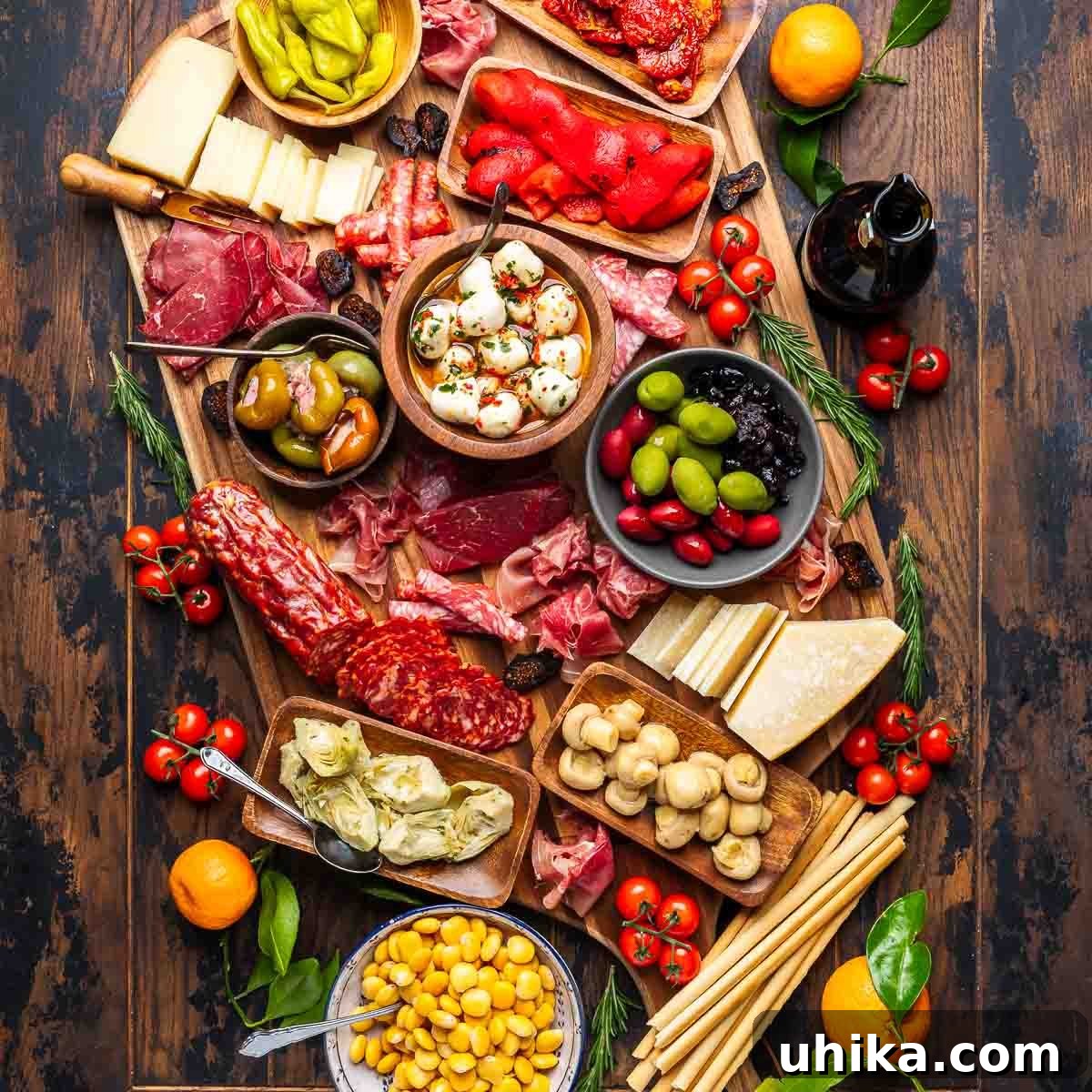
There’s truly nothing more delightful than witnessing the sheer joy on your guests’ faces as they encounter a beautifully presented antipasto platter! This classic Italian appetizer, brimming with a diverse array of flavors and textures, isn’t just a treat for the palate; it’s a visual feast that sets the perfect tone for any gathering. And for the host, its make-ahead nature is a godsend, allowing you to relax, mingle, and genuinely enjoy the company of your friends and family without last-minute kitchen stress. Crafting an impressive antipasto board is an art that combines simplicity with elegance, making it an ideal choice for effortless entertaining.
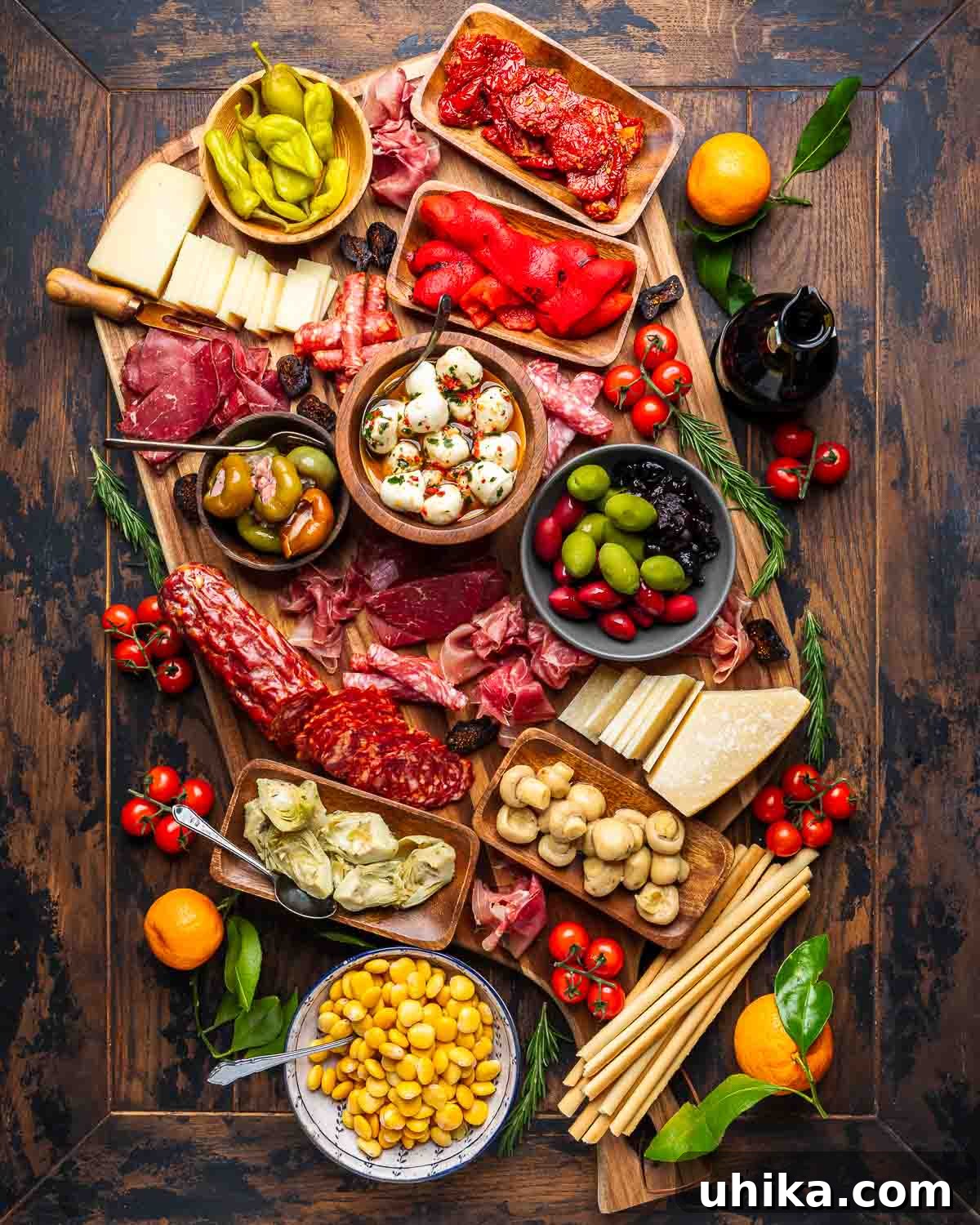
Crafting the Ultimate Italian Antipasto Platter
The Italian antipasto platter is a culinary masterpiece, a celebration of Italy’s rich gastronomic traditions! The word “antipasto” literally means “before the meal,” and this spread serves as the perfect introduction, tantalizing taste buds and building anticipation for the courses to follow. It offers an incredible variety of items to choose from, including tangy pickled vegetables, crisp crackers, savory salty cured meats, briny olives, and an assortment of exquisite cheeses. With such a diverse selection, there’s truly something here for everyone, catering to a wide range of preferences and dietary considerations.
While an elaborate antipasto board might appear intimidating to create, resembling something only a professional food stylist could achieve, I’m here to assure you that this is far from the truth. You don’t need a professional background or an extensive collection of gourmet tools to assemble a show-stopping antipasto platter. Over the years, I’ve gathered a handful of straightforward tips and clever tricks that make the process not just manageable, but genuinely enjoyable. I’m excited to share these insights with you, empowering you to build the most beautiful and delicious antipasto platter your guests have ever seen, transforming simple ingredients into an unforgettable culinary experience.
Why an Antipasto Platter is Perfect for Entertaining
An antipasto platter is more than just an appetizer; it’s an experience. Here’s why it’s the ultimate choice for hosts:
- Visual Appeal: The vibrant colors and varied textures of the ingredients create an irresistible display that immediately captivates guests. It’s a true centerpiece.
- Customization: You can easily tailor the platter to your guests’ preferences, dietary needs, or the season. Vegetarian, gluten-free, or specific flavor profiles are all achievable.
- Social Interaction: A shared platter encourages conversation and interaction as guests explore the different offerings and discuss their favorites.
- Effortless Hosting: Most elements of an antipasto platter can be prepared or assembled in advance, significantly reducing stress on the day of your event. This allows you to spend more quality time with your guests rather than being stuck in the kitchen.
- Abundance and Variety: With a wide selection of meats, cheeses, vegetables, and more, an antipasto platter ensures there’s always something for everyone, making it incredibly satisfying.
Essential Antipasto Ingredients: A Detailed Guide
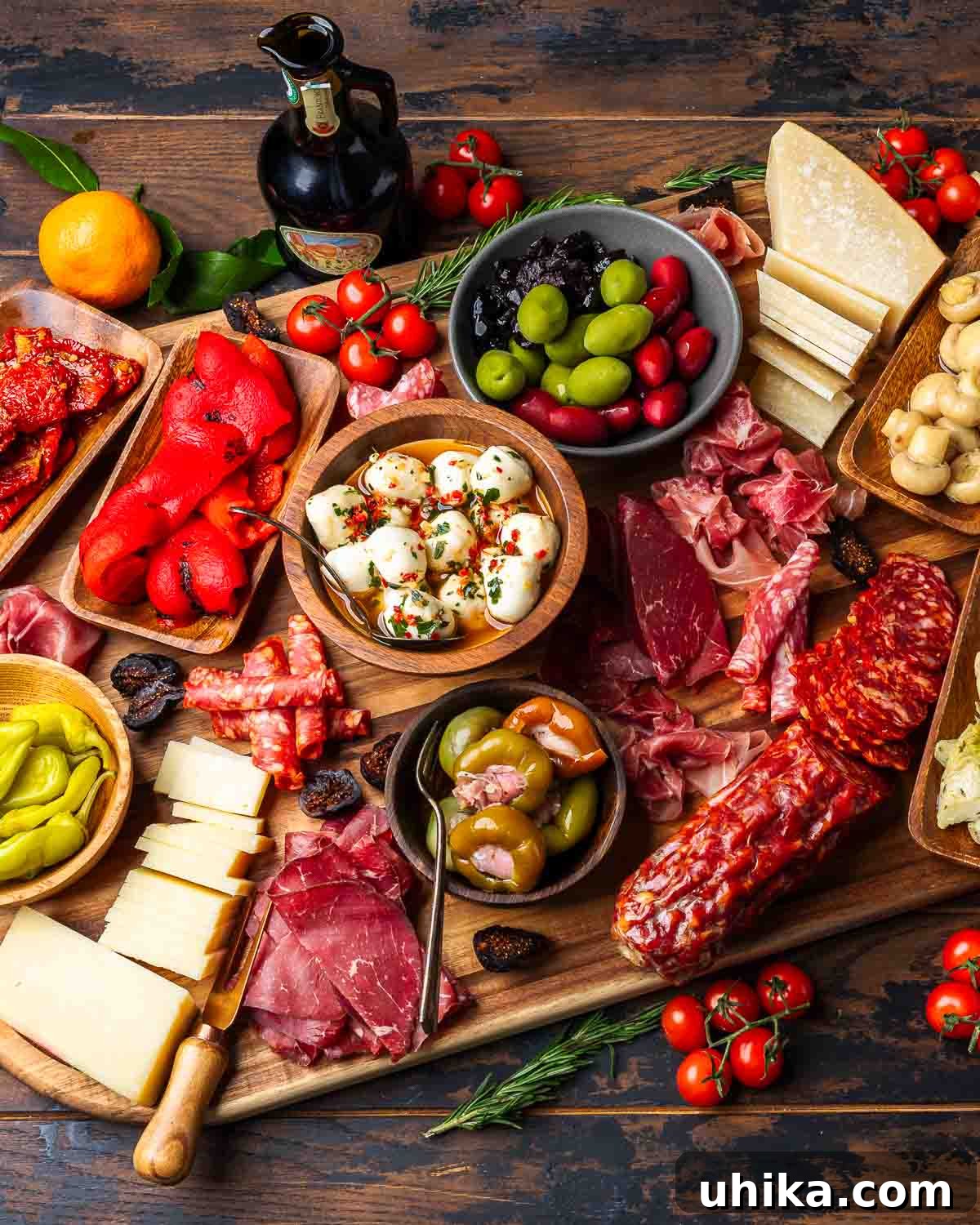
The beauty of an antipasto platter lies in its versatility and the quality of its components. While the possibilities are endless, starting with a thoughtful selection of high-quality ingredients is key. The following image showcases a fantastic range of items, and the bulleted list provides special notes and suggestions to guide your choices, helping you create a balanced and exciting spread.
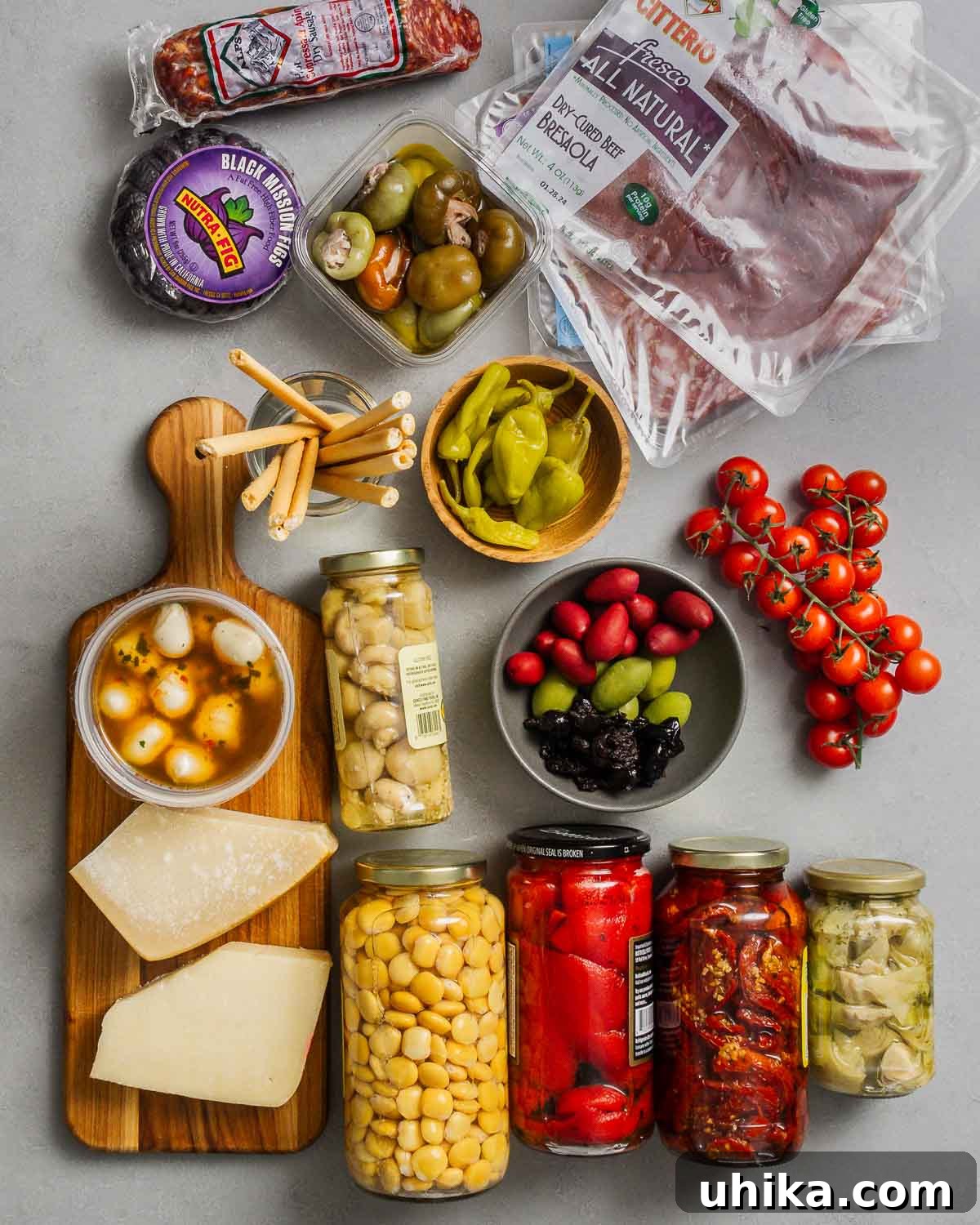
- Artisanal Cheeses: Aim for at least 3-5 different cheeses to offer a variety in flavor profiles and textures. Think about hard, semi-hard, and soft options.
- Hard Cheeses: Parmigiano Reggiano (aged, nutty, salty), Pecorino Romano (sharp, sheep’s milk). Offer these in wedges for guests to break off or pre-cut into shards.
- Semi-Hard Cheeses: Provolone (mild or sharp), Asiago (nutty, firm). Slice these or cube them for easy grabbing.
- Soft/Fresh Cheeses: Marinated fresh mozzarella balls (bocconcini or ciliegine), burrata (creamy, rich). These add a delightful creaminess.
- Selection Tip: Varying the milk source (cow, sheep, goat) also adds another layer of complexity.
- Premium Cured Meats (Salumi): A selection of 3-5 different cured meats is ideal, offering diverse flavors and textures.
- Salami: Genoa salami (classic, savory), Hard soppressata (spicy or mild, firm), Felino salami. You can slice these thin and roll them for presentation.
- Prosciutto: Delicate, thinly sliced prosciutto di Parma or San Daniele offers a sweet and salty balance. Arrange it in beautiful, ruffled patterns.
- Specialty Meats: Consider bresaola (air-dried, salted beef), coppa (pork shoulder/neck), or spicy ’Nduja (spreadable salami) for a gourmet touch.
- Presentation Tip: Roll or fold meats in different ways to add visual interest to the platter.
- Flavorful Pickled Vegetables (Sott’aceti): These provide a crucial tangy contrast to the rich meats and cheeses.
- Peppers: Assorted pickled pepperoncini, pickled cherry peppers (especially those stuffed with prosciutto or cheese).
- Artichokes: Marinated artichoke hearts offer a tender, earthy bite.
- Mushrooms: Marinated mushrooms are a delightful, savory addition.
- Other Options: Pickled green beans, giardiniera (mixed pickled vegetables), or even pickled Italian eggplant.
- Marinated Vegetables (Sott’olio): These add a rich, oil-infused flavor and tender texture.
- Sun-Dried Tomatoes: Oil-packed sun-dried tomatoes provide intense, sweet-tart notes.
- Olives: A medley of Sicilian green olives, oil-cured black olives, and vibrant Kalamata olives. The variety in color, size, and flavor is important.
- Beans: Lupini beans are a traditional and unique Italian snack that adds a different texture.
- Roasted Peppers: Sweet roasted red peppers, usually packed in oil.
- Fresh Ingredients for Balance and Color: These elements add freshness, brightness, and visual appeal.
- Fruits: Seasonal fresh grapes (red and green), thinly sliced oranges (especially if you can find them with leaves for garnish), or fresh figs are excellent.
- Vegetables: Clusters of cherry tomatoes on the vine add a rustic, garden-fresh touch and burst of flavor. Crisp cucumber slices or bell pepper strips also work well.
- Herbs: Fresh sprigs of rosemary, basil, or thyme tucked into gaps provide aromatic garnish and extra visual elegance.
- Dried Fruits for Sweetness: These offer a sweet counterpoint and textural contrast.
- Figs: Dried figs, especially halved, are beautiful and pair wonderfully with cheese and meat.
- Apricots/Dates: Dried apricots or dates also work well, adding natural sweetness and chewiness.
- Crisp Accompaniments: Crucial for scooping and crunch.
- Breadsticks: Long, slender grissini (Italian breadsticks) are a classic choice.
- Crackers: A selection of plain, water crackers, or savory taralli.
For detailed quantities and a full ingredient list, please refer to the recipe card below. Remember, the key is variety and balance, ensuring a delightful sensory journey for your guests.
How to Build a Beautiful Antipasto Platter: A Step-by-Step Guide
Assembling an antipasto platter or even a charcuterie board might seem daunting at first glance, but it’s a straightforward process once you understand a few key principles. This section will walk you through the steps to construct the most visually appealing and delicious antipasto platter, making you feel like a pro in no time!
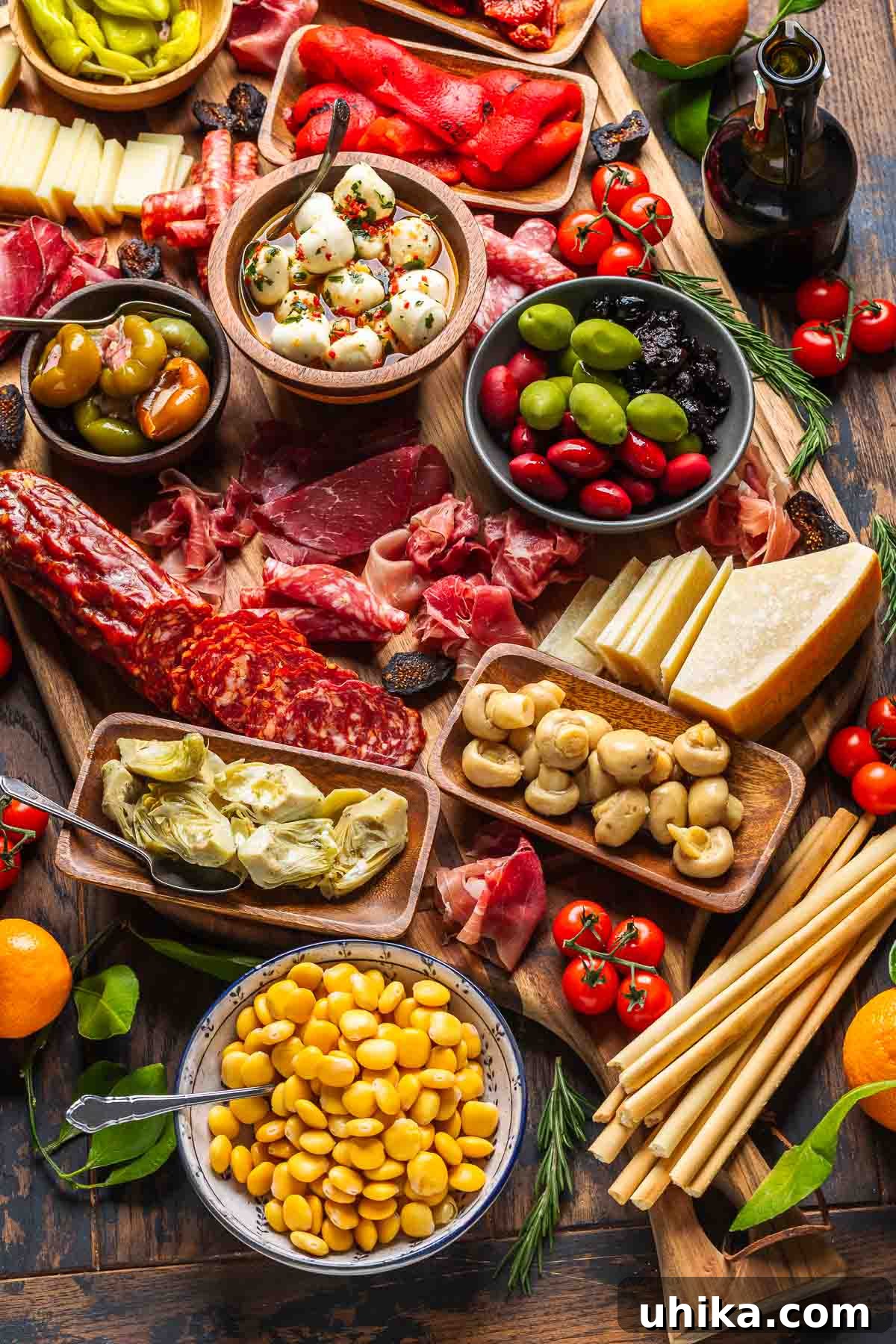
- Select Your Board: The foundation of your platter is the board itself. It doesn’t need to be overly ornate or expensive. Look for a sturdy wooden cutting board, slate, or even a large ceramic tray. The most important factor is size. Choose one large enough to comfortably hold a good assortment of food without looking sparse or overly crowded. A board measuring at least 16″ by 24″ is recommended for larger gatherings, providing ample space for creativity. Home Goods or Home Sense can be great places to find unique and affordable options.
- Gather and Prepare Ingredients: Lay out all your chosen ingredients. Use the ingredient guidelines provided earlier as a starting point, but don’t hesitate to customize based on your preferences or what’s fresh and available. Aim for a balanced ratio: typically, 5-7 types of vegetables (pickled or marinated), 3-5 types of meat, 3-5 types of cheese, 2-3 types of olives, and 2-3 fresh or dried fruits. Pre-slice harder cheeses and arrange meats in appealing ways (rolled, folded, or fanned out) to facilitate easy serving for your guests.
- Place Your Centerpiece (Optional but Recommended): A central anchor helps to structure the entire platter. I often select a large, attractive bowl and fill it with a substantial item, such as marinated fresh mozzarella balls or a colorful medley of olives. This centerpiece provides a focal point around which the rest of the ingredients can be artfully arranged.
- Stagger Small Bowls for Wet Items: To prevent liquids from seeping onto the board or mixing with other ingredients, utilize a variety of smaller bowls or ramekins. Fill these with your pickled vegetables, marinated items (like artichoke hearts or mushrooms), and olives. Strategically stagger these bowls around your centerpiece, creating distinct sections and adding varying heights to the display.
- Arrange the Cheeses: Begin placing your cheeses, as they are often larger, structural components. Cut half of each block of hard cheese into slices, cubes, or wedges to make it easier for guests to serve themselves. Place different types of cheese on opposite sides of the board, perhaps with their tips pointing towards the centerpiece, creating balance and flow. Ensure there’s a good distribution of cheese throughout the platter.
- Place the Cured Meats: Now it’s time for the salumi. For softer meats like prosciutto, delicately arrange them in a “ruffled” or “flower” shape. For firmer salami, roll individual slices or fold them into quarters. Distribute the meats in various areas around the board, nestled among the cheeses and bowls. Aim for an inviting, abundant look rather than a flat, uniform spread.
- Fill in the Gaps with Fruits, Vegetables, and Crackers: This is where the platter truly comes alive and appears bountiful. Use your fresh and dried fruits, cherry tomatoes, and crunchy crackers or breadsticks to fill any remaining empty spaces. If using dried figs, cutting them in half can offer a more elegant presentation. Tuck clusters of grapes or small piles of dried apricots into nooks and crannies. This step also ensures that every inch of the board is visually appealing and accessible.
- Garnish for a Flourish: While optional, garnishes elevate the presentation significantly. Fresh herbs like sprigs of rosemary, basil leaves, or thyme add a pop of color, a delightful aroma, and a touch of rustic elegance. You can also drizzle a high-quality extra virgin olive oil over some of the cheeses or vegetables for an added sheen and flavor.
- Serve and Enjoy! The best part about an antipasto platter is that it’s designed for relaxed enjoyment. I highly recommend assembling it before your guests arrive so you can simply kick back and engage with them. If preparing further in advance, cover the board tightly with plastic wrap and refrigerate. Remove it from the refrigerator at least 30 minutes before serving to allow the cheeses and meats to come to room temperature, enhancing their flavors. Consider serving your exquisite platter with some classic Italian aperitivo cocktails, such as a refreshing Aperol Spritz, a light Hugo Spritz, or a festive Bellini.
Antipasto Platter vs. Charcuterie Board: What’s the Difference?
Antipasto platters and charcuterie boards share many similarities, primarily featuring an assortment of cured meats and cheeses. However, their defining characteristics and typical inclusions differ significantly, reflecting their distinct culinary origins.
An antipasto platter, rooted in Italian tradition, tends to emphasize fresh and pickled vegetables, often showcasing Italian-style marinated items like artichoke hearts, roasted red peppers, sun-dried tomatoes, and a generous variety of olives. While cured meats (salumi) and cheeses are central, the vegetable component is notably more prominent, offering a brighter, tangier, and often lighter profile. Antipasto is literally “before the meal,” meant to awaken the appetite with a diverse palate of flavors. You might also find things like bruschetta, focaccia, or even some seafood elements on a traditional Italian antipasto.
A charcuterie board, on the other hand, derives from French culinary tradition, specifically “charcuterie,” referring to the art of preparing cured meats. Therefore, charcuterie boards place a stronger focus on an elaborate assortment of cured meats (pâtés, rillettes, sausages, terrines) as their star attraction. While cheeses are almost always included, the accompaniments often lean towards fruit (fresh and dried berries), nuts, honey, various jams and preserves, mustards, and even dark chocolate. The emphasis is on rich, savory, and often sweet pairings that complement the meats. The vegetable component, if present, is usually less extensive than on an antipasto platter.
In essence, if you’re craving a vibrant spread heavy on zesty pickled veggies and classic Italian meats and cheeses, an antipasto platter is your go-to. If you’re after a meat-centric experience with rich condiments and a touch of sweetness, a charcuterie board fits the bill.
More Delicious Additions for Your Antipasto Platter
While the core ingredients listed above form a fantastic base, don’t hesitate to expand your antipasto platter with these delightful Italian spreads and condiments, offering even more variety and flavor dimensions:
- Caponata – A traditional Sicilian eggplant spread, rich with tomatoes, olives, capers, and a sweet-and-sour profile. Perfect for spreading on crostini.
- Cherry Pepper Spread – A vibrant and often spicy spread made with cherry tomatoes and piquant peppers, adding a zesty kick.
- Peperonata – A soft, sweet, and sour condiment made from slow-cooked bell peppers, often with onions and tomatoes, offering a mild and comforting flavor.
- Artichoke Pesto – A creamy and savory spread featuring artichoke hearts blended with cheese, nuts, and olive oil, a delightful alternative to traditional basil pesto.
- Marinated Seafood: Small bowls of marinated calamari or anchovies can add a coastal Italian touch.
- Hard-Boiled Eggs: Simple yet effective, quartered hard-boiled eggs can be a surprising and welcome addition.
- Fresh Bread: Beyond crackers, a crusty baguette or slices of focaccia are perfect for dipping and soaking up flavors.
How to Build the Best Antipasto Platter
James Delmage
★★★★★
45
45
12
Pin
Ingredients
Cured Meats
- 6 ounces Genoa salami
- 3 ounces prosciutto
- 3 ounces bresaola
- 3 ounces coppa
- 3 ounces soppressata
Cheeses
- 8 ounce Parmigiano Reggiano, sliced or in chunks
- 8 ounces mild provolone, sliced
- 12 ounces marinated fresh mozzarella balls (bocconcini or ciliegine)
Olives
- 8 ounces Sicilian green olives
- 8 ounces oil-cured black olives
Pickled & Marinated Vegetables
- 6 ounces stuffed cherry peppers
- 6 ounces roasted red peppers
- 6 ounces marinated artichoke hearts
- 6 ounces marinated mushrooms
- 6 ounces lupini beans
- 6 ounces marinated sun-dried tomatoes
- 6 ounces pepperoncini
Fruits and Accompaniments
- 6 ounces dried figs (halved)
- 10 ounces cherry tomatoes (on the vine if possible)
- Assorted crackers or Italian breadsticks (grissini)
- Fresh rosemary sprigs (for garnish)
Instructions
-
Choose a large board (at least 16×24 inches is recommended) as the size will dictate how much you can fit. The ingredient amounts provided are general guidelines.
-
Place olives, mozzarella balls, and pickled vegetables into small bowls or dishes. This prevents them from leaking onto other ingredients and keeps your board clean. Slice at least half of the provolone and Parmigiano Reggiano to make it convenient for your guests.
-
Artfully arrange your cured meats. Form prosciutto into elegant flower shapes, fold or roll other cold cuts like salami to add height and texture. Arrange them in distinct sections around all sides of the board.
-
Distribute crackers, spreading tools (for softer cheeses), and small toothpicks around the board, ensuring guests can easily serve themselves.
-
To enhance the visual appeal and make the board more festive, garnish with fresh cherry tomatoes (especially those on the vine) and sprigs of rosemary or other fresh herbs like basil or thyme. Enjoy this delightful spread!
Notes
- There is no strictly “right” or “wrong” way to build your antipasto board. The primary goal is to use the best quality ingredients you can find, focusing on a delightful variety of meats, cheeses, and pickled items that complement each other.
- For optimal freshness and appearance, assemble the board shortly before your guests are set to arrive. If preparing in advance, cover tightly with plastic wrap and refrigerate. Remember to remove it at least 30 minutes before serving to allow the ingredients to come to room temperature, which significantly enhances their flavors and aromas.
Nutrition information is automatically calculated, so should only be used as an approximation. It is not intended as medical advice. Always consult a qualified professional for personalized dietary guidance.
Expert Tips for Antipasto Platter Success
Beyond the steps of assembly, a few additional considerations can elevate your antipasto platter from good to truly exceptional:
- Temperature Matters: For the best flavor, most cheeses and cured meats should be served at room temperature. Remove your platter from the refrigerator about 30 minutes before serving. However, very fresh cheeses like mozzarella balls can remain slightly cooler.
- Balance Flavors and Textures: Aim for a mix of salty, sweet, savory, and tangy. Combine soft cheeses with firm ones, chewy meats with crispy crackers, and fresh fruits with pickled vegetables. This creates a dynamic eating experience.
- Color and Presentation: Think of your board as a canvas. Use the natural colors of the ingredients to create a vibrant and appealing display. Reds (roasted peppers, cherry tomatoes), greens (olives, herbs), and creams (cheeses) can be arranged artfully. Don’t be afraid to stack or layer some items to add height and dimension.
- Ample Serving Utensils: Provide separate tongs, small spoons, or cheese knives for each item to maintain hygiene and ease of serving. Small bowls for discarded olive pits or wrappers are also a thoughtful touch.
- Consider Dietary Needs: If you know your guests have specific dietary restrictions (e.g., vegetarian, gluten-free), ensure there are ample options available for them. Clearly label items if necessary.
- Replenish as Needed: For longer gatherings, have extra ingredients prepped and ready in the fridge to replenish the platter as items get low, keeping it looking fresh and abundant throughout the event.
- Pairing with Beverages: An antipasto platter pairs beautifully with a variety of drinks. Light-bodied Italian red wines (like a Dolcetto or Barbera), crisp white wines (Pinot Grigio or Vermentino), dry rosé, or sparkling wines (Prosecco or Franciacorta) are excellent choices. For non-alcoholic options, sparkling water with lemon or herbal iced tea works well.
If you’ve enjoyed crafting this Antipasto Platter or any recipe on this site, we’d love for you to give it a 5-star rating and share your experience in the comments below. Your feedback helps our community of home cooks!
We believe in catering to various learning styles. If you are someone who prefers to learn by watching, you can find most of our recipes and helpful tips on our YouTube channel and our Facebook Page. Connect with us and become part of our growing culinary community!
Love this recipe? Share your thoughts below!
Join us on Instagram at @sipandfeast or tag your beautiful creations with #sipandfeast!