


Savory Bacon and Leek Bread Pudding: Your Ultimate Comfort Food Recipe
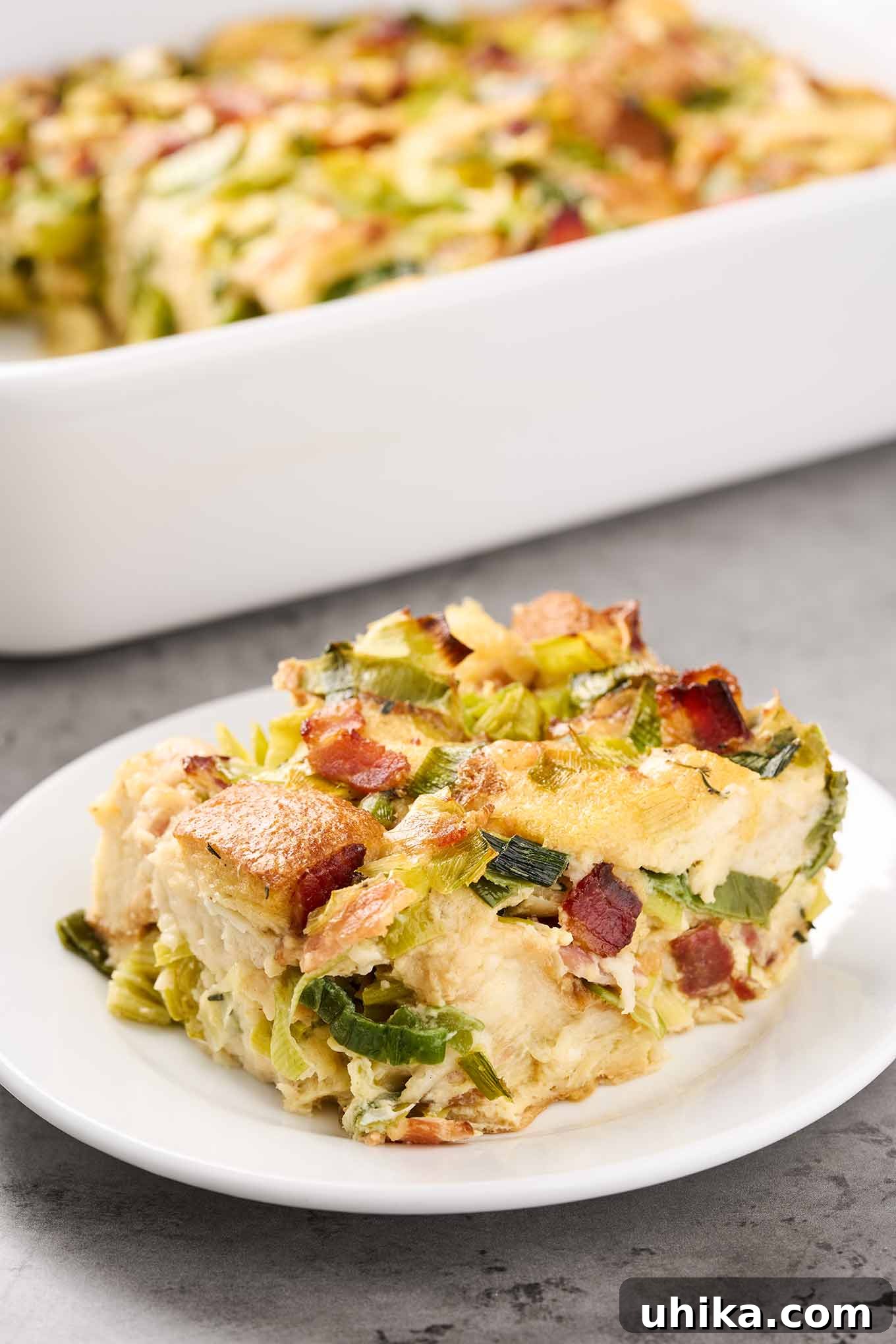
Indulge in the harmonious blend of rich, custardy bread, crispy thick-cut bacon, and sweet, tender leeks with this exceptional savory bread pudding. More than just a dish, it’s a warm, comforting culinary experience that effortlessly graces your table, whether as an elegant side with roasted meats and poultry or as a captivating center-piece for a delightful brunch.
This recipe was initially crafted as a gourmet alternative to traditional stuffing, designed to complement a beautifully glazed ham. Its instant success revealed its versatile nature, quickly establishing it as a perfect candidate for a luxurious brunch offering. The robust flavors and satisfying texture make it a standout choice for any meal. Plus, this savory bread pudding recipe offers wonderful potential for easy customizations. While we highlight the exquisite combination of thick-cut bacon and leeks, feel free to explore variations such as diced ham or crumbled breakfast sausage for a unique twist.
Why This Savory Bread Pudding Will Be Your New Favorite
This savory bread pudding is poised to become a beloved addition to your recipe collection. Here’s why it’s truly a cut above the rest:
- Unmatched Flavor Harmony: Experience a symphony of tastes, where the smoky, salty notes of bacon perfectly intermingle with the delicate, sweet earthiness of leeks, all encased in a luscious, herb-infused custard and tender bread. It’s a flavor profile that’s both sophisticated and deeply comforting.
- Incredibly Versatile: Its adaptability is one of its greatest strengths. Serve it as a memorable side dish for holiday gatherings, a sophisticated main for a weekend brunch, or even a comforting, standalone dinner on a chilly evening. It complements a variety of meals with ease.
- Perfectly Moist Texture: The secret to its exquisite internal texture lies in the use of a bain-marie (water bath). This gentle cooking method ensures the bread remains wonderfully custardy and moist throughout, while the top develops an irresistible golden-brown finish.
- Effortlessly Adaptable: This recipe serves as an excellent foundation for your culinary creativity. Whether you wish to incorporate different cheeses, experiment with various herbs, or swap out the protein, it’s designed to be easily customized to suit your personal preferences.
- A Gourmet Twist on Comfort Food: By transforming the classic concept of bread pudding into a savory delight, this dish offers a fresh, exciting, and utterly satisfying take on traditional comfort fare. It’s familiar yet wonderfully new.
Key Ingredients for Crafting the Perfect Savory Bread Pudding
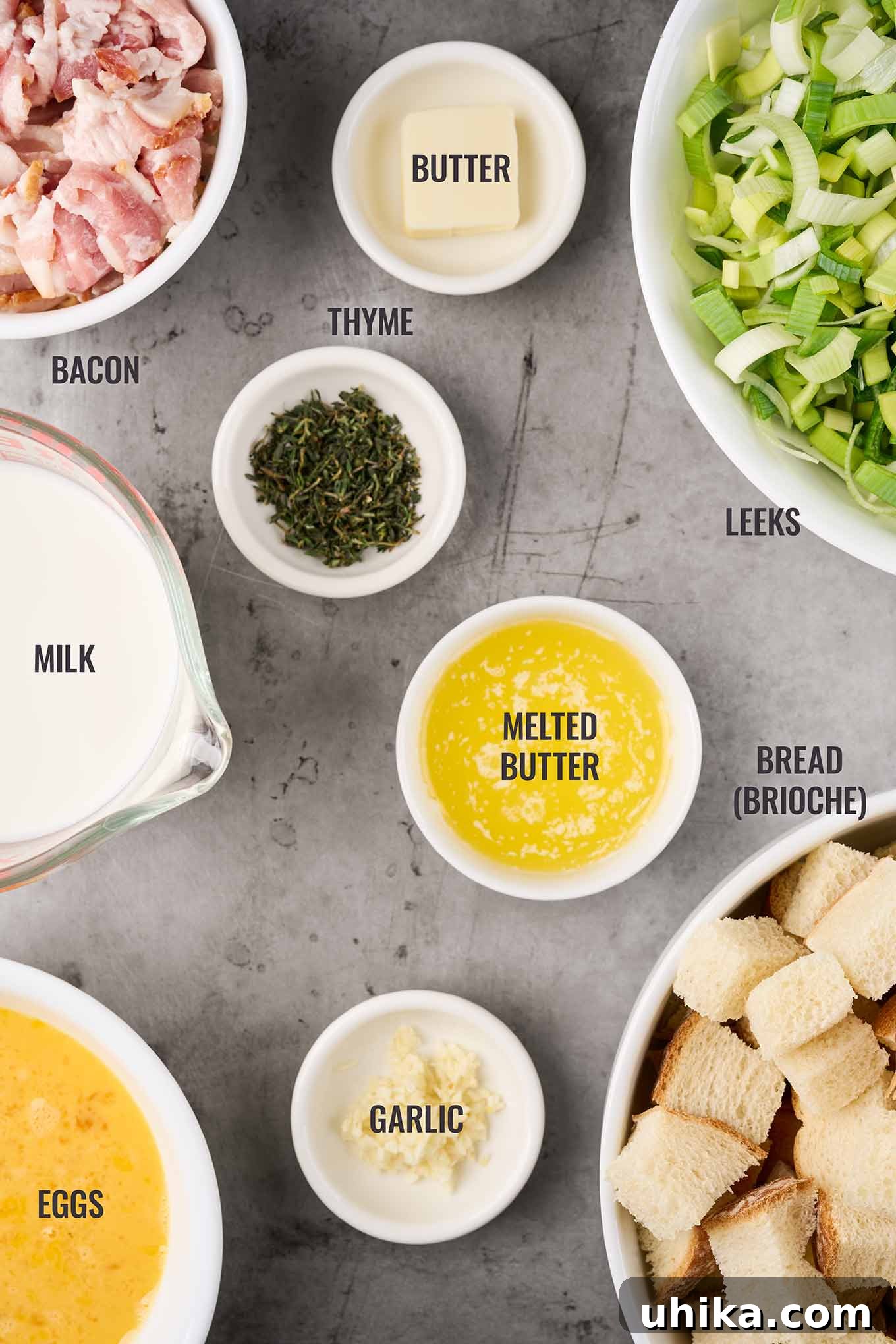
The success of any exceptional dish hinges on the quality and thoughtful selection of its ingredients. For this savory bread pudding, understanding each component ensures a truly outstanding result. The complete list of ingredients, including precise quantities, can be found in the detailed recipe card below.
The Ideal Bread for Savory Bread Pudding
Choosing the right bread is paramount for a superior bread pudding. We highly recommend soft, dense breads with a subtly sweet and buttery flavor, as they absorb the rich custard beautifully without becoming soggy. Brioche and challah are our top choices for this savory version, delivering a luxurious texture and a rich foundation. These breads, when cut into ¾-inch cubes, provide enough structure to hold up to the soaking and baking processes, ensuring a delightful chewiness within the creamy custard. For best results, consider using day-old bread, as it tends to absorb the liquid more efficiently, leading to a firmer, more cohesive pudding.
Flavorful Leeks: A Sweet and Earthy Addition
Leeks are a star ingredient in this recipe, contributing a unique sweet and mild onion flavor with a slightly earthy, herbal undertone. This delicate flavor profile pairs exceptionally well with the richness of the custard and the smokiness of the bacon, adding a layer of sophistication. When you’re at the market, look for leeks that are firm, with crisp, green leaves and healthy-looking white and light green stalks, preferably with their roots still intact to signify freshness. Due to their layered structure, leeks can easily trap dirt and sand. Don’t worry, we’ve included detailed tips on how to properly clean them in the notes section below.
Thick-Cut Bacon: The Secret to Depth and Texture
The choice of bacon significantly impacts the overall enjoyment of this savory bread pudding. We strongly advocate for using thick-cut bacon. This isn’t merely a preference; it’s a strategic choice because the bacon in this recipe undergoes a double cooking process – first in the skillet, then again during baking. Thicker slices hold up wonderfully to this extended cooking, retaining their texture and a pleasant chewiness without becoming overly crisp or brittle. They also impart a deeper, more satisfying smoky and salty flavor that permeates the entire dish. For those seeking alternatives, diced ham or crumbled breakfast sausage are excellent substitutes, especially if you’re tailoring this for a specific brunch theme.
Aromatic Fresh Thyme: The Herbaceous Heart
The use of fresh thyme in this dish is crucial for enhancing its aromatic qualities. Its subtle, peppery, and slightly floral notes provide a sophisticated herbaceous backdrop that beautifully complements the other savory ingredients. While fresh herbs always offer the most vibrant flavor, we understand that dried herbs can be more convenient. If you need to substitute dried thyme for fresh, remember the general conversion rule: use one-third the quantity of dried herbs compared to fresh. For instance, if the recipe calls for 1 tablespoon of fresh thyme, use 1 teaspoon of dried.
The Custard Base: Whole Milk and Eggs for Richness
The lusciously tender and moist core of this savory bread pudding comes from its creamy custard base. Whole milk is essential here, providing the richness and velvety texture that elevates the dish. The eggs act as the primary binder, ensuring the pudding sets beautifully while remaining incredibly tender and delicate. For optimal blending and a smooth, cohesive custard, ensure your eggs are lightly beaten and ideally at room temperature before whisking them into the milk and melted butter mixture.
Preparation Overview
How to Make Savory Bread Pudding at a Glance
Planning to create this delightful dish? Here’s a quick, simplified overview of the process. For comprehensive, step-by-step instructions and important details, please refer to the printable recipe card provided further down the page.
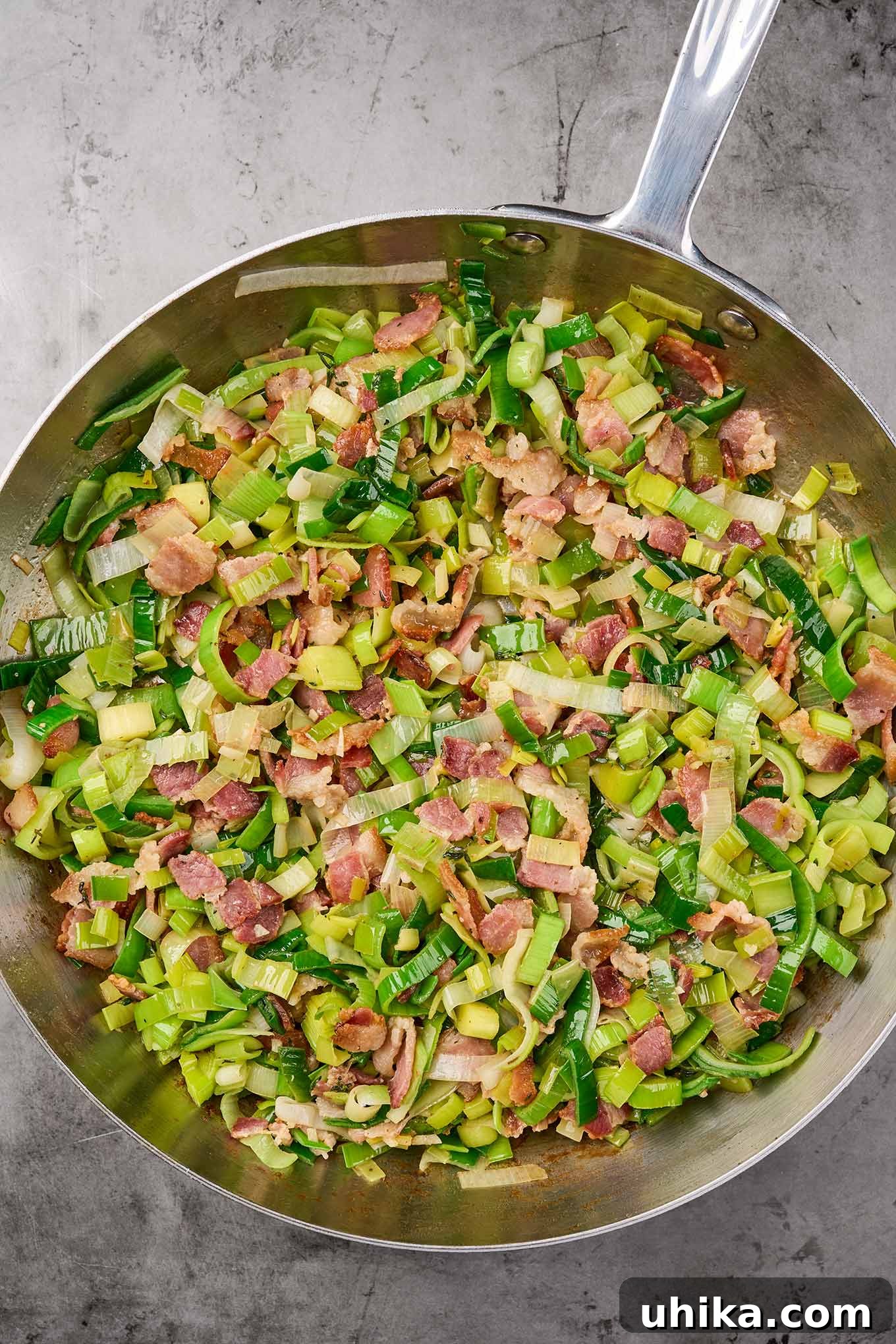
Your culinary journey begins by uniformly cubing your chosen bread and setting it aside in a spacious mixing bowl. Next, you’ll render the thick-cut bacon in a large pan until it’s cooked through but still pleasantly pliable. After draining the bacon and reserving a small amount of its flavorful fat, you’ll sauté minced garlic and thinly sliced leeks in this mixture until they become wonderfully soft and translucent. The cooked bacon is then reintroduced to the pan, seasoned with fresh thyme, salt, and pepper, and finally combined with the waiting bread cubes.
The creamy custard base is prepared by melting butter and then whisking in whole milk and lightly beaten eggs until smooth. This rich liquid is then carefully poured over the bread and savory mixture. A gentle toss ensures every bread cube is generously coated, setting the stage for the crucial soaking period where the bread fully absorbs the luxurious custard, promising an exquisitely moist final product.

Finally, the prepared mixture is transferred to a buttered baking dish. For a tender, evenly cooked result, it’s baked gently within a larger pan containing boiling water—a technique known as a bain-marie. Once the pudding is set and boasts a beautiful golden-brown top, remove it from the oven, cover loosely with aluminum foil, and keep it warm until you’re ready to serve this impressive and deeply satisfying dish.


Savory Bacon and Leek Bread Pudding Recipe
Made with buttery brioche, smoky thick-cut bacon, and delicate sweet leeks, this savory bread pudding is a versatile and easy-to-prepare dish that’s bursting with flavor. It’s perfect as a hearty brunch item or a comforting side for any meal.
Cook Time: 1 hr
Soaking Time: 20 mins
Total Time: 1 hr 50 mins
Yields: 8 servings
Pin Recipe
Rate Recipe
Print Recipe
Ingredients
- 12 ounces Brioche or challah bread, about 8 slices, cut into ¾-inch cubes
- 8 strips thick-cut bacon, cut into ½-inch pieces
- 4 tablespoons unsalted butter, divided
- 1 large clove garlic, finely chopped
- 3 medium leeks, cleaned and thinly sliced (yielding 4 to 5 cups)
- 1 tablespoon fresh thyme leaves, stripped from stems (or 1 teaspoon dried thyme)
- ½ teaspoon fine sea salt
- Freshly ground black pepper, to taste
- 2 cups whole milk
- 4 large eggs, lightly beaten
- Boiling water, for the bain-marie
Instructions
- Prepare Your Baking Dish: Preheat your oven to 350°F (175°C). Generously butter a medium-sized baking dish (a 2-quart capacity dish is ideal for achieving a moist and fluffy texture; refer to the notes section below for more on dish size).
- Cube the Bread: With the crusts still on, cut your brioche or challah bread into uniform ¾-inch cubes. Place these bread cubes into a large mixing bowl and set aside.
- Cook the Bacon: In a large, heavy-bottomed skillet, cook the ½-inch pieces of thick-cut bacon over medium heat until they are fully cooked but still slightly pliable, not overly crispy. This ensures they retain a good bite after the pudding bakes. Transfer the cooked bacon to a plate lined with paper towels to drain any excess fat. Carefully pour off all but 2 teaspoons of the rendered bacon fat from the skillet, leaving that flavorful residue behind.
- Sauté Aromatics and Leeks: Return the skillet to medium heat. Add 1 tablespoon of the divided butter to the remaining bacon fat. Once the butter is melted, add the finely chopped garlic and sauté for about 1 minute until it becomes fragrant. Next, add the cleaned and thinly sliced leeks to the pan and cook for 4 to 5 minutes, stirring occasionally, until they are beautifully soft and tender.
- Combine Savory Elements: Return the cooked bacon to the skillet with the sautéed leeks and garlic. Stir in the fresh thyme leaves, ½ teaspoon of fine sea salt, and a few generous grinds of fresh black pepper. Taste the mixture and adjust the seasoning if needed to your preference. Transfer this fragrant, savory mixture to the large bowl containing the bread cubes and gently toss everything together until evenly combined.
- Prepare the Custard: Cut the remaining 3 tablespoons of butter into small pieces. Place them in a microwave-safe bowl and heat on high for about 10 seconds. Stir the butter, then continue microwaving in 5-second increments until it is fully melted and smooth. In a separate, larger bowl, whisk the whole milk into the melted butter until well combined. Then, vigorously whisk in the lightly beaten eggs until the custard mixture is homogenous and smooth.
- Soak the Bread: Slowly and evenly pour the prepared custard mixture over the bread cubes, bacon, and leek mixture in the large mixing bowl. Using a spatula or your hands, gently toss everything together until all the bread cubes are thoroughly and evenly coated with the custard. This step is crucial for ensuring a uniformly moist and flavorful bread pudding.
- Allow to Rest and Absorb: Spread the entire mixture evenly into your prepared buttered baking dish. Set the dish aside and allow it to rest for at least 20 minutes at room temperature. This critical soaking time is what permits the bread to fully absorb the custard, leading to that coveted rich, custardy texture throughout the finished pudding.
- Prepare for Baking (Bain-Marie): When you’re ready to bake, carefully place your filled baking dish inside a larger, deeper roasting pan. Slowly and carefully pour enough boiling water into the outer pan to come approximately halfway up the sides of the baking dish containing the bread pudding. Be extremely careful not to splash any water into the pudding mixture itself. This technique, known as a bain-marie or water bath, ensures gentle, even cooking. (Refer to the notes section below for a more detailed guide on using a bain-marie). Carefully transfer the entire setup (roasting pan with water and inner baking dish) to the preheated oven.
- Bake to Perfection: Bake for 50 to 60 minutes, or until the savory bread pudding is beautifully golden brown on top, appears set, and a butter knife or skewer inserted into the center comes out clean.
- Serve Warm: Once baked, carefully remove the pudding from the oven and then lift the inner baking dish out of the bain-marie. Cover the baking dish loosely with aluminum foil to keep it warm and allow it to rest for a few minutes before slicing and serving. This short resting period allows the flavors to meld and the pudding to firm up slightly, making it easier to serve.
Notes and Expert Tips for Success
Choosing the Right Baking Dish for Optimal Texture
For a truly moist, fluffy, and custardy savory bread pudding, the size of your baking dish matters. We highly recommend using a medium-sized baking dish, ideally around a 2-quart capacity (approximately an 8×8-inch square or a comparable oval/round dish). This size allows the bread pudding mixture to fill the dish almost to the top, ensuring proper depth. If you use a much larger casserole dish (such as a standard 9×13-inch), the mixture may spread too thinly, leading to a drier, less custardy result, as the liquid evaporates too quickly. A smaller, deeper dish helps retain moisture and promotes that ideal tender texture.
How to Thoroughly Clean Leeks: Say Goodbye to Grit
Leeks are notorious for trapping sand and soil between their tightly packed layers. Proper cleaning is absolutely essential to avoid any gritty surprises in your finished dish. Here’s a simple and highly effective method:
- Trim: Begin by trimming off the root end of the leeks and discarding the tough, dark green upper portions of the leaves (these are generally too fibrous to eat). You’ll be using the white and light green parts.
- Slice: Slice the leeks in half lengthwise, then crosswise into uniform ¼-inch thick slices. This exposes the inner layers where dirt hides.
- Soak and Swish: Place the sliced leeks into a large bowl or the basin of a salad spinner. Fill the bowl generously with cold water and vigorously swish the leeks around with your hands. Let them sit and soak for approximately 10 minutes. This allows any stubborn sand or grit to loosen and sink to the bottom of the bowl.
- Rinse and Repeat: Carefully lift the leeks out of the water, making sure to leave the settled grit behind. Drain the dirty water, rinse the bowl thoroughly, and then repeat the filling and swishing process. This time, a long soaking period isn’t necessary.
- Dry: If you’re using a salad spinner, spin the leeks dry as you would any salad greens. Otherwise, pat them thoroughly dry with a clean kitchen towel or paper towels. Excess moisture can dilute your custard.
Mastering the Bain-Marie (Water Bath) Technique for Perfect Bread Pudding
A bain-marie, French for “water bath,” is a simple yet incredibly effective technique vital for baking delicate, custard-based dishes like this savory bread pudding. It provides a gentle, even heat that prevents the edges from overcooking, keeps the custard from curdling, and ensures a beautifully smooth, moist, and consistent texture throughout the pudding. It truly makes a noticeable difference in the final product. Here’s how to set one up correctly:
- Select Your Outer Pan: Choose a larger roasting pan or baking dish that is deep enough to hold water reaching about halfway (or ideally two-thirds) up the sides of your inner baking dish. The outer pan should also be large enough to comfortably accommodate your pudding dish, leaving at least 1 inch of space around all sides for even heat circulation.
- Optional Liner: For added stability and to prevent the inner dish from sliding around when transferring, you can place a folded kitchen towel or a silicone mat at the bottom of the outer pan.
- Position and Pour: Carefully place your assembled bread pudding baking dish into the center of the larger roasting pan. Then, slowly and carefully pour boiling water into the outer pan, taking utmost care not to splash any water into your bread pudding mixture. Fill it until the water reaches approximately halfway up the sides of your inner baking dish.
- Transfer to Oven: With great care, transfer the entire bain-marie setup (the outer pan containing water and the inner baking dish) to your preheated oven.
- Remove Promptly: As soon as your savory bread pudding is done baking and passes the doneness test, carefully remove the inner dish from the hot water bath. Leaving it in the hot water bath, even after it’s out of the oven, can cause it to continue cooking (carry-over cooking) and potentially overcook, leading to a less desirable texture.
Customizing Your Savory Bread Pudding with Delicious Variations
This recipe is a fantastic canvas for culinary creativity, allowing you to adapt it to your taste preferences or utilize ingredients you have on hand:
- Meat Alternatives: While bacon is sublime, consider swapping it for other cooked meats. Diced cooked ham offers a different salty note, crumbled breakfast sausage brings a spiced element, or even shredded cooked chicken can create a unique flavor profile.
- Cheese It Up: A generous addition of shredded cheese can elevate the savoriness and richness. Excellent choices include nutty Gruyère, sharp cheddar, tangy Parmesan, or a smoky provolone. You can stir about 1 cup of shredded cheese into the bread mixture before adding the custard, or sprinkle some on top during the last 15-20 minutes of baking for a golden, bubbly crust.
- Herb Swaps: While fresh thyme is wonderful, other fresh herbs can offer delightful variations. Consider incorporating fresh rosemary for a more robust flavor, sage for a classic holiday feel, delicate chives for a milder oniony touch, or a combination of Italian herbs for an aromatic medley.
- Add More Vegetables: Enhance the complexity and nutrition by adding more sautéed vegetables. Sautéed mushrooms (especially cremini or shiitake), finely chopped spinach (squeezed dry to remove excess moisture), caramelized onions, or roasted bell peppers can add extra layers of flavor and visual appeal.
Nutrition Information (Approximate)
- Calories: 364
- Total Fat: 25g
- Cholesterol: 170mg
- Sodium: 535mg
- Carbohydrates: 21g
- Fiber: 1g
- Sugar: 4g
- Protein: 11g
Nutrition information is automatically calculated and should be used as an approximation only. Actual values may vary based on specific ingredients and preparation methods.
Serving Suggestions for Your Savory Bread Pudding
The true brilliance of this savory bacon and leek bread pudding lies in its incredible versatility, making it a perfect dish for almost any occasion. Here are some delectable ways to serve it and impress your guests:
- As an Elegant Side Dish: This bread pudding makes an impeccable accompaniment to rich, roasted meats. Pair it with a classic Sunday roast chicken, a tender pork loin, a succulent roasted turkey, or a flavorful roasted lamb. Its creamy texture and savory depth offer a wonderful contrast to main protein dishes, particularly complementing a holiday glazed ham.
- Brunch Centerpiece: Elevate your weekend brunch spread by making this dish the star attraction! Serve it alongside fluffy scrambled or perfectly poached eggs, a vibrant fresh fruit salad, crispy hash browns, and perhaps a refreshing mimosa or a robust coffee for an unforgettable and indulgent experience.
- Hearty Lunch or Light Dinner: For a satisfying and comforting meal, enjoy a generous slice of this bread pudding on its own. A simple green salad tossed with a light vinaigrette dressing would provide a lovely fresh counterpoint, balancing the richness of the pudding.
- Festive Holiday Feast: Move beyond predictable stuffings and introduce this unique and gourmet dish during your Thanksgiving or Christmas celebrations. Its sophisticated appeal and comforting qualities are sure to make it a memorable addition to your holiday table, earning rave reviews from family and friends alike.
Storage and Reheating Tips for Savory Bread Pudding
To ensure you can savor your delicious savory bread pudding beyond its initial serving, proper storage and reheating techniques are essential for preserving its delightful texture and flavor.
- Storing Leftovers: Allow any remaining bread pudding to cool completely to room temperature. Once cooled, transfer it to an airtight container. It can be safely stored in the refrigerator for up to 3-4 days. This ensures its freshness and prevents any bacterial growth.
- Freezing for Future Enjoyment: For longer-term storage, savory bread pudding freezes remarkably well. We recommend freezing individual portions for convenience. Wrap each slice tightly in plastic wrap, then place the wrapped portions into a freezer-safe bag or an airtight container. It can be frozen for up to 2-3 months without significant loss of quality. When you’re ready to enjoy it, thaw the frozen portions overnight in the refrigerator before reheating.
- Reheating in the Oven (Recommended): The best method to reheat bread pudding and maintain its optimal texture is in the oven. Preheat your oven to 300°F (150°C). Place individual servings or the entire dish in an oven-safe dish, cover it loosely with aluminum foil (this is key to preventing it from drying out), and heat for 15-20 minutes, or until it is thoroughly warmed through.
- Reheating in the Microwave (Quick Option): For a quicker reheating option, individual portions can be warmed in the microwave. Place a slice on a microwave-safe plate and heat on medium power in 30-second increments until it’s hot. Be cautious not to overcook, as microwaving can sometimes alter the texture, making the bread tougher if heated for too long.
More Savory Breakfast and Brunch Inspiration
If you’ve fallen in love with the comforting flavors of this savory bread pudding and are eager to explore more satisfying options for breakfast or brunch, we have a few other exceptional recipes that are sure to delight your palate:
- This Crustless Quiche with Morel Mushrooms and Ramps offers a sophisticated and distinctly seasonal touch to your table. Featuring earthy morel mushrooms and wild ramps (a type of wild leek), it brings a unique, gourmet flavor that’s perfect for spring.
- For a delightfully unique and herbaceous twist, our Savory Pesto Zucchini Bread delivers rich, fragrant pesto flavors baked into a moist, easily sliceable loaf. It’s fantastic served warm with a pat of butter or enjoyed at room temperature.
- And for those craving something simple, classic, and utterly satisfying, this Bacon and Cheese Frittata hits all the right notes. It features crispy bacon and gooey melty cheese baked into tender, fluffy eggs, creating a truly comforting and familiar dish that’s always a crowd-pleaser.
Frequently Asked Questions (FAQ) About Savory Bread Pudding
Can I prepare savory bread pudding ahead of time?
Absolutely! You can assemble the entire bread pudding mixture – combining the cubed bread, cooked bacon, sautéed leeks, and the rich custard – and place it into your buttered baking dish. Cover it tightly with plastic wrap or aluminum foil and refrigerate for up to 24 hours before baking. Before placing it in the oven, allow the dish to sit at room temperature for about 30 minutes. You might also need to add an extra 5-10 minutes to the total baking time since it will be starting colder.
What are the best types of bread for this savory recipe?
For the best texture and flavor in this savory bread pudding, we highly recommend using brioche or challah bread. Their inherent richness, buttery flavor, and dense yet soft texture allow them to absorb the custard beautifully without becoming soggy. You can also experiment with other sturdy, slightly sweet breads like a good quality white sandwich bread or even a light sourdough if you prefer a subtle tangy note, though brioche and challah offer the quintessential bread pudding experience.
Can I add cheese to this savory bread pudding?
Yes, and it’s a fantastic idea for an extra layer of flavor and richness! Shredded Gruyère, sharp cheddar, or even a blend of Italian cheeses would work wonderfully. You can mix about 1 cup of shredded cheese directly into the bread mixture before pouring in the custard, or for a golden, bubbly crust, sprinkle it generously over the top of the pudding during the last 15-20 minutes of baking.
How do I know when the bread pudding is perfectly cooked?
Your savory bread pudding is perfectly cooked when it’s beautifully golden brown on top, appears set, and a butter knife or wooden skewer inserted into the center comes out clean. If you’re using an instant-read thermometer, the internal temperature should register around 180-190°F (82-88°C).
Is using a water bath (bain-marie) truly necessary for this recipe?
While you *can* technically bake bread pudding without a water bath, it is highly recommended, especially for this custard-based recipe. The bain-marie provides a gentle, consistent heat that is crucial for baking delicate custards. It prevents the edges and bottom from drying out or becoming tough before the center is cooked, and it significantly contributes to a much more tender, uniformly moist, and luxurious texture throughout the entire pudding. It truly makes a noticeable difference in the final quality of the dish.
Savor the Comfort: A Culinary Journey Awaits
This Savory Bacon and Leek Bread Pudding is more than just a recipe; it’s a culinary embrace, a versatile showstopper, and an inviting aroma that promises warmth and joy throughout your home. Whether you’re gathering for a special occasion, hosting a delightful brunch, or simply craving a sophisticated yet profoundly comforting meal, this recipe delivers on all fronts. Dive into its rich textures, savor its unforgettable flavors, and allow this modern classic to become a cherished part of your family’s table. Happy cooking!