
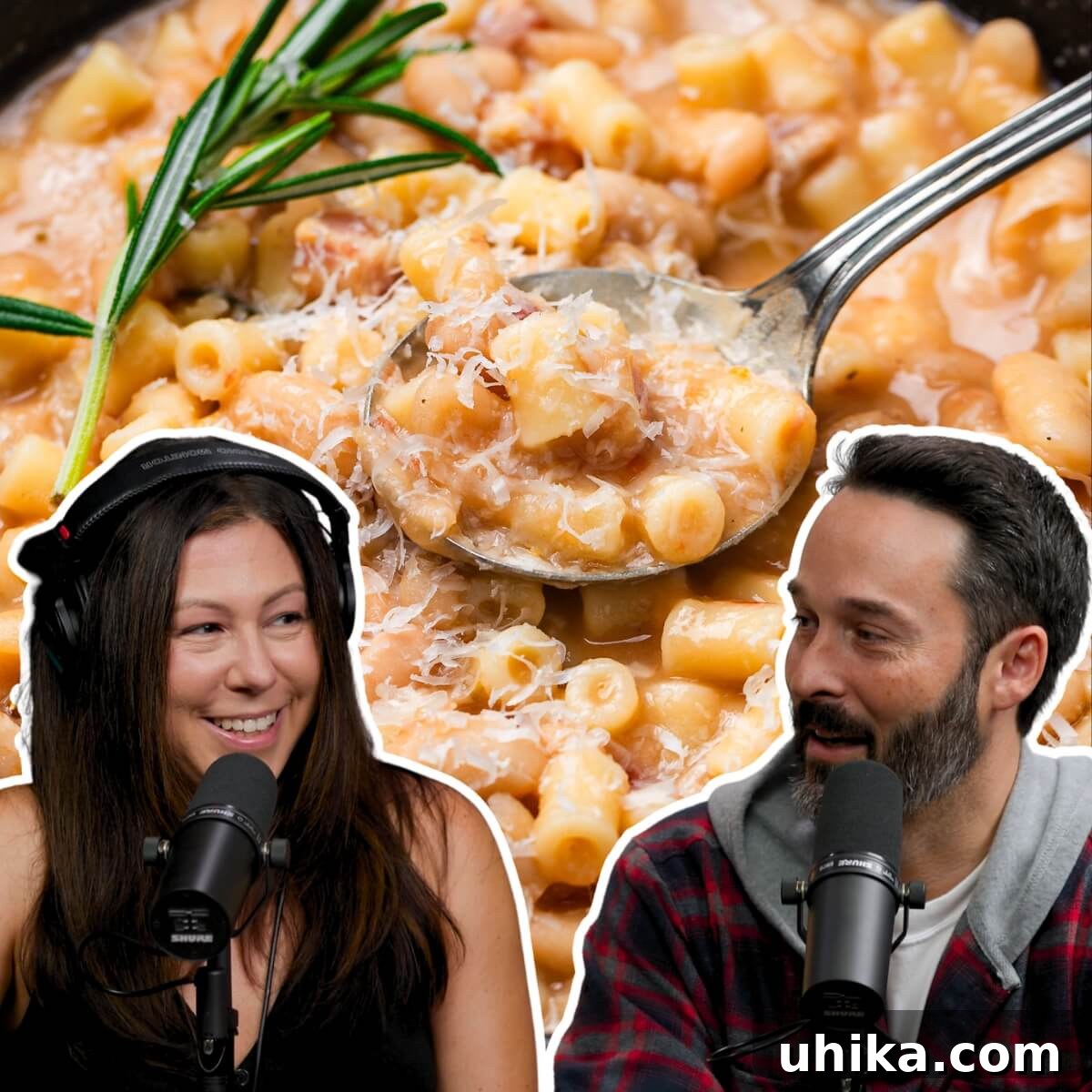
Pasta fazool, or pasta e fagioli, quite literally translates to “pasta and beans.” However, this humble name barely scratches the surface of what this iconic dish truly represents. It’s more than just ingredients; it’s a warm embrace of comfort, a potent dash of nostalgia, and a hearty sprinkle of culinary history, deeply woven into the fabric of Italian-American heritage. While its preparation boasts countless regional and familial variations, and its pronunciation sparks lively debate, one truth remains universally acknowledged: it is always profoundly delicious and satisfying.
What is Pasta e Fagioli? A Beloved Italian-American Comfort Food
At its core, for a dish to be rightfully called pasta e fagioli (or pasta fazool), it must feature the two eponymous ingredients: pasta and beans. Beyond this fundamental requirement, the culinary landscape of this dish opens up to a vibrant spectrum of interpretations. Typically, it incorporates small-shaped pasta such as ditalini, tubetti, or elbows, which are perfect for soaking up the rich broth. For the beans, cannellini, navy beans, or borlotti (also known as cranberry beans in North America) are the most traditional and commonly used varieties, each lending its unique texture and flavor to the dish.
The variations extend far beyond just the choice of pasta and beans. Some renditions are thin and soupy, ideal for a lighter meal or appetizer, while others are robust and thick, almost stew-like, making them a hearty main course. The flavor profile also sees diverse interpretations: some recipes might include a hint of savory pancetta or bacon to build a foundational flavor, while vegetarian versions rely solely on olive oil and aromatics for depth. Tomato-based pasta fazool, with its vibrant color and tangy notes, stands in contrast to the “in bianco” (white) versions, which feature minimal or no tomato, allowing the pure flavor of the beans and broth to shine through. Throughout a lifetime of savoring this dish, both traditional and experimental versions, one discovers that its versatility is its strength, always delivering an ultra-comforting and deeply satisfying experience, no matter the slight variations.
Watch Our Pasta Fazool Recipe on YouTube
The Linguistic and Culinary Legacy: Why “Pasta Fazool”?
The intriguing pronunciation of “pasta fazool,” prevalent among Italian-Americans, holds a fascinating linguistic and historical backstory that speaks volumes about the journey of Italian immigrants to the United States. While the standard Italian word for beans is “fagioli” (pronounced fah-JOH-lee), the common “fazool” pronunciation stems directly from the dialects of Southern Italy. In Neapolitan dialect, “fagioli” becomes “fasule,” and in Sicilian, it’s “fasulu” or “fasola.” Considering that a vast majority of Italian immigrants who settled in the US during the late 19th and early 20th centuries hailed from these southern regions—Naples, Sicily, and Campania—it’s easy to understand how their regional pronunciations became ingrained in the lexicon of Italian-American cuisine. This linguistic shift highlights the rich tapestry of dialects that existed across Italy before its unification and how these cultural nuances traveled across oceans, evolving into the unique Italian-American identity we know today.
The culinary history of pasta fazool is equally compelling, tracing its roots back to ancient bean and grain soups popular during the Roman Empire. Over centuries, particularly in Neapolitan cuisine, dishes were often categorized by class: elaborate meals for the wealthy and simple, nourishing fare for the poor. Pasta fazool firmly belonged to the latter, earning its reputation as a “peasant dish.” Legend has it that the dish was so irresistible, even noble folk would don disguises to sneak into taverns and savor this forbidden delicacy, a testament to its widespread appeal despite its humble origins. Initially, the dish utilized black-eyed peas, the primary beans available in Italy through early trade routes. A significant turning point arrived in 1528 when Pope Clement VII introduced new bean varieties, imported from the Americas, to Tuscany and Veneto. This era also marked the gradual integration of tomatoes, another New World staple, into Italian cooking, forever transforming the cuisine and giving rise to the pasta fazool we recognize today. This evolution underscores the adaptability of Italian food, continuously incorporating new ingredients while preserving its comforting essence.
Crafting Your Own Authentic Pasta Fazool: A Step-by-Step Guide
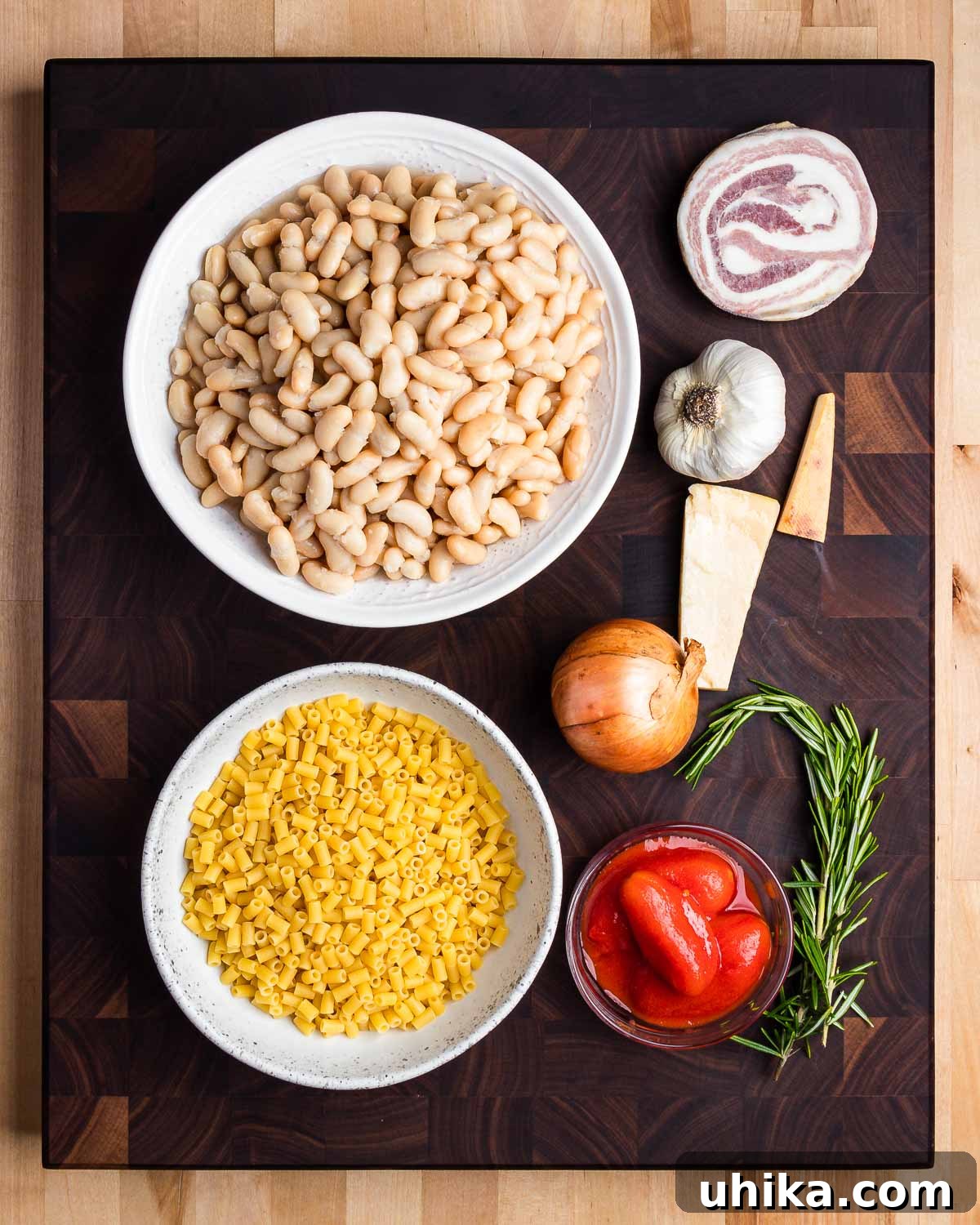
Making pasta fazool is a journey into simple, flavorful cooking. While there are countless ways to approach it, the fundamental principles ensure a comforting and delicious outcome. The choice of fat forms the foundation of your dish. Traditionally, particularly in older recipes, lard was a common starting point, lending a deep, savory richness. More modern variations often begin with a few ounces of pancetta or bacon, rendered until crispy to provide a flavorful base and delectable bits for texture. For a vegetarian or vegan version, simply start with a generous pour of high-quality olive oil, a healthy and equally delicious alternative. All good cooking, regardless of cuisine, begins with fat, as it’s essential for sautéing aromatics and building foundational flavors.
Once your fat is ready, add minced garlic. If you choose to include onion, sauté it first until translucent (about 5-7 minutes) before adding the garlic. Cook the garlic over medium-low heat until it’s fragrant and golden, taking care not to burn it. A pinch of hot red pepper flakes can be added about 30 seconds after the garlic to infuse a subtle warmth. If you opt for a tomato-inclusive version, now is the time to add a few whole plum tomatoes, gently squeezed, or a spoonful of tomato paste, cooking them in the aromatic oil mixture for a couple of minutes to develop their flavor. This short cooking period mellows the acidity and concentrates the sweetness of the tomatoes.
Next, introduce your liquid – typically 4 to 5 cups of water or chicken/vegetable stock, depending on the desired richness and the amount of pasta you plan to use (half a pound to a full pound is common). Deglaze the pot, scraping up any flavorful brown bits from the bottom. Now, add your beans. While dried beans, pre-soaked and cooked, offer a superior texture, convenience often dictates the use of canned cannellini, navy, or borlotti beans, which yield excellent results and significantly reduce preparation time. If using canned beans, rinse them thoroughly before adding.
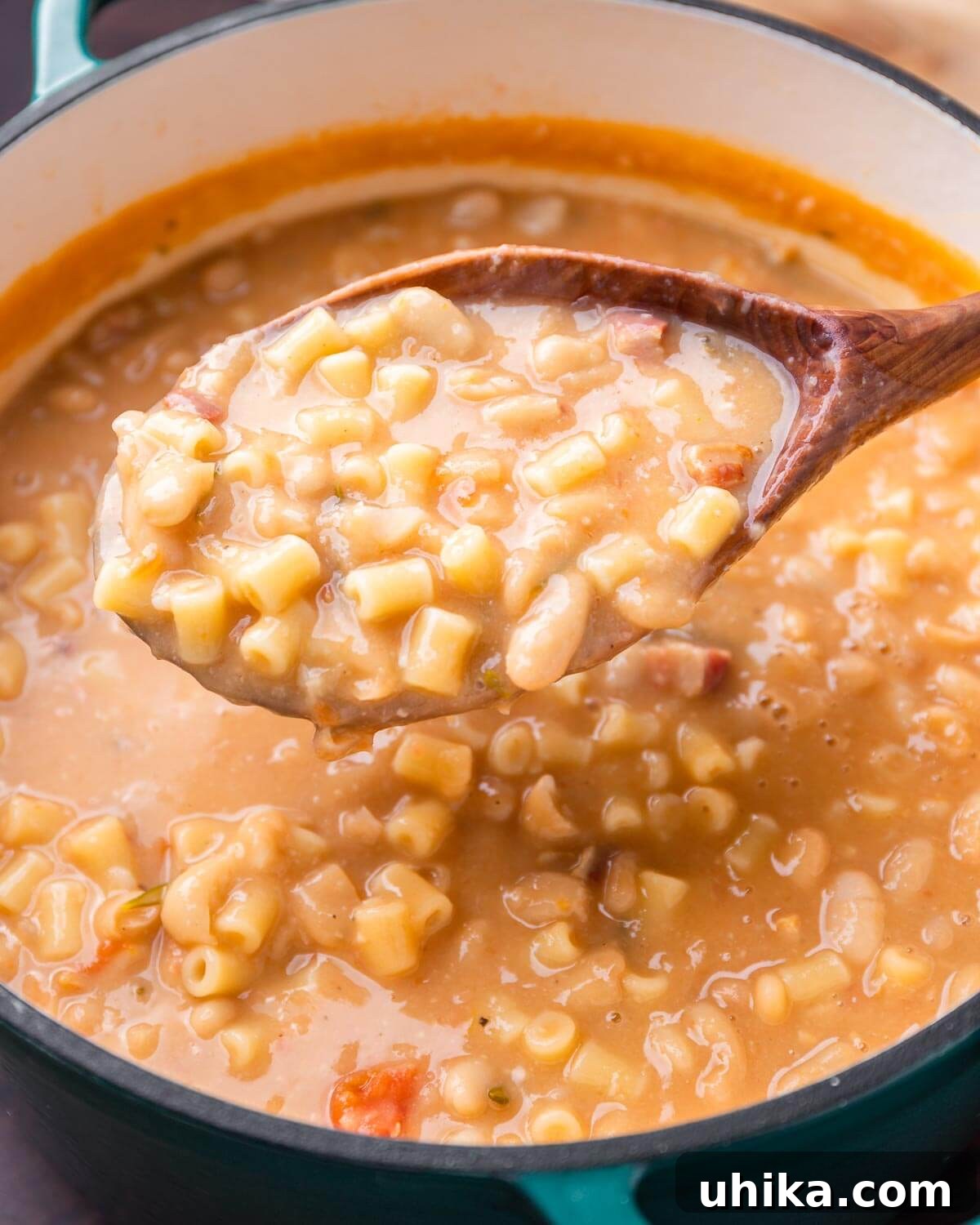
The magic of pasta fazool happens when the dried pasta is cooked directly in the savory bean and broth mixture. As the pasta cooks, it releases its starches, naturally thickening the soup and creating an incredibly creamy texture without the need for actual cream. Furthermore, the pasta absorbs the flavors of the broth, resulting in a deeply integrated and harmonious dish. While boiling pasta separately is an option, cooking it in the broth is a technique widely used in various Italian “pasta e” dishes (like pasta e ceci or pasta e lenticchie) for a reason – it truly enhances the final product. As the pasta cooks, you might also consider adding a Parmesan Reggiano rind to the pot; it slowly melts, infusing the soup with an umami depth that is truly unparalleled. A sprig of fresh rosemary, as featured in some beloved family recipes, can also elevate the flavor profile, offering an aromatic counterpoint to the beans.
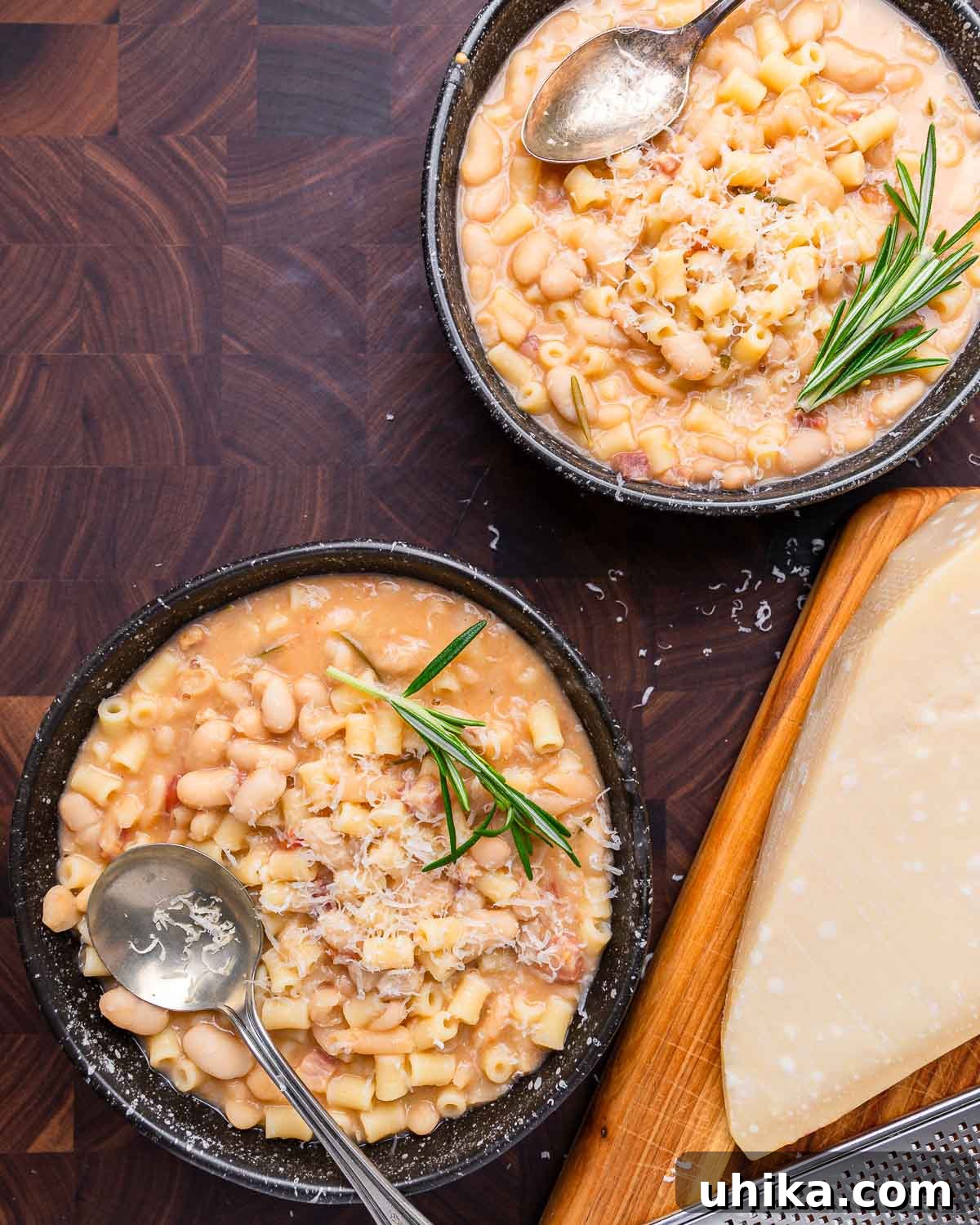
Once cooked, pasta fazool is traditionally served as a hearty main course, particularly in Italian-American homes. It’s often finished with a drizzle of extra virgin olive oil and a generous grating of fresh Parmesan cheese. Its humble origins mean it’s rarely found in high-end Italian restaurants, but it’s a staple in pizzerias, delis, and home kitchens, celebrated for its affordability and soul-warming qualities. The beauty of this dish lies in its adaptability; feel free to experiment with different bean types (such as fava beans or chickpeas, creating a dish akin to pasta e ceci), various small pasta shapes, or even broken spaghetti. For a more substantial meal, consider adding cooked sausage, transforming it into a robust sausage pasta fazool. This dish truly embodies the spirit of “making it your own,” allowing personal taste and available ingredients to guide its creation.
The Essence of Italian-American Cuisine: Authenticity and Adaptation
Our approach to Italian-American cooking is rooted in a deep appreciation for the culinary traditions that shaped generations of immigrant families. We often receive questions about why our focus remains predominantly on Italian-American recipes, and the answer is simple: this is the food we grew up with, the very essence of our heritage in the New York metropolitan area. Many of us are first, second, or third-generation Italian-Americans, and the dishes we learned to make were a delicious fusion of ancestral traditions and the ingredients available in our new home. This unique culinary landscape, characterized by dishes like pasta fazool, Sunday sauce, and meatballs, is a testament to adaptation and love.
While the initial vision for this platform included a broader range of cuisines, feedback and a desire to build a strong, authentic brand led us to specialize. Our main knowledge base lies firmly in Italian-American food, specifically the styles and traditions found in New York, New Jersey, and Philadelphia. This is not to diminish other culinary heritages, but to honor the one that profoundly shaped our experiences. It’s a niche born from personal history and expertise.
It’s important to understand that Italian-American food, though distinct from the food found in Italy today, is not “inauthentic.” It’s an evolution, a culinary narrative of immigrants adapting recipes with local ingredients and developing new family traditions over a century. This food is cherished by countless individuals with Italian roots in America, and by many others who have embraced its comforting flavors. Debates sometimes arise about “authenticity,” often from those who may not understand this unique history. However, Italian-American cuisine stands proudly as a vibrant, beloved, and undeniably real part of our cultural fabric. We celebrate this rich tradition, offering recipes that reflect these cherished flavors and encourage everyone to “make it your own” while respecting the dish’s humble origins. After all, if you enjoy it, that’s what truly matters.
Avoiding Common Pasta Fazool Pitfalls
While encouraging personalization is key, it’s also important to steer clear of certain misconceptions that can dilute the essence of pasta fazool. This dish, at its heart, is simple and wholesome. Be wary of overly complicated recipes that call for an excessive number of ingredients, attempting to transform a peasant dish into something it’s not. True pasta fazool thrives on a relatively short, carefully selected list of components that work harmoniously. For instance, if you encounter a recipe for “Olive Garden copycat” pasta fazool with a long list of unusual additions, it’s likely straying far from tradition.
A major red flag in any “Italian” recipe is the inclusion of “Italian seasoning.” This pre-mixed blend, often found in supermarket spice aisles, is a construct for convenience and rarely features in traditional Italian or Italian-American cooking. Authentic Italian flavors come from fresh herbs like basil, oregano, parsley, and rosemary, used individually or in specific combinations, not from a generic shaker. Recipes that rely on such shortcuts often miss the nuanced balance that defines good Italian food. Our philosophy is to embrace the simplicity and quality of individual ingredients, allowing their natural flavors to shine. Pasta fazool should not be a “medley of colors” from countless vegetables or an overload of different meats; it should be a comforting bowl where the pasta and beans are the stars, supported by a rich, savory broth and simple aromatics.
Question & Answer: Roasting a Whole Chicken – Achieving Perfection
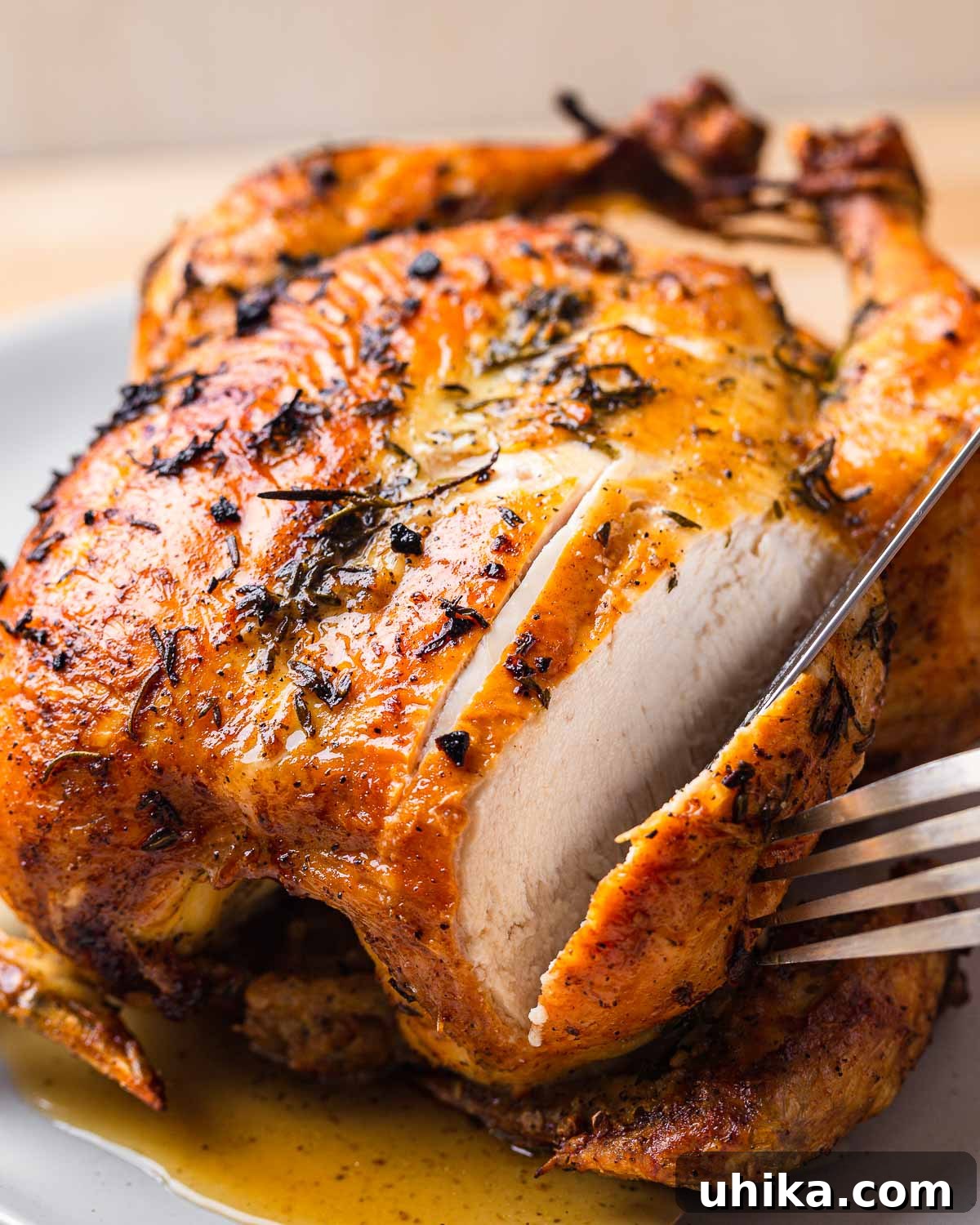
Question: When roasting a whole chicken, the common theme is to remove the chicken from the oven when the breast is at 160°F and the dark meat is at 175°F. On America’s Test Kitchen, they just take this beautiful roasted chicken out of the oven and measure the breast at 160°F, but they never temp the dark meat. The same thing when cooking a spatchcock bird. They show no method of achieving this, like tenting the breast, et cetera. So how do they achieve this? If the dark meat is 175°F, the white meat has to be overcooked. Do you know the secret of accomplishing this? Or is this just another mirage from the cooking gurus?
Answer: This is an excellent question that many home cooks grapple with. The ideal scenario of perfectly cooked white meat (160°F) and tender dark meat (175°F or higher) simultaneously is indeed challenging to achieve, especially with a conventionally roasted whole chicken. The key difference lies in the muscle fibers: dark meat benefits from higher temperatures where its connective tissues break down, becoming more tender and flavorful, while white meat dries out quickly past 160°F.
When you see cooking shows or recipes that only mention the breast temperature, they are often prioritizing the white meat’s doneness, as it’s more prone to becoming dry and tough if overcooked. In many home cooking scenarios, including our own, the approach is often to roast the chicken until the breast reaches 160°F. While this might mean the dark meat hasn’t quite hit its optimal 175°F or 180°F, it’s a trade-off many accept to prevent dry breast meat. Most places, from casual bistros to family dinners, operate on this principle.
However, there are techniques to achieve a more even cook. Spatchcocking (removing the backbone and flattening the bird) helps by allowing the chicken to cook more evenly, reducing the differential between breast and thigh. For a conventional roast, methods like shielding the breast with foil during part of the cooking process can slow its cooking, giving the dark meat more time to catch up. Some chefs might even remove the breast meat once it’s done, tent it, and return the darker meat portions to the oven for a few more minutes. However, for a simple, weeknight roast chicken, prioritizing the breast temperature and accepting that the dark meat will still be very good, if not perfectly fall-off-the-bone, is a common and practical approach. The objective is to achieve a delicious meal without unnecessary complexity, often with sides like potatoes roasting alongside. It’s less about a secret technique and more about making a practical decision based on desired outcome and effort.
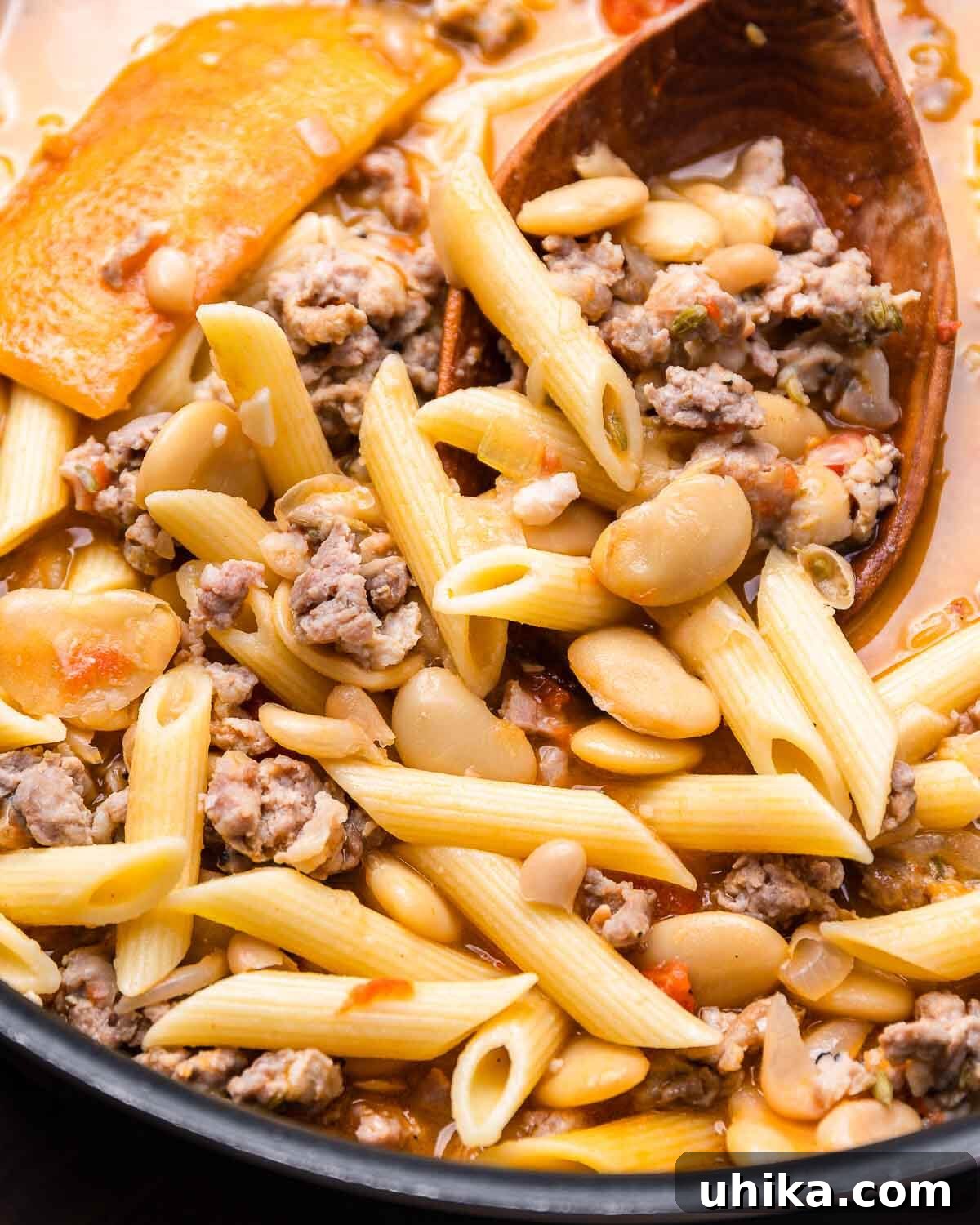
We hope this deep dive into Pasta Fazool, its history, variations, and preparation, inspires you to make this wonderful dish your own. Remember, the best recipes are those that bring comfort and joy to your table, adapted to your taste. For more delicious recipes and discussions, explore our podcast episode page and our other Italian-American culinary guides.
We always love hearing from you! Please send your questions and comments to [email protected]. Every question is valuable, and we’re here to help.
If you enjoy our weekly podcast and want to support our work, consider joining us on Patreon for exclusive bonus episodes each month!
Thanks for listening and happy cooking!