
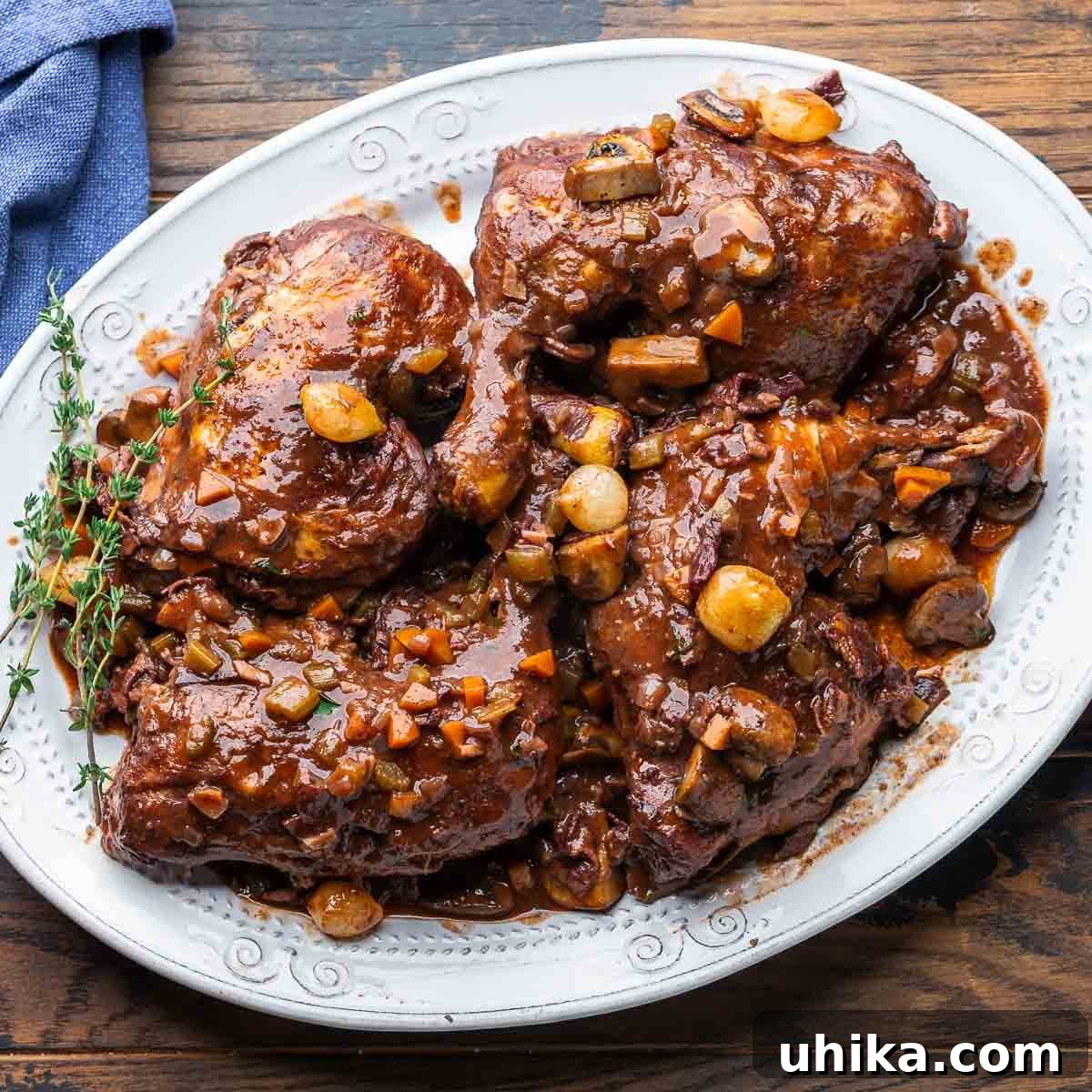
Coq au Vin: A Timeless French Chicken Stew
Delve into the heart of French culinary tradition with Coq au Vin, a soul-warming stew that embodies rustic elegance. This iconic dish features succulent chicken, typically dark meat, slowly braised in rich red wine, infused with aromatic vegetables, fresh herbs, and often enhanced with savory bacon, mushrooms, and pearl onions. Perfect for chilly evenings or special gatherings, Coq au Vin is a symphony of deep, comforting flavors that transport you straight to the French countryside.
Often lauded by culinary legends like Julia Child, Coq au Vin has captivated palates worldwide with its profound flavor profile and tender, fall-off-the-bone chicken. While traditionally prepared with a rooster (coq) and fine Burgundy wine, our accessible recipe adapts this classic for the home cook using readily available chicken legs and thighs and a quality, yet affordable, dry red wine. We also introduce a hint of dark chocolate at the final stage, an optional but highly recommended addition that beautifully intensifies the stew’s complexity and richness. This subtle touch elevates the sauce, adding a luxurious depth that truly distinguishes the dish.
Serve your exquisite Coq au Vin with a side of crusty artisan bread, creamy mashed potatoes, or velvety polenta, perfect for soaking up every last drop of the exquisite sauce. Pair it with a glass of Pinot Noir or a hearty Burgundy to complement the stew’s robust flavors, creating an unforgettable dining experience.
Watch the Full Instructional Video
Essential Coq au Vin Ingredients
Crafting the perfect Coq au Vin begins with selecting high-quality ingredients. Below is a comprehensive list of what you’ll need, along with special notes to help you achieve the best flavor and texture in this classic French stew.
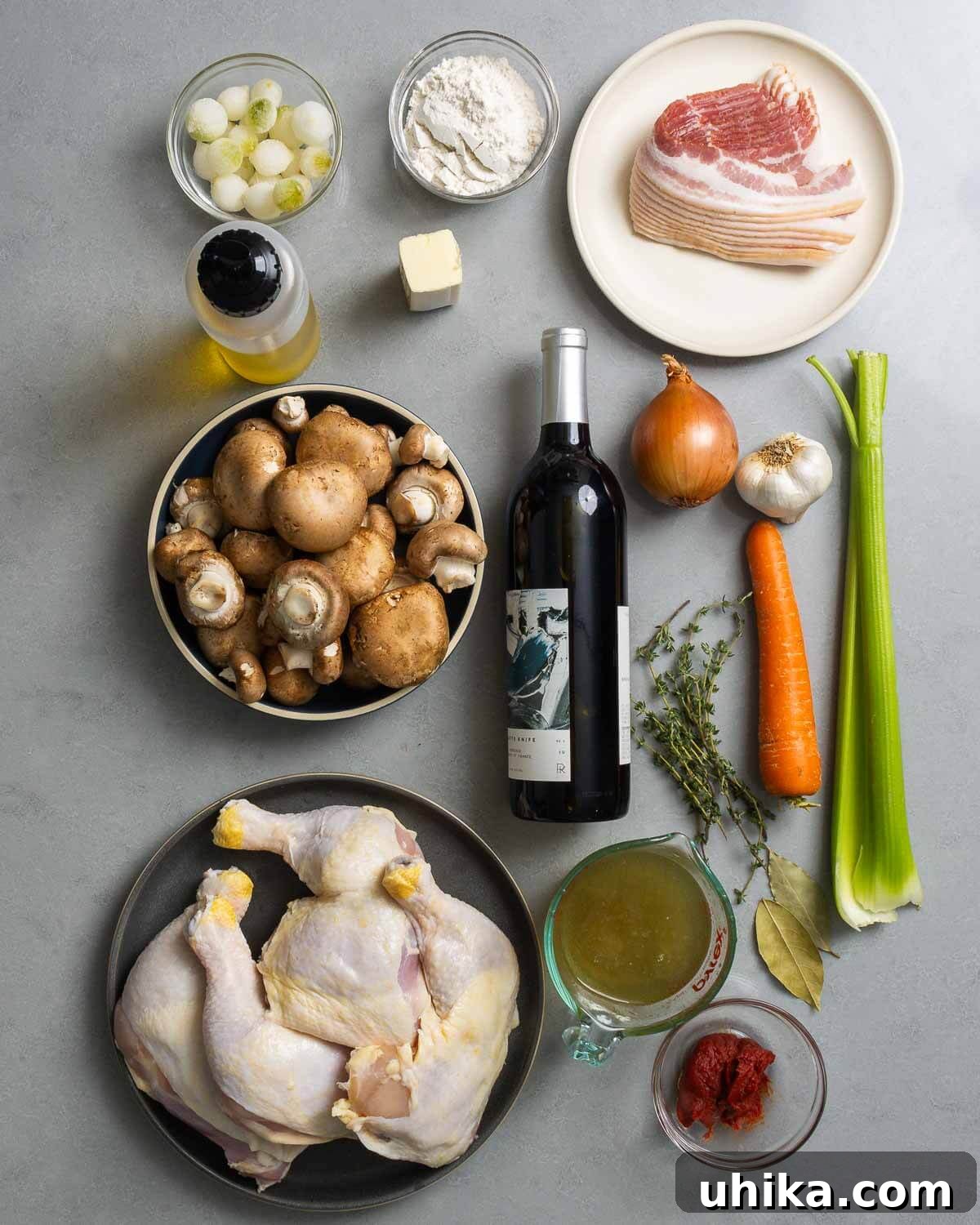
- Chicken: For optimal flavor and tenderness in Coq au Vin, we highly recommend using dark meat such as chicken legs and thighs, or a combination of both (chicken quarters). Dark meat stands up better to the long braising process, remaining moist and flavorful, unlike white meat (breasts) which can dry out. Bone-in, skin-on chicken also adds more flavor to the stew and helps develop a richer sauce.
- Red Wine: The cornerstone of Coq au Vin’s distinctive flavor. Traditionally, a fine Burgundy wine (made from Pinot Noir grapes) is used. However, any good quality, dry red wine you enjoy drinking will work beautifully. Excellent alternatives include other Pinot Noirs, Cabernet Sauvignon, Merlot, or even a Zinfandel. Since the wine is a dominant flavor, choose one you genuinely like.
- Bacon: Thick-cut bacon is essential, not just for its smoky flavor but also for rendering fat, which serves as the foundational cooking oil for searing the chicken and sautéing the aromatics. The crispy bacon bits are later added back, providing a delightful textural contrast.
- Mirepoix (Onions, Carrots, Celery): This classic French aromatic base adds layers of savory and sweet flavors to the stew. Diced finely, these vegetables slowly release their essence into the braising liquid, building a complex flavor foundation.
- Garlic: Freshly minced garlic contributes a pungent, aromatic depth that is crucial to the stew’s overall character.
- Herbs: A fragrant bouquet of fresh herbs is vital. We use fresh thyme sprigs, often tied together for easy retrieval, and dried bay leaves. These herbs infuse the stew with their earthy, herbaceous notes as it slowly braises.
- Chicken Stock: Homemade chicken stock is always preferred for its superior flavor and lack of excessive sodium, allowing you to control the seasoning precisely. If homemade isn’t an option, opt for a high-quality store-bought stock or one made from a concentrated chicken base (like Better Than Bouillon) that is low in sodium.
- Mushrooms and Pearl Onions: These are sautéed separately and added at the end, providing wonderful texture and an earthy, sweet counterpoint to the rich stew. Cremini mushrooms offer a deeper flavor than white button mushrooms, and pearl onions sweeten and soften beautifully.
- Tomato Paste: A small amount of tomato paste adds umami, depth, and a slight tang, helping to balance the richness of the wine.
- Flour: Used to dredge the chicken, it helps create a beautiful brown crust during searing and thickens the sauce as the stew braises.
- Dark Chocolate (Optional but Recommended): A small piece of dark chocolate (70% cacao or higher, not pictured) added at the end is our secret ingredient. It doesn’t make the stew taste like chocolate but instead enhances the savory notes, deepens the color, and adds an incredible richness and complexity to the sauce.
- Olive Oil and Butter: Used for sautéing the finishing elements like mushrooms and pearl onions, contributing to their golden-brown perfection and rich flavor.
- Salt and Freshly Ground Black Pepper: Essential for seasoning at every stage, balancing and enhancing all the flavors.
Refer to the detailed recipe card at the end of this article for precise quantities and further notes on each ingredient.
Step-by-Step Guide to Perfect Coq au Vin
Follow these detailed instructions to create a truly unforgettable Coq au Vin. Each step is designed to build layers of flavor, ensuring a rich and tender stew. Pay close attention to the visual cues in the accompanying photos to guide you through the process.
- Prepare the Chicken and Marinate: Begin by trimming any excess fat from 3 ½ to 4 pounds of chicken legs and thighs. Place the chicken in a large bowl and pour in an entire bottle of Burgundy or your chosen dry red wine. Ensure the chicken is fully submerged or turn it occasionally. Marinate the chicken for at least 2 hours, or ideally, overnight in the refrigerator for the deepest flavor infusion. This crucial step tenderizes the meat and imbues it with the wine’s rich character.
- Prepare Aromatics and Dry the Chicken: While the chicken is marinating, dice 1 medium white onion, 1 large carrot, and 2 celery ribs. Mince 5 cloves of garlic. Tie 8 sprigs of fresh thyme together with kitchen twine; this makes them easy to remove later. Once marinating is complete, remove the chicken from the bowl and set it on a clean work surface. *Do not discard the marinade wine*; it will form the base of your stew’s sauce. Pat the chicken pieces very thoroughly dry with paper towels on all sides. This step is vital for achieving a good sear. Season generously with salt and freshly ground black pepper.
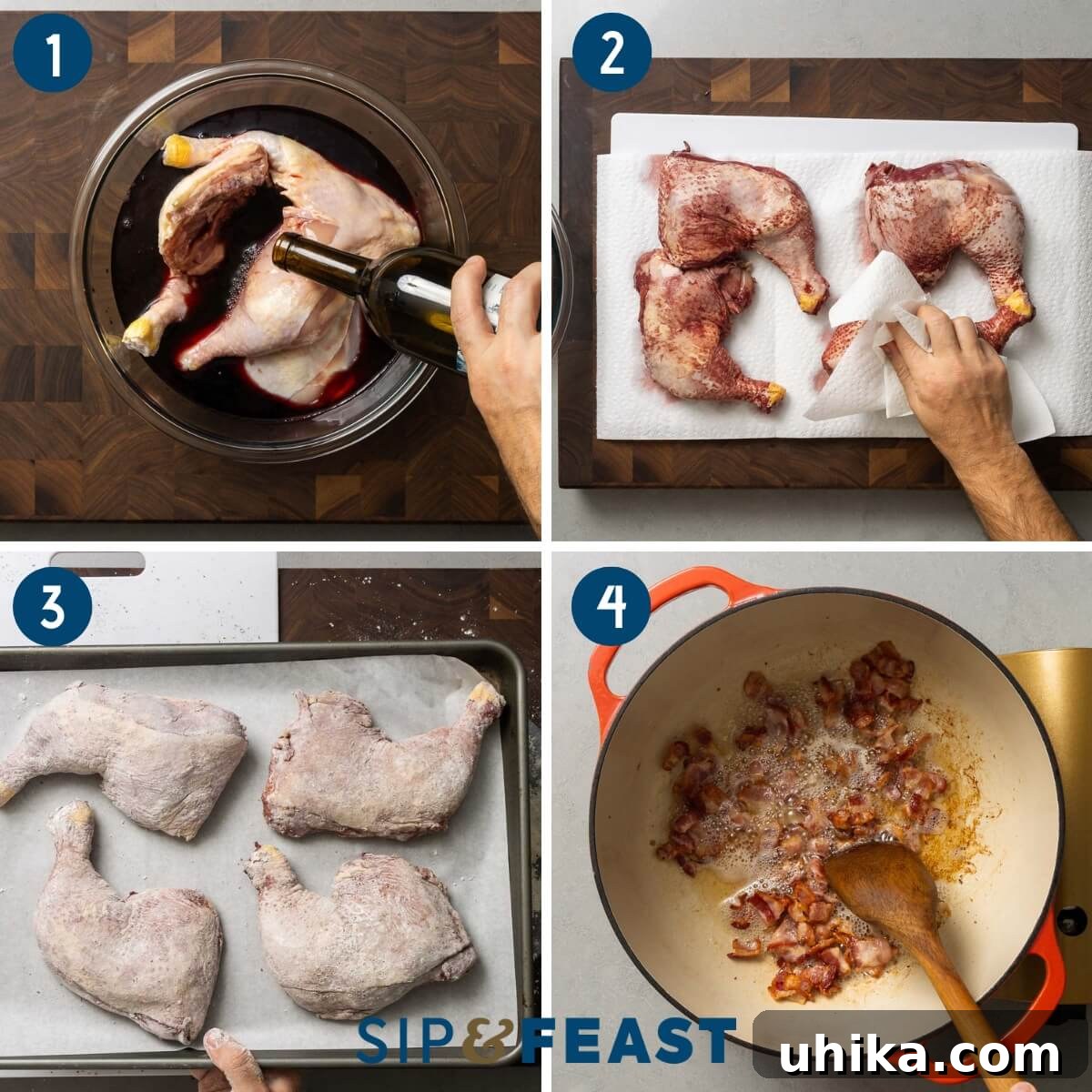
- Dredge the Chicken: Preheat your oven to 350°F (175°C) and set an oven rack to the middle level, ensuring there’s enough room for a large Dutch oven with its lid. Lightly dredge each piece of seasoned chicken in ½ cup of flour, shaking gently to remove any excess. Place the floured chicken on a parchment paper-lined baking sheet or a clean plate, ready for searing. The flour coating will help create a beautiful brown crust and thicken the stew’s sauce.
- Render Bacon Fat: Heat a large Dutch oven or heavy-bottomed pot over medium heat. Slice 4 ounces of thick-cut bacon into 1-inch pieces and add them to the hot pot. Cook the bacon, stirring occasionally, until most of its fat has rendered and the bacon bits are crispy and golden brown, about 7-10 minutes. Using a slotted spoon, remove the cooked bacon and transfer it to a paper-towel-lined plate to drain, reserving the rendered bacon fat in the pot. These crispy bacon bits will be added back to the stew later.
- Sear the Chicken: Increase the heat slightly if necessary to maintain medium. Carefully add the floured chicken pieces to the bacon fat in the pot, working in batches to avoid overcrowding. Overcrowding will steam the chicken instead of searing it, preventing the desirable browning. Sear the chicken until each piece is beautifully browned on all sides, a crucial step for developing deep, complex flavors in the stew (this is the Maillard reaction at work!). Once seared, transfer the chicken to another clean plate and set aside.
- Sauté the Aromatics: Remove any excess bacon or chicken fat from the pot, leaving approximately ¼ cup. Add the diced onions, carrots, and celery (the mirepoix) to the pot. Sauté for 10-12 minutes, stirring occasionally, until the vegetables begin to soften and become translucent. Next, add the minced garlic and cook for another 2 minutes until it becomes fragrant, taking care not to burn it. This aromatic base is key to the stew’s savory depth.
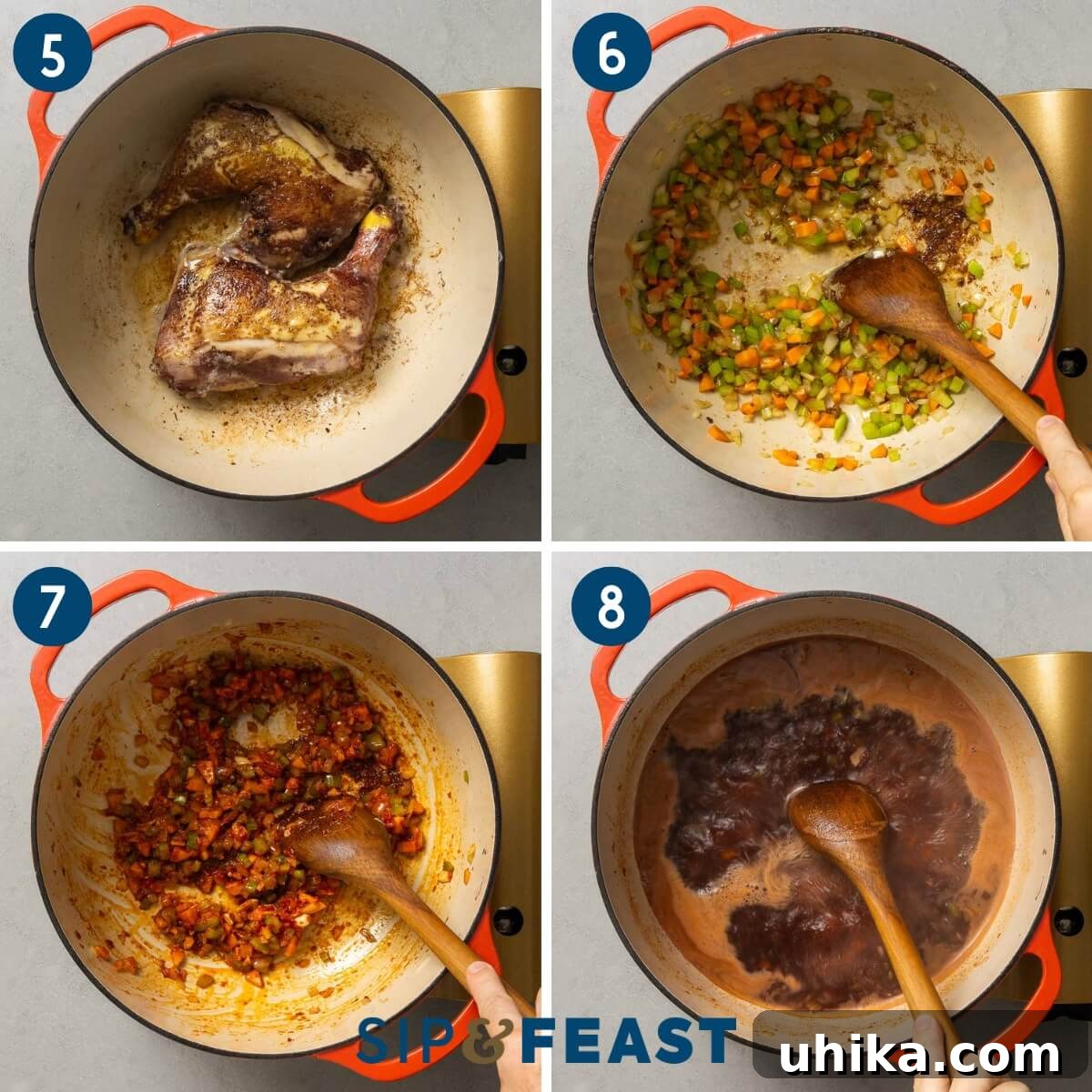
- Cook Tomato Paste: Add 3 tablespoons of tomato paste to the sautéed vegetables. Cook for 3-4 minutes, stirring frequently. This step, known as “pincage,” deepens the flavor of the tomato paste and contributes to the overall richness and color of the sauce. If the paste starts to stick or burn, add a splash of water or the wine marinade to lower the temperature and deglaze.
- Deglaze with Wine and Stock: Pour the reserved marinating wine and 1 cup of chicken stock into the pot. Bring the liquid to a rolling boil. Using a flat wooden spoon, vigorously scrape the bottom of the pot to dislodge any browned bits (fond) that have accumulated. This process, called deglazing, incorporates all those caramelized flavors into the sauce, adding incredible depth.
- Braise the Stew: After boiling for 2 minutes, turn off the heat. Carefully return the seared chicken pieces and the crispy bacon bits to the pot. Add the tied bundle of thyme sprigs and 2 large bay leaves. Ensure the chicken is mostly submerged in the liquid. Cover the pot tightly with its lid and transfer it to the preheated oven. Braise for 75-90 minutes, or until the chicken is incredibly tender and easily pulls away from the bone. The long, slow braise is what makes Coq au Vin so succulent.
- Prepare Pearl Onions and Mushrooms: While the chicken braises, prepare your finishing elements. Slice 1 pound of cremini mushrooms into quarters. Mince 3 tablespoons of fresh flat-leaf parsley and remove 2 teaspoons of fresh thyme leaves from their stems. In a separate large pan, heat 2 tablespoons of olive oil over medium-high heat. Add 16 pearl onions and cook them until tender and lightly caramelized, about 3-5 minutes. Remove the cooked pearl onions with a slotted spoon and place them on a plate, covering with foil to keep warm.
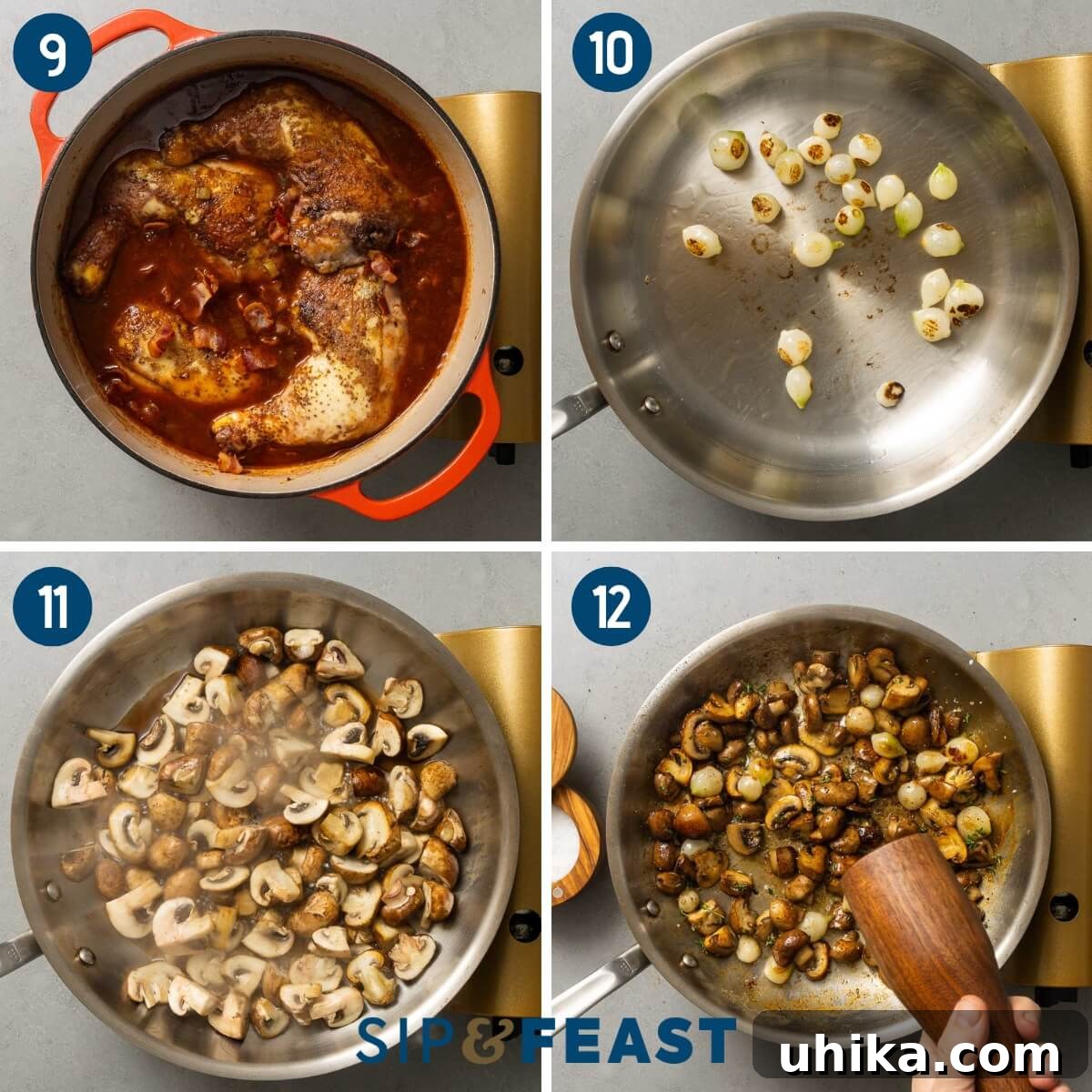
- Sauté the Mushrooms: Add the quartered cremini mushrooms to the same pan where you cooked the onions. Cook over medium-high heat, without overcrowding, until they release their water and begin to brown and develop a rich, earthy color, approximately 5-8 minutes. Once browned, add 3 tablespoons of butter and continue to cook for another 2-3 minutes, stirring until the mushrooms are glistening and beautifully coated in the butter. The butter adds another layer of richness and helps them caramelize further.
- Combine Finishing Elements: Return the sautéed pearl onions to the pan with the mushrooms. Toss or mix them gently to ensure they are well coated with the buttery mushroom mixture. Turn off the heat and season the mushrooms and onions with salt and freshly ground black pepper to taste. Stir in the fresh thyme leaves you prepared earlier. Set this mixture aside.
- Remove Chicken from Pot: Once the chicken in the Dutch oven is tender and cooked through (the internal temperature should be around 185-190°F or 85-88°C for optimal dark meat tenderness), carefully remove the chicken pieces from the pot. Place them on a plate and cover loosely with foil to keep them warm while you finish the sauce.
- Finish the Sauce: Remove and discard the spent thyme sprigs and bay leaves from the Dutch oven. Skim off any visible excess fat from the surface of the sauce. Place the pot back on the stovetop over medium-high heat. Bring the sauce to a gentle simmer and reduce it for about 10 minutes, stirring occasionally, or until it has thickened and reduced by about half. The sauce should be rich, glossy, and thick enough to coat the back of a wooden spoon. Once reduced to your desired consistency, remove from heat. If using, stir in ½ ounce of dark chocolate until it is completely melted and the sauce is smooth and velvety. Taste the sauce and adjust seasoning with salt and pepper as needed.
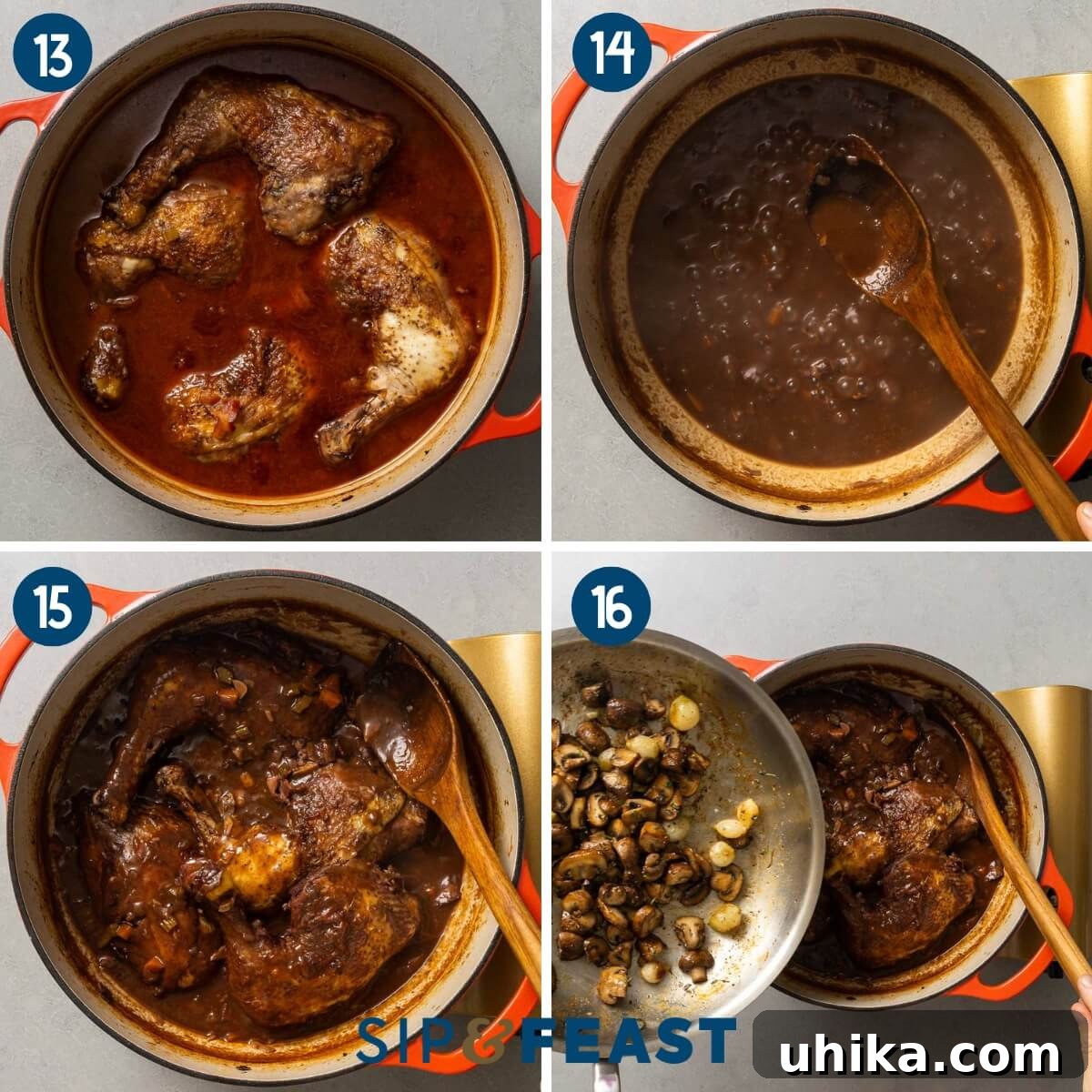
- Combine and Serve: Return the tender chicken pieces to the pot with the thickened, glossy sauce. Gently mix to ensure each piece is beautifully coated.
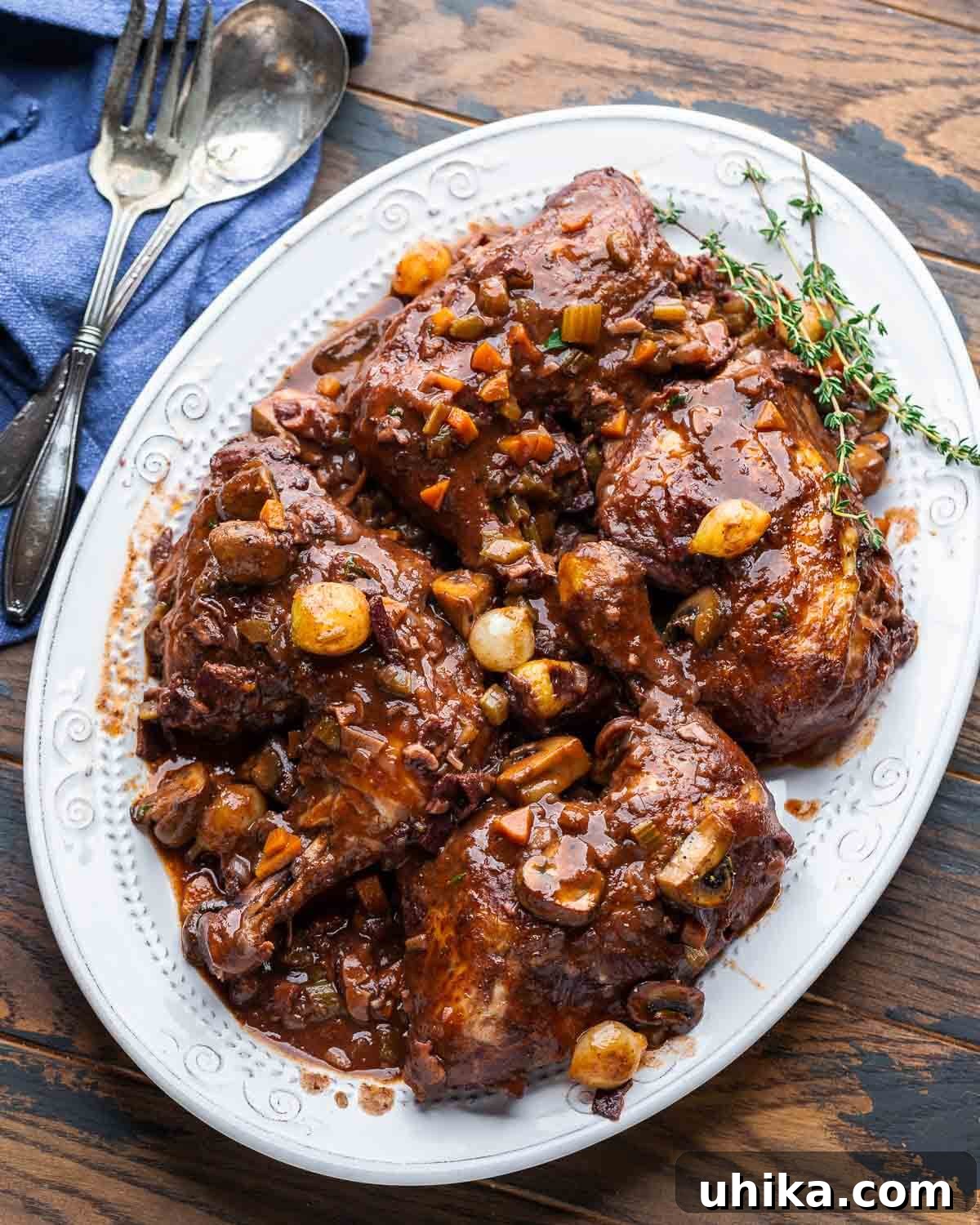
- Add Finishing Touches: Stir the minced fresh parsley into the Coq au Vin. You can either add all the sautéed mushrooms and pearl onions directly into the pot and gently fold them in, or keep them separate and divide them equally among individual servings to ensure everyone gets a generous portion. Serve your magnificent Coq au Vin immediately with a generous scoop of creamy mashed potatoes or slices of crusty bread to savor every drop of the rich sauce. Enjoy this classic French comfort food!
Expert Tips for the Best Coq au Vin
- Make Ahead for Enhanced Flavor: Like many soups and stews, Coq au Vin tastes even better the next day! The flavors meld and deepen significantly after a night in the refrigerator, making it an ideal dish for entertaining. Simply prepare the stew completely, allow it to cool, then refrigerate overnight. To reheat, gently simmer on the stovetop over medium-low heat until thoroughly warmed through. If the sauce has thickened too much overnight, add a splash of water or chicken stock to loosen it to your desired consistency.
- The Power of Homemade Stock: Utilizing homemade chicken stock or even homemade beef stock can dramatically elevate the flavor of your Coq au Vin. Homemade stocks typically contain no added salt, which gives you complete control over the final seasoning of your dish. This is especially important when reducing the sauce, as commercial stocks can become overly salty when concentrated. If using store-bought stock, choose a low-sodium variety and taste frequently when reducing the sauce to prevent it from becoming too salty. If it does, a cornstarch slurry can thicken it without further reduction.
- Embrace the Dark Chocolate Secret: While listed as optional, adding a small piece (around ½ ounce) of high-quality dark chocolate (70% cacao or greater) at the end of the sauce reduction is a game-changer. It won’t make your stew sweet but will enhance the savory notes, add a beautiful richness, deepen the color, and introduce a subtle complexity that will leave your guests wondering what your secret ingredient is. It’s a small touch with a big impact on the overall flavor profile.
- Proper Chicken Doneness: For truly tender dark meat in your Coq au Vin, aim to cook the chicken until its internal temperature reaches 185-190°F (85-88°C). While chicken breast is typically cooked to 165°F, dark meat benefits from a higher temperature, as it allows the collagen and connective tissues to break down, resulting in incredibly succulent and juicy bites that are characteristic of a perfectly braised stew.
- Serving Suggestions Beyond Potatoes: While mashed potatoes and crusty bread are classic pairings, consider other options. Creamy polenta or rice pilaf are excellent for soaking up the luxurious sauce. For a lighter touch, serve with steamed green beans or asparagus.
Explore More Comforting Stew Recipes
If you’ve enjoyed the rich and hearty flavors of Coq au Vin, we invite you to explore more of our favorite comforting stew recipes that are perfect for any season:
- Chicken Fricassee: A creamy, classic French chicken stew.
- Peposo: A rich, peppery Tuscan beef stew.
- Chicken Paprikash: A vibrant Hungarian chicken stew with a creamy paprika sauce.
If you’ve enjoyed this Coq au Vin recipe or any other recipe on our site, we’d love for you to give it a 5-star rating and share your experience in the comments below.
We believe in catering to various learning styles. If you are someone who prefers visual instruction, you can find most of our recipes and cooking demonstrations on our YouTube channel and our Facebook Page.
Coq au Vin
James Delmage
15 mins
2 hrs
2 hrs
4 hrs 15 mins
6
Pin
Coq au Vin is a rustic French stew made with chicken braised in red wine with vegetables and herbs and topped with mushrooms and pearl onions.
Ingredients
For the stew
- 4 ounces thick cut bacon, cut into 1″ pieces
- 3 1/2-4 pounds chicken thighs and legs
- 1 medium white onion, diced
- 1 large carrot, diced
- 2 ribs celery, diced
- 5 cloves garlic, minced
- 1/2 cup flour
- 3 tablespoons tomato paste
- 1 bottle Burgundy wine or other dry red wine
- 1 cup chicken stock (see notes below)
- 8 sprigs thyme, tied together
- 2 large bay leaves
- Salt and pepper, to taste
- 1/2 ounce dark chocolate (optional)
For finishing
- 3 tablespoons butter
- 2 tablespoons olive oil, divided
- 16 pearl onions
- 1 pound cremini mushrooms, quartered
- 3 tablespoons flat leaf parsley, minced
- 2 teaspoons fresh thyme leaves
- Salt and pepper, to taste
Instructions
- Trim the chicken thighs of excess fat. Place the chicken thighs and legs in a large bowl and pour in the whole bottle of Burgundy. Marinate the chicken for at least 2 hours, but if possible overnight.
- Preheat oven to 350°F (175°C) and set the rack in the middle level, allowing enough room to accommodate a large Dutch oven with a lid.
- Heat a large Dutch oven to medium heat and add the bacon. Cook the bacon until most of the fat has rendered (7-10 minutes) then remove the bacon with a slotted spoon to a paper towel-lined plate to drain.
- Meanwhile, remove the chicken from the bowl and place onto a work surface, making sure to save all of the wine. Pat both the legs and thighs very dry and season with salt and pepper on all sides. Dredge the chicken pieces in flour and shake off all of the excess. Sear the chicken pieces in the bacon and chicken fat until well browned on all sides, working in batches if necessary. Place all of the chicken onto another plate and set aside.
- Remove excess bacon and chicken fat from the pot, leaving approximately a quarter cup in the pot. Add the onions, carrot, and celery to the pot and cook for 10-12 minutes or until they begin to soften then add the garlic and cook for another 2 minutes or until very fragrant.
- Add the tomato paste and cook for another 3-4 minutes, stirring frequently to avoid burning. If it starts to burn just add a couple of ounces of water into the pot to lower the temperature.
- Add the wine and chicken stock to the pot and bring to a boil for 2 minutes. Using a flat wooden spoon, scrape the bottom of the pot to remove all of the brown bits.
- Turn off the heat and add the chicken, bacon, thyme, and bay leaves to the pot. Cover the pot and place it in the oven to cook for 75-90 minutes or until the chicken is very tender.
For finishing
- Once the chicken is tender, remove the chicken to a plate and cover with foil to keep warm. At this time, discard the bay leaves and thyme from the sauce.
- Skim any visible fat from the top of the sauce pot then place the pot onto a burner and turn the heat to medium-high. Reduce the sauce until thickened by about half (about 10 minutes). The sauce should be quite thick and will coat the back of a wooden spoon. Once reduced, taste test, and season with salt and pepper. Add the chocolate and mix until smooth. Place the chicken into the pot and mix well to coat. Cover with the lid and set aside.
- Heat a large pan to a touch higher than medium heat. Add the olive oil along with the pearl onions. Cook the onions until tender (about 3-5 minutes) then remove with a slotted spoon into a plate that is covered with foil.
- Add the mushrooms to the same pan and cook until they release their water and start to brown (about 5-8 minutes). Once they begin to brown add the butter and cook until they are glistening (about 2-3 minutes). Return the pearl onions back to the pan and toss/mix to coat. Turn off the heat and season with salt and pepper and the thyme leaves.
- Mix the parsley into the pot. You can mix all the mushrooms and pearl onions into the pot right before serving or divide them onto plates so that each person gets a few pearl onions and mushrooms. Serve with mashed potatoes or crusty bread. See notes below about serving the next day which is preferred.
Notes
- If possible, it’s best to let the pot cool and then refrigerate overnight. The flavors will be much more concentrated and the taste will be that much better. To reheat the next day, simply simmer on the stovetop at medium to medium-low heat until hot. If the sauce is too thick, just add a bit of water to loosen it up.
- Chicken thighs are best cooked until at least 185-190°F (85-88°C) so that the collagen and connective tissue begin to break down, which makes much more tender and juicy bites.
- Makes 6 large or 8 moderate-sized servings.
- Homemade chicken stock is best, since there is no salt, which allows the sauce to be reduced until very thick without being overly salty. If you use homemade stock this recipe will work as shown. If using store-bought stock, make sure to taste test while reducing. If the sauce begins to get too salty, stop reducing it, and simply add a slurry of cornstarch (1-2 tablespoons mixed with 3 tablespoons water) and simmer until thickened.
- Leftovers can be saved for up to 3 days in the fridge and can be frozen for up to 6 months.
Nutrition
Carbohydrates: 14.5g |
Protein: 91.6g |
Fat: 58g |
Saturated Fat: 18.9g |
Cholesterol: 274mg |
Sodium: 746mg |
Potassium: 532mg |
Fiber: 2g |
Sugar: 4.7g |
Calcium: 80mg |
Iron: 6mg
Nutrition information is automatically calculated, so should only be used as an approximation.
Like this? Leave a comment below!
Check us out on Instagram at @sipandfeast or tag #sipandfeast!