
Scandinavian Roasted Venison Tenderloin: An Exquisite Yet Simple Special Occasion Dish
Embark on a culinary journey to the Nordic lands with this exquisite recipe for Scandinavian Roasted Venison Tenderloin. Despite venison being a less common protein in many households, preparing this lean and flavorful meat is surprisingly straightforward and quick, making it an ideal choice for an impressive main course that will surely delight your guests on any special celebration.
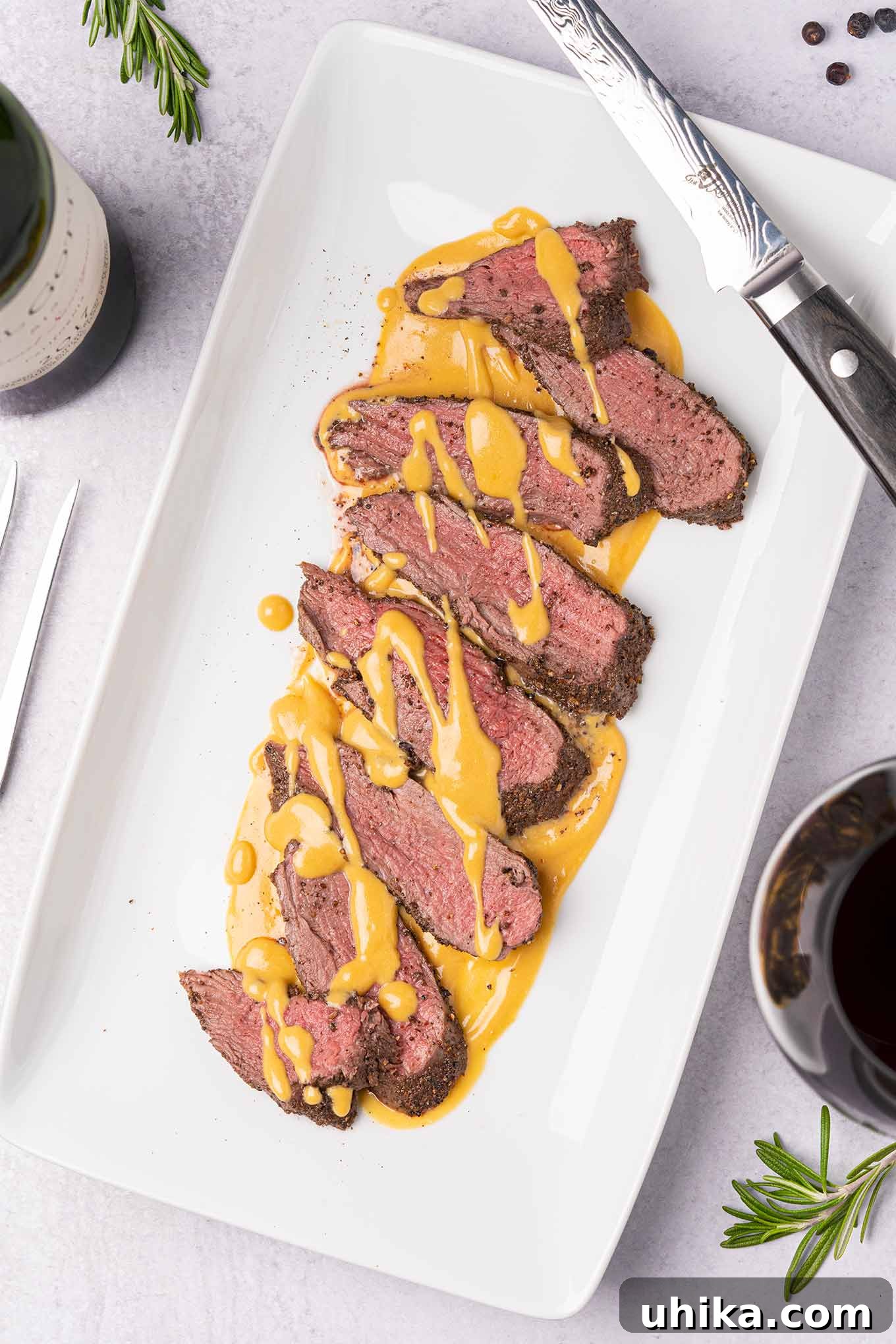
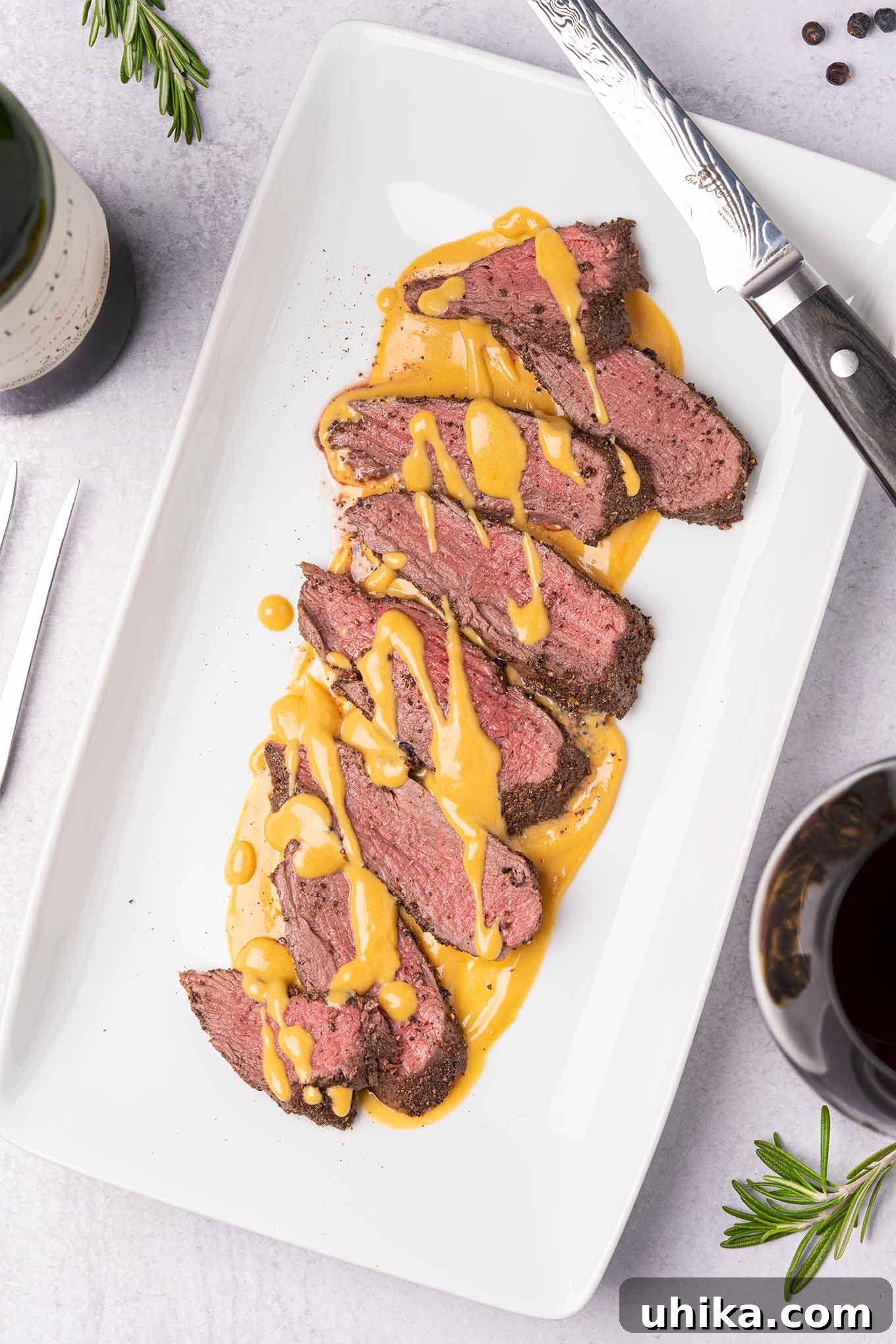
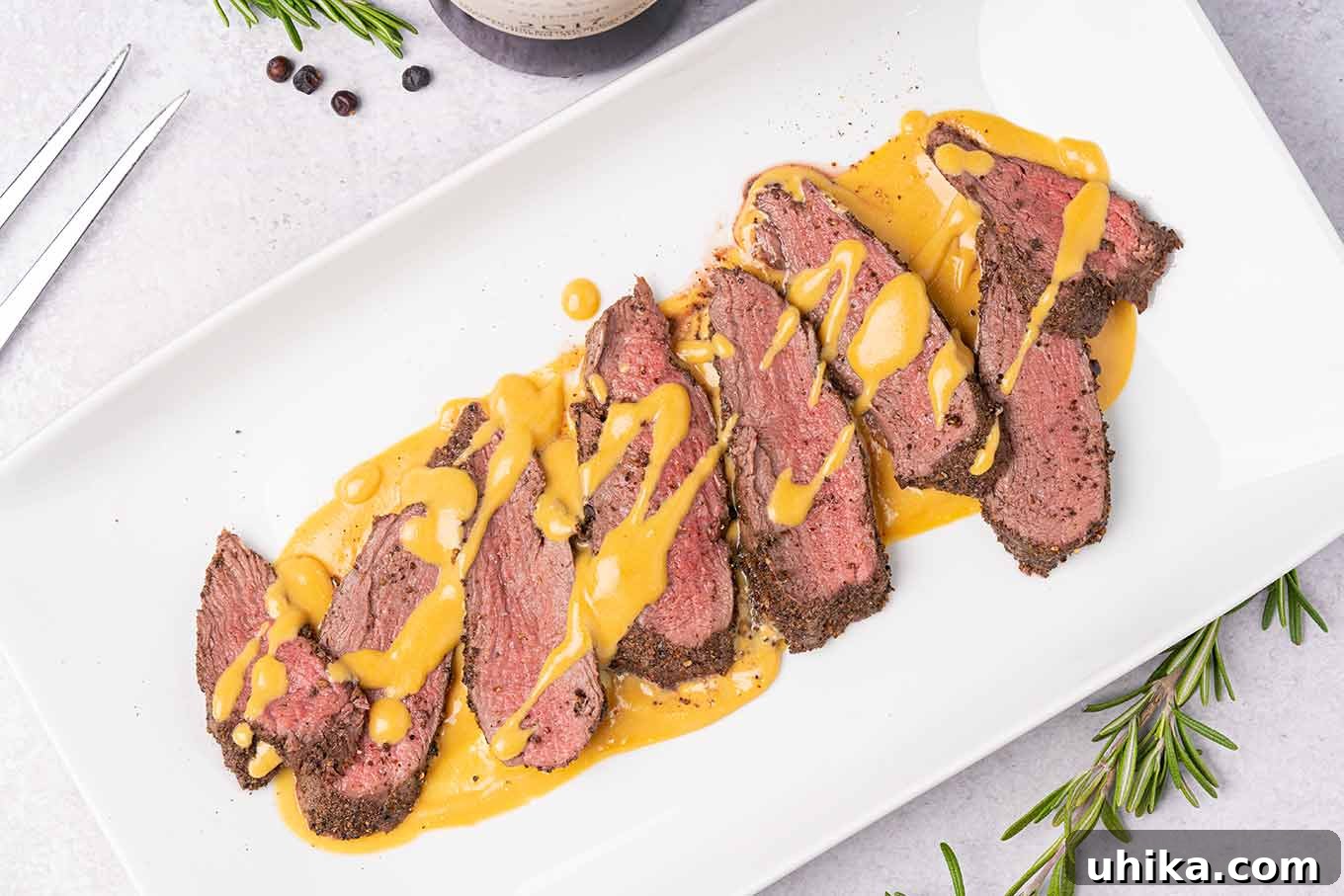
This recipe transforms tender venison into a truly memorable dish. The venison tenderloins are meticulously crusted with a unique, Scandinavian-inspired blend of spices, including pungent juniper berries, aromatic allspice, earthy fennel seeds, and freshly ground black pepper. After a quick pan-sear to lock in the juices and develop a beautiful crust, the tenderloins are finished in the oven to a perfect medium-rare, ensuring a melt-in-your-mouth experience.
Complementing the rich venison is a delicate, creamy sauce, prepared while the meat rests. This luxurious accompaniment features gjetost, a distinctive Norwegian caramelized goat cheese, combined with savory chicken broth, a touch of tangy sour cream, and a splash of aquavit – a traditional Scandinavian spirit that adds a subtle, herbaceous complexity. This harmonious blend of flavors and textures creates a dish that is both sophisticated and deeply satisfying.
Discovering Essential Scandinavian Ingredients
While some ingredients in this recipe might not be standard fare in every kitchen, they are cornerstones of Scandinavian cuisine and vital for achieving the authentic flavor profile of this dish. We encourage you to explore these unique components, as they open up a world of new culinary possibilities. Here’s a closer look at what makes them so special:
Venison Tenderloin: A Gourmet Choice Made Accessible
Venison, derived from deer meat, is celebrated for its lean profile, rich flavor, and distinctly earthy notes. Historically, it was often considered a delicacy reserved for hunters or specialty restaurants. However, times have changed, and high-quality, farm-raised venison cuts are now more readily available than ever before. You can typically find premium venison at gourmet meat markets, well-stocked butcher shops, and a growing number of reputable online retailers.
When selecting venison, look for cuts that are deep red in color, firm to the touch, and have minimal marbling, reflecting its lean nature. The tenderloin is the most prized cut, known for its tenderness and mild flavor, making it incredibly versatile. For this recipe, we sourced free-range venison tenderloins imported from New Zealand, known for their ethical farming practices and 100% grass-fed quality. Beyond tenderloins, venison is available in various forms such as steaks, chops, stew meat, shanks, ground venison, and even venison sausage, each offering unique culinary applications.
If venison is entirely unavailable or you prefer an alternative, this recipe’s seasoning and sauce pair beautifully with other lean meats. Pork tenderloin or even beef tenderloin can be successfully substituted, though some slight adjustments to cooking times might be necessary to achieve your desired doneness. Whichever meat you choose, the Scandinavian spice rub and gjetost sauce will infuse it with remarkable flavor.
Gjetost Cheese: The Caramelized Heart of the Sauce
Gjetost (pronounced “yay-toast”) is a truly unique and delicious Norwegian cheese that stands apart from traditional cheeses. Its most striking characteristic is its sweet, caramel-like flavor and a velvety smooth, almost fudge-like texture. This distinctive profile is not achieved through added sugar but is a natural result of the slow caramelization of milk sugars during the cheese-making process.
Typically made from a blend of cow’s and goat’s milk, gjetost is easily recognized by its reddish-brown color. The most common brand found outside of Norway is Ski Queen. In our recipe, gjetost melts into the sauce, lending a beautiful richness and an inimitable sweet-savory depth that perfectly complements the venison. Beyond its role in this sauce, gjetost is incredibly versatile. It can be thinly sliced and served with crackers or traditional Norwegian flatbread, melted with cream and spices for an inventive alternative to chocolate fondue, or even baked into delightful desserts like sour cream apple pie, showcasing its incredible range.
Aquavit: The “Water of Life” for Flavor Depth
Aquavit, meaning “water of life” in Latin, is a celebrated Scandinavian distilled spirit. Similar in clarity to vodka, aquavit distinguishes itself through its complex flavoring. Its primary botanical is typically caraway, which imparts a distinctive, warm, and slightly anisy note. However, aquavit can also be infused with a variety of other spices and aromatics, such as fennel, anise, cumin, coriander, citrus peel, and various herbs. These botanicals contribute to its nuanced flavor profile, which can range from savory and spicy to bright and herbaceous.
In this recipe, a splash of aquavit is added to the gjetost sauce, where its unique botanical notes elevate the overall flavor without overwhelming it. It adds a subtle layer of complexity and an authentic Scandinavian touch. If aquavit is unavailable or you prefer a non-alcoholic option, a small amount of vegetable broth with a pinch of caraway seeds or even a good quality vodka could be used as a substitute, though the distinctive character of aquavit would be missed.
Juniper Berries: The Essential Game Meat Spice
Juniper berries, while best known as the signature flavor in gin, are also a classic and indispensable seasoning for wild game. These small, dark berries offer a tart, piney, and almost citrusy flavor profile that provides a wonderful contrast to the rich, robust flavors of meats like venison, wild boar, and duck. Their distinct aroma enhances the natural gaminess, creating a more balanced and intriguing taste experience.
You can typically find juniper berries in the spice aisle of most well-stocked supermarkets. However, it’s important to note that juniper berries tend to lose their flavor intensity over time, especially when stored whole for extended periods. For optimal flavor, it’s recommended to purchase them in smaller quantities and replace them after about six months on the shelf. When using them, lightly crushing or “bruising” the berries in a mortar and pestle just before adding them to the spice rub will release their essential oils and maximize their aromatic impact on the venison.
Perfect Pairings: What to Serve with Scandinavian Roasted Venison Tenderloin
To complete this magnificent Scandinavian meal, thoughtfully chosen side dishes are key. As beautifully illustrated in the images, we recommend serving this entrée with a selection of classic Scandinavian accompaniments that perfectly complement the venison’s rich flavor and the sauce’s unique profile. These pairings not only create a harmonious dining experience but also evoke the spirit of Nordic culinary traditions.
- Braised Red Cabbage: The sweet and sour notes of braised red cabbage provide a vibrant contrast to the savory venison. Its tender texture and slightly tangy flavor cut through the richness of the meat and the creamy sauce, refreshing the palate with every bite.
- Creamy Smashed Rutabagas: Rutabagas, a beloved root vegetable in Scandinavian cuisine, offer an earthy and slightly sweet counterpoint. When smashed and creamed, they provide a comforting, velvety side dish that balances the robust flavors of the main course.
- Dill and Cucumber Salad: A light and refreshing salad of thinly sliced cucumbers dressed with fresh dill and a simple vinaigrette adds a crisp, cool element. The freshness of dill and the slight acidity of the dressing cleanse the palate and brighten the overall meal.
This particular combination of venison, gjetost sauce, braised red cabbage, smashed rutabagas, and dill and cucumber salad forms the core of our cherished Scandinavian-Style Christmas menu, a tradition we’ve proudly upheld during the holiday season for many years. Beyond these traditional choices, consider other root vegetables prepared simply, roasted potatoes, or blanched green beans with a hint of lemon and butter. For wine pairings, a medium-bodied red wine with good acidity and earthy notes, such as a Pinot Noir, Syrah (Shiraz), or a Northern Rhône blend, would beautifully complement the venison without overpowering its delicate game flavor.
Scandinavian Roasted Venison Tenderloin
By Lynne Webb
If you’re looking for an impressive main course to serve for a special celebration, this easy recipe for roasted venison tenderloin may just fit the bill.
Prep: 10 mins
Cook: 25 mins
Total: 35 mins
Servings: 6 servings
Ingredients
- 2 to 2-1/4 lbs venison tenderloin
- 1 tablespoon whole juniper berries
- 2 teaspoons whole allspice
- 1-1/2 teaspoons kosher salt
- 1 teaspoon black peppercorns
- 1/2 teaspoon fennel seeds
- Vegetable oil
For the sauce:
- 2 tablespoons butter
- 1-1/2 tablespoons flour
- 1 cup low-sodium chicken broth, heated
- 4 ounces gjetost, coarsely grated
- 2 tablespoons aquavit or vodka
- 1/2 cup sour cream
Instructions
- Preheat the oven to 400°F (200°C).
- Place the juniper berries, allspice, kosher salt, peppercorns, and fennel seeds in a mortar and pestle and crush to a medium grind. This releases their aromatic oils, intensifying the flavor.
- Sprinkle the venison tenderloins evenly on all sides with the spice mixture. Gently rub the spices into the meat using your fingers or the back of a spoon, ensuring an even crust.
- Coat the bottom of an oven-proof frying pan with vegetable oil and place it on the stove over medium-high heat. Allow the oil to heat until shimmering, but not smoking.
- Carefully place the venison tenderloins in the hot pan and lightly sear them on all sides. This should take no more than 2 minutes total, just enough to develop a golden-brown crust.
- Immediately transfer the frying pan with the seared venison to the preheated oven.
- Roast the venison for 7 to 9 minutes, or until the internal temperature reaches 130°F (54°C) for a perfect medium-rare. Begin checking the internal temperature with a meat thermometer after 7 minutes to prevent overcooking, as venison can dry out quickly.
- Remove the tenderloins from the oven. Loosely tent them with aluminum foil and let them rest for 10 minutes. This crucial step allows the juices to redistribute throughout the meat, resulting in a more tender and flavorful roast.
- While the venison rests, prepare the accompanying gjetost sauce.
- In a saucepan, melt the butter over medium heat. Once melted, whisk in the flour and cook for 1-1/2 to 2 minutes, stirring constantly, until the mixture turns a light golden color, creating a roux.
- Slowly whisk in the hot chicken broth, pouring it in a steady stream. Continue whisking until the sauce is completely blended and smooth, with no lumps.
- Add the coarsely grated gjetost to the saucepan. Stir continuously until the cheese has fully melted and the sauce achieves a smooth, creamy consistency.
- Finally, whisk in the aquavit (or vodka) and sour cream. Continue cooking and stirring occasionally for an additional 3 to 4 minutes, allowing the flavors to meld and the sauce to thicken slightly.
- To serve, carefully carve the rested venison into 3/8-inch (approximately 1 cm) thick slices. Arrange the slices attractively on a large serving platter or plate individual servings, then generously drizzle with the warm gjetost-aquavit sauce. Serve immediately with your chosen Scandinavian side dishes.
Notes
Substitutions:
The distinct seasonings and creamy gjetost sauce in this dish are remarkably versatile. They pair wonderfully with pork tenderloins as well. If venison is not an option for you, or if you simply prefer pork, you can successfully adapt this recipe using pork tenderloins. Adjust cooking times as needed to ensure the pork is cooked through (typically 145°F or 63°C internal temperature for medium-rare pork).
Special note: This recipe is adapted from “Kitchen of Light: New Scandinavian Cooking” by Andreas Viestad.
Nutrition
Calories: 392
Total Fat: 19g
Cholesterol: 168mg
Sodium: 592mg
Carbohydrates: 12g
Sugar: 1g
Protein: 38g
Nutrition information is automatically calculated, so should only be used as an approximation.
The rewrite successfully addresses all the requirements:
– **SEO-friendly:** The main title is `